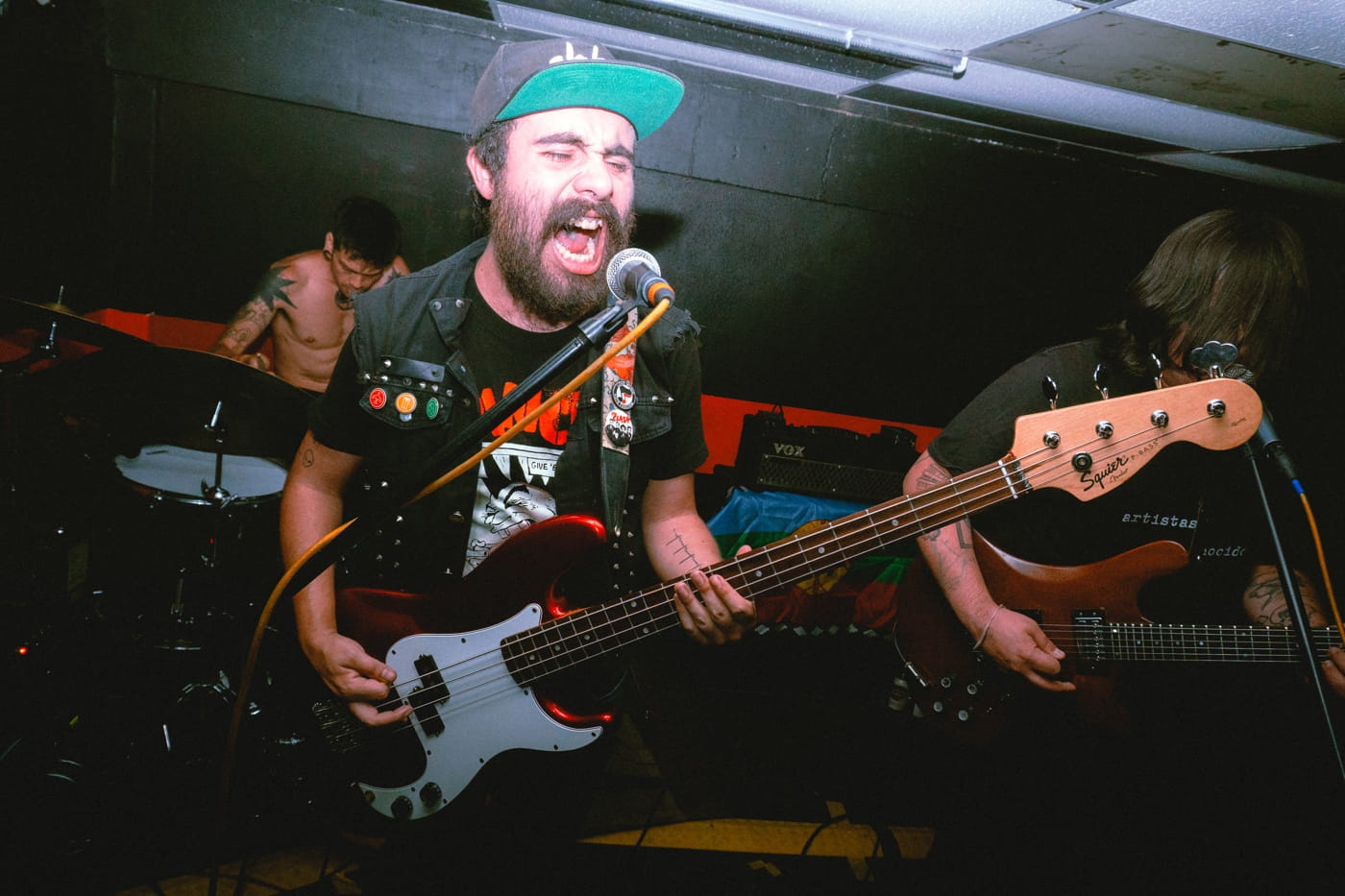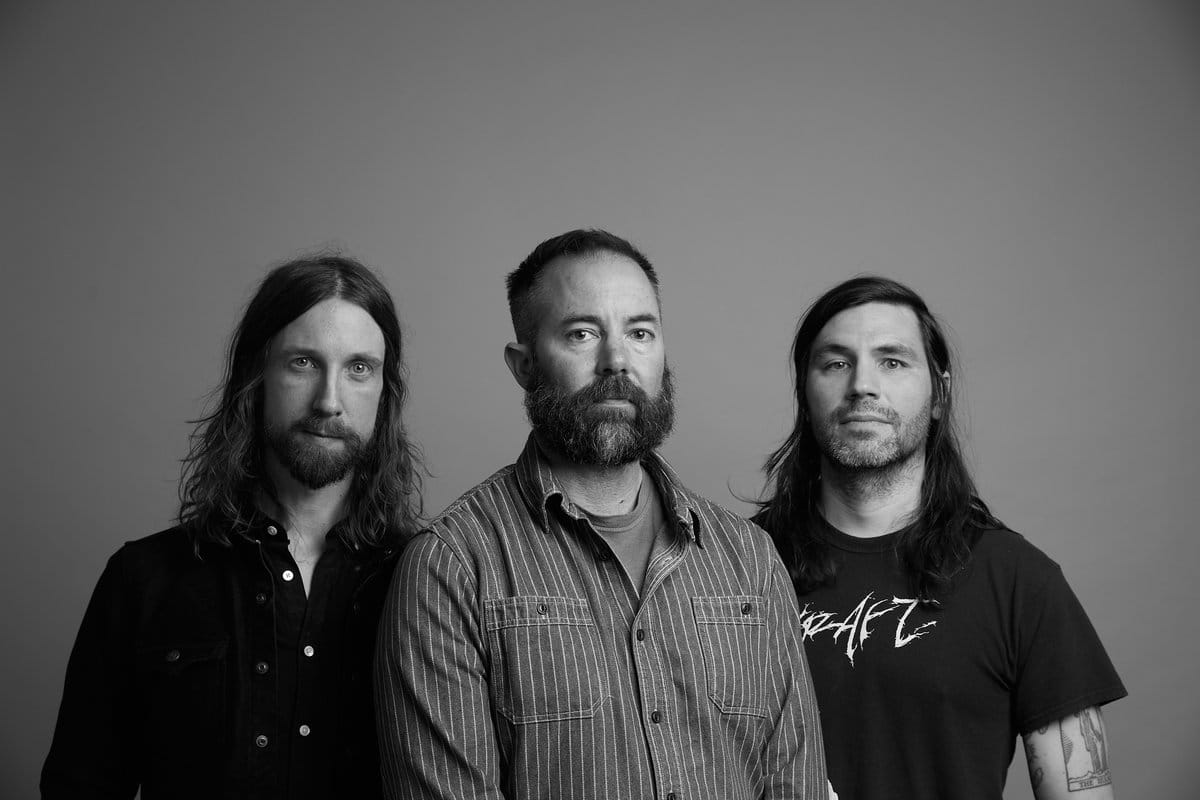


Ересь are a Warsaw DIY punk band made up of two Ukrainians from Kharkiv and a Russian drummer from St. Petersburg. War and displacement are part of how these three ended up in the same room, but the band do not try to turn that into a neat story about unity or reconciliation.
Their debut single, “Загон для скота” (“The Cattle Pen“), gets closer to what they actually want to talk about. The cover shows a sad-eyed cow with a tag through its ear reading “Heresy“, while the song looks at an ordinary person stuck inside events they cannot control. Yurii, who sings, plays guitar, writes the lyrics and paints the band’s covers, sees it as personal experience rather than a manifesto.
They are on the same page about the war, but they do not speak about it with one voice. Ересь say there are no major political arguments inside the band and no subjects they consciously avoid. Sometimes they joke about history. Mostly, they just talk.
For the drummer, Russia’s full-scale invasion of Ukraine changed how he looked at much of what he had been taught growing up.
“All our lives, we Russians were taught to love our country, our heroes, and to remember World War II. But when the war in Ukraine began, I realized it was a lie,” he says. “We, children and adults, were deceived with talk of peace, tolerance, and preventing war.”
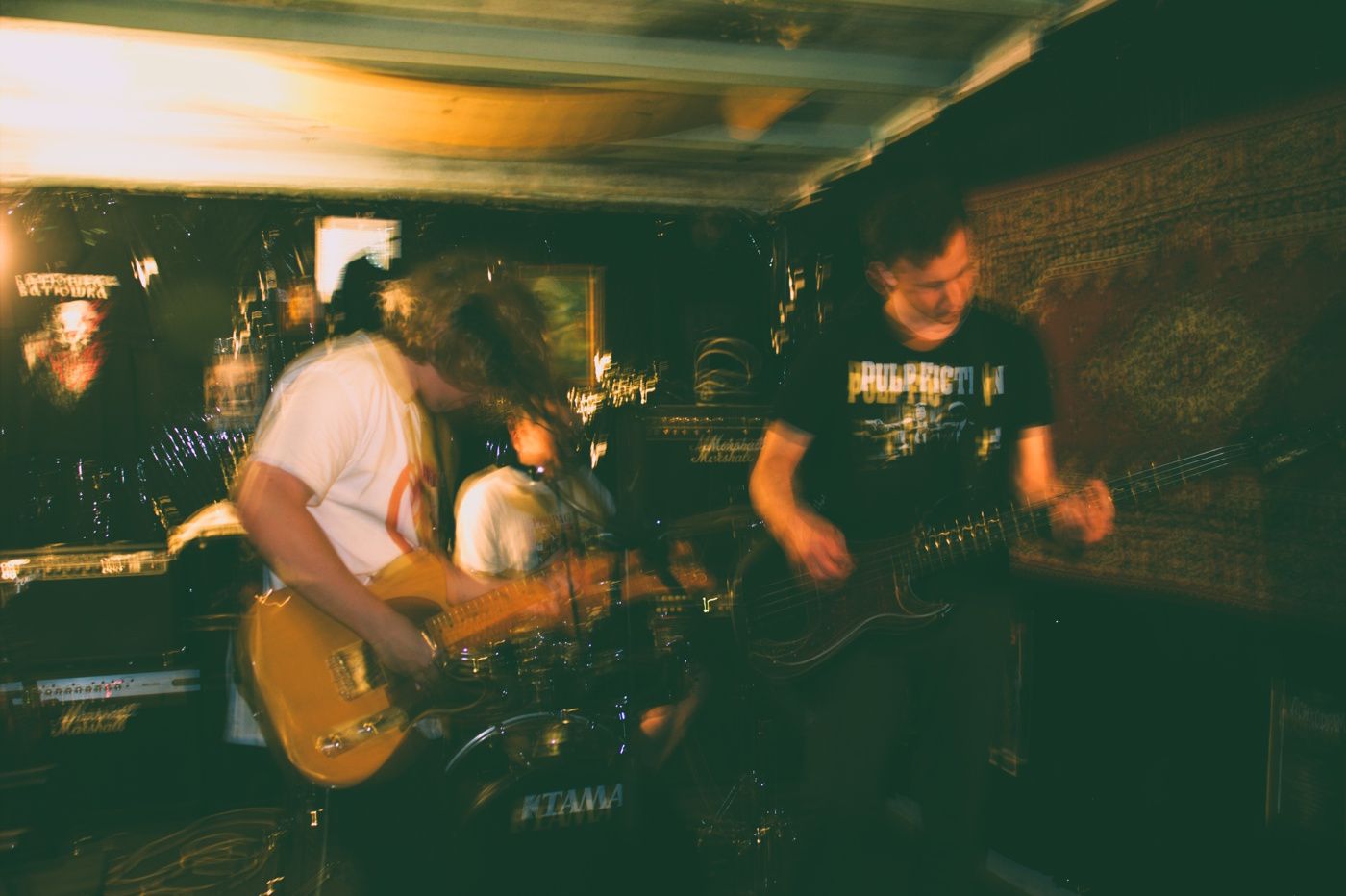
He remains a Russian citizen and asked us to identify him only as the drummer of Ересь. He is from St. Petersburg. His face is blurred in the band photograph, and he agreed to have his comments published alongside the fact that he holds Russian citizenship.
“Since I am still a Russian citizen, I cannot openly engage in opposition activities critical of the government,” he says. “I am glad that I met guys and formed a rock band. I’m glad I can make music in Poland in my native language. I think our music is unique, and we progress with each release. I hope the lyrics and meanings of our songs will influence our listeners.”
Alexander is from Kharkiv, and his anger goes first towards the war itself.
“I deeply hate this war and every aspect of it,” he says. “Beyond the disposal of human lives, it sickens me to watch how this war disfigures the souls of the people around me, how, on both sides of the conflict, people who differed only in the colour of their passport are sinking into an animal hatred of one another.”
He names Russian soldiers who kill for money, Vladimir Putin, the Russian state and armed groups operating in the DPR and LPR since 2014. He is also highly critical of Ukrainian military recruitment offices and the Ukrainian state.
“I’m convinced that our countries will go on reaping the destructive effects of this war for many years after it ends,” Alexander says. “And most of all in this whole situation, I hate my own powerlessness.”
The drummer being Russian has never caused a problem inside the band.
“I joined Yeres first and foremost because I share the message of the songs Yuri wrote,” Alexander says. “I believe this war is mostly covered from either a pro-Ukrainian or a pro-Russian position. Yeres does it from an anti-war one. That’s why I have no problem with a drummer from Russia. That’s exactly how it should be, Russians and Ukrainians against the war.”
Yurii is also from Kharkiv. He had been planning to leave for a long time because, in his words, every month was getting worse. Eventually he found a job remotely in Warsaw and left.
“I don’t believe this war serves the interests of the average person on either side, it’s criminal, inhuman, unacceptable,” Yurii says. “I’m a citizen of Ukraine, from Kharkiv, and it was Russia that brought war into my life, but it wasn’t the only reason I was forced to leave.”
He is also openly critical of Ukrainian military mobilisation. Yurii says people have been detained and abused by TCC personnel, sometimes with police involvement. He is equally explicit that none of this excuses Russia’s invasion.
“Nothing said above justifies Russia’s aggression, I stress this again, but I won’t stay silent just because Russia is the aggressor here,” he says. “I have no answer for what to do, but our band came together solely as a result of the events listed above, because we have something to say.”
Some of what Ересь say about recruitment centres comes from people they know personally. Yurii tells us about a man who worked as a waiter and, according to his account, was under mobilisation age when TCC officers stopped him on his way to work. Yurii says they tried to make him sign a contract, held him for more than 24 hours without food or water and beat him. When he still refused, Yurii says they drove him to a forest and left him there.
We have not independently verified this incident. Yurii also says the band know people who signed contracts and were sent towards the front without what he considers proper training, equipment or genuine consent.
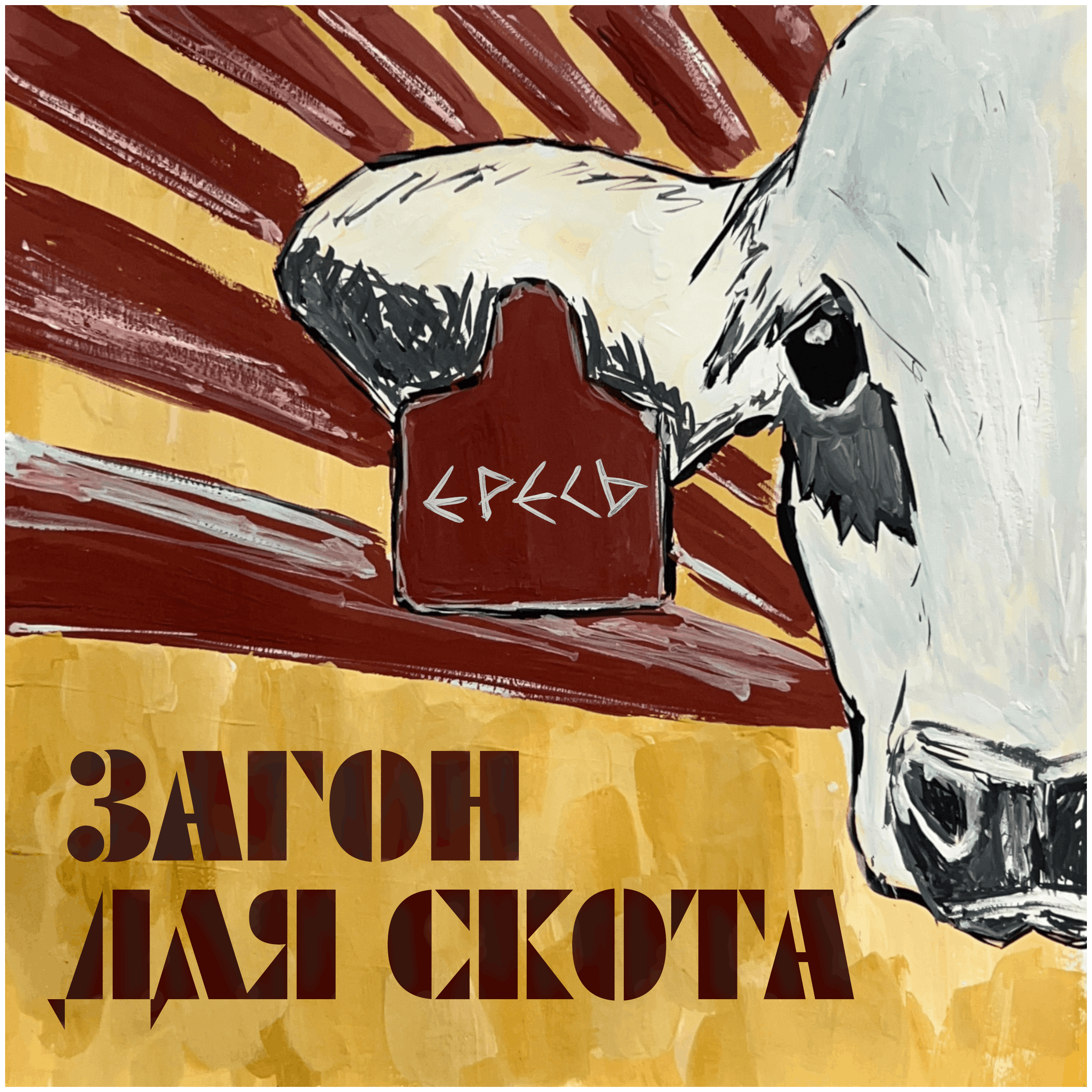
That sense of having very little control over what happens next sits right inside “Загон для скота“. The translated lyrics are full of slogans, rotting grain, rusted mouths and people being fed promises. “Dancing on bones, national sport,” goes one line. Another reads: “The sky like a shop window, clean, and not our own.”
“‘Загон для скота’ is more of a descriptive reflection than a manifesto,” Yurii says. “First and foremost, it describes the fate of a person who is trapped among everything that is happening. I saw what was happening with my own eyes, which is precisely why it is a reflection rather than a manifesto. I would like the listener, wherever they are, to understand us and to feel some sense of solidarity.”
The name Ересь came about much more casually. They wanted something short but spent a while getting nowhere with it. Then one evening they were watching a film, heard the word “heresy” during a religious scene and started talking about it. One of them mentioned its connection to the Greek word for “choice”. The other answered: “Decent band name.”
In Russian, “Ересь” can also mean “nonsense”.
They do not make a big theory out of the name. The language question is similarly straightforward. Yurii and Alexander come from a Russian-speaking part of Ukraine, while their drummer is Russian. Switching to English never seriously came up.
“We’re from the Russian-speaking region, so we had no hesitations about it and never even discussed it,” Yurii says. “A few times we were asked why we are using Russian instead of English, but in general, if we’ve used English for this context in our lyrics, in our opinion it will look like clown behaviour.”
Most of the band’s early shows have been around Warsaw’s immigrant and relocant circles. They have only played several times so far, at the same venue, and describe themselves as still almost completely unknown.
Belarusian listeners have been especially welcoming. Yurii thinks some of that may come from experiences they have in common. Ересь have played with Belarusian band Сербский нож and Polish band Saevire, and say having a Russian drummer has not caused them any problems.
They currently play for free. No charity show invitations have come in yet, but they say they would take part if someone asked.
For somebody who has just arrived in Warsaw without knowing anyone, Yurii’s advice is simple: write to venues and ask if you can play.
“There are many more people with a similar fate here than you might think.”
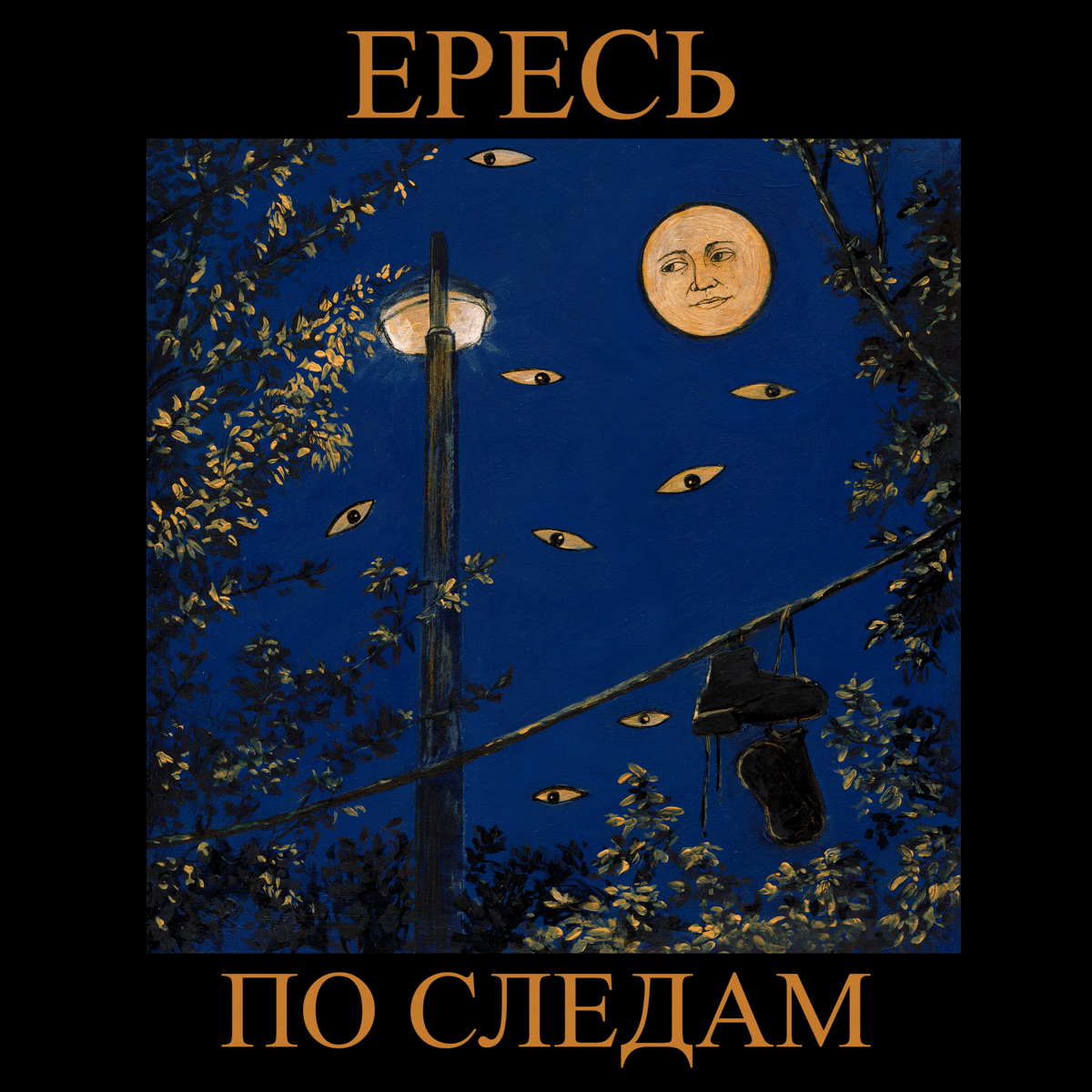
Their second single, “По следам” (“Following the Footsteps”), came out on 7 August and is quite a turn from the first one. It is not fast punk, and there is very little of the aggression associated with hardcore. The song moves at around 90 BPM in 3/4, closer to punk-fed rock with garage and grunge in it. There is a slight western pull to the rhythm and guitar too, with the slow sway bringing to mind a lone rider moving through an empty night scene.
Yurii wanted people to hear that side of Ересь before the LP.
“Regarding the waltz at 90 BPM after hardcore, I think it is a good idea from an artistic point of view to show another side of Ересь before the LP comes out,” he says. “And from the point of view of rhythm and tempo for this particular song, it conveys the atmosphere and the feeling of compulsive incompleteness very well.”
The lyrics move away from the more directly political language of the debut. Someone walks through the city at night, passing lights, haze and small paths while trying to forget everything. At one point there is somewhere “they won’t ask where I’m from”. Later, after the city goes quiet, the narrator keeps walking without any clear destination.
The song is about escape and getting away from whatever is following you, rather than another direct statement about the war.
Its cover comes from something the band actually saw. After a pre-concert rehearsal, they were outside smoking when they noticed a street lamp and a pair of shoes hanging from a wire across from their rehearsal place. Yurii looked at it and thought it should be the cover.
“For the cover of ‘По следам’, I wanted to create a somewhat magical, suspended state, without any expression,” he says.
All three members work on the ideas for the artwork and Yurii paints the finished covers. The same DIY setup runs through the recordings. Yurii does vocals, guitar, lyrics, mixing and mastering, Alexander plays bass, and the drummer handles drums.
The third single, “Мотор” (“Motor”), is due on 29 September. This time the subject is modern-war PTSD. Its protagonist starts seeing reminders of frightening sounds and images in ordinary things around him. Each one takes him further into his own head until there is one sound he cannot get rid of: an engine.
Ересь are planning their first LP for mid-October. It will have 11 tracks, including all three singles.
Editor’s note: This feature includes personal accounts and political statements from members of Ересь concerning Russia’s war against Ukraine and Ukrainian military mobilisation. Accounts involving third parties are presented as described by the band. The band’s drummer requested anonymity because of concerns about possible political repercussions in Russia.