

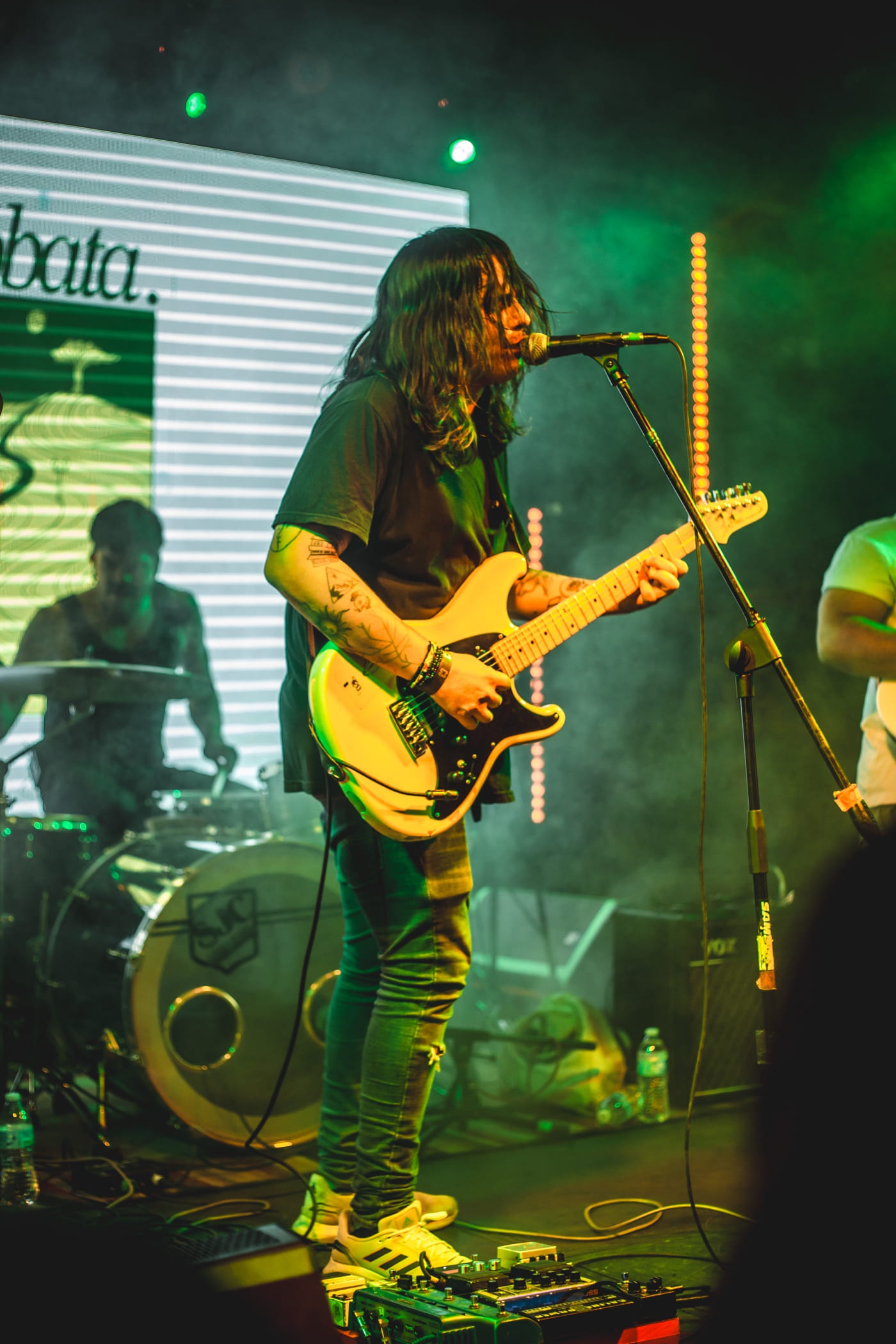
Pre-post from the south of north america. Zach, the band’s guitarist, calls it a position rather than a genre label. For acróbata., the two halves actually mean something quite specific.
The “pre-post” part comes from acróbata’s pull towards post-hardcore without wanting to stay inside its heavier end. The vocals can get urgent, songs can move quickly, then something like “talismán” or “muros ciegos” slows everything down and gives the guitars more room. Zach sees some of that as reaching towards music that came before the heavier style they eventually inherited.
“The ‘pre-post’: we know we lean a lot on the post-hardcore side of our music, in the vocals and the rapid passages through some of the tracks, but we also enjoy the very sweet and slow parts of what we play in songs like ‘talismán’ or ‘muros ciegos’,” he says. “So we feel like we’re picking up some of the precursors of this heavier style of music.”
Then there is the second half.
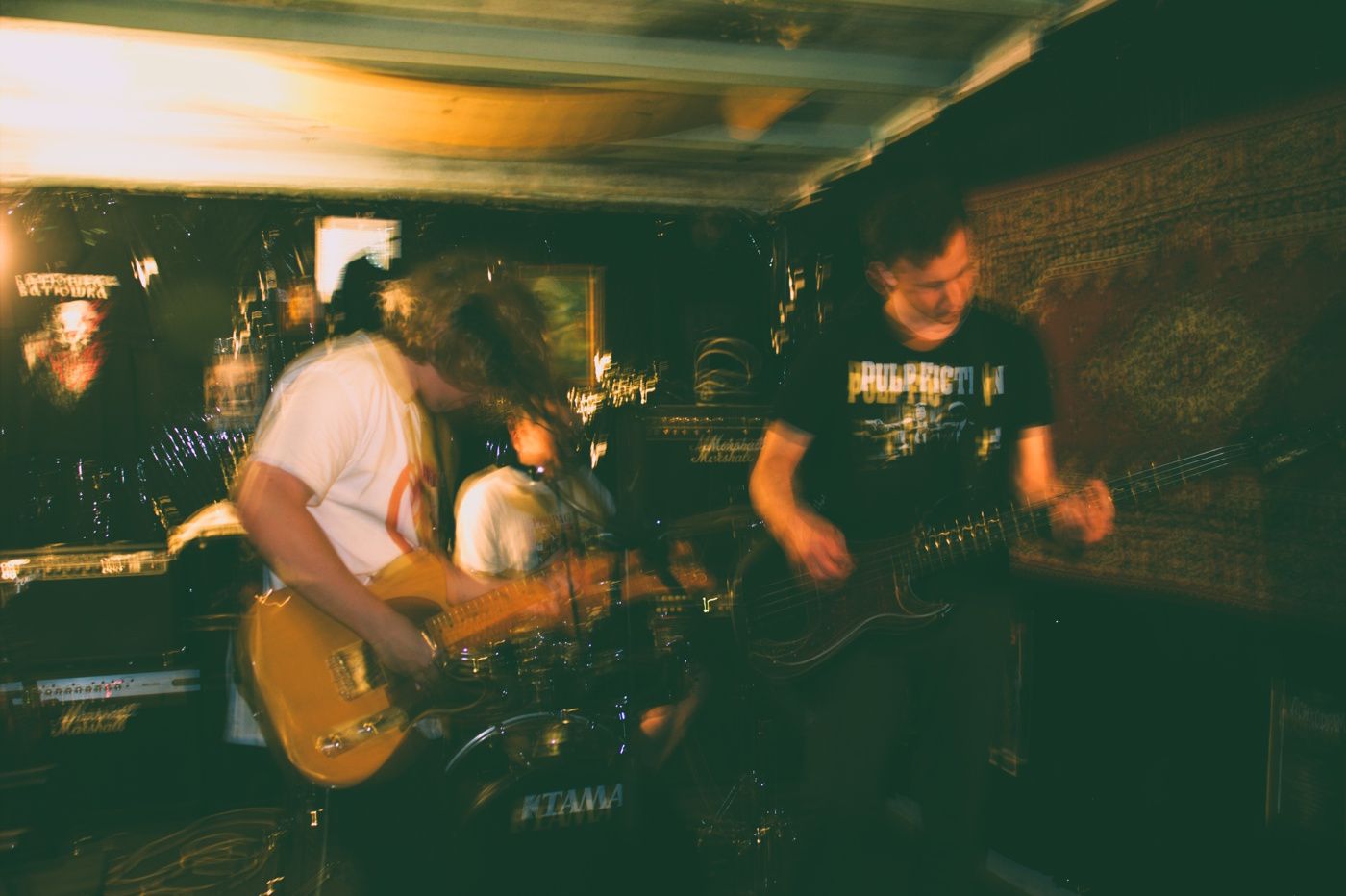
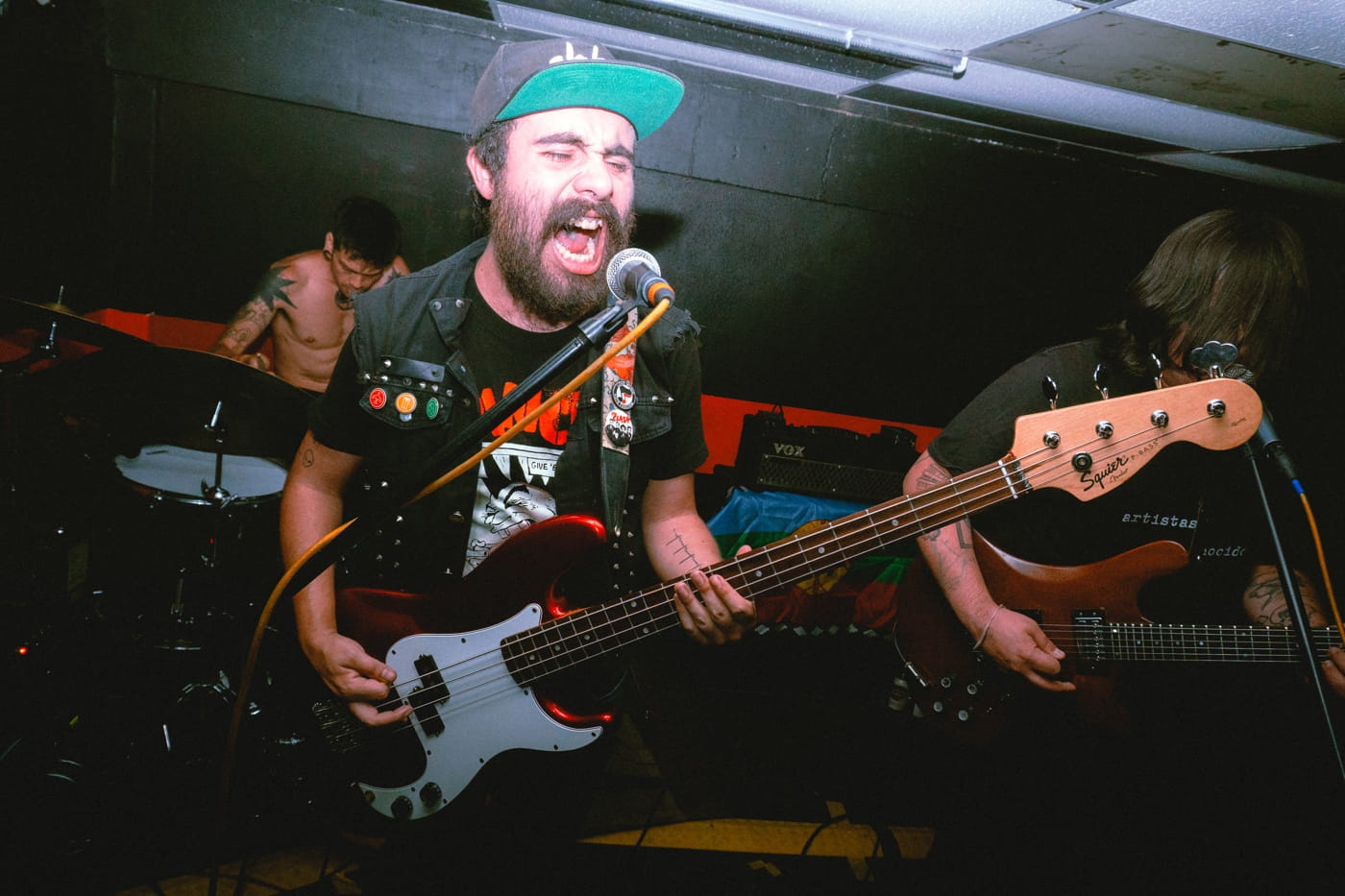
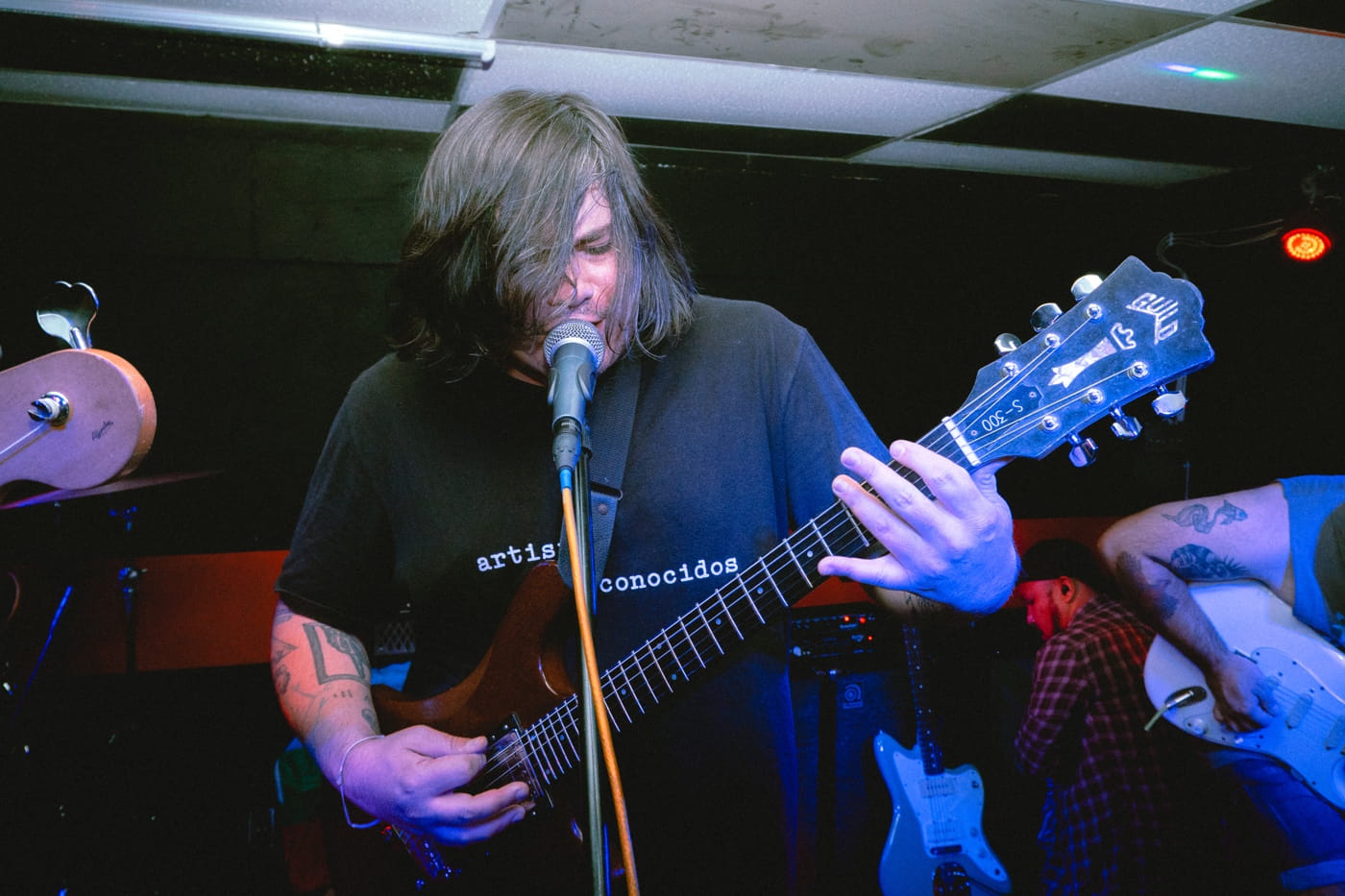
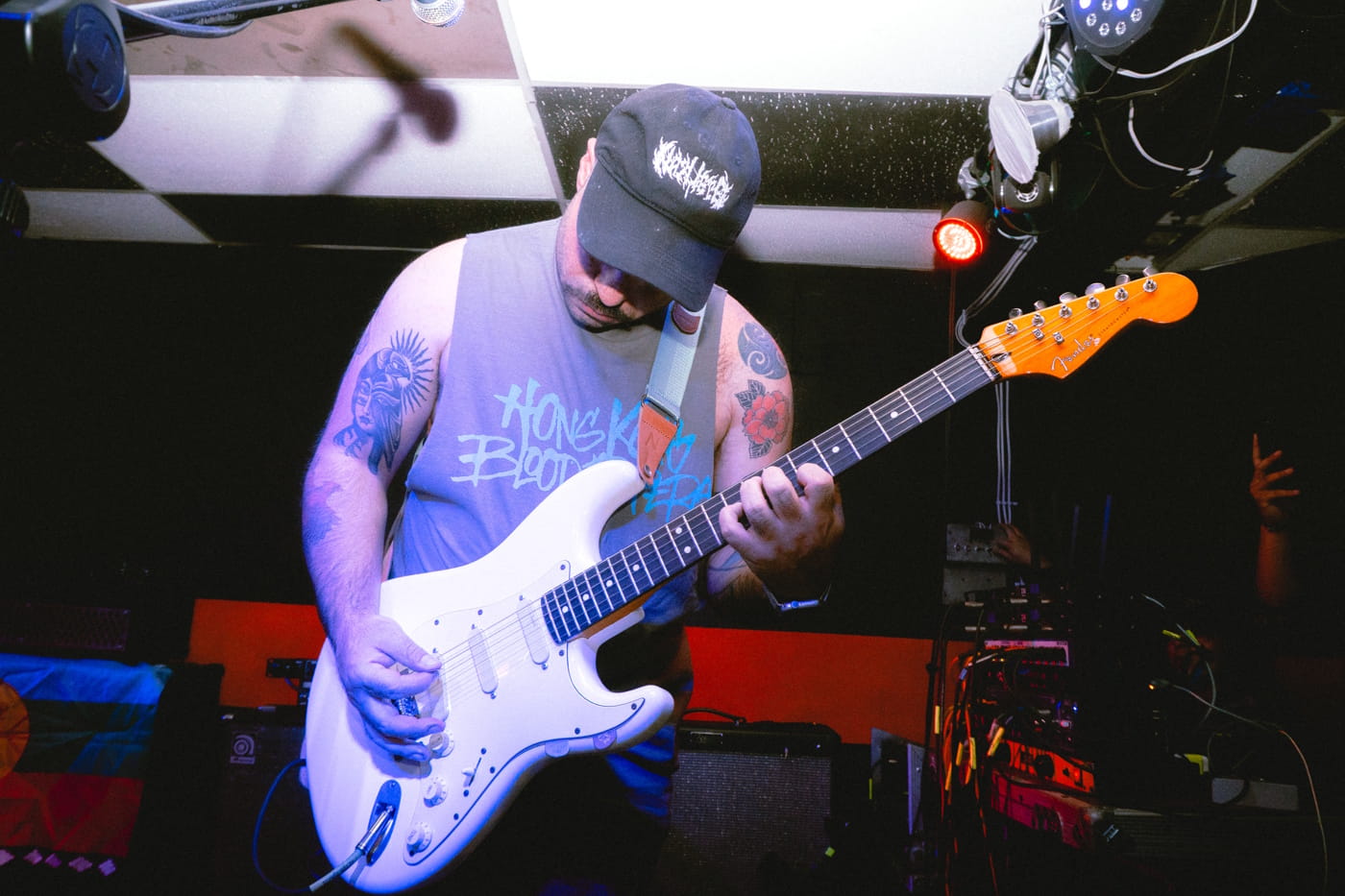
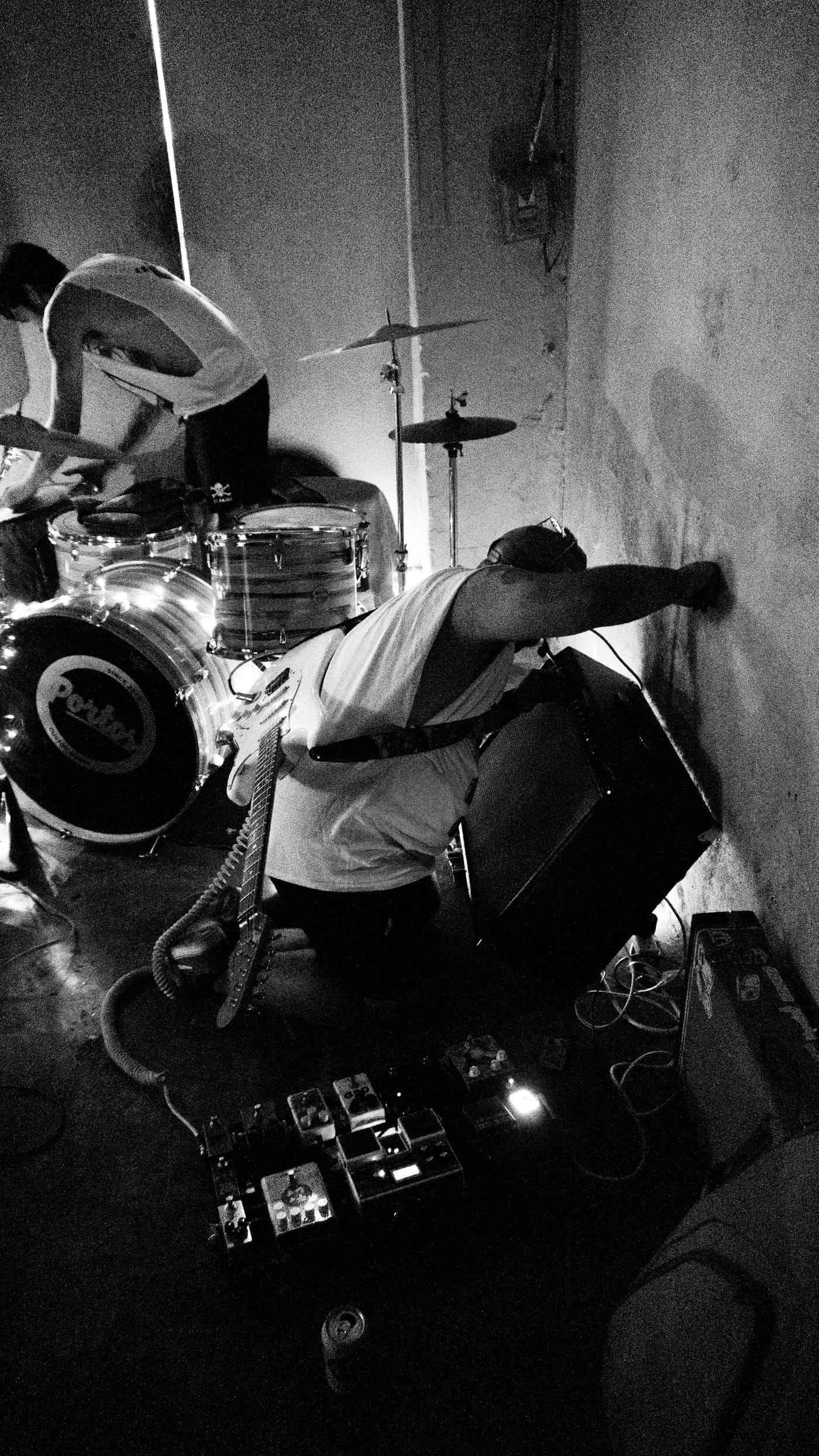
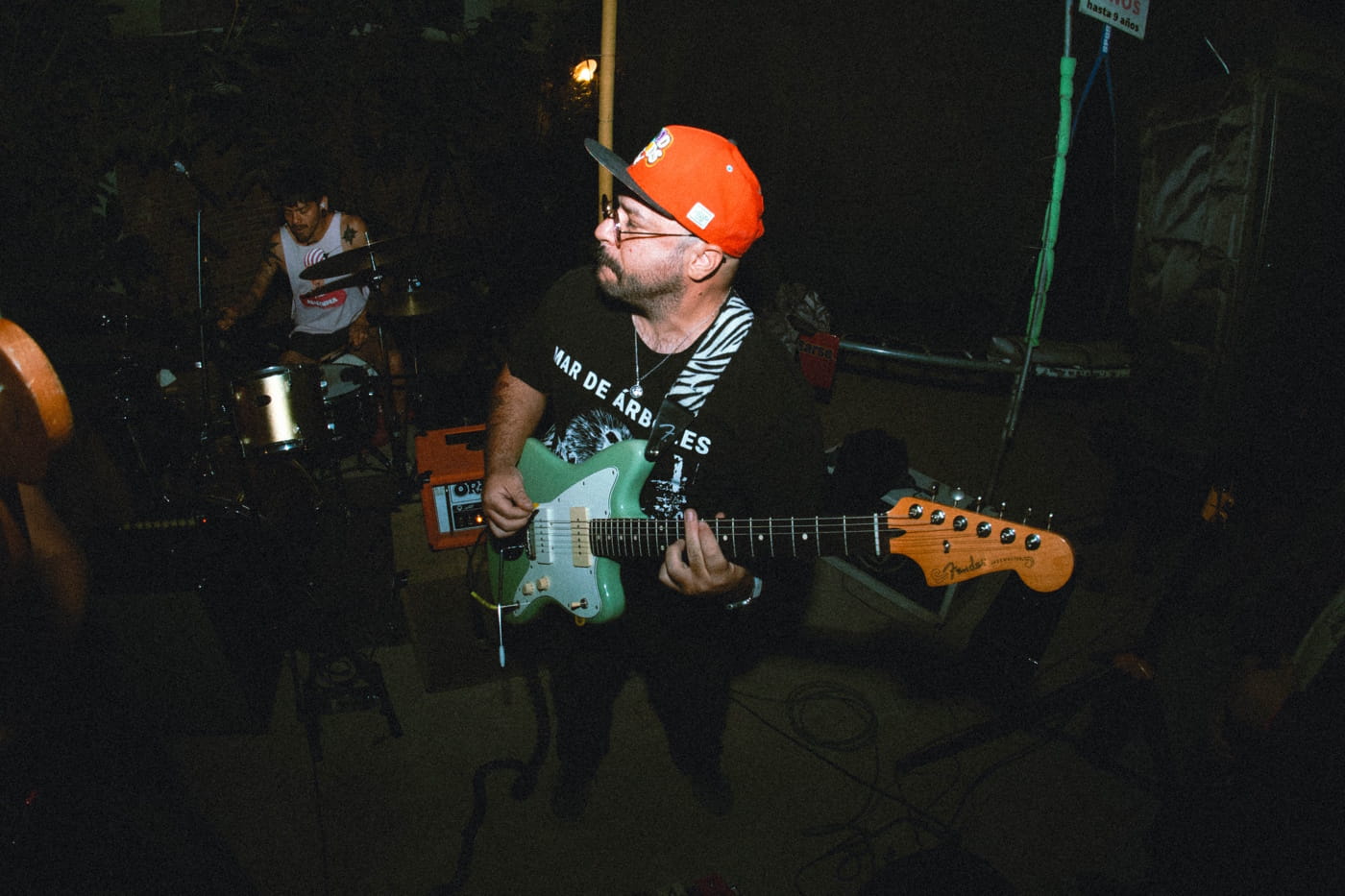
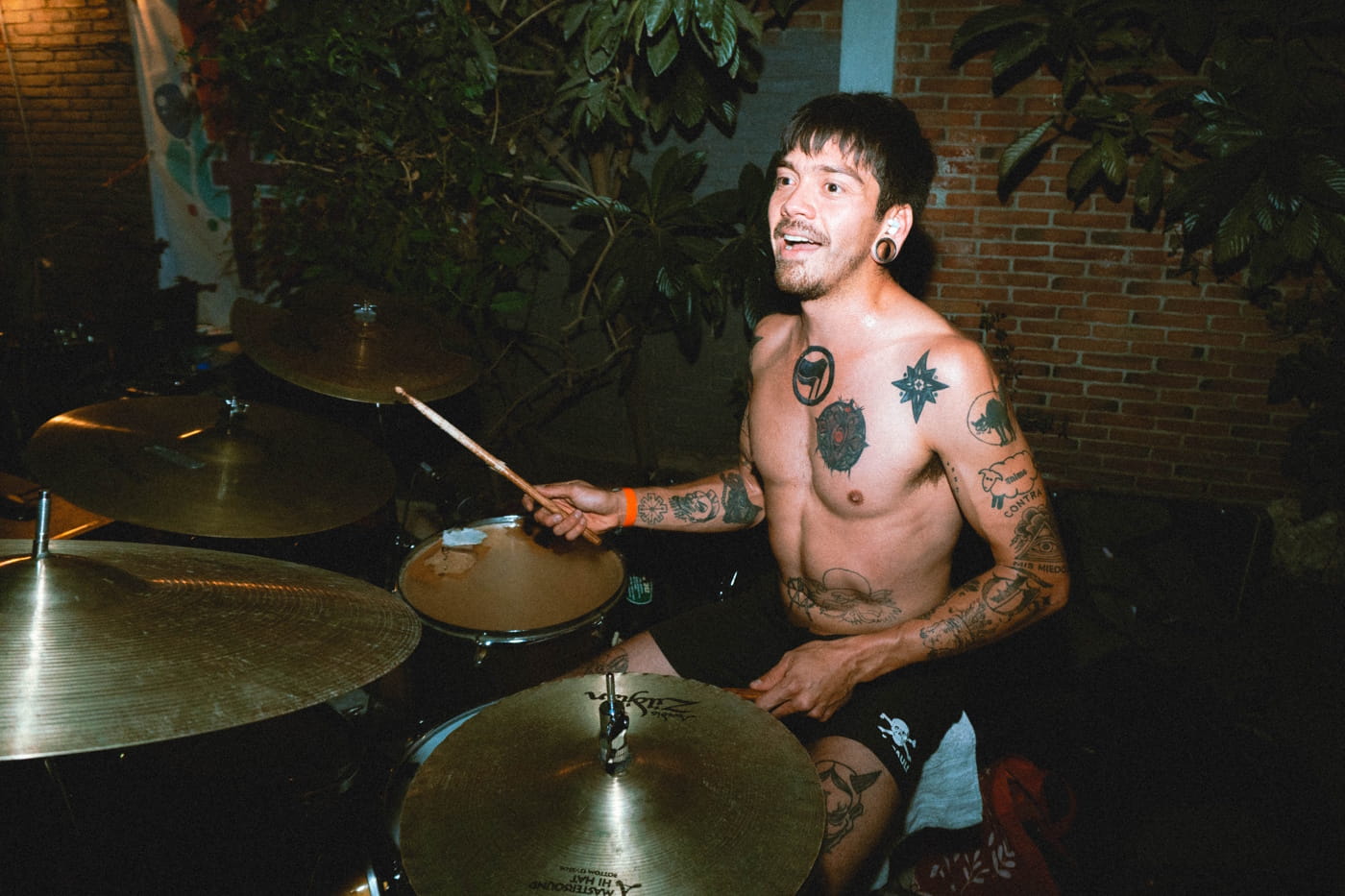
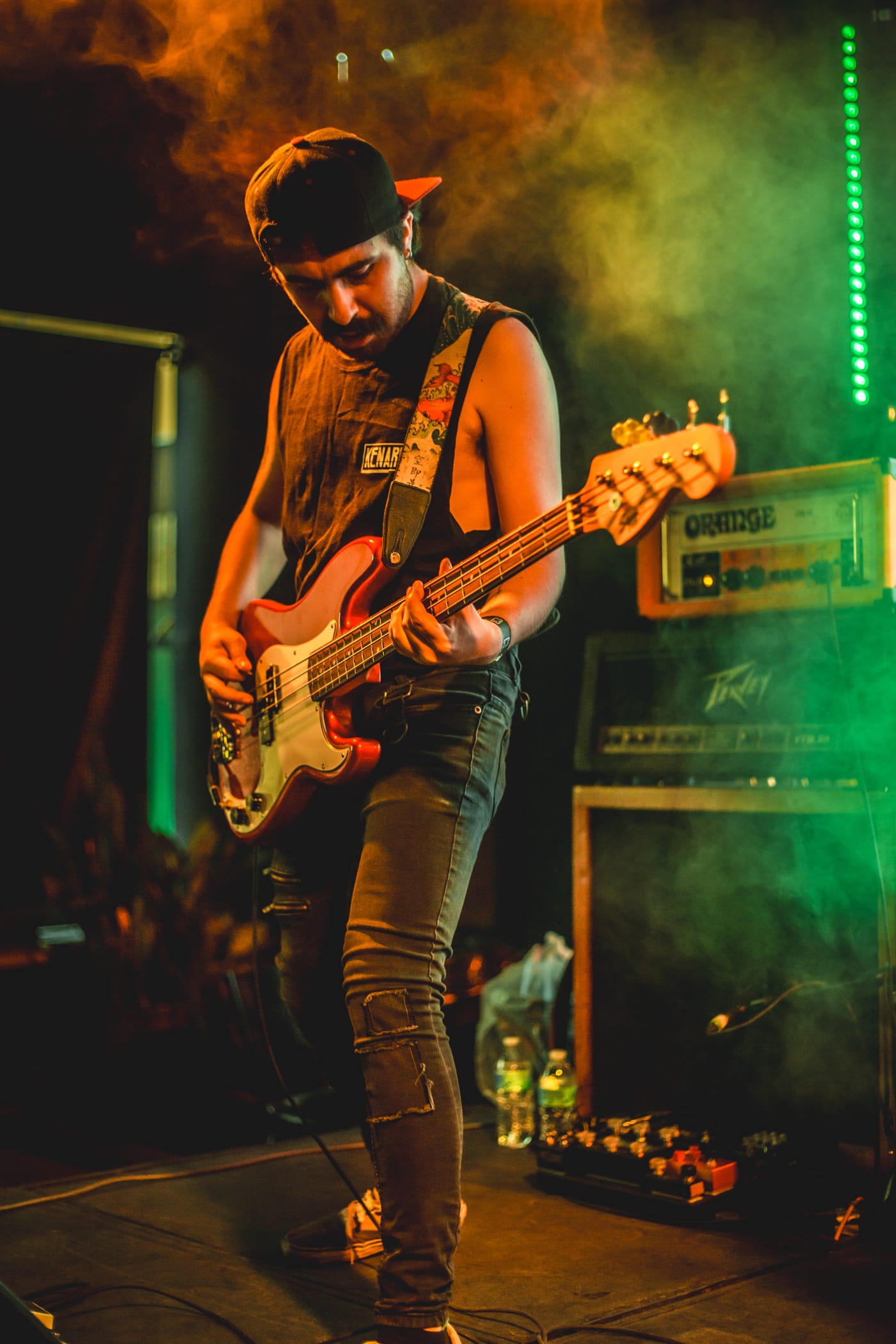
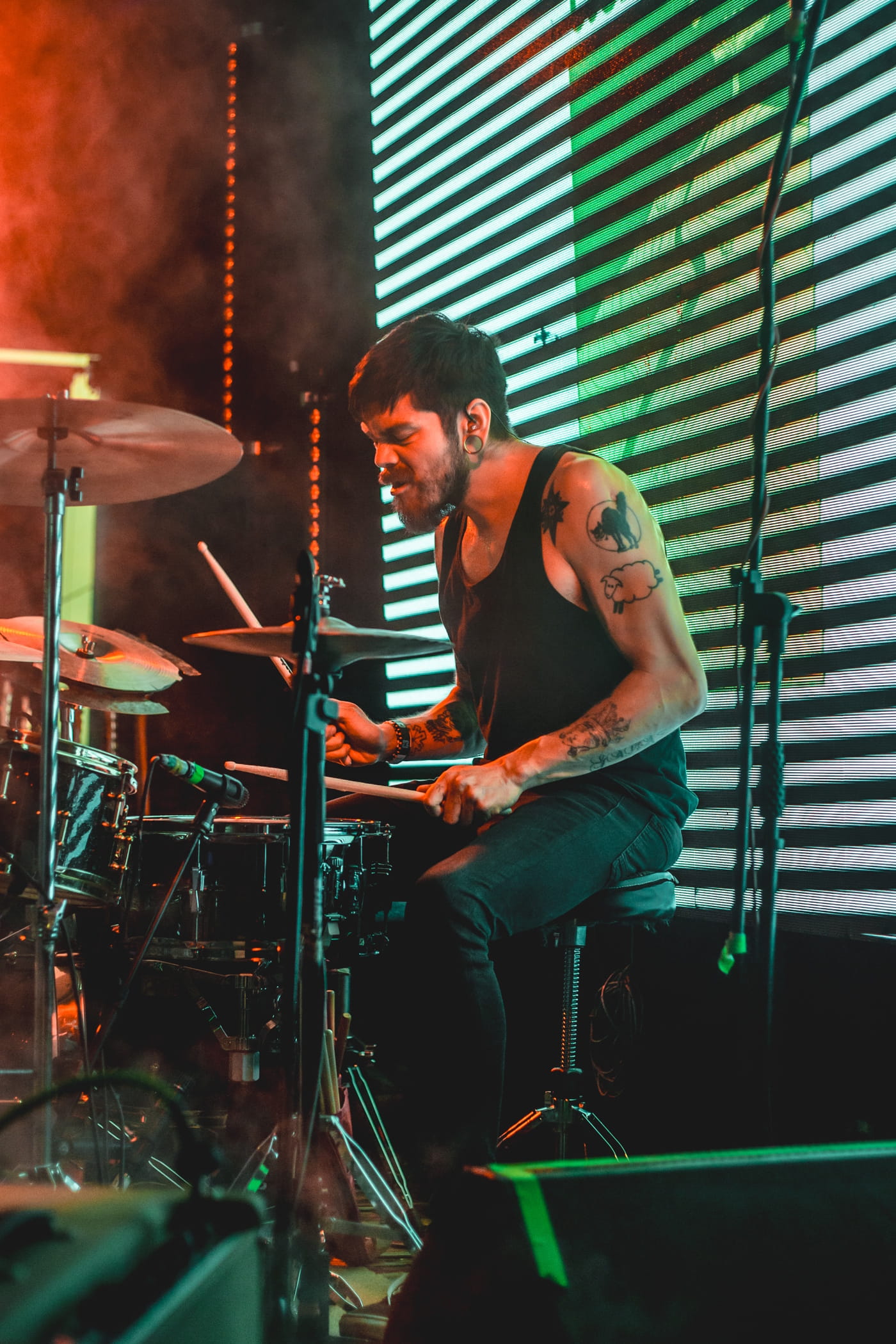
acróbata. live in Puebla. Drummer Rodrigo Palma is originally from Chile, and some members have spent time in South America, but Zach does not use that as a reason to claim a South American identity for the band. Much of what they listen to comes from the United States and Canada.
“We consume a lot of USA and Canadian music, if that makes any sense,” he says. “Our music takes a lot of western influences and that’s why we enlisted foreign bands as our main influences, but the list goes on and on.”
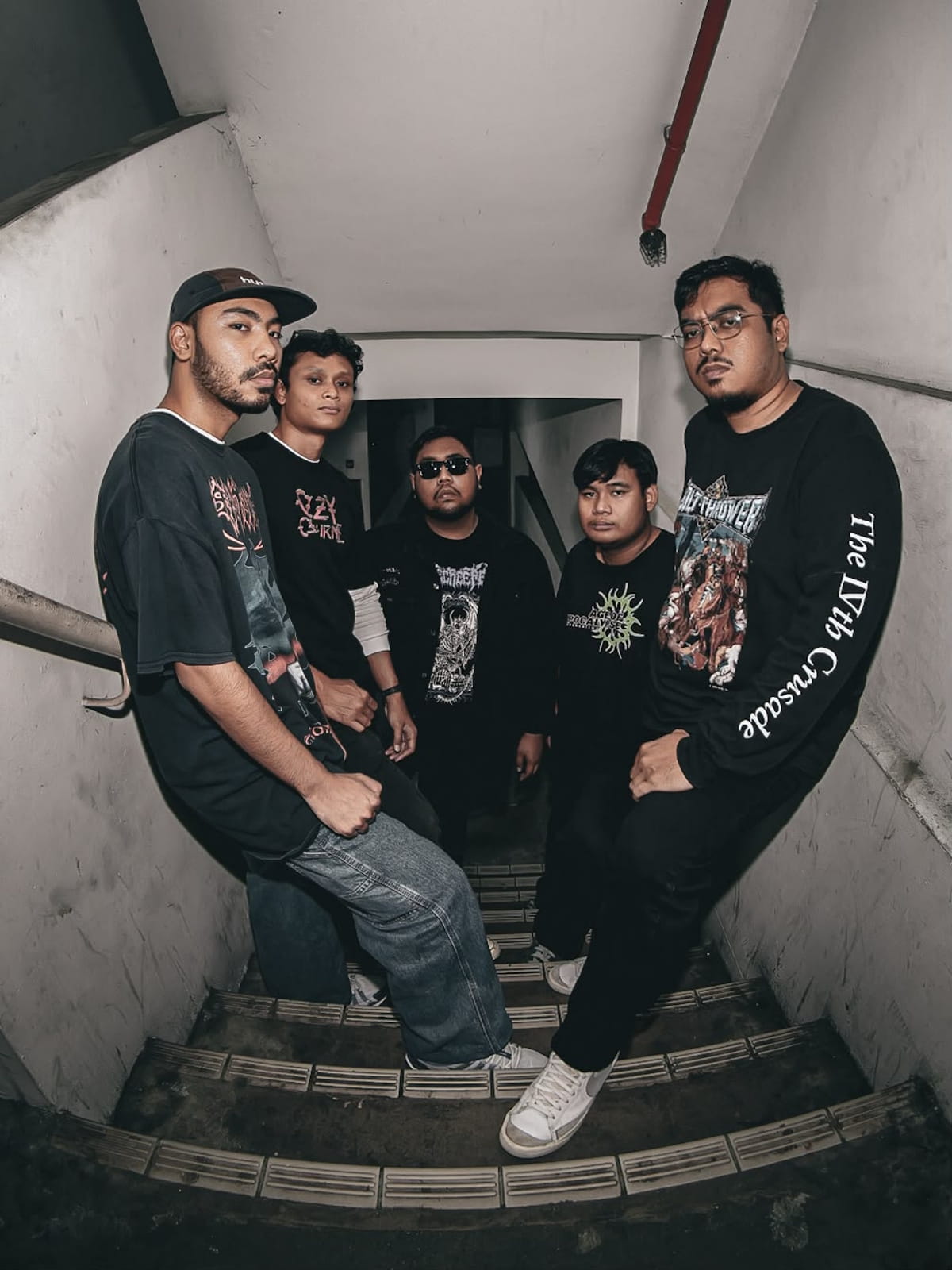
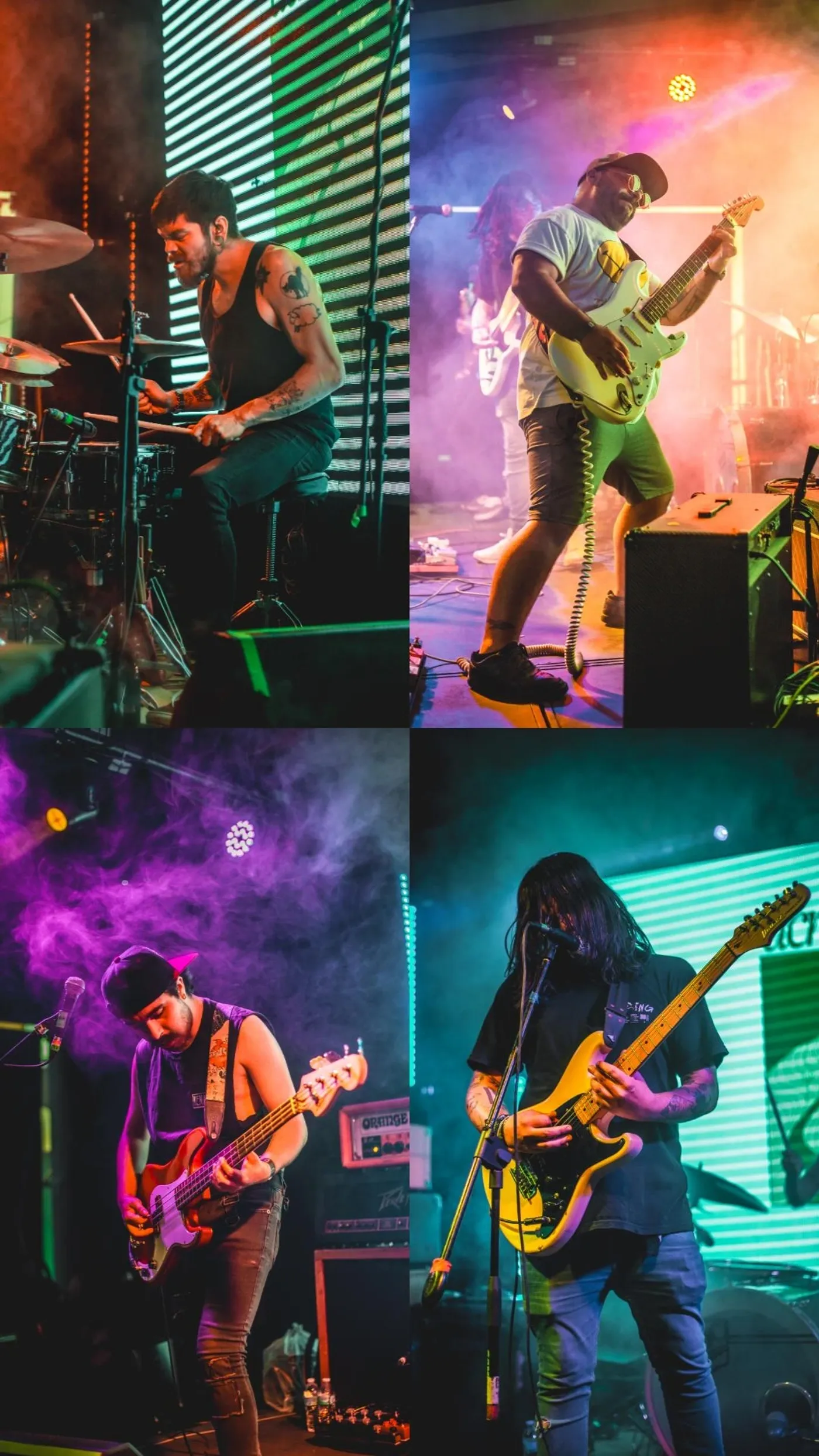
The lineup is Zach, whose full name is Esteban Cárdenas, on guitar; Fernando Obregón on guitar and vocals; Poncho, or Alfonso Corte, on bass; and Rodrigo on drums. Zach prefers Zach, so Zach it is.
Their first full-length, “tèlesma“, contains twelve songs and was composed in Puebla, a point the band are proud of precisely because the city rarely turns up in conversations about Mexican post-hardcore.
“It’s not very well known in Mexico as a place where a lot is really happening in terms of an underground scene,” Zach says. “But we’d argue there’s tons of music happening here and we feel proud that the album was composed in this city.”
Then there is the boring part of having a band: finding a room, paying for it and hoping enough people show up to cover the cost.
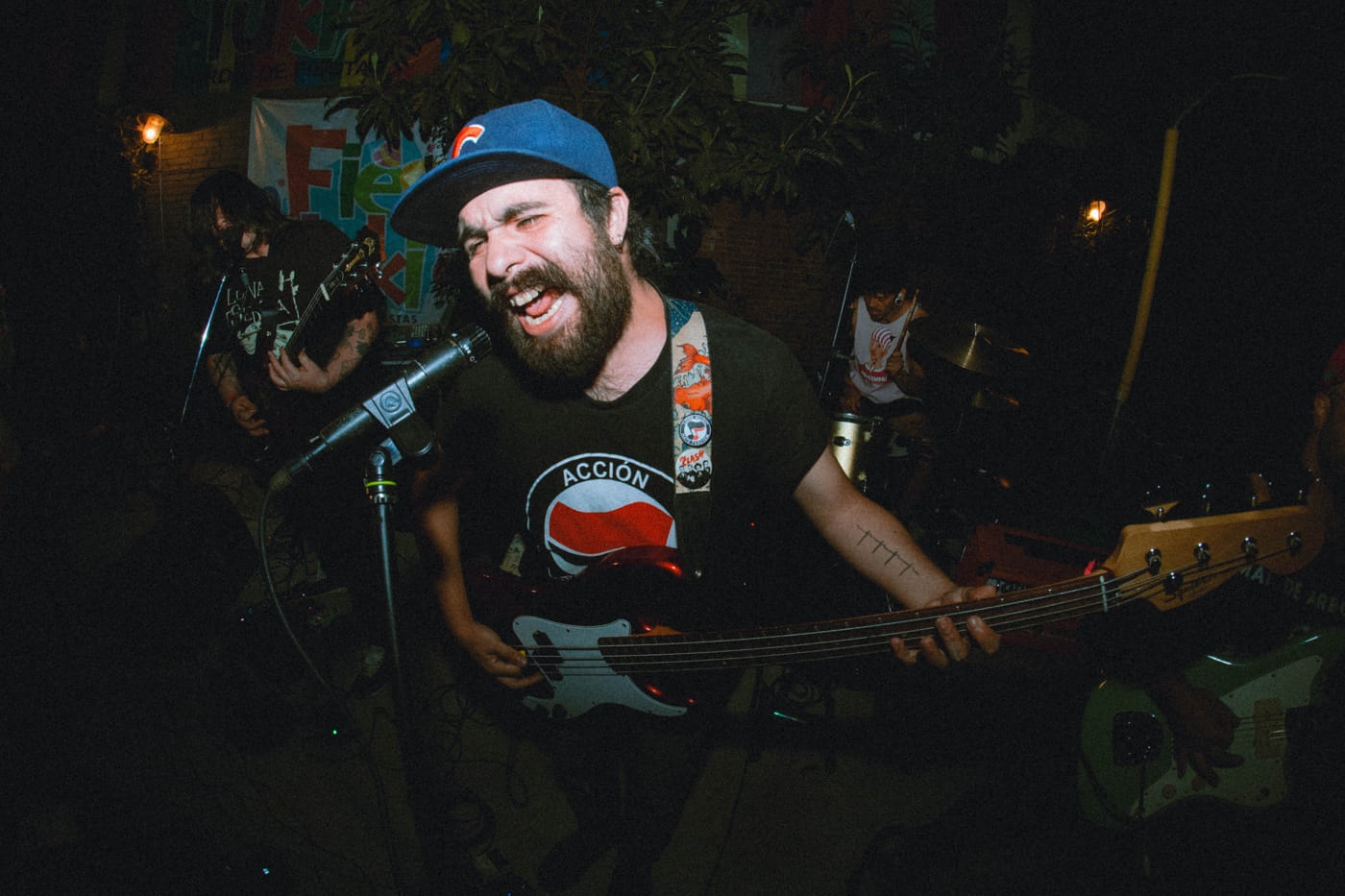
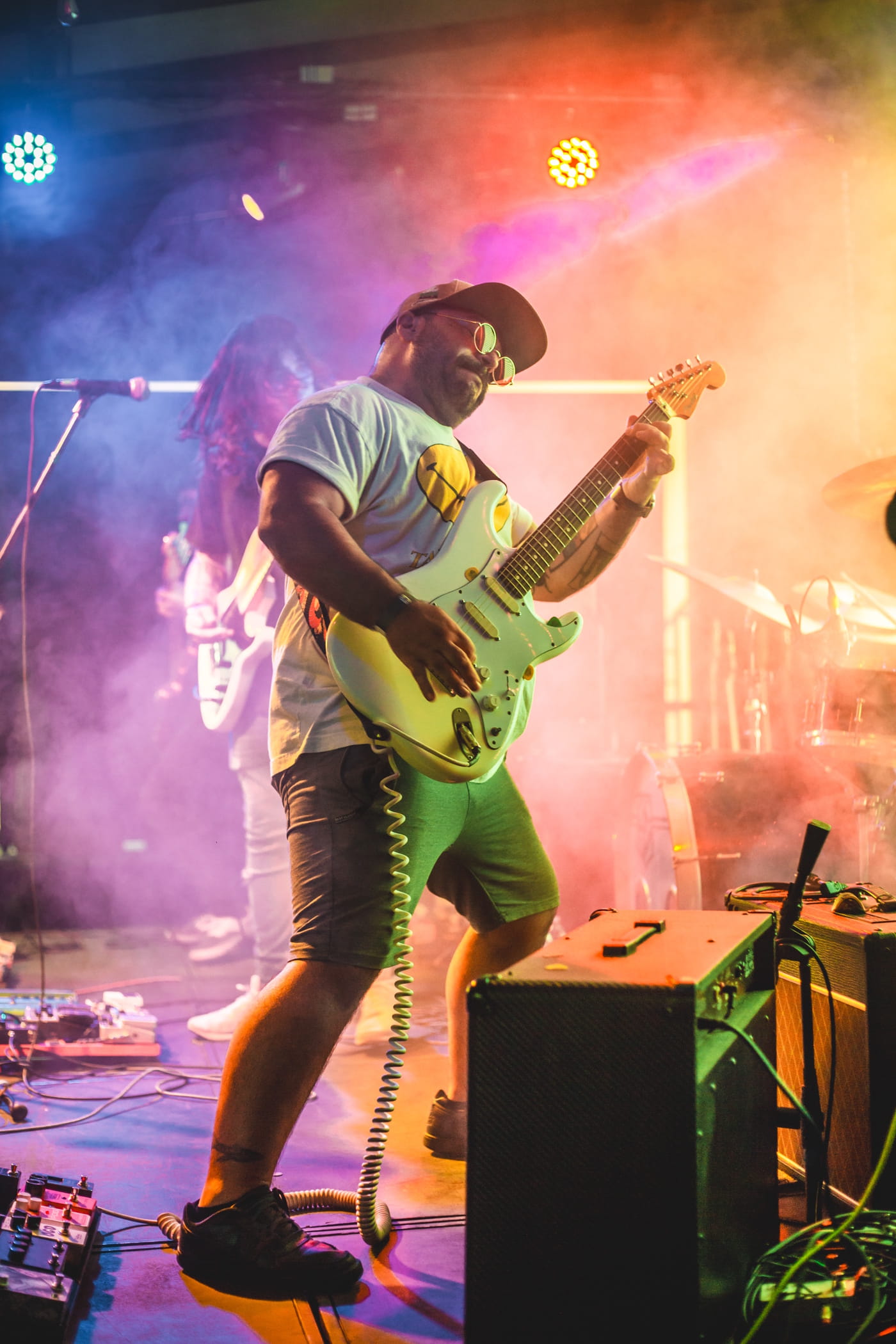
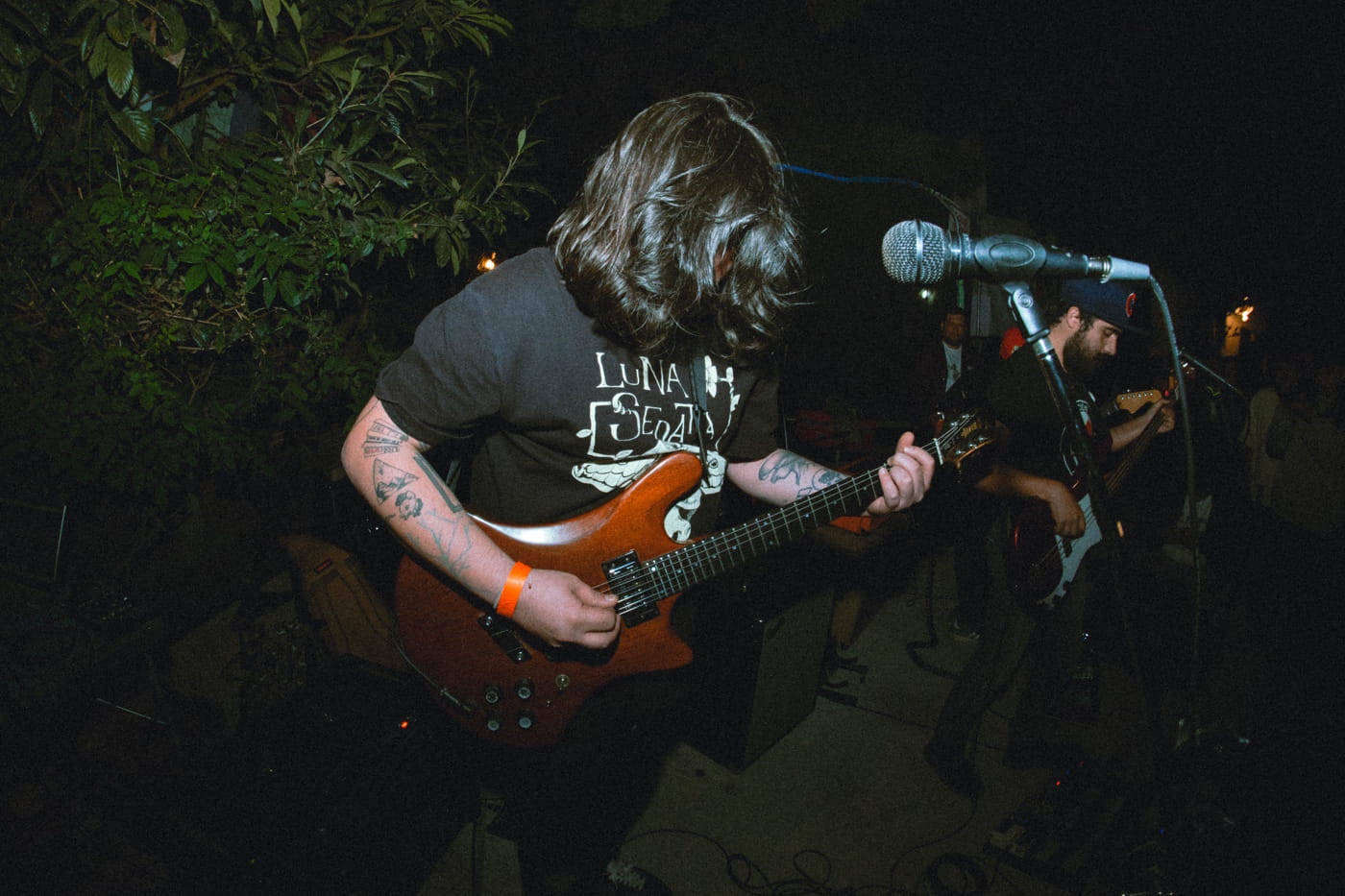
Antiforo and Beat803 are two Puebla venues Zach points to. Promoters handle plenty of bookings, while bands also put shows together themselves and invite other groups in. Mexico City inevitably enters the equation because of its sheer size, so acróbata. move between the two and intend to keep travelling around Mexico through this year and next.
“We try to play as much as we can, and not only in Puebla but in other places in Mexico too,” Zach says. “We are planning to play around Mexico this year and next year to tour the album now that it’s out and to get to as many places as we can because we love playing; thriving through playing is the way.”
He has a useful example of what that looks like in actual numbers.
Last December, Zach organised a show for his birthday. His other post-hardcore band, eles, were playing, and acróbata. were supposed to be on the bill too, but Fernando was still recovering from surgery and could not play.
The show cost around 6000 pesos to organise, roughly 350 US dollars or 300 euros. Admission was 50 pesos, around 2.5 euros. Three Puebla bands played, eles, leñadores and no lo vi venir, with Uklao and minimono coming from Mexico City.
They broke even.
Zach says more expensive venues exist, but the places he knows tend to operate around those costs. A bigger show might charge around 200 pesos, or 10 euros, at the door. For bands, merch is usually what gives them a chance to come away with anything.
“We all try to support each other,” he says. “I try to always buy merch from other bands just trying to support the local scene, it is the way.”
“En algún lugar del sendero“, the longest song on the record, includes an excerpt from an interview with Chilean artist Violeta Parra. She is asked which form of artistic expression she would choose if she could keep only one. Her answer is the people.
Parra is there because she matters to the band.
“We admire Violeta Parra as an artist because of what she represents for Latin American artists, and how, through necessity, art can be such a powerful tool,” Zach says. “She was an amazing artist who connected with the people and we just felt it was important to put something from someone we admire that much into our album.”
Then comes the line that gets closest to why that particular excerpt stayed.
“We must choose people.”
“En algún lugar del sendero” also sits close to the most personal writing on “tèlesma“. Zach wrote it and “magnolia dealbata” around losing his father to cancer.
“I was just coping with life happening and I wrote it like talking to myself and to that person.”
Most of the rest is personal too. Zach talks about grief, turning the page and reinventing yourself, but also says those experiences do not have to define you. Writing all of it in Spanish was a conscious choice.
“It was a decision,” Zach says. “We want to speak in the language we understand best and we want to communicate our Latin American roots as well. I personally find Spanish such a beautiful language.”
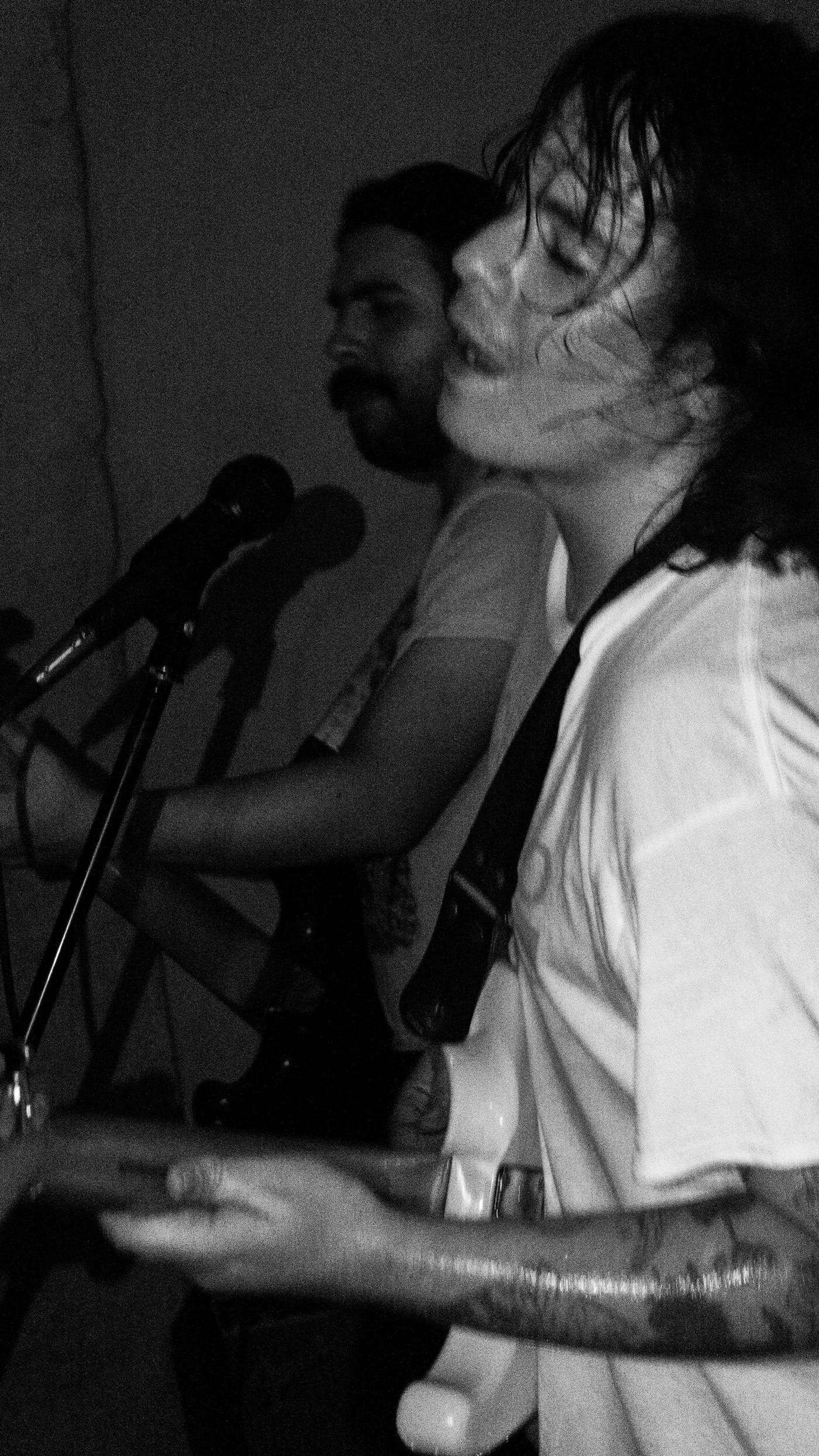
The writing is divided fairly evenly between Zach, Fernando and Rodrigo. Zach and Rodrigo tend to start closer to poetry, while Fernando puts those words into the songs. Their lyrical reference points also stretch well outside anything that would normally be filed beside post-hardcore.
Gustavo Cerati, Charly García and Luis Alberto Spinetta are part of that. So are Rita Guerrero, Adriana Enciso, Silvio Rodríguez and Paulina Cortés.
“None of them have anything to do with post hardcore whatsoever but we are songwriters and poets we greatly look up to.”
Before “tèlesma”, there was “Demo MMXXV” in April 2025. Two songs from it made the album: “carnaval de la luna” and “abu dhabi jet set”. They were also the first two songs acróbata. wrote.
The first proper batch eventually grew to five: “abu dhabi jet set”, “carnaval de la luna”, “murciélagos griegos”, “en algún lugar del sendero” and “talismán”. For a while, the band simply kept playing those songs live while the full album took shape.
Then studio time with Herman Araujo was booked.
“We hit turbo mode.”
The remaining songs were written in roughly two or three months.
“Talismán” had already been through a much longer process. Zach wrote its main guitar line with a slow closing track in mind. The first version ran for around ten minutes.
When they played it together, it seemed off. They put it away.
Fernando later suggested returning to exactly the same song at a quicker pace. No sections changed. They simply pushed the tempo up by roughly 30 bpm.
“Suddenly felt like a different song, vibe was better and kinda felt like it belonged in the record rather than just a jam.”
A demo of that slower version still exists. The band have been preparing it for a bundle alongside photos, other demos and outtakes recorded while getting ready for the final album sessions. There was no fixed online release date when we spoke. Zach expected physical prints to be ready around the band’s León and Guadalajara dates.
Recording “tèlesma” itself also took considerably longer than first planned.
Acróbata. initially set aside one week with Herman to finish the record. During the final week of September and first week of October 2025 they tracked drums, guitars and bass between Submarino Del Aire and Multiverso Rec.
Then they stopped.
For roughly five months they kept the recorded tracks and finished lyrics and vocal parts around them before returning to Herman in March 2026 for vocals and synths.
“We felt it was important to get it right without the pressure of doing things just for the sake of it,” Zach says.
Part of the extended schedule was unavoidable. Fernando developed severe pneumonia, complications followed, and he needed major lung surgery. He has since fully recovered.
“That kinda slowed the pace for us to finish the record but health is paramount, so we’re glad he’s ok and fully recovered now.”
Herman produced the album with the band, recorded with them at Submarino Del Aire and Multiverso Rec, played keys and mixed the record at Alto Astral. Erick Urbina mastered it at Reso Mastering.
The album’s titles follow no single rule either.
“Abu dhabi jet set” does not point towards some hidden story. Zach says they were playing with words and liked how that combination sounded.
“Arquitecto emplumado” and “magnolia dealbata” were different. The ideas behind them were already connected closely enough to the songs that the titles arrived almost as soon as the music and lyrics started meeting. Other unfinished songs often survive under inside-joke names until the band find something permanent.
And if “pre-post from the south of north america” sends somebody looking beyond acróbata., Zach has already supplied enough names to keep them busy for a while.
Around Puebla, start with Leñadores, Who’s the man in the eye, Mar de árboles, No lo vi venir and Días de nada.
Elsewhere in Mexico, acróbata. point towards Luna sedata, Joliette, Lyvonia, Malcría, Xenofobia, Ruido subterráneo, Daelenda, Habak, Satón and Minimono.
From Colombia: Últimos tiempos, Vientre and Desnudos en coma.
From Chile: Contra todos mis miedos, Tenemos explosivos, Marcel duchamp, Jon lutheria, Malplena, Jurel tipo salmón and Cienfuegos.
From Argentina: Wrrn, Archipiélagos, Cursi no muere, Puerto austral, Árboles en llamas, Fun people, Eterna inocencia, Boom boom kid and Minoría activa.
And from Europe, Zach names Stormo, Daïtro, Sed non satiata, Suis la lune and Republic of dreams as bands that mean a lot to them.
“The list could go on and on.”
Catch acróbata. live at the following dates:
August 21: La Casa del Musico, León, Guanajuato
August 22: Hake al Rey, Guadalajara, Jalisco
August 29: The House Pop Lab, CDMX
September 3: Beat803, Puebla, Puebla
September 5: Bug Gigs, CDMX
September 26: The Gangster Dinner, CDMX
October 3: Antiforo, Puebla, Puebla
October 31: Foro Ying, CDMX