

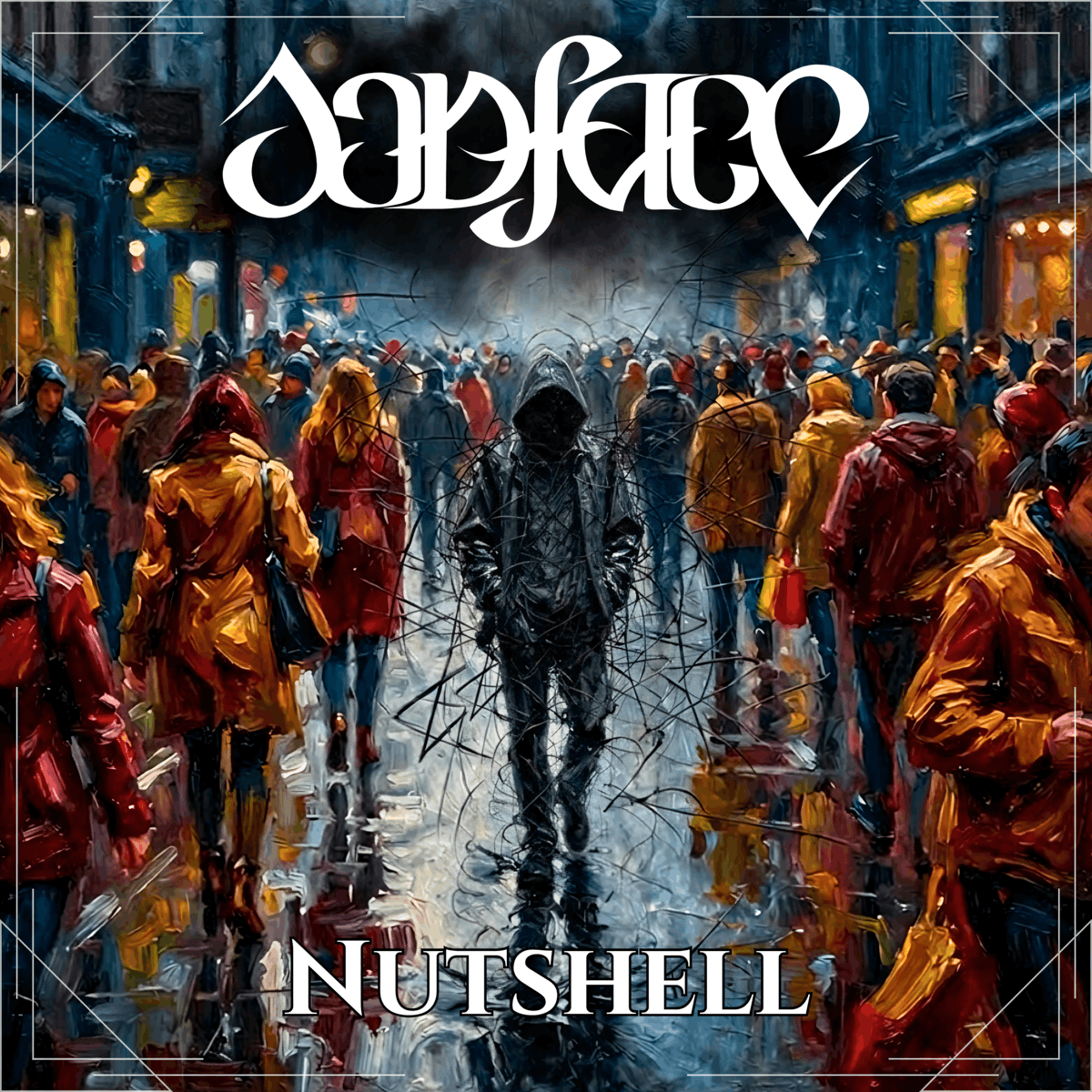
Paweł Gregorczyk has been building his Warsaw based project SADFACE around sadness for a while now. When we first spoke at length about the project last year, he talked about music as a kind of soundtrack to films that do not exist, with metal, rock, electronic sounds and the visual side all feeding the same idea. Even the early SADFACE releases kept returning to darkness, from “The Last Radiance” and “Do Not Play With the Dark” to the planned “Tenebra Omnia Regit”.
On August 22, Paweł took that fixation back to one of the songs he considers a reference point for his own work. SADFACE released an instrumental reinterpretation of Alice In Chains’ “Nutshell” on the day Layne Staley would have turned 59.
The original appeared on the legendary “Jar of Flies” in 1994 and later became one of the defining moments of Alice In Chains’ 1996 “MTV Unplugged” performance.
The SADFACE version leaves the vocal out completely.
Guitar takes over the vocal melodies, piano comes in around the emotional peaks, and the arrangement stays sparse, with ambient guitar and textures filling the space around the main line.
Paweł knew from the start that Staley’s performance was the part he could never reproduce. His solution was to assume that anybody who knows “Nutshell” will hear that voice anyway.
The accompanying video carries the same sadness into a symbolic story that has already produced several readings among viewers: depression, ageing, lost love and the passage of time. “In memory of Layne Staley”.
Wyświetl ten post na Instagramie
This also gave us a good reason to go wider than the single. We asked Paweł about covers that genuinely changed the songs they borrowed, what happens to “Nutshell” when its most recognisable voice disappears, and the late artists whose records still stay close to him.
Wyświetl ten post na Instagramie
Five covers that genuinely changed the original
Cover picks and an interview with SADFACE.
To me, the most valuable covers have always been the ones that don’t merely recreate the original, but transform it through their own emotions and sensibility. There’s no art in becoming a tribute band; the real art lies in translating sounds into your own musical language. That is what I’ve always looked for in covers, and what I will continue to seek.
Johnny Cash – Hurt (Nine Inch Nails cover):
This cover is devastating on so many levels. The musical arrangement strikes hard, giving it a completely different emotional weight than the original. On top of that, coming from an aging, ailing artist fully aware that his life was nearing its end, the lyrics take on a whole new meaning. It’s all tied together by a stunning music video that amplifies the theme of inevitable impermanence.
Anathema – Better Off Dead (Bad Religion cover):
The Brits had to dig deep to unearth such rich seams of sorrow from a punk banger—and they pulled off the impossible. Ever since I first heard their version, I can’t listen to the original without feeling like someone is trying to force happiness onto those chords.
Hey feat. Agnieszka Chylińska – Angelene (PJ Harvey cover):
While the instrumentation stays fairly close to the original, the vocal performance opens up completely new, cosmic dimensions. Chylińska didn’t just sing the song— she became the song, so completely did she immerse herself in it and in its emotions.
Ulver – Solitude (Black Sabbath cover):
Though seemingly close to the original on the surface, the Norwegians pulled it from its rock roots and submerged it in an ambient, neoclassical realm. This musical alchemy makes “Solitude” sound as if it were written specifically for Shadows of the Sun. It’s a prime example of “less is more,” stripping away everything except the elements that deepen the sense of emptiness and isolation.
Marduk – Oil on Panel (Wovenhand cover):
A collision of such contrasting musical worlds could easily have left behind nothing but ruins, yet it gave birth to something beautiful and musically uncompromising. The black metal atmosphere completely transforms the deeply religious undertones of this dark neofolk track. Mortuus delivers a staggering amount of emotion here—he doesn’t just scream the words; he tears them straight from his black soul.
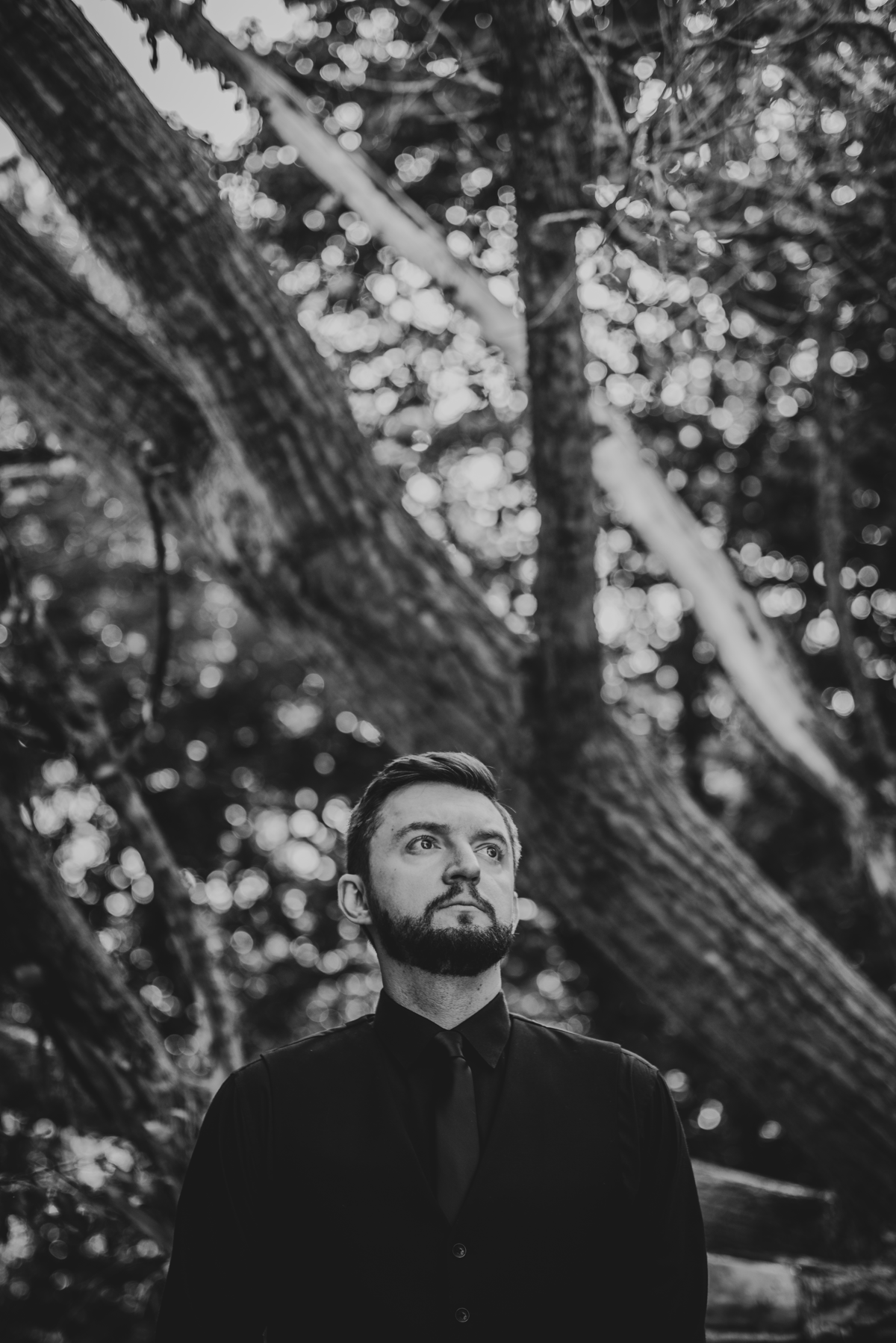
What remains of “Nutshell” when Layne Staley’s voice disappears?
How did you approach a song tied so closely to one particular vocalist, and where did you try to move the weight of the lyrics, loneliness and tension in an instrumental version?
From the very beginning, I knew that any attempt to measure up to a vocalist as extraordinary as Layne Staley would end in failure. It wasn’t just about the voice itself, but above all, the emotional delivery of his vocal lines. Layne is battling his demons here, exposing his frightened soul, laying bare all his pain and fear for everyone to see. You simply cannot recreate that.
The SADFACE reinterpretation of “Nutshell” is, first and foremost, a tribute to a great artist, a legendary band, and a monumental song that I consider one of the most beautiful and heartbreaking in rock history. I assumed that fans of Alice In Chains would hear Layne’s voice in their heads anyway while listening to my version, so in a sense, he remains the vocalist of this version.
I decided to focus on the song’s foundations to draw out its raw sadness and intimacy. The vocal lines became delicate melodies carried by ambient guitar. A subtle piano lifts the emotional climaxes, while ambient textures enhance the lingering feeling of isolation. It’s easy to overproduce a track—adding elements that enrich the sound but ultimately bury the emotion. “Nutshell” hits hard with pure grief at its core, so it needs no extra embellishments.
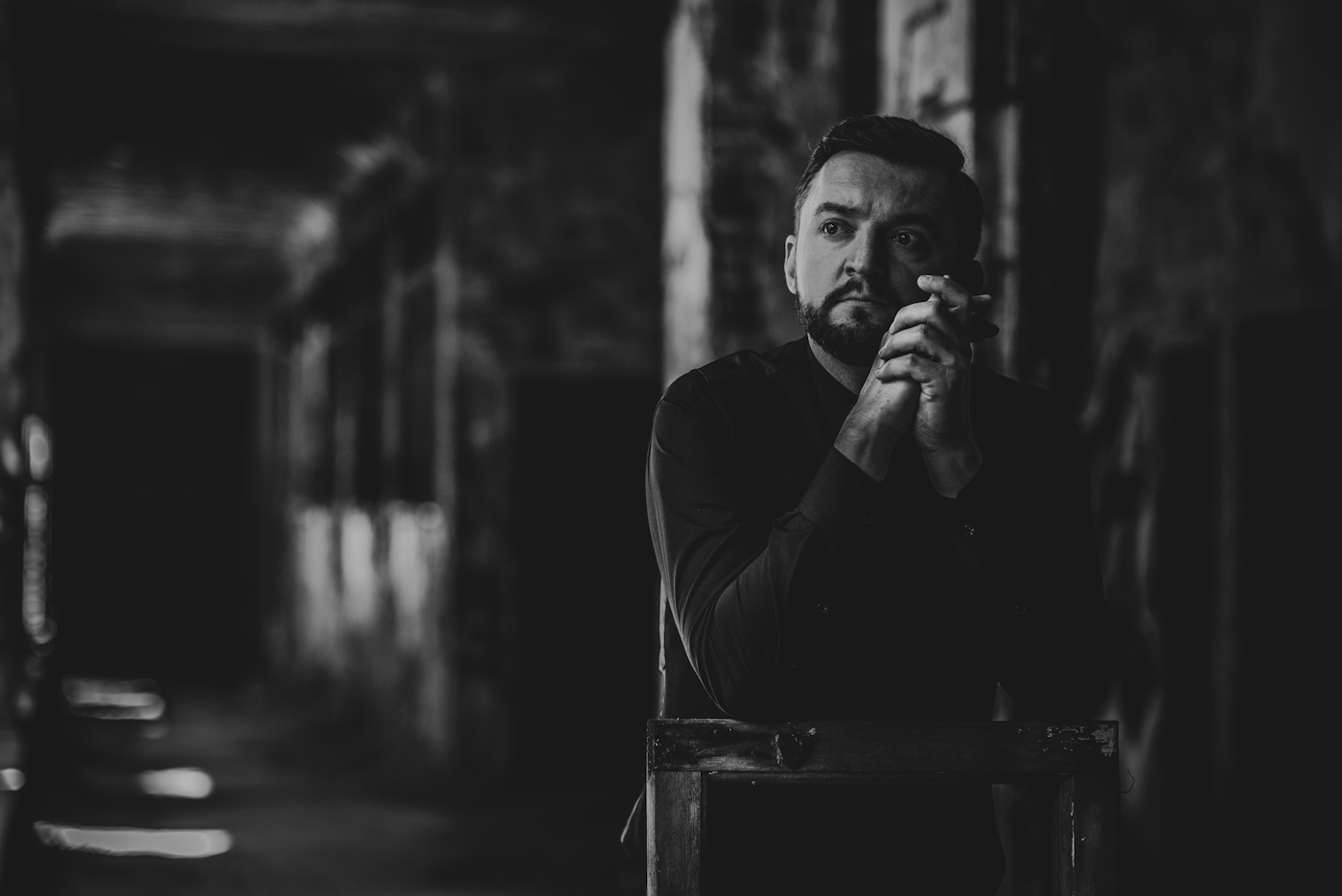
Taking the lyrics into the visual side, which emotions or images from the original “Nutshell” ended up finding their way into your music or the video?
I really wanted the music video to capture a spirit of sorrow and a certain quiet hopelessness, while still leaving plenty of room for interpretation. I think that worked, as several people see it as a symbolic depiction of depression, while others see old age, the passage of time, or even lost love. Every single one of them is right—each of those stories carries the same darkness and helplessness that I feel in the Alice In Chains original.
The original is steeped in pain and fear, and Layne’s story gives his words an even more piercing resonance in hindsight. It’s one of those songs you can no longer listen to purely as music—the artist’s life makes every lyric hit differently. Perhaps that’s why “Nutshell” still cuts so deep today. It doesn’t offer easy answers; it forces you to sit with the emotions we usually try to drown out.
Five late artists whose music is still important to you.
Starting naturally with Layne, pick one song from each and tell us why you still return to it, or what that person taught you as a musician.
Layne Staley
A voice that drills straight into your mind and stays there forever. A phenomenal vocalist who had an unmatched ability to bring raw, dark emotions to the surface.
He showed me that music can be a powerful space for sharing what we carry inside, even when it’s painful or uncomfortable. Giving voice to those things through sound can be deeply cathartic for both creator and listener. His passing left a void in music that can never be filled.
I revisit “Nutshell” constantly—both the studio track and the MTV Unplugged performance.
It’s one of those rare songs where minimalism creates maximum emotional impact.
Chuck Schuldiner
I vividly remember buying live albums where part of the proceeds went to a medical fund supporting his battle with cancer. Shortly after, the news of his death broke. It hit me hard—he was my absolute musical idol. With every record, he pushed the boundaries of death metal. A true genius who refused to compromise artistically.
That uncompromising vision made him difficult to work with—as shown by the frequent lineup changes—but without it, he might never have elevated his art to such heights. He taught me that having your own authentic voice matters far more than trying to please anyone else, and “Crystal Mountain” will always be a reminder of that.
Roman Kostrzewski:
I am truly grateful that I had the chance to meet this legend of Polish metal in person. He belonged to a dying breed of artists who radiated an almost mystical aura both on and off stage.
He always seemed to have his head somewhere above the clouds, completely immune to external influences or suggestions regarding his art. At his best, his lyrics could reach genuinely high levels of poetry; it was through him that many metalheads in Poland discovered the Neo-Romantic and Symbolist works of Tadeusz Miciński and Stanisław Przybyszewski.
I often reflect that if Kat hadn’t been stuck behind the Iron Curtain, they would be recognized today as one of the greatest thrash metal bands in history. “Głos z ciemności” showcases their songwriting mastery and how seamlessly their music and lyrics built a mysterious, almost mystical atmosphere.
Martin Eric Ain
An artist for whom metal was merely a launching pad, never the end goal. With Celtic Frost, he shattered genre constraints by weaving in classical elements, electronica, industrial textures, visual art, and anything that could expand the band’s creative palette. People often underestimate just how deeply influential this band was to artists worldwide. Whenever I think of Martin, the video for “A Dying God Coming Into Human Flesh” from the brilliant Monotheist instantly comes to mind.
His vocal performance is one of the defining elements of the track—majestic, sinister, and monumental.
Warrel Dane:
His voice made the emotions in the music feel almost tangible.
He possessed a unique timbre that, paired with a theatrical flair, a sense of drama, and heavy melancholy, elevated the music to a higher emotional plane. Warrel is proof that an unconventional style that refused to fit any established mold can captivate listeners if driven by genuine vision and honesty.
“Believe In Nothing” captures the very essence of what he brought to Nevermore. I still wonder what kind of masterpiece he and Chuck Schuldiner might have created had they worked together in Control Denied as originally planned. Sadly, we’ll never know.
🔔 IDIOTEQ is ad-free, independent, and runs on one person’s time. If you want it to stay that way: DONATE via PayPal or SUPPORT via Patreon.
NEW: IDIOTEQ Explore 🗺️ Browse 15+ years of our archive by city, country, and style. Find artists on the world map or trace related sounds through the styles map.
Stay connected via Newsletter · Instagram · Facebook · X (Twitter) · Threads · Bluesky · Messenger · WhatsApp.