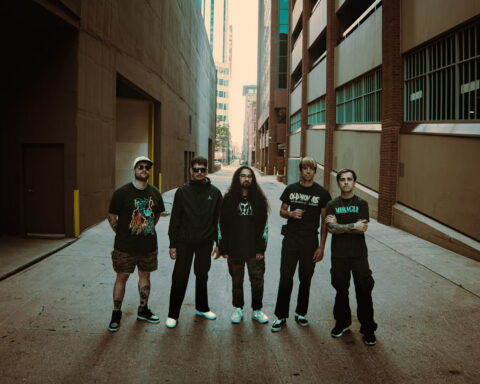

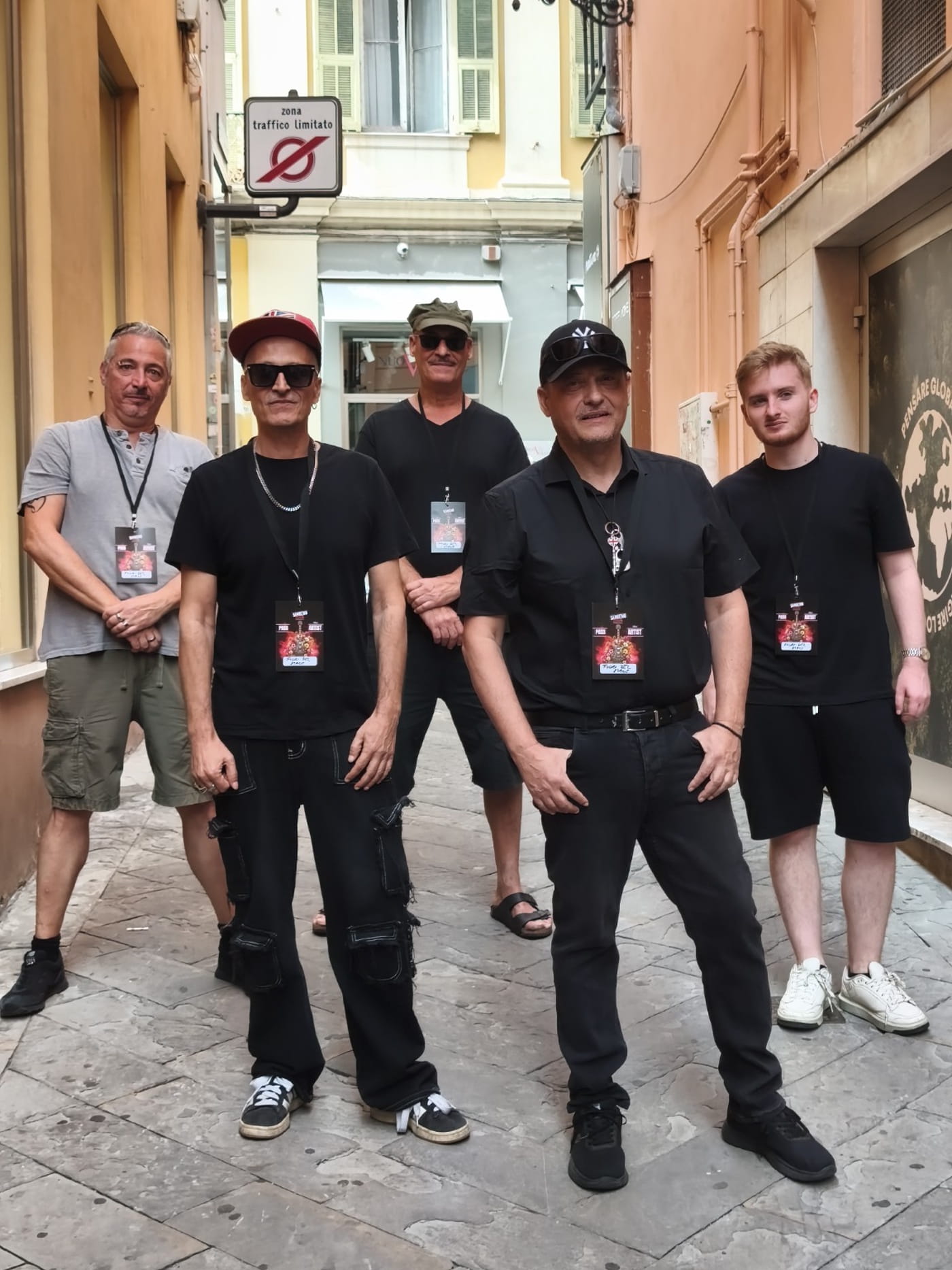
When Fiori del Male took their anti-war song “Allarme Rosso nel Golfo Persico” onto the Teatro Ariston stage in September 2026, they were playing music that had followed them since their early days in the alternative rock underground of Scampia, Naples.
Written during the Gulf War in 1991, the song had survived decades of moves between cities, changing lineups, other musical projects and years without a proper release. Part of singer Nunzio Ciccone’s original vocal recording had survived too, kept on DAT and eventually recovered with help from his father.
The song had finally been released that April, 35 years after it was written. By then, Fiori del Male had spent years in Milan and London, appeared in Italian newspapers and on national radio, worked alongside people from Naples’ underground arts scene and developed several different musical identities. The musicians who had made the original recording came together again, using some of the old vocals alongside newly recorded instruments and electronic production.
There is also a family history running through all of this. Salvatore Ciccone, father of Nunzio and guitarist Claudio, had made the original professional studio session possible in 1991. Decades later, he digitised the surviving DAT and cassette, allowing the brothers to recover the old audio. He died on 3 September 2025, seven months before the song was officially released.
For Nunzio and Claudio, the work their father did is part of why the recording exists today. But their story reaches further back than the tapes, to a neighbourhood where young musicians were organising concerts and making their own recordings while much of the outside world knew their home almost entirely through reports about crime.
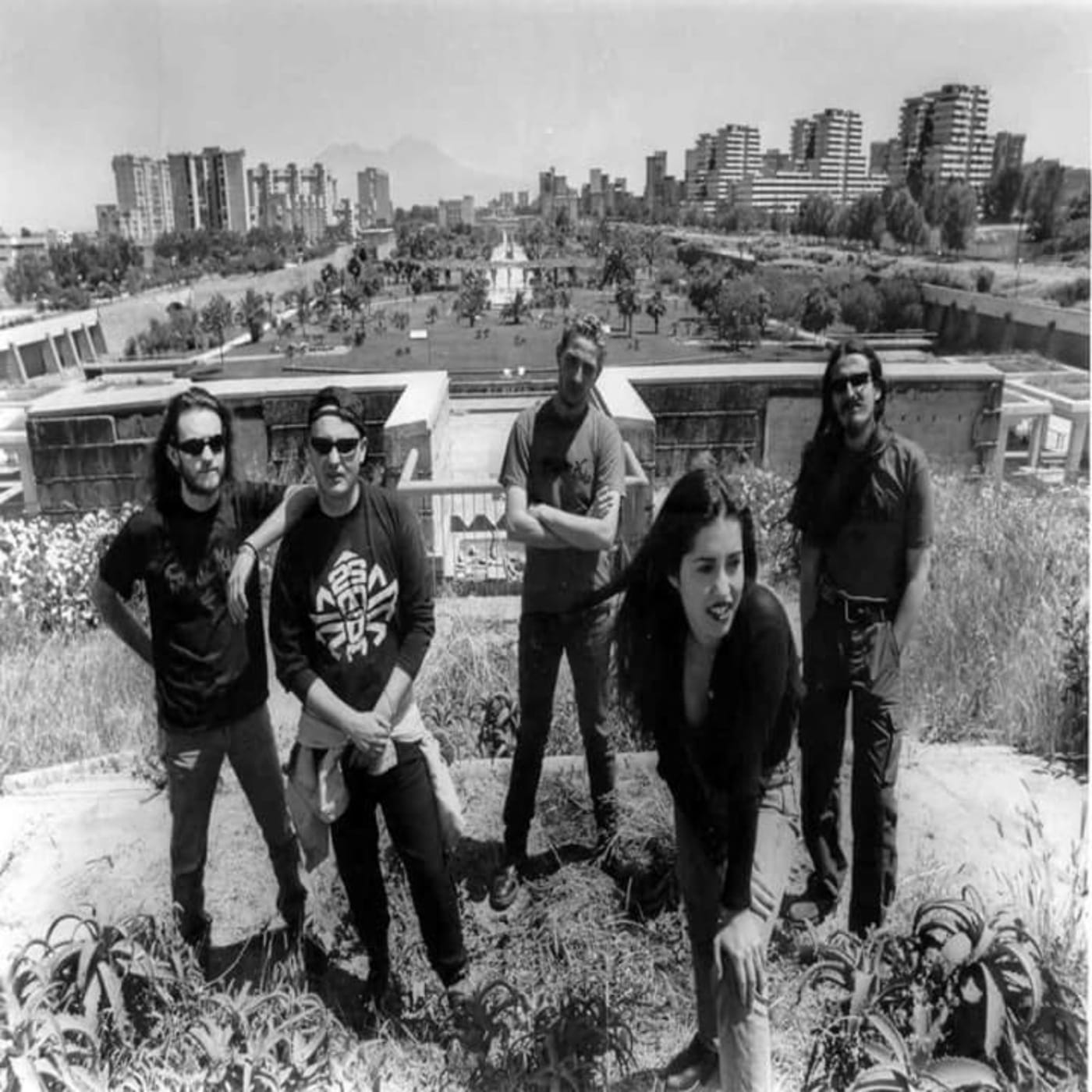
Fiori del Male began in 1991 in the area known as the 167 of Secondigliano, within Scampia in northern Naples. The initial idea came from Nunzio, Claudio and their sister Alessia Ciccone. Nunzio wrote lyrics and sang, Claudio played guitar, and Alessia contributed saxophone and vocals. Their wider musical circle included guitarists Andrea Palazzo, bassist Enzo Esposito, drummer Roberto Zincone and keyboard player Armando Vertullo. Danilo Napoli would also join the band’s history on lead guitar during the mid-1990s.
The name Fiori del Male came from the idea of a flower resisting the temptation of evil, a choice between conscience and corruption, creation and destruction. These were concerns the musicians connected directly to daily life in Scampia.
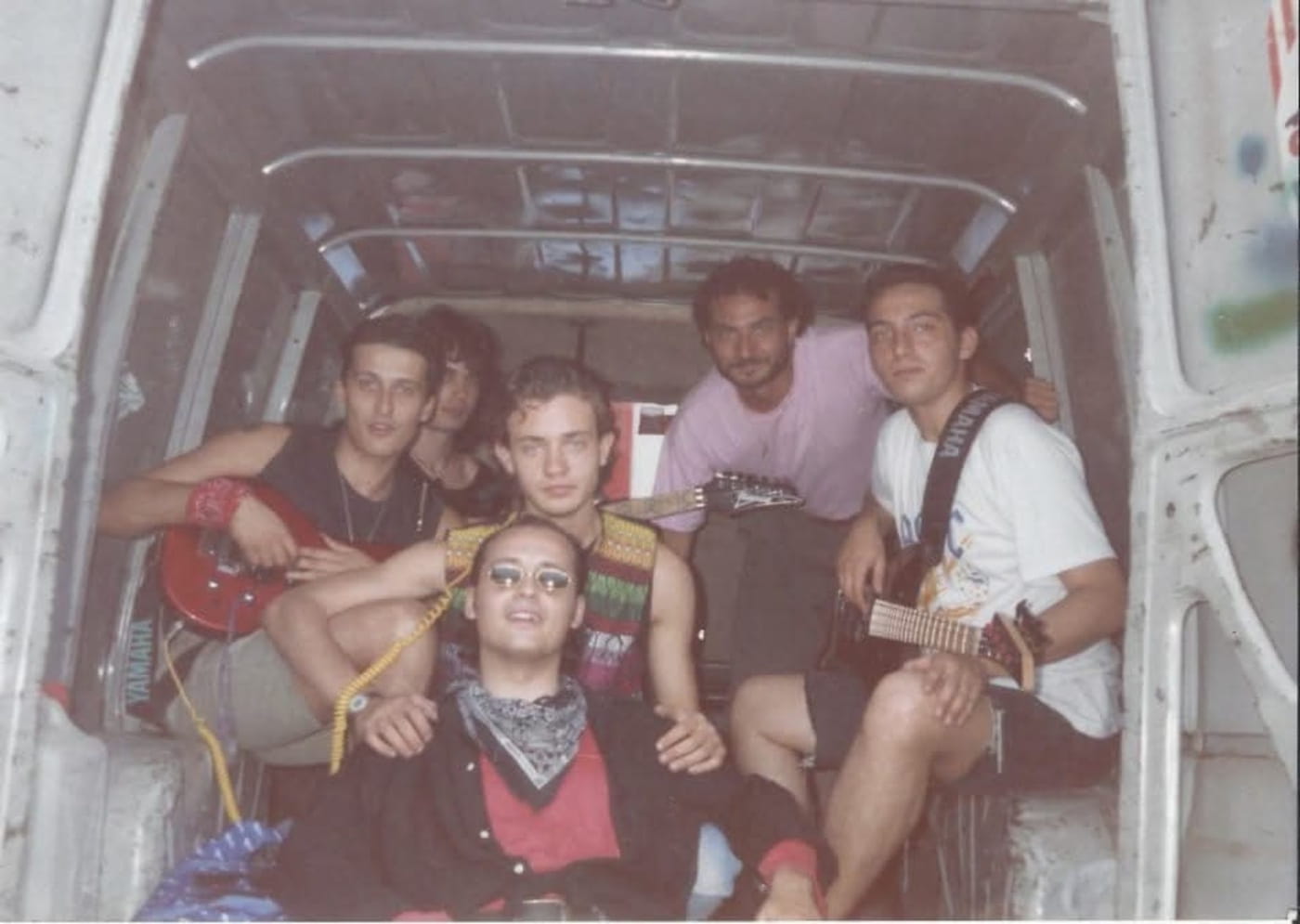
By the early 1990s, the area had acquired a national reputation shaped heavily by organised crime and social problems. That reputation obscured much of the cultural activity taking place there. Musicians were rehearsing in garages and rehearsal spaces, using social centres and small clubs, recording their own music and putting together independent festivals. They had very little established infrastructure to help them, so they made use of what was available.
Fiori del Male were part of this local activity. Their recurring phrase, “We exist and resist”, expressed their insistence that Scampia should also be recognised for the people making music, poetry and art there.
That attitude shaped their approach to opportunities outside the neighbourhood. The musicians wanted their work to reach people, but Nunzio and Claudio remember being wary of requests that would soften their political message or present Scampia as an exotic criminal setting. They called themselves cani sciolti, independent outsiders who were difficult to place within an established system.
As Nunzio later put it: “For Fiori del Male, refusing compromise never meant refusing growth or professional work. It meant recognising the point at which an opportunity required us to become a different project: to turn Scampia into an exotic criminal backdrop, to dilute politically uncomfortable lyrics, or to detach the music from the social reality that had generated it.”
Their early songs dealt with the place they came from and events happening elsewhere in the world. The first Gulf War provided the immediate subject for “Allarme Rosso nel Golfo Persico”.
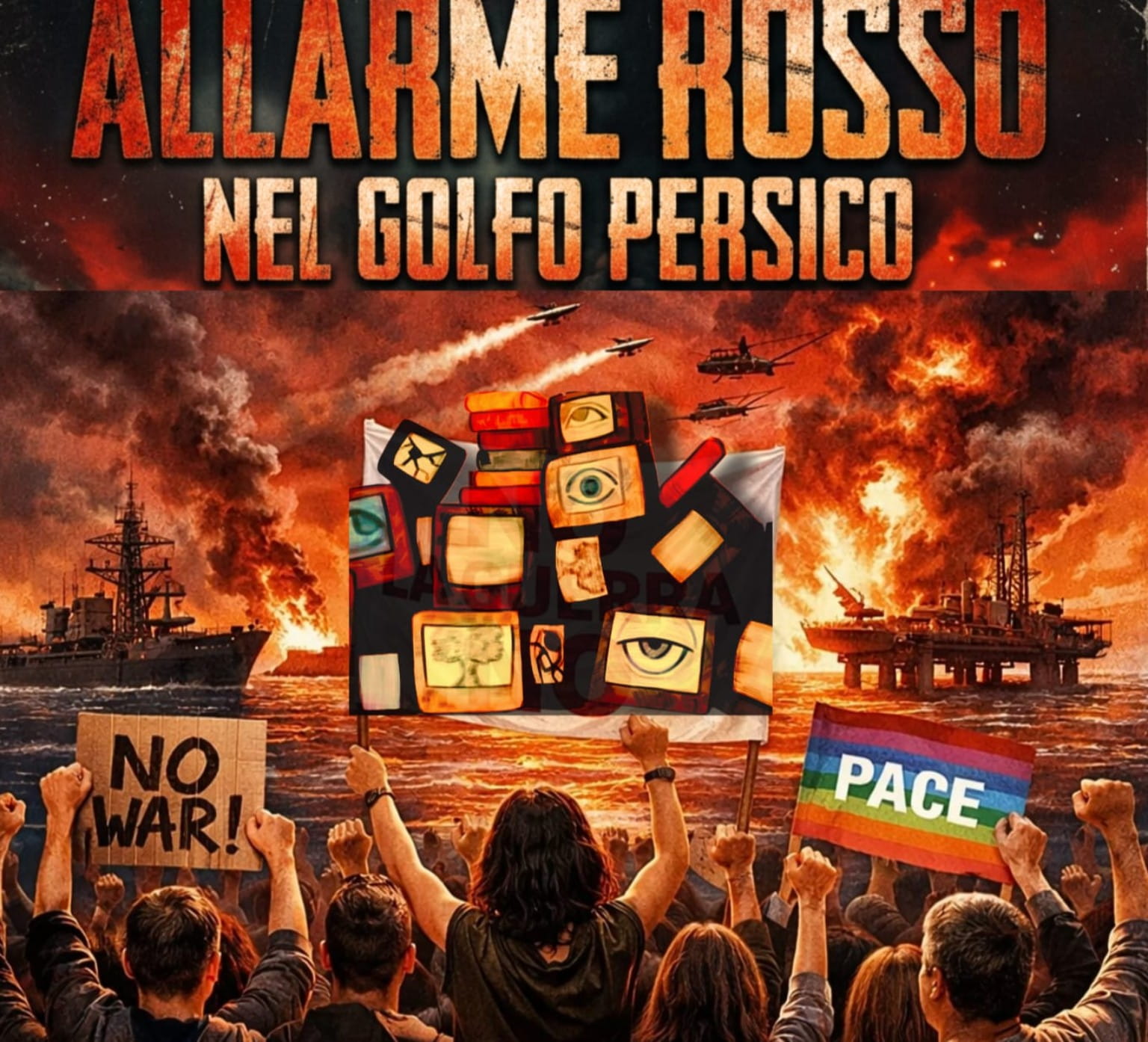
Written in 1991 while the conflict was unfolding, the lyrics address warfare, oil, flags, nationalism and the way television turned military action into a public spectacle. There is also a concern with the fear and confusion experienced by people confronted with events they cannot control.
The line “Allarme rosso nell’universo” extends the warning beyond the Persian Gulf. Nunzio was thinking about war as a recurring human problem, with economic interests and nationalist feeling tied to the destruction being broadcast into people’s homes.
The band recorded the composition professionally that same year. It was a guitar-based alternative rock song with vocals and a conventional band arrangement, and the later version would retain its verses, choruses and overall construction. The new recording introduced electronic elements into that existing rock setup, building on Claudio’s subsequent work with production and DJ techniques.
The original lyrics were left completely unchanged when the song was released in 2026. This was a conscious choice. Nunzio and Claudio felt that the subjects they addressed in 1991 remained relevant as new wars unfolded and similar questions about military action, economic interests and political manipulation continued to arise.
They have also been clear that the song should never be described as a prophecy. The words came from the Gulf War and the circumstances of 1991. Their relevance to later events is something the musicians recognise when looking back at their work.
“Time eventually confirmed the language of ‘Allarme Rosso’. History returned the same conflicts and questions to us. What may have looked like the wrong choice in 1992 now feels like a cyclical and visionary truth.”
The reference to 1992 is particularly personal for Nunzio.
That summer, Fiori del Male took part in United Rock for Europe, a music initiative held in Ariccia, near Rome. Surviving programmes document a rock marathon at Palariccia on 25 July and a further event in Piazza della Repubblica on 26 July.
The competition was organised by 21 Compagnia Generale dello Spettacolo and involved figures and organisations including Rita Pavone, Teddy Reno, the music publications Ciao 2001 and Qui Giovani, and Edizioni Rosso di Sera. Dodi Moscati was connected to the initiative through her RAI Radio1 programme “Diretta da…”.
Fiori del Male performed “Angeli Ribelli” alongside “Allarme Rosso nel Golfo Persico” during this period. Nunzio remembers being explicitly encouraged to concentrate on “Angeli Ribelli” when pursuing the opportunities that followed.
“The decision was mine: I chose ‘Allarme Rosso nel Golfo Persico’. I felt that it possessed a different communicative depth — one capable of moving beyond the immediate historical event and entering the human psyche, its fears, contradictions and fragility. Perhaps choosing to go against the current was madness. We paid for that decision ourselves. From then on, it seemed that we continually had to prove the value of ideas that the industry of that period did not consider useful enough.”
The surviving archive does not identify the person who made that request. It would be inaccurate to attribute it to Pavone, Reno, RAI, Rosso di Sera or any other named participant in the competition.
Nunzio believes the choice might have affected the band’s chances of appearing on a planned RAI 2 television broadcast. He has no documentary evidence establishing such a connection, and regards it as a personal interpretation of what happened.
“I believe that decision may also have harmed our chances of appearing in the planned national television broadcast on RAI 2. This remains my personal interpretation: I do not possess a document proving a direct causal link. For years, however, I experienced the choice almost as a musical sentence — a spell that imprisoned our lives and our desire to continue believing in the music around us.”
A separate piece of the 1992 history is much better documented.
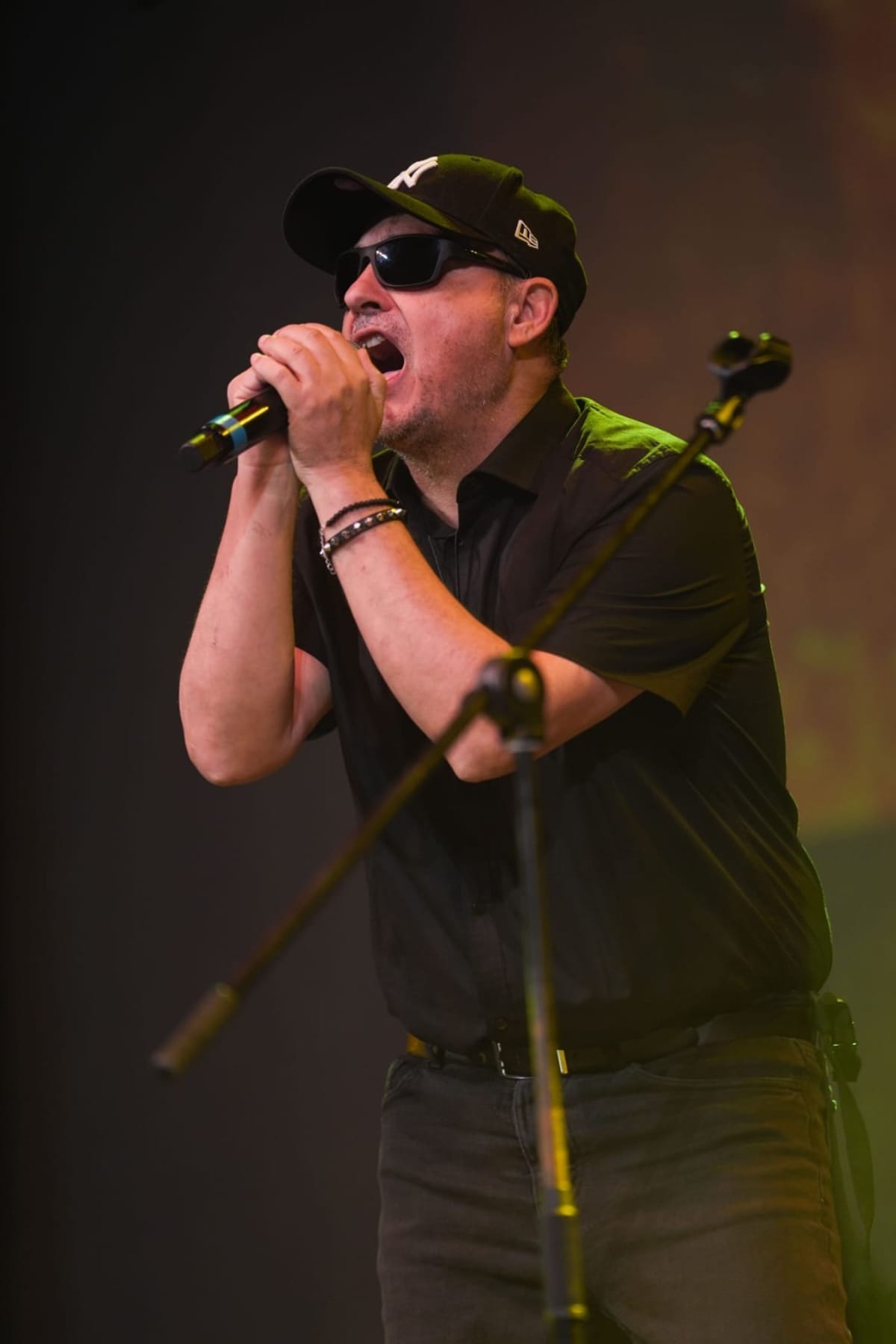
On 3 November, a formal letter addressed to “I Fiori del Male” invited a representative of the band to RAI’s studios at Via Asiago 10 in Rome for Moscati’s Radio1 programme. It confirmed the planned broadcast of at least one song and mentioned a promotional compilation connected with the United Rock for Europe final.
The band still possess audio from the programme. Nunzio can be heard taking part in the interview before “Allarme Rosso nel Golfo Persico” is introduced.
That recording establishes that the song reached national radio during the period when its future seemed uncertain to Nunzio. It also places the band within a documented network of concerts, competitions and broadcasters, much of which can now be reconstructed through their archive.
The years that followed were full of activity.
On 10 June 1994, Ateneapoli published coverage identifying Nunzio, Claudio and Enzo. The musicians were becoming increasingly involved in the wider Neapolitan arts scene, developing connections with writers, performers and organisers whose work also dealt with the city’s social conditions.
One of those connections was Peppe Lanzetta, the Neapolitan writer and performer whose work frequently addressed the lives of people living outside Naples’ familiar tourist image.
On 5 April 1996, Fiori del Male opened a presentation of Lanzetta’s “Incendiami la vita” at Rudepravo in Vomero. They performed “Ultime Notizie da Secondigliano”, and the event was reported by Il Mattino.
Two months later, on 14 June, documentation places them at Osteria da Vito in Bologna, a venue associated with musicians and performers including Lucio Dalla, Francesco Guccini, Alessandro Bergonzoni and Lanzetta.
Their connection with Lanzetta also led to one of the better-documented cultural initiatives of that period.
“NonSoloBronx“, subtitled “da casa mia non si vede Capri”, was a Comune di Napoli project with Lanzetta involved in its artistic direction. Its activities focused on areas of Naples that rarely received the same cultural attention as the city’s established venues and tourist districts.
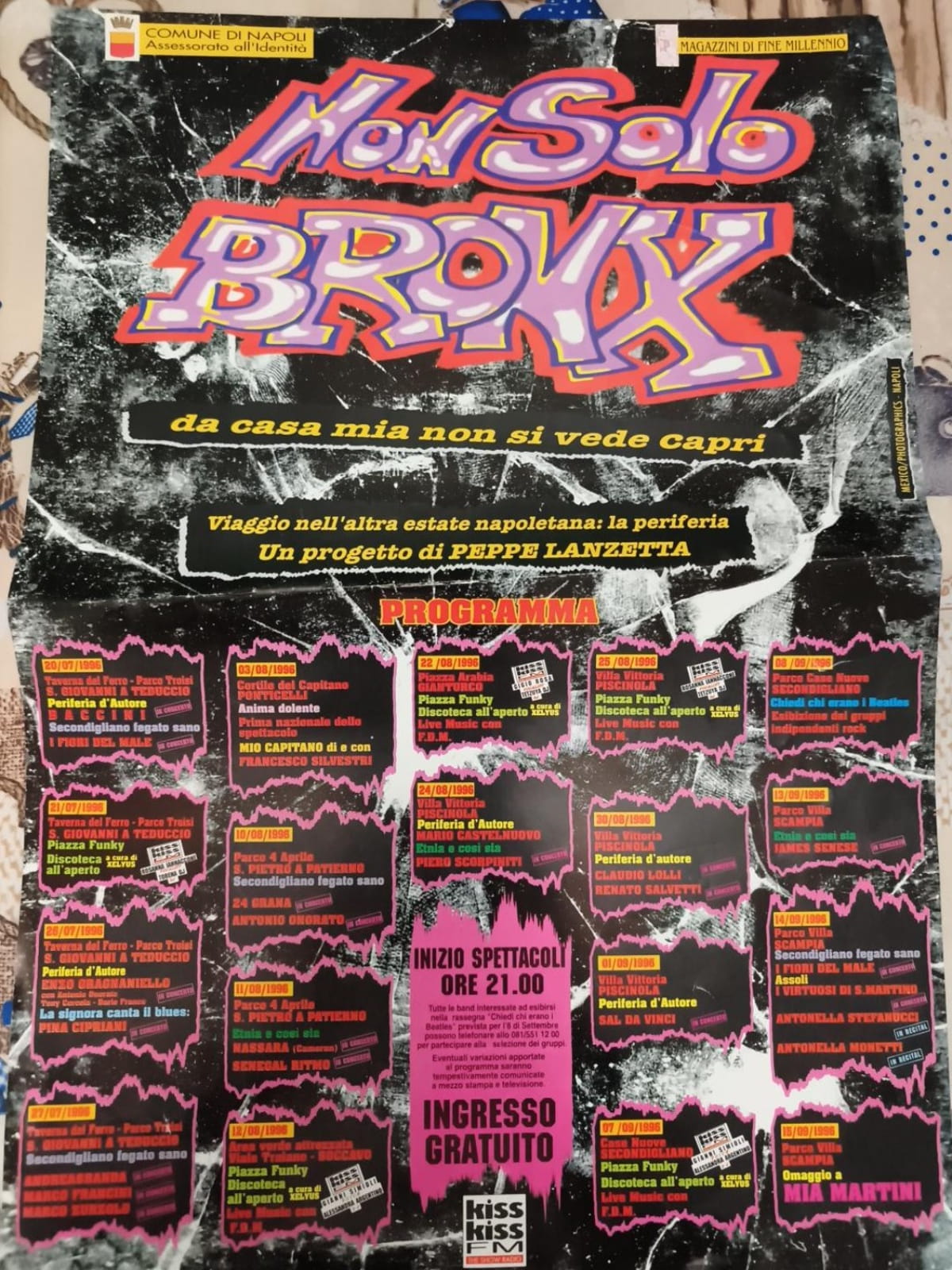
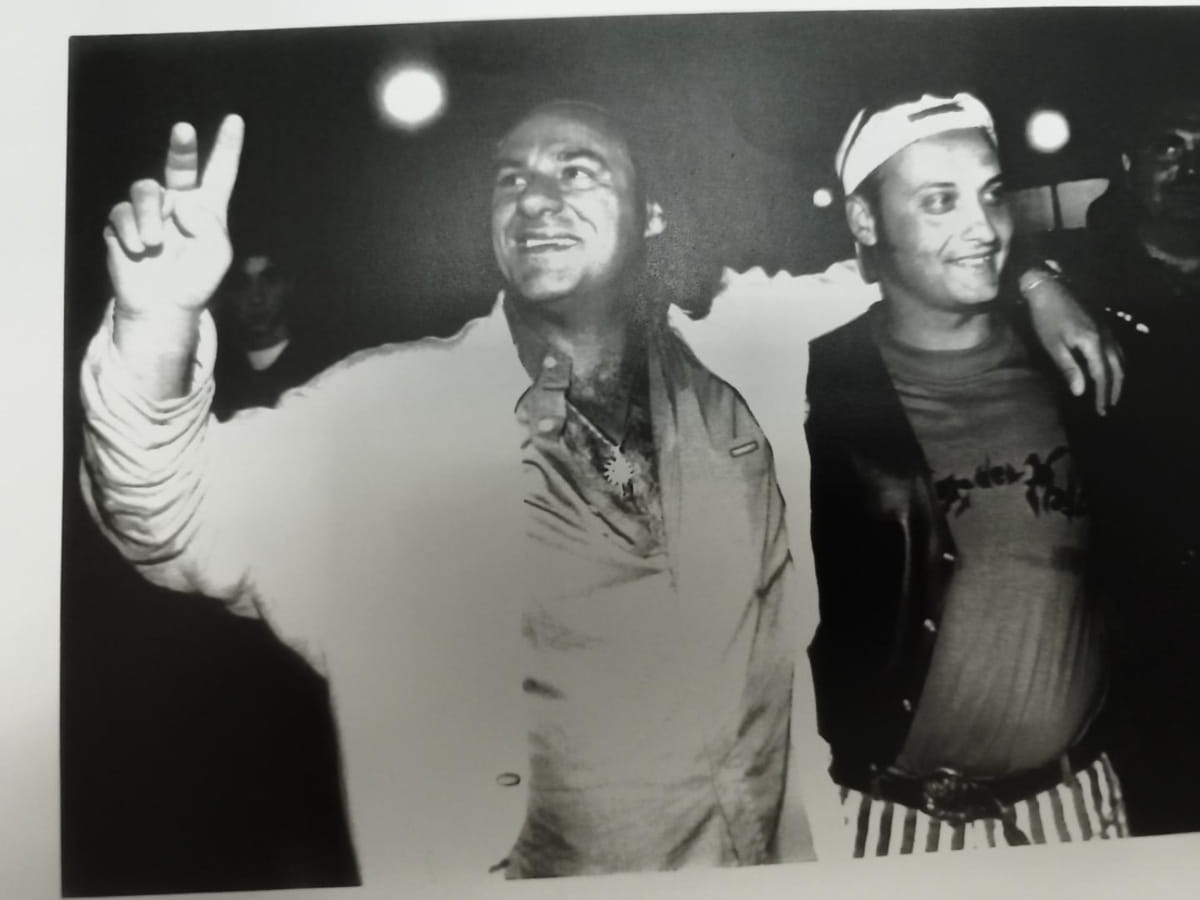
On 20 July 1996, Fiori del Male played in San Giovanni a Teduccio before Francesco Baccini. Surviving programmes and photographs document the event, including images involving Lanzetta and the then mayor of Naples, Antonio Bassolino.
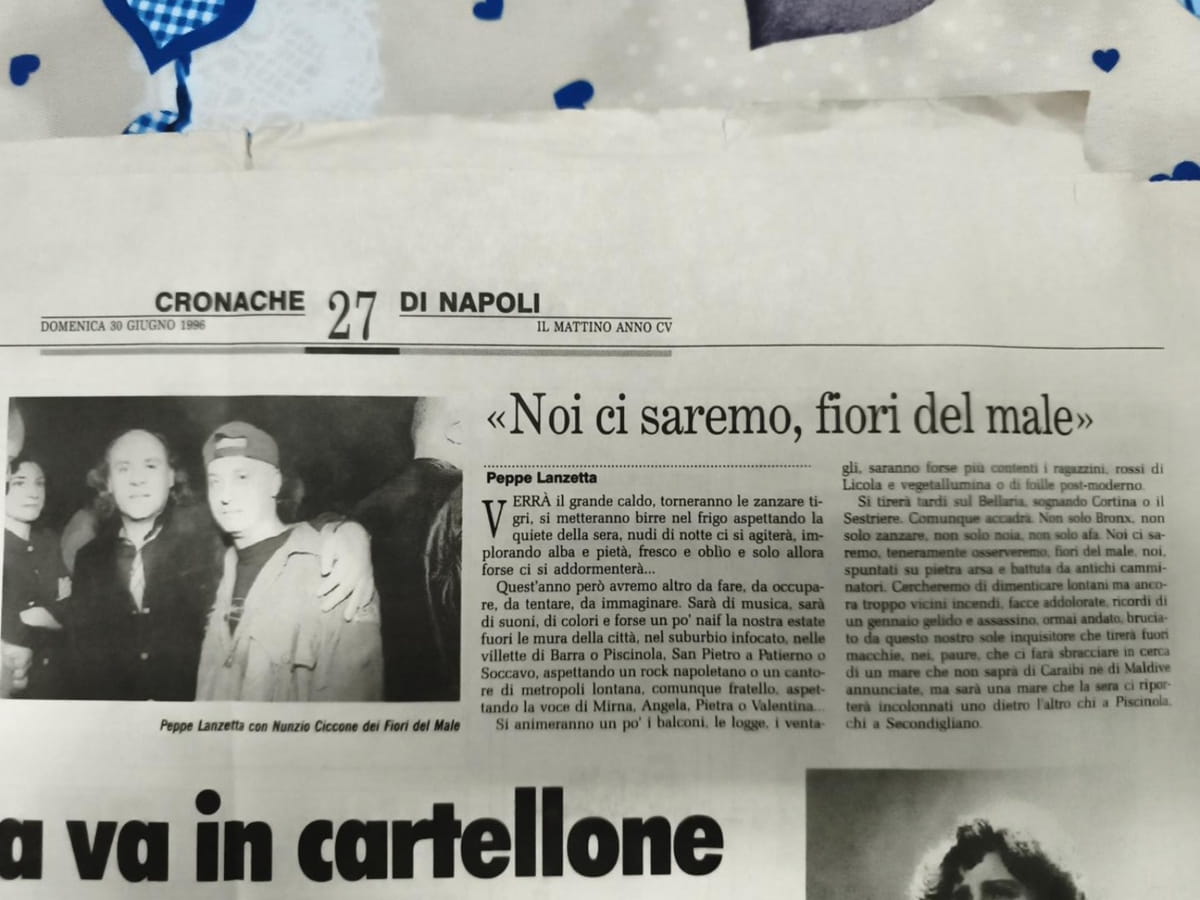
An Il Mattino article from 30 June that year, “Noi ci saremo, fiori del male”, also records the band’s activity. The accompanying photograph of Nunzio with Lanzetta was taken by Sergio Siano.
Their work continued to reach audiences outside Naples. On 4 June 1997, an appearance at the Ariston in Campobasso was connected with an audience of approximately 1,200 young people.
The following month, la Repubblica published “Napoli sommersa – Fratelli Ciccone” on 14 July, adding another contemporary account of the brothers and their place in the Neapolitan cultural scene.
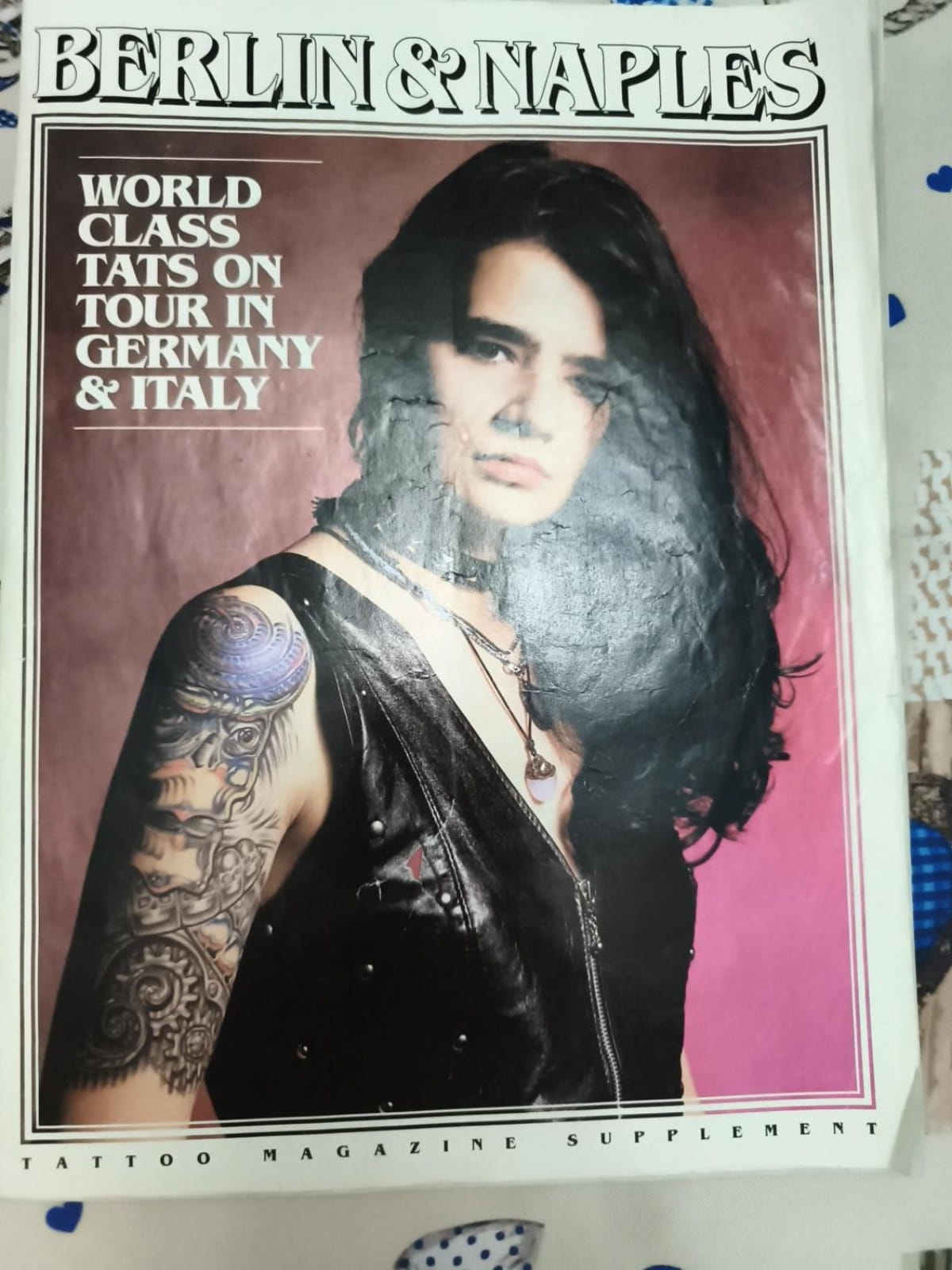
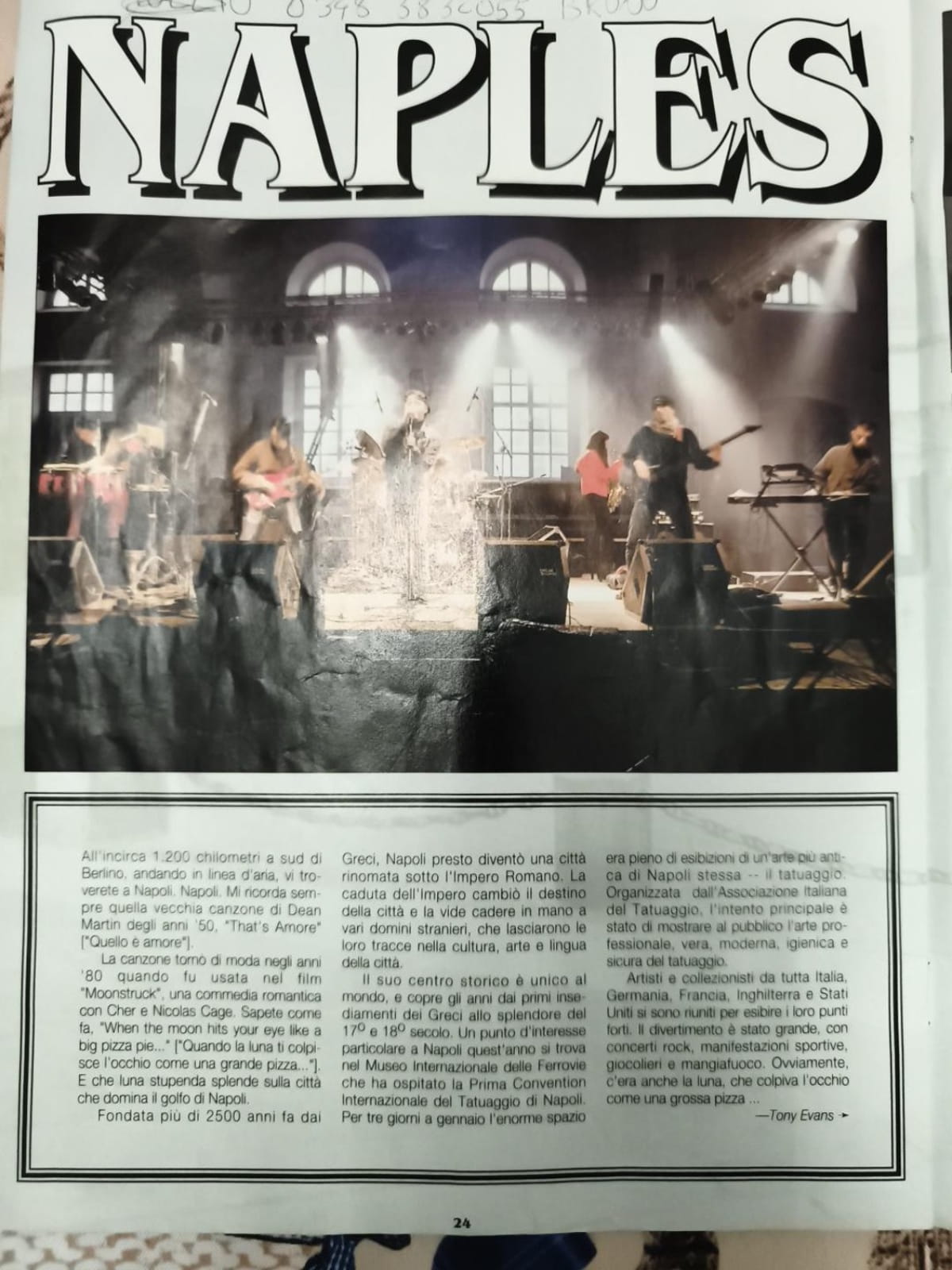
Around the same period, Fiori del Male appeared in Tattoo Magazine, issue 96, published in August 1997. The magazine and its “Berlin & Naples” supplement included photographs and coverage of an event bringing live music together with international tattoo culture.
On 11 September, the band played in Cerveno, in Valle Camonica near Brescia, in an appearance connected with 99 Posse.
Their involvement in solidarity events also continued. A surviving programme for “Napoli & Bari Insieme – per la solidarietà” lists Fiori del Male among those taking part in an initiative supporting families affected in Secondigliano and paediatric and oncology institutions in Naples and Bari.
These shows were part of a working underground circuit that extended through music, theatre, literature and independent cultural activity. Fiori del Male were appearing in public while much of the infrastructure available to more established recording artists remained beyond their reach.
By 27 June 1999, Corriere della Sera had published “Fratelli rock missione di pace”, dealing with the Ciccone brothers through music, migration and their interest in peace.
By this point, the band’s story was already moving beyond Naples geographically.
Milan became an important part of their musical development, including work under the name FlowerPeace. Around 2000, London became another major centre of activity. The musicians describe approximately twelve years of making music there, although the precise dates and circumstances of relocation differed between members.
Nunzio moved from Naples and Scampia to Milan, then London, and eventually Rome. Claudio followed a similar early route through Naples, Milan and London before returning to Naples. Alessia also returned to Naples after living in Milan and London.
Enzo remained in London, having moved there through Naples and Milan. Armando later returned to Milan after his time in Britain.
The wider history also includes work under the Ciccone Bros. name. These periods involved different configurations and musical approaches. There was no fixed Fiori del Male lineup travelling together through every city, and the musicians’ individual experiences of those years were not identical.
Andrea Palazzo and Roberto Zincone remained connected to the band’s earlier history. Both would eventually take part in the renewed recording of “Allarme Rosso nel Golfo Persico“.
Somewhere within these changing lives, the original song remained on physical recording media.
The first person to take serious responsibility for preserving the Fiori del Male archive was keyboard player Armando Vertullo. He collected and kept recordings, documents and traces of the band’s early work.
As Armando followed a different path in life, Claudio took over that responsibility. By then, Claudio’s own musical work had developed through DJing, production and electronic arrangements. He continued to look after the DAT, the audio cassette and the broader collection of documents.
The recording of “Allarme Rosso nel Golfo Persico” had never been turned into a commercial physical release. There was no original vinyl pressing, CD or officially distributed cassette edition of the song. The professional recording existed on the surviving media, preserved privately as recording technology moved through the MP3 era and into streaming.
The other documents were equally varied. Photographs, programmes, newspaper articles, radio correspondence and flyers contained evidence of different parts of the band’s history. Some established exact dates, venues and names. Others recorded people and events that the musicians remembered but could no longer place precisely.
Salvatore Ciccone had supported the original recording session in 1991, when Nunzio and Claudio were still young musicians trying to get their work recorded properly. Years later, he digitised both the DAT and the audio cassette, giving the brothers access to audio that could be used in a contemporary production.
For the family, his role had never been limited to keeping an old tape somewhere safe. He had helped make the recording possible, and he helped preserve it in a usable form.
Salvatore died on 3 September 2025.
The musicians have described the digitised recording as his final gift. Their historical dossier closes with a dedication to him, recognising both his support in 1991 and the later work that allowed the song to be completed for release.
After his death, Claudio and Andrea decided to get the song moving again. They contacted musicians associated with the original Fiori del Male recording and began working on a version that would preserve the composition and its words.
The finished master contains two different periods of Nunzio’s singing. Selected sections of his original 1991 vocal performance, recovered from the DAT, were combined with newly recorded vocals.
The instrumental parts were performed again from scratch. None of the instrumental tracks from the 1991 DAT were used in the 2026 master.
Andrea recorded rhythm and lead guitars, Claudio contributed guitar and electronic production, Enzo played bass and Roberto returned on drums. Nunzio supplied the vocals, including the older sections preserved on tape.
The band retained the original structure, keeping the verses, choruses and principal arrangement in place. The lyrics remained exactly as they had been written during the Gulf War.
Musically, the 2026 version brings guitars and a full rhythm section into contact with the electronic elements Claudio developed through his later production work. His experience with DJ techniques, sampling and contemporary arrangements had become part of the way he approached recording.
Nunzio’s old vocal sections give the track an unusual relationship with its original performance. The singer is present at two different ages, with the original recording entering a production made by musicians who have since spent decades living and working in different places.
For Nunzio, those years included moving between Naples, Milan, London and Rome, along with the responsibilities and losses of adult life. He continued to regard the song as a way of communicating the political concerns that had first led him to write it.
Claudio had also changed his approach to music considerably since 1991. His work with electronic production gave him opportunities to develop the original guitar arrangements using techniques that had become central to his later career.
The contributions of Andrea, Enzo and Roberto brought musicians from the earlier recording back together. Their histories remained their own, including the experiences they had accumulated during the years apart.
The official release arrived on 4 April 2026.
For anyone encountering the song for the first time, its lyrical references belong directly to the Gulf War period. Oil, nationalist politics, the public presentation of conflict and the experience of people caught up in war are present because those were the subjects the band were addressing in 1991.
Nunzio and Claudio see the repetition of those issues across subsequent decades. They have spoken about the continued connection between political interests, economic pressure, nationalism and the way wars are presented to the public.
Their interpretation of the song has developed with the years, but the words themselves remain those of the younger musicians who wrote it.
The band’s independence has also remained important to them. Nunzio has spoken about the lack of support available to artists working outside established industry structures, and the effect it had on a project seeking to keep its political message intact.
They were willing to work professionally and participate in larger events, as their early history demonstrates. Their problems arose when they felt an opportunity required them to change the identity or political direction of their work.
“We were ‘cani sciolti’ — independent outsiders, difficult to control and difficult to place inside an established structure. That freedom preserved our identity, but it came at a very high price.”
The original recordings and the historical documents have now allowed the musicians to reconstruct much of their earlier activity. There are still uncertainties, particularly around private conversations and decisions where only personal memories survive.
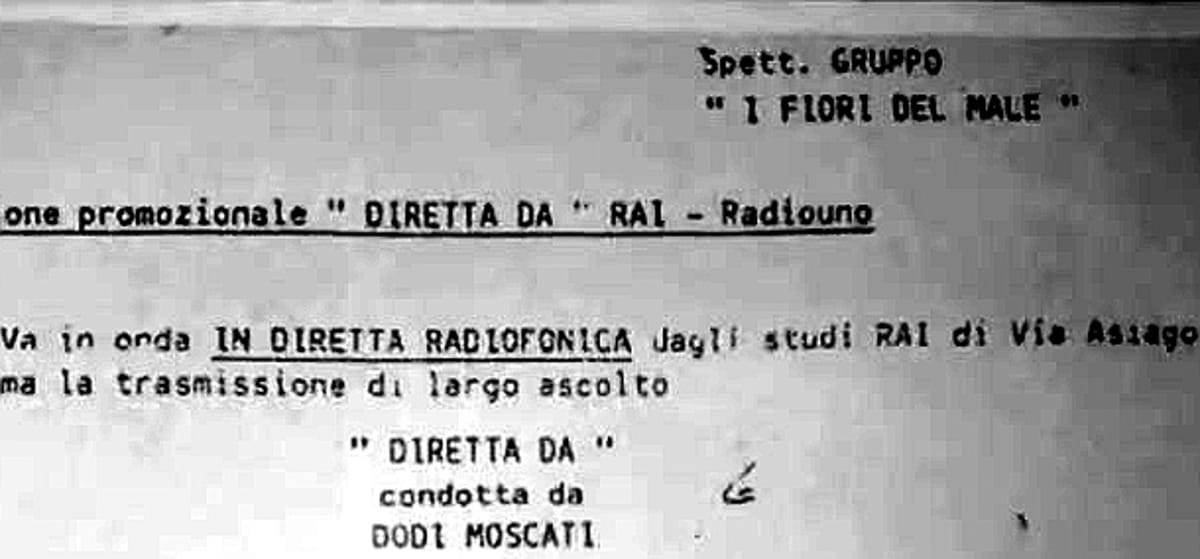
Nunzio’s account of the 1992 request to concentrate on “Angeli Ribelli” is one example. The RAI invitation and recording are another kind of evidence, documenting a specific broadcast connection independently of later recollections.
The band’s own guiding principle is that “The evidence should remain stronger than the mythology.”
The final months of this history brought Fiori del Male back into public view through Sanremo Rock & Trend Festival.
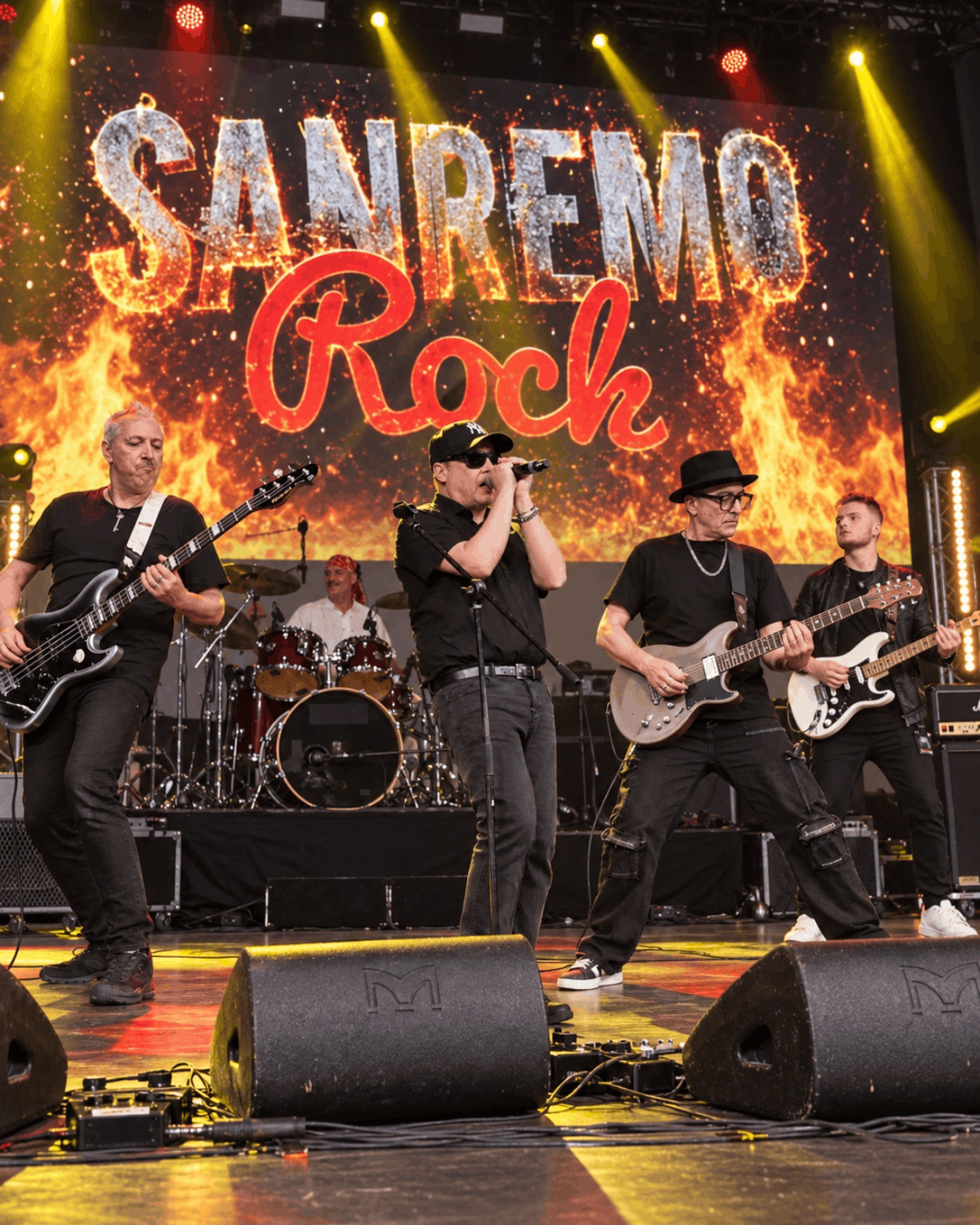
In 2026, the festival listed Fiori del Male, London, among its International Winners selected through international partners. They were chosen through the London and UK connection and represented the United Kingdom, reflecting the band’s years of musical activity in Britain.
On 11 September 2026, they performed “Allarme Rosso nel Golfo Persico” at Teatro Ariston during the festival’s National Finals.
The lineup on stage brought together Nunzio on vocals, Claudio on guitar and DJ duties, and Enzo on bass, with Saverio Pappalardo playing lead guitar and Angelo Calabrese on drums. Andrea remained connected to the music and history of the band but did not perform at Teatro Ariston.
Fiori del Male did not progress to the Finalissima. The Ariston appearance was their final stage in the competition.
It was also their latest documented public performance of a composition that had already accompanied them through several different periods of their lives.
There is an obvious connection to the band’s experience in 1992. At United Rock for Europe in Ariccia, they had performed the Gulf War song while pursuing opportunities connected with national radio and television. A few months later, Nunzio was interviewed on RAI Radio1, and “Allarme Rosso nel Golfo Persico” was introduced on air.
In 2026, the same composition reached Teatro Ariston, performed by a lineup involving some of the musicians from those early days and others who had become part of the later project.
The difference was also in the recording itself. The version available to the public contained parts of the vocal performance Nunzio had made back in 1991, preserved through the care of Armando, Claudio and Salvatore.
Ariston came after a long history of gigs and collaborations, followed by years when the musicians lived in different places and worked under different names. There had been national press coverage, radio appearances, grassroots initiatives, periods of musical activity in Milan and London, and the private preservation of their early recordings.
The Sanremo appearance added another public event to that history. It also gave the musicians an opportunity to perform their old composition after finally releasing it officially.
For Nunzio and Claudio, Salvatore’s absence remains part of the story. Their father had helped them enter a professional studio in 1991 and later made it possible for them to use a recording they might otherwise have lost. The finished song appeared only after his death.
One statement from Nunzio’s account of the intervening years stays close to how the band now approach their history: “The past is not a closed place — it is a territory from which the future can still be imagined.”
In this case, part of the past exists as an actual recording. Nunzio’s younger voice can still be heard within the new version of “Allarme Rosso nel Golfo Persico”, alongside the work of musicians who have spent the last 35 years following different lives and musical paths.
“Allarme Rosso nel Golfo Persico” by Fiori del Male was officially released on 4 April 2026. Listen on Spotify or watch the official video on YouTube. The band’s history and the surviving recording are dedicated in part to the memory of Salvatore Ciccone, who died on 3 September 2025.
🔔 IDIOTEQ is ad-free, independent, and runs on one person’s time. If you want it to stay that way: DONATE via PayPal or SUPPORT via Patreon.
NEW: IDIOTEQ Explore 🗺️ Browse 15+ years of our archive by city, country, and style. Find artists on the world map or trace related sounds through the styles map.
Stay connected via Newsletter · Instagram · Facebook · X (Twitter) · Threads · Bluesky · Messenger · WhatsApp.