

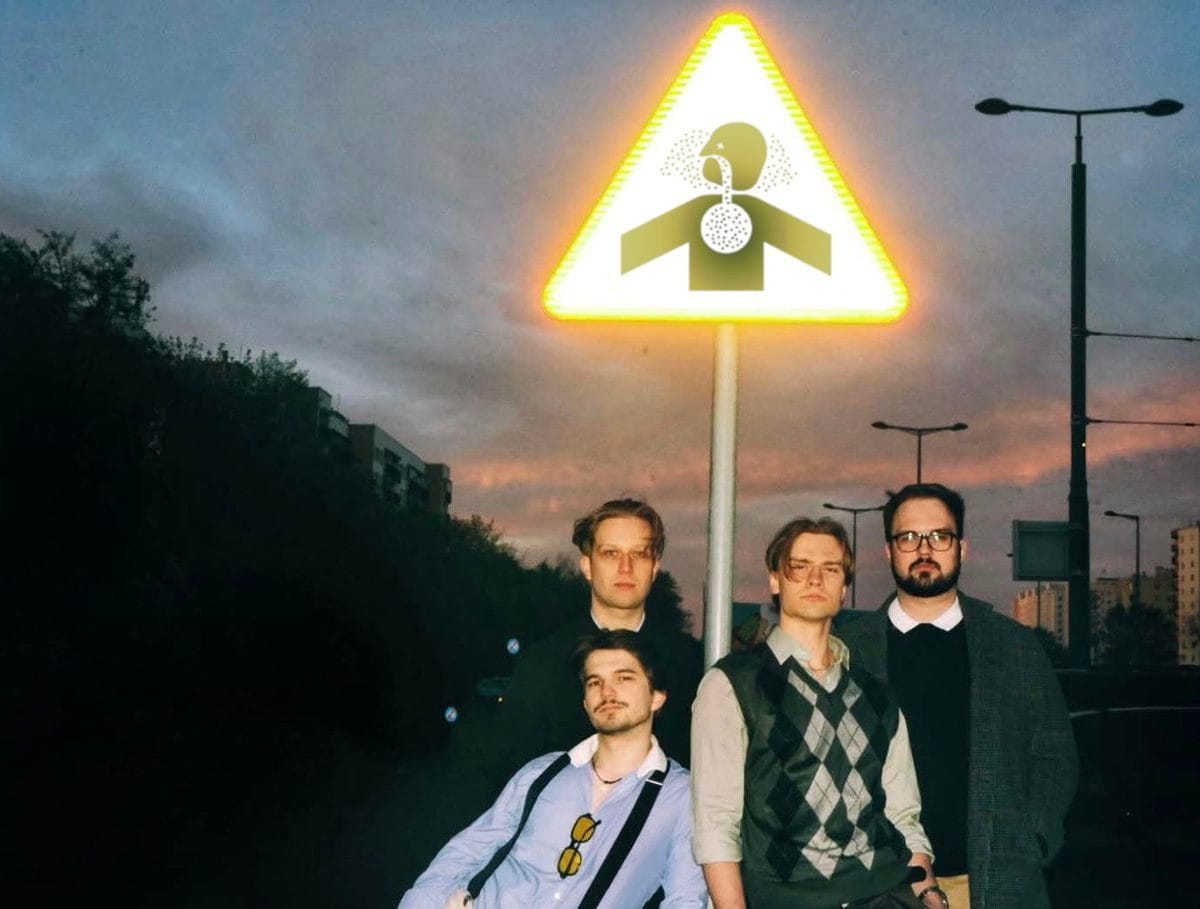
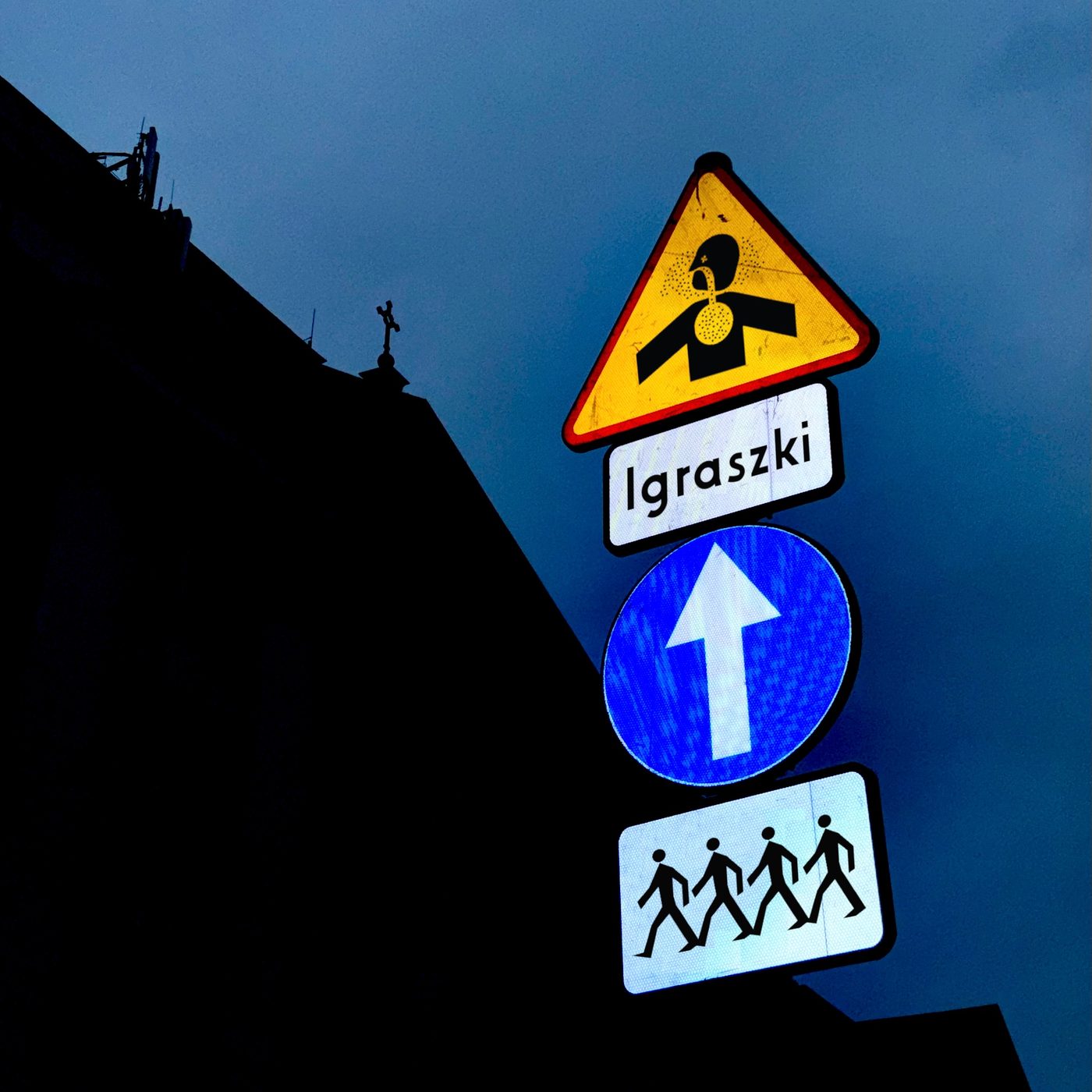
Most of the songs on “Igraszki“, the debut EP by Warsaw art-rock band Tani Gaz Rozweselający (Cheap Laughing Gas), were written when the group consisted of two law students looking for a bassist and drummer. The six tracks bring together energetic guitars, piano with a jazz touch, synthesisers and vocals that move between melody and shouting. They’re full of people struggling with work, ambition, loneliness and the sheer amount of noise that comes with living in Poland’s capital.
It took roughly three years of writing, rehearsing, changing arrangements and dropping songs before the EP was recorded in December 2025. By the time it finally came out on 2 October 2026, TGR had parted ways with two drummers, started playing with electronic percussion and recorded their next LP. That album is still waiting for its turn.
“We’d probably record these songs differently now,” vocalist and guitarist Dominik Drażba tells IDIOTEQ. “But we’re happy we finally managed to close this period and get on with completely different, more mature stuff. ‘Igraszki’ is a kind of ‘childish’ version of what’s still to come.”
It’s quite a lot of history for a band’s first EP, although the songs themselves are concerned with things the musicians were noticing almost as soon as they moved to Warsaw.
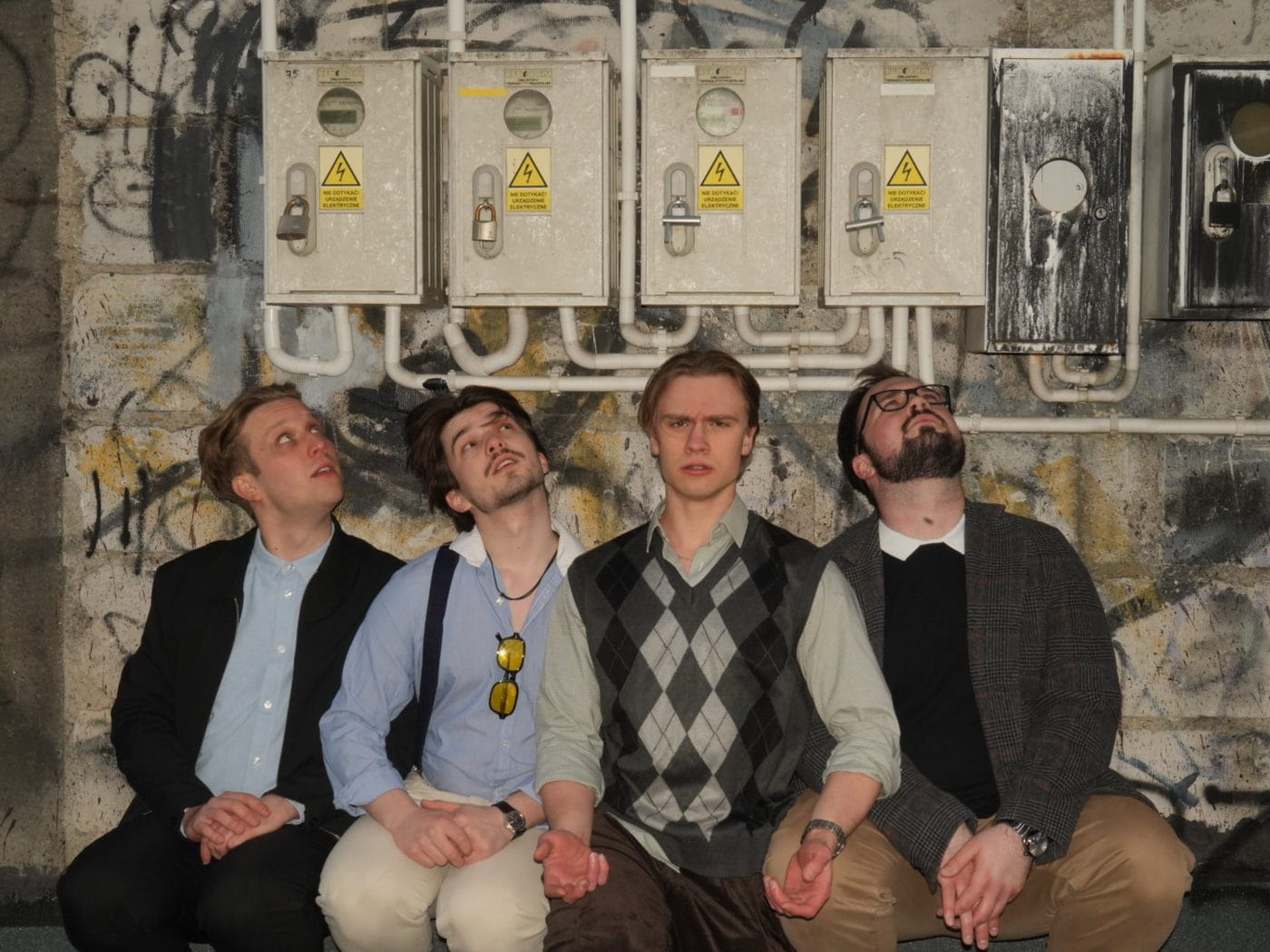
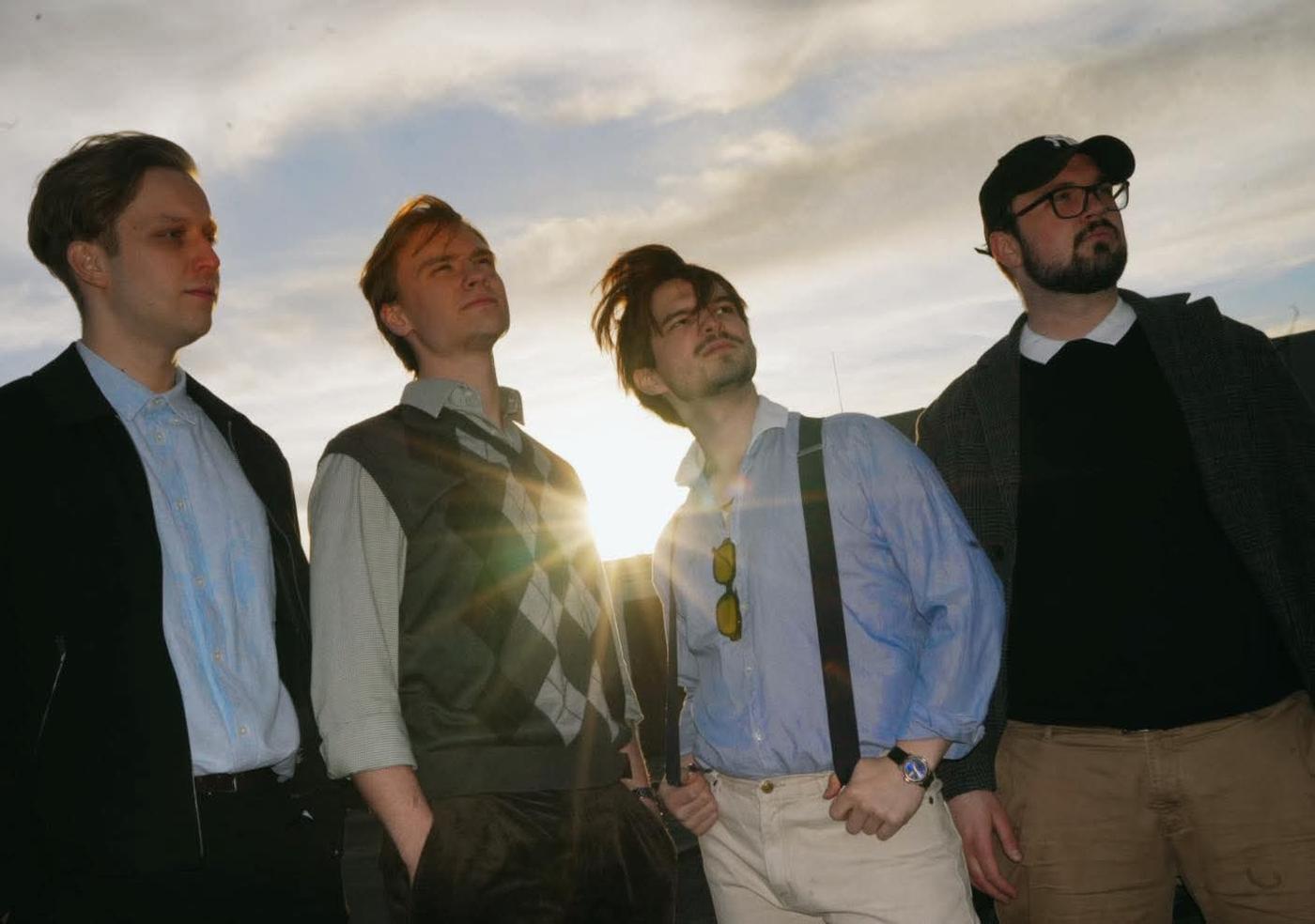
Dominik, guitarist Błażej Prusiński, bassist Julian Ślęczka and pianist and synthesiser player Sebastian Marciniak met during their law studies. They came from Gdynia, Ciechanów and Rzeszów, and the capital made a strong impression on them.
“Warsaw is definitely a ‘working city’. When we arrived here to study, we encountered an environment that can seem hostile and aggressive to someone who isn’t used to it. Everything seems as though it’s about to explode.”
They remember tired, irritated people, cars pouring through the streets, sirens sounding every day and screens on buses constantly showing adverts. Shops have their own voices announcing promotions. Occasionally there’s a dead pigeon on the pavement.
The band’s description of Warsaw gets particularly harsh around Central Station. For them, it’s the most cursed part of the city, with its mismatched buildings, awkwardly placed skyscrapers, crowds and constant rushing. The Palace of Culture and Science, which dominates the area, receives the rather unflattering nickname “Pała Kultury i Nauki”.
Then there are the people trying to fit everything into their working week. University lectures, jobs, corporate social events, networking and the pressure to look successful all run together.
“Many people spend their days running from work to classes, then to social events where they do ‘networking’, all to build some sense of identity out of scraps of superficial status. They want to get a job in a corporation. They think they’ll be safe there.”
There’s a good chance that anyone who’s spent time around Warsaw’s office districts will recognise some of that. The band’s irritation also extends to the ordinary background noise of shopping, travelling and constantly being told something.
“Everything screams. It’s hard to point to one particular situation because it’s the accumulation of all these little things.”
On “HALO WARSZAWO! (lepsza wersja)”, Warsaw becomes a character in its own right, temperamental and merciless, addressed directly by somebody who has had enough of the place.
The narrator wakes up to sirens, walks outside and finds another dead pigeon. There’s talk of the filthy Vistula eventually being replaced by a nineteen-lane motorway. A screen on a bus won’t stop talking, and the increasingly agitated narrator responds with a threat to blow the whole vehicle up.
Then, in the middle of the song, comes a long supermarket announcement promoting vacuum-packed chicken breast at 9.99 zł per kilogram, complete with the usual sales language about the lowest price on the market.
It’s an especially daft bit of writing, and completely recognisable as the sort of announcement Polish shoppers hear every day. TGR have taken that endlessly repeated commercial voice and dropped it straight into their account of a man being driven mad by the city.
For the band, those sudden changes are part of how “Igraszki” was conceived. They wanted to play around with the listener, offering something comforting, turning a serious thought into a joke, then overwhelming them with another change of mood. The characters in the lyrics are frequently ridiculous, although their problems are familiar enough.
Krzysztof Witkiewicz, the fictional vice-director in “Uciekaj, wicedyrektorze!”, occupies a particularly miserable position at work. He’s based loosely on a manager from a company where one of the musicians worked, a subordinate, anxious and rather childish man forced to deal with an intimidating boss and responsibility for other people’s mistakes.
His working life involves printers, monitors, demanding clients and a female director who keeps him firmly beneath her. He remembers being with somebody who once made him feel calm, away from all those people and their voices.
He wants to escape.
The story gets increasingly absurd. There are stolen cigarettes, a painting by Witkacy, somebody called Witkiewicz being thrown into a car boot and a police chase. Eventually the narrator ends up in prison, receiving visits from his ex-wife and son. He’s sometimes embarrassed by his situation, but the final lines find him surprisingly content.
He’s finally unemployed.
For four students studying law and already thinking about their future careers, the office hierarchy was an obvious source of worry. They saw the vice-director as somebody trapped in a particularly unpleasant level of middle management, bearing responsibility without enjoying much control.
The next character deals with a different fear, and his story began with somebody the musicians actually knew.
“Pepito Rodriguez!” follows a young man who becomes fascinated by an older, apparently successful figure. The person who inspired Pepito was a man around fifty whom TGR encountered in real life.
“At first he presented himself like a character from an American film, or, to put it more fancifully, a Mexican gangster. Confident, exceptionally intelligent, witty, cynical, adored by women. Everyone wanted to be ‘like him’, just as we sing in the chorus.”
For the younger musicians, he appeared to understand how to deal with the intense world they’d entered. Here was someone with the personality, confidence and apparent success they thought might be necessary to get anywhere.
But spending more time around him complicated that impression.
His jokes about alcoholism and loneliness gradually started sounding serious. The band noticed that he drank during the day, sometimes in situations where doing so could have landed him in considerable trouble. He tried to conceal it, yet sometimes appeared almost to want them to notice.
Wyświetl ten post na Instagramie
The fictional Pepito inherits that mixture of charm and unhappiness. In the song, the younger narrator repeatedly promises himself that one day he’ll be like his idol. Eventually the same refrain starts carrying a fairly worrying possibility: he’ll end up like him, too.
The narrator is partly based on the band themselves, a talented but shy young man trying to work out how to behave in an unfamiliar place. For TGR, Pepito also represents the fear of ending up entirely outside the comfortable career structure they’d been watching, isolated and alone.
Both Pepito Rodriguez and Krzysztof Witkiewicz are fictional names. The musicians have deliberately kept identifying details about their real-life inspirations private.
The younger man from “Pepito Rodriguez!” appears again on “Te piękne twarze!”, still struggling to connect with the people around him.
Wyświetl ten post na Instagramie
He admires the world but has nobody to share it with. He describes having trouble breathing and feeling separated from everybody else. Some of the loneliness he noticed in Pepito has entered his own life, although he still believes he’ll find his place eventually.
The song includes one of the EP’s more openly hopeful passages:
“One day I’ll smile again
And scream out my love
Though the muscles in my face are so heavy.”
There’s also a line that plays with the band’s own name, about every laughing gas being cheap and eventually bringing whoever it has lifted back down to earth.
Another character has already lost much of his patience with the people around him. “Jestem elektryczny!”, the EP’s focus single, is narrated by somebody in a permanent state of agitation. He’s always in a hurry, angry at anyone who gets too close and convinced that everybody else should leave him alone.
He talks about destroying things, drinking the Vistula and growling at anyone who approaches.
The direct inspiration for some of this behaviour was Rocky, the dog belonging to Dominik’s parents.
The title came from lettering on Warsaw buses, another ordinary piece of the city ending up in a song about somebody who can barely stand being there.
Wyświetl ten post na Instagramie
Across these characters, the musicians have taken their own worries about work, social status and belonging and exaggerated them until things become fairly ridiculous. The anxious office manager fears being trapped inside the corporate hierarchy. Pepito and his admirer carry the fear of ending up outside it altogether. Warsaw provides the offices, the crowded streets and the constant encouragement to keep working towards something.
All of this started taking shape very early in TGR’s history.
Dominik and Błażej became friends at the beginning of university, initially without knowing that either of them played an instrument. Once they discovered that, they arranged to play together and started writing almost immediately.
They came up with basically every song that would eventually appear on “Igraszki“, apart from “Uciekaj, wicedyrektorze!”, but had no idea how to find a full band. There was no bassist or drummer, and for a while they simply kept working on their own.
Julian joined towards the end of their first academic year, with drummer Uladzimir “Vova” Kaspiarovich arriving a few months later. The new line-up spent almost a year arranging the songs, played several gigs and recorded three singles.
Things became difficult after they released the first one. A dispute with their recording engineer forced them to find somebody else to mix the remaining recordings, delaying their release. Meanwhile, musical and logistical disagreements between Vova and the others had been growing.
Sebastian joined on piano and synthesisers during this period, becoming the fourth member who had met the others during the same year of law studies. Shortly afterwards, Vova left.
His replacement was Sebastian’s acquaintance Błażej Olzak, whom the band remember as an absolute beast behind the drums. With Olzak playing, the arrangements finally sounded the way they’d wanted. They booked a gig, arranged to record the EP and released the remaining songs from their earlier sessions.
Then Olzak began having doubts about staying.
He told the others shortly before their December 2025 concert and recording sessions. They went ahead anyway, recording “Igraszki” with Olzak on drums, Marek Przybyszewski handling recording, mixing and mastering, and Kuba Korzeniowski also working as a recording engineer.
Olzak left soon afterwards.
The argument with their first engineer had already left a small piece of TGR history available for anyone to hear.
One of the original singles was “HALO WARSZAWO!”, which the band have since renamed “HALO WARSZAWO! (gorsza wersja)”, literally the worse version. The EP includes a new recording called “HALO WARSZAWO! (lepsza wersja)”, or better version.
During the first sessions, the engineer kept trying to push them towards music he considered more suitable “for girls”, including playing them Imagine Dragons as an example of something he thought sounded good.
The band were unimpressed.
“We love all our female fans, but we believe they love us most when we’re authentic.”
One particular section became a point of disagreement. After the first chorus, the song moves into a heavier passage. The engineer wanted Dominik to sing it with a melody. Dominik wanted to scream.
On the better version, he got to scream.
After the December recording sessions, the wider problem of keeping TGR together remained. Christmas, exams and the winter holidays left little opportunity to look for another drummer. Dominik and Błażej were also planning Erasmus exchanges for the following academic year.
There was a serious possibility that the EP would be the last thing they released.
The situation changed when they spontaneously arranged a gig at Fochy i Fanaberie in Praga Północ, Warsaw. With no drummer available, they had to work out how to perform the songs in a completely different way.
Some of their existing arrangements didn’t make sense without drums, so they prepared new music for the show.
“At that concert, for the first time, we showed ourselves from a different side: sensitive, calm, deeply sad. Something closer to Slint and Radiohead.”
The new songs were quieter and sadder, and the response surprised them.
“It was a shock that TGR, a band that had always done somersaults on stage, was crying on stage this time. That sensitivity is present on ‘Igraszki’, but buried under many layers of irony.”
People who knew the band’s usual stage antics found themselves watching something quite different. For the musicians, the reaction offered a reason to keep going.
They had about six months left before Dominik and Błażej went abroad. If they could record an LP in that time, they thought they might be able to save the band.
The Fochy i Fanaberie gig changed their plans. They began experimenting with percussion synthesisers and eventually found a way to play without relying on a permanent drummer.
There was a fairly straightforward advantage, too. As the musicians joke, a synthesiser always listens and always keeps time.
They continued booking shows, including a nearly sold-out gig at Teatr BOTO on Monte Cassino Street in Sopot, and managed to record the new LP before the planned exchanges.
By the time they spoke with us, Dominik was studying in Italy and Błażej in Estonia. They were arranging a December tour and gradually putting out the music they’d accumulated during the previous months.
The EP they had spent so long finishing now belongs to an earlier line-up and an earlier way of playing together. Yet they remain attached to those songs. Over three years, they repeatedly went through what they’d written, dropped pieces that weren’t working and improved the ones they wanted to keep.
That left six tracks on “Igraszki”, all carrying the same Warsaw frustrations and strange characters that first brought their ideas together.
“Igraszki” was released independently by Tani Gaz Rozweselający on 2 October 2026. The complete EP is available on YouTube, along with the video for “Jestem elektryczny!”. The recordings feature Błażej Olzak on drums, with artwork by Dominik Drażba and photography by Amelia Goniszewska.