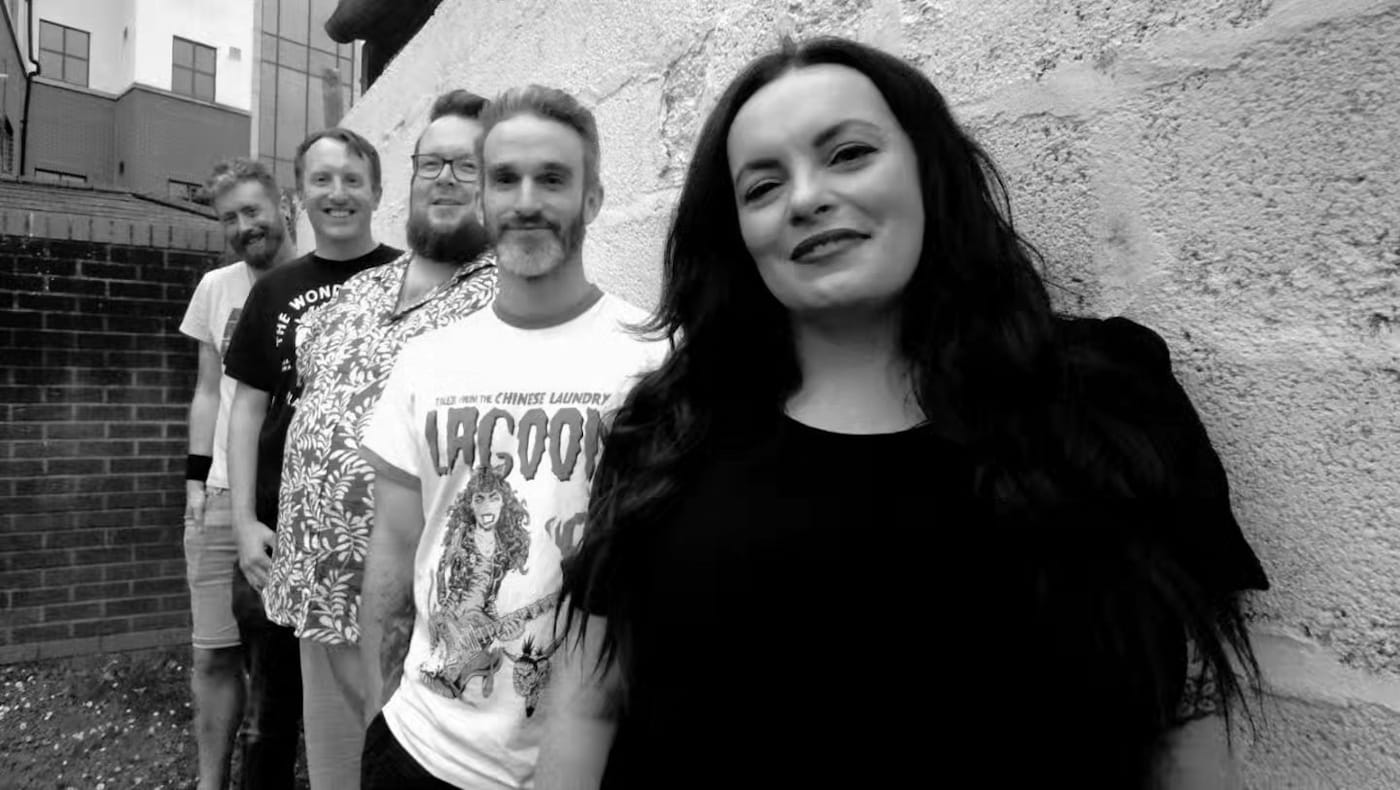



Anti-Corpos have been doing this long enough to know what punk says about itself, and what actually happens once the room fills up.
“For every 1 out of 5 Anti-Corpos concerts we need to stop the show and manage bad behavior in the audience, people taking up too much space, or not respecting the boundaries of others,” Adriessa Souza says. “So for as long as we are a band we will be calling out bad behaviour in and out of the concert room.”
That sentence gets closer to the band than any clean genre tag does. Anti-Corpos call themselves queer feminist noisy punk. The music hits hard and fast, pulling between heavy riffs, dark grooves, and blown-open noise, but the point has never been just impact. Since forming in Brazil in 2002, the band has been fighting for gender equality in heavy music, and after more than 20 years they still sound like a band refusing to let anybody hide behind scene language.
Last year they released their first full-length, “Backlash,” through Refuse Records, Emancypunx, and No Gods No Masters in Brazil.
It came after years of EPs, multiple tours, and a long history that stretches across Brazil, the UK, and Europe. It also marked a shift inside the band itself.
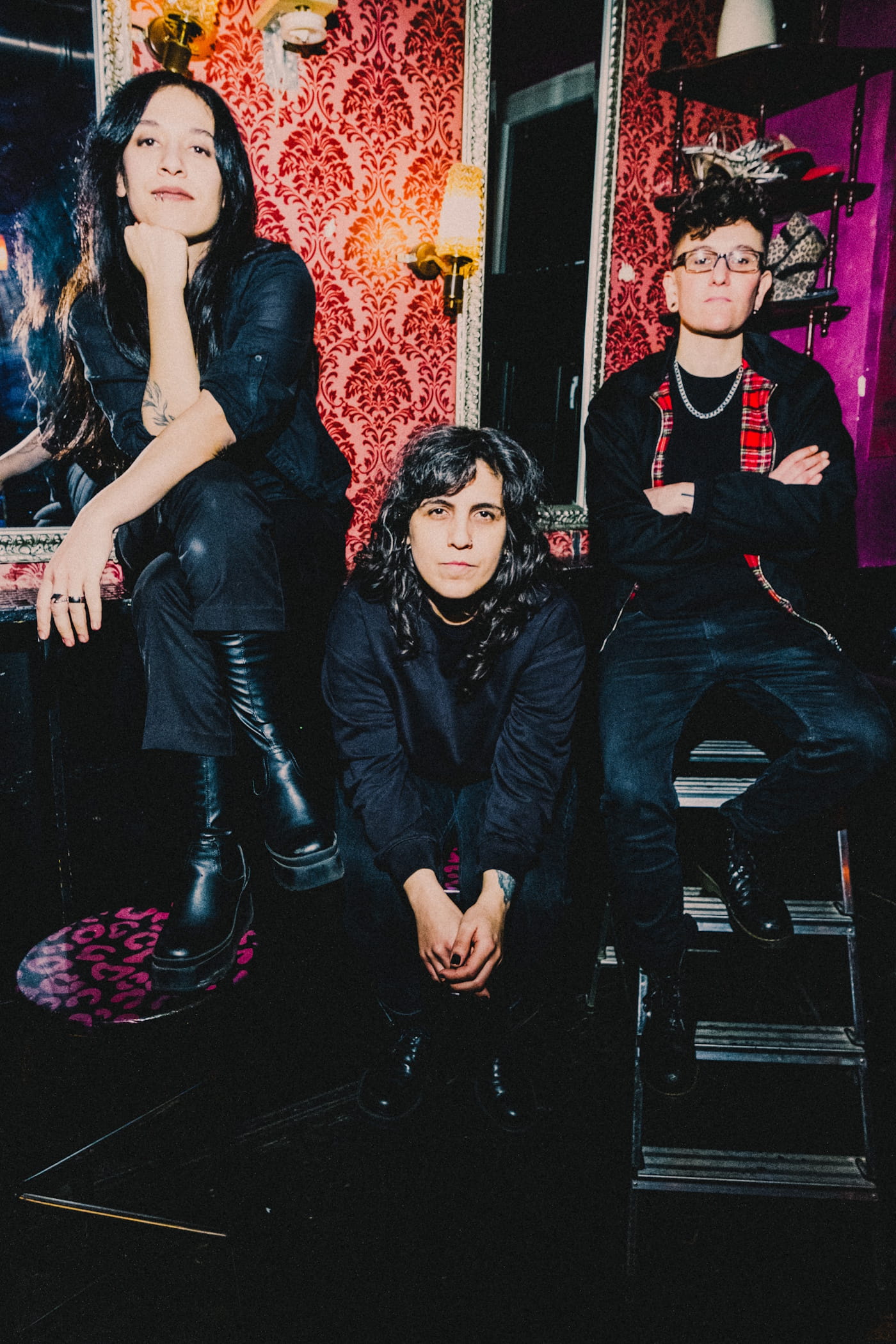
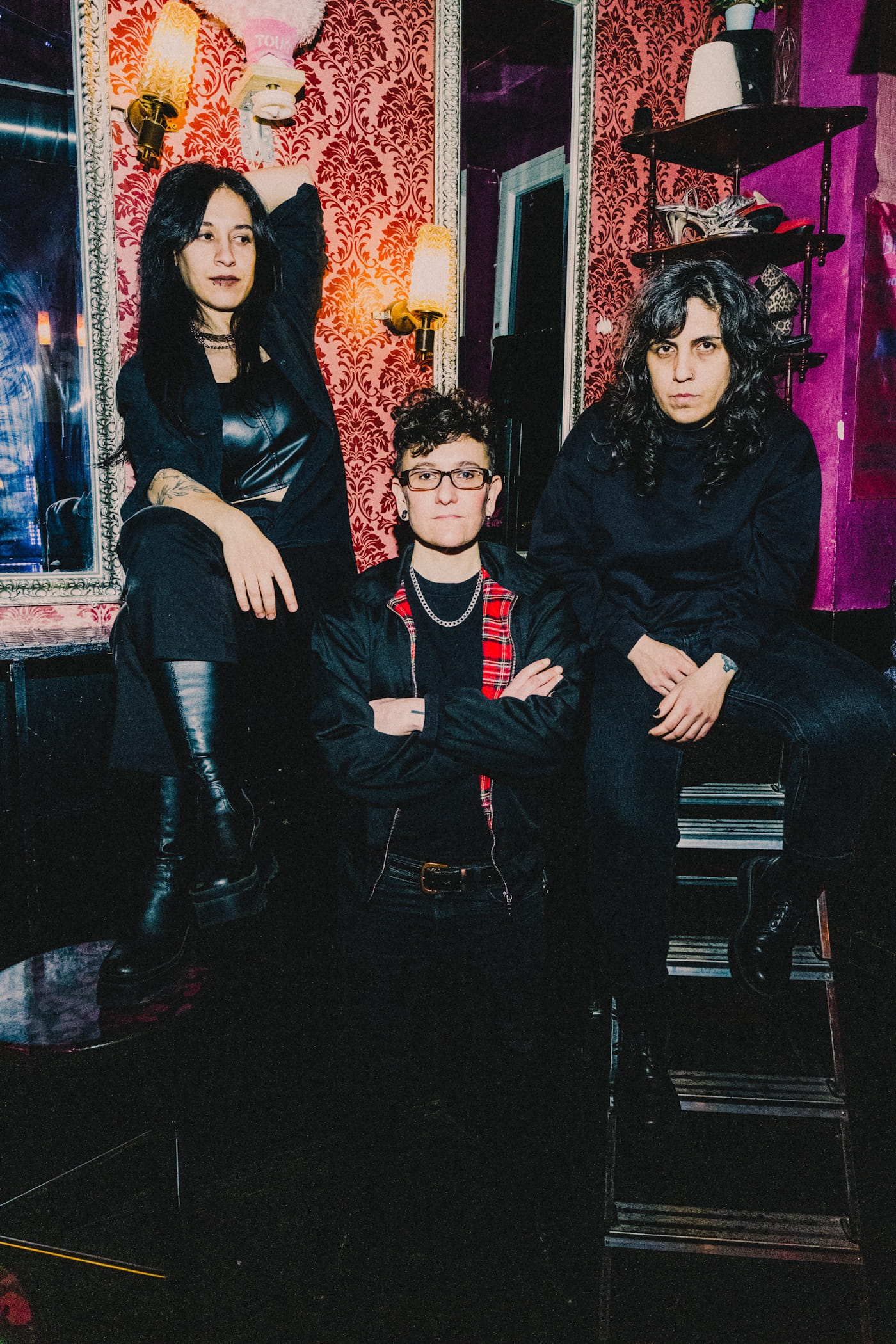
Anti-Corpos are now Adriessa Souza on vocals and bass, Helena Krausz on drums and backing vocals, and Irem Kara on vocals and guitar. Irem joined in 2022, and the record carries that change.
“The release of our full-length album last year felt like a milestone for the band,” Adriessa says. “Since Irem joined us in 2022 we worked a lot on a heavier sound and we’re really happy with the results. This album has allowed some new experiences, a packed release show, reaching a new audience, our first tour in Portugal, and now our first tour in Japan.”
That Japan tour starts in April, and even for a band with this much road behind them, it doesn’t read like routine expansion. It sounds more like a line being extended into a place none of them have been before.
Wyświetl ten post na Instagramie
“Going to Japan for the first time feels like a totally new adventure for us,” Adriessa says. “We’ve toured a lot in Europe and South America but none of us have ever traveled to Asia so this feels like such a huge opportunity for us, to take our music to a new culture, we can’t wait.”
Anti-Corpos have played Puntala Festival, Fluff Fest, LadyFest, Fusion Festival, Dyke March, LDCM, No Gods No Masters, and Miss the Stars. They’ve put in the kind of years that usually flatten a band into legacy status or private nostalgia. That is not what is happening here.
Wyświetl ten post na Instagramie
“Anti–Corpos has such a long history, 20 years,” Adriessa says. “And whilst there’s a thread through all of what we have done, we’re excited for these new experiences.”
That thread runs through politics, but not as slogan wallpaper.
Anti-Corpos have always written around feminism, anti-homophobia, anti-racism, queer identity, and self-care. The striking part is how little distance Adriessa puts between those themes and the daily mechanics of being in a band, living in Berlin, and trying to keep a scene honest while the world gets uglier.
“It’s very exhausting to keep talking about violence and mysogny in the hard core punk scene, but it’s impossible to ignore,” she says. “In these cases we need to stand with the victims and be louder to demand change from the scene.”
She doesn’t pretend things have stayed frozen. “We’re happy to see a younger generation of queer and migrant musicians in the Berlin scene. Some things have changed, and some have not.” Then she widens the picture again: “The world is quite scary, the rise of the right, so many wars, alot of racism and discrimination of various people.”
Berlin has been the band’s base for a decade now, and Adriessa is clear about what that has meant beyond the usual easy mythology of the city. There is no tourist version of this story. There is work, routine, compromise, access, and the daily grind of trying to hold onto a life in a place that gives and takes in different ways.
“Living in Berlin for over 10 years has certainly changed us,” she says. “We’ve settled into routines, full-time jobs, and dealt with cultural differences and class privileges.” Then it turns harder. “I have experienced some xenophobic violence; even though Berlin is multicultural, we live in Germany, don’t we? So the way affection and care are expressed is extremely different from how it is in Brazil; everything here is colder and more bureaucratic.”
That split shapes the band’s view of the city and the scene around it. Berlin offers more music than anyone can keep up with. “There’s a concert every night,” Adriessa says. It offers art, funding, and, in her view, “one of the few big cities where you can still live a simple life with a good quality of life.” But it has also exposed a political break inside punk that she describes without hedging.
“In recent years, we’ve also witnessed a rupture within the punk scene between some German punks who openly support the Israeli government in its genocide of the Palestinian people — they called themselves anti-German but usually are the biggest ‘Germans’ I know — and those who stand with the liberation of the Palestinian people.”
That kind of bluntness is central to Anti–Corpos. It comes through in the songs, but also in the band’s visual language. Adriessa used to work as a graphic designer and still handles that side with a clear sense of purpose. She describes visuals as support rather than decoration, a way to carry the argument of the songs into another form.
“I quite enjoy the process of finding visual images to match our sound,” she says, “but it’s definitely a supportive role, our music has such strong themes it’s quite easily paired with visual elements.”
The videos show how that has shifted over time without losing focus. “Sororidade,” released in 2014, put queer people in the streets in Brazil and turned public space into something taken back by force.
“Borders of Fears,” from 2019, sits in the same political line.
More recently, “Hellfire,” released in 2025, pushes the band’s sense of danger into a more immediate register.
“In the ‘Hellfire’ music video the videographer portrayed our fear of the night as Flinta people,” Adriessa says, “how it can still be unsafe in 2026 to walk alone at night.”
For all the movement in Anti-Corpos’ story — from Brazil to Berlin, from EPs to “Backlash,” from European circuits to a first run through Japan — the core of it stays stubborn. A band can change its lineup, get heavier, play bigger rooms, reach new countries. It can still find itself stopping the set to tell the crowd to get their shit together.
Japan is next in April. “Backlash” is out now via Refuse Records, Emancypunx, and No Gods No Masters.
🔔 IDIOTEQ is ad-free, independent, and runs on one person’s time. If you want it to stay that way: DONATE via PayPal 𝗈𝗋 SUPPORT via Patreon.
Stay connected via Newsletter · Instagram · Facebook · X (Twitter) · Threads · Bluesky · Messenger · WhatsApp.