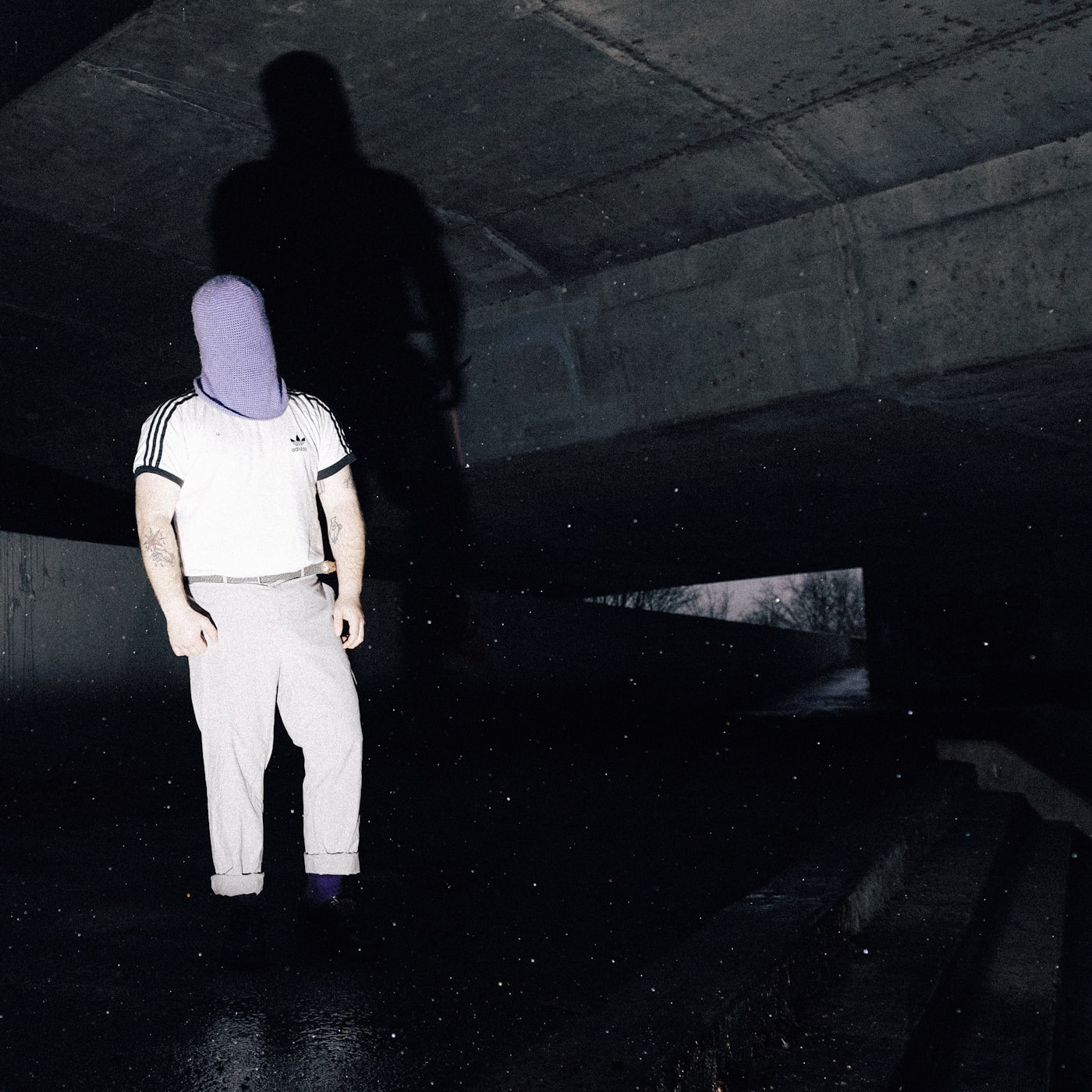


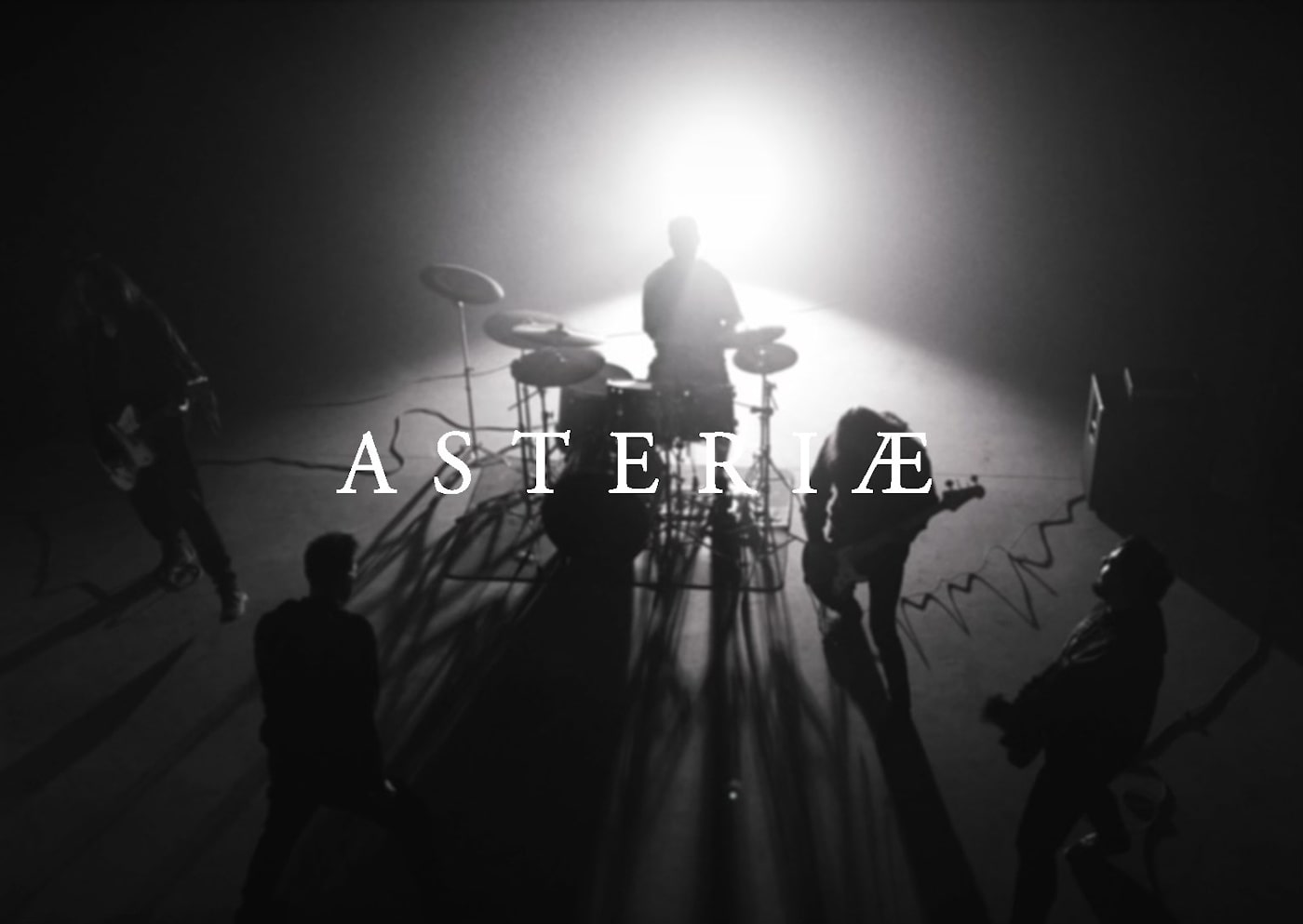
There’s a quiet thought hanging in the back of your head when you listen to Asteriæ: maybe the only way some people get through a week is by building a room inside the noise. The Poznań five-piece have been doing that since 2019, fusing blast beats with wide guitar motifs and a bass tone that never really relaxes, all cut by vocals that feel like someone finally said the thing they were trying to hide. “Miejsce, które nazywam sobą” isn’t offered as a grand statement. It’s offered as a place you go when you have nowhere else to leave what’s eating you.
The band formed around Michał and Marcel, and in February 2023 released their debut “Gasnąc,” entirely DIY, gaining unexpected traction and pushing them to stages like Summer Dying Loud, Post Mortem, and Skowyt.
There’s something telling in how quickly it translated live: the songs feel like they were written with bodies in mind. One year later they filmed Black Vine Session #2 in the Museum of Musical Instruments in Szyba, a live video album meant to capture the version of themselves that only shows up under heat.
They describe that environment as “full of expression, emotion, and intense atmosphere,” a way of holding themselves in proof.
They write lyrics in Polish, and they don’t pretend there’s a deeper reason beyond the one that matters: “We write lyrics in Polish because it’s the easiest way for us to capture and pass on the emotions that really live in us,” they say.
“English is sometimes simpler to pronounce and easier to ‘fit words,’ but Polish gives us more honesty and depth.” Some of the early “Gasnąc” texts were in English, but the band add: “English often lets you smuggle in unnecessary ornaments or incorrect content. What’s literal for us can be misunderstood because we don’t know all the corners of that language. You can feel that Bartek and Marcel give more of themselves when the spoken word is closer to them.”

The new album’s title frames the entire thing. “This album — like all the music we write — is an escape. ‘Miejsce, które nazywam sobą,’ as the title suggests.”
Their metaphor is simple and heavy: “Imagine you’re a jar or bottle standing under a leaking ceiling of bad emotions. Our music is the sheet of paper below, soaking up everything that drips, forming shapes and outlines, taking away the surplus anger and frustration that everyday life brings.” It reads like someone who finally figured out how to stay humane by burning off the pressure somewhere else.
Songwriting wasn’t rushed. “Toń” was written early and stuck to them through shows, rehearsal rooms, and eventually Black Vine Sessions. The bigger shift arrived when Eryk joined in January 2024: “That was a breakthrough. We know we’re complete now. Everyone, despite their own problems, is there for each other, and in hard situations we can count on one another.” It’s not dramatic; it’s simply someone telling you they finally found all the pieces.

Even the name Asteriæ has a small ghost behind it. “At the start we had a concrete idea of how the band should look,” they say. Their then-drummer floated more conceptual, cosmic narratives: “about saying goodbye to a person flying a spaceship from a collapsing Earth.”

Over time it didn’t feel true, and they turned inward, toward self-conflict and daily corrosion. But “Asteria” — Greek patron of stars — stayed, like a faint echo of the band’s first draft of themselves.
View this post on Instagram
They keep their work in the underground, but refuse the idea that underground equals forgotten. “Working with D.I.Y Koło Records is terribly important for us and we’re happy to be in that crew,” they say.
“Music being underground doesn’t mean it must be forgotten or left unpromoted. We don’t want to make money on this. That’s not why we do it. It isn’t an industry for us or an attempt to break out for individual gain.” They add simply: “Everyone rebels somehow against the world around them. We chose this path. Huge thanks to Piotr for trusting us.”
Catch the band live at the following stops and scroll down to see the full track by track rundown for the whole thing:
View this post on Instagram
“1 – 4 – 8”
This one started as frustration and turned into dark coincidence. While composing, the band kept stumbling on the 148th measure; they joked, they swore, the working title became “148” just to tell projects apart. Then someone remembered Article 148 of the Polish Penal Code — murder. “What began as coincidence turned into something far more meaningful — a name that fits the emotional hit and content of the song.” The number stuck. It now frames the track’s tone the way a warning sign frames a hallway.
“Ruiny”
Originally titled “Jad,” this was the moment the new record clicked as a direction rather than a pile of ideas. “Ruiny gave us the real push to act — the moment we knew it was time to write new songs and give them a shared direction.” Here they kept “the rawness and rage that rang out on ‘Gasnąc’,” pulling less melancholy and more teeth. Spoken melodic passages tie it back to earlier impulses. They call it “a symbolic turning point — a track that unites the raw and emotional, reminding us why we started creating music in the first place.”
“Tchnienie”
Working title: “really sad.” “From the first notes it carried a heavy, melancholic aura we didn’t want to lose.” But the band refused to coast on one mood. Midway, they punch through: “At one point we break the mood with a segment that, in our opinion, is the heaviest, most suffocating, and crushing of everything we’ve created.” It’s the only piece where they stepped away from 4/4 or 3/4 intentionally, preserving pulse while bending structure. The shift feels like someone drowning, then remembering they can swim — or maybe the other way around.
“Uwolniłem się”
This one reaches backward. The core riff was written over ten years ago by Marcel, back when he played death-crust with his stepfather and cousin in Batali. It never found a home then; it matured in the drawer. The lyrics come from a collection of poems and texts by Arkadiusz Szczotkowski, the same stepfather. It’s not subtle — it’s a family thread woven back into the current sound. A D-beat section marks the roots, filtered through the band’s current sensibility. “We preserved its raw energy, combining it with the space, melancholy, and weight characteristic of our style.” It quietly builds a bridge between everything they used to be and everything they’re building next.
“Toń”
A long companion, first captured on Black Vine Sessions. It’s been played since their third concert in 2023 in Warsaw, and has practically never left the setlist. The writing approach was reversed: “We first had the idea for the ending — incredibly powerful and full of emotion — then we searched for the right beginning to lead there.” It’s extended, slow-building, “filled with space and tension,” and currently the band’s longest track. It waited on the shelf because they always knew it would close the next album. Eventually they couldn’t hold it back. “For us, it closes one chapter and opens another,” they say. It feels like someone documenting the moment they shed a skin.

What “Miejsce, które nazywam sobą” does is simple: it gives the band somewhere to store the things that would otherwise spill over. It’s not posture. It’s maintenance. And it’s telling that they never call it victory — only escape.
Everyone rebels against the world around them. This is just the path they chose.