

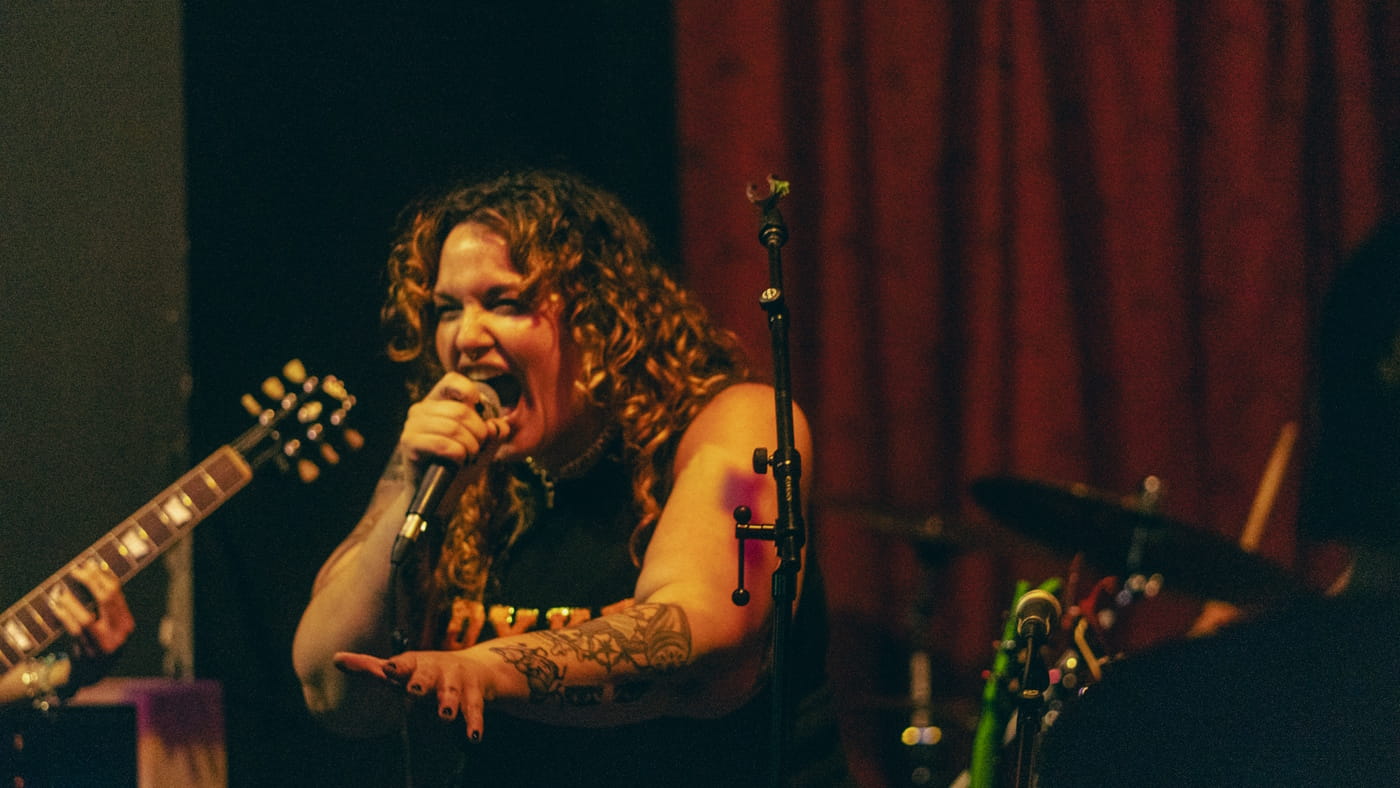
At Obrien’s Pub in Allston, after bratlash‘s debut EP release show, a woman came up to Jett Hexx to say she’d heard the band for the first time that night. She wanted to know where else she could find their music. She’d ditched Spotify for ethical reasons, and asked if bratlash was anywhere else.
Jett said yes, everywhere except Spotify, for similar reasons. Her friend, standing beside her, admitted he didn’t know there were streaming services other than Spotify. That opened a longer conversation.
Six months from now, Obrien’s will be gone. The venue is closing this year to make room for condos. Its old sister room, Great Scott, is a Taco Bell.
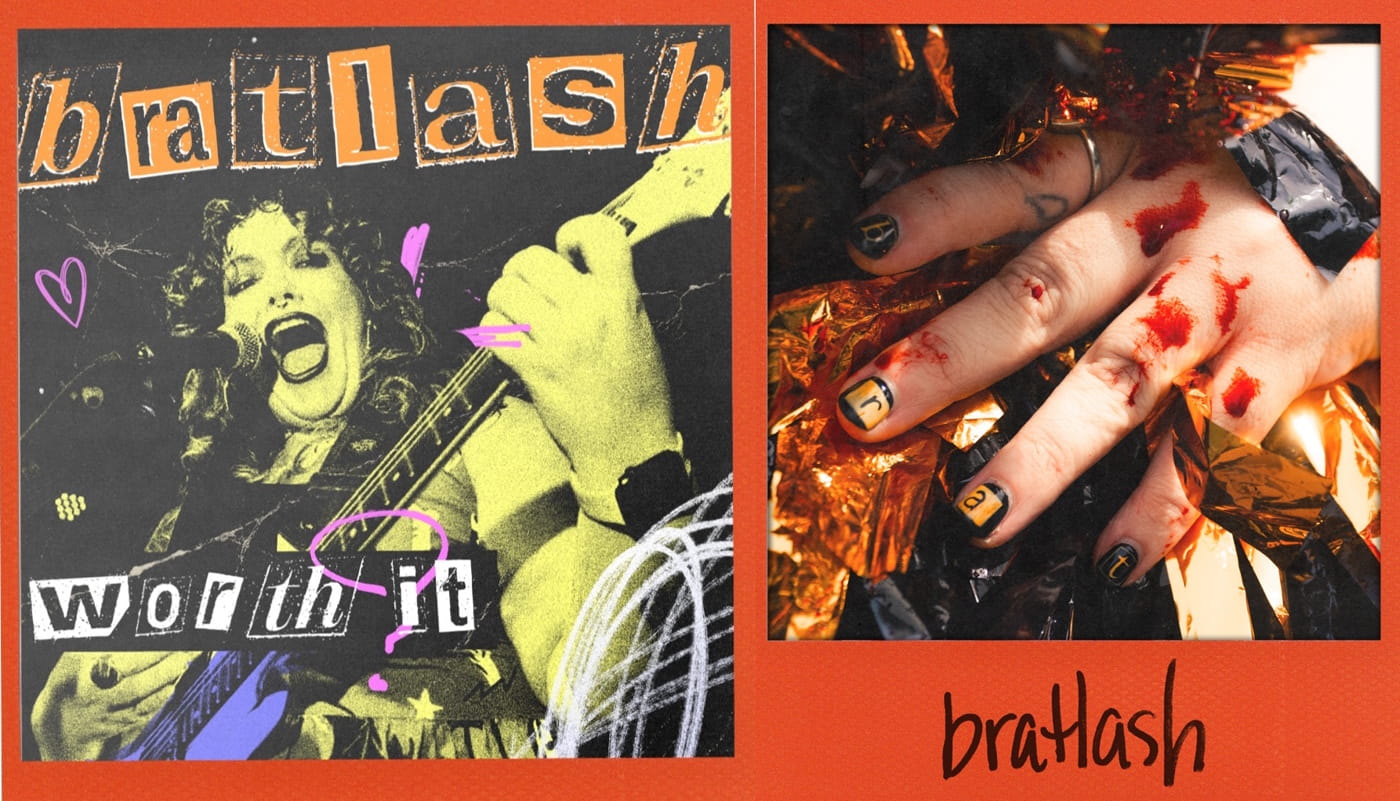
That’s the setting bratlash’s self-titled debut EP arrives in. Three songs, engineered and produced end to end by women and queer people. Nadia Lee on guitar, mixing, co-production, and engineering. Natalie Bibby on mastering. Jett writing, tracking, co-producing, and fronting. The next single after the EP, “Yr Lies”, was produced, mixed, and engineered by Sarah Tudzin, with additional engineering by Jett and Julian Hoot, and lands in the fall with a music video.
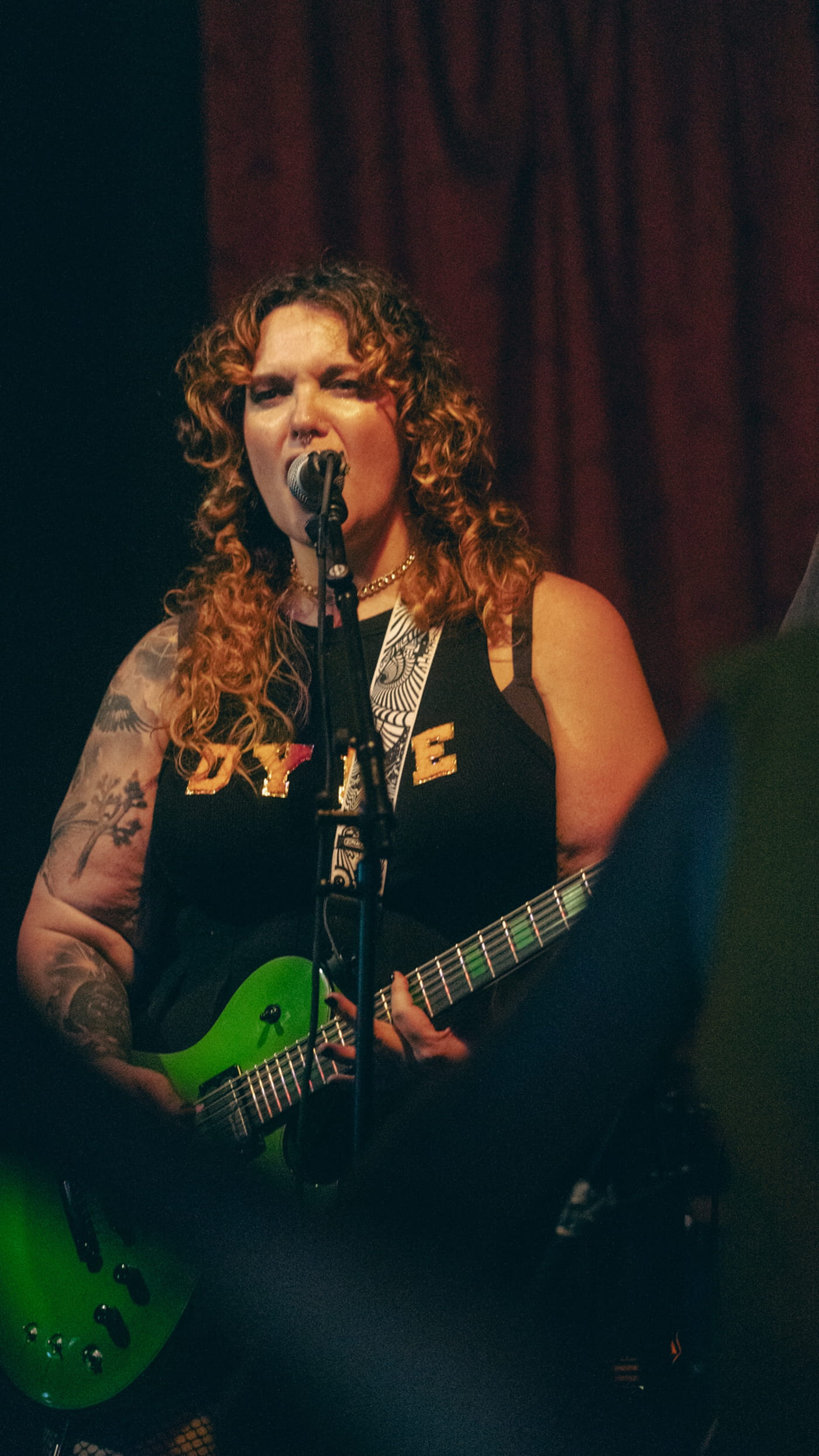
Jett founded bratlash in Boston in 2025. The current lineup is Jett (they/them, vocals, songwriting, guitar, production, engineering), Nadia (she/her, guitar, production, engineering), Zach Hunhoff (he/him, guitar), Johnny Levine (they/he, bass), and Julian Hoot on drums as a temporary live solution. Ben Gentil played drums on the record, and Gabbie Quinones played bass on the EP itself.
Reference points the band gives out openly: Mannequin Pussy, Bikini Kill, UK psych doom band Electric Wizard, and proto-punk group Death. After the debut single “Worth It (is it?)” landed in April 2026, If It’s Too Loud called them “the find of the year for us.”
“bratlash was founded because of the sacred rage I was feeling under the current administration and just a culmination of many years of frustration with how the systems and government in America work,” Jett said. “I was at a boiling point and wanted to have an outlet for my feelings in the hopes to continue to build community, and create safe spaces for other BIPOC and queer and trans folks.”
Wyświetl ten post na Instagramie
The collaborator chain is not accidental. Jett runs an active check on it. “It has always been at the forefront of my decisions to work with femmes, BIPOC and queer folks first. There are so many white cis men in this industry, and, I can make a small change in this way.” The numbers Jett puts on the table: only 11% of the audio industry is represented by people who aren’t cis men, and less than 2% by trans or non-binary engineers and producers. Any cis man on a bratlash record is either a proven ally, or the work was outsourced because Nadia and Jett had to be in the room tracking with the band. “I will not work with people who don’t, period.”
Where the ethic comes from: Jett wanted to become an audio engineer and music producer after sitting on the artist side of studios where the rooms were full of men making decisions for them and their art. “I didn’t love that or feel safe as an artist, and I choose to move differently.”
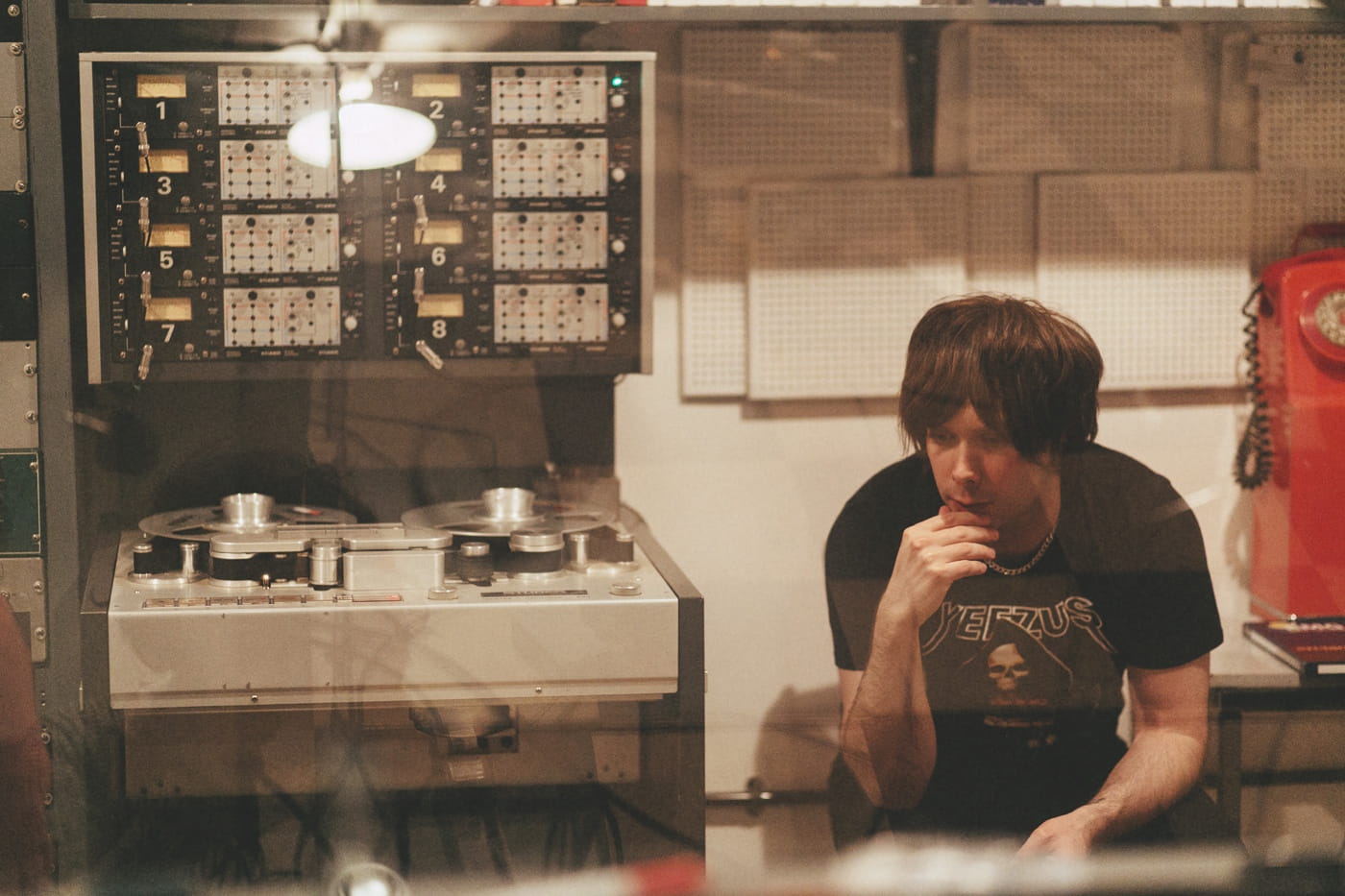
Jett and Nadia met about eighteen months before they started working together. Jett calls the shared frequency between them “lovingly chaotic energy”. The engineer’s job, to Jett, is to always read the room. With Nadia, that unclenched. “I didn’t ever have to censor myself or think about what I was about to do or say. I could just exist as is.”
Natalie came in via We Are Moving The Needle, an organisation that lifts female, trans, and non-binary engineers and producers. Jett watched her teach a mastering masterclass on heavy music. “I saw her mixture of audio knowledge paired with intuition, which is something I really value in collaborators. I also saw how unafraid and unapologetic she was about making the music have even more teeth than it did in the mix, and that is something that not all mastering engineers do.” After the class, the two got to talking about riot grrrl music and the Pacific Northwest, the region Jett calls their first home. No other mastering engineer was ever in consideration.
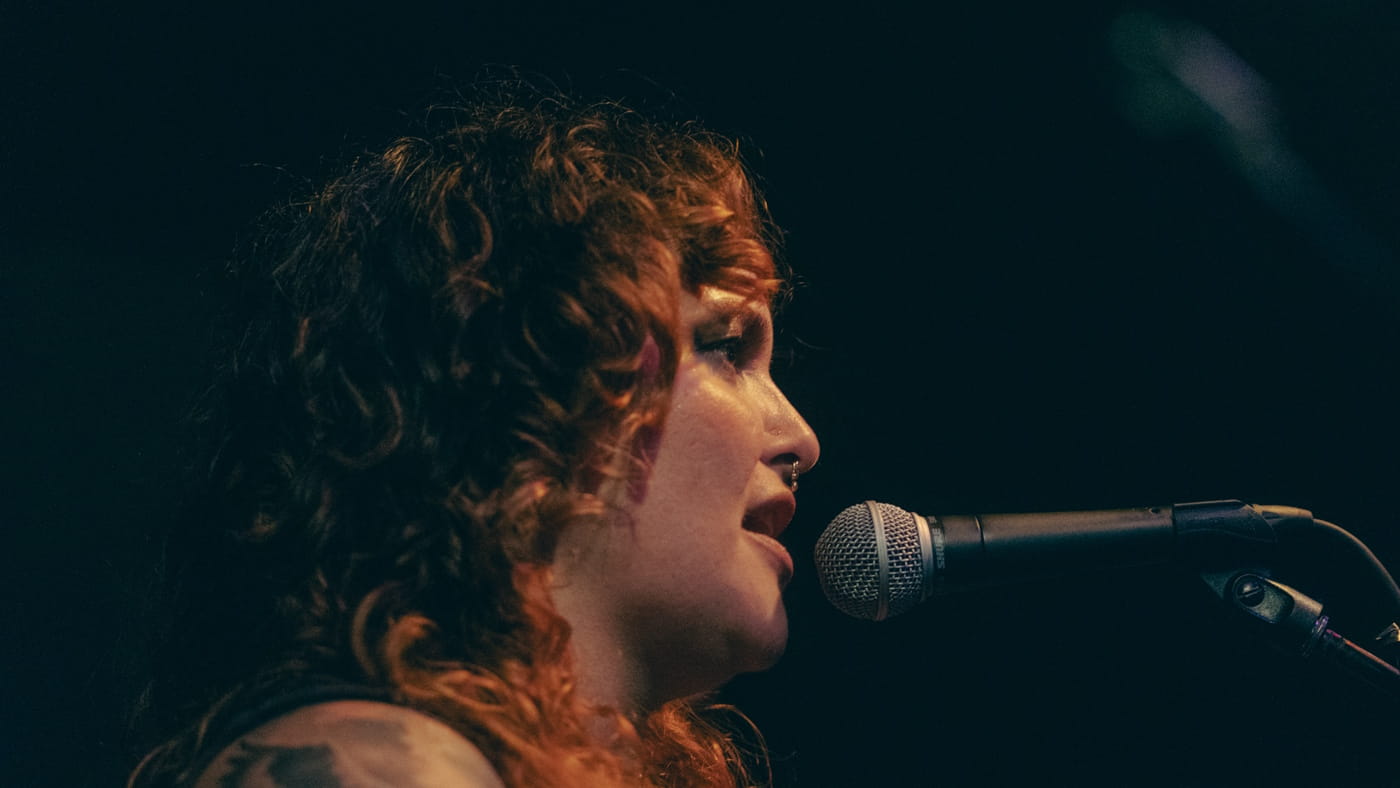
Sarah’s role sits on the next release rather than the EP. Sarah Tudzin produced, mixed, and engineered “Yr Lies”, the fall single. She and Jett had a one-day session together in Boston to get basics and some vocal overdubs, while Jett and Julian Hoot handled additional engineering remotely. Because the window was tight, most of the vocal and percussion layering fell to Jett and Julian, who is currently playing drums with bratlash as a temporary solution. Sarah left the shape of the overdubs open.
“She didn’t give me much direction with the vocal and perc overdubs, just that she wanted to add some. I thought it was fun that she was giving me creative liberty, so I ran with my instinct on it.”
Jett tracked much of the vocals while sick.
“Because of that I was a little more squeaky than usual. However, that lent to me being able to hit some notes in the 7th octave, which I normally cannot hit and it added a really interesting higher frequency sonically to the song during the last choruses.”
Nadia chopped up Jett’s basic 8th-note percussion pattern into something with more movement. The bridge of “Yr Lies” ended up somewhere closer to Jett’s mother’s soul records than to anything else the band has done. “Because we play fusion music, and my background as a vocalist is very much influenced by the soul records my mom played when I was little, that translated a lot to that section.” Sarah’s own background in punk, singer-songwriter, indie, and alternative music shaped how the song came together too.
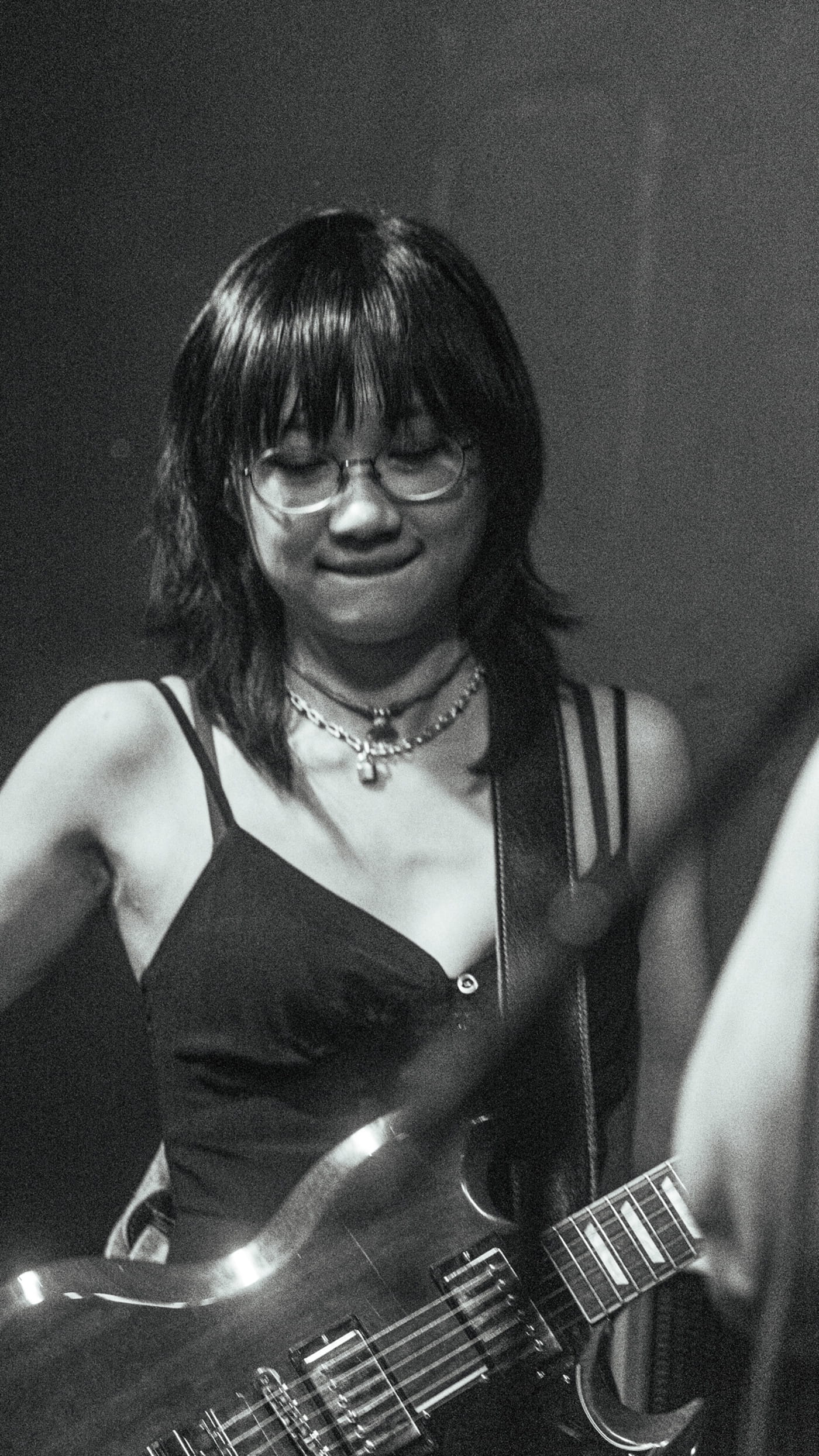
Additional hands across the EP: John Paterno recorded “Worth It (is it?)”. Alex Allinson tracked parts of “does that OFFEND u?”. Julian Hoot, Ethan Tan, and Django Beaudoin worked as assistant engineers on “RIP”. Recording split between The Bridge Sound & Stage in Cambridge, MA, and 37′ Productions in Rockland, MA.
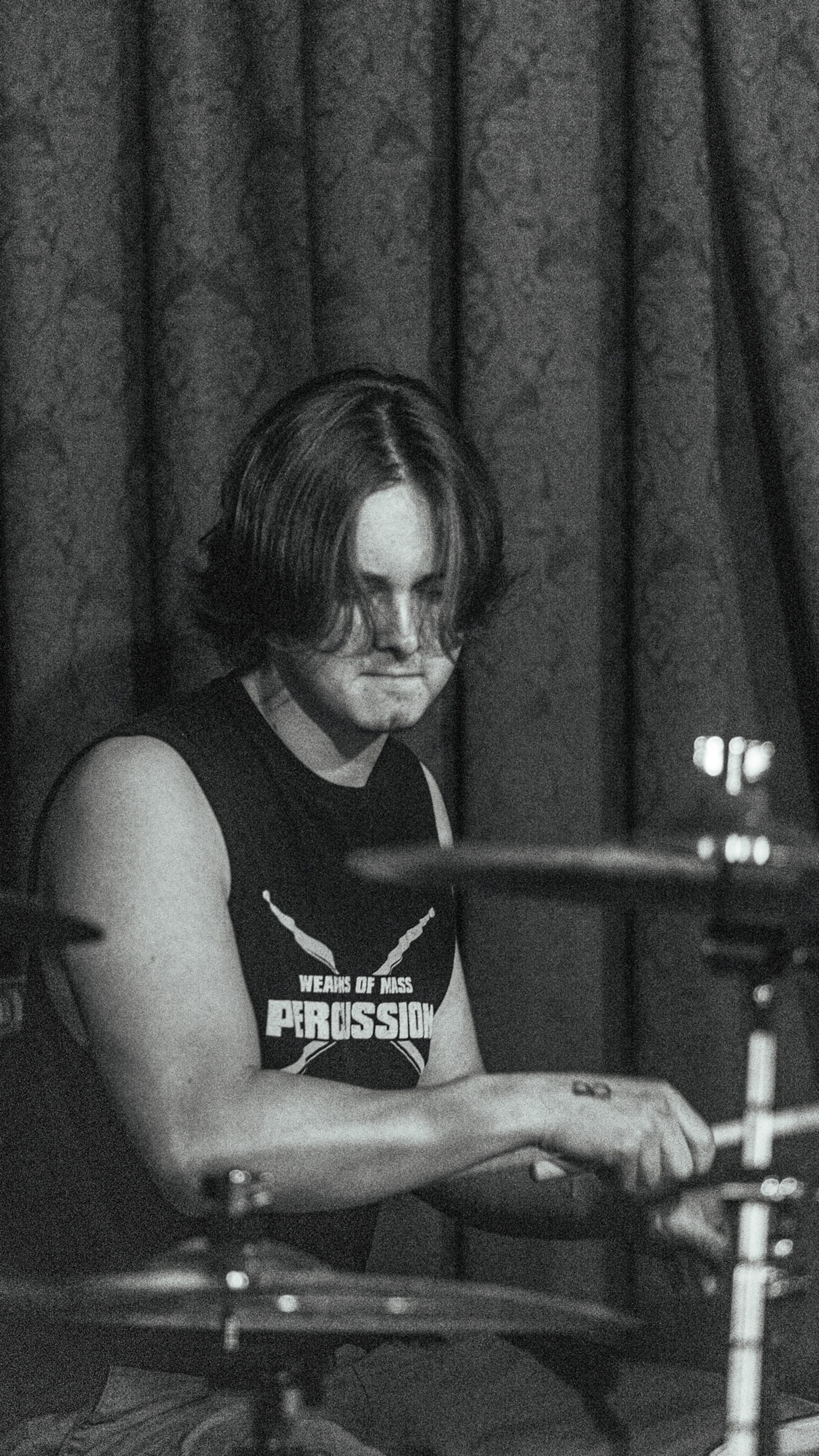
Nadia’s two sides inside the band, engineer and player, don’t fight each other. “when i’m recording this stuff, what i’m thinking about is ‘how can i help create the vision jett has in their head?'” On the EP itself, “does that OFFEND u?” is the only track she actually played on. Live, she’ll double the guitar lines Jett played on the record so Jett can work the room, or reach for the “weird noises” side of her pedalboard. Because Jett usually plays with their back to the band, Nadia takes on some of the MDing alongside Julian for the current live setup.
The goal for bratlash in the studio and live has always been to hold safe space for BIPOC, queer, and trans folks. That runs from the credits sheet through to how a room is set for a show.
Three songs, one throughline: power. “RIP” sits on oppressive systems. “Tell me why I work my hands down to the bone, while my kids are bein raised all on their own” came out of Jett’s experience trying to build a better life for their family under late-stage capitalism, and paying for that in time not spent with them. The rest of the song follows on. “Tell me why the ones in charge look powdery white, wearin prada and gucci as they step on our rights” gestures at the founding fathers and the top of the wealth pyramid. Then the pre-chorus: “This is a eulogy of all the pain, systems of oppression for others’ gain. Raw doggin’ the poor, so they get paid. Business as usual, the American way.” The chorus flips into humor: “dont Rest in Peace, suck on deez”. “I think its important to infuse humor into these subjects,” Jett said, “and I sure as hell as long as I’m alive will continue to make sure these people who take advantage of beautiful marginalized communities don’t rest in peace.”
Underneath the song sits an earlier discovery. The history Jett was taught as a kid was, in their words, “complete bullshit”. Punk rock was the entry point into a version of that history that wasn’t built on white savior stories.
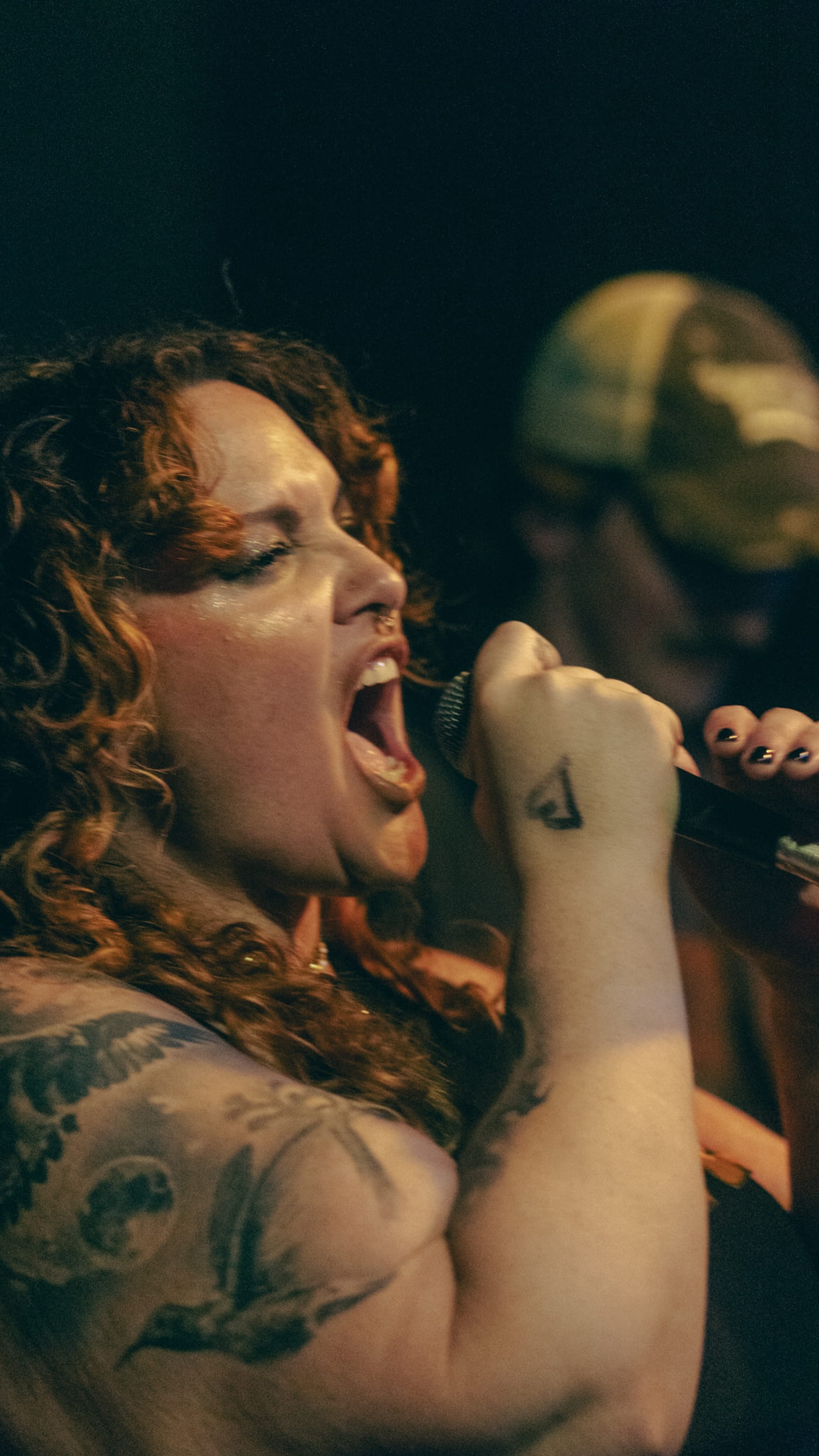
“Worth It (is it?)” pulls the theme into a private register. Jett wrote it about a relationship they were still inside at the time. Only recently could they name what the song is: “Was it worth it? You fucking hypocrite.” The line lands two ways.
“I noticed that I was giving a lot in this relationship, and something I’ve realized about myself in the last few years is that I do put a lot of energy into things I love. There is nothing wrong with that, but I think I’ve struggled with discernment of my love and care, so the hypocrite line is not only towards the partner at the time, but also to myself.” Earlier in the song: “Wearing Midas’ crown, it’s my time to pay.” A friend of Jett’s once asked them, “have you ever thought of your relentless hope as sadomasochistic?” The Midas image in the song is about the inability to see the reality of a person until reality does the work for you. What looked like gold fading once the wake-up came.
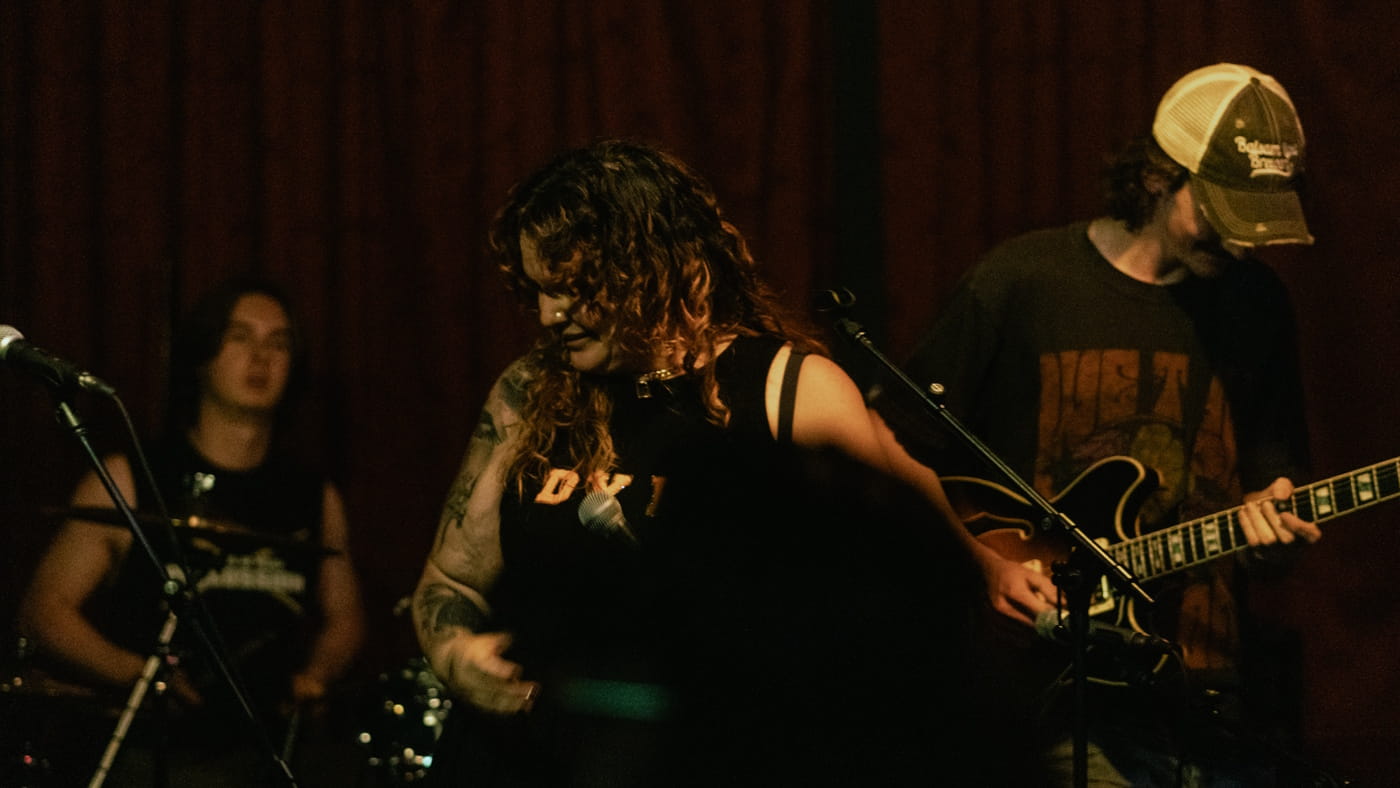
The third track, “does that OFFEND u?“, is the closing statement on power. Jett calls it an opus of lived queer experiences rather than a single moment. Some of the lines land on childhood: “you put me to sleep and program me, not to take up space, put me in my place and be all the things that you want to see.”
Others go straight at institutional religion. “You hammered my heart, up on your cross. The Holy contusion from sacred illusion, no more delusion, no more confusion.” Another line calls a nation “founded in Christian values” a guise for control: “push rewind on the mazes of their gasoline phrases, see through the coded praises and their guillotine gazes.”
Jett grew up in Texas during the Bush administration. Queerness came into focus in early teens. Classmates were calling them a dyke before they even knew what the word meant. The religious upbringing was inside what Jett now names as Christian Nationalism. In their teens, they went on a mission trip to South Africa through an organisation called Teen Mania. That trip is where they lost their faith.
Another line, “I’ll shave my head, forget the things you said. Do what I want while you wish I was a lady”, intentionally breaks the rhyme scheme. “You would assume I was about to say ‘dead’ instead of ‘lady’. To me, being perceived as a lady as a genderqueer person well…I might as well be dead to you because you just completely assumed and invalidated how I identify.” In the B verse, “In myself I am invested as I purge what I’ve ingested” points at the same shape of story: recognising that the beliefs you held weren’t yours to begin with. The bridge of the song sits on grief, on the pain that came out of years of self-abandonment.
The warrior in Jett has been there since childhood, by their own account. “I am a huge diva when it comes to justice and morally slippery behavior, as well as people posing things to benefit you when all it is going to do is benefit them.” The polaroid imagery across bratlash’s visuals this season carries the same throughline the songs do: chapters in one longer story about power.
The band’s tagline, “music to disappoint your dad with”, covers more ground than it looks like it should. Jett splits it three ways. “The dad we are disappointing is literal and figurative. It stands for your family, the ways in which they raised us and how we choose to pave our own path and our own values, the administration in the sense that their entire goal is to erase queer, trans and BIPOC people which is quite clear considering policy, police brutality, wealth, academic and access inequity, and much more I can name. It is also a statement against patriarchy as a whole because of the pervasive nature of it, how it is the basis for fear based programming that drives us as people to make decisions that are not from a place of love and togetherness.”
The heavy content is where the playfulness earns its place. Owning the inner brat is part of the writing, the composition, and the delivery. If bratlash can give a room one night of reprieve and community, that’s the win. Patriarchy, in Jett’s read, thrives on inequity and on ignorance. Shed light on it and the culture inches closer to somewhere better.
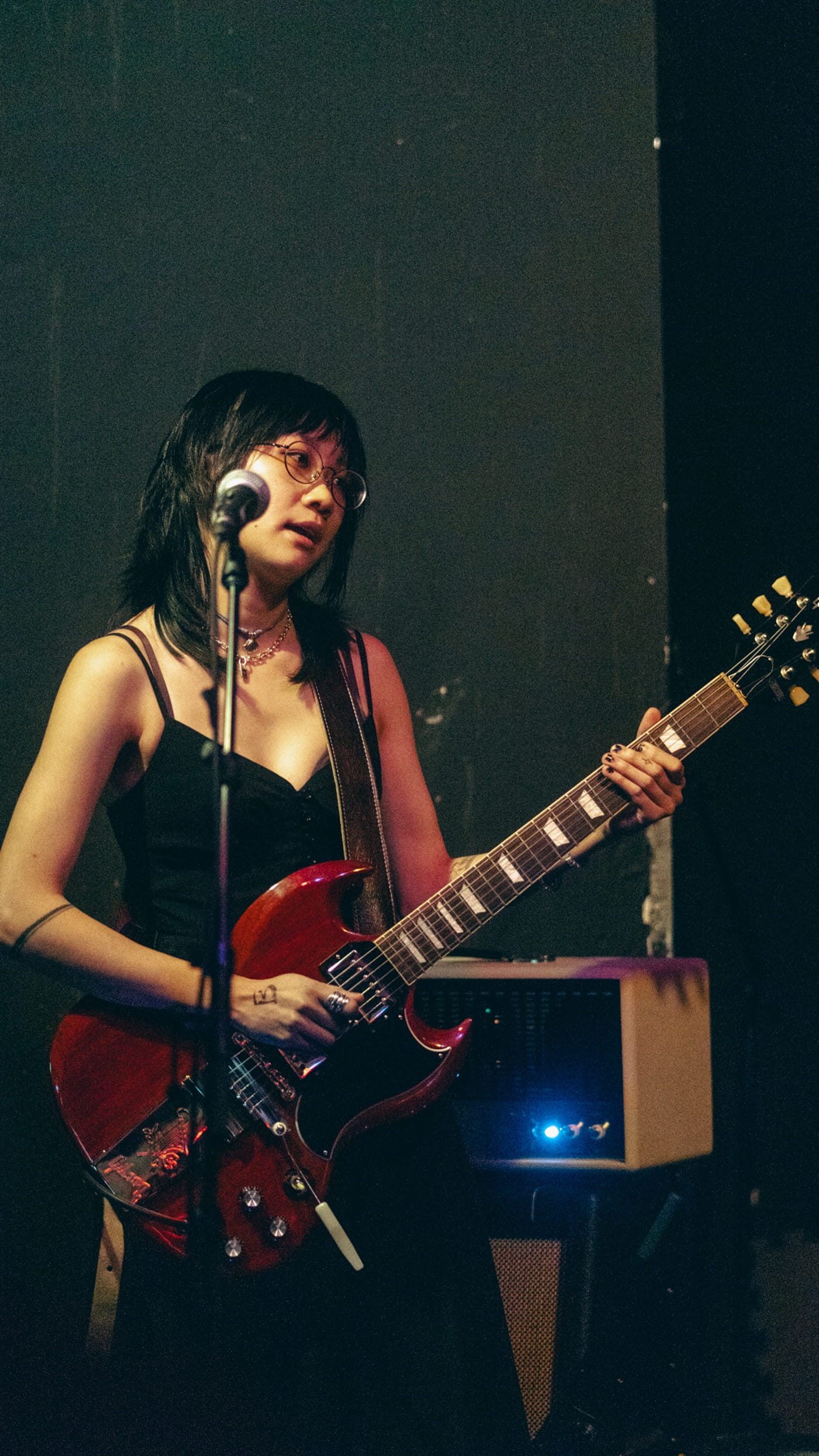
Nadia grew up in Singapore, in an all-girls Christian school, in a culture that stigmatised queer people and undervalued creative careers. “People in Singapore value jobs like doctors, engineers and finance. Creative jobs are not highly valued or seen as legitimate often by friends and family. After moving to America, I felt a huge culture shock because I never had the opportunity to openly express myself or presenting a certain way, wearing certain clothes or saying certain things.” The Christian school did one thing for her: her formative years were spent around other girls, so she never learned to feel like she had to be quiet or not make space for herself.
The parallels with Jett’s background are part of why the two clicked. “I am extremely grateful that Jett and I found each other because I feel that our stories are parallel in a lot of ways. We both come from a religious upbringing, share similar music interests and taste, and queerness.”
For Nadia, the queer collaborator chain is more than professional practice: “It’s important to build your queer family, and a network of queers to collaborate with in your life even outside of music, because those are my people and we have to create family wherever we are.”
Music was the way in as a teenager. Nadia’s mom hated heavy music. Nadia blasted it anyway. “Music has been my best therapist and I hope to do the same for others.”
Then Spotify. Jett brought the decision to the band as a decision, not a proposal. bratlash releases everywhere except Spotify. Jett had personally divested from the platform over a year earlier. Their case, in their own words, covers several fronts: Spotify approving ICE ads on the free tier, unresolved concerns about the platform’s stance on IDF, the CEO’s involvement with defence tech company Helsing, what Jett calls the platform’s uplifting of AI-generated music, “the pink washing of music”, and Spotify being the lowest-paying streaming service for independent artists.
“I understand that spotify doesn’t officially endorse IDF or ICE, but the CEO’s involvement with Helsing and approving ICE ads on their free platform is enough for me to have major concerns,” Jett said. The new verified-human badge, gated behind a 10K-follower minimum, reads to them as one more bandaid on a company they don’t respect. They acknowledge other platforms have their own problems too.
“I do understand that YouTube uses AI and our music is there, and I also recognize that Apple and Amazon music also have problematic politics. The thing is, we have to put our music somewhere as a new band and that is why in promo we choose to promo bandcamp first.”
The distinction Jett draws is between professional artists (musicians, producers, engineers) and what they call “corporate slaves who are programmed to send a specific message with their music and hide behind the word ‘artist’ leeching off the backs of DIY and Indie Artists.” Their read on the numbers: indie listeners don’t actually find their bands on Spotify playlists. Word of mouth, Bandcamp, live shows, and platforms with less trash in them are where the audiences turn up.
Their overall stance is honest about its limits: “there truly is no ethical consumption under capitalism. However, I can make a more informed choice as a consumer and that is what I am doing.” These are Jett’s positions, stated for the record.
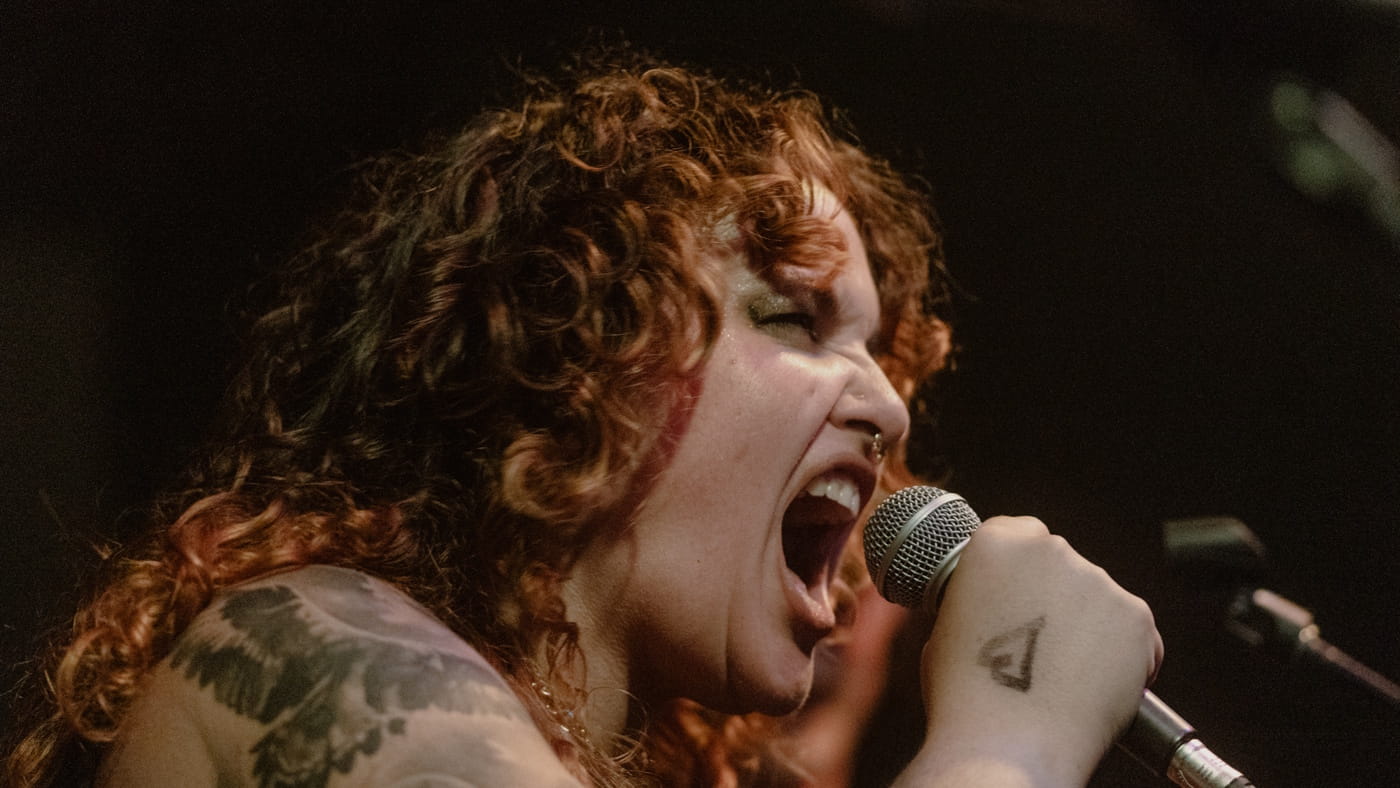
Nadia disagreed on the streaming call, and said so openly. “As much as I agree with Jett, I believe that not releasing on spotify may significantly limit our listener base. Most of the people I know here and in Singapore have not even considered the ethics behind Spotify as a company, and the horrible shit they put money into. Unfortunately because of this, I do believe that it could benefit us as a whole to release on spotify and make it as accessible to anyone as possible. I believe art should be for everyone.”
She stood behind the call anyway. “However, I 100% understand and stand behind Jett’s decision to keep us off of spotify because I appreciate their dedication to their values.” On the dynamic between the two of them here, she put it plainer: “At the end of the day, this is Jett’s baby and I am just the loving uncle.” Since then, Nadia has switched off Spotify herself, and added a direct line to anyone reading: “IF YOU ARE READING THIS, PLEASE SWITCH OFF OF SPOTIFY AND FOLLOW US.”
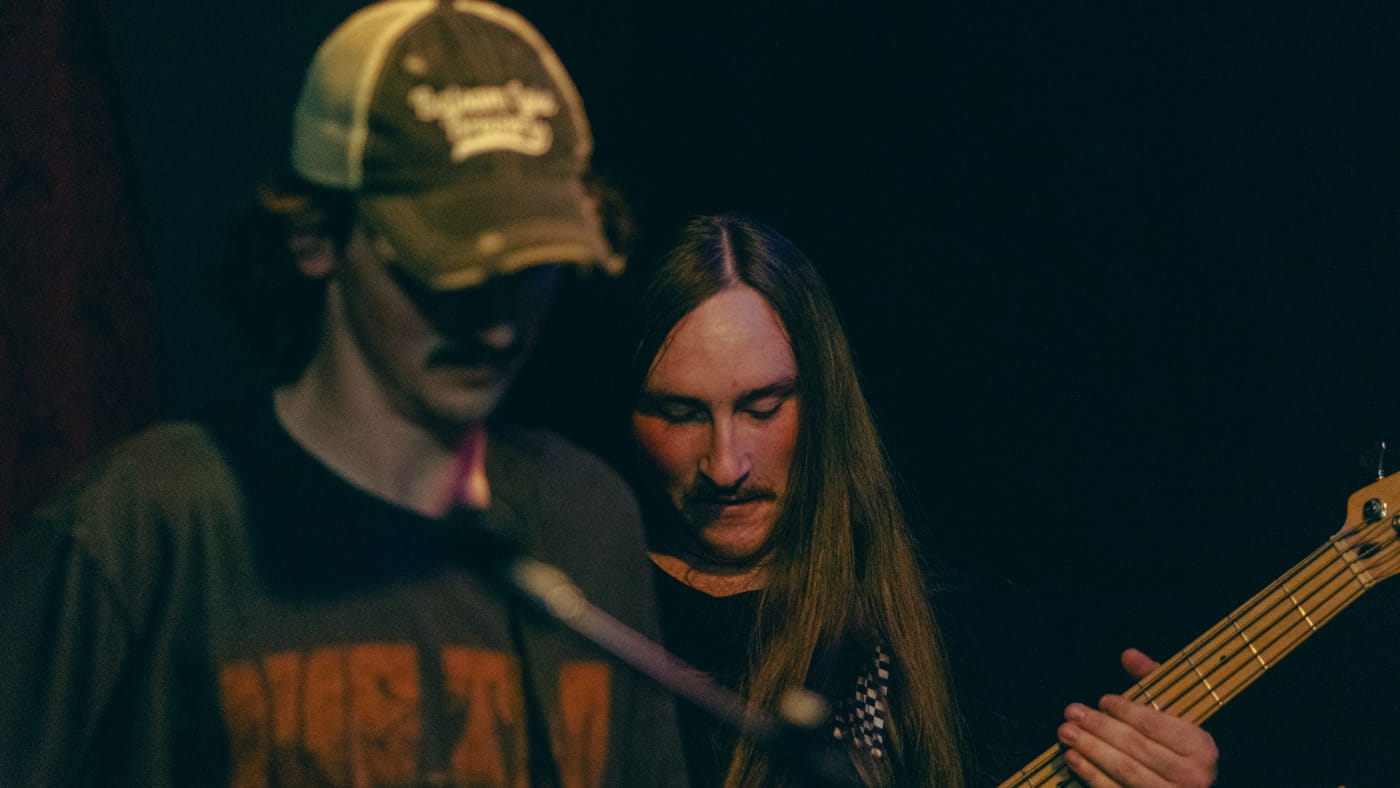
The visible cost of the decision, so far, is missed passive discoveries and a handful of one-to-one conversations. Jett recently got a YouTube comment from someone saying they thought bratlash was cool but couldn’t find the music anywhere except Spotify. Jett sent them the linktree and directed them to the band’s YouTube uploads.
“But what I got there was an opportunity to interact with a possible fan one on one. That is something I wouldn’t have been able to experience if they had just found us on spotify. It is more important to me to make connections with people, real connections.”
Part of Jett’s hope for the rollout is showing other artists that opting out of the corporate game isn’t a career-ender. There’s research to back it. Indie listeners aren’t finding their favourite bands through Spotify’s algorithms.
Boston queercore has less physical space than it did five years ago. Obrien’s is one loss, Great Scott another.
“In general there is a lack of small cap spaces to play in Boston and a lot of the heavier scene gets pushed out of the city because of this.”
The Queercore Collaborative gets Jett’s shout for their programming across New England, including a recent show at The Drake in Amherst that Jett called the best show they’d been to in a long time. Boston bands worth naming, per Jett: Film & Gender, Vomitdolls, K.O. Queen, Tears From A Grieving Heart, Gloomlurker.
What Jett wants the city to do better: sustain small-cap venues instead of paving them over for luxury real estate that only Biotech workers and academic institutions can afford. Allston in particular has been an artist neighbourhood for decades, hence the name Allston Rock City. What the shows still need to fix: ground rules that actually get enforced. “It’s okay if the boys backup for a bit and let the queers come to the front. We need to teach people about consensual touch and not tolerate anything but that.”
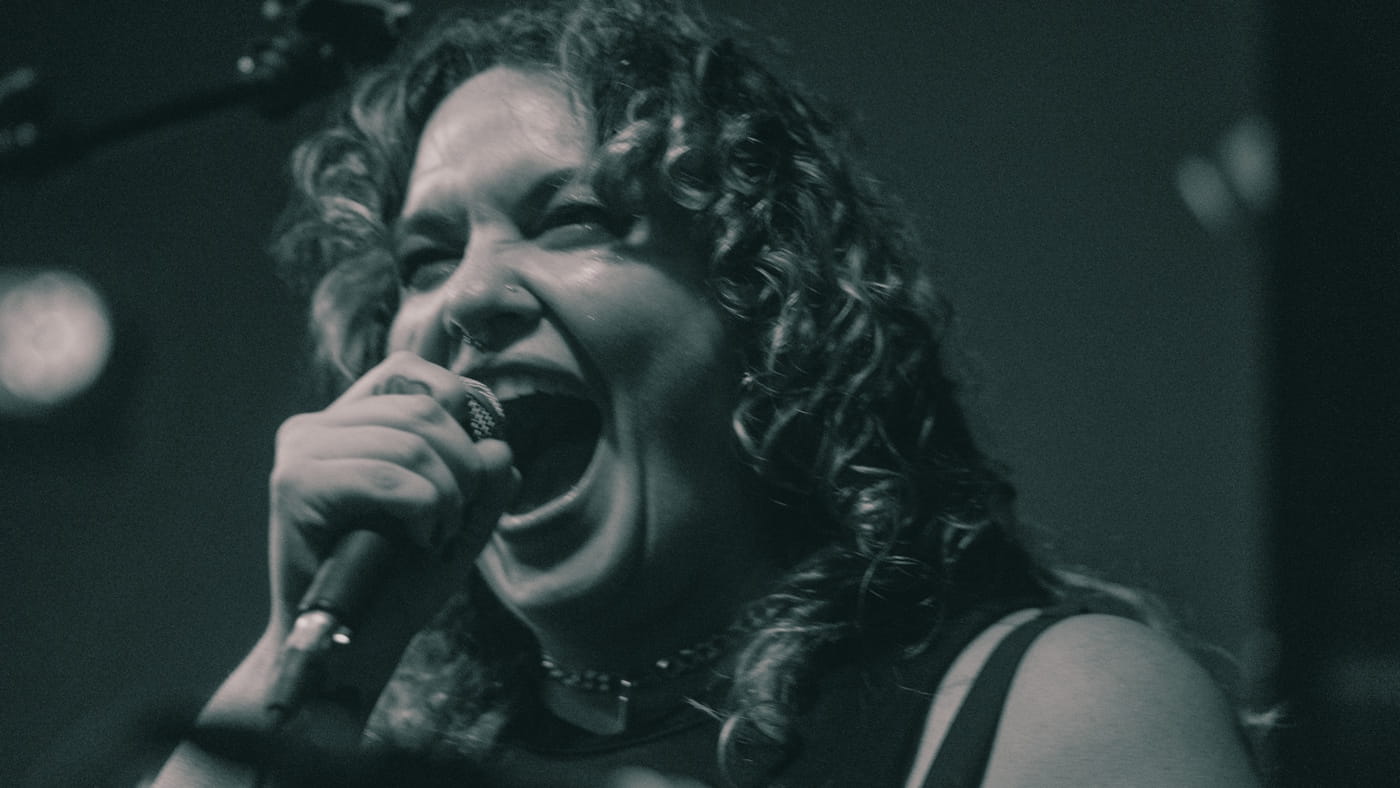
What Boston does right, in Jett’s account: the DIY scene looks out for its own. “It may take a bit to earn trust with others, but in Boston once someone decides they like you they will inconvenience themselves to help you. People here have grit and they aren’t afraid to do the hard thing to help people they care about. Maybe it’s the winters that do this, I don’t know.”
Joy is bratlash’s word for what happens after the rage. “In my life, I’ve learned that joy is a byproduct of transmutation, and a choice,” Jett said. “I could choose to be angry, but that is frankly below me to stay in that state of being.” Anger, in their own read, was the catalyst that let joy become a choice, once the rage had been felt through. Since launching the band, Jett has taken hate on social media. “But deciding to choose joy and do it for little Jett despite is how I reclaim my power. And, don’t worry haters, there is so much more of bratlash and me coming for you.” Nadia puts it plainer: “it’s in the name, gay people are happy. It’s more fun to laugh in the faces of your haters and make a good time out of it, anyways.”
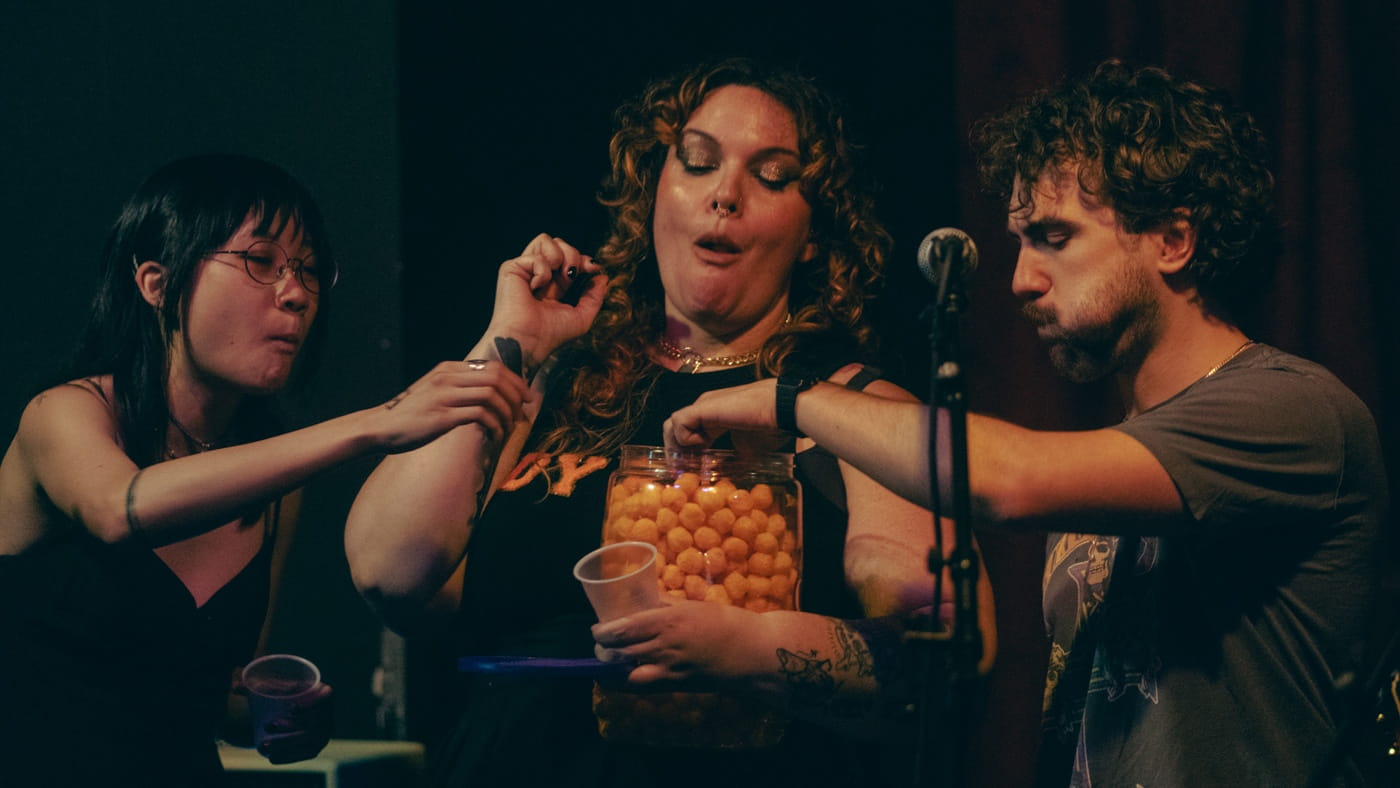
The rollout is laid out. The self-titled EP is out now. A live version of “does that OFFEND u?” follows a month later, originally slated to be a bonus track on the EP itself before Jett moved it out as its own single. Jett and Zach tracked it without practicing the song as an acoustic version first, chasing the feel of a secret shared with someone you trust. Radical honesty is how Jett moves through the world. Sometimes that looks like joy, sometimes rage, sometimes it looks quieter.
“Yr Lies”, produced and mixed by Sarah, arrives in the fall with a music video. “Consensual Violence” comes late fall or early winter as a single. Nadia says it makes her laugh every time she hears it, calling the energy “completely unhinged and almost maniacal.” A second EP, themed on the band’s experiences living in Boston, drops in 2027. A full-length is on the horizon after that. Jett sees the releases as chapters in a long book, different seasons of the band. Moving forward, songs get composed together as a band, not just brought in by Jett. The 2027 EP will be the first release with that shift baked in.
Nadia is moving to LA. Her role shifts toward visuals and mixing. She’s a believer in music as a full audiovisual experience, and would put her own money into being at any festival the band gets on. Jett wants festivals, a summer tour, more music videos, a growing catalogue.
The band’s own definition of success is smaller than any of that. “I’ve had some of my friends sing our songs back to me,” Nadia said, “and even if it was just that, that is enough.”
🔔 IDIOTEQ is ad-free, independent, and runs on one person’s time. If you want it to stay that way: DONATE via PayPal or SUPPORT via Patreon.
NEW: IDIOTEQ Explore 🗺️ Browse 15+ years of our archive by city, country, and style. Find artists on the world map or trace related sounds through the styles map.
Stay connected via Newsletter · Instagram · Facebook · X (Twitter) · Threads · Bluesky · Messenger · WhatsApp.