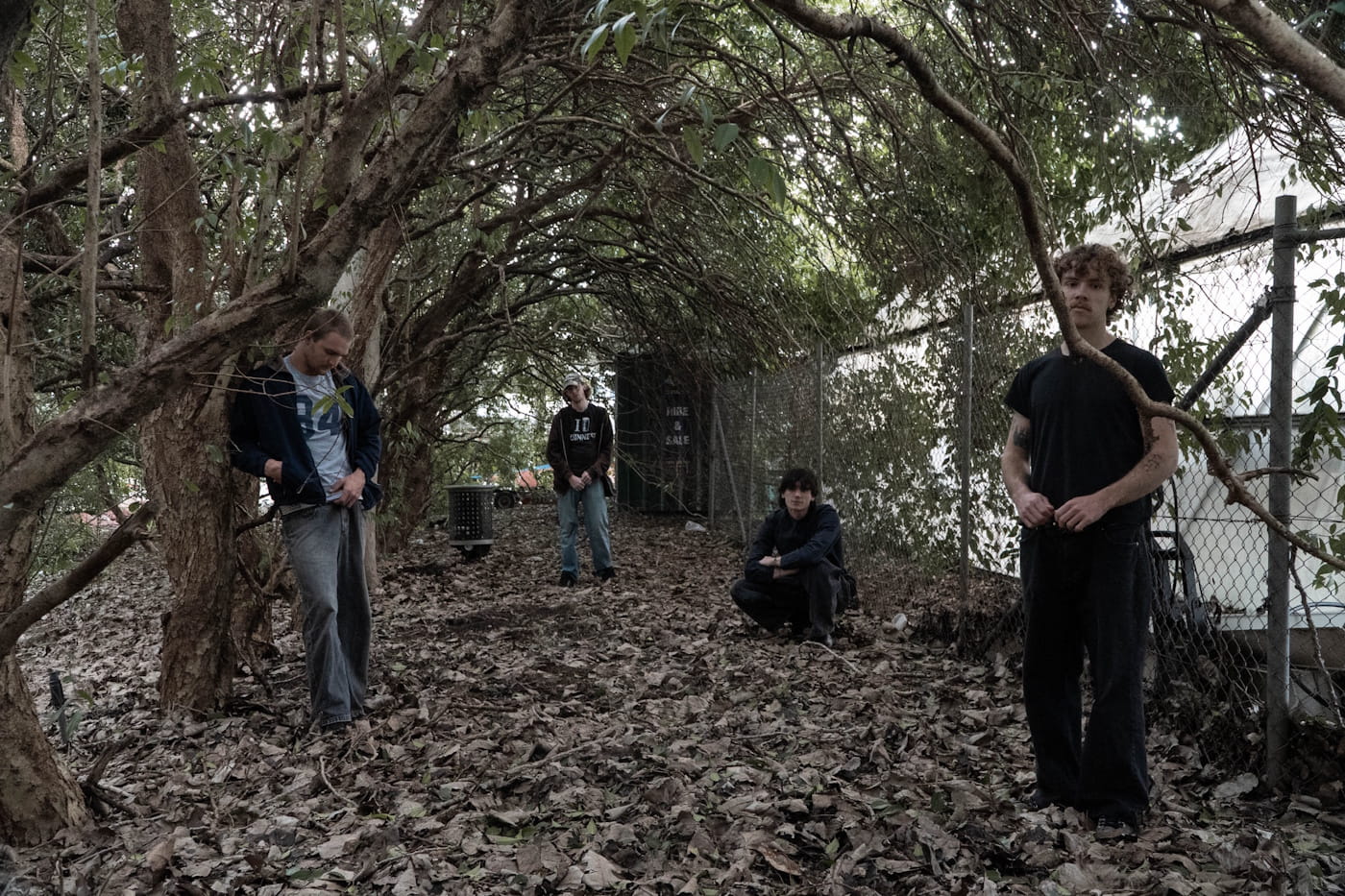


Chevreuil have always treated the duo format like a piece of engineered performance architecture. Julien F. and Tony C. formed the band in 1998 after meeting three years earlier at art school, then stripped the setup down until it behaved less like standard rock instrumentation and more like a closed circuit for sound, motion, and pressure.
In their own language, Julien plays “magnetic drums” and Tony plays “magnetic guitar,” a description that fits the way their music locks together as if pulled by force rather than arrangement.
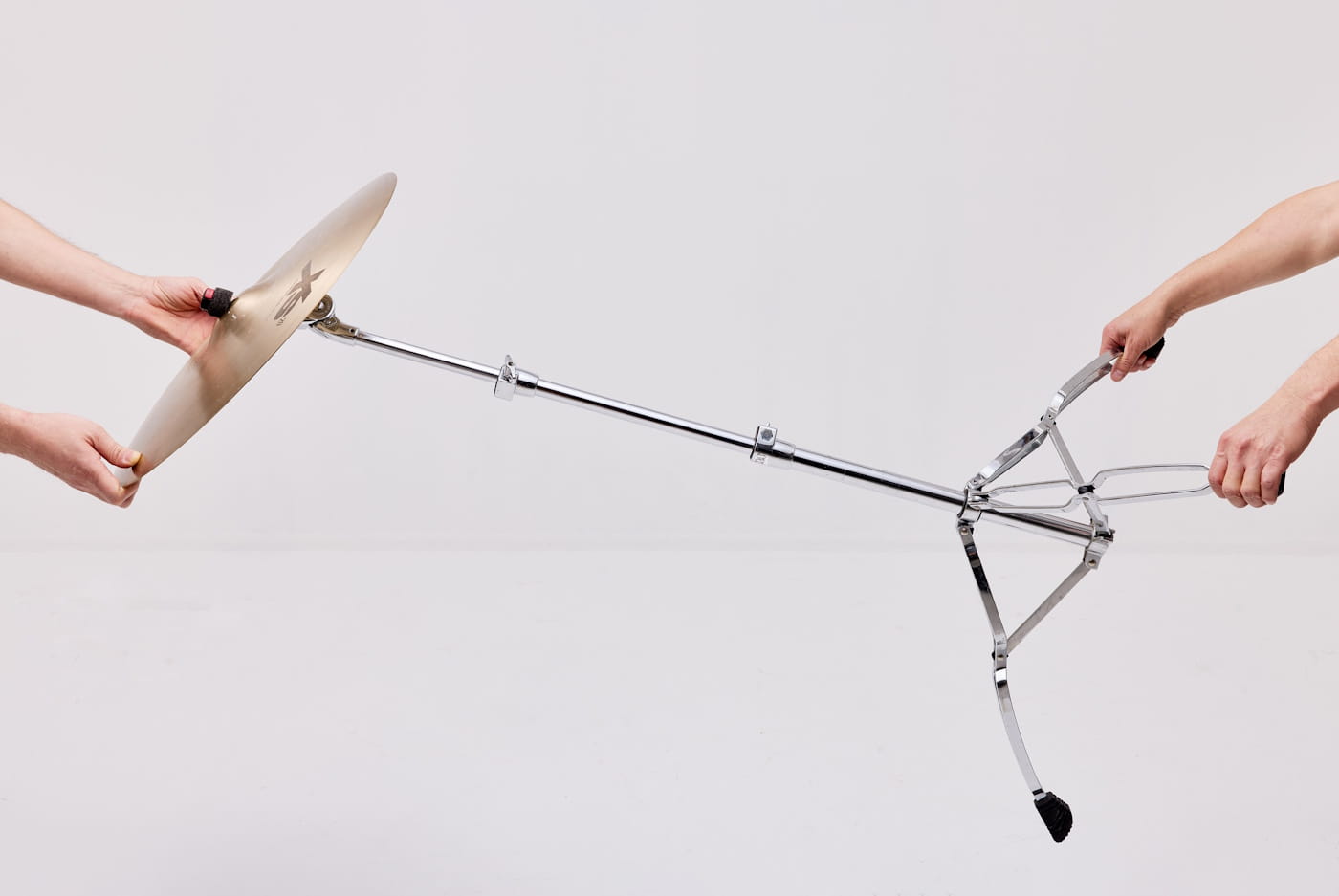
That idea is still intact on “Ordrus,” the third single from “Stadium,” Chevreuil’s first album in 20 years, out April 24, 2026 through Computer Students™. Julien, who also handles drums in the band, had floated April 1 as the right moment to move quickly with a piece around the track before shifting to something more polished for the full album release later in the month. The timing makes sense. “Ordrus” feels built for the job: compact, severe, and loaded with the logic of the larger record.
“With ‘Ordrus,’ we wanted something direct but dense,” the band say. “Driven at first by aggressive, martial percussion, then unfolding into a turbulent field of fractured guitars with an orchestral, low-register character. It works both as an interlude and a transition: a short, haiku-like moment that distills and propels the album’s broader movement and transformation.”
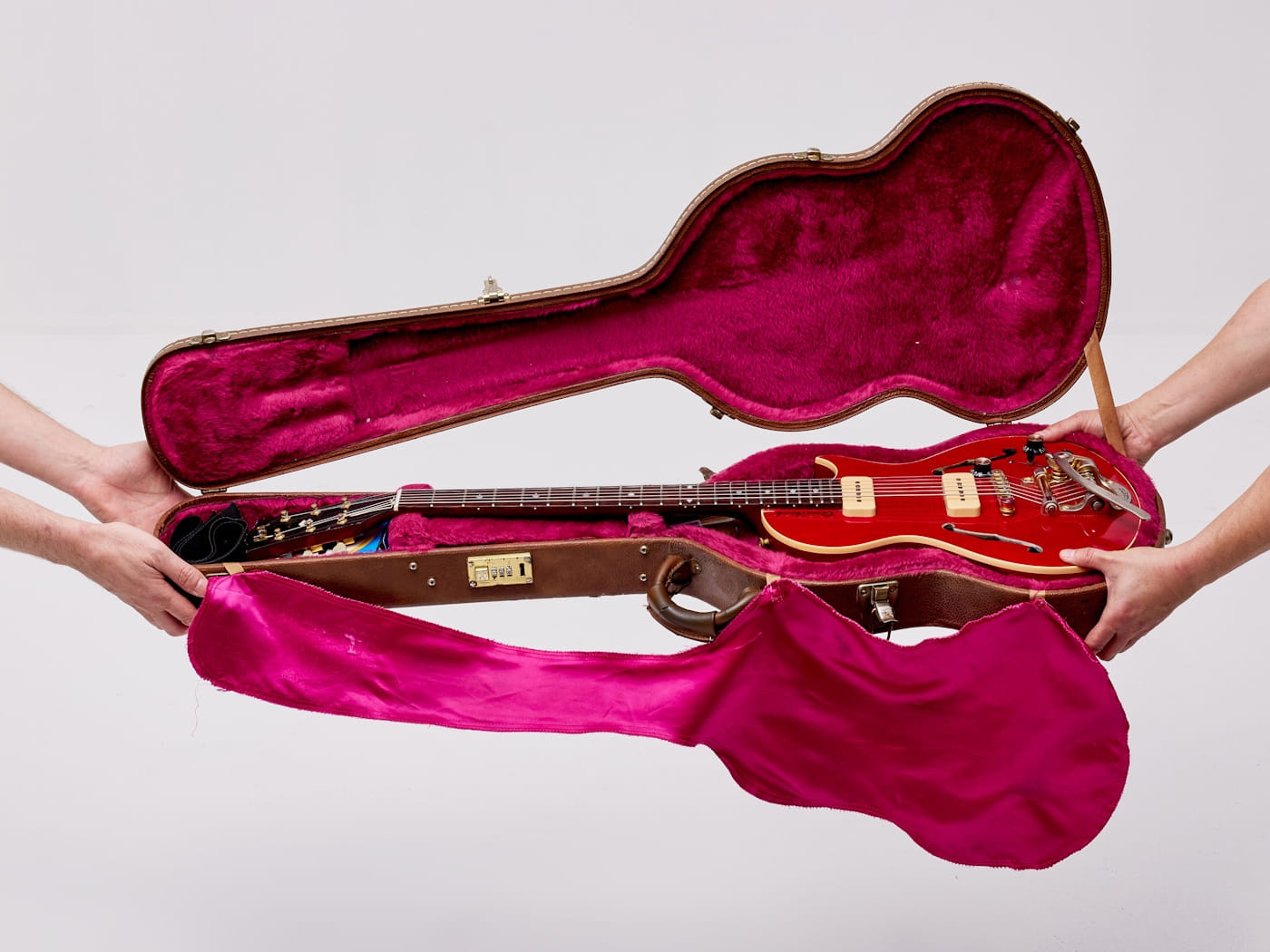
Chevreuil rejected the addition of a bassist early on and built everything around reduction, repetition, and spatial control. Tony’s guitar runs through four amplifiers placed around Julien’s drum kit, creating a quadraphonic field that surrounds the players. Julien’s 1976 Ludwig kit, built the same year both musicians were born, is never amplified.
The whole system only needs a single outlet for the amps, which has allowed the duo to think of performance as something portable, sculptural, and physical at once. Even now, with new circuitry in the signal path, that basic design remains untouched.
“Stadium” started in a different place. What began as a reissue plan with the creative force of Computer Students™ turned into a new album once the duo got back in a room together.
They had not played as Chevreuil for 15 years. Before anything else, they spent a week testing whether the old chemistry still held, recording during the day and cooking for each other at night. The answer became a double LP.
“Stadium is probably our most esoteric and exploratory record so far,” they say.
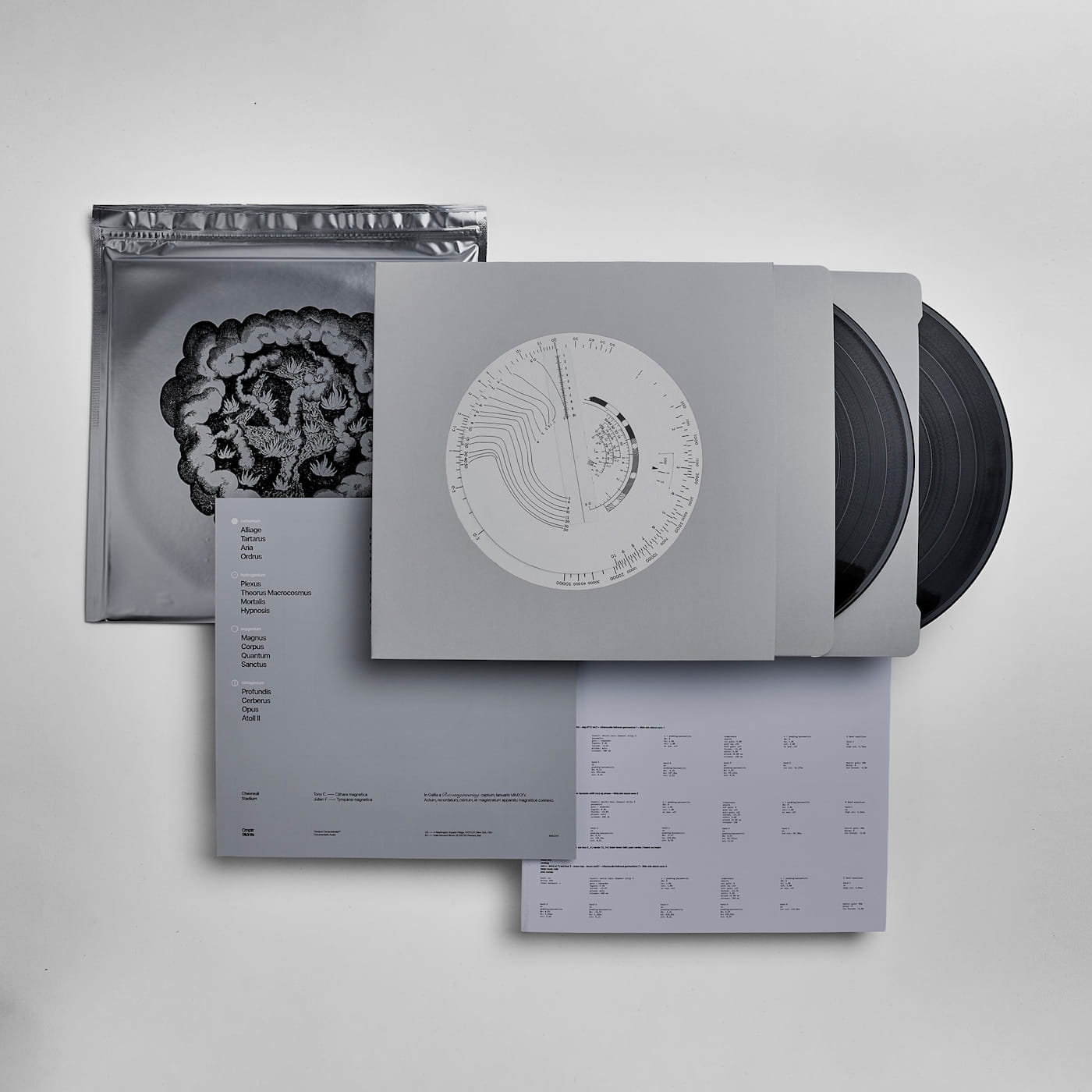
“We kept everything that defines our sound—live takes, four amps—but added a conceptual layer inspired by physics, astronomy, and magic. The record is built in parallel. Two vinyl, four sides, four tracks each—like twin albums that can be listened independently or as a continuum.”
That parallel design gives the album a different kind of internal motion. Chevreuil connect it to the music of the spheres, magnetism, radioactivity, barometric oscillations, astrometry, and magic, but the ideas are not there as decoration.
They sit inside the mechanics of the record itself: two discs, four sides, four pieces per side, mirrored enough to suggest system design, loose enough to keep the thing unstable. “Ordrus” works as one of the hinges in that build, a brief section that redirects the flow without flattening the tension.
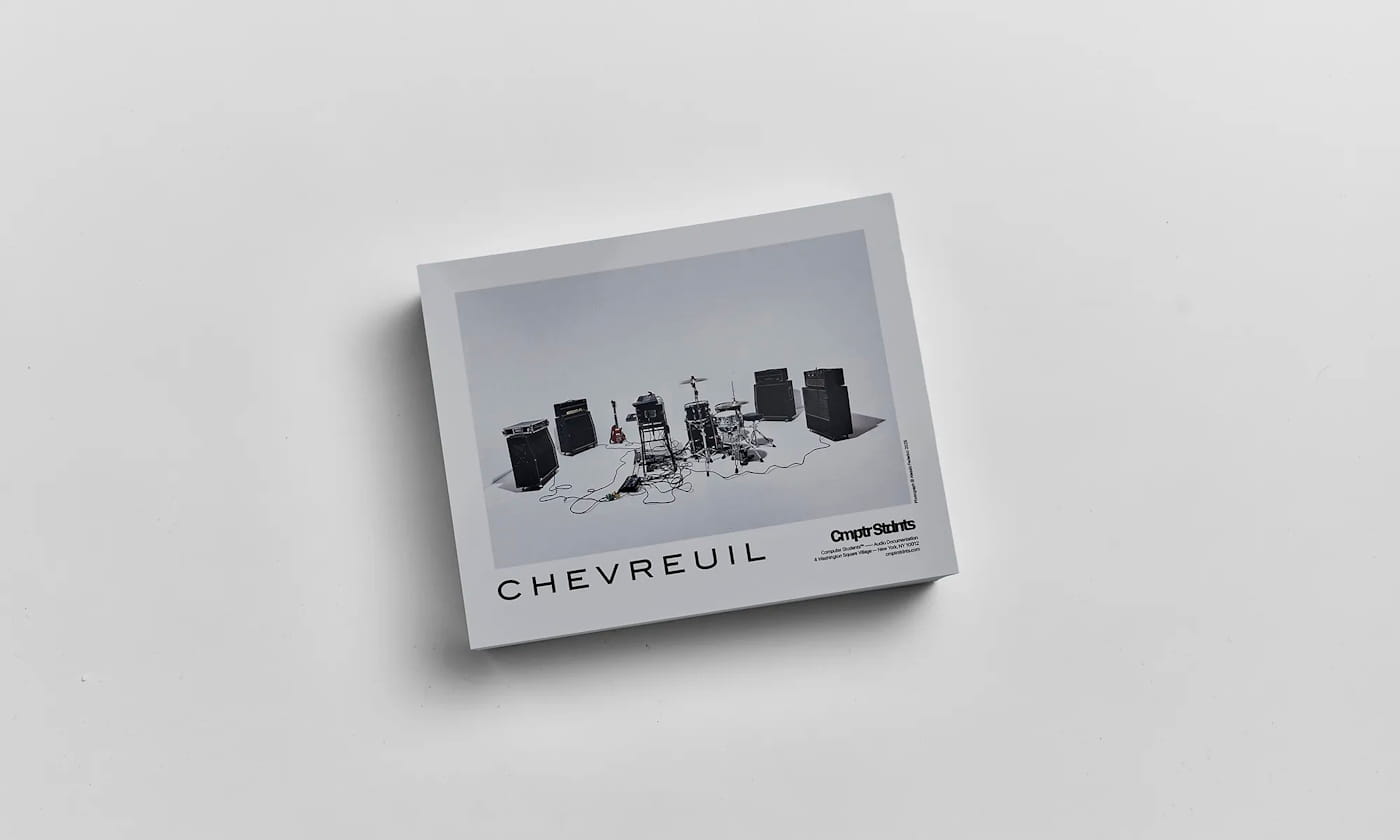
The recording process followed the same principle. “Stadium wasn’t recorded in a traditional studio context,” they explain. “Rather than relying on a controlled and corrective environment, we worked in a live room with a distinct character, embracing its acoustics and limitations. The pronounced reverb, along with careful positioning of the instruments, helped us shape a sound rich in depth and spatial pr”.
The unfinished sentence still says a lot about how Chevreuil hear themselves: not as a band polishing away room sound, but as a duo using placement, leakage, reflection, and force as part of composition. “Stadium” was recorded and mixed in France by Retroengineering in January 2025, then mastered in August 2025. Kassian Troyer handled the lacquer cut at Dubplates Berlin in September 2025.
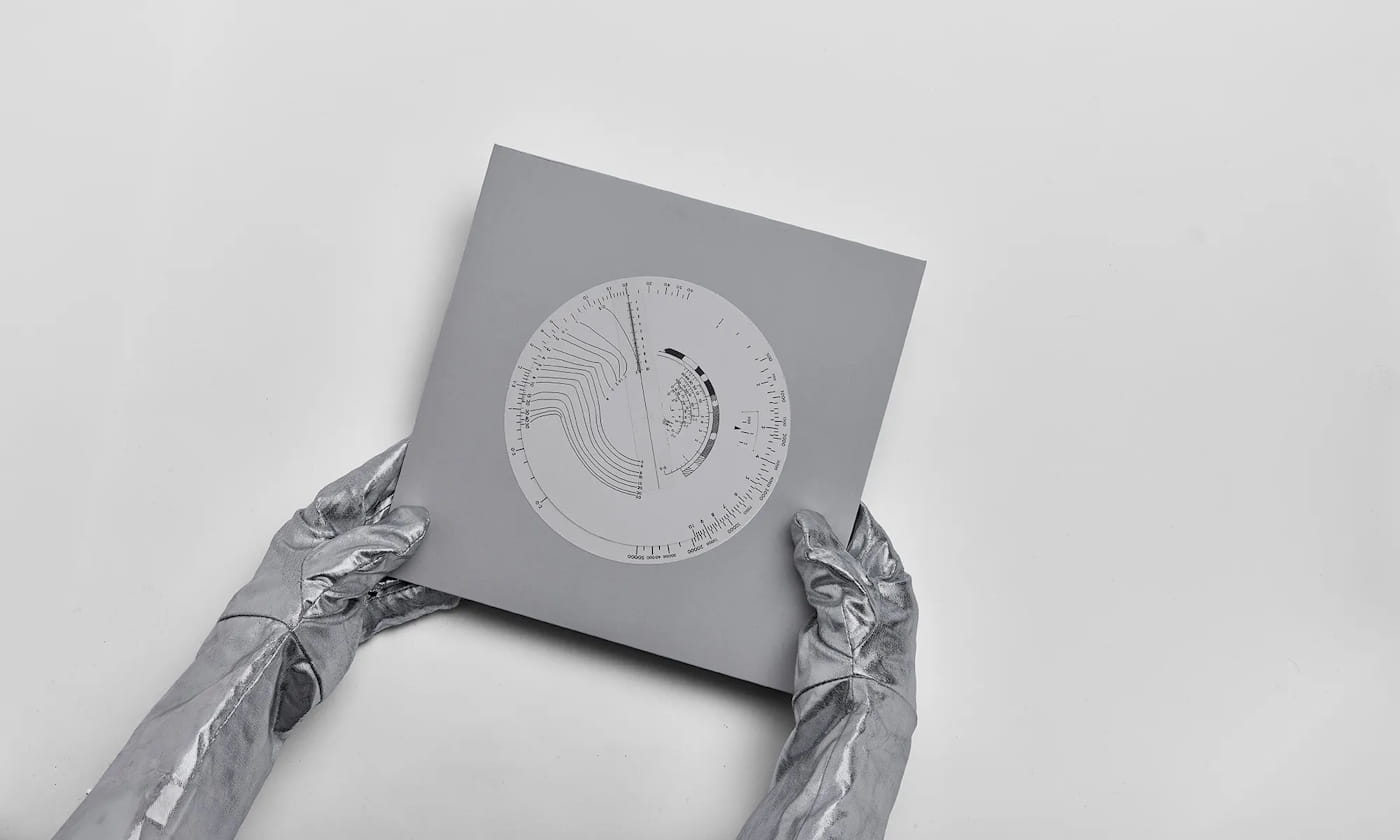
The album is now up for preorder through Computer Students™ as a standard double 12-inch, 180-gram HQ, 33rpm vinyl edition in a reverse-board gatefold sleeve with a 6mm spine. The Deluxe edition keeps those core specs and adds a 12-page codex with full technical transparency, documenting the complete recording configuration with parameter settings and specifications, housed in the label’s sealed aluminum sleeve with black print. A limited colored-vinyl version in a Type-1 aluminum sleeve is available exclusively from the label, while CD, cassette, and digital editions arrive in what the label describes as their most unadulterated form.
That attention to system detail fits a band whose catalog has long treated documentation, setup, and process as part of the work. Several earlier Chevreuil releases were recorded by Steve Albini in Chicago. Two decades after their last album, they come back sounding less interested in nostalgia than in whether the machine still responds when power runs through it.
🔔 IDIOTEQ is ad-free, independent, and runs on one person’s time. If you want it to stay that way: DONATE via PayPal 𝗈𝗋 SUPPORT via Patreon.
Stay connected via Newsletter · Instagram · Facebook · X (Twitter) · Threads · Bluesky · Messenger · WhatsApp.