Tony Gonzalez doesn’t gravitate toward major chords. The Norwegian songwriter, also of noise rock duo Barren Womb plus Twin Serpent and Oma Desala, says he naturally heads for dissonance, melancholy and minor moods when he writes under his Velcro Dog solo alias. “The Gonzo Futurist Manifesto” is the exception. He forced the chorus into something brighter on purpose, then weighted it back down with doomy lyrics. The video premieres today on IDIOTEQ, and it’s the first taste of his second album “Fjord Noir“, out September 18 on Westergaard Records.
“Major chords have never been my strong suit, but to avoid being a one-trick Tony, I wanted to try something a bit more upbeat and positive that still fit within the quite dour world of Velcro Dog,” Gonzalez says of the new single. “‘The Gonzo Futurist Manifesto’ is what I came up with, juxtaposing sweet, naive melodies with dark lyrical themes of depression and missing out on life.”
The mechanics of getting there are worth dwelling on. Gonzalez admits his grasp of music theory is “practically non-existent,” and the way he describes the process is one of the better self-aware lines a songwriter has put down in a while. “Every time I sit down to write I resemble a blind person at an orgy: I have to feel my way around for a bit,” he says. “I usually get grossed out when I stumble upon happy motifs, but this time, instead of immediately discarding them, I kept going until I had a chorus I could live with.”
The verses then went somewhere sadder melodically, and the lyrics did the rest of the rebalancing work. “I wrote some doomy, gloomy lyrics to balance the whole piece out. It ended up being a fun little experiment that taught me that there can be depth to the joyous, even though my demons try to tell me otherwise.”
The chorus he ended up writing turns the brightest moment of the song into its bleakest line:
This grave’s not gonna dig itself
Just keep in mind
That you can’t shovel sunshine
My friend
Elsewhere the lyrics run the same way. “If talk is cheap then I’m a two-dollar whore.” “I learned to swim even though I never learned to float / Not too late to navigate even though I missed the boat.” “I burn the brightest when I’m doused in gasoline / Just be prepared for the biggest meltdown ever seen.” A song that sounds optimistic on first listen reveals itself as the opposite once the lyric sheet is in hand.
Velcro Dog isn’t the obvious move for someone with a real surname already attached to multiple projects. Gonzalez explains the decision. “Although I’m proud of the Gonzalez name, I’ve never exactly been my own biggest fan, which made the prospect of releasing music under my given name feel both daunting and difficult.”
He also wanted to keep this stuff separate from his other work. “I cover a lot of ground with other projects (punk, noise rock, trip hop etc.) which all are equal parts of my musical DNA, so I didn’t want the music I create for this project to be the thing that most defines me as a songwriter.” There’s a third, drier reason. “Gonzalez is a pretty common surname, making it harder to stand out. Sweden already has a González that absolutely rips on acoustic guitar and sings like an angel.”
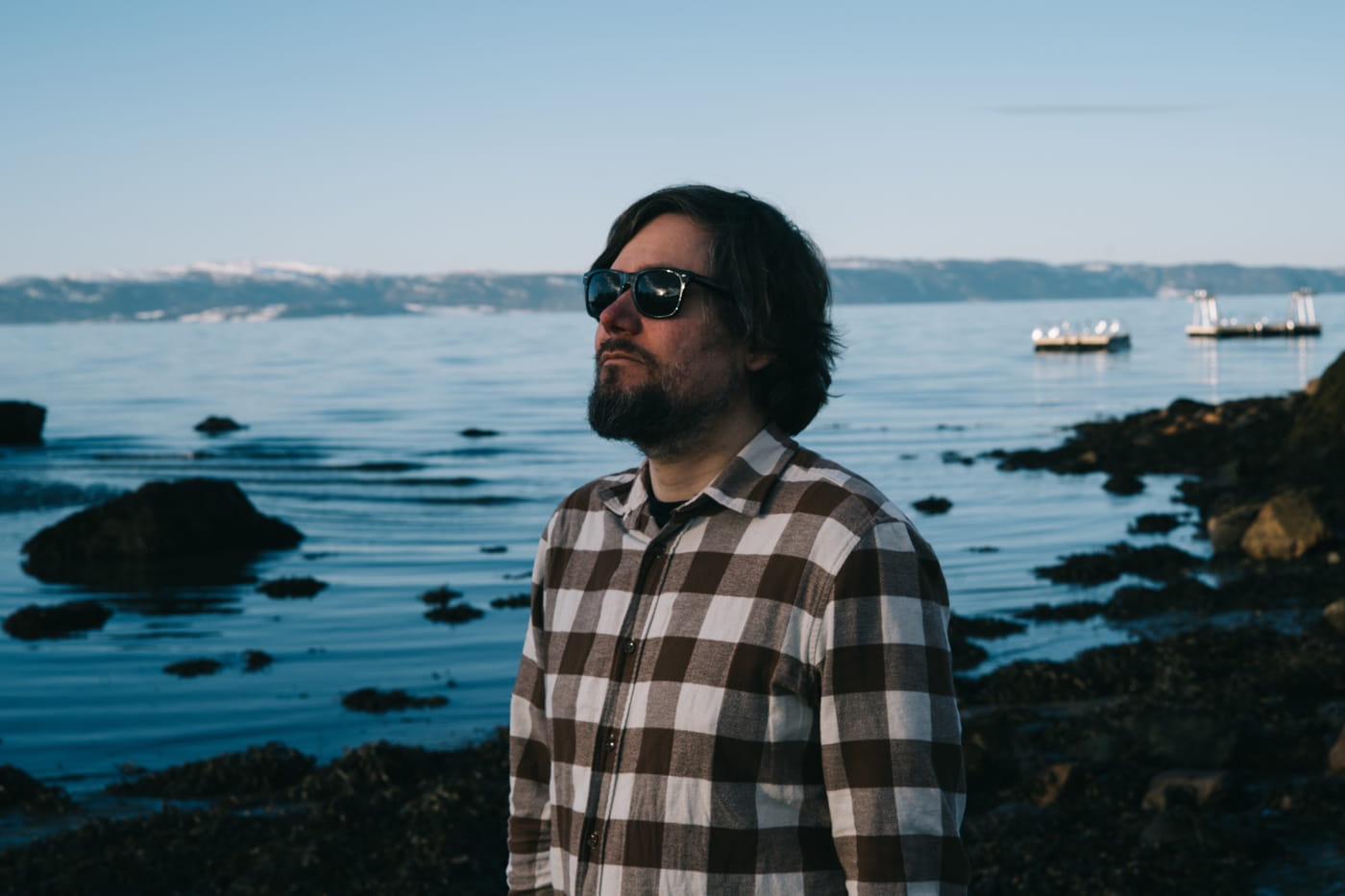
The Velcro Dog name itself does the conceptual heavy lifting. “It’s not a specific breed of dog, but a collective term for dogs who are extremely loyal, but also super angsty and clingy,” he says. “The moment they are separated from the safety of their pack, they seemingly hurtle through the abyss, enveloped by all-consuming darkness and fear. I felt a strong kinship to this notion and it suited the project like a glove.”
He’s aware of the contradiction. “I do see the irony of having an alias for a project which is, at its core, about blatant honesty.” But the alias gives him space to do things he wouldn’t otherwise. Writing about depression and low self-worth, and forcing himself onstage alone, are both part of the project’s design.
“I’ve always struggled with depression and feelings of low self-worth, but an even bigger struggle has been opening up about this. Part of the reason I created Velcro Dog was to force myself to expose these demons to the world. I figured that by singing and talking about them, I could somehow conjure them into reality, and it’s way easier to kill something you can see than something you can’t.” On the live show: “I’m quite comfortable on stage as part of a group, but never in my wildest nightmare would I have wanted to be utterly alone in front of an audience. Therefore, this is exactly what I must do.”
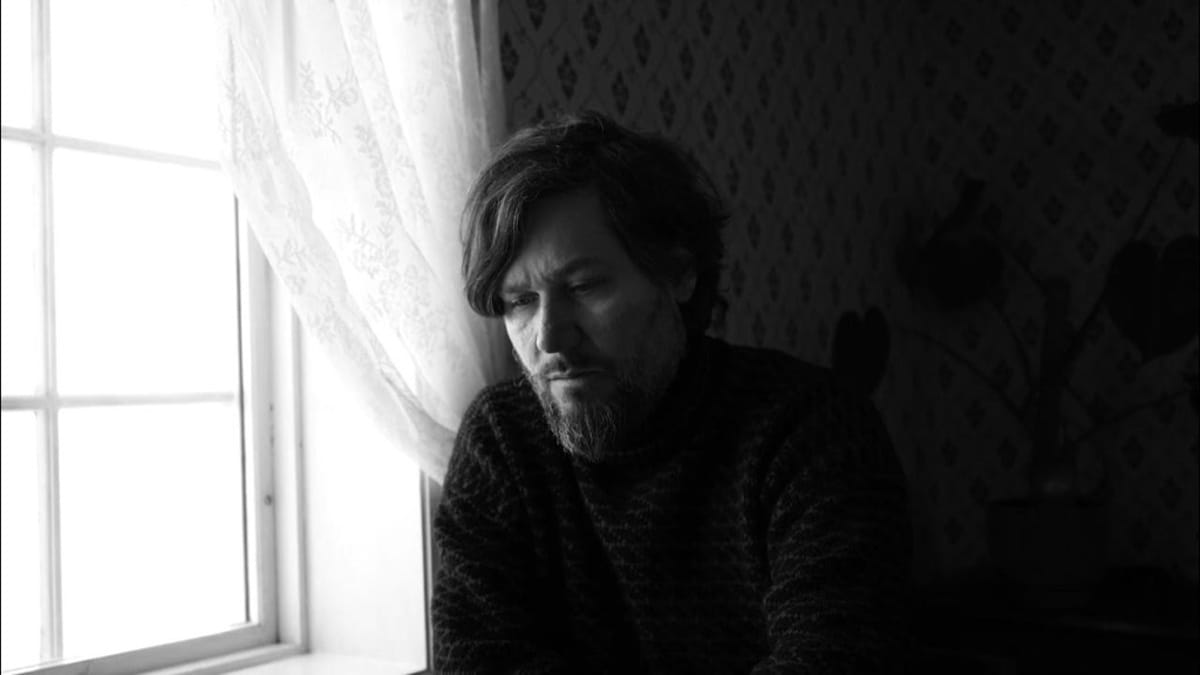
The “fjord noir” tag is Gonzalez’s own coinage and exists partly out of respect for the genres he won’t claim. “I see myself as sort of a tourist in the singer-songwriter world,” he says. “Even though I absolutely adore a lot of americana, blues, country and folk, my musical upbringing primarily came through rock, punk and metal.” Rather than pin Velcro Dog to a tradition he didn’t grow up inside, he made one up.
The “noir” part is straightforward. He’s been drawn to “the darker corners of life” for as long as he can remember (cynicism, strife, tragedy, squalor), and noir cinema’s contrast-heavy aesthetic gave him a working vocabulary for it. The “fjord” part is literal. He’s a coastal Norwegian, raised by seafarers, and lives now in Trondheim. “My language is salt-drenched, my analogies are nautical, and my music is filled with the temperament of the open ocean. This is not by design, but by circumstance. I could try to negate it by moving away from the coast, but I fear I would die inland.” His own summary lands clean: “If it’s true that you should write what you know, then fjord noir is what I know.”
“Fjord Noir” is the follow-up to 2022’s “Misanthropology”, written across what the press notes call “a two-year period marred by decaying mental health.” The album moves through themes of escapism, doubt and resignation, with a love letter to Trondheim worked in. Cinematic textures (choirs and strings) sit on top of the low-key feel without crowding it.
Gonzalez calls Velcro Dog “my plague baby.” Before the pandemic, his fuel for finishing songs was social anger. “All the injustice, inequality and inhumane behavior modern society is structured around really gets me furious.” Isolation killed it. “That oh-so-useful rage quickly dissipated in the long bouts of isolation we all had to endure during that time, which left me unable to create music at all for a while.” Apathy moved in first (he calls it “truly a shit writing partner”), then sadness, and the sadness gave him “Misanthropology” and the template for everything that’s followed.
He’s open about the tricks he leans on. The first is limitations. “I like simple things and too many options are paralyzing for me. They hamper the workflow and get in the way of what’s truly important. This is why I don’t do fancy demos. I would rather spend my time working out the kinks of an arrangement or melody than endlessly adding elements to a recording that’s just meant to be a sketch.”
The second is television. “I’m rarely able to write anything worthwhile if I’m too focused on the task at hand, so half-assing it by watching something mind-numbingly stupid while playing guitar really takes the pressure off.” He says it only works at the spark stage, that first idea, not for the rest of the song.
The third is a deflection technique. “If something is difficult to say because it’s too honest or hits too close to home, I often convolute it violently to make it as open-ended as possible, providing myself with the necessary distance.” He collects metaphors, turns of phrase and sayings for exactly this purpose, and there’s a bonus he likes. “You get to hear what other people think you mean, which can imbue the song with extra levels and meaning.”
“Fjord Noir” was recorded and mixed at Piir Studio in Trondheim by Vebjørn Svanberg Numme (Dune Sea, Probleman, Waste a Saint) across fall and winter 2025, with production credit shared between Numme and Gonzalez. Alan Douches (Sufjan Stevens, Fleetwood Mac, Chelsea Wolfe) mastered it at West West Side Music.
Cello sits across five tracks (“Friends in Dry Places”, “I’ll Stick to Fiction”, “Stranded on Trash Island”, “The Gonzo Futurist Manifesto” and “White Bluffs of Cover”), arranged and performed by Live Sunniva Smidt, who also contributes backing vocals on “Concrete Kisses”. Percussion is split between Numme (across six tracks) and Samuel Lykkås, who also plays electric guitar on “Roaccutan”. Timo Silvola arranged and played banjo on “Concrete Kisses”. Ludvig Rølvåg handled Rhodes on “Roaccutan”. Per-Arne Amundsen arranged the melodica on “Thirteen to the Dozen”. Vilde Steiro Amundsen co-wrote lyrics and arrangements on “Concrete Kisses” and “Thirteen to the Dozen”. Everything else (music, lyrics, artwork) is Gonzalez.
“Fjord Noir” is out September 18 via Westergaard Records on digital, CD and limited vinyl.
🔔 IDIOTEQ is ad-free, independent, and runs on one person’s time. If you want it to stay that way: DONATE via PayPal 𝗈𝗋 SUPPORT via Patreon.
Stay connected via Newsletter · Instagram · Facebook · X (Twitter) · Threads · Bluesky · Messenger · WhatsApp.