
A recent trip through the US has probably messed with my ears a little. I came back giving Americana and country a lot more time than I used to. Then Spanish Love Songs announced “Future Nausea”, and that whole corner of guitar music started getting plenty of room around here. Hooks & The Huckleberries caught me at a good moment: an Albuquerque band sitting around indie rock, Americana, alt-country and Red Dirt, with a Banner Pilot song in their hands.
Hooks & The Huckleberries release “Skeleton Key” on September 25. It is a reworking of the song Banner Pilot released on “Collapser” in 2009. Their version drops the tempo, changes the key, puts chorus-heavy guitars and a much larger drum sound around the song, and keeps the lyric and basic structure in place. Adam Hooks fronts Hooks & The Huckleberries, has spent the last six years touring and playing with country bands, and is also the frontman of punk band Russian Girlfriends.
Long before either band, he was a kid in a Minnesota town of 350 people trying to work out what punk even was.
Adam was living in Lake Wilson when the closest rock station he could clearly receive came out of Marshall, Minnesota. He was in fourth or fifth grade and would stay awake beyond midnight for its alternative show. Older kids from the church youth group had already passed along bits of Nirvana, Pixies and Local H. Classic rock still had a place for him, but those records made him aware of a darker, stranger side of rock music that seemed much closer than the pyrotechnics and distance of arena shows. He did not have a name for it yet. He only knew he wanted in. Then, at 1am on a Wednesday in April 1996, the DJ introduced a new single by a band whose name, Adam remembers being told, could not be said on air without risking an FCC fine.
The song was “Pepper” by Butthole Surfers.
“I jumped up from my bed and wrote down as many lyrics as I could remember from that one listen,” Adam said. “It took months of reciting those lyrics at every kid I saw in an ‘RIP Kurt Cobain’ shirt, asking if they knew who the hell the band was that wrote it?!? Our babysitter Joanna was the one to finally and happily inform me of the band name and song title, and I mowed lawns all summer to buy the ‘Electric Larryland’ cassette. It’s still one of my favorite albums of all time.”
His route into punk had another unusually direct source. Adam’s dad attended seminary school in St. Paul during the height of the original Twin Cities punk scene. The family already had The Replacements, Hüsker Dü, Suicide Commandos, The Suburbs, Soul Asylum, Curtiss A and Prince around the house. His parents were churchgoing and serious music fans, and Adam remembers being encouraged to keep digging once punk started taking hold.
One Sunday, his dad put Dead Kennedys’ “Give Me Convenience or Give Me Death” on in the car on the way to church because Adam “needed an upgrade” from The Ramones. Later, when Adam discovered a skate park benefit two towns away with local punk and hardcore bands, his dad drove the two-hour round trip on a school night. Adam had not known a DIY punk show could even exist in rural South Dakota and Minnesota.
“And that was it. I had found my people,” he said.
From there, he started buying CDs by any band that looked remotely punk, checking shirts at local shows, then searching those names on Napster and LimeWire. In 2001, he hitched a ride with older friends to Warped Tour in Somerset, Wisconsin. Seeing bands he already loved in one place was part of it. Meeting a much wider community of people with similar values, who in his words lived outside “polite midwestern society”, helped turn music into a career and life goal.
Adam says he has always been able to hear whether a song is well made through changes in production, arrangement or style, which is one reason his listening has never stayed inside one genre. He has little patience for the old idea that punk musicians are somehow lesser songwriters because the records move fast, guitars are distorted and the scene keeps itself accessible.
“Whether it’s in fan or musician circles, unless you have that connection with punk rock in the first place, the entire scene tends to get dismissed as ‘juvenile’, ‘lazy’, or ‘amateurish’,” he said. “It’s extremely unfortunate, because within this often overlooked and underrepresented genre exist some of the most intelligent and technical songwriters and musicians in the entirety of Rock n Roll.”
He points to lyrics “akin to poetry”, distinctive guitar leads, rhythm sections he would put against the musicians hanging in the Rock and Roll Hall of Fame, and an emotional directness that still makes him ask, “why the fuck would you ever want to go back to pop music?” His list comes fast: “For every Bruce Springsteen, there’s a Banner Pilot or Gaslight Anthem. For every Guns n Roses, There’s a Rancid or NOFX. For every Rush, there’s a Bear vs Shark or Propagandhi. For Every Taylor Swift, there’s a Distillers or The Gits.”
Adam also values the fact that a punk band can finish a set, sell its own merch and talk directly with the people who came to see it. He calls punk bands “APPROACHABLE” and sees that direct contact as increasingly valuable in a world he thinks is getting further removed from everyday reality.
He had already connected with Banner Pilot, “Collapser” and “Skeleton Key” for years. Nick Johnson’s lyric is built like an unfinished novel: a Minneapolis opening scene, an ending the narrator can imagine, and a blank middle he cannot write. Adam was pulled in by how much space the words leave for somebody else’s memories.
“From the opening line to the last, ‘Skeleton Key’ has all the elements of my favorite type of song,” he said. “Lyrics that paint a vibrant story, let leave space for you to inject your own lived experiences in between the lines. A melody so catchy and moving you’d swear you heard it before you were born, and a brutal, heart wrenching honesty you’re only gonna find in the works of the best.”
After six years around country bands, the chord progression and subject matter started sounding familiar to him in a different way. He heard similarities with the country songs he and the band were listening to at the time, and a Red Dirt version stopped seeming like much of a stretch.
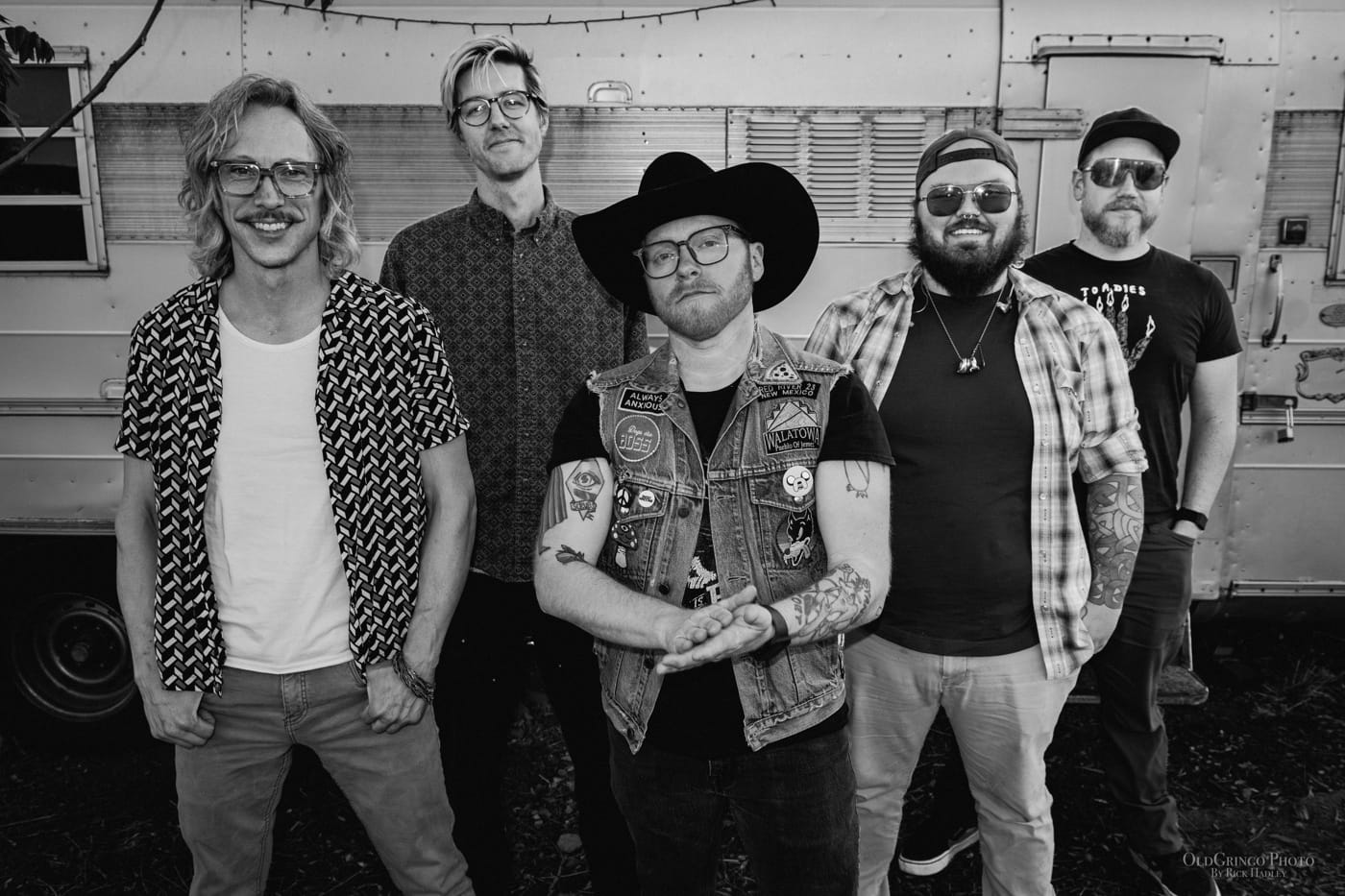
Bassist Jesse Mortensen came to Banner Pilot through this cover. The melody hit him first, along with what he called the “raw, visceral delivery” of the original and the aimless, misfit characters, who reminded him of his own youth. He had been completely unaware of this corner of punk before joining Hooks & The Huckleberries, and credits Adam with giving him an appreciation for it through the process of arranging the song. Jesse says Adam is unusually good at digging through obscure corners of music for lesser-known songs with something deeper going on, then finding a way to bring that quality forward in his own performance. “Skeleton Key” won him over on the first listen and was simply fun to learn and reinterpret.
Adam first made an acoustic demo. When he brought it to the band, they changed the key, eased the tempo back and lowered some of the aggression. The lyric and structure stayed largely intact. “When a song is already that good, you don’t need to do much except play it well,” Adam said.
Jesse remembers the changes as small but decisive. They added an intro, gave extra attention to the bridge, and spent time working out individual parts that could play against each other rhythmically and melodically. Slowing the song was enough to change its genre in his ears, although he still hears the original heart inside it.
Drummer Dustin Hoag remembers Adam being the only member who really knew Banner Pilot. The band made a point of not studying the original recording too closely. They followed Adam’s interpretation and let their own arrangement develop from the writing itself. Dustin heard something close to Don Henley’s “The Boys of Summer” in Adam’s performance, especially in the nostalgic look back at youthful love and the harder edge in Adam’s voice. That pushed him towards the drum sound and some of the 1980s influence he brought into the track.
For keyboard player Ken Easton, there was almost nothing in the original arrangement telling him what to play. Once Adam sang the song to the band, Ken started hearing possible chorus harmonies. Jesse became the person who would stress-test those ideas.
“Jesse always has a great way of stress-testing your ideas, making sure we don’t play or sing anything because we can, but because it should be there, and that was fundamental for sculpting our version,” Ken said.
The band never went into the session with a strict arrangement brief. Adam only knew that recording a tribute meant making it sound like Hooks & The Huckleberries. Over the last year, they had already been leaning harder into their indie rock side, so bigger drums and guitars fit where the band were going.
Hooks & The Huckleberries started in August 2020 and released “So Far Gone” in 2021. Their second album, “For The Love of Whatever”, followed in 2024 with Matt Pence, whose credits include Jason Isbell and Nikki Lane, producing. The band were official SXSW artists across 2024 and 2025 and have shared stages with Reckless Kelly, Flatland Cavalry, Futurebirds, The Droptines, Kody West and Vandoliers. A 2025 performance of “Small Town True Crime” at The Launchpad also caught them in their Albuquerque home base, alongside the official video for “For The Love of Whatever”.
Glide Magazine premiered the alt-country single “Babylon Is For Lovers”. The Wild Is Calling heard the band stretching a classic composition into something that suggested “Explosions of the Sky collaborated with Jason Isbell.” Adobe & Teardrops put them near Lucero, Two Cow Garage and Arliss Nancy while writing about “Jemez”. Maximum Volume picked up the touring line from “For The Love of Whatever”, “toured a million miles, never made a dime. It still don’t matter, in that old Econoline,” and heard a band still doing it for the love of music.
Adam got sober in February 2022, a year and a half after starting Hooks & The Huckleberries. The years since have given him time to look back at Russian Girlfriends, the people he made that music with and what he calls the “wild, reckless journey” they survived together.
“Whether it’s punk or country, the struggle is the same. Late nights, long drives, packed shows, empty shows, sketchy hotels, new best friends you’ll never see again, three chords and the truth, and lots and lots of Domino’s Pizza.”
New Mexico has helped those styles sit next to each other without much ceremony. Adam says he has never been able to stay in one lane anyway, and living much closer to the Texas and Oklahoma scenes changed how he heard the Banner Pilot song. His hope with the cover is simple: show punk and country listeners some of the similarities, then maybe send each group towards a band or style they had not checked out before.
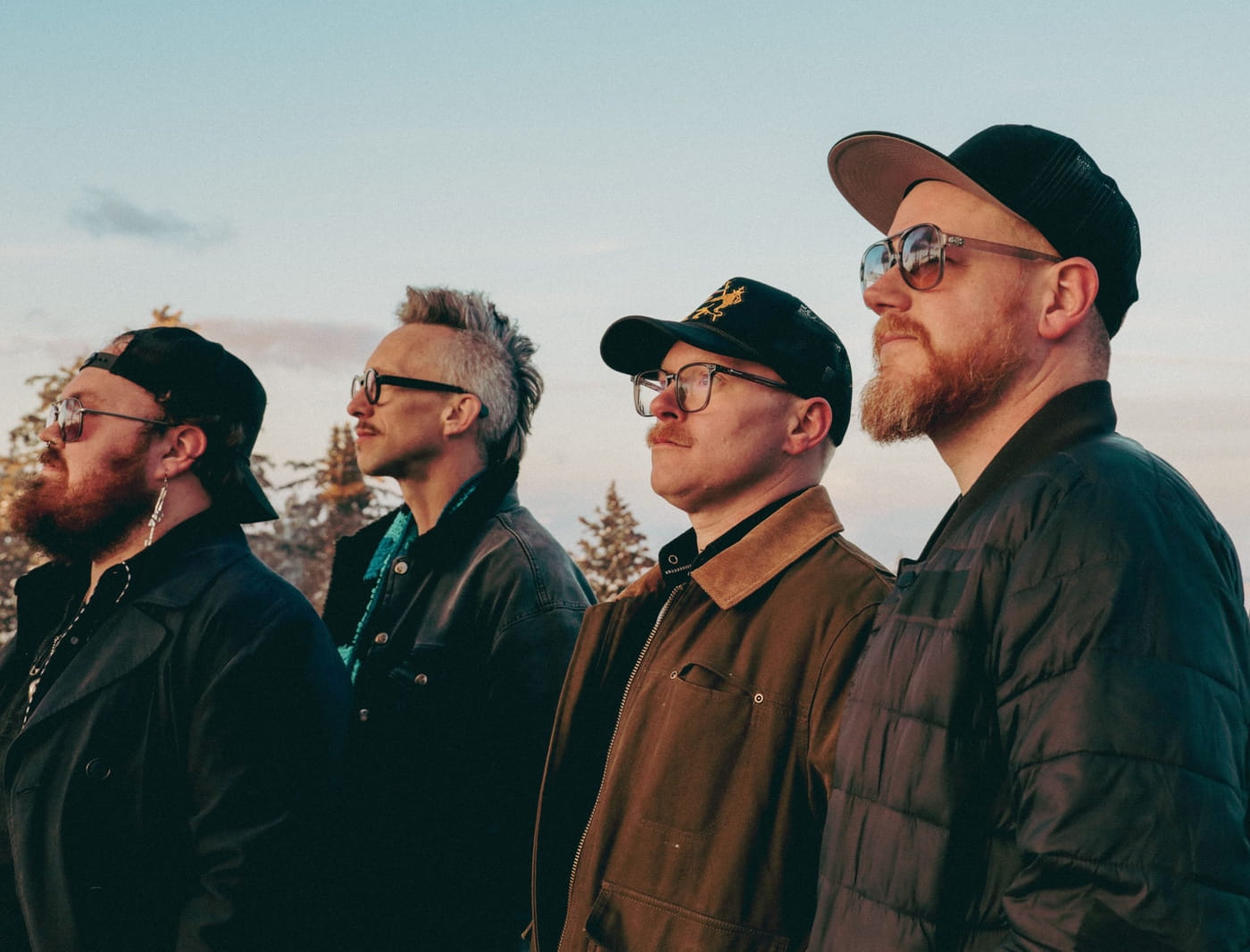
Jesse hears Albuquerque as a place where the small size of the music community, its Wild West streak and the lack of serious industry pressure leave room for musicians to try things without much concern for genre expectations. He also knows the band would probably do what they wanted anywhere.
“Nobody anywhere was asking for a genre bending cover of Banner Pilot by a bunch of dudes in Albuquerque, New Mexico, and yet here it is.”
Dustin came to Albuquerque from the suburbs of Dallas/Fort Worth, where scene boundaries had felt much firmer. He grew up around a local history that included The Toadies, Tripping Daisy, Old 97’s, Centro-Matic and Flickerstick. Pluto Records was part of the post-punk, emo and hardcore side of Dallas, with My Spacecoaster, Evelynn, Dreaming of the Fifth and Shmunks For You among the bands that stuck with him. Dustin remembers those latter groups pushing beyond the alt-rock, grunge and punk categories around them through emotional directness and experimentation. He heard them developing ideas that would later become much more common nationally, even as those specific bands remained largely undiscovered.
Albuquerque is smaller, and he sees less pressure to pick a camp. There is not a huge alt-country scene there either. That leaves Hooks & The Huckleberries a little outside the centre of Red Dirt and alt-country nationally, something Dustin is comfortable accepting if it means they can keep making decisions on their own terms.
Ken grew up in Albuquerque and says the city encouraged his own loose relationship with genre. Musicians there will play with each other across styles, and he has never spent much time worrying about what separates one category from another. “The goal for us is never really to directly make one song into another direct genre, but to just make whatever scratches the itch for each of us as creatives.”
“Skeleton Key” arrived during a lineup change. Jesse had only recently joined the band, while Ken was also still relatively new. Ken remembers the cover first coming up while they were on tour in Texas. Adam often throws B-sides and obscure cover ideas around in the Huckleberries van, and Ken initially had no idea whether “Skeleton Key” would ever come up again. Once Adam started playing it, he began working through ways to fit his own ideas around the others.
Dustin has learned a similar lesson about Adam’s suggestions. “Rarely well-known bands, and never A-sides,” is how he describes the pattern. The ideas can initially confuse the rest of the band, but Adam’s connection to the songs has earned their trust. Jesse’s arrival made this one particularly useful. Dustin sees the cover as the first real demonstration of the contribution Jesse could make to the band’s sound and direction, and several choices made here continued into the next album.
After making “For The Love of Whatever” with a producer they had long admired in a world-renowned studio, the band decided their next record would be completely DIY. “Skeleton Key” and the forthcoming third full-length “Straight On ’Til Morning” were made over the last year at Jesse’s home studio in Rio Rancho.
“We spent the last year in Rio Rancho at our bass player Jesse’s home studio laying down tracks and arguing over mixes,” Adam said. “Because we weren’t constrained by time and money the way we were with ‘For The Love Of Whatever’, we took that time to sit back and listen to what we were creating, experiment with microphone placements, instrument arrangements, lyric rewrites, and entire do-overs. The DIY aesthetic really lent itself to the energy and experimental arrangement of ‘Skeleton Key’, and I think it helps keep its original spirit intact, even with our more Americana approach.”
Last year, Hooks & The Huckleberries were in Austin for SXSW and caught the world premiere of the documentary “The Hole Truth And Nothing Butt”. For Adam, who still remembers hearing “Pepper” alone in bed in 1996 and spending a summer mowing lawns for “Electric Larryland”, the film brought him back to the reason he wanted to play in bands at all.
At the time, Hooks & The Huckleberries were dealing with serious member changes and having trouble deciding where to go next. Adam says the documentary pushed one rule to the front: “Care less about the ‘rules’ and more about having fun.”
“Skeleton Key” is a standalone single, chosen to lead into “Straight On ’Til Morning” because the band hear it as a connection between where Hooks & The Huckleberries started and what they have become. For Adam, it also resolved an argument he had been carrying around privately, the idea that his punk and country lives had to stay apart.
“Out of that reconciliation came ‘Skeleton Key’, and our 3rd full-length album ‘Straight On ’Til Morning’.”