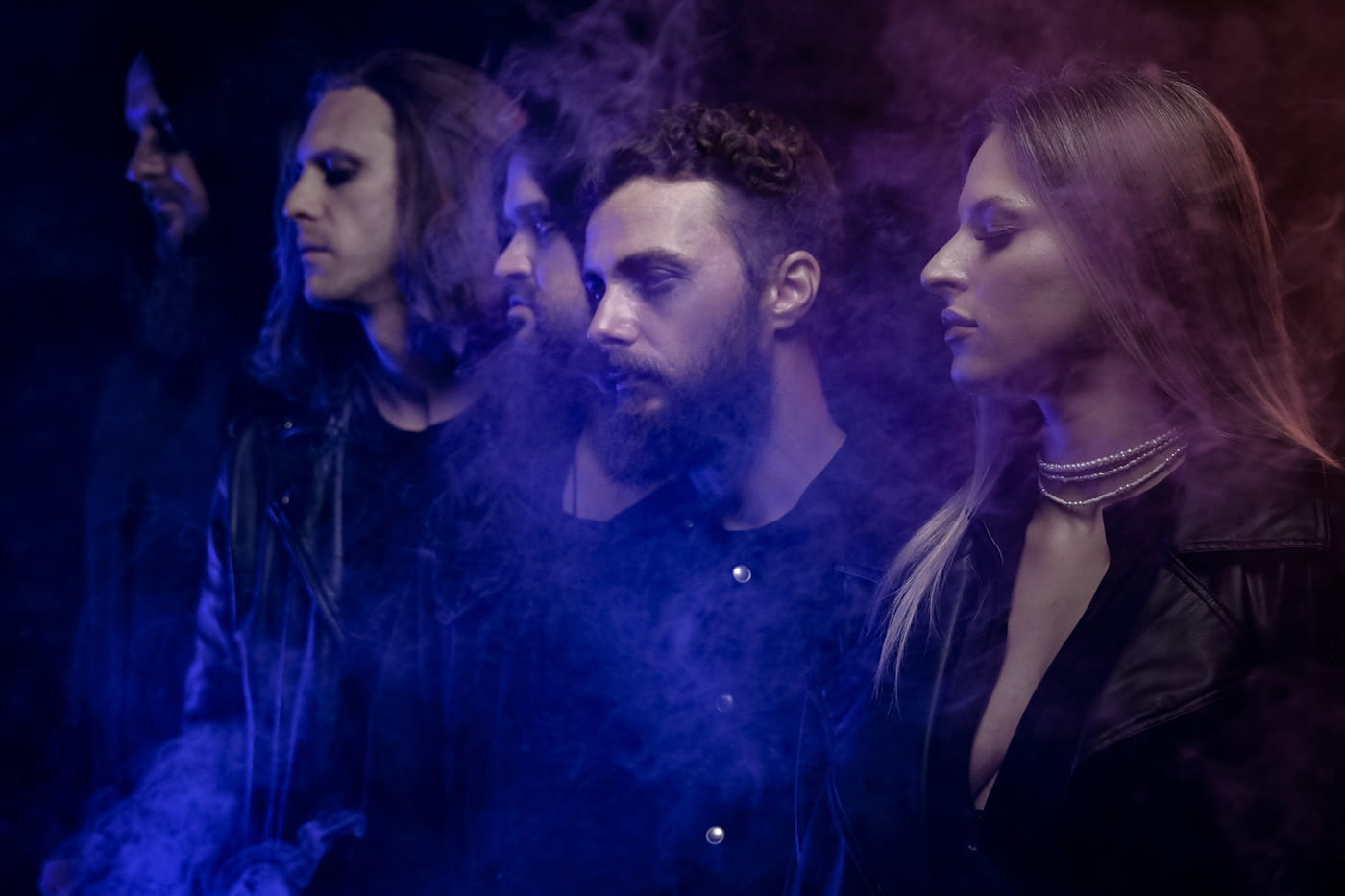


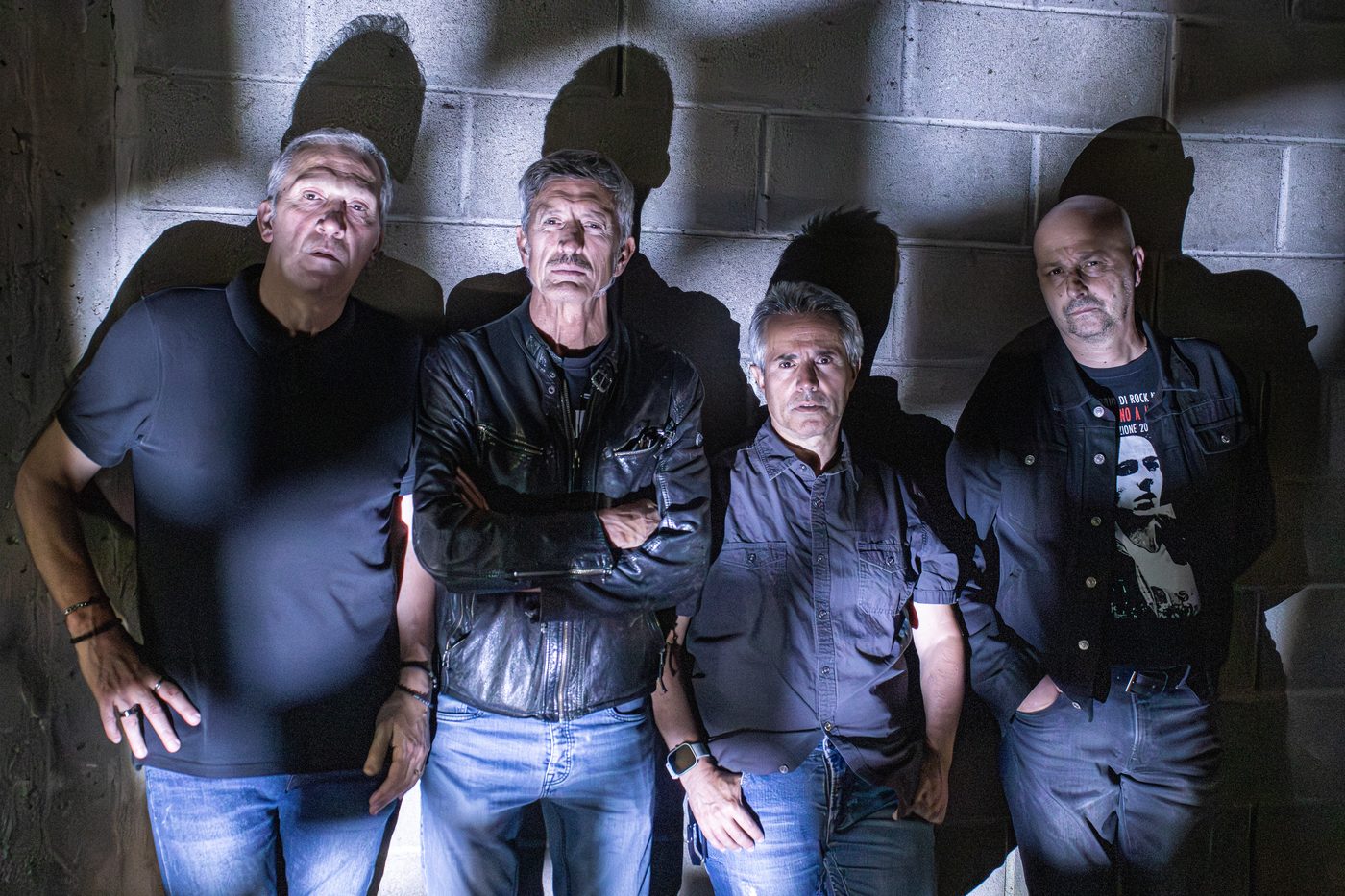
One of the twelve new songs on LINEA’s “Oggi come ieri” began as a ballad. By the time the Milan combat-rock band finished working on it, the title track had become what guitarist and singer Gianmarco “Gimmi” Pirro calls “white reggae”, with a chorus he says stays in your head.
Elsewhere on the album, an extended, repeated ending gives “Storia di eroi” the character of a partisan hymn, while “You Will Never Have Me” goes straight for the kind of English-style punk-rock guitar riff Gimmi loves. After 37 years, LINEA are still happy to change a song completely in the rehearsal room.
Those changes took roughly two years. The four-piece now have piano and vintage keyboards alongside guitars, bass and drums, and the songs move between political subjects and much closer, personal ones. “Fino all’ultimo figlio” deals with war and the wish for suffering to end. “Immaginavo te” found bassist and singer Silvio Calesini using his voice in a way that surprised him. The record carries a very familiar argument in its title: the problems LINEA were singing about decades ago are still here, and so is their reason for playing together.
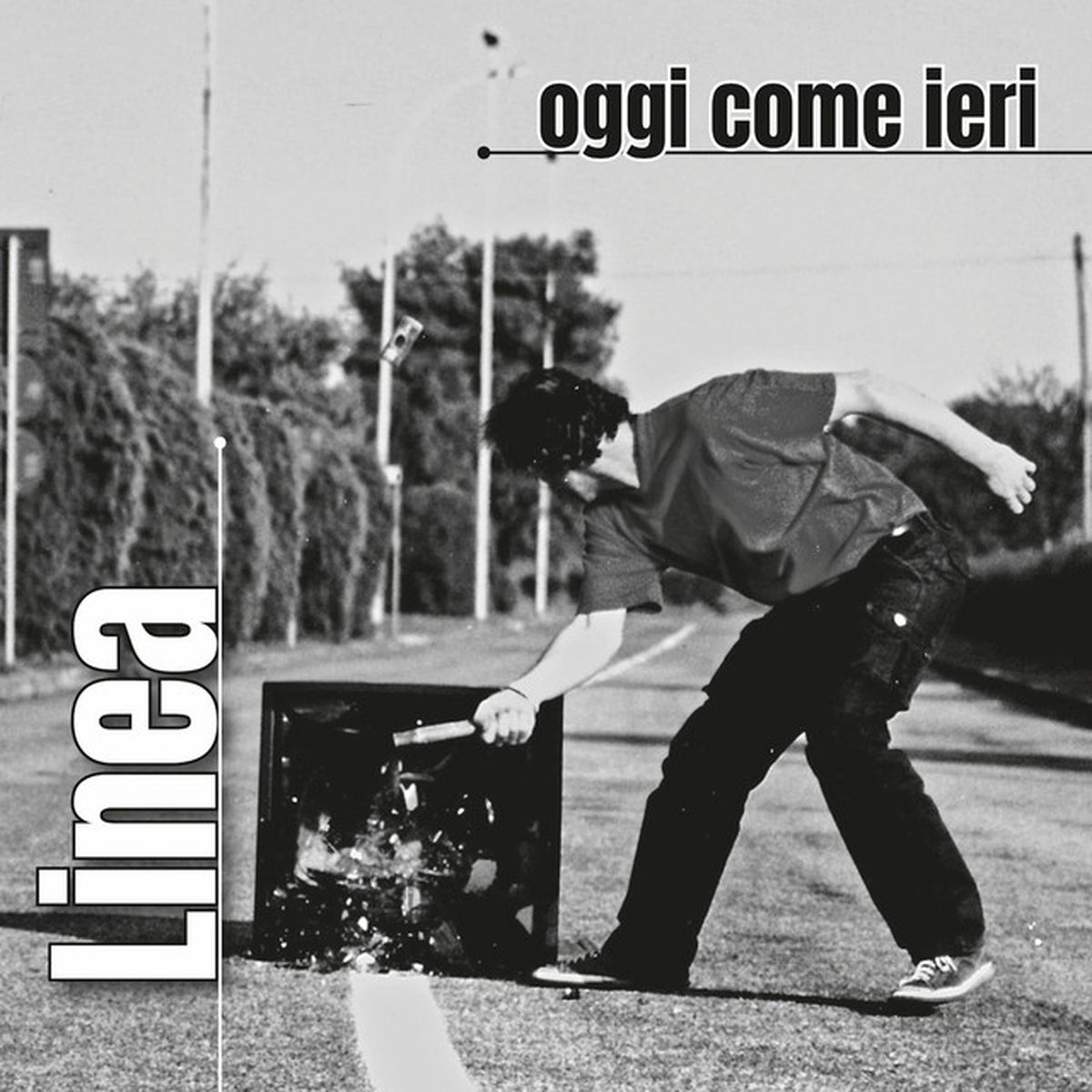
Gimmi gives the title, “Today as Yesterday” in English, two meanings. The first goes back to the promises people made during the pandemic, when so much of ordinary life had stopped.
“After Covid, people often said that things would never be the same again, that humanity would be better, that everything would improve. We’d never lived through anything like that, without the freedom to go out or travel, afraid of catching the virus. It was an incredibly difficult experience for everyone. And yet we found ourselves exactly the same, with the same problems: wars, poverty, the strong killing the weak. Humanity learns nothing from the past!”
The second meaning comes from the band’s friendships. “Today, just as yesterday, we’re still here with our passions, wanting to meet up, talk, write songs and play them for ourselves and other people. As the lyrics say, ‘it will be wonderful’.”
Silvio also thinks about the conversations he has with friends. His darker reading of the title concerns what he sees as manipulated information and the divisions it causes. “Today, just as yesterday, we get together as friends to share thoughts and ideas, to talk and find the things that unite us. We take those conversations home with us, like a reserve for the future. And it’s beautiful.”
The songs started turning up during the enforced break from gigs. LINEA had released “Fuori mercato” in 2020 to mark their first three decades, returning to songs from older albums and even the original demos to give them fresh arrangements. Silvio had a new song ready, so they included that too. Then the pandemic made it difficult to take the album out to play.
Gimmi and Silvio kept in touch and began swapping home-recorded ideas. There was the familiar exchange of “I’ve got a new song, what do you think?” and “I’ve got a few things you should hear too.” Once they could meet in the rehearsal room, they had enough beginnings to keep working. Some survived with fewer changes; others were rebuilt again and again. Silvio puts the actual writing period at around two years, and keyboard player Fabio Costantino reckons that every one of the twelve songs went through continuing changes to its structure or arrangement.
“We wanted to improve every single aspect over those two years,” Fabio says, “so each song could express itself as well as possible.”
Max Longhi had entered the band around “Fuori mercato”. He’d known LINEA almost since the beginning and followed what they were doing, but his previous playing had come from a different musical background. Going back over the old catalogue helped him find his place.
“My first job was to enter a musical world that hadn’t really been mine, perhaps because of my previous experiences. Learning the old songs and rearranging them helped me get into this project with my heart and soul. With the new record, we’ve managed to find and renew the spirit of LINEA, which remains the same. ‘Oggi come ieri’, we’re still ‘Fuori mercato’,” he says.
In April 2026, LINEA recorded the album at Real Sound Studio in Milan. The sessions took a little over a week, according to Gimmi, after all those months of rehearsal and changes. The band handled their own production and arrangements; Ettore “Ette” Gilardoni recorded, mixed and mastered the results.
For Gimmi, “Storia di eroi” was one of the songs that came out closest to what he’d imagined. He likes its groove and the way the ending keeps repeating until it is almost a hymn. The people in the lyrics are the Italian partisans who fought against fascism and for their country’s freedom.
“The partisans are the heroes, people who fought for the freedom of their country, and many sacrificed their lives,” he says. “That must never be forgotten. It has to be passed on to future generations, even if some people would prefer us to forget!”
Silvio remembers two songs particularly well. On “Immaginavo te”, he found himself singing in a new way, with the words taking on a very personal sound. Writing “Fino all’ultimo figlio”, about war and imagining an end to suffering, was a different experience altogether.
“Singing and writing about war, imagining an end to the suffering, I felt as though my soul were coming out of me and singing,” he says. For “Immaginavo te”, “I felt I was singing in a new way. The words took on a very personal sound. I’m really happy with that song.”
Max picks “Futura direzione” and “Fragile” as two sides of LINEA, one lighter and the other angrier. Davide “Prais” Calesini joins them on “Fragile”, while Gang’s Marino Severini sings on “Mia Palestina”.
Fabio’s keyboards have changed how the band put these songs together. Silvio finds they complete the arrangements and bring in new ideas. Gimmi wanted older sounds, especially acoustic piano, Hammond-style organ and vintage synthesisers, that would work with their familiar rock setup. They got to know Fabio as a person first; discovering how well he played gave them another reason to ask him in.
“Keyboards give music a colour that other instruments can’t,” Gimmi says. “We chose more vintage sounds: acoustic piano, that lovely warm Hammond-type organ and a few old synthesisers. Nothing too modern or electronic. We wanted a warmer sound to round out the usual guitar, bass and drums.”
From 2014 to 2019, LINEA played as the backing band for Filippo Andreani, an old friend from Como punk-rock group Atarassia Gröp. They had shared gigs for years. When Filippo started writing songs for a solo project, he wanted people he knew could work with his punk roots and help turn those songs into live arrangements.
“It was a huge new experience,” Gimmi says. “We could put our abilities as a band into arranging songs that weren’t ours and make them sound the way he wanted. It was wonderful and satisfying, especially when you saw how happy he was to hear his songs taking shape.”
Silvio liked being able to take somebody else’s songs in a new direction while keeping the street-level quality they shared. LINEA played on Andreani’s “La prima volta” and “Il secondo tempo”, both of which reached the final five of Italy’s Targhe Tenco awards. During the second album, they worked with producer and bassist Guido Guglielminetti, watching how closely he worked on each instrument and arrangement.
“We learned a huge amount about how a professional works in the studio, looking after every detail of every instrument,” Gimmi says. “We still use a lot of what we learned when we’re working on our own songs.”
Filippo returned the favour by singing on “Pensavo con te” from “Fuori mercato”. The band wanted him on their anniversary record after five years playing his songs; Silvio says it was also a way to keep that friendship going.
Long before Filippo entered the picture, there was San Giuliano Milanese in 1989. Gimmi had grown up on British rock and pop: The Beatles, The Who, Led Zeppelin and Deep Purple. The friends with whom he started LINEA were more immersed in punk, new wave and The Clash. Around Milan, bands including Afterhours, Ritmo Tribale, Casino Royale and Timoria were coming through. LINEA made one decision early and stayed with it: the lyrics would be in Italian.
“At first we met with quite a lot of opposition,” Gimmi remembers. “People told us English was more international. We didn’t give a damn and carried on our way. Then, a few years later, all the rock bands were singing in Italian!”
They recorded four or five demos, contributed to compilations and hunted for gigs in the small number of clubs booking original rock music, as well as in social centres. Winning Milan’s Scorribande competition got them a track on a compilation and a slot at the city’s Rolling Stone venue. The show brought more contacts, then gigs at other clubs and festivals. LINEA’s first album, “In Cammino”, eventually arrived in 2000.
They kept playing, though the breakthrough never came. Gimmi is open about that: “It was a good time, but perhaps through a lack of luck, or because we weren’t ready enough ourselves, we never managed to make the big leap. Even so, we carried on writing new songs and spending a lot of time in the rehearsal room to get better. We kept going our own way.”
Silvio joined LINEA in 1999. What stayed with him about Joe Strummer went beyond the records: it was the way people got together, organised gigs and did whatever needed doing themselves. Fabio first heard “London Calling” through a cousin who loved The Clash. For Gimmi, the same album had everything he was looking for, from rock’n’roll and blues to ska and reggae, with lyrics that meant something.
When LINEA saw Strummer play with the Mescaleros in Milan, Gimmi was struck by how little ego he brought to the stage. Here was someone who had helped change punk rock, playing as though he still had everything to prove. Gimmi also admired the way Strummer had pushed to keep The Clash’s double and triple albums affordable.
“It was fascinating to have a punk icon up on stage putting himself on the line again as though it were his first time, with truly admirable humility,” he says. “It made you understand what kind of person he was and why so many people still loved him.”
LINEA helped organise the first Italian tribute to Joe Strummer at Bologna’s Estragon in December 2004. Their original singer Mauro Zaccuri came up with the idea and put it together with manager Daniele Calesini and Fulvio Pinto, who later played drums in the band.
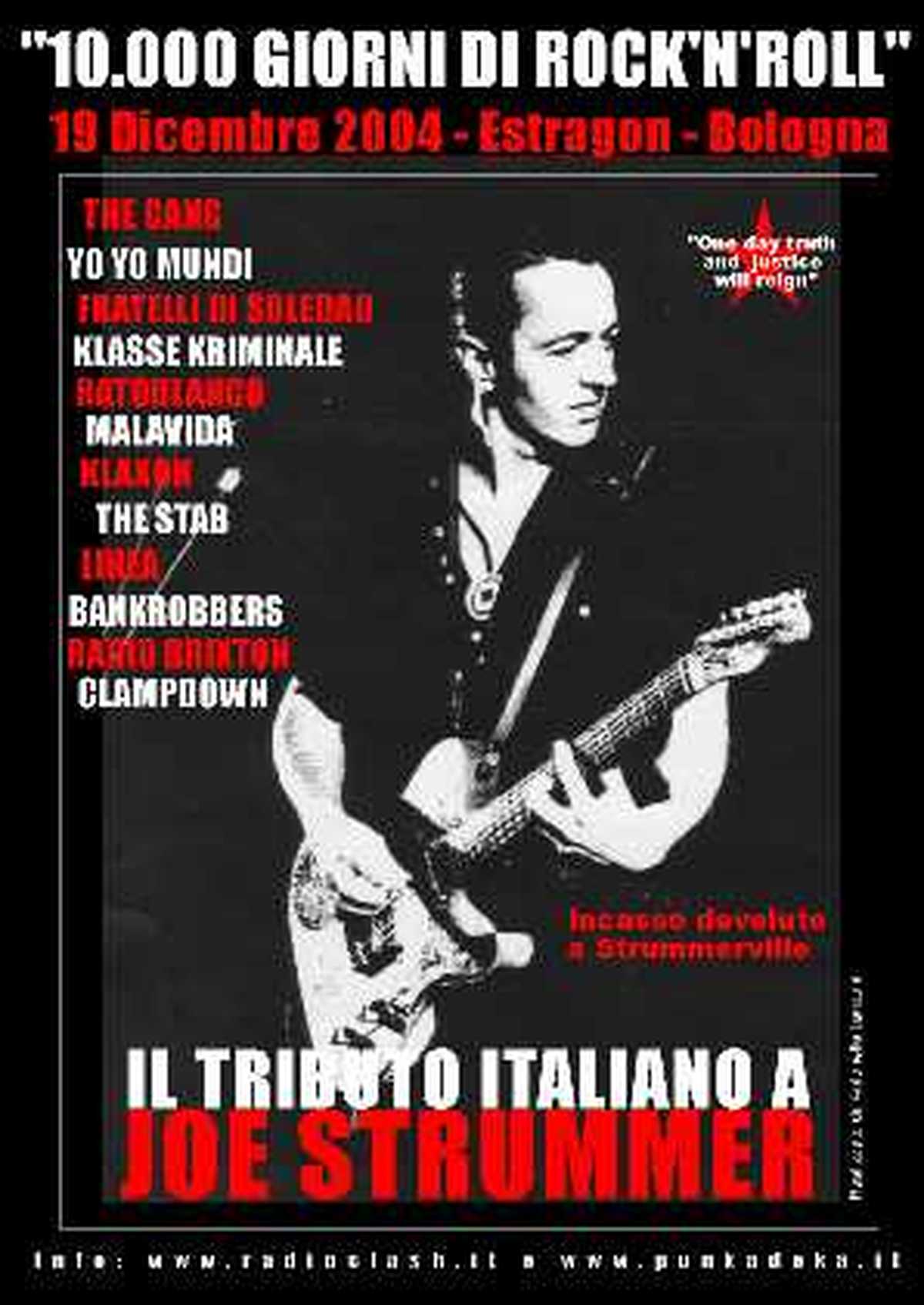
LINEA played “Police & Thieves” that night, and their performance ended up on the live compilation. The tribute went on to run for ten editions. It also brought them into contact with people from the British Clash circle.
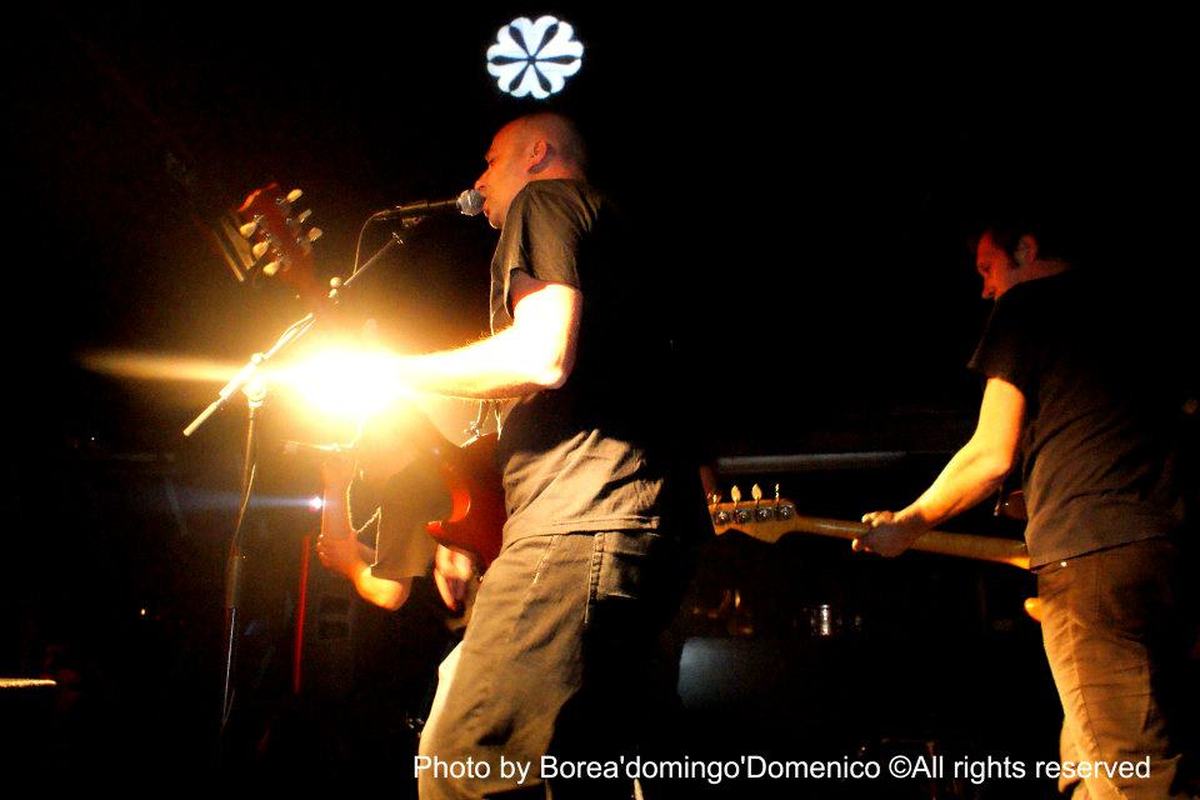
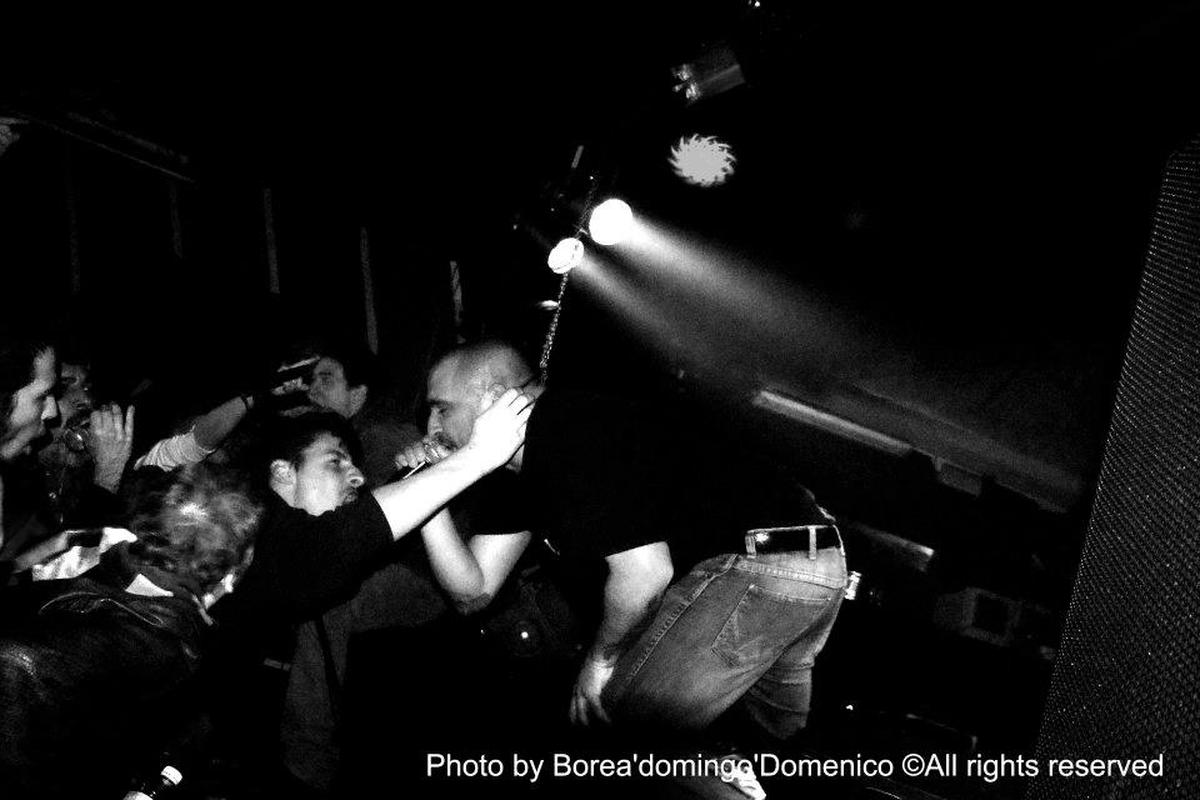
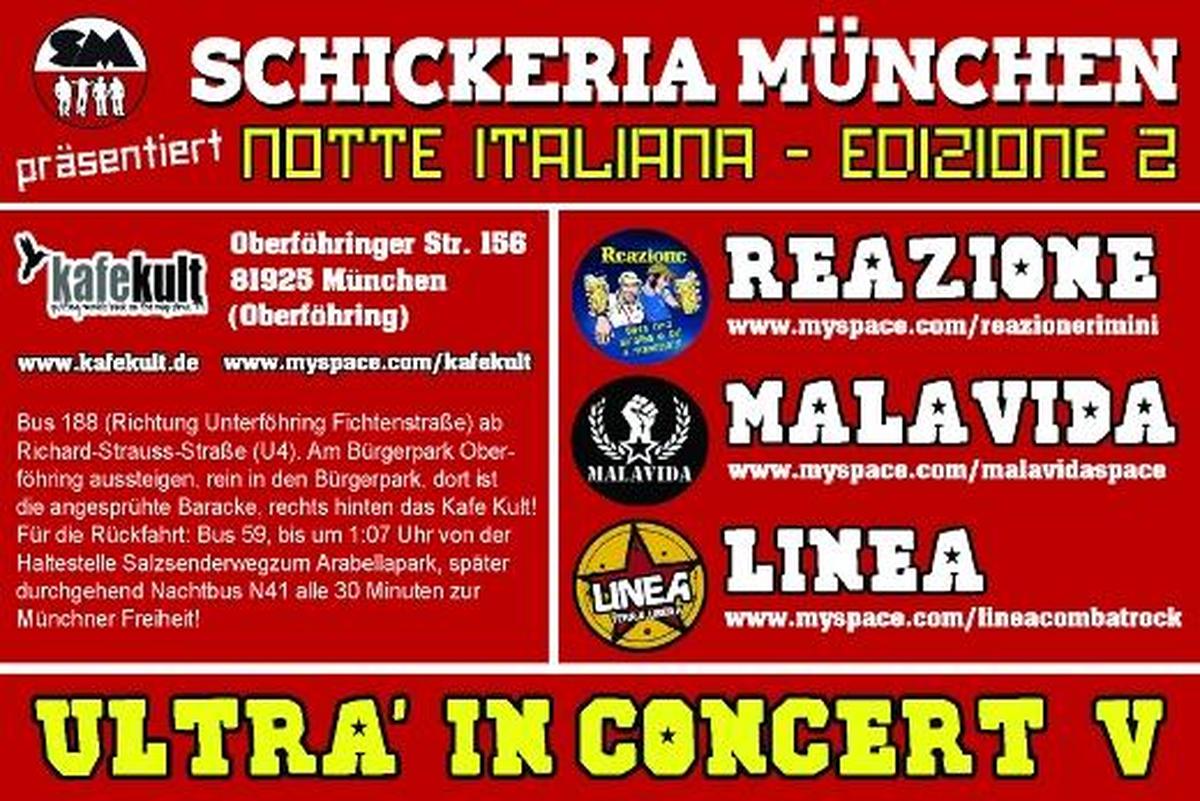
British writer Anthony Davie was among Mauro’s contacts. The friendships made around the tribute eventually took LINEA to Strummercamp near Manchester twice. Gimmi was curious to see how a British crowd would react to an Italian band playing their own songs in Italian.
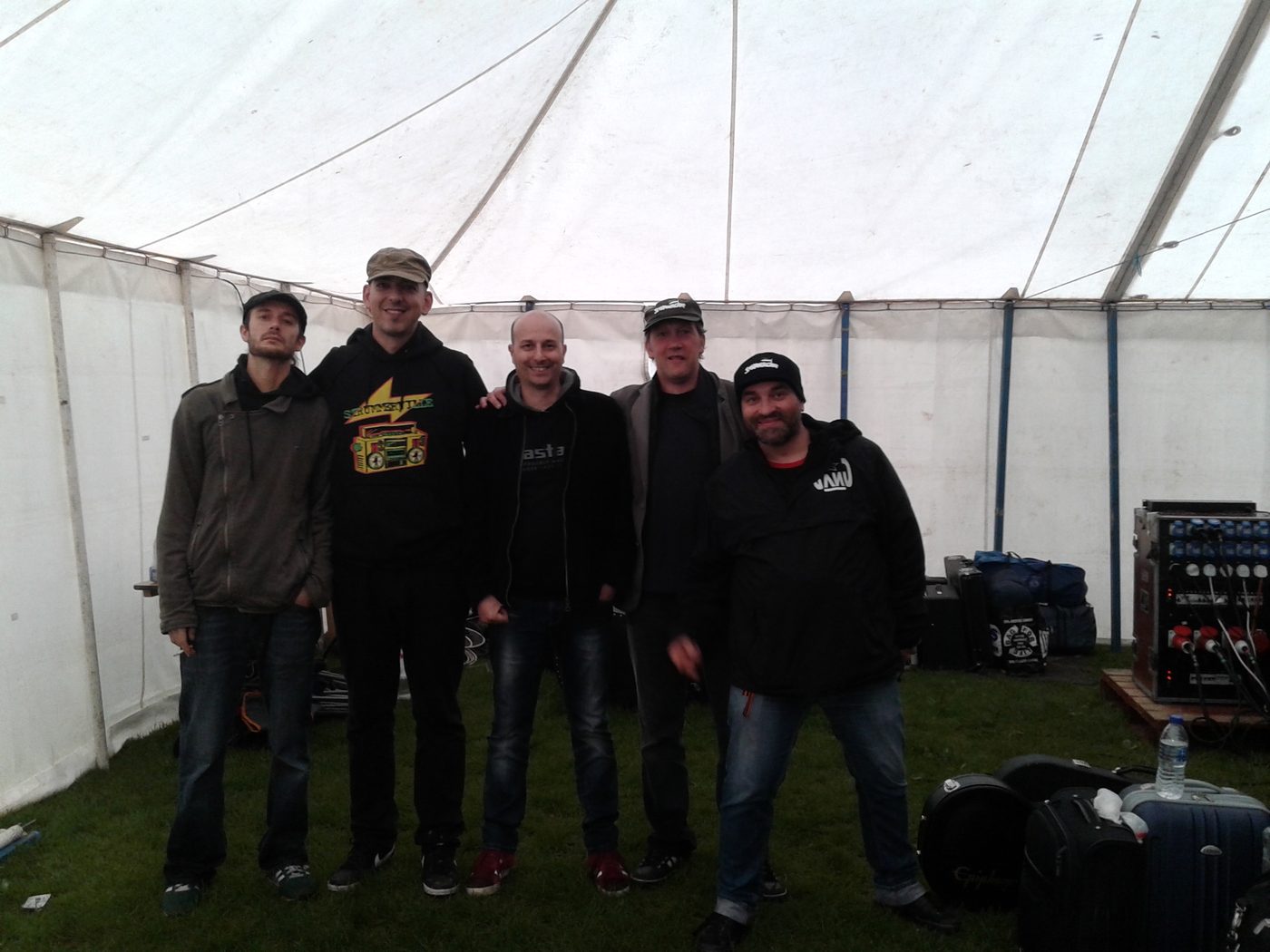
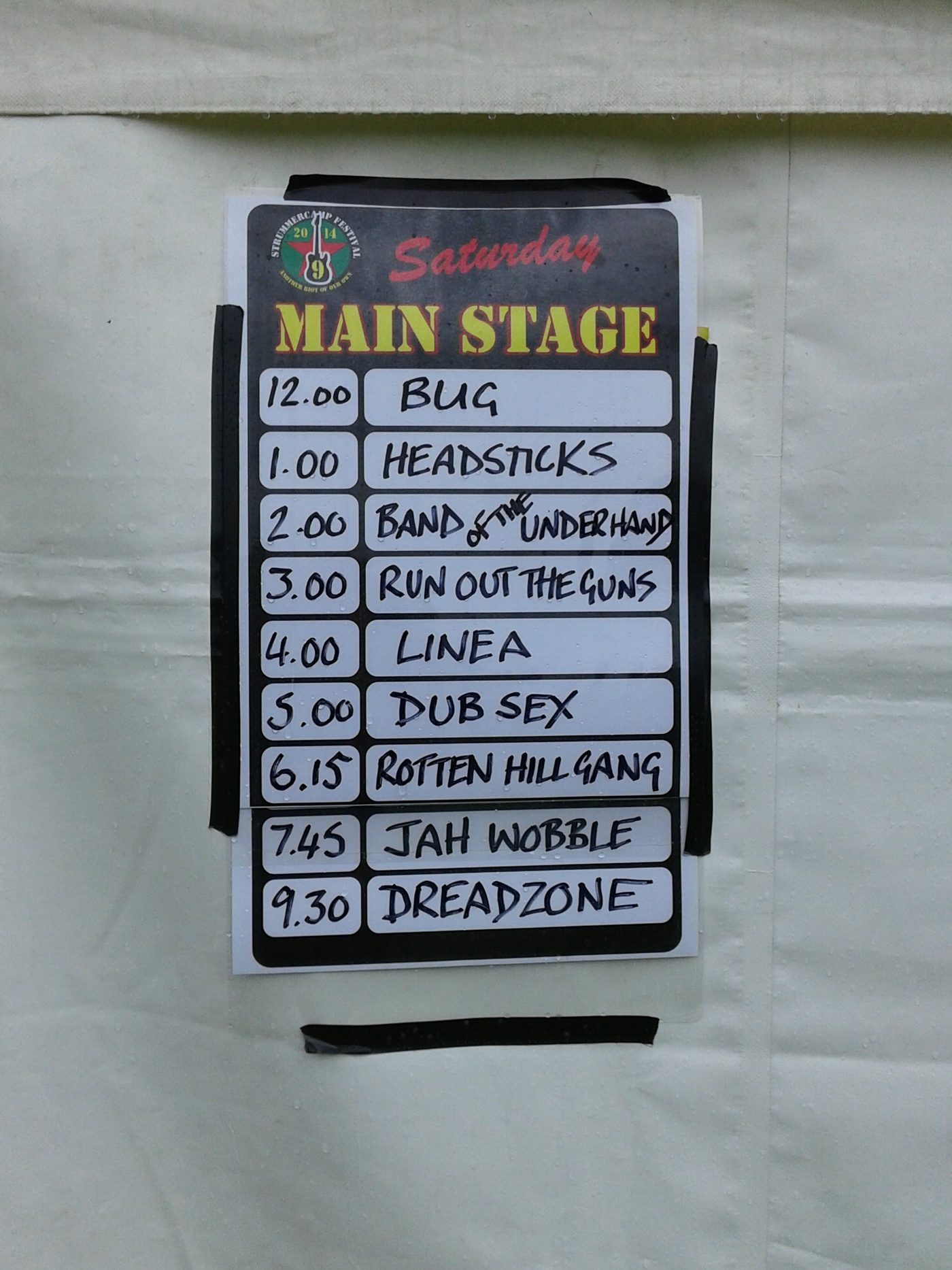
Silvio remembers the festival vividly: “I remember it as though we were all sitting around a fire, with Joe Strummer guiding us as we strummed away between the electric and acoustic stages. A community full of energy and the pleasure of being there.”
For Gimmi, going on stage in England with an Italian-language set meant having to win over people who had grown up around the music LINEA loved.
“You plug in the leads and go: one, two, three, four, and give everything you’ve got, from the heart, without a big show. The nice thing about the English is that if they see and hear sincere, believable energy, and above all respect, they appreciate it. They applaud, they sing, and afterwards they come over and compliment you too!”
The same friendships took LINEA to Liverpool in 2009, opening for Los Mondo Bongo at the Cavern Club. Former Mescaleros Pablo Cook and Smiley were in the group. Gimmi had loved The Beatles since he was young, so playing there was a pilgrimage of sorts.
“You find yourself in one of the most famous and historic rock venues, and you’re treated like a professional, with all the care given to a band playing an important stage,” Gimmi says. “Even though you’ve come from Italy, play your own music and sing in Italian, apart from a Clash cover, you’re appreciated and applauded for your sincere energy and respect. And I’ll tell you something else: we even sold a few of our CDs that night. Incredible!”
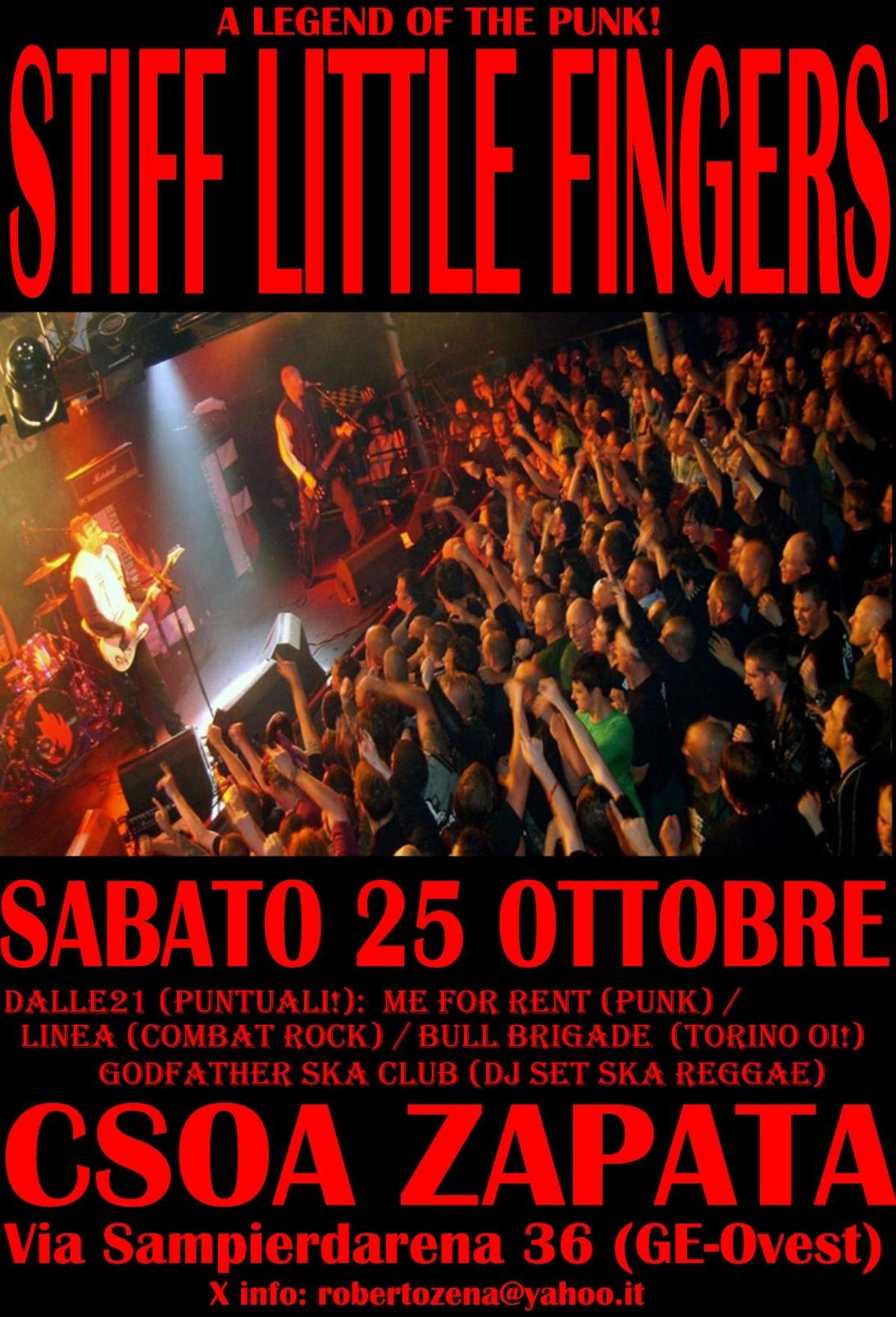
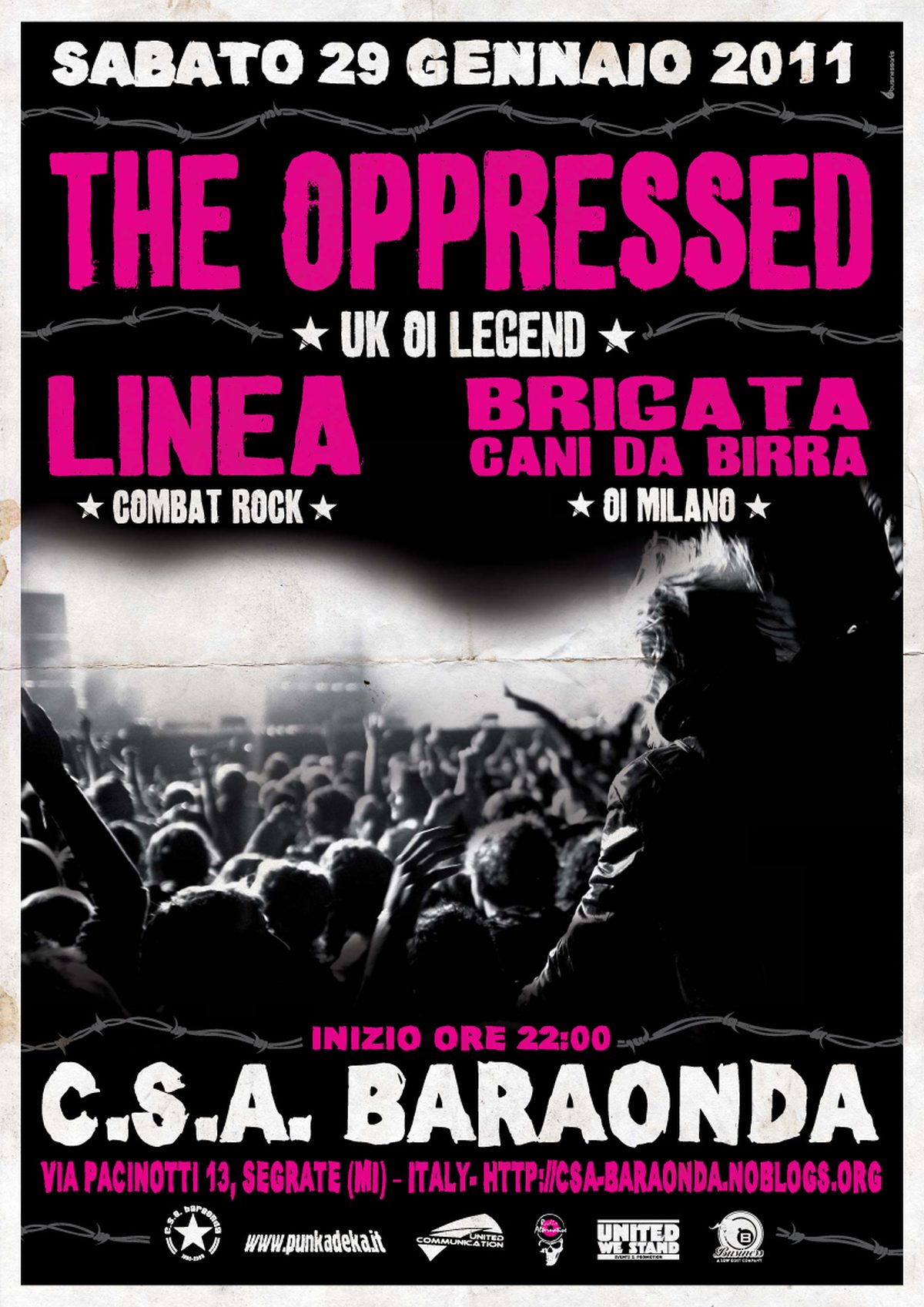
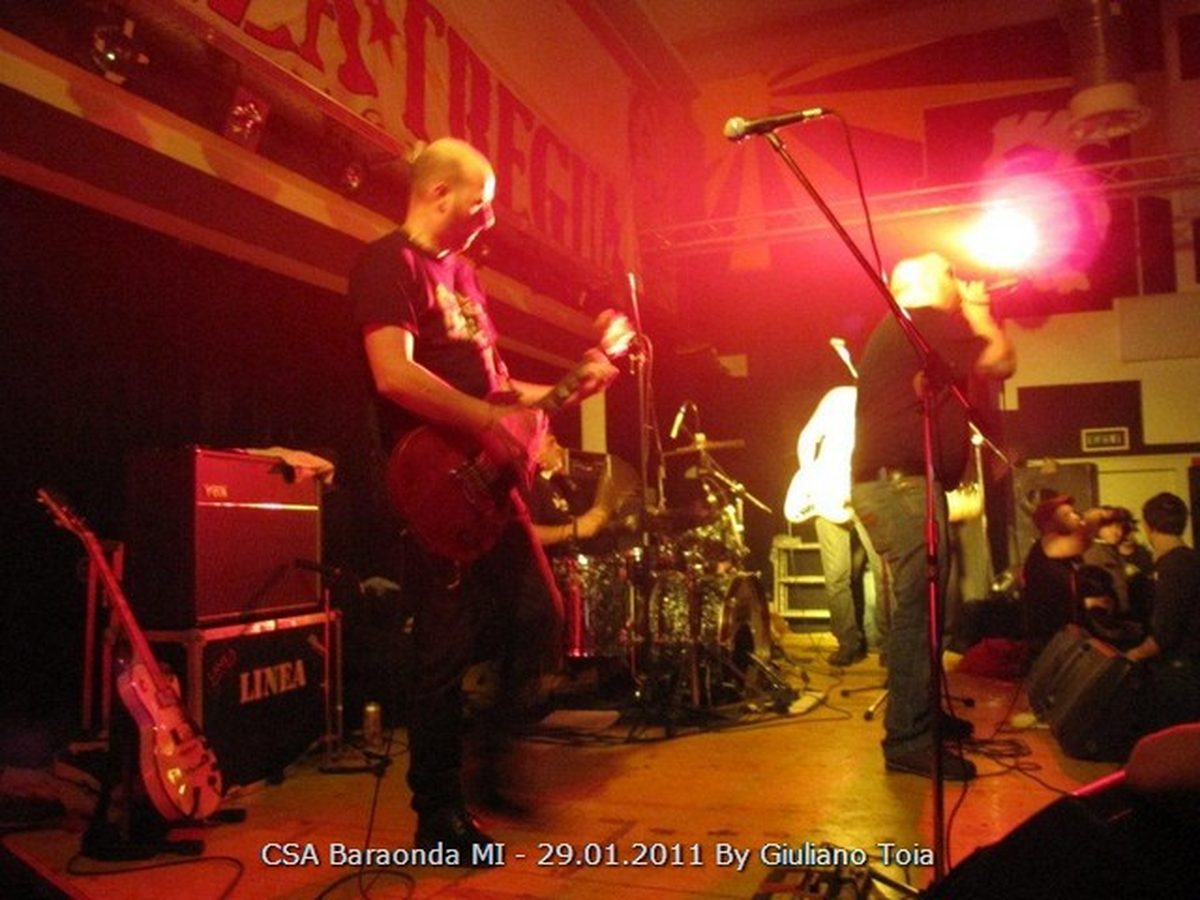
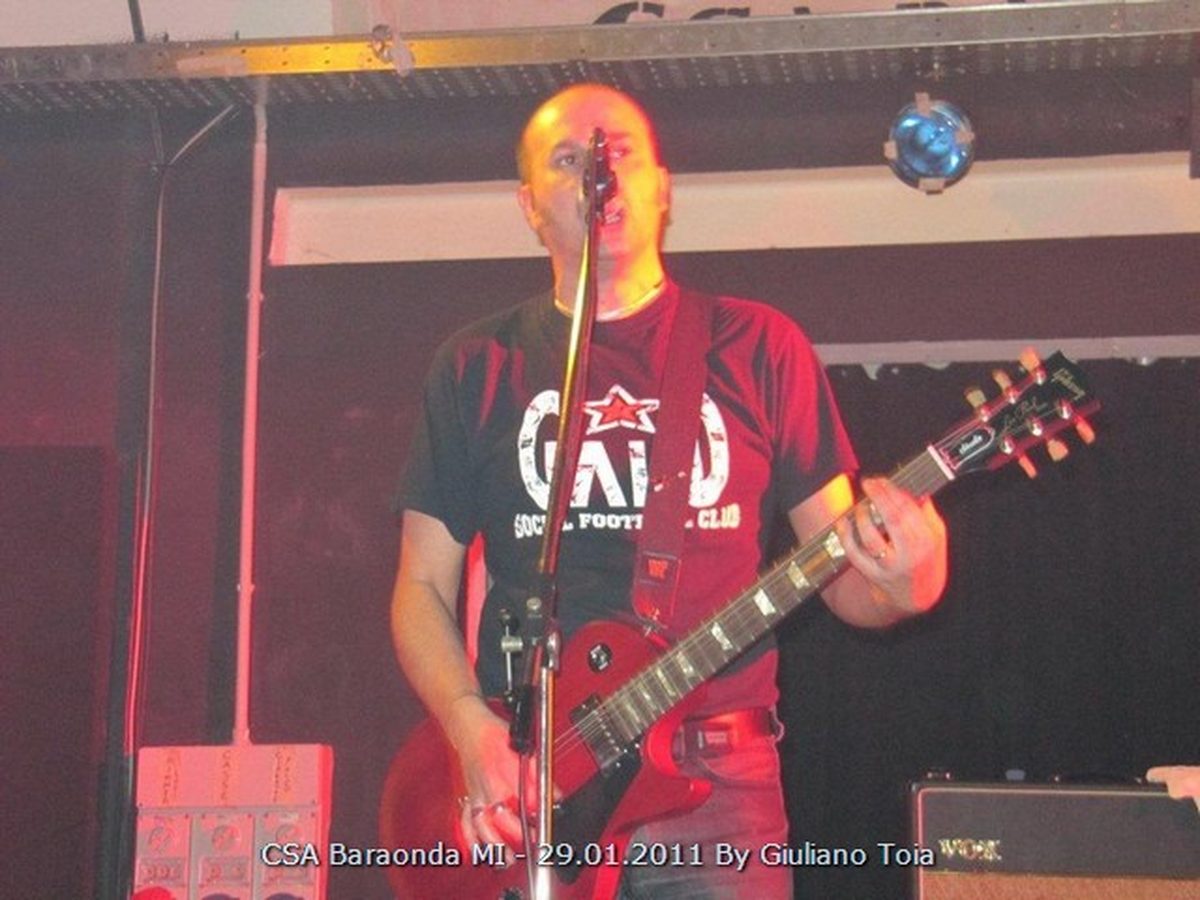
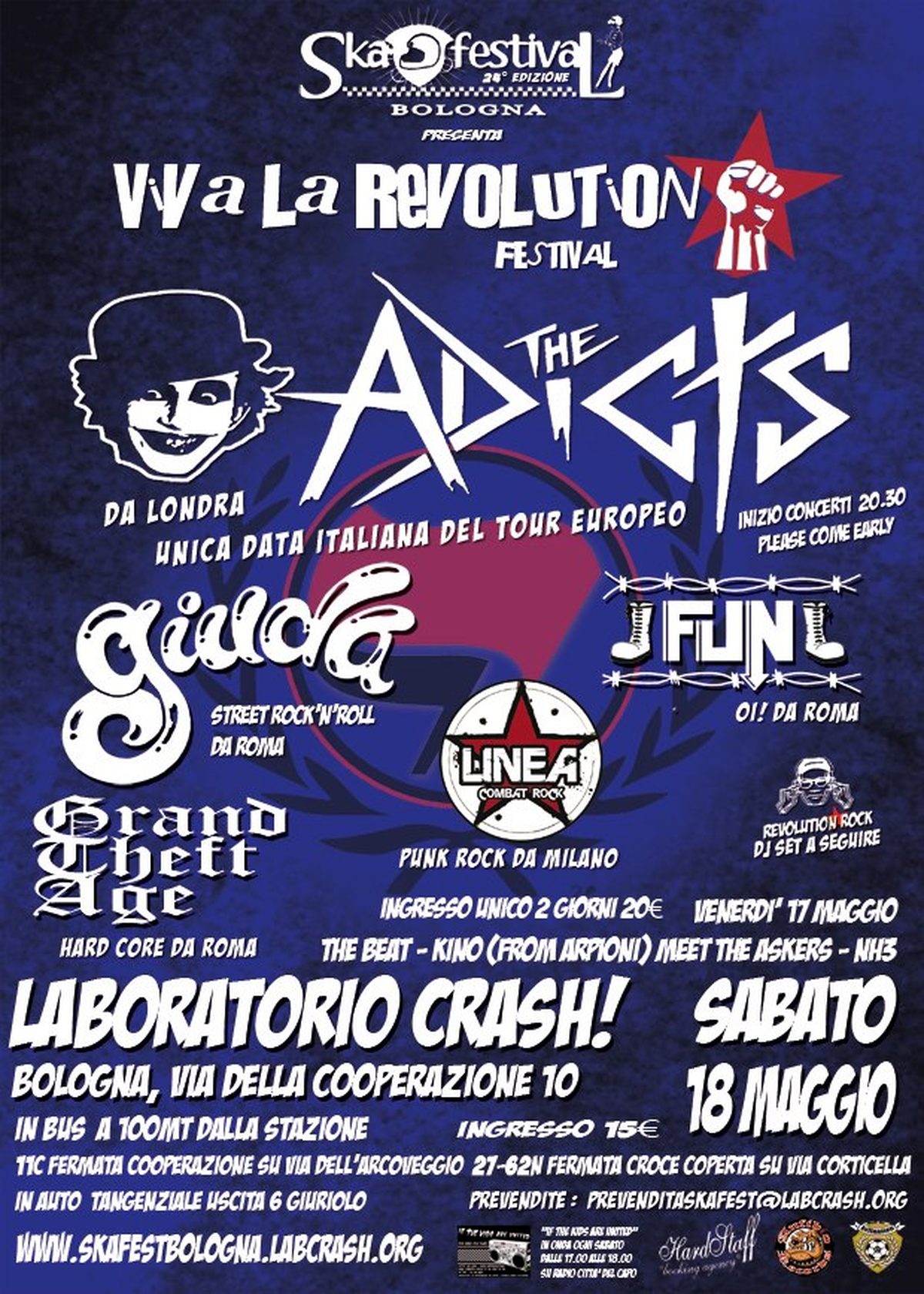
Most of LINEA’s gigs were still on the Italian DIY circuit, often in social centres. They shared stages with Stiff Little Fingers at CSOA Zapata in Genoa and with The Oppressed in Bergamo and Segrate. For Silvio, helping to organise gigs was simply part of what the band did.
Max has watched the crowd shrink at Italian gigs, even when the younger bands on stage are good. “Live music in our country is going through a really sad period, but we have to stay positive and never give up. There are some young bands playing really well. What we’re really missing is the crowd. Turn off your phones and listen to more music!”
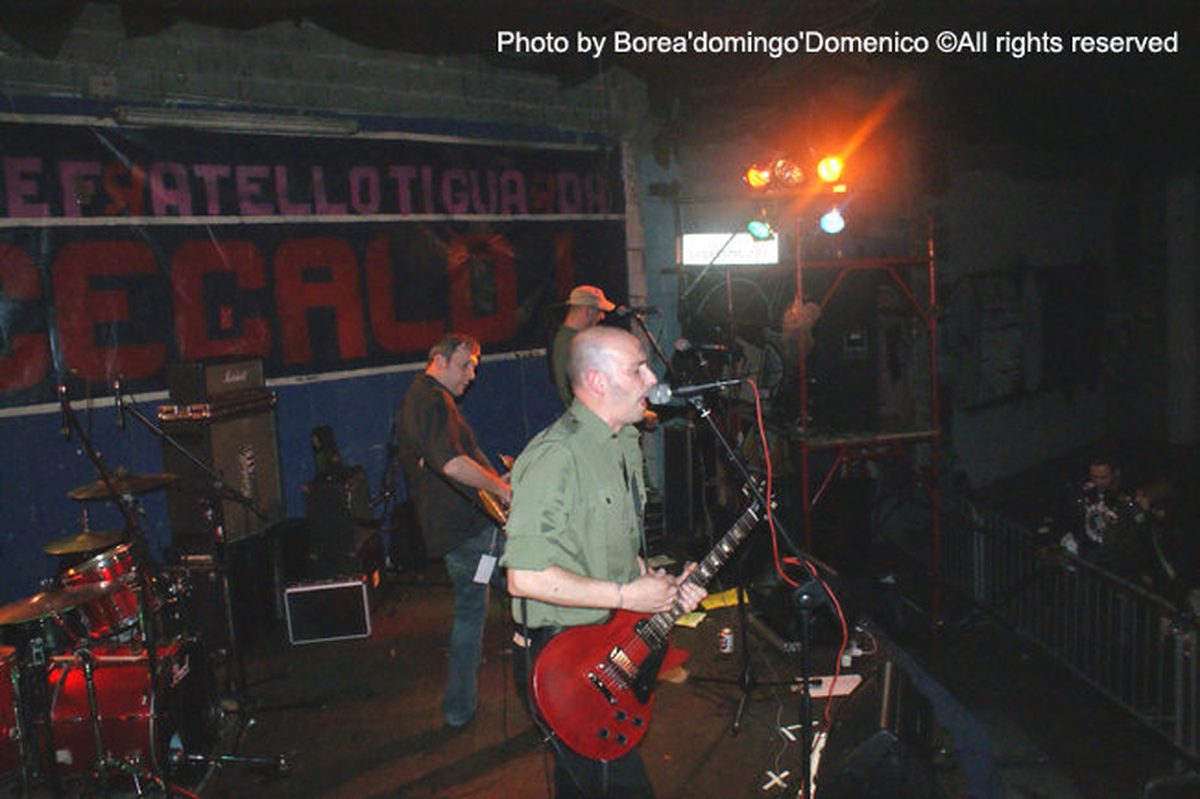
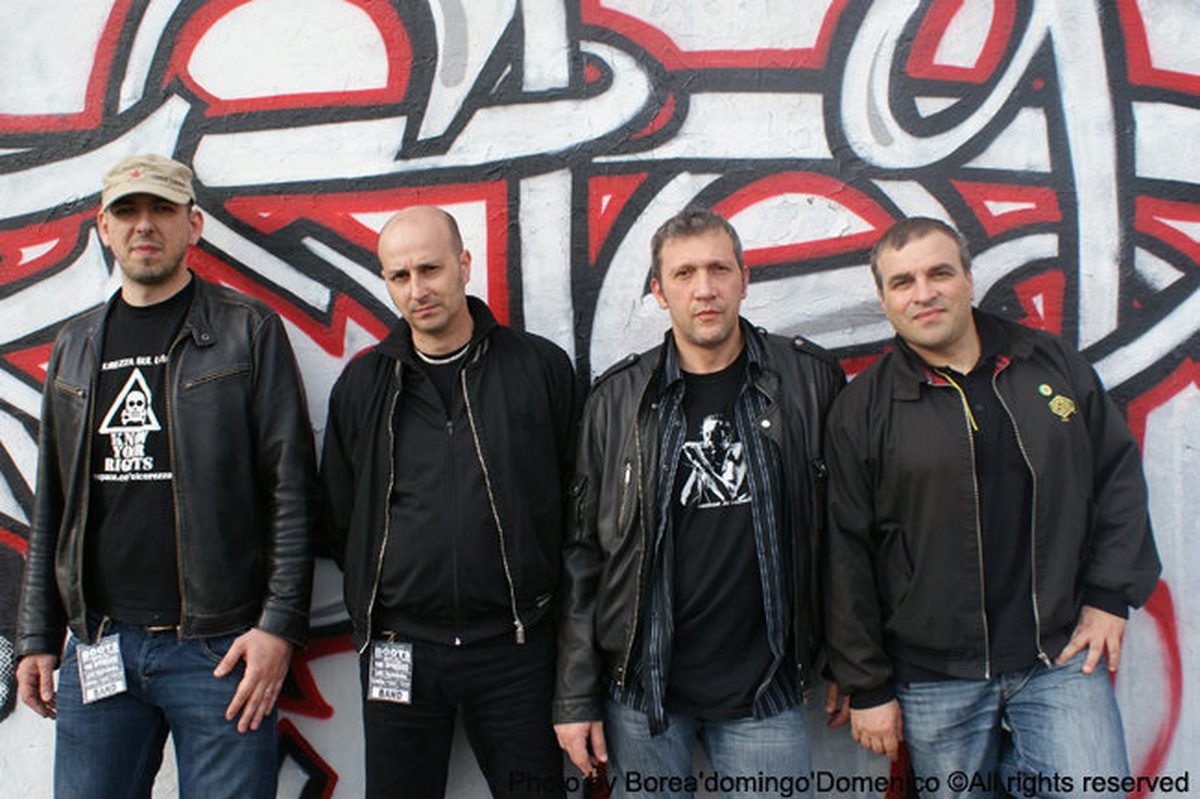
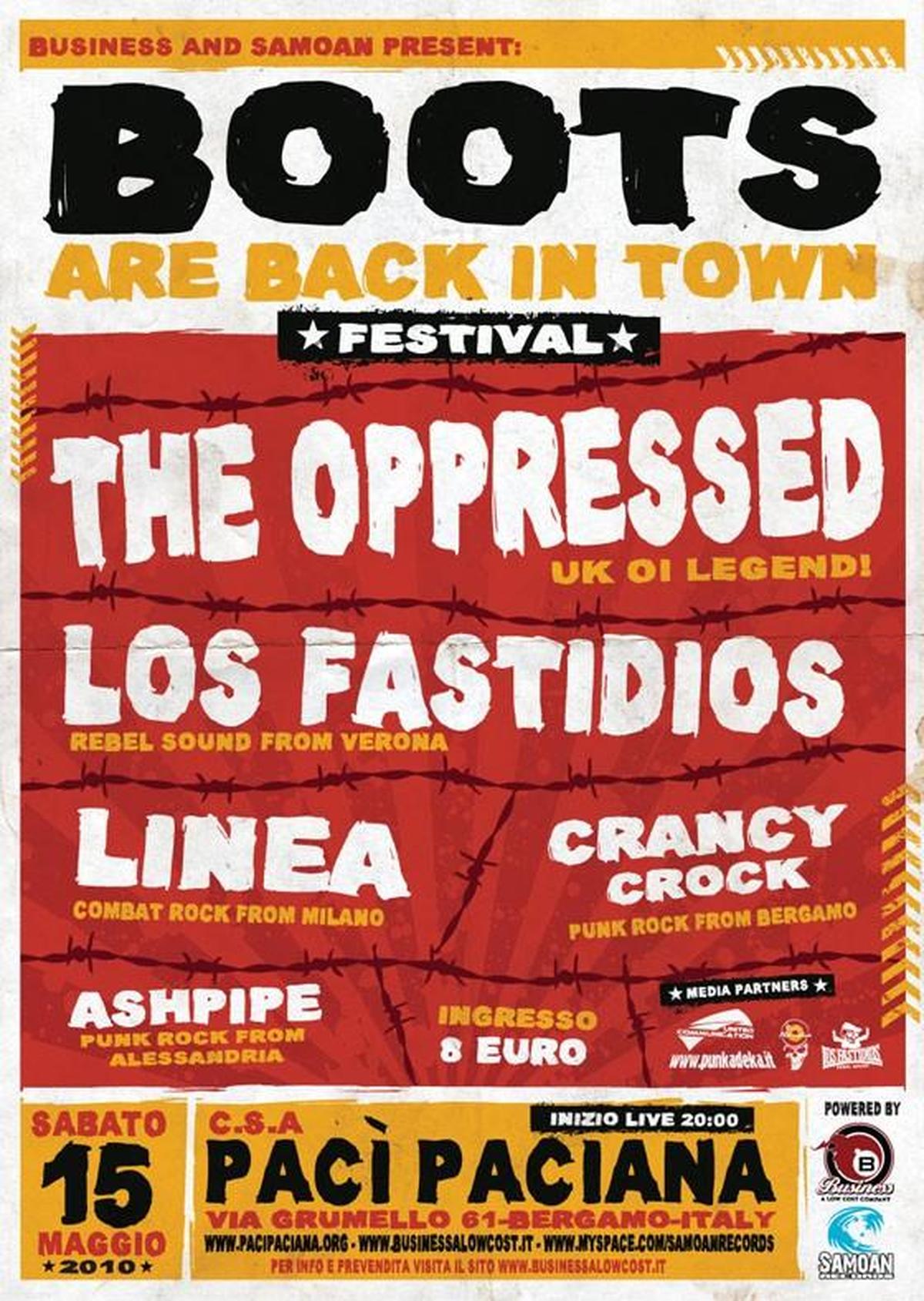
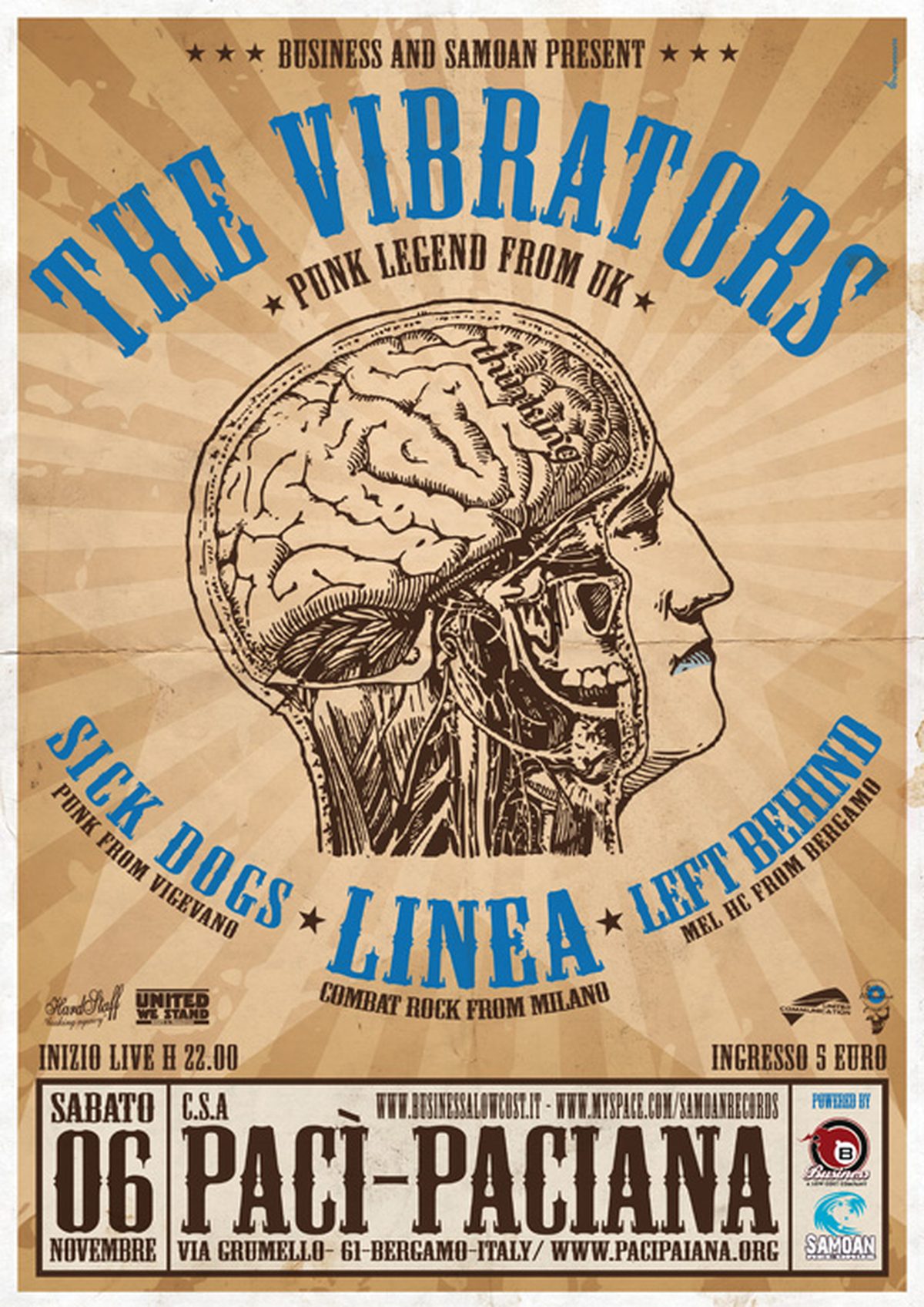
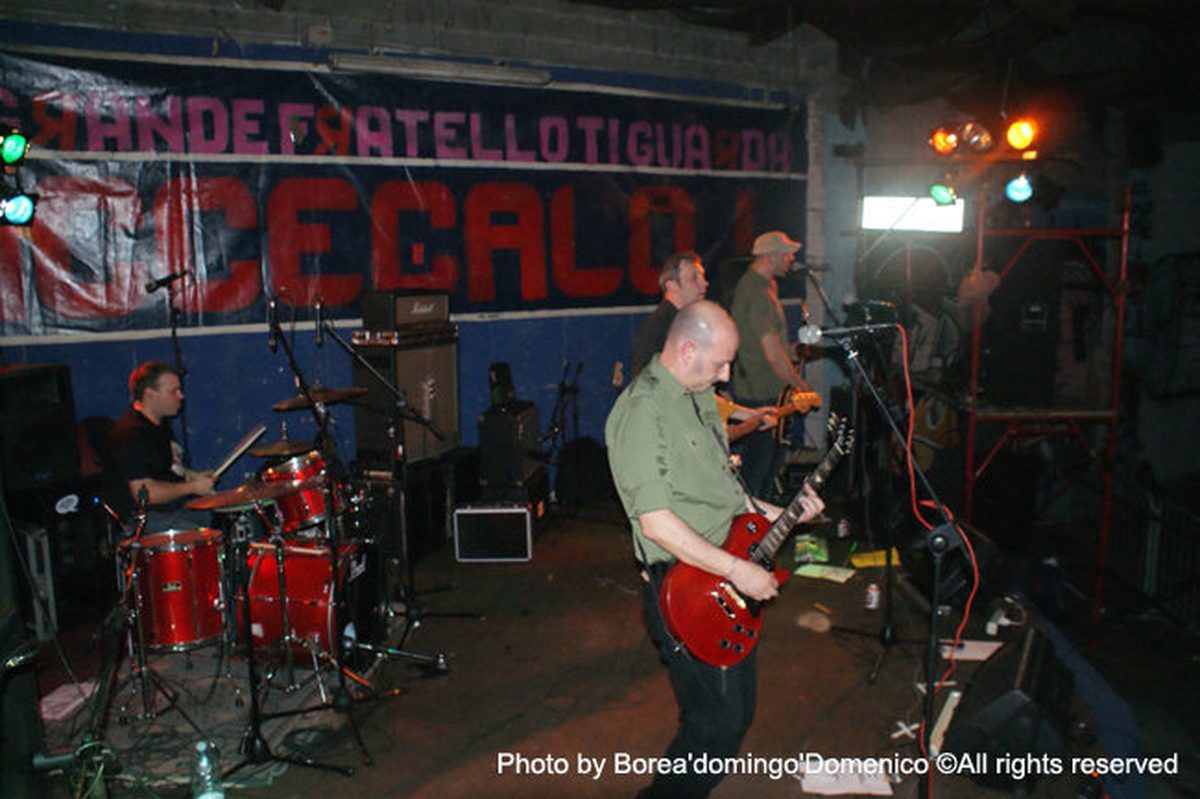
Gimmi thinks people have got used to consuming everything quickly, music included. He remembers having decades of records from the 1960s, 1970s and 1980s to discover, more than he ever found time to hear; now practically everything is a tap away. He worries that people have stopped listening carefully and that clubs have fewer customers for original bands. He’s also fed up with the number of tribute bands being booked.
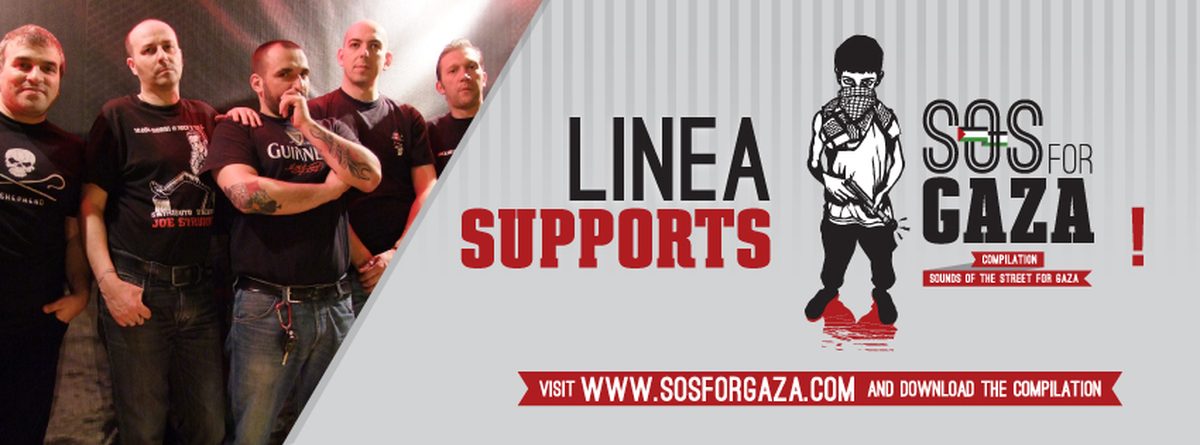
Gimmi welcomes the fact that younger people have their own sounds, including rap and trap. Silvio hopes they can take the music they discover and do something new with it. Neither has stopped believing songs can carry a political message.
“I don’t believe the power music can have has changed,” Gimmi says. “I still think music can be a cultural force with a huge impact. What’s important is choosing what kind of music to listen to, and above all what message it contains.”
Silvio has never separated those things either: “Our music carries messages, sometimes political, sometimes about belonging, sometimes more personal. My view of music and politics hasn’t changed. Songs can become the soundtrack to a movement, or they can remain what they are: songs with their own meaning and message.”
“Oggi come ieri” was released in September 2026 and is available on Spotify.
All interview quotations translated from Italian.
🔔 IDIOTEQ is ad-free, independent, and runs on one person’s time. If you want it to stay that way: DONATE via PayPal or SUPPORT via Patreon.
NEW: IDIOTEQ Explore 🗺️ Browse 15+ years of our archive by city, country, and style. Find artists on the world map or trace related sounds through the styles map.
Stay connected via Newsletter · Instagram · Facebook · X (Twitter) · Threads · Bluesky · Messenger · WhatsApp.