

You won’t always find this kind of sound on these pages. The usual rotation here leans heavier on hardcore, post-hardcore, punk — the stuff that hits fast and leaves bruises. But every now and then something comes through that demands a different kind of attention, and Julie’s Haircut‘s tenth album “Radiance Opposition” is exactly that. This is hypnotic psych, shamanic kraut, syncretic rock — whatever label you want to stick on it, it probably won’t cover everything happening across these eight tracks.
Released via Superlove in the EU and Weird Beard Records in the UK, it’s the band’s first full-length since 2019, and it sounds like a group that’s been around since the late nineties in northern Italy and still hasn’t run out of places to go.
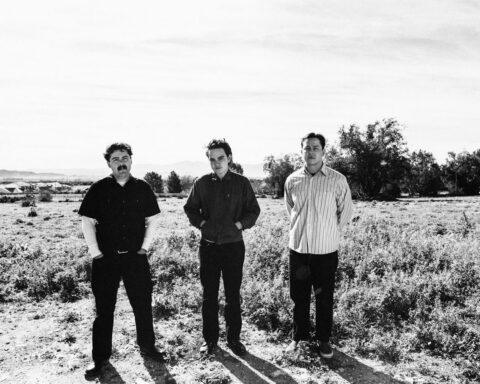
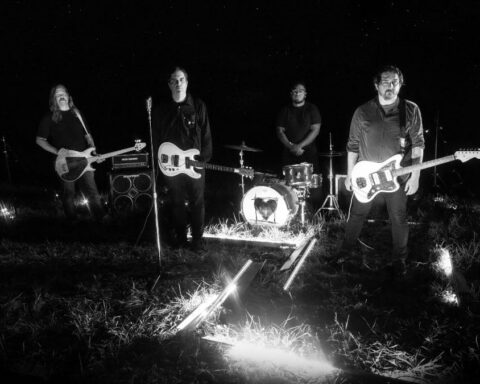
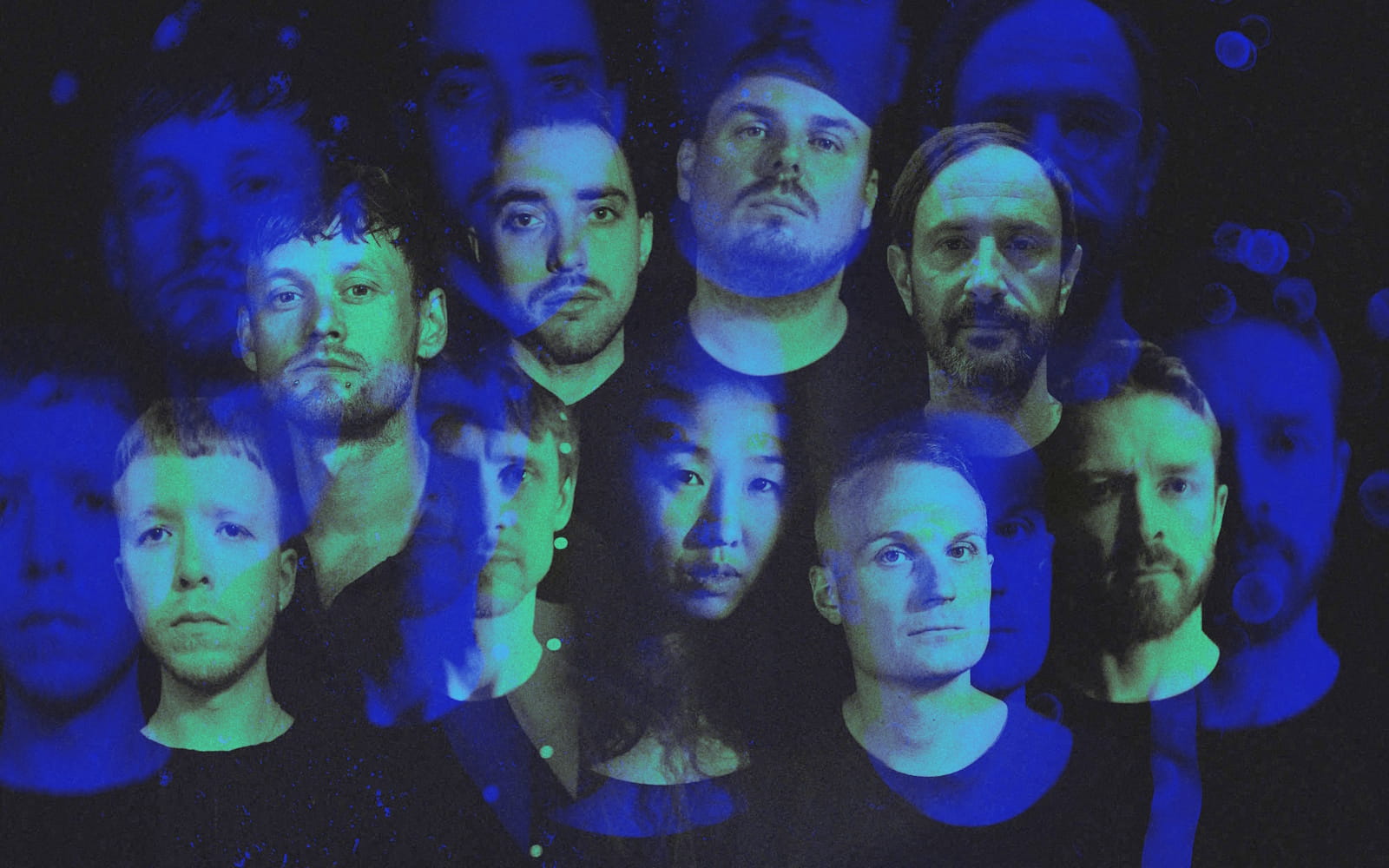
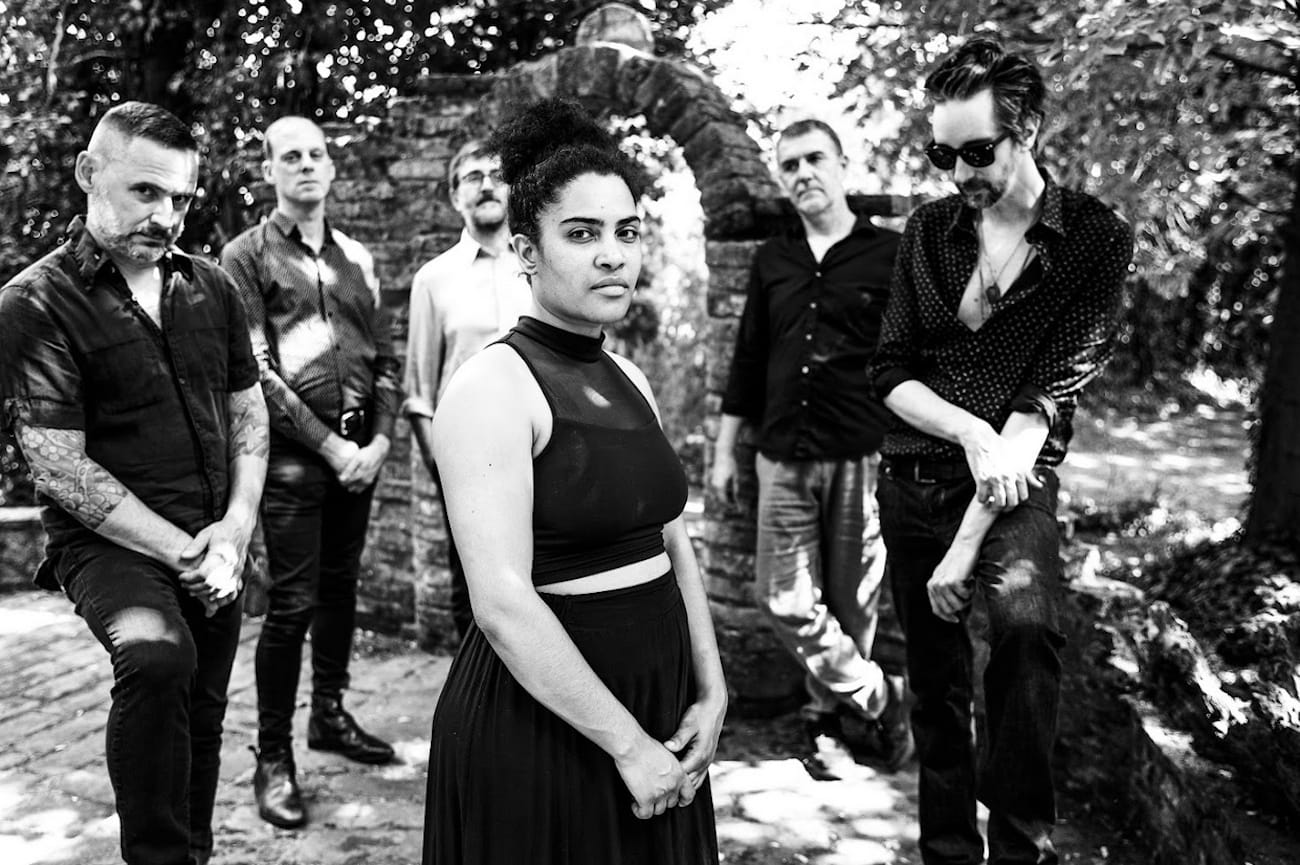
Julie’s Haircut are Nicola Caleffi, Luca Giovanardi, Andrea Rovacchi, Andrea Scarfone, and Ulisse Tramalloni — a six-piece now, with the addition of Italian-Nigerian singer and songwriter Anna Bassy, whose arrival reshaped the album in ways the band didn’t fully anticipate. Over the years they’ve collaborated with Damo Suzuki, Sonic Boom, Philip Corner, Daniel Higgs, and Valerio Cosi, and drew the attention of the late Andrew Weatherall. The title “Radiance Opposition” comes from the I Ching, the Chinese book of divination. The visual frame is by contemporary artist Zoë Croggon.
Before getting into the track-by-track, the story of how Bassy joined is worth telling. Before she ever set foot in the studio, the band sent her some incomplete instrumental tracks they were working on. She sent back “Spring Moon” as a try-out — just a few seconds of her main vocal line overdubbed on the backing track. They hadn’t met her in person yet, only a couple of phone calls. “The moment we heard it we immediately understood that she was tuned on our same frequency.” A few days later she came into the studio and started recording vocals on the tracks that felt right to her, starting again from “Spring Moon.” It came together fast. Beyond writing lyrics and singing lead on her own tracks, she added harmonies across the rest of the album and helped shape its final form. For a band that’s been doing this for almost three decades, bringing in a new voice is not a small thing. It landed immediately.
As for the instrumentation — mbira finger harp, bouzouki, pedal steel, electronic theremin, all woven into what could easily just be a psych/electronic record — the band says there’s no master plan. “It is the song that moves our choices — acting as a musicians collective, everyone is engaged in adding what is most fitting to the track’s identity. There is no written law: we share ideas and recorded stuff, maybe someone has an instrument at hand at home or in the studio and tries adding something.”
Here’s how each track came together.
“I Can See The Light” opens the album with a minimal pulsating synth arpeggio that slowly builds into a full-blast symphonic piece — male and female vocals, guitars, percussions, and the mbira finger harp that appears elsewhere on the record too. The band describes it as an introductory track that fuses electronic, electric, and acoustic elements in an organically layered way. “We feel a strong sonic connection between ancient rhythmic instruments and machines, both based on repetition and pulses.” It started as a simple demo and was fully developed in the studio. The lyrical inspiration came from a passage in Bram Stoker’s “Dracula” about hypnagogic hallucinations.
“Unit Circle” also began as a demo built on drum machine and synthesizer, then went through extensive studio development. Finding the right vocal approach took time — different attempts, different lyrics — until Anna Bassy stepped in and nailed the mood immediately with her performance and words. The band loves how the track grows by juxtaposing synthetic and acoustic percussions, a post-punk bass line, electronic pulses, and ghostly guitars.
“The Earth Knows” is the more psych-rock-oriented track, one that had a more traditional song structure from the start. The rhythm pattern took a while to land — they tried different solutions before settling on a linear 4/4 drum pattern that ended up making perfect sense. There’s electronics buried behind the guitar wall — synths, drum machines — hidden deep in the mix. “We love to bury things deep in the mix and this happens a lot in this record.”
“Spring Moon” is the track that underwent the most development. The only thing that survived from the original demo is an electric piano line; everything else was added and built out over months of studio work. Heavy layering, different frequencies and sounds clashing and finally blending, lowest to highest — what the band describes as “a tribal rush run by Anna’s incredible shamanic presence.” This was the very first track she recorded with them.
“To The Sacred Mantle” has a different origin, being an electronic piece built on analogue synths and drum machines. The intent was to keep it minimal and dark. The final version is essentially the demo plus some percussion and guitar additions. It came together fast compared to other tracks — the vocals are basically first takes. It functions as a tension-relief moment in the tracklist while carrying its own building core underneath.
“Wounds” is the last song recorded for the album. It started as an instrumental acoustic piece and was completed in relatively short time with vocals, percussions, bass guitar, synths, and an electronic theremin. There’s an interesting tension between its folkish cadence and the synthetic pulses running through it. “The rhythm is at the core of everything, and it would be great to have a long electronic remix of this track aimed for the dance floor.”
“Extinction Of The Sun” was the very first track recorded for the album, born from a longer live instrumental studio jam that also featured Clara Romita on a second drum kit. What you hear is essentially that original jam segment plus vocals. It hits hard after the relatively quieter “Wounds” and builds tension effectively. The title and nihilistic atmosphere come from Emily Dickinson. The lyrics started through what the band calls “a bibliomantic creative strategy” — randomly opening Dickinson’s collected poems. The eye fell on the line “Sun’s Extinction,” and that image gave birth to a cosmic vision that locked into the track’s existing dark mood. On Dickinson’s particular brand of cruelty: “It is an innate feature of her view of Nature, far from being elegiac, and is a matter masterfully issued in Camille Paglia’s ‘Sexual Personae.'”
“6 Am Carpet Candlelight” closes the album. It started as a simple demo recorded on a winter early morning, sitting on a carpet with a candle illuminating the room — hence the title. Despite sounding minimal and empty, there’s a lot happening: different percussion layers, a bouzouki, acoustic and electric guitars, electric piano and synths, two vocal lines, plus pedal steel guitar from their friend Marco Parmiggiani. “Lyrically it is an attempt to depict a cosmic journey that happens in the mind — which somehow summarizes the spirit of the whole record.”
The band also shared a few names from the Italian underground scene that people outside Italy should be paying attention to: Laura Agnusdei, Maria Mazzotta, Ondakeiki, Neoprimitivi, Al Doum & The Faryds, Black Saagan, Mai Mai Mai, Leatherette, and Amæmi.
“Radiance Opposition” is out now on Superlove and Weird Beard Records.