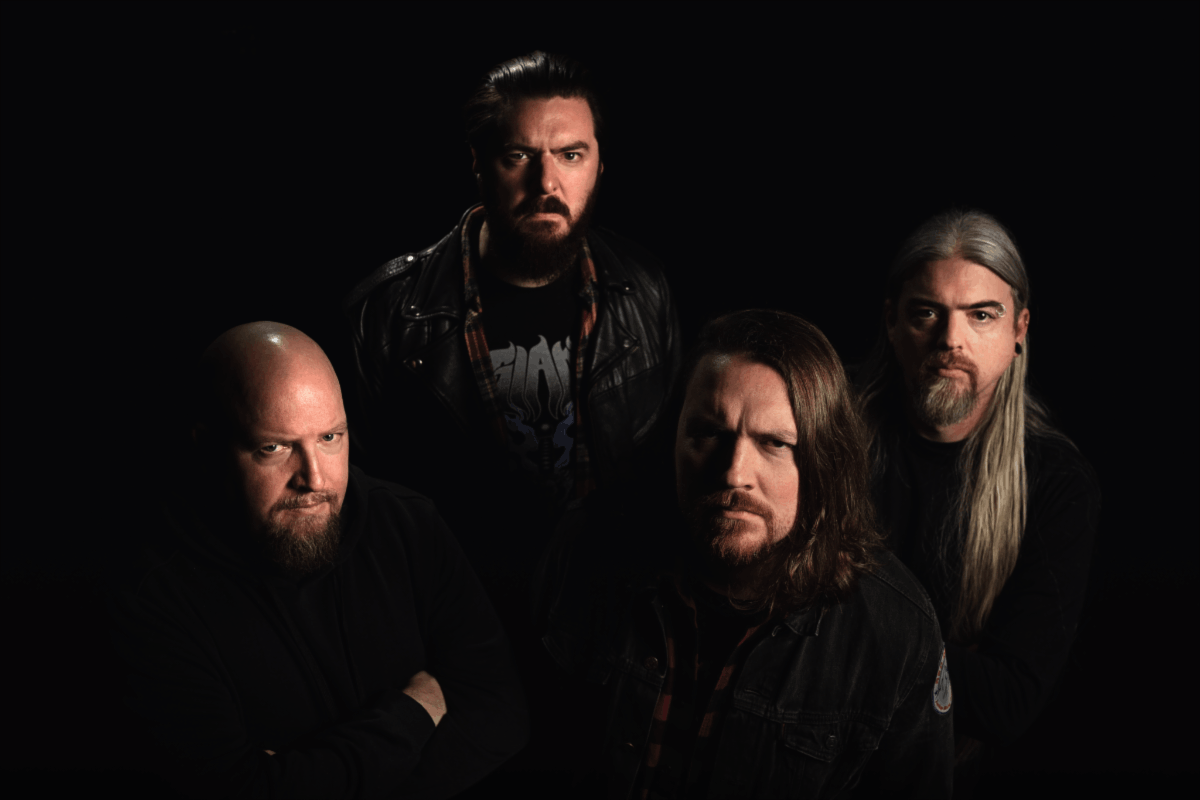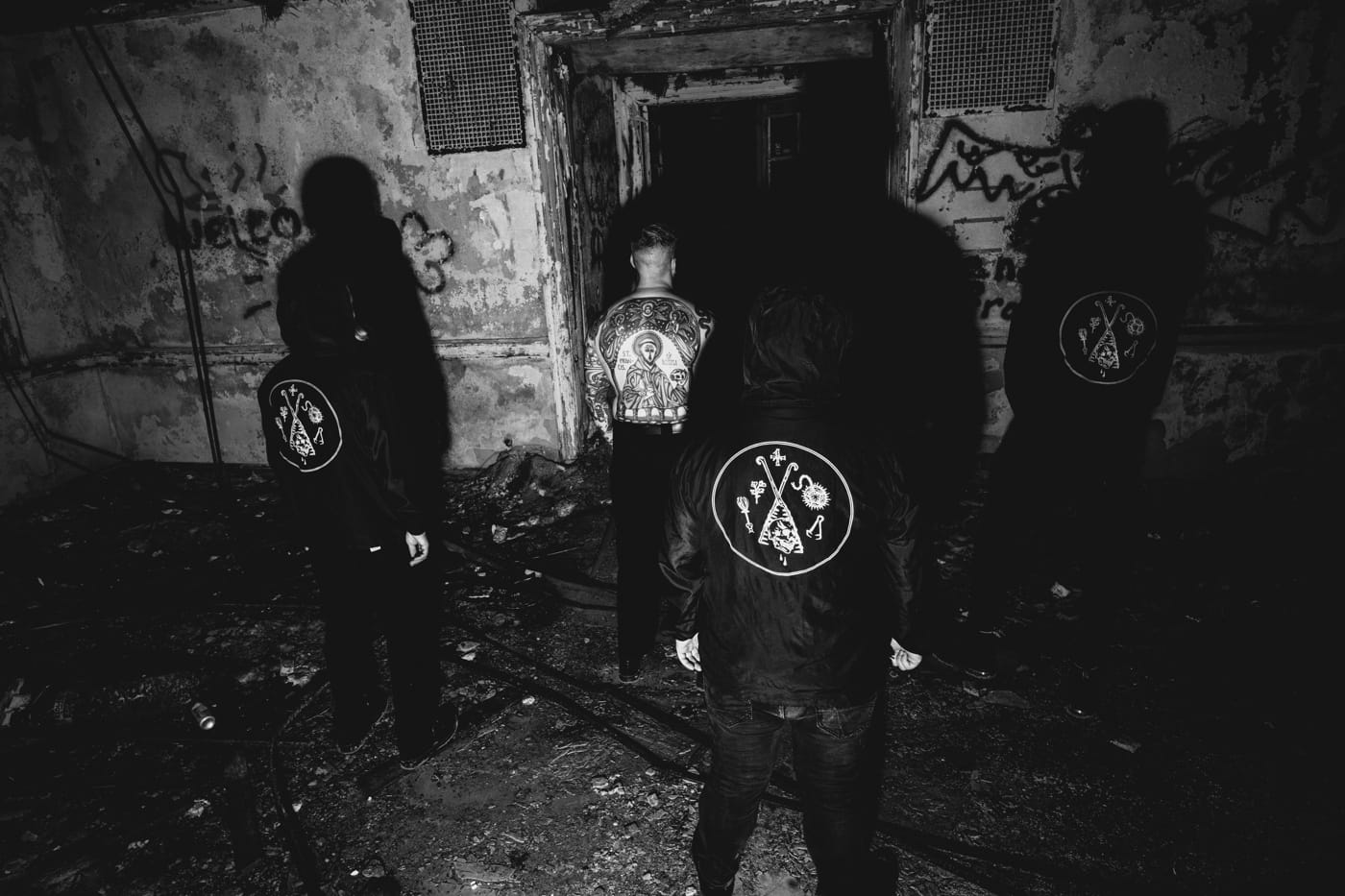

Punktuals started with smoke breaks. D. Lee, Gator, Mickey Diablo, Notorious J. Rock and Criss Crash were all rehearsing with other Seattle bands at the same facility, and the five kept meeting outside until the shared jokes and appetite for loud, crooked rock turned into a band of its own. A year after their 2025 debut “Better Never Than Late“, they already have an eleven-song second album ready, a third being mixed and mastered for 2027, and a fourth starting to be tracked.
Their musical vocabulary is wide. The Ramones and Bad Brains sit near the fast end of it, the Melvins provide some of the weight, Queens Of The Stone Age vibe fuel their driving guitars mode, Mr. Bungle accounts for a fair bit of the weirdness, and the heavier side of Seattle rock keeps showing up in different forms. “Hourly Rage“, due October 9 through Friendo Records, moves through all of that without staying in one place for long. The second single, “Dog Bite“, pulls towards a slower, sludgier Seattle tradition, and we are premiering its video below ahead of the song’s September 10 release.
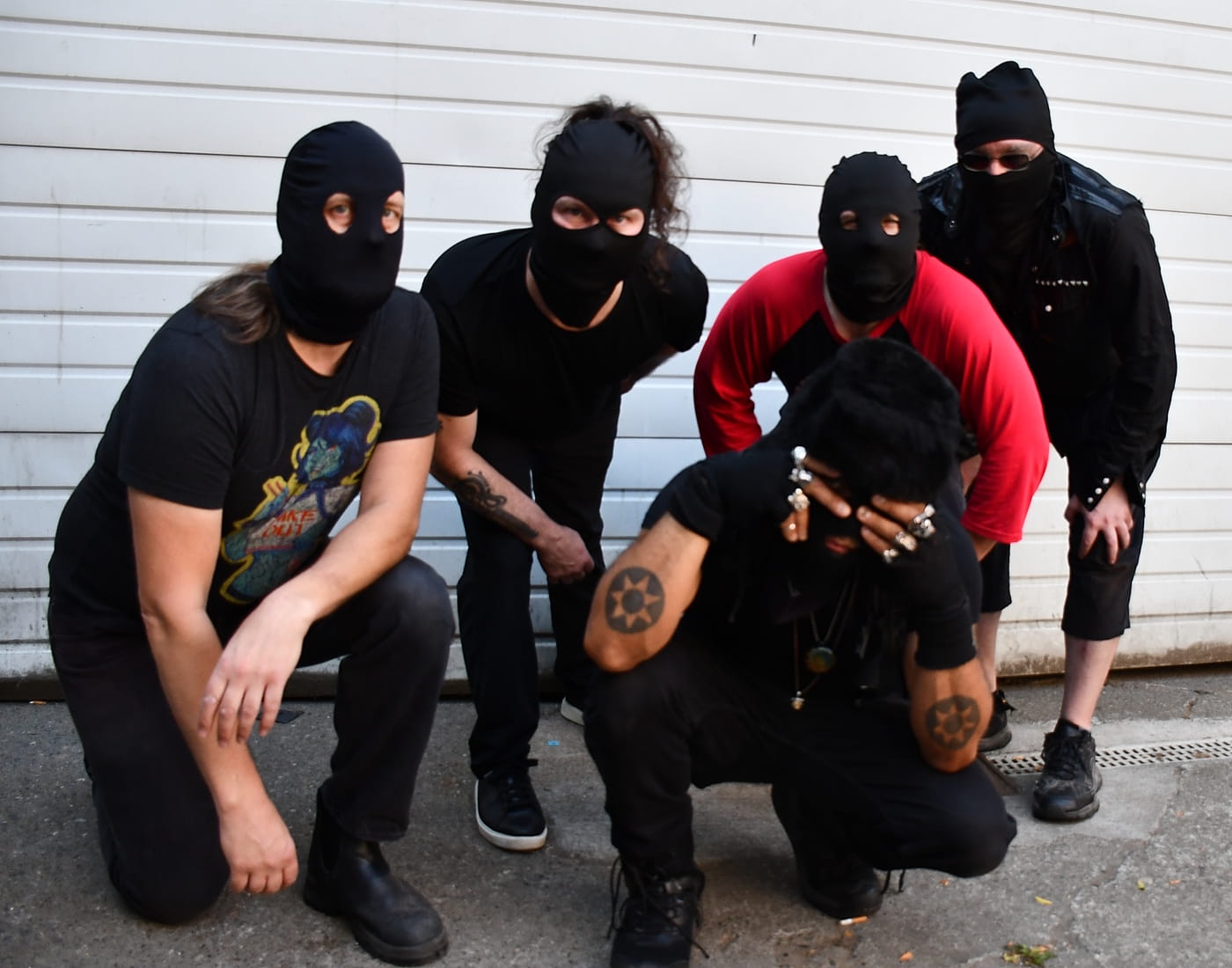
The masks came almost as soon as the band did. All five had already spent years playing with other Seattle bands, and Punktuals gave them a way to leave the familiar names off the front of the thing. D. Lee once gave the quick version like this:
“People always ask us why we wear masks. It’s partly because my mom always said we had ‘faces for radio,’ and also because it makes it easier to rob banks. It’s not because the gigs don’t pay well; it’s because the streaming doesn’t.”
Asked again without requiring the bank-robbery answer, he got more specific. “Life is hard and you won’t make it very far without a sense of humor. The masks strip away the attention on the individual, we are a collective whose biggest concern is the music/art, we really want people to focus in on that.”
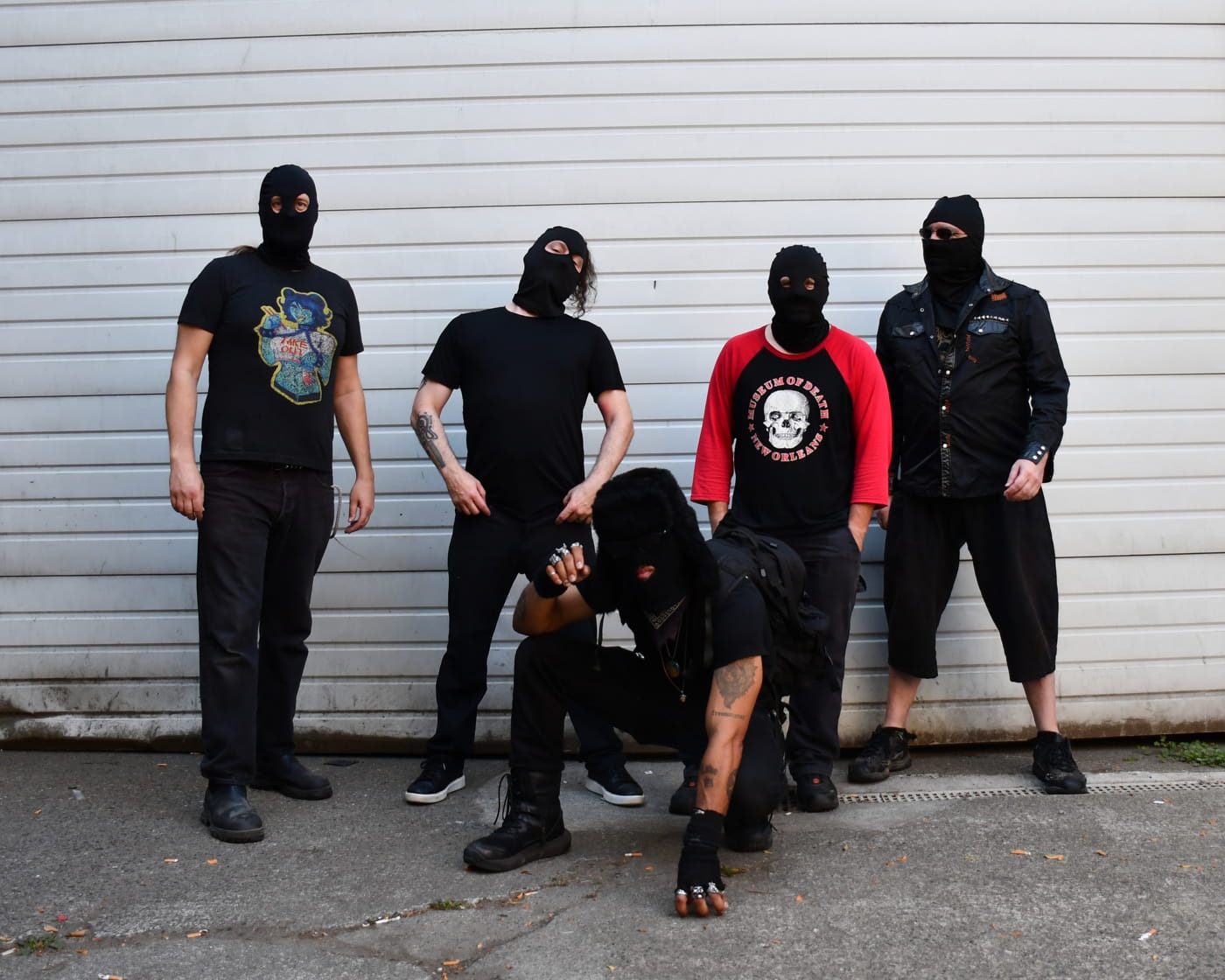
D. Lee also found leaving the old identities behind easy. Years of personality obsession and hero worship had made putting the attention back on the songs appealing to him. Gator called Punktuals a fresh start that let them make something their previous bands could not. Mickey’s reasoning was shorter: being anonymous is simply more fun. Notorious had no interest in accepting the premise that he had given anything up. “Notorious J. Rock doesn’t give up. I pity the fool who gives up.”
Criss approached the same idea from another direction. “It’s not so much about wearing masks, as much as it is focusing on the message. And paying attention to the intention of the sounds. We could easily look like people you’ve seen. Or we can leave it up to you to decide if you’ve seen anyone.”
He still sees everything those previous bands did as part of who the members are now. “yeah, we’ve all played in other bands before. And those bands had the life that they did. Now we’re living in this current life, and speaking about what’s going on now. I don’t think we’ve given up our past selves, rather we’ve embraced them, and have moved beyond because of them.”
Gator wants the anonymity to keep ego and rock-star status out of the way. Halloween costumes are welcome, though. Mickey said he still has not found a situation where the joke is unnecessary, and when Notorious was asked for the serious mask answer he simply deferred to Gator.
That relationship with Seattle is similarly loose. The city has spent decades selling one very specific version of its music history, yet D. Lee sees a much longer line. Hendrix, Quincy Jones and Heart were already part of it before the four major grunge bands changed 1990s culture, sold millions of records and became the default shorthand. Plenty of good Seattle music also came afterwards. For him, the point is the diversity of the city across all of those periods.
Gator places Punktuals “somewhere between the end of the hair band era and grunge”, which he remembers as “garage rock and juvenile hall”. Mickey has a less complicated arrangement with the city: “Seattle sits where it does, and so do we. We kinda leave it alone and Seattle leaves us alone. It’s a pretty agreeable relationship.” Criss answered the Seattle question with “Pass”. Notorious submitted a question mark.
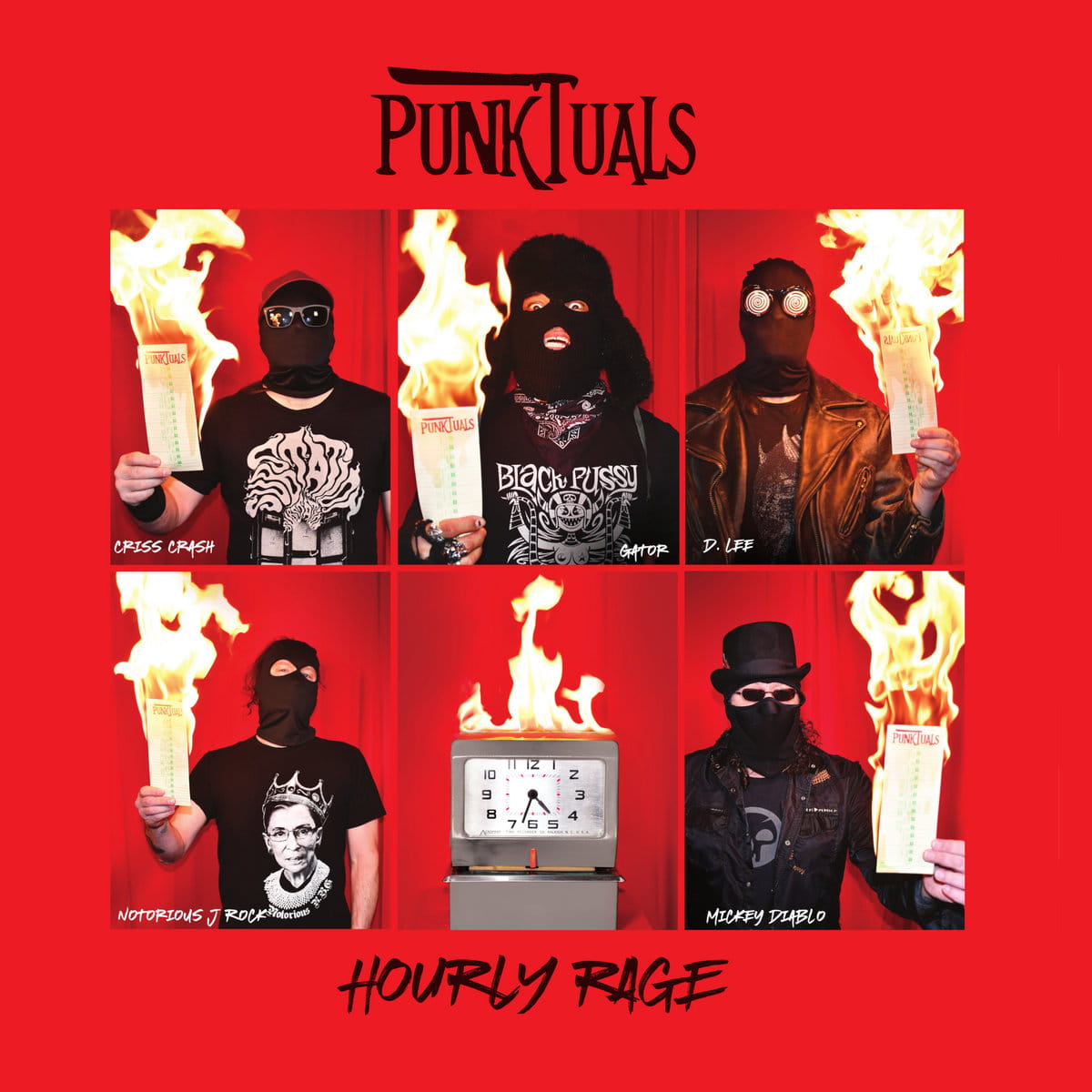
That mix of jokes and everyday irritation gets much closer to “Hourly Rage“. The album begins with a punch clock. The title track is a near-a cappella doo-wop piece, with the sound of someone clocking in before the line, “It’s the end of the world and the beginning of nothing”, delivered with a Mike Patton pull. The same clock is on the album cover.
D. Lee says it is his.
“It’s my punch clock, and I thought it would be perfect for the cover. It represents all the jobs I’ve ever had where I was not doing music or art. There’s an anger/resentment in doing a job where you feel you’re wasting time you’ll never get back when you should be creating.”
Gator had already been working on a related image. He drew a clock in graphite pencil across an 18-inch tom drum head, filling its hour hand with symbols for things that pissed him off or “sucker punched” his happiness. He was about three quarters through it when he thought about using it for the back cover. D. Lee’s actual punch clock won out because it made the wordplay cleaner: “Hourly Rage“, HR, Human Resources, hourly wage. For Gator, punching in and out runs from waking up to falling asleep. Everything in between becomes the record.
The other three memories are less reliable. Criss remembers the clock being found in “one of those stores that has cool old shit”, then adds that everybody has to clock in or “the Man won’t get off our back”. Mickey says the studio is full of stuff he does not understand. Notorious insists the clock was called Pepe and that Pepe mopped floors at an erotic theatre.
Work is everywhere once the record gets going. D. Lee makes money through studio and video work when Punktuals are not taking his time. Mickey moves things from place to place and sometimes gets paid for it, though he is thankful the job barely enters the songs. Criss keeps his answer vague and says he puts every ounce of whatever he is doing into his playing. Notorious says not to worry about his money.
Gator builds houses for people who can afford expensive homes, then returns to his mother-in-law suite and writes about people he believes do not deserve those houses. He points directly to “Downsizer“.
D. Lee calls Gator the band’s poet and the person behind its lyrics and concepts. The eleven songs take bits and pieces from their lives, including the good parts and the ugly ones, and the basic practical problem never disappears. Making a living in a band is difficult. They write songs they actually want to play and then work out how to make them happen.
Gator put that financial pressure plainly elsewhere:
“Not everybody is a trust-fund kid or has easy access to cash that can dig them out of a jam when they need it, nor does everybody have the capital to make their wildest dreams come true. The balance of being a creative, hard-working, codependent, and imbalanced member of society can be brutal and beautiful at the same time. We’re PUNKTUALS. We wear masks for anonymity because we are YOU.”
“Self Inflictus” pushes the money question into politics. Gator sings, “It’s getting belligerent!” before the lyric turns to “suffering is lost to oligarchs, duly organized to serve only the proud.”
He wrote that line himself. “I wrote the line about the oligarchs because even the most powerful elites can bring suffering upon themselves through the abuse of their power, while also subjecting people who take pride in their work to levels of hardship they themselves could never understand.”
D. Lee hears the same line through the new American concentration of wealth, naming Bezos and Musk and asking what it says when fortunes go towards reaching Mars while ordinary people still struggle to get health coverage. Mickey’s explanation is shorter: watch the news. Gator writes the lyrics, and this is the time they are living through. Criss and Notorious both answered the authorship question with Gator’s name.
“Dog Bite” comes from a much more personal stretch. Gator wrote it just after the pandemic and before a breakup. He describes it as a triple metaphor, covering people who lost someone and carried survivor’s guilt afterwards, people who discovered that some of their friends were racists, and people who lost themselves inside an abusive situation before finally getting out and continuing alone.
Musically, it sits in one of the record’s sludgier pockets. Mickey hears a groove that sticks around with Gator’s voice riding above it. D. Lee remembers the guitar part ringing through his 1950s Gibson GA-40 amp while he was writing it. He liked the sound enough to buy his first acoustic guitar and add that to the recording to thicken the part. The band chose it as a single partly because it sounded different and they liked having the freedom to move around the full rock spectrum.
It is the clearest pull on “Hourly Rage” towards the quieter, heavier Seattle tradition around Alice in Chains’ “Jar of Flies”. Gator also wanted the song to show that Punktuals have patience as well as hardcore weight. Criss calls it “a really cool tune” and hopes other people agree. Notorious has an even shorter argument: “Because ‘Dog Bite’ is a killer song.”
The video carries characters over from “Death Of The Party“. Gator’s original idea had the people who died in that first video coming back to life in “Dog Bite“, becoming aware of their previous lives and making amends to people they had wronged, in his words, “lasciviously, with self harm, debaucherous mindedly and in blotto.”
D. Lee remembers the lighting doing much of the work and sees a Robert Paulson, “Fight Club” quality in it. “Are the PUNKTUALS indoctrinating people into our cult?” Mickey says he does not actually remember being in the video. Criss sent us to Gator and D. Lee for the answer. Notorious deferred to Gator too.
We’re premiering it right here!
“Death Of The Party”, the first single, was premiered through V13 and introduced another recurring Punktuals subject: dying while the party is still going. It has some of the looseness of early Mudhoney around a macabre final blowout, with death, destruction and suicide pushed through the band’s dry sense of humour. Campaign coverage has also appeared through Pop Punkers Mag, From the Strait, Visual Atelier and Get Some Magazine.
D. Lee’s Grim Reaper in that video is unusually content with his job.
“Death is always winking at us, and the majority of us don’t know when he’s showing up. Death isn’t necessarily a major theme on the new album, but it’s always a major theme in life. By having the Grim Reaper in our music video, we get to show him as somebody who really enjoys his work. In fact, he may not be a Grim Reaper, but a Happy Reaper.”
The Happy Reaper has already acquired several origin stories. D. Lee says a worker with that shift should probably enjoy it, given that he has been on the clock since the beginning of time and will not finish until the end. Gator thinks the Reaper looks like the song sounds: someone who loves his job, has good music to get him through it, and perhaps has an entire vegetable garden ready to reap. Mickey has heard half a dozen explanations from D. Lee and assumes all of them might be true.
Notorious has the strangest version. He says he was trying to find the “In Memory Of Elizabeth Reed” tombstone from the Allman Brothers song when the Reaper appeared and wanted to play Yahtzee. “It was weird.” Criss left that question hanging.
The rest of “Hourly Rage” keeps shifting. “Sorry” heads towards Faith No More and gives the band’s stacked vocal harmonies more room. Those harmonies also connect Punktuals to the bigger vocal instincts of Queen, Yes and the Beatles, even when the rest of the song comes from the kind of punk that has lived in basement bars for decades.
“Shrooms” takes another route, with King Crimson, Black Sabbath and Soundgarden all making sense around the same song. D. Lee, Mickey Diablo, Notorious J. Rock and Criss Crash carry much of that instrumental side of the band. “How’m I Gonna Go”, planned as the third and final single, returns to death from a different angle and runs through the possible ways a life might end.
Across the whole record there is still room for the short, direct punk of Minor Threat and Hüsker Dü, the stranger rhythmic instincts associated with Battles and King Gizzard and the Lizard Wizard, and the humour of Tenacious D. Punktuals have never shown much interest in keeping all of those instincts separated. Their first album already moved through big riffs, dense noise, shoutable choruses and dry lyrics, and “Hourly Rage” pushes the range further.
That debut, “Better Never Than Late”, arrived in 2025. Punktuals spent the following year building a small, loyal Pacific Northwest audience and a reputation for unruly live shows, while writing about death, intoxication, terminal illness, jobs and unemployment. They also keep the old “is rock ‘n’ roll dead?” argument somewhere in the background, looking at mainstream charts led by pop, EDM, dancehall and hip-hop and continuing to make rock records at a fairly ridiculous rate.
D. Lee would not cut anything from either album. He grew up admiring 1960s and 1970s bands that released records frequently, and his basic rule is that when the writing is going well, keep writing. The third Punktuals album is already being mixed and mastered for a 2027 release, and they have started tracking the fourth. Mickey says they were simply in a good space and confirms more releases are already in motion.
Criss is thinking about what all of that does to the live set. The band will keep songs from “Better Never Than Late”, though some tracks from the debut rarely make the stage now and he would like to give them another run. A short “Hourly Rage” release tour follows in autumn 2026.
“Hourly Rage” was recorded at Birdhouse Studio in Seattle. Punktuals produced, arranged, wrote and performed it themselves. Gator handled vocals, D. Lee guitar and punch-clock duties, Notorious J. Rock guitar and backing vocals, Mickey Diablo bass, and Criss Crash drums. Dave West and Chris Martin engineered the sessions, with Jack Endino mixing and mastering. Album photography is by Dave West, with design and illustration by Victortrey Funklove and Maria Horn.
The album arrives October 9 through Friendo Records on vinyl, CD and the major streaming platforms. All three singles are accompanied by self-produced videos. “Hourly Rage” can be pre-saved now, with more from the band at punktuals.com and solo.to/PUNKTUALS.
When Notorious was asked what he would cut now, after two albums in roughly a year, his answer took five words.
“Nothing. Punktuals do what Punktuals do.”
🔔 IDIOTEQ is ad-free, independent, and runs on one person’s time. If you want it to stay that way: DONATE via PayPal or SUPPORT via Patreon.
NEW: IDIOTEQ Explore 🗺️ Browse 15+ years of our archive by city, country, and style. Find artists on the world map or trace related sounds through the styles map.
Stay connected via Newsletter · Instagram · Facebook · X (Twitter) · Threads · Bluesky · Messenger · WhatsApp.