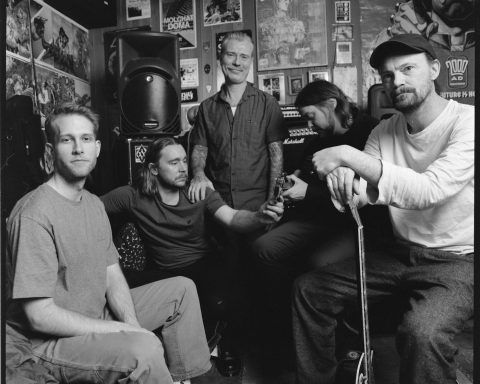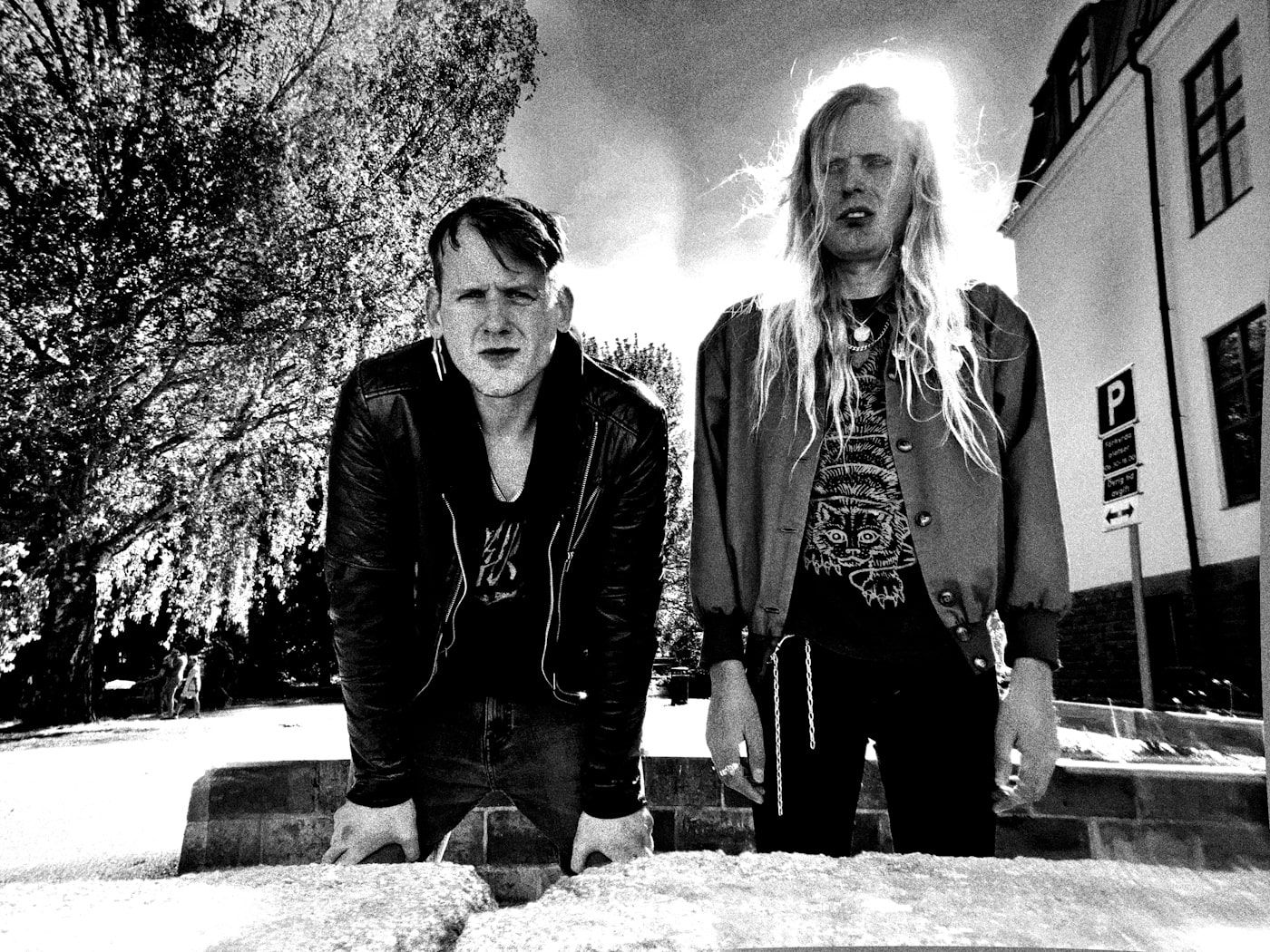


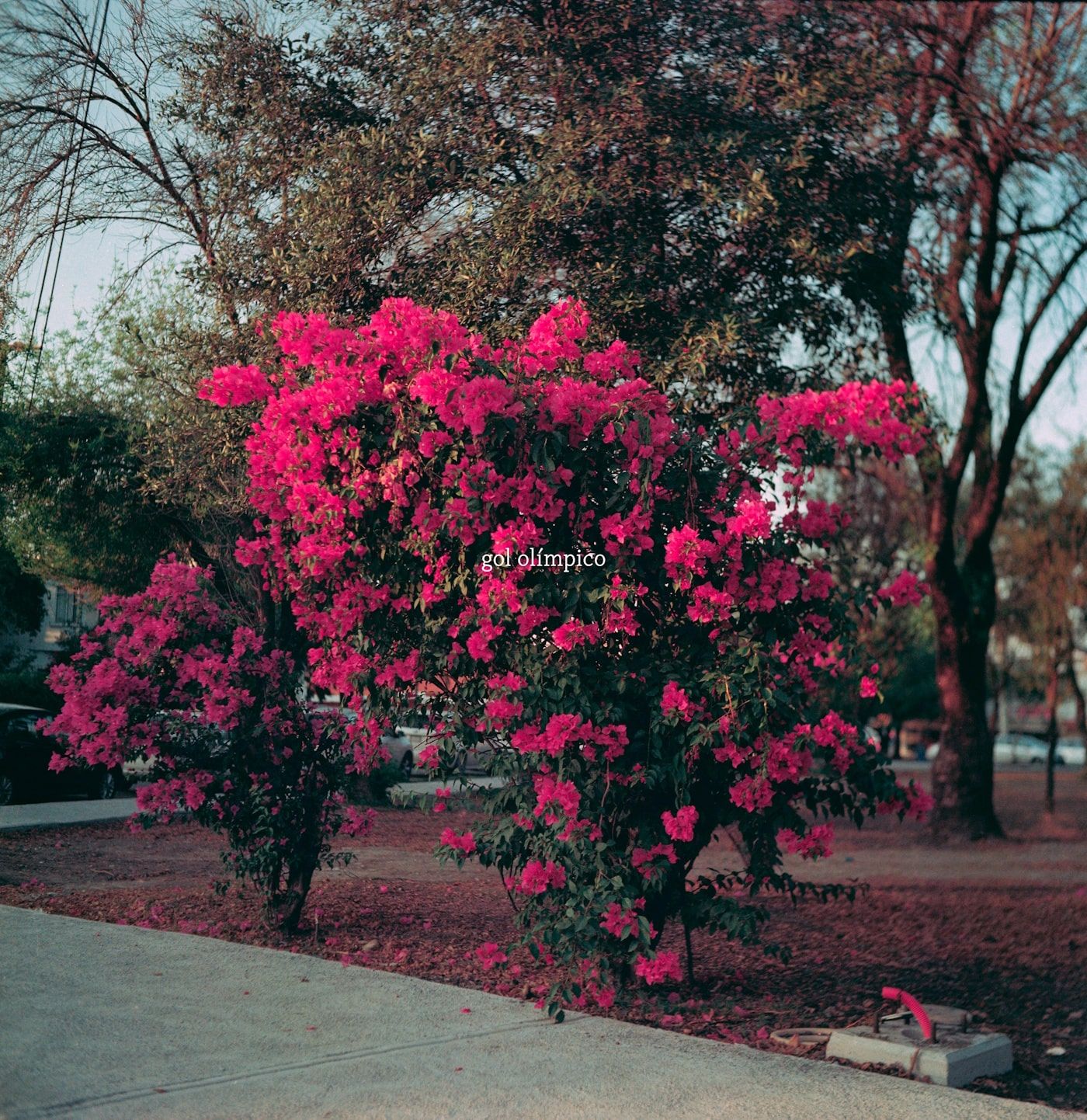
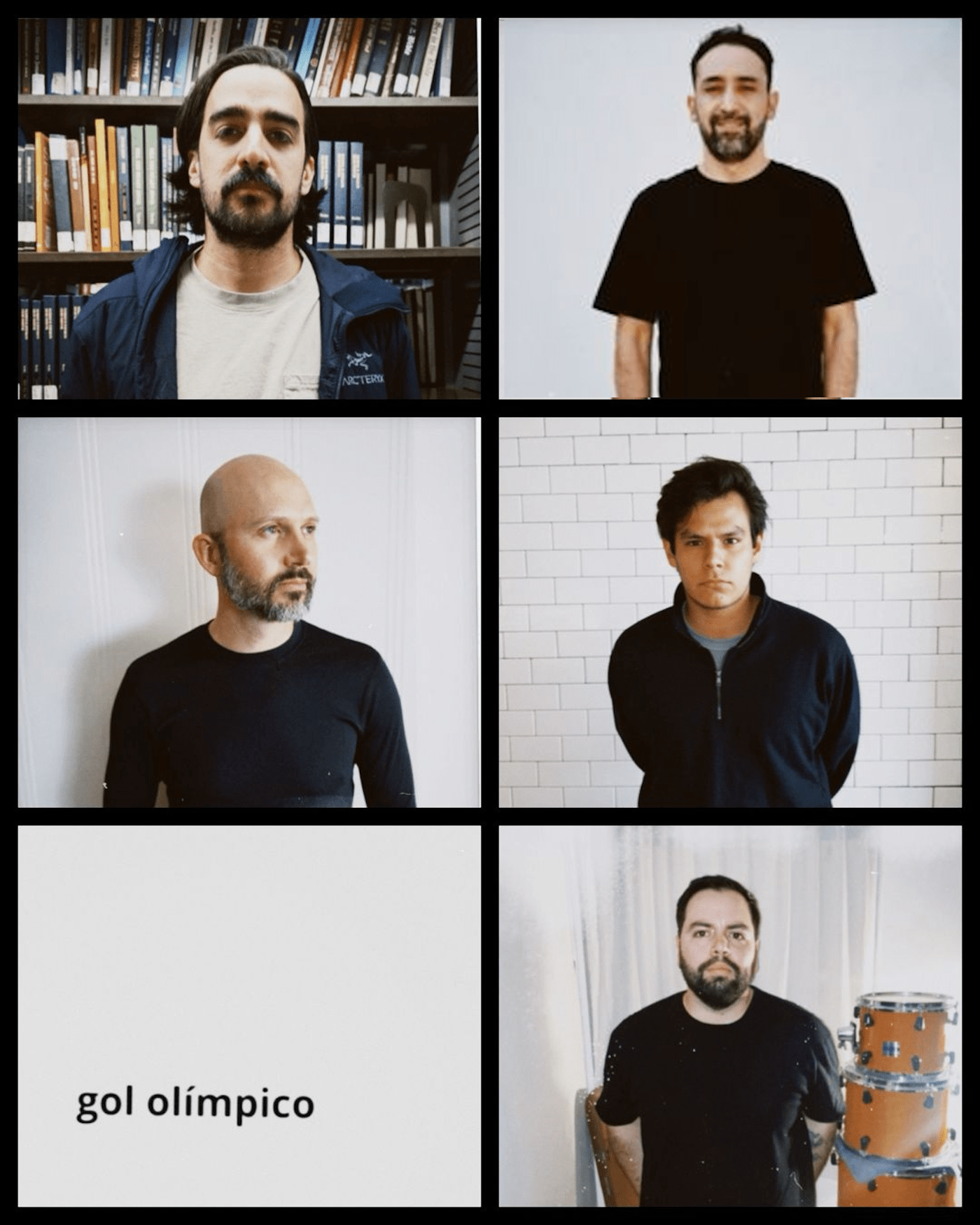
Gol Olímpico is a Mexican emo project formed by musicians spread across Mexico, the U.S., and Canada. Rooted in Monterrey, Nuevo León, the band is fronted by guitarist and vocalist Andrés Pérez, with Jonathan Lipps on synths, trumpet, and vocals, Gerardo Rojo on guitar, Andrés Malo on drums, and Raúl Hernández on bass.
Their debut EP, Reflejos de un ayer, released June 19, 2025 via Costa Rican label Furia, distills themes of longing, displacement, and daily survival into four quietly intricate tracks recorded across borders and stitched together by a deep sense of place and personal memory.
The project began almost by accident. “Gol Olímpico started after several years when I was completely away from music,” said Pérez. “I’d gone almost eight years without writing anything, until one day a friend sent me some old demos he found on a hard drive—songs I’d recorded as a teenager for an emo project I’d uploaded to MySpace back in the day. Hearing myself all those years later did something to me. It made me want to write again, even if at first it was just for myself.”
The band’s setup—spanning three countries—developed naturally. “Little by little, friends from different places began joining in—some in Mexico, others in Canada. That’s how Gol Olímpico became this crazy cross-country project. We’ve never all been in the same room at the same time.”
View this post on Instagram
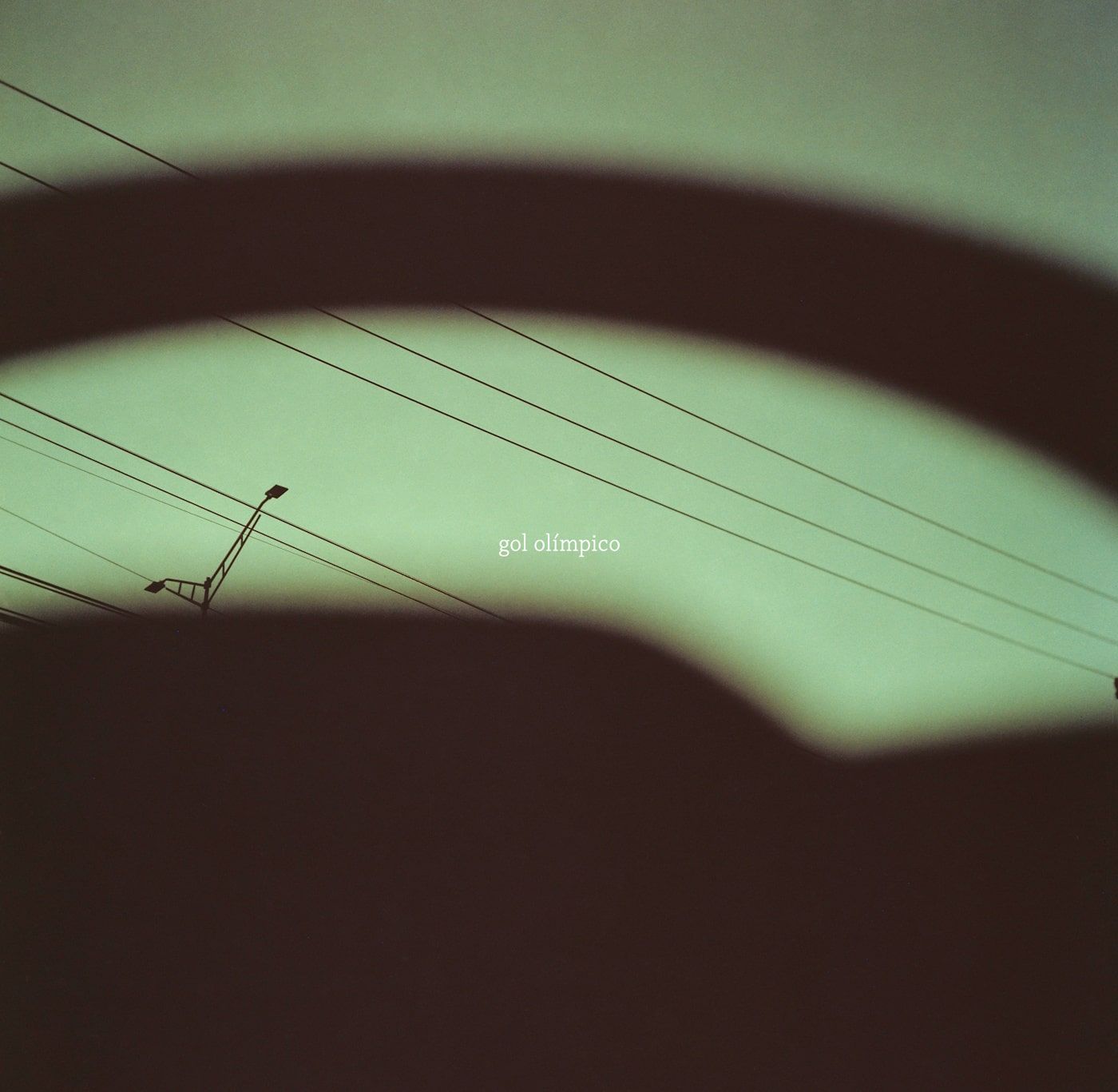
That process defined the sound. Songs began as home demos by Pérez and grew through layers of remote collaboration. Producer Jorge “Pingo” Ávila (Quinto Atlas, Abanico, Fonte) brought the recordings to life at The Sign Studios in Monterrey, with additional parts recorded by Pérez in North Carolina and Lipps in Vancouver. The cover artwork and visual language—shaped by Alain Olivo—leans on analog photography and Super 8 film, emphasizing the band’s dedication to memory and texture.
Released on digital and 7” vinyl by Furia—a label known for its work with Latin American acts like Adiós Cometa and Lentamente—Reflejos de un ayer is a tight, intentional record of quiet reflections. Across four tracks, the band revisits moments of emotional stillness, longing, and quiet contentment.
Opening with “pasan los días,” the EP begins in Vancouver, where the song was written in 2022. Pérez recalled how the song arrived after years of writer’s block. “One day, I started messing around with some open tunings that American Football had shared on Instagram—the same ones they used for LP3. That open tuning somehow cracked something open for me… I quickly wrote a small poem, which ended up becoming the chorus.”
The final version closely mirrors the original demo—no second verse, just an instrumental bridge to “let it breathe.” Synths added later by Lipps, inspired by Disintegration-era Cure, tie the track together. “There’s a particular nostalgia in those notes that makes it feel complete.”
The second track, “casa, como ningún lugar hay,” draws from a mix of real and imagined moments. A tribute to The Hotelier’s Home, Like No Place Is There, the title is a direct translation. The lyrics recall a late-night road trip to see the band, filtered through themes of drifting, emotional exhaustion, and searching for a sense of home. “It’s a song about liminal spaces, friendship, migrating, taking pills that don’t work, sleeping through the day… and realizing that home might not be a place after all.”
Musically, it’s the band’s most layered work, starting from a simple drum loop in GarageBand and growing into a full arrangement with trumpets and a final chorus that Pérez calls “probably the emotional high point of the entire record.” The refrain “gracias por seguir aquí” (“thank you for still being here”) gives the track its weight.
“vancouver, bc” came with hesitation. “At first I didn’t even want it on the record,” Pérez admitted. “It felt too raw to sing out loud.” The writing and recording process was more fraught than for the other songs—disagreements over arrangement, re-recording sessions, and emotional challenges all played a role. “But I think all that tension worked in the song’s favor. It kept getting refined until it finally felt right.”
The song’s themes touch on duality—joy and exhaustion living side by side. “The chorus says ‘y a veces dudo si lo mejor está por venir’ (‘and sometimes I doubt if the best is yet to come’),” referencing a common saying in Mexican culture. “But then it concludes with ‘pero hoy descanso y agradezco estar aquí’ (‘but today I rest and I’m grateful to be here’).” The accompanying video, shot by Lipps on a 1993 Sony analog camera, reinforces the song’s wistful tone.
The EP closes with “las noches que no dormí,” a short, lullaby-like piece that Pérez wrote in the same session as “pasan los días.” “It’s a song about feeling both lost and found. About sleepless nights and feeling lucky to be here.” The track’s video, shot by Diego Ponce of Miraflores, captures the intimacy of the song in a way Pérez found deeply resonant. Despite being the final track—and the shortest—it’s become the EP’s most streamed song. “I think that says something about the song itself, and it highlights how streaming can be a stupid system sometimes—but also how beautiful it is when a song connects with people, even if it’s only two minutes long.”
View this post on Instagram
So far, the response has exceeded expectations. “When we released the first couple of songs, I wasn’t sure anyone was even going to listen,” said Pérez. “To be completely honest, had I known this was going to get this much attention… I probably wouldn’t have done it. In hindsight, putting such personal songs out there can feel exposing.”
Still, the EP has created a community around the band, especially in Mexico and across Latin America. Partnering with Sello Furia deepened that sense of connection. “The way they approach music with so much honesty and community spirit has been a big inspiration for us.”
View this post on Instagram
Gol Olímpico’s live debut is set for summer 2025, with shows in Mexico City and Monterrey. In Monterrey, the band will perform at the Tell All Your Friends Festival—co-founded by Ávila and Pérez over a decade ago. A split release with Mexican and Costa Rican bands is also in the works, along with plans to record another EP and tour Central America.
View this post on Instagram
Their presence in the growing Latin American emo scene feels earned. “There are so many bands I’d love to shout out,” Pérez noted, listing names across the country and beyond—from Miraflores, Cacomixtle, and Estoy Muerto Por Dentro Pero Aún Sigo Soñando to Argentina’s Fin del Mundo and Estación Sur. “I have to mention our friend and producer Jorge ‘Pingo’ Ávila, who just released his debut record as PNGO… one of the best alternative rock albums to come out of the north of Mexico in years.”
Gol Olímpico’s Reflejos de un ayer is a mellow, gentle record that listens, remembers, and stays close. Not by forcing its way into the moment, but by being there when the moment comes.
Check out the full extended track by track commentary below.
pasan los días
“Pasan los días” was written in 2022 while I was living in Vancouver, Canada. I’d spent most of the pandemic trying to write music to no success. I’d sit down, hoping something would come, and nothing ever felt right.
One day, I started messing around with some open tunings that American Football had shared on Instagram—the same ones they used for LP3. That open tuning somehow cracked something open for me. A melody arrived out of nowhere, and the words started pouring out almost immediately. I quickly wrote a small poem, which ended up becoming the chorus.
While I was recording a demo to capture the chorus before I forgot it, the bridge just fell into place naturally. And I knew right away: that was the song. No second verse. Just a big instrumental bridge to let it breathe.
This was one of the first couple of songs I’d written in eight years that I felt genuinely good and excited about. It’s a love song, but it’s also a song about growing up—about watching the light inside you fade a little as the years go by, and yet still seeing that same light shining brightly in someone else. It’s about accepting the passing of time, but also finding a kind of quiet contentment in the fact that it does go on without us.
For over two years, this song sat in my google drive. When I finally shared it with the band, they liked it but suggested I should “finish it” by adding a second verse. But I stood my ground and the song was recorded with the exact same structure of the demo. It’s one of those songs you write in five minutes, and it’s perfect as it is.
The synths were the last thing we added, and they’ve become my favorite part of the track. I asked my friend Jonathan to listen to “Disintegration” by The Cure and to see if that inspired anything in him. I believe it certainly did. There’s a particular nostalgia in those notes that ties the whole song together and makes it feel complete.
casa, como ningún lugar hay
“Casa, como ningún lugar hay” isn’t necessarily a true story as much as it’s based on a real story. It’s a tribute to The Hotelier, and in particular their album Home, Like No Place Is There, which is my favorite fourth-wave emo record. The title of the song is a direct translation of that album’s name.
The story I’m building on comes from a trip my brother and I made to one of The Hotelier’s tenth-anniversary shows. For whatever reason, we ended up driving really late at night to make it in and out of the concert, and then spent a few days on the road. It’s a song about liminal spaces, friendship, migrating, taking pills that don’t work, sleeping through the day, losing your sense of home, and realizing that home might not be a place after all.
While writing this song, I kept thinking about a scene from Albert Camus’ The Plague. There’s a moment when Dr. Rieux and his friend Jean Tarrou, exhausted and burdened by the devastation around them, break curfew and go swimming in the sea at night. In the middle of chaos and sickness, they find a fleeting sense of freedom and quiet connection—a moment of beauty and escape that feels almost like a secret between them. That scene has stuck with me for years, and this song feels like that to me: a brief moment where the world stands still, and you remember why you keep going.
There’s also a dumb meme reference that’s always made us laugh—the photo of a vending machine with a sign that says “the light inside me is broken but I still work.” There’s a line about screaming in the mosh pit, too. The lyrics hold a lot of imagery and even humor.
Musically, this is probably our best song. The way everything works together feels very special, and it wasn’t something we consciously planned. The demo started with the drum loop you hear at the beginning. I typed a similar version of it in GarageBand and then started messing around on my guitar.
Contrary to “pasan los días,” this one didn’t come to me in five minutes—it took a couple of weeks. I had the instrumental sitting around for a while before I started singing over it. I actually wrote about five extra verses and then slowly edited things down until it felt right. For a while, it didn’t even have a chorus, but eventually it just came to me and stuck.
The trumpets and the bass line in the final chorus are probably the emotional high point of the entire record. It’s a song that draws you in and takes you on a journey, held together by the simple line “gracias por seguir aquí” (“thank you for still being here”), which, to me, captures the essence of the whole song: that staying can be both the hardest and the most beautiful thing we can do.
vancouver, bc
The third track on the record, “vancouver, bc” was definitely the hardest song for me to write and share. Even though now I’m really glad it’s part of the EP, at first I didn’t even want it on the record. Consciously, I kept telling myself the song didn’t fit the overall tone of the EP. But if I’m honest, I think a big part of me was just trying to avoid how vulnerable the lyrics felt and the memories behind the song.
I remember struggling a lot while recording the vocals because my voice kept breaking. It felt too raw to sing out loud, like saying certain things would make them more real.
Unlike the first two tracks, where the band’s collaboration flowed pretty smoothly, this one was a bit of a challenge for all of us. Communication broke down a little, and it ended up being the only song on the EP where we had to re-record parts and navigate some differences of opinion around the arrangement and the mix. In the end, though, I think all that tension worked in the song’s favor. It kept getting refined until it finally felt right, and ironically, it ended up becoming the single for the EP.
This is also the longest song on the EP—and the one with the most words. It’s a song about feeling exhausted and worn out, while at the same time feeling genuinely happy and satisfied, and how both of those things can be true at once. The chorus says “y a veces dudo si lo mejor está por venir” (“and sometimes I doubt if the best is yet to come”), which ties into a common Mexican saying (probably not exclusive to mexican culture) that you shouldn’t worry when things are bad, but rather when things are going well. But then it concludes with “pero hoy descanso y agradezco estar aquí” (“but today I rest and I’m grateful to be here”). The song is ultimately an invitation to rebel against the absurdity of life, to find moments of contentment, and to cultivate a sense of peace in the midst of chaos.
One of my favorite things about the song is the visual we created for it. Jonathan Lipps, who plays trumpet and synths for us, and is based in Vancouver, shot the video using a Sony analog camera from 1993 he found at his parents’ house. The grain and color of the footage captured exactly the feeling I wanted—a mix of nostalgia and fleeting beauty.
Now, looking back, I’m proud of how the song turned out. It’s probably the most personal track on the EP, and it taught me a lot about pushing through discomfort to say what I really needed to say.
las noches que no dormí
“Las noches que no dormí” was the first song I wrote for this project, back in 2022, in the same session as “Pasan los días.” It also came together in just a few minutes and then lived in my google drive for a couple of years. It’s almost like a lullaby, and it ended up closing the EP in a very natural and organic way. It’s also the shortest song on the record.
It follows a similar journey as “Pasan los días”—in many ways, they mirror each other. It’s a song about feeling both lost and found. About sleepless nights and feeling lucky to be here. It’s sad, but also kind of beautiful.
Our friend Diego Ponce, from the band Miraflores, shot a beautiful visual for it in Mexico City. I don’t think anyone has understood this song as well as he did. And the trumpets, by Jonathan Lipps, once again, take the song home. In my opinion, it’s the best ending we could have given the record.
Recently, I read an article that said nowadays no one listens to the last song on a record—that the play counts always work the same way, with the first songs getting more plays and the last ones getting fewer. But since we released the EP, this song has been the most listened to. I think that says something about the song itself, and it highlights how streaming can be a stupid system sometimes—but also how beautiful it is when a song connects with people, even if it’s only two minutes long.