

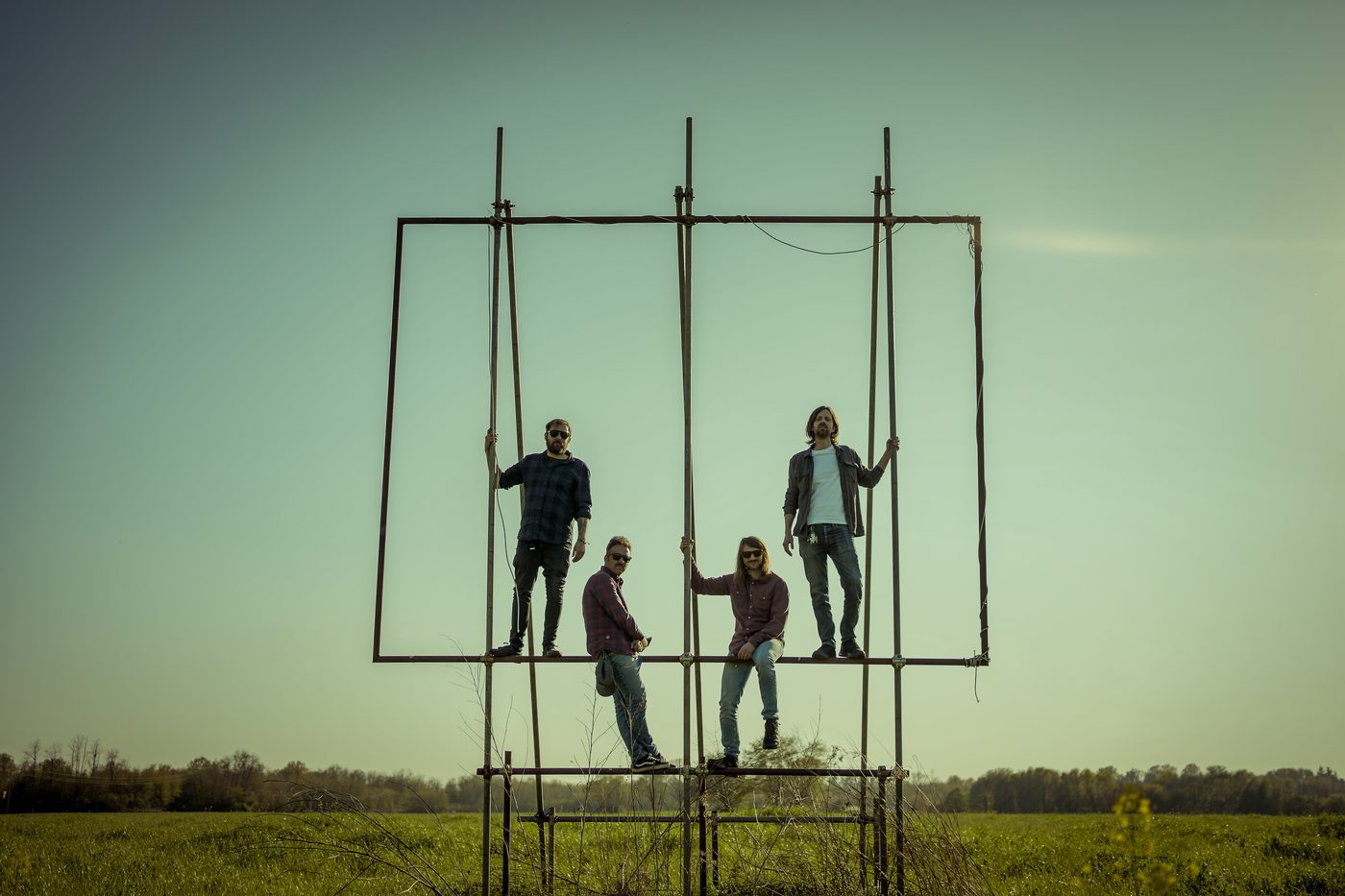
There’s a strange, almost physical pulse running through “Death of Permanence“, the new record from Milan’s Threestepstotheocean. Their post-rock and post-metal roots are still recognisable in the repeating guitars, heavy bass and tightly wound drumming, but twenty years into making music together, these four Italians have taken their sound somewhere quite different. Voices, electronics, industrial hip-hop rhythms and instruments they’ve rarely used before are all finding their way into the compositions.
“Black Syrup“, one of the first singles, offers a particularly dark introduction. The rhythms have a hypnotic, almost massaging quality, with the kind of physical repetition that can bring Meshuggah to mind, although Threestepstotheocean approach it with a gentler touch. There’s an uneasy darkness underneath the whole thing, and Dalila Kayros’ extraordinary vocal performance makes it even stranger. The music has that peculiar ability to pull you in through repetition and keep you there as the individual sounds start changing around you.
And the rest of the album goes much further. Six tracks that move through psychedelia, dark folk, electronic music and heavy instrumental rock, often within the same composition. There are moments of genuine restraint, others where everything becomes dense and unsettled. Trying to describe the whole thing through familiar genres gets frustrating pretty quickly. It’s a record you have to spend some time inside.
We’re giving you the chance to do exactly that today, with the exclusive full-album premiere of “Death of Permanence”, two days before its official October 16 release through Subsound Records. We’ve also returned to a conversation with the band that started three years ago, when they were seriously questioning how they wanted to make music and whether another full-length album even made sense.
That conversation matters quite a bit now.
When Threestepstotheocean released “Duende” in September 2023, they called it a transitional recording. The standalone single gathered some of the sounds they had developed since forming in 2006, but by then, the musicians were getting increasingly tired of how long it took them to finish records. Writing could become stressful, songs were repeatedly revised, and sometimes the whole process ground to a halt. They were considering releasing smaller, unrelated pieces of music whenever something felt ready.
Their solution involved changing what happened in the rehearsal room.
Francesco Tosi, who plays keyboards, helped turn their practice space into a small mobile studio. They started recording constantly, working on their parts separately, adding overdubs and filters, and talking through arrangements at length. Occasionally they wouldn’t play their instruments at all.
Three years later, drummer Davide Logrieco confirms that the experiment carried straight into “Death of Permanence”.
“All those methods stayed with us. Actually, we pushed the pre-production side even further. We recorded everything on separate tracks, and sometimes the usual rehearsal night became a night on Francesco’s couch, listening back and working on the songs on a computer.”
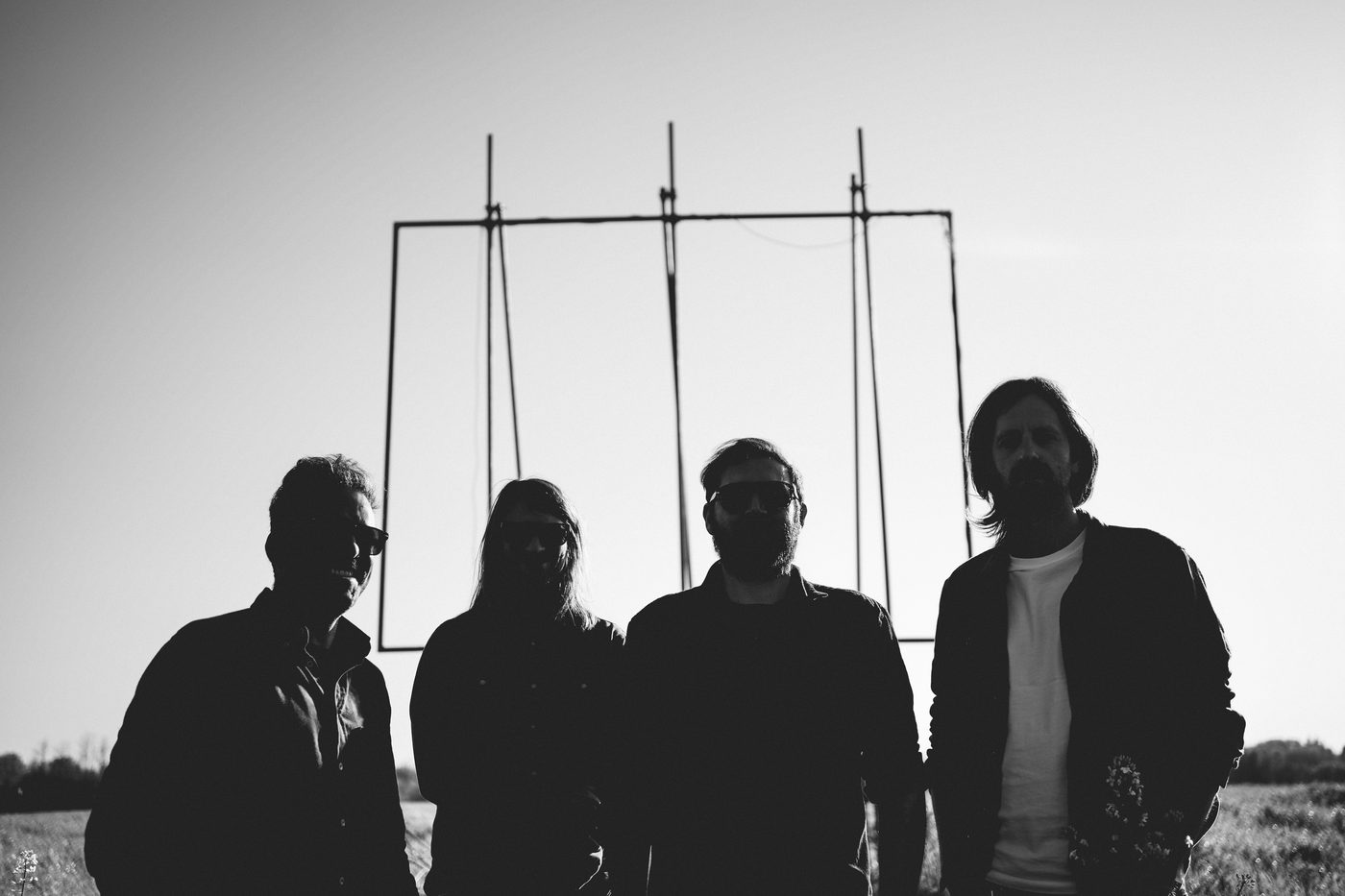
The four musicians had become comfortable with a fairly obsessive way of composing over the years. Their earlier records often depended on developing long patterns through repeated rehearsals, and they would keep revisiting ideas until they were satisfied. Back in our 2015 interview around “Migration Light“, they were already talking about spending ridiculous amounts of time listening back to their recordings.
Now there was much greater freedom to interfere with the music after a rehearsal. Giacomo Rogora’s bass, Andrea Sacchetti’s guitar, Francesco’s keyboards and Davide’s drums could be moved around, removed from entire sections or replaced with something nobody had originally played together.
“The biggest change was that we stopped treating what came out of the rehearsal room as something fixed. Everything stayed open. We could remove parts, rebuild them, or create something completely new that none of us would have played naturally during a jam.”
They became particularly interested in taking things away. For a band whose music had often involved building large, overlapping arrangements, leaving substantial gaps required some adjustment. Sometimes an instrument would disappear for much of a track. Other times the musicians would rebuild an idea on the computer until it barely resembled what they had played together.
This approach eventually gave them room to bring more people into the music, and some of those contributions became central to the finished album.
Take “Every Time I Dive“, which features Moonlit, the Italian duo of Federico Porta and Sergio Di Bella.
Threestepstotheocean have known the pair for years and have enormous respect for their ability to work with different instruments, including ones they build themselves. Jack, who answered much of our questionnaire, considers Moonlit one of the overlooked treasures of their local underground community.
The musicians made room for Moonlit’s contribution while the song was still being written, removing harmonic and rhythmic parts so that flute, saxophone, ocarina and acoustic guitar could enter naturally. Once the main recording sessions were finished, they visited Moonlit’s rehearsal space and recorded the additional instruments together, trying different arrangements before the final mix.
It was a far closer writing collaboration than the ones involving the record’s guest singers.
Dalila Kayros, the Sardinian performer whose work brings Italian folklore into contact with experimental vocals and electronics, was someone Threestepstotheocean had admired for a long time. When they started developing “Black Syrup”, dark folk was already a significant part of the composition. Dalila’s approach to singing suited those ideas, particularly the stranger melodic shapes and the way her voice could move between very different levels of intensity.
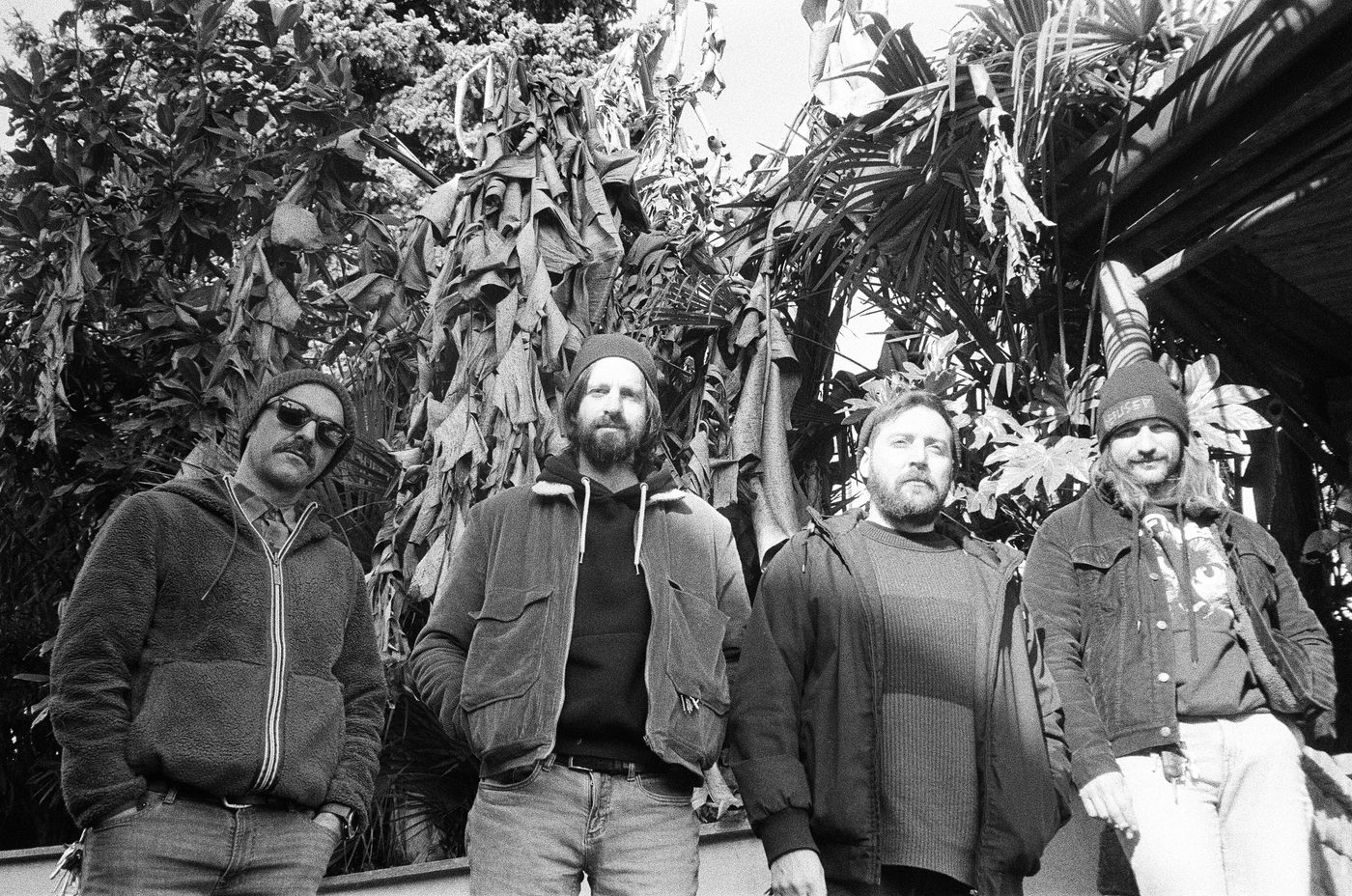
Conny Ochs had a different job on “Outer Gods“.
The German songwriter is an old friend of the band, and they had imagined a voice with strong blues, folk and rock ‘n’ roll roots for what Jack considers the album’s most straightforwardly rock-oriented song. Yet “Outer Gods” was also the track they struggled with most, and by the end of writing, they were still unsure about it.
For both guest singers, the band finished the instrumental compositions first, sent them over with a few suggestions about mood and left the vocal decisions in their hands.
Before Conny received “Outer Gods”, though, the track needed some attention from Stefano Santi.
Stefano has worked with Threestepstotheocean before and returned to record and mix “Death of Permanence” at SPVN Studio in February and March 2026. This time the musicians gave him considerably greater freedom to make production decisions and change the arrangements.
Wyświetl ten post na Instagramie
The songs reached the studio in very different states. “What Went Wrong” was already largely finished instrumentally. “Outer Gods” still needed a convincing shape, especially because the band wanted it to work on its own before adding Conny’s voice.
Stefano helped them get there.
“That is probably where Stefano made the biggest difference. He helped give the song a clear identity and brought it to a point where it could almost stand on its own even without vocals. Only then did we feel ready to give it to Conny.”
A much smaller studio decision changed “Black Syrup“. Stefano ran the drums through an analogue delay, introducing a rhythmic effect that immediately caught the band’s attention.
“At one point he ran them through an analog delay, and as soon as we heard it we knew that was the right sound and mood for the track.”
The sessions also included additional recording by Francesco, with Giovanni Versari handling the final mastering at La Maestà Mastering.
By the time they reached SPVN, the musicians had been collecting ideas for well over two years. Their shared Google Drive had grown into an enormous collection of recordings, unfinished sketches and different versions of songs. Looking through it to answer our questions, Jack discovered that the earliest draft on the album dated back to November 2023.
The song was “What Went Wrong“.
At that point it had a different title and was still instrumental. Its starting point was the band’s interest in darker American industrial hip-hop, a particularly interesting departure for musicians who had spent much of their history working around post-rock and metal.
The drums and bass take on a repetitive, loop-like character, with electronic sounds gradually building around them. The guitar enters much later, occupying a smaller part of the arrangement than listeners familiar with the group’s older records might expect.
Despite being one of the biggest departures from their earlier work, “What Went Wrong” underwent relatively few major changes during the later album sessions.
Its eventual connection with Larry Stromberg came from an entirely different source.
Larry is an incarcerated American poet, playwright and writer whose work Threestepstotheocean discovered through Prison Radio, an organisation that publishes recordings by people inside the US prison system and helps bring their experiences into public discussion.
His poem “What Went Wrong” was recorded at SCI Phoenix, a state prison in Pennsylvania, and published through Prison Radio in June 2025. It came from an exercise in a prison poetry class. The text moves through regret, damaged relationships, guilt and remorse, eventually asking whether truth and forgiveness remain possible.
For the musicians, hearing Larry’s words changed what the instrumental composition could communicate.
“His text ‘What Went Wrong’ struck us with its sheer power, clarity, and drama.”
The spoken-word recording ended up altering the emotional direction of the song so considerably that Jack now finds it difficult to imagine the finished version without Larry’s voice. The appearance is credited courtesy of Prison Radio.
The accompanying official video, shot by Davide and featuring performers Silvia Cattaneo and Isabella Dall’Omo, gives the track a further visual interpretation.
For all the time spent pulling songs apart, one of the last compositions came together surprisingly easily.
“Future Questions” arrived near the end of writing. Jack remembers it as a relatively quick piece, made without the usual tendency to overthink each decision or pile more layers onto the arrangement.
“It’s a song we wrote quite quickly and with extreme ease, trying not to overthink it or build excessive layers over it. It’s a simple piece in its construction, yet in its simplicity, it’s extremely psychedelic.”
That simplicity helped them realise they finally had enough for another album. The six songs were working together, and the musicians could concentrate on recording, refining and finding the right people to complete them.
It brought them back to a format Davide had never really stopped loving, despite the frustrations discussed in 2023.
“I am still very attached to the album as a format. I like the idea of an LP as a container, almost a carefully made photograph of a specific period. Years of work, changes, mistakes and effort finally come together in one shape.”
Releasing individual songs still has its appeal, particularly when an idea comes together and the musicians are eager to share it. But Davide also worries about letting a good track go before finding where it belongs.
“At the same time, at least for me personally, there is also the feeling that releasing a single track can almost feel like wasting a bullet before it has found its real place.”
There was never a single meeting where Threestepstotheocean decided that these recordings had to become a full-length album. The pieces gradually started making sense as a group. “Future Questions” was the last thing they needed.
The experience also made them reconsider how they had understood DIY throughout their history.
Threestepstotheocean began in Milan in 2006 and spent their early years releasing instrumental music through small labels, organising shows and travelling around Italy and Europe. They’ve played in Japan too, including a particularly memorable visit that involved flying roughly 10,000 kilometres for just two concerts because work commitments prevented a longer trip.
They’ve always maintained close relationships with people organising gigs, running venues and putting out independent records. These relationships have lasted through several changes in the music itself.

Our 2020 conversation around “Del fuoco” touched on this quite extensively. The band remembered feeling part of something resembling a defined local music scene during their earliest years, roughly between 2007 and 2010. As the way people found and shared music changed, that sense of belonging became harder to identify.
They were increasingly interested in the people and shared activities that connected them across genres. At the time, they argued that community was a much more useful word than scene.
The six years since have only strengthened that view.
Jack associates the idea of a scene with musical styles, geographical borders and expectations about what belongs where. A community, in his understanding, grows through personal relationships, shared values and people helping one another organise things.
He also worries about the circumstances facing independent music spaces. Economic crises, political and cultural pressures, technological changes and wars are affecting the places where underground music happens. Access to recorded music may have become faster, but the need to meet, play and spend time together remains.
“We still don’t feel part of a well-defined scene, but rather – as the many collaborations on this album show – we feel we belong to a community, which is also one of the reasons we keep making music.”
The musicians have started describing their DIY approach in similarly direct terms.
“Probably DIY has become for us an ethics of connection and shared process. It is less about “doing it yourself” and much more about “doing it together”.”
That’s a particularly useful way of understanding the record’s many collaborations. Some came from longstanding friendships, others involved approaching people whose work they admired from a distance. They trusted the guest singers to develop their own parts, gave Moonlit space within the writing process and brought Larry’s poetry into music that had initially been conceived without him.
Riccardo Giacomin, who handled the album’s artwork and design, and German photographer Alexander Krack were involved on the visual side.
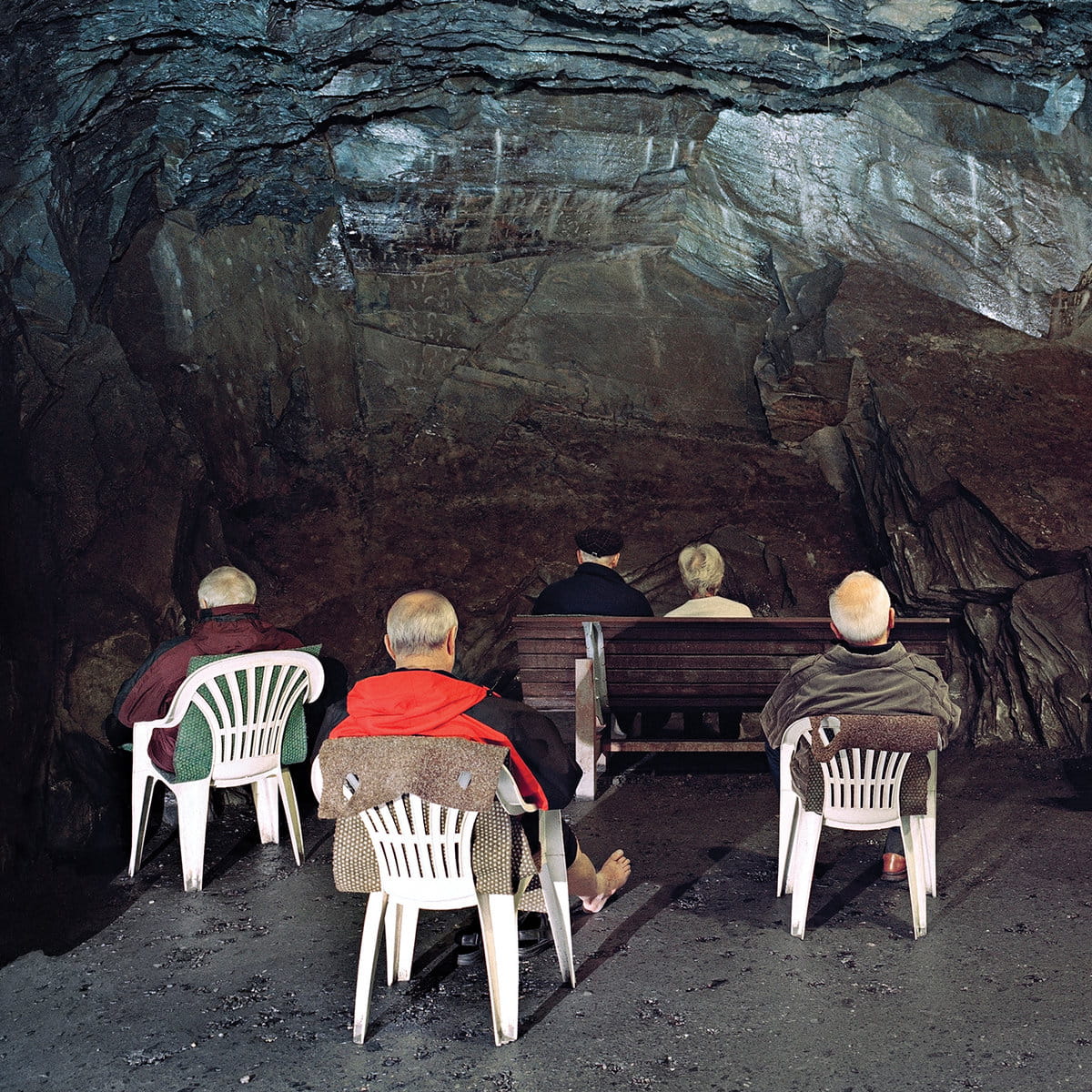
The cover uses Krack’s photograph from “The Treatment”, a series documenting German spa towns, rehabilitation facilities and the sometimes peculiar environments surrounding medical care.
Krack photographed these places during 2013 and 2014, visiting numerous health resorts across Germany. Some of the project grew from his own childhood memories of spending summers in mountain spa towns while receiving treatment for chronic bronchitis.
The photographs move between picturesque outdoor surroundings, sterile clinical interiors, medical machinery and people following their daily treatment routines. The combination can be unsettling, especially where the peaceful appearance of a resort sits alongside the reality of illness and ageing.
Threestepstotheocean brought one of those photographs into the visual world of “Death of Permanence”, with Riccardo responsible for the finished design.
Their decision to work with Subsound Records fits the same approach to sharing responsibilities.
“Duende” had been released entirely on their own. For the new album, they returned to working with a small independent label, something they had already done on several previous records.
Subsound helps distribute the album, get physical copies into shops, reach media outlets and deal with some of the considerable cost and organisation involved in putting out vinyl and CDs. The musicians kept control of the music, artwork, videos and communication.
As the band put it in their answer, “working with a label isn’t about handing over control; it’s about building a collaboration that supports our vision.”
There’s also a fairly personal reason behind the title, even if the musicians haven’t attached a detailed account of individual events to it.
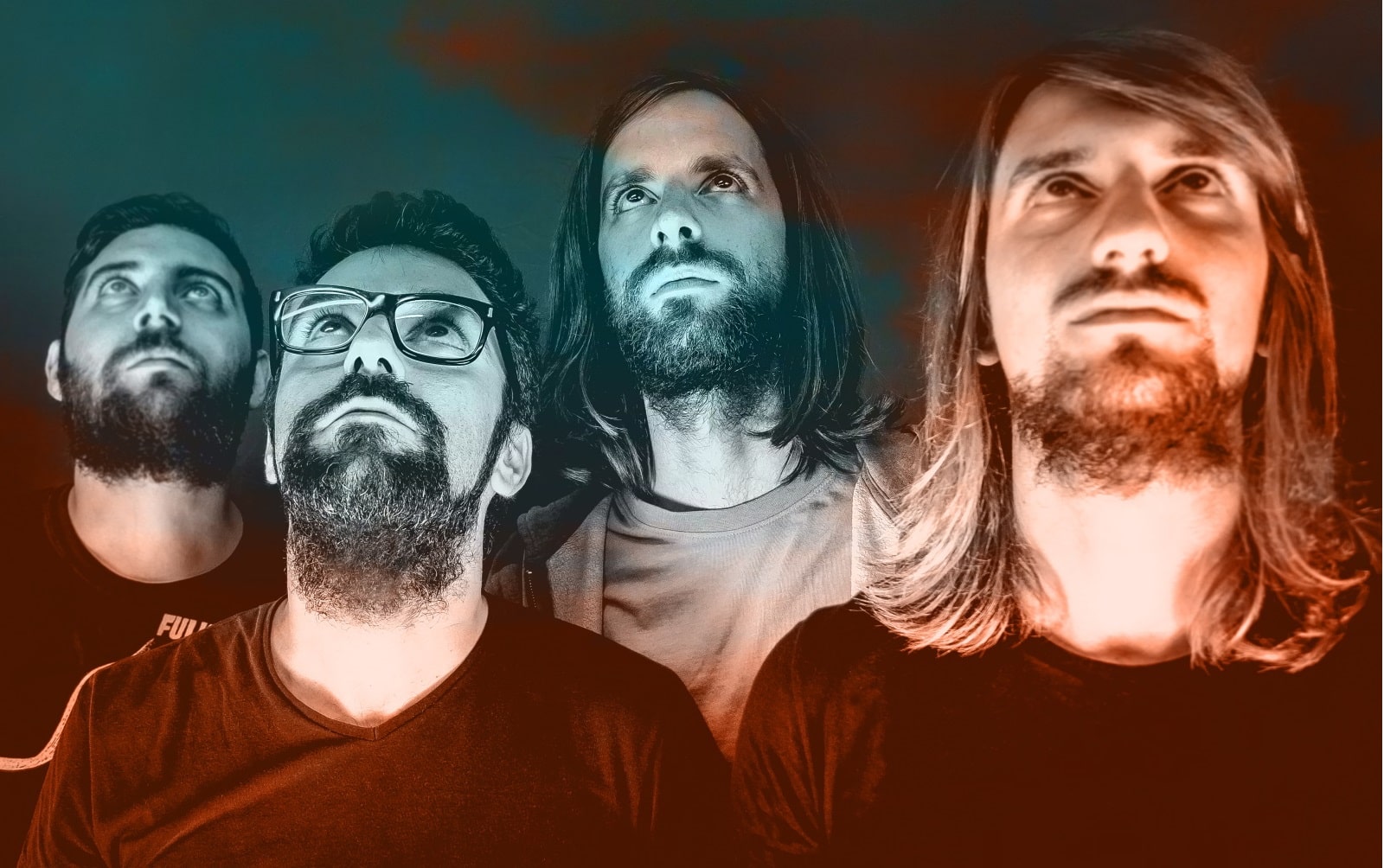
A lot has happened since “Del fuoco” came out in 2020. Over those six years, they’ve watched things they once considered fixed change, sometimes beyond recognition. That applies to their private lives, and also to the wider social and political circumstances around them. They talk about losing certainties they once relied on and coming to terms with how quickly familiar things can disappear.
For a band that has existed since 2006, the subject has an additional dimension. Davide Logrieco, Giacomo Rogora, Andrea Sacchetti and Francesco Tosi are still making music together, still changing how they work and still allowing other people to influence the results.
The album’s final track is called “Eternity Is a Glitch”. It’s quite a title to finish a record concerned with how temporary apparently permanent things can be.
Three years ago, Threestepstotheocean were wondering whether they had the patience for another album. They’ve ended up making one that documents exactly those years of change, through the songs themselves and the unfamiliar ways they learnt to put them together.
“Death of Permanence” is officially released October 16, 2026, through Subsound Records. You can listen to the entire album in our exclusive premiere and pre-order it through the band’s Bandcamp. Vinyl and CD editions are also available through the Subsound Records store.
The band are also taking the new music back on stage, with their first announced dates running from October into January.
Upcoming live dates:
- 17 October 2026, Carpi, Mattatoyo, with Dievel
- 24 October 2026, Sestri Levante, Circolo Matteotti, with Ainu, Sator and Gert
- 13 November 2026, Bologna, FreakOut, with Die Sünde
- 28 November 2026, Lonate Ceppino, Black Inside, album release party with Giobia and Elisa Begni
- 12 December 2026, Mezzago, Bloom, with This Will Destroy You
- 23 January 2027, Arona, Ca’ de Pop, with Muschio and Ainu
A further date on 14 November is being arranged, with the location and venue still to be confirmed.
Wyświetl ten post na Instagramie
🔔 IDIOTEQ is ad-free, independent, and runs on one person’s time. If you want it to stay that way: DONATE via PayPal or SUPPORT via Patreon.
NEW: IDIOTEQ Explore 🗺️ Browse 15+ years of our archive by city, country, and style. Find artists on the world map or trace related sounds through the styles map.
Stay connected via Newsletter · Instagram · Facebook · X (Twitter) · Threads · Bluesky · Messenger · WhatsApp.