

There’s a point early on “Deconstructive Surgery” where Jeff Byers is yelling about time slipping through your hands—“Time is water in the desert”—and it doesn’t land like a metaphor so much as a problem the band is actively trying to solve.
“In The Desert” was built in pieces, across cities, around families, jobs, and a clock nobody in the band is pretending to ignore anymore. Northeast Regional—split between Richmond and DC, with one member briefly relocating to Oman—made the record almost as a dare to themselves: is this still worth the time it takes?
They answered that question by finishing an 11-song LP anyway.
We’ve been keeping an eye on the band for a while—most recently in our 2025 “In Shorts” roundup and earlier with a 2023 feature around “Heiress”—but “In The Desert” is a different scale entirely. The project that started as Byers’ recording outlet has turned into a five-piece with a shared history and a limited window to actually be in the same room.
Big life shifts fed directly into the record. Byers was dealing with the birth of his daughter and his father’s dementia diagnosis. “Not having the ability to recall most of your life story, good or bad, was very sad to me,” he says. “As guys in our 40s… it’s natural to look out and think about what time you have left and what to do with it.”
Wyświetl ten post na Instagramie
At the same time, Mike Morris—who sings on three tracks—was preparing to move his family to Oman, a plan that was later cut short by escalating conflict in the region, forcing a return to the U.S. before a year had passed. The album cover pulls from that landscape: stark, winding, wide open.
The band kept meeting weekly, writing in whatever time they could carve out. No career strategy, no long-term plan. Just a record made because they still wanted to make one.
Wyświetl ten post na Instagramie
Recorded by Ricky Olson (Prisoner, Prayer Group, Naysayer) at Spacebomb Studios in Richmond, with vocals tracked by Pedro Aida at Audio Verite, the album was mixed by Olson and mastered by Brad Boatright at Audiosiege. The approach was direct: track drums live, layer guitars carefully, keep the amps and feedback intact.
“We wanted to make the record sound very natural,” Byers says. “We like the sound of our amps and the feedback they create. It’s a part of the NER sound. I was surprised at how melodic the record turned out to be… we went more to a meditative space instead.”
That shift shows up immediately in the structure of the songs.
Wyświetl ten post na Instagramie
“Deconstructive Surgery” and “Widows Memorial” started as one piece. “We were finishing this song up until the finish line… and it wasn’t working as one song,” Byers explains. The solution was to split it in two and rebuild the opening of the latter. “Deconstructive Surgery” ends up as a three-piece recording—just Byers on all guitars—built around an Ampeg V-4 and an Earthquaker Plumes pushing the more droning sections.
“MR,” one of the earliest songs written, begins with a riff from Morris before expanding outward. “James adds some nice textural leads… The song has some overt Hot Snakes influences but also has nods to Oasis and The Constantines.” Byers leaves a small joke hanging at the end: “The discerning listener will note I don’t fully spell out the band name.”
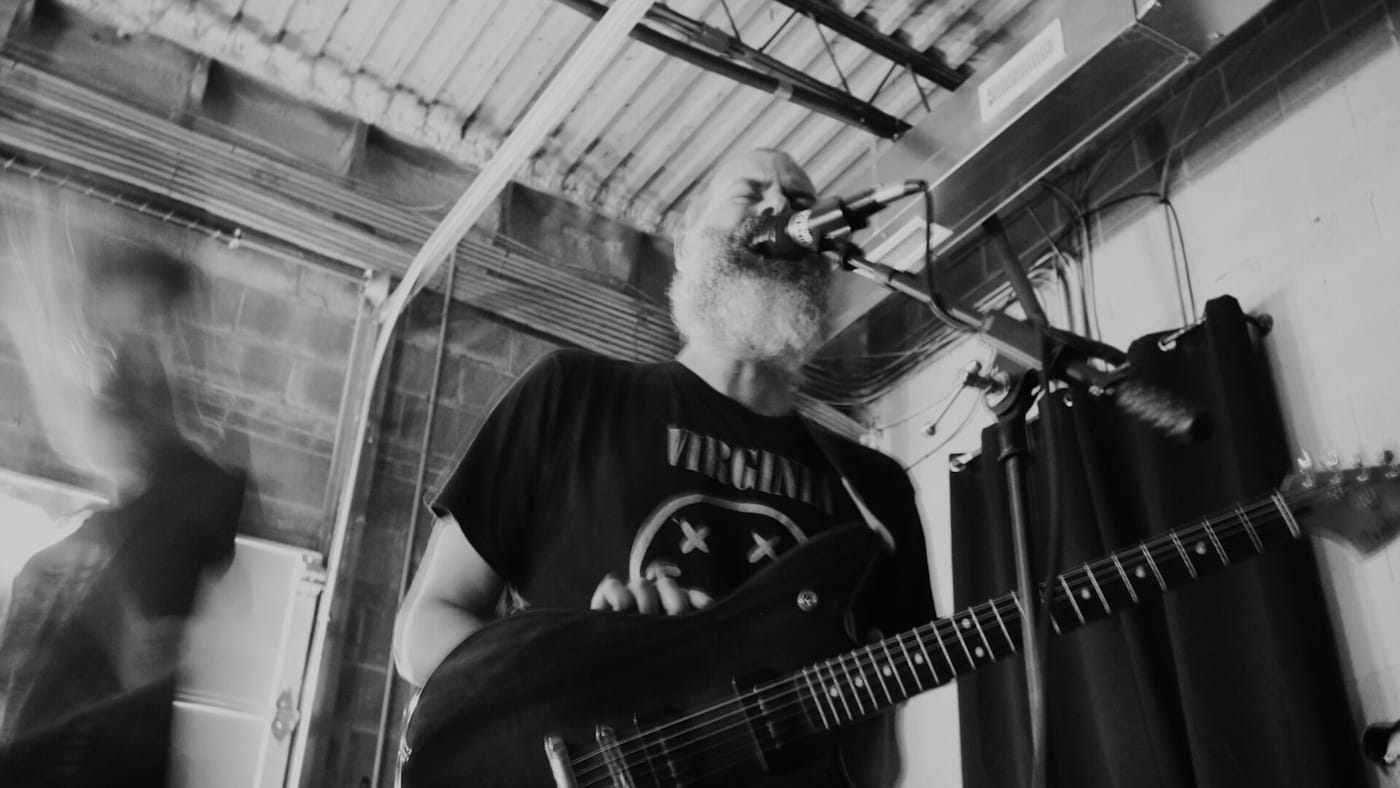
“Indulgence” went the opposite direction—cut down from something longer, with its second half scrapped entirely. The shift from open picking to palm-muted downstrokes changed the feel completely. Byers traces part of its DNA to Robert Palmer’s “Clues,” even if the reference point is buried now. “The initial riff had more of a Hives/Franz Ferdinand/‘indie sleaze’ feel even though it does not sound like that now.”
“Alt Bounce,” another Morris track, leans into a Breeders/Bully starting point before drifting toward Archers of Loaf territory. It’s one of the few moments on the record that actually stops mid-song—no feedback, no noise—just a full reset. “Perfect for driving with the windows open on the first day of real spring.”
“Meander” predates the band itself. Byers and Morris were playing it together as far back as 2019, unsure if it even belonged on a record like this. It stayed. Morris’ wife Dana contributes vocals, with lyrics written about their daughter in the future. “There’s a funny mention of a Rancid poster.” Sparse guitar, locked-in rhythm section, and a clarity that surprised them once it was finished. “It sounds like it could be on the radio.”
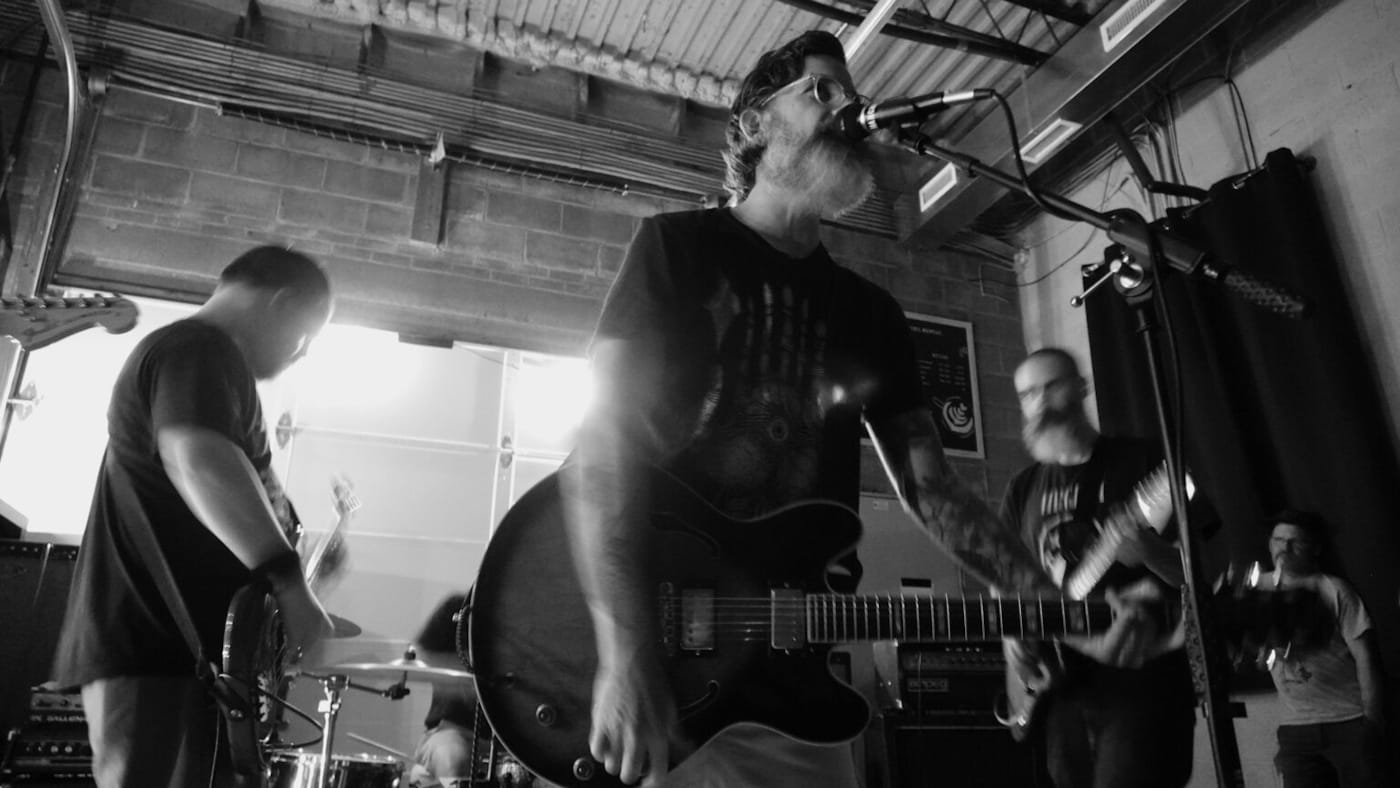
“Sick Days” reaches even further back, built from a leftover riff from the “Fitness” 7”. The defining choice comes at the end: holding a single chord for minutes while the band builds around it. “The one-chord idea may have come from Shudder To Think’s ‘X-French Tee Shirt’ or maybe AC/DC’s ‘Let There Be Rock’… we created a really nice meditative passage.” Byers would have stretched it to ten minutes if he could.
“Long Live The Dullness,” another Morris composition, ended up opening side B. Written in Drop D, it was fine-tuned late in the process. “Tyler thinks it sounds like I Hate Myself. I always thought it kind of sounded like Jets To Brazil’s ‘Chinatown.’” The payoff is held back deliberately, teased until the end.
It also contains a small technical detail that only shows up once: during the guitar break, you can hear a completely different setup Morris used while tracking drums—“a J Mascis Squier and some amp at the studio.”
“Trade Secrets” runs a capo on the second fret and pulls heavily from John Davis’ “Arigato!” era. The chorus lands closest to a statement of intent for the whole record: “Try and keep creating art if you can… you likely don’t—and won’t—ever know who you influence… Don’t give up if you still got the juice; not everything needs to be a side hustle.”
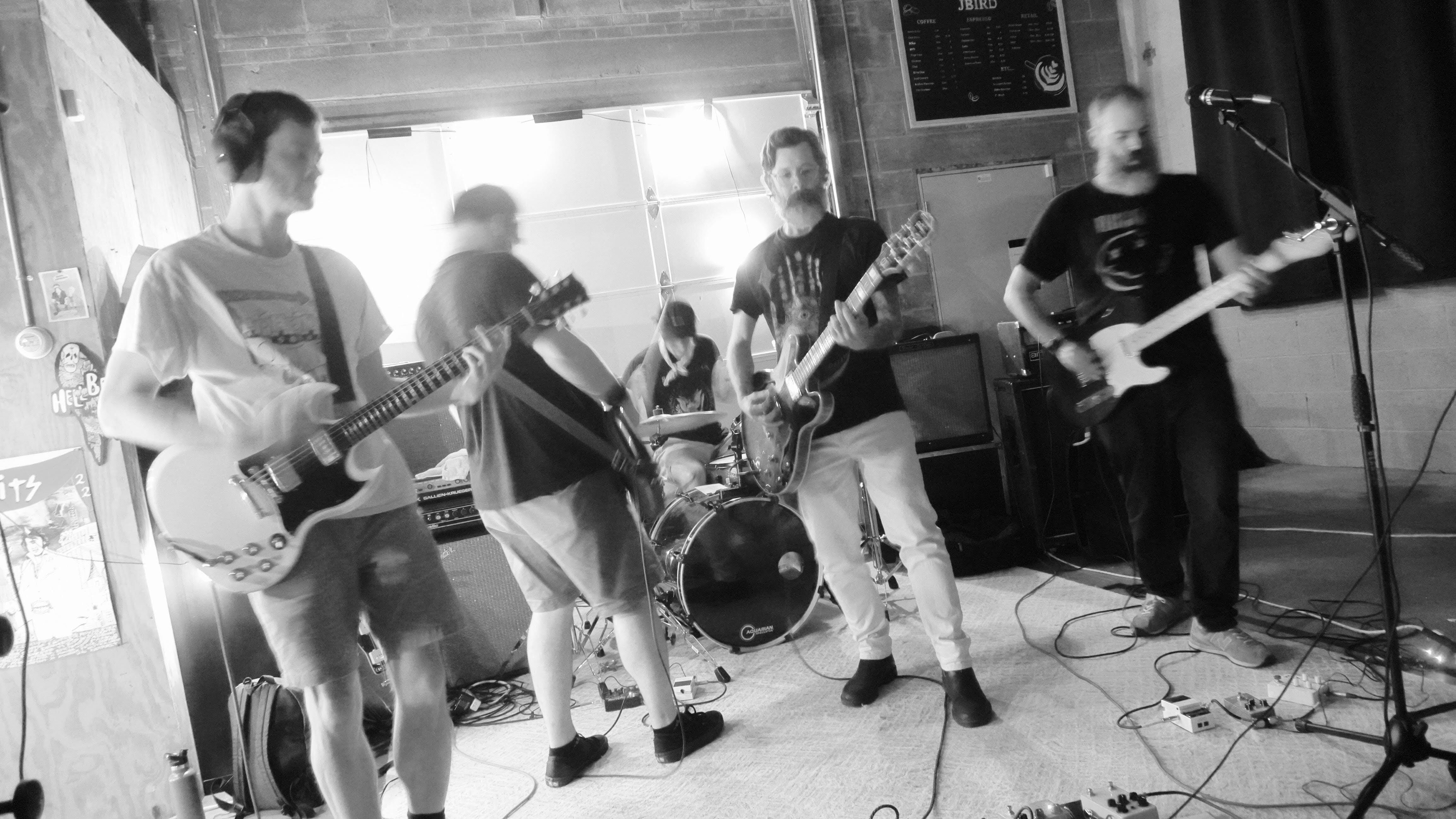
“Rolling Thunder” and “Detours” are the densest guitar arrangements on the album. Three rhythm tracks layered, feedback built using a locally made A.C.H.E. pedal (a Harmonic Percolator clone), mixes pushed toward overload. “I wanted to make a mountain of sound… make people think their speakers blew.”
“Detours,” written primarily by James Doubek, also introduces a 6/8 structure that complicated the vocal phrasing. “This is one of my favorite vocal performances from me on the record,” Byers says.
“Widows Memorial” closes things out by returning to the fragment that once belonged to “Deconstructive Surgery.” Stripped down at the start—just Byers and Doubek on guitars—it expands into something heavier, with Plumes-driven gain pushing the ending. “James’ leads on the end really make the part.” Byers double-checked himself against Creepoid’s catalog just to make sure he wasn’t lifting anything unintentionally.
Across all of it, the band makes a point of not stacking identical guitar parts. With three players, the goal was to build outward instead of doubling up. That restraint gives each track its own shape, moving between tight, driving sections and wider, slower passages that linger longer than their earlier work ever did.
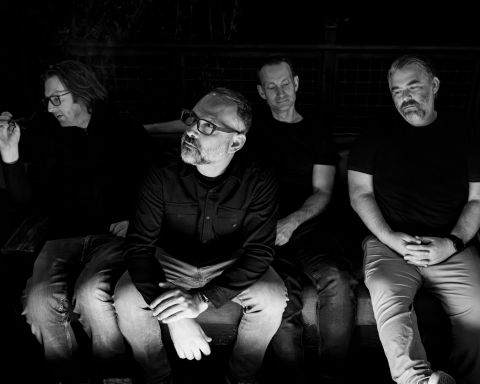
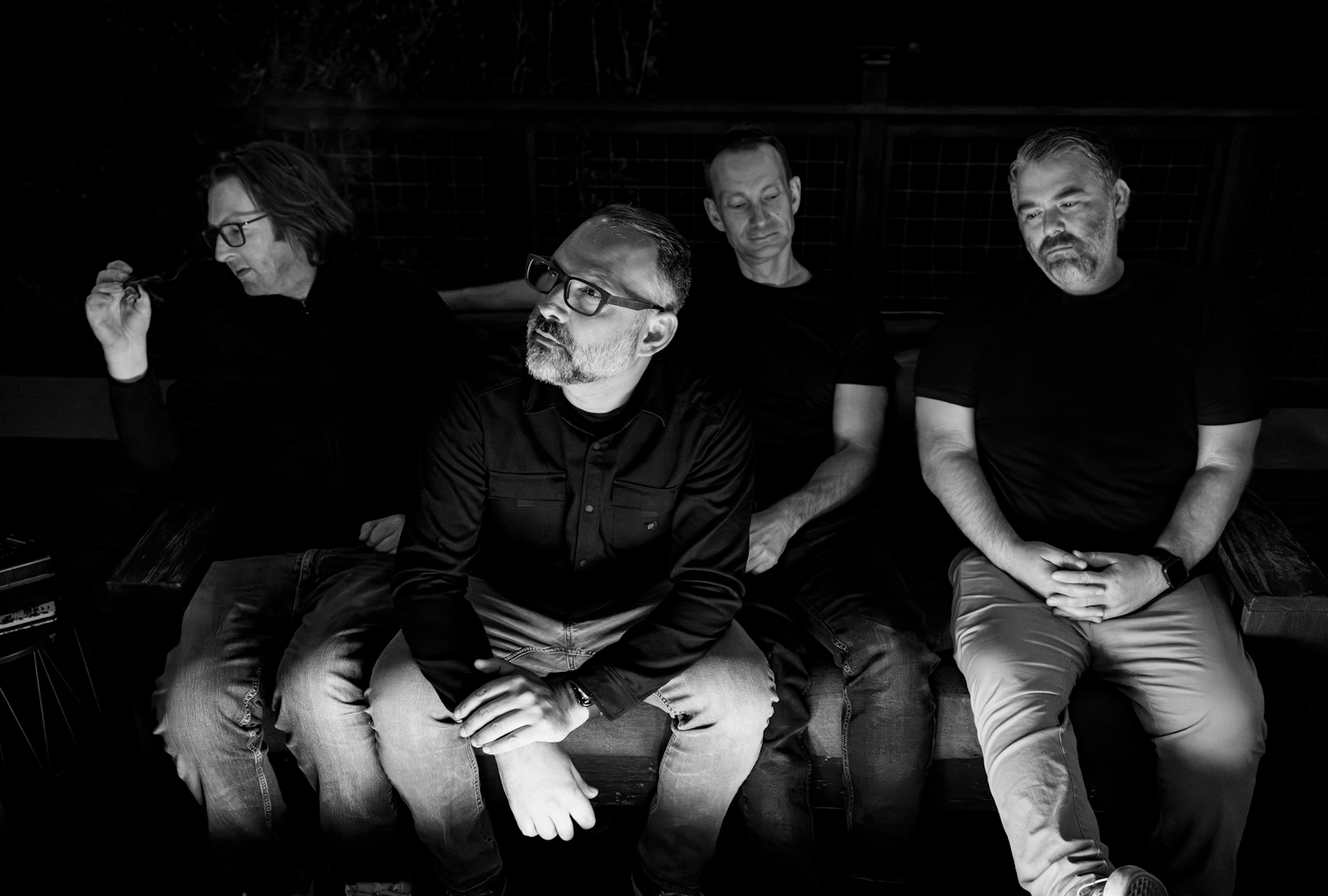
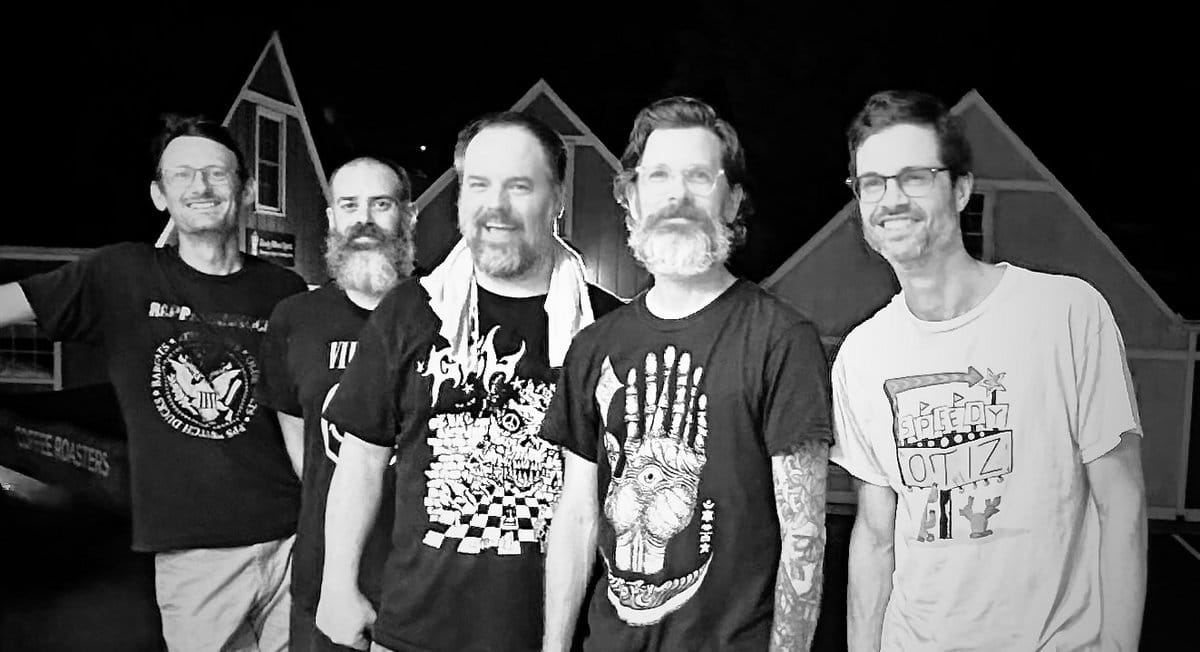
The lineup on the record is Jeff Byers (guitar, vocals), Mike Morris (guitar, vocals), James Doubek (guitar), Tyler Worley (bass), and Zach Nelson (drums).
Outside the studio, the band exists in a looser state. Three guitarists in different cities. Uncertainty around whether they’ll even play a release show. “We are taking it one day at a time,” they say. “We are excited for people to hear the record and sit with that for now.”
They still show up when they can. They opened the first Dark Days Bright Nights festival in Richmond in 2024, sharing the bill with Kilara and Pygmy Lush—names tied to their own history of going to shows as teenagers. Closer to home, they’ve spent time playing with Doll Baby and Cryptid Summer, bridging Richmond and DC in a way that reflects the band’s own split identity.
“We are in our 40s so… we are probably out of touch of what the scene here is,” Byers admits. “That said, people we grew up with… are still playing in bands… and that’s very inspiring.”
“In The Desert” sits somewhere between continuation and endpoint. Not framed as either.
The band also released a 2-hour-40-minute podcast on April 2 documenting the making of the record, including interviews with all members, Ricky Olson, and a stack of demos and practice recordings. It’s available via their Bandcamp and streaming platforms.
🔔 IDIOTEQ is ad-free, independent, and runs on one person’s time. If you want it to stay that way: DONATE via PayPal 𝗈𝗋 SUPPORT via Patreon.
Stay connected via Newsletter · Instagram · Facebook · X (Twitter) · Threads · Bluesky · Messenger · WhatsApp.