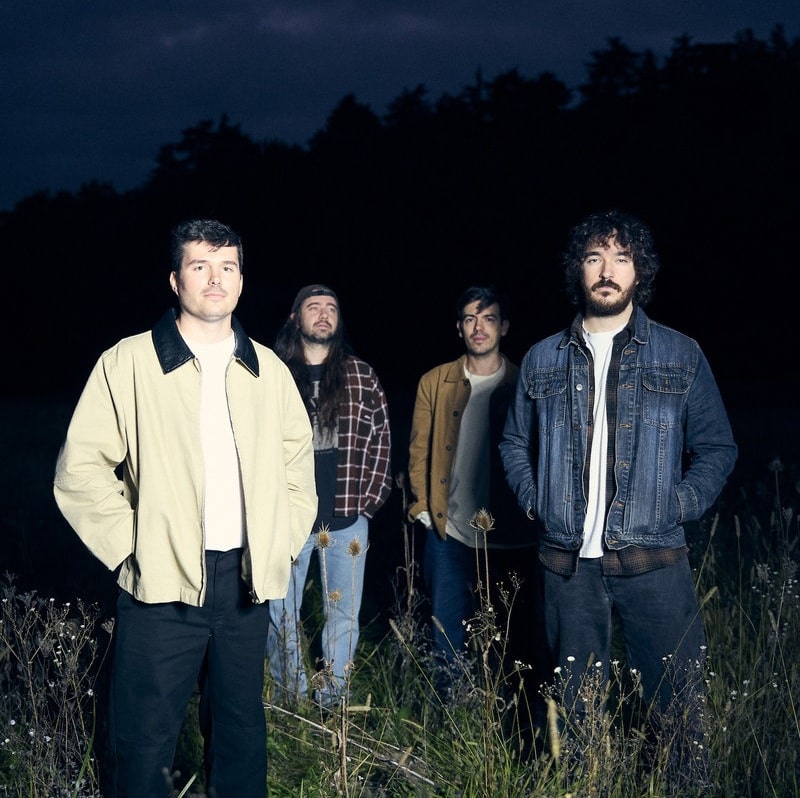

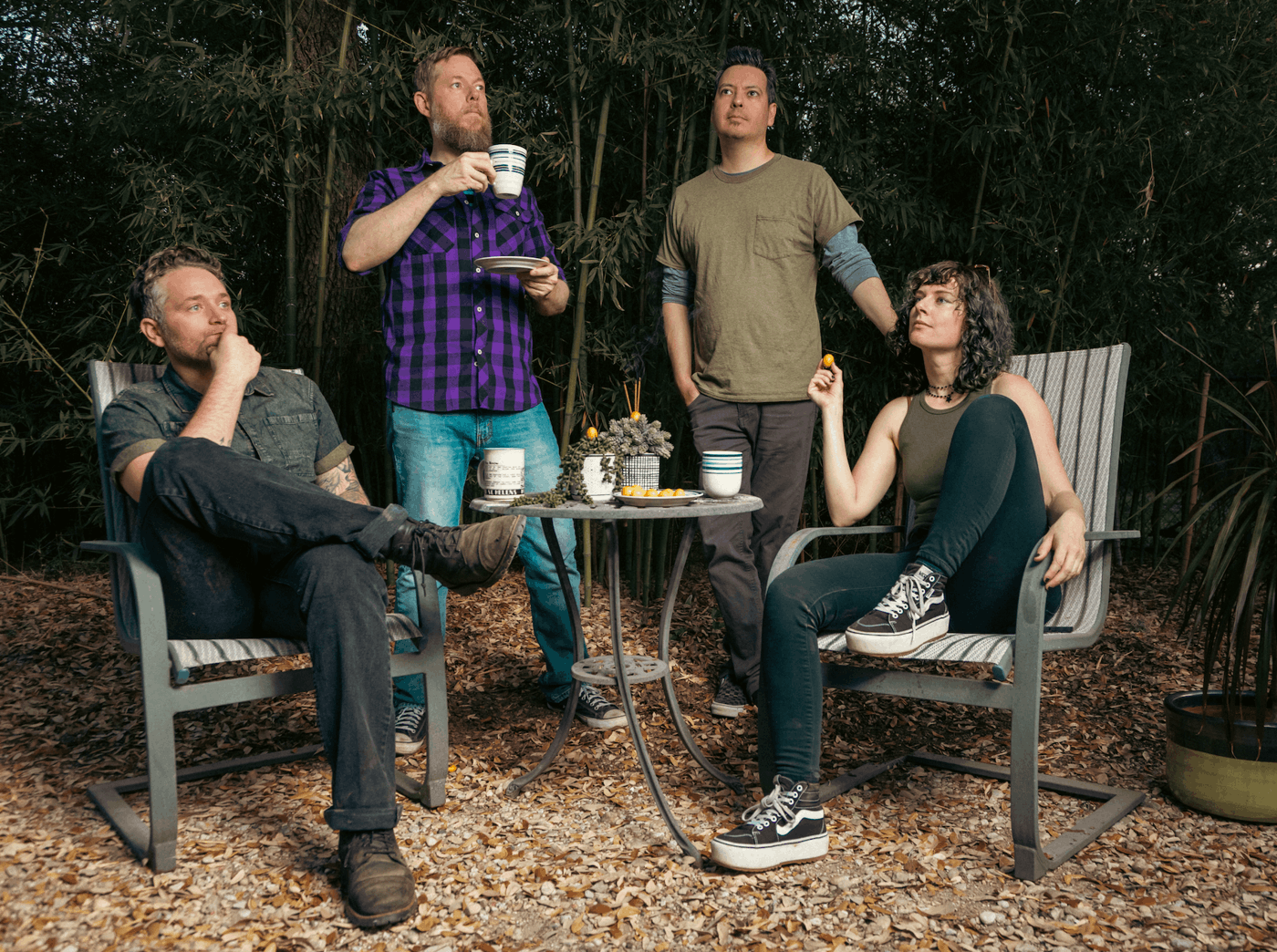
Heavy shoegaze, nu-gaze, post-grunge, alt-rock with 90s blood in it, however you want to label it, the wave has been loud enough for long enough that calling it popular doesn’t really say anything. Wide-cut trousers, fuzz pedals, that whole reference catalogue young listeners pulled out of a decade they didn’t live through. It all keeps coming back, and somewhere on the heavier end of that revival sit Object Fiction, a four-piece out of Austin who have been working toward this point quietly for years.
Neil Gonzalez and Alan Newton first met in 2001, selling records and CDs at Wherehouse. They clicked on what they were listening to, and the friendship outlasted the day job. Their first proper musical project together was a live hip-hop act that ran from 2010 to 2012, which Neil and Alan credit with tightening their live chops and cementing the musical bond. They kept playing together on and off through the years. Object Fiction officially launched in 2019, then COVID hit and the whole thing went on pause.
Neil began recording and fleshing out songs as demos at his home studio. Some of the tracks they play live now were born in those early sessions. “This is definitely where the overarching sound of Object Fiction was honed,” the band say. “In these earlier versions Neil really put his fingerprint on the songs, and created really beautifully layered music. Alan’s bass abilities really put a motor on these songs. Thick octave and fuzz, but some parts are very melodic and beautiful as well.”
Those demos were what Patrick Gartner and Emily Day first heard. Patrick had actually tried out as a drummer in 2024. The personalities clicked, the playing did not. “He was a far better guitarist than drummer, a fact he himself admits,” Object Fiction recall. They came back to him almost a year later, this time on second guitar. “The addition of the second guitar gives the music a relentless wall of sound when we play live.”
Emily came in through a Facebook post looking for a drummer for an “instrumental” band. The demos hit her immediately, and the way she describes it is very specific. The music sounded like some of her favourite bands, and she was already getting vocal melody ideas before she’d even reached out. When she did, she made a condition clear: she would join, but only as both singer and drummer. Those were the only kinds of projects she was interested in at the time. She sent Neil quick recordings of her vocal ideas over his demos. That was that.
Wyświetl ten post na Instagramie
The four-piece writing process started with all of them translating Neil’s demos into something playable in a room together. Patrick changed riffs here and there to fit his style or push melodies in a different direction. Emily fitted parts of the songs to match the feel her vocals were taking on. Comparing the early demos to the final recordings, the band note, the songs got faster and heavier in the process.
Pull Emily on what it actually takes to drum and sing at the same time, and the answer is honest. “Most of the time I naturally write my vocal melodies in sync with the drum parts,” she says. “There are times when we have to switch up the rhythm of an ending phrase because the vocal part is too different and I can’t yet always syncopate between singing and drumming, so we usually prioritize the vocal melody in those instances. The biggest struggle so far has been to be able to hear myself singing while drumming, and I’m working on not sounding out of breath while singing live.”
The three singles came out over three weeks in spring 2026. “Eyes Wide Shut” dropped on 17 April, “Novocaine” on 24 April, and “11:11” on 1 May. All three were mixed by Neil and mastered by Brendan Reza at Hellreza Audio & Co. in Austin. The artwork for “Novocaine” was done by Neil too.
Asked about how songs like “Novocaine” come together lyrically, Emily lays out her process without dressing it up. “I write songs from a melody-first approach, and then fit lyrics into the rhythmic phrasing. I usually go with the first ideas that pop into my head for a melody. Words are not my writing strong suit, so I mostly go off vibes and fit them into the puzzle of the melodic lines. I’m a sucker for edgier lyrics though, ha.”
What “Novocaine” is actually about, by her own account, is whatever the listener brings to it. “Whatever the combination of phrases, vocalizations, guitars, and rhythm makes you feel when you listen to it, that’s what the song is about. Our lyrics are more of a curation of vibes than anything else. Meaning is made by the listener.”
On Austin itself, Object Fiction have a working map of the city’s heavier and shoegaze-adjacent corners. The bigger ambition is to get into the Levitation lineup, with Psychefest stages further down the road. Closer to home, they recently shared a bill with Whisper, a local band they speak about with specifics.
“Their music is thick and layered. Their music is dreamy and whimsical, but there’s a lot of weight behind it as well, especially when they play live. We’d share a bill with them anytime.” Ringo Deathstar and Late Wife are bands already on most Austin radars, but Object Fiction note they keep putting out work that holds up. Some of the people in Jet Cemetery and Fuck Money live next door to band members, which they single out as a more useful kind of scene mapping than press lists.
Wyświetl ten post na Instagramie
The picture the band paint of Austin’s venue ecosystem is sharper than the boosterism most cities get. The city has introduced something called a “street impact fee” that new music venues are required to pay, which Object Fiction describe as “insanely expensive” and going “nowhere but city hall’s pocket.” Between that, rents, and rising costs of goods and labour, the band say it’s effectively impossible to open new independent venues inside city limits. So the action has moved.
“We are seeing cool shows happening just outside of the city limits in North and South Austin,” they say. “We also see more alternative spaces like art galleries, warehouses, and random DIY spots putting on shows.” Specific examples they give: Happy Clouds smoke shop and Cloud Tree Art Gallery.
On Austin’s old reputation as the live music capital of the world, they are blunt. “There are 100 stages on 6th street, but you really just see the same 20 bands playing the same 100 cover songs over and over and over again.”
The decision to roll out singles one at a time rather than wait for an EP or album is a practical one. Object Fiction are self-producing everything. They tracked bass and guitars themselves, recorded drums at a home studio owned by Brendan Reza (who also handled mastering), and Emily tracked her own vocals at home. Neil mixed everything, Reza mastered. “We’re probably going to record more singles next, and build that up to a full album release by fall,” the band say. “I think we’re following a pretty normal course of action for newer bands. Luckily, we all like recording and producing.”
What they will not do is play the content-marketing game. “No shame to those who are currently doing everything they can to break out on social media,” they say, “but we really hate the idea of making content and performing skits so Mark Zuckerberg can sell ads. It’s just not our bag at all. Everyone says this is how you’re supposed to do it these days, but fuck that.”
“We believe it means a lot more when someone comes across our music naturally, hears it for what it is, and actually feels affected by it in its entirety, not as a 30 second sound bite sandwiched between horrible political news and endless AI slop.”
🔔 IDIOTEQ is ad-free, independent, and runs on one person’s time. If you want it to stay that way: DONATE via PayPal 𝗈𝗋 SUPPORT via Patreon.
Stay connected via Newsletter · Instagram · Facebook · X (Twitter) · Threads · Bluesky · Messenger · WhatsApp.