
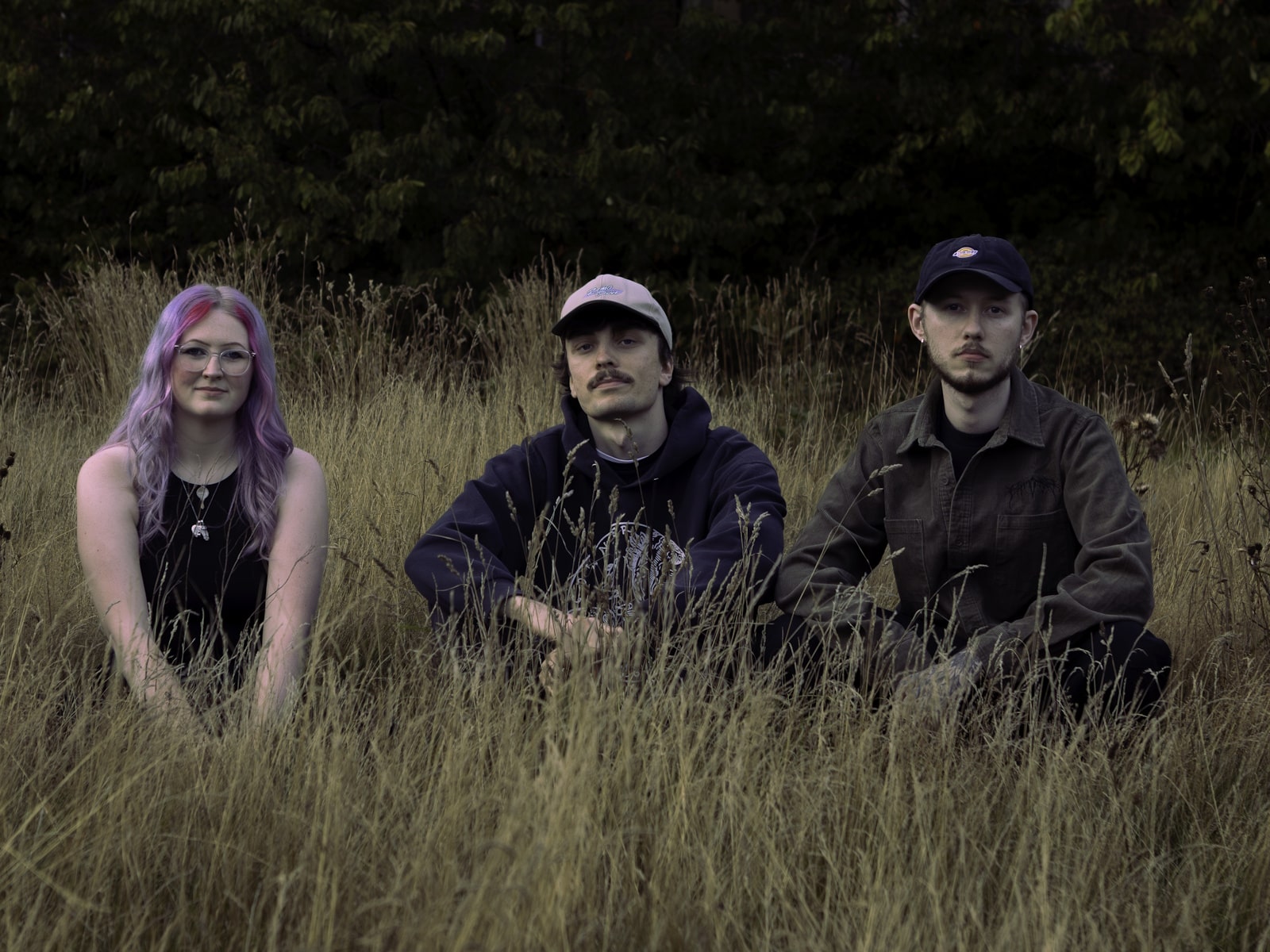
Pale Sailor’s debut EP “you’re not yourself,” out October 24, moves between exhaustion and recovery, disconnection and grounding. The Sheffield trio — Anya Bellamy, Eamonn Hall, and Henry Veitch — have built a short but fully shaped statement from four tracks that sit somewhere between midwest emo and pop punk, with their own DIY fingerprints visible on every layer.
For vocalist and bassist Anya Bellamy, the record became more than a set of songs — it was a document of a turning point. “you’re not yourself is a reflection of both my emotional experiences and creative growth,” she says.
“Through its lyrics, DIY production and artwork, the EP captures a period of my life shaped by frustration and uncertainty.” The writing drew heavily from her early love of literature and poetry, an influence that shaped her shift away from blunt, literal emo tropes toward something more open-ended. “I’m always trying to find ways to add depth through abstract imagery and metaphors,” she explains. “While I’m often discussing very personal experiences, I often think the less obvious the topic of the song is, the better.”
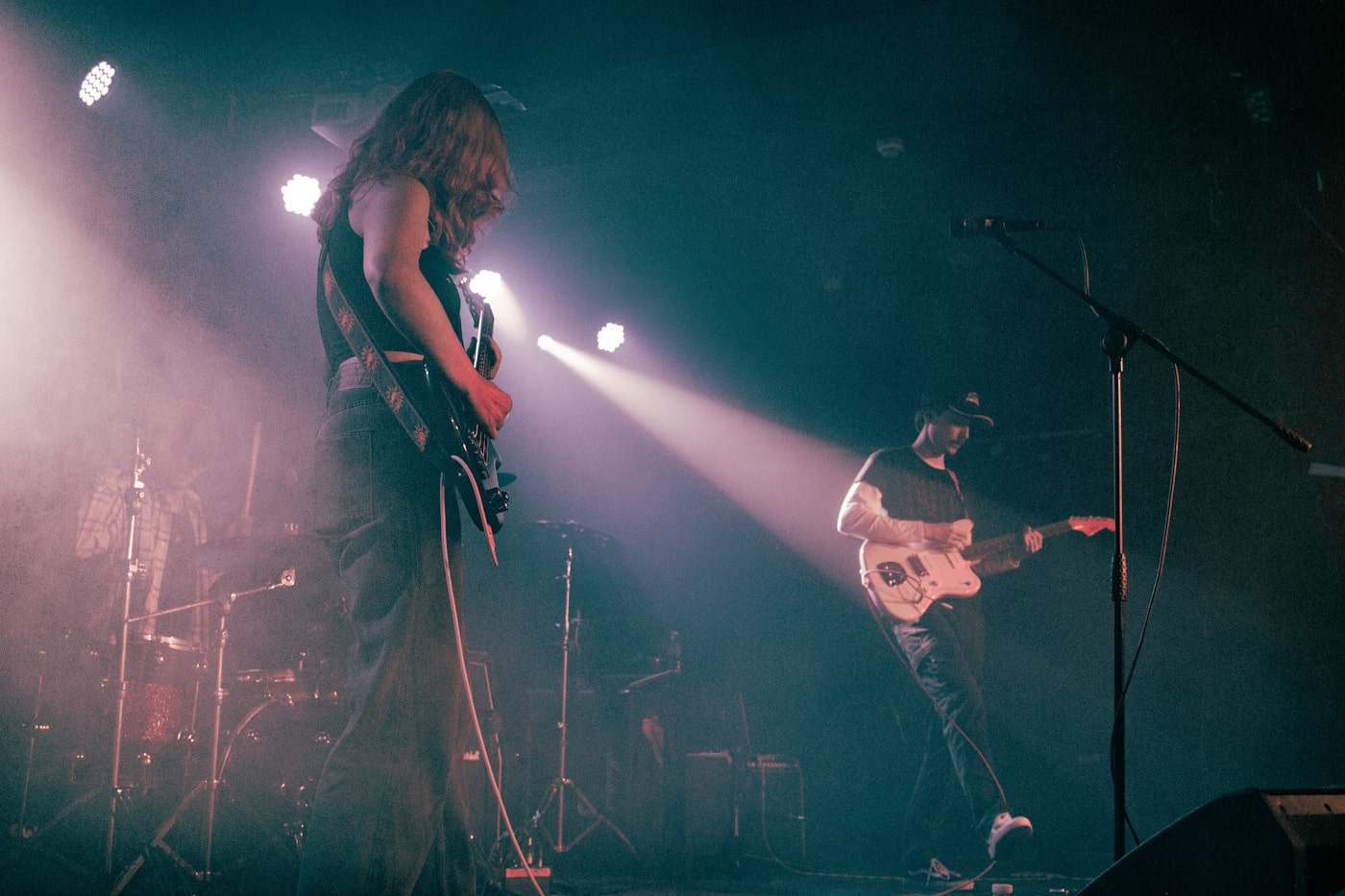
Recorded in Eamonn’s attic with a couple of mics and a lot of borrowed time from local university studios, the record feels both carefully built and instinctive. The band tracked drums in a campus studio, then shaped everything else with makeshift isolation booths of blankets and chairs. “It was a long process, but one that gave us complete creative freedom and a final product that truly feels like us,” Anya explains. “The sense of community, self-sufficiency and supporting one another means everything to us.”
That idea runs through the EP — not just sonically but socially. Friends contributed gang vocals, plugin presets, and studio space. The mastering was handled by Ste Kerry, while the artwork — shot by Anya near her home on an old 2009 digital camera — mirrors the EP’s natural, transitional tone. Even in its construction, “you’re not yourself” reflects how the band operates: open-handed, communal, a little improvised, but deliberate.
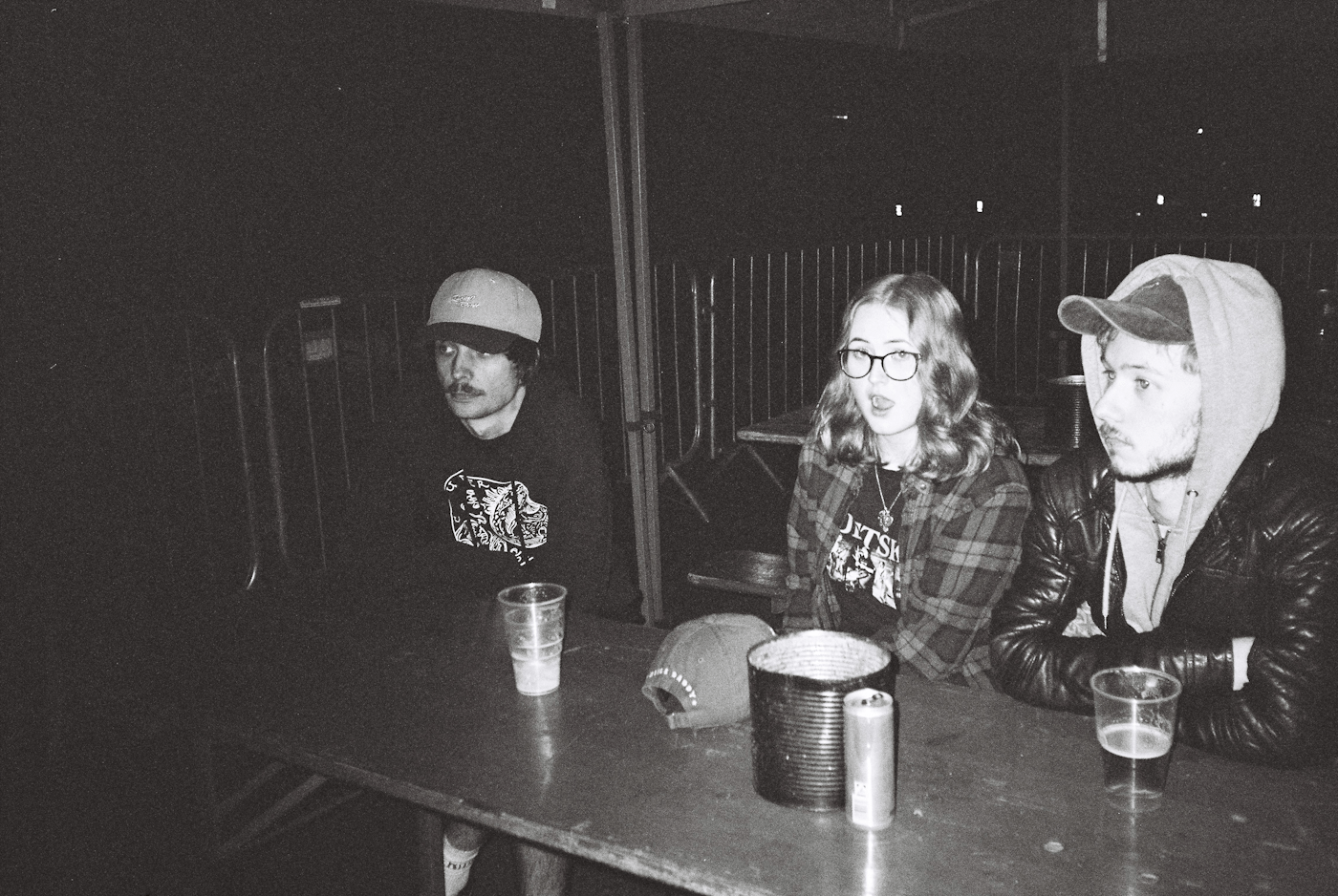
Lyrically, the four tracks pull from the uneasy space between personal and social pressure. The writing began during a stretch of frustration and burnout at the end of last year, a time that shaped much of the record’s emotional tension.
Each song addresses a separate angle of that experience — “shrimply the best” captures frustration and wasted time, “go ahead, play it, see if i care” deals with emptiness and death, “surface level” focuses on depression and addiction, and “willows” confronts anger and disappointment. “Wasting time again I’ve noticed the blue light,” Anya sings in the opener, a line she says “summarises the whole song’s emotional tone.”
The final track, “willows,” carries a quieter fury. Written during her final year of university, it reflects disappointment and burnout — the feeling of giving everything to something that gives nothing back. “The verse section ‘Why can’t you see how this hurts him more, day after day’ isn’t about a specific ‘him,’ but instead about a shared feeling of dissatisfaction that myself and my peers felt throughout our time at university,” she says. “It’s about putting all your drive and energy into something to receive the bare minimum back.”
Anya’s creative world extends beyond sound. The EP’s photos were taken during autumn and winter walks while the songs were being written. “I was using walking and photography as something to break up the monotony of the days,” she recalls. “The artwork encapsulates the scenery that inspired my writing style at the time, and my mental association with autumn and ‘shrimply the best.’” The photos were all taken within a few miles of her home, shot on her old digital camera — a sentimental object gifted by her dad in 2009.
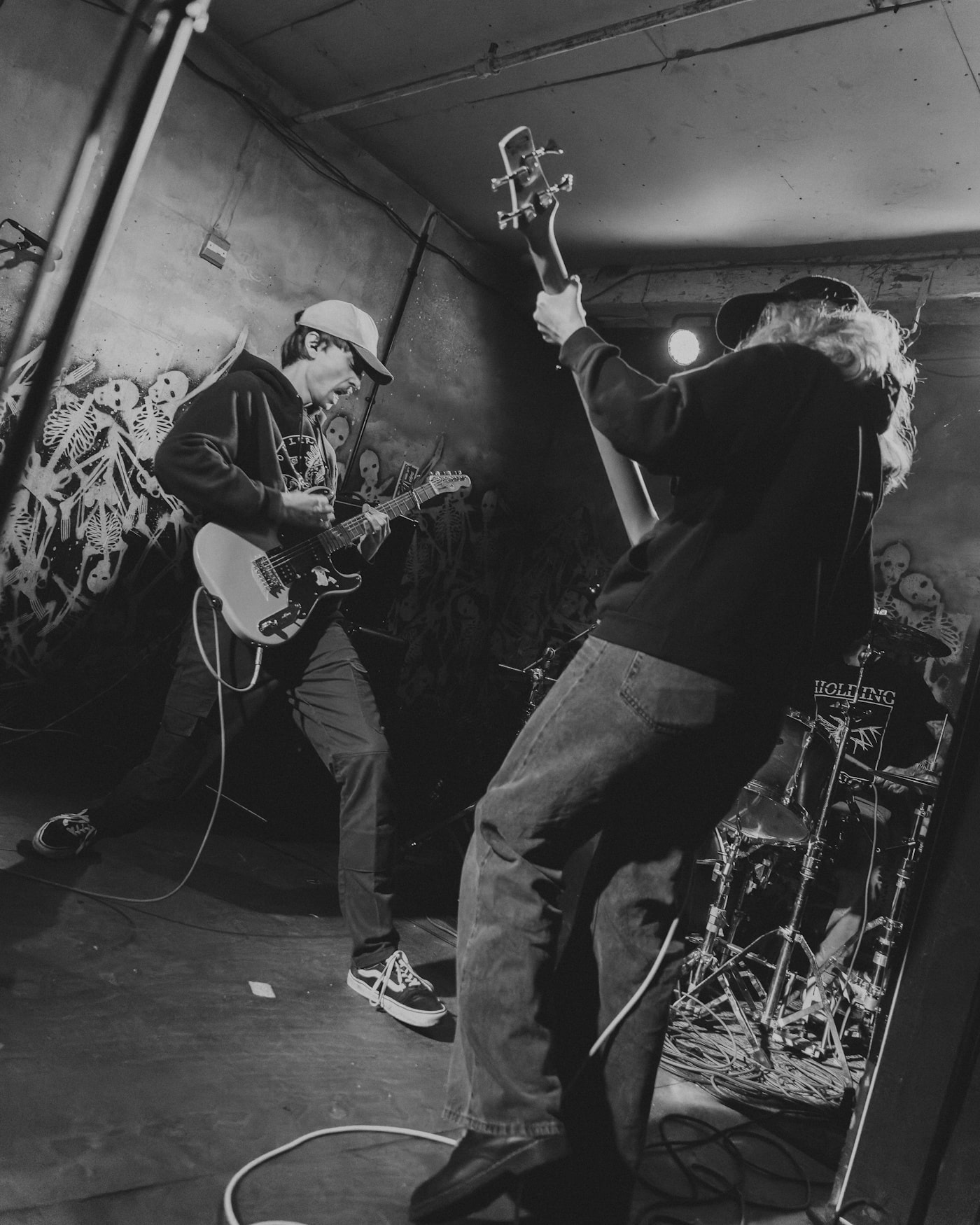
The visual and musical worlds connect through Pale Sailor’s firm grounding in community and DIY culture. Their first gig took place at Hatch, a small local space run by promoter Midnight Gaboosh, who later helped them secure their permanent rehearsal spot at Lughole, Sheffield’s volunteer-run punk venue. “We even recorded some of the gang vocals for the EP in that rehearsal room,” Anya says. “Throughout our time as Pale Sailor, we’ve thrown ourselves into whatever we can — from designing merch and posters, to booking and organising shows, to now recording and mixing our EP.”
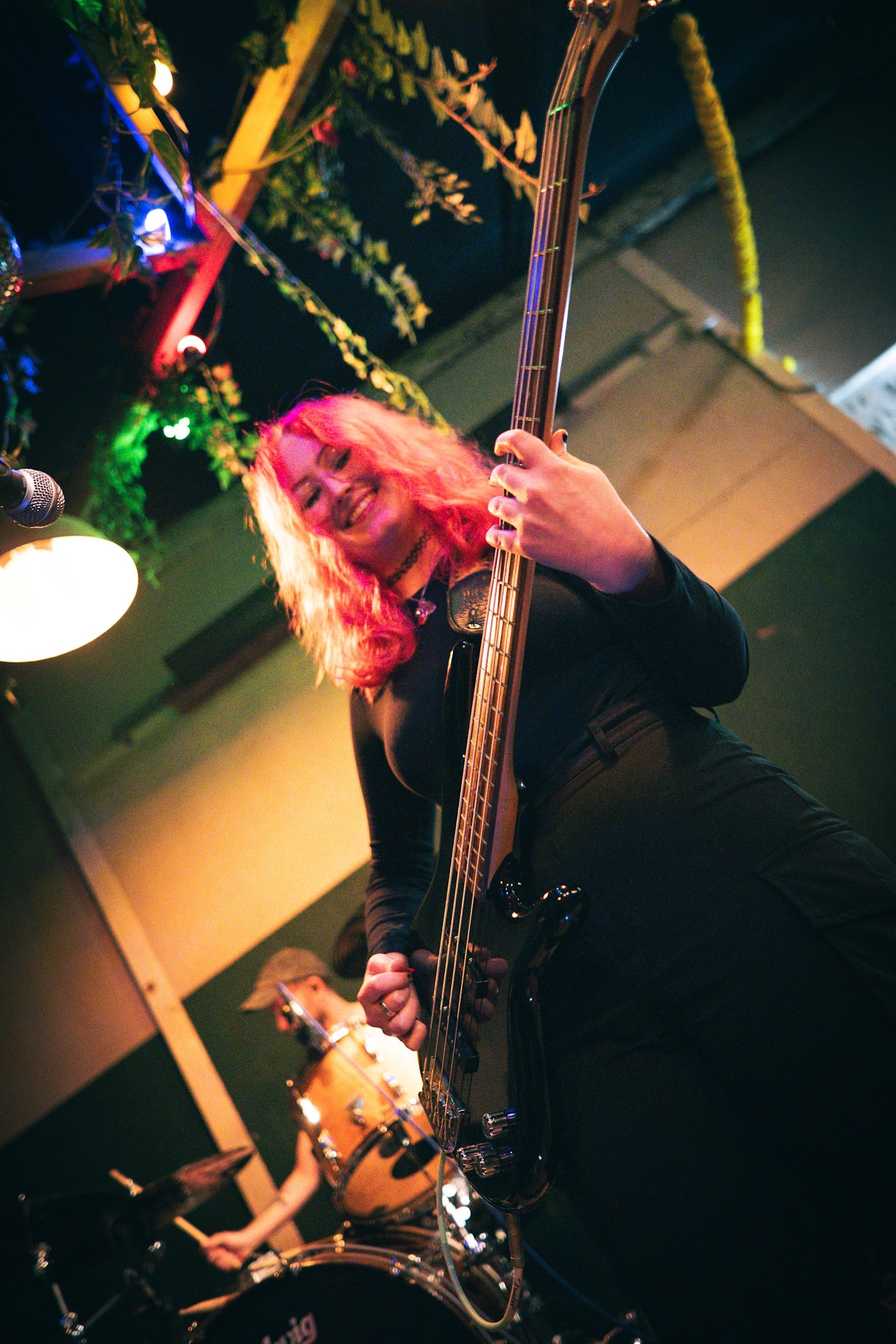
Online DIY spaces have also played a role in their growth. Eamonn’s “Riff of the week” series on TikTok helped connect the band with a global audience. “Seeing other bands online self-produce and release their own music was a huge inspiration to us and gave us the confidence to try it ourselves,” Anya says. “I found I learnt a lot about music production through seeing what other DIY artists do via the online community.”
In “you’re not yourself,” Pale Sailor capture that whole orbit — isolation, frustration, creativity, and community — and let it play out without pretense. “Through the songs, production, and artwork, this EP documents where we were creatively, emotionally, and personally,” Anya concludes. “It’s a snapshot of Pale Sailor’s sound and a starting point for where we might go next.”
Read the full track-by-track commentary below for an inside look at how each song came together and the stories behind them.
1 – shrimply the best
The opening track of you’re not yourself sets the tone for what’s to come with its dynamic instrumentation and passionate lyrics. The title of the track, shrimply the best, began as a joke name Eamonn gave the demo while it was still a work in progress. Despite attempts to change it to something more fitting, the name stuck, mostly due to its absurd charm.
The second half of the track went through multiple rewrites, with the band adapting the song after testing it out live and wanting it to carry greater emotional weight. The final version builds into a layered cathartic outro, reminiscent of many emo staples before it.
Instrumentally, shrimply the best takes significant inspiration from Sweet Pill, particularly in the riff driven verse section and busy drum work. The vocal layering in the outro was inspired by a live performance from Pale Sailor’s close friends, Student Slasher Film, where audience members sang overlapping lines back to the band, an emotional and intense moment Pale Sailor aimed to recreate. Gang vocals, a common feature in emo and pop punk, had long been something the band wanted to implement, and to do this they enlisted the help of Matthew Watt and Owen Lyons from local band Jumper Boy and longtime friend Kelci-Leigh. Together with Anya and Eamonn, their voices helped bring the track’s finale to life.
Lyrically the track reflects a period of stagnation and mental fatigue. It was written while Anya was waiting to hear back about a master’s course and feeling increasingly frustrated at the lack of response, yet powerless to move forward. The monotonous time wasted in front of a screen as the days shortened and the weather turned colder contributed greatly to the song’s emotional tone.
2 – go ahead, play it, see if i care
The second track on the EP combines upbeat, playful energy contrasted with darker lyrical undertones. The final title, go ahead, play it, see if i care, originated from a comment drummer Henry made during rehearsal, which the band felt captured the song’s spirit. This replaced the working title of the track, Blink 183, named as such because Eamonn was adamant the riff was reminiscent of Built This Pool by Blink-182.
The track opens with a quirky sample from Fallout 2, chosen simply for its humour and fit with the track’s vibe. Originally, the bass riff of the track was written on guitar although after trialing it live, the band felt it didn’t cut through enough. Drawing inspiration from contemporary emo bands like Michael Cera Palin and Forests, who often let the bass take a lead role, the band switched the riff to bass, giving the track a unique character and feel.
At first, the track only had words during the verse, although during recording these were rewritten with additional lyrics for the second repeat of the riff. When writing these, Anya initially tried to maintain the lively and bouncy energy of the track without getting overly serious, but ultimately opted for a more contrasting approach. The final lyrics explore imagery of vastness, emptiness, and even death, adding unexpected emotional depth to the otherwise upbeat sound.
3 – surface level
surface level was the final track Pale Sailor wrote for the EP. With three demos prepared, this song was written to “fill the gaps” in the record, deliberately contrasting the other tracks’ tempos, structures and lyrical themes. Despite the track being written last, it was first to be mixed and served as the template for the other tracks’ production. The title, surface level, reflects the song’s layered, metaphorical lyricism, inviting interpretation on multiple levels.
Instrumentally, surface level stands out as the most pop stylised track on you’re not yourself, featuring defined verses and choruses alongside comparatively restrained guitar and drum work. Drawing inspiration from a variety of alternative music, particularly by Free Throw, Four Year Strong and Paramore, this track balances accessibility with emotional intensity.
Despite the accessible instrumental, lyrically the track is the most emotional, vulnerable and abstract on the EP, discussing Anya’s personal mental health struggles as a teenager. The verses take on a conversational tone, as if Anya is talking to a younger version of herself, whilst the chorus is more descriptive of how she felt during that time. The bridge contrasts soft instrumentation with deeply introspective lyrics before shifting into a heavier second half which expresses the frustration and complexity of recovery and “getting better”. This song also features backing vocals by Kelci-Leigh, who performs subtle harmony in the final chorus.
4 – willows
The final track, willows, was the first to be written for the EP and remains one of its most emotionally intense and sonically distinct entries. The title, like most of the other tracks, carries a lighthearted origin story. Drummer Henry was given naming rights for the track, with Eamonn jokingly asking him not to call it something silly like The Wind in the Willows. Naturally, that’s exactly what Henry suggested although the band ended up shortening it to just willows for simplicity. Coincidentally, the imagery of weeping willows, expansive yet inherently melancholic, fits the tone of the song well and adds a layer of unintended symbolism.
When writing the song, the band set out to create something slower and heavier than their usual style, drawing inspiration from shoegaze and post-hardcore acts like Title Fight and early Remo Drive. The contrast between the dense instrumentation and the soft vocal adds to the track’s emotional tension. Lyrically, willows explores frustration and anger, particularly the experience of being let down by someone when you need them the most. Written during Anya’s final year of university, the lyrics reflect the pressure of academic, social and personal responsibilities and the anger that can surface when those around you fail to meet expectations.
Due to the contrasting sound to the other tracks on the EP, willows posed a unique challenge to mix. The band were aiming for a “wall of sound” aesthetic which meant the track needed several more guitar layers than the other tracks on the EP. Sam Cowell from Student Slasher Film contributed their Neural DSP guitar presets to Pale Sailor, which helped elevate willows production and shape the final sound.
The bridge section of the track features a dense collage of audio samples, creating an uneasy and chaotic atmosphere as they overlap. This overwhelming texture was part of the band’s vision that adds extra emotional weight to the section despite the lack of lyrics.