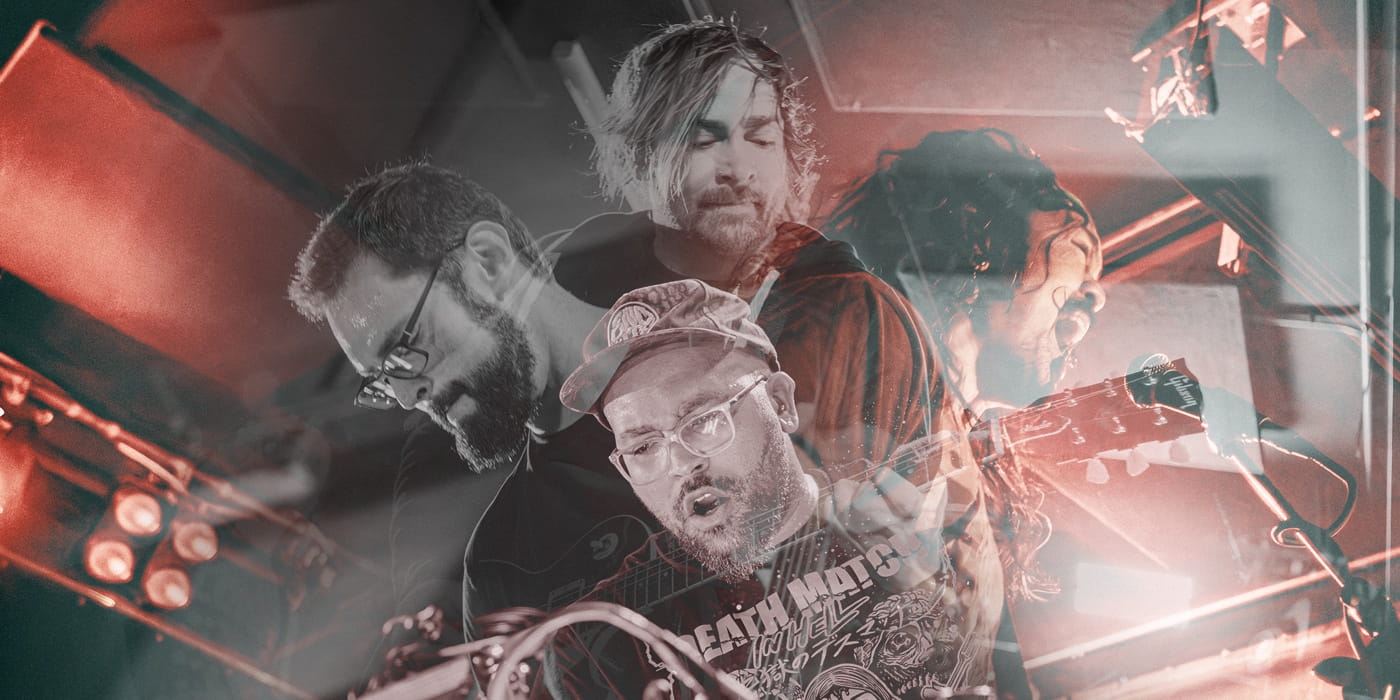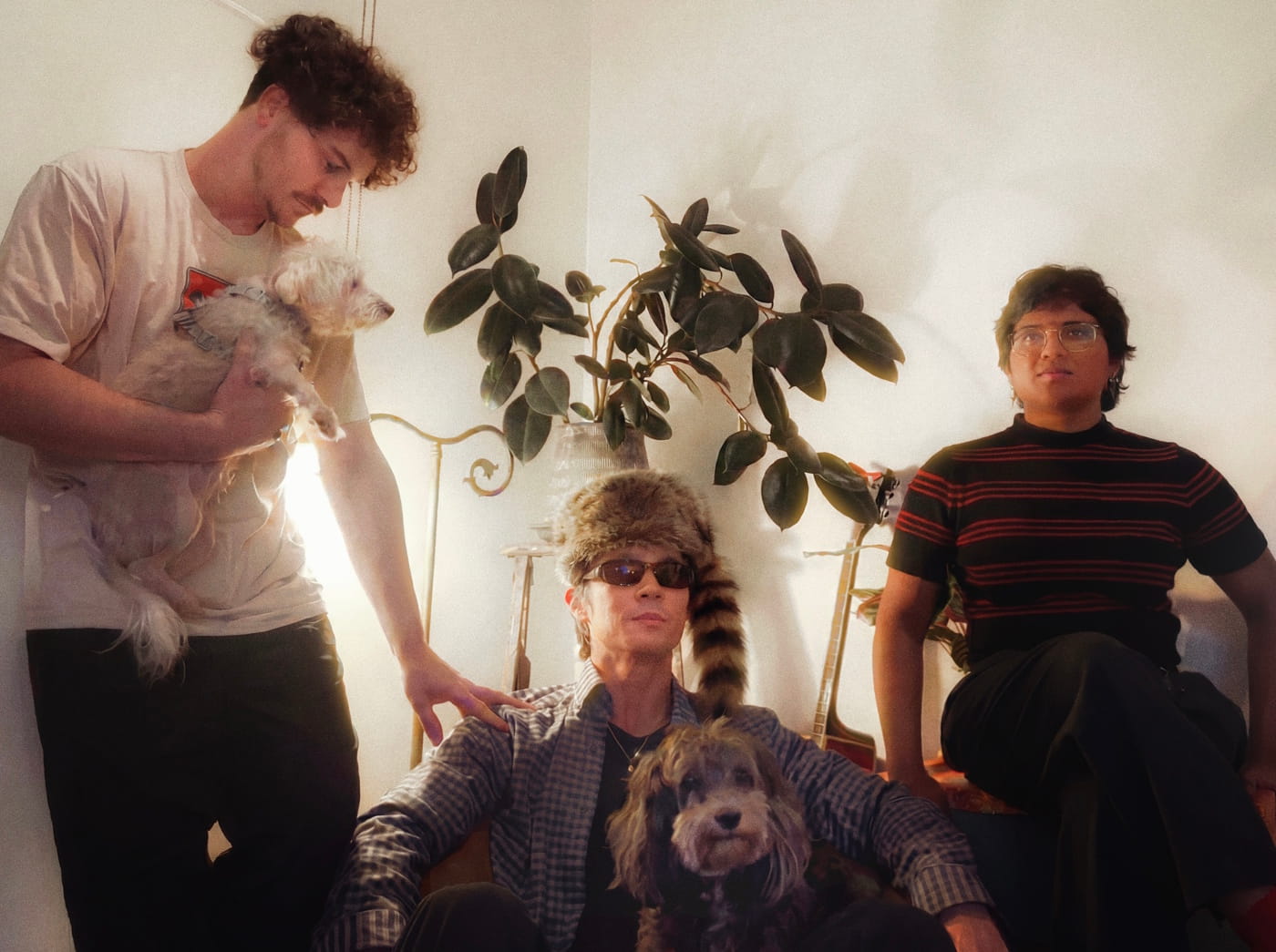


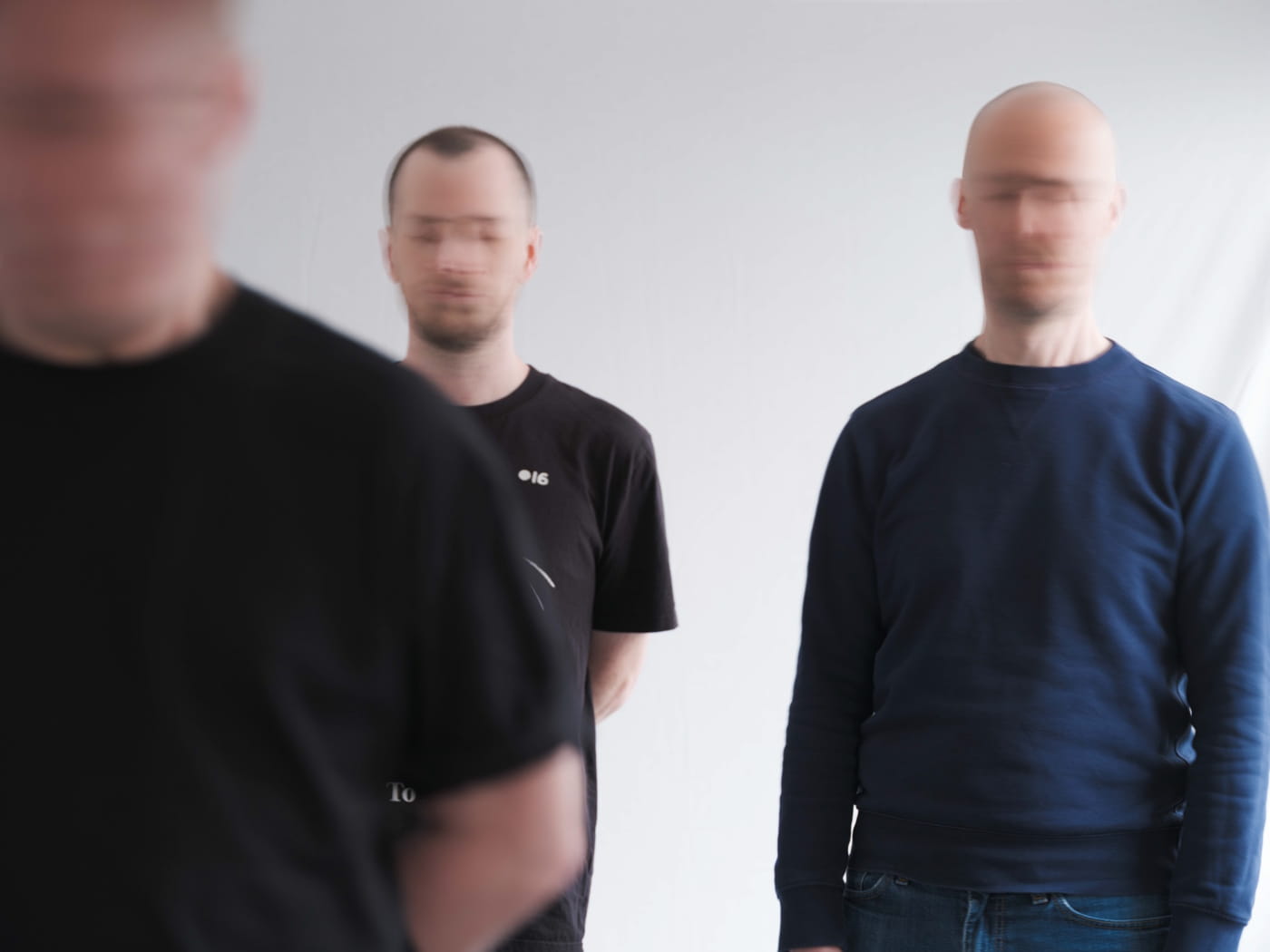
The economics of a Sinecures record come down to this: one bottle of premium tequila per recording session, two sessions, a local Newcastle venue, and Graham Thompson handling the recording and the mix himself. The only real money went on pressing the vinyl. “We all work and being in a band is a time and financial commitment that sometimes seems a bit ridiculous,” says Paul Dolan, who writes most of the songs and sings them. “Brace”, the trio’s debut, is out today on limited vinyl and digital through sinecures.bandcamp.com.
For fans of Unwound, Shipping News, Slint, Enablers, Fugazi and Shellac.
Sinecures are Dolan (also of Knots), Thompson (Ballpeen, Jimmy Floyd Hasselbaind, OZO, Jinn, Grace) on bass, and Shaun Danielson (Jimmy Floyd Hasselbaind) on drums.
Thompson and Danielson have played together for years, and that shared history shows up in how fast the rhythm section can move. “Having played together for many years in our previous band, we have a very good understanding of what the other person may play, what to play along with them that compliments their parts and also to suggest parts to play with no bruising of any egos,” Thompson says. “It allows writing and rehearsing to happen at a pace and has proven to be productive.”
That speed is one half of how the band works. The other half is Dolan going home and grinding. “We have a definite ‘rapid prototype’ approach to songs where, somewhat amazingly to me, Graham and Shaun tend to immediately come up with parts on the spot,” he says. “I need to go home and repetitively work on parts until I’m happy with them. I do fantasise about having a week of rehearsing and writing together but we’re just too busy.” Dolan brings riffs and structures in, then watches them get pulled apart in the room. He didn’t always plan it that way.
Wyświetl ten post na Instagramie
“In the early days I think Graham and Shaun thought I was going to lay down each song note for note and be pretty dogmatic about it, but I’d prefer the songs to coalesce through discussion and experimentation,” he says. “The song dynamics emerge through a discursive process. We all pull the structures, textures and dynamics towards our individual preferences and references.” He calls it a democratic process, and says the conversations usually improve the songs in ways he wouldn’t have reached on his own.
The guitar work runs on open tunings, which Dolan treats less as a shortcut and more as a search. “Using open tunings forces me to relearn chord shapes and note relationships. I think of it like a process of mining. Sometimes you find a rich seam of unusual melodies within a certain tuning,” he says. “Some tunings like FAEGAD sound unusual and beautiful but become one trick ponies that are difficult to extract songs from without them sounding too similar.” His reference point for doing this well is Enablers: “I love the way Joe and Kevin from Enablers approach this. Each new album seems like a distinct step forward in carving out unusual melodies without repeating themselves.”
Wyświetl ten post na Instagramie
The vocals were the hardest part to settle, mostly because Dolan doesn’t enjoy doing them. “I don’t enjoy the process of singing or shouting. It feels massively exposing and vulnerable to me. I’ve never had a conventionally good singing voice, but I’ve learned to find a way to use my voice that feels authentic to me,” he says. The two modes on the record have clear ancestry. Quieter passages lean on Slint and Seam. The shouting comes from somewhere older: “full on shouting that comes from a lifetime of absorbing Fugazi and Unwound. The music always comes first and dictates what kind of delivery I take.”
Lyrically, “Brace” carries Dolan’s day job into the songs. He works as an artist and professor researching big tech infrastructure, and those ideas end up bleeding into the writing. He used to favour something more cryptic. “I quite like the smart ass and opaque lyrics of North of America, These Songs are Cursed and The Sepultura especially, but with this band I’ve found the lyrics to be more direct and probably a bit easier to work out a context for,” he says. “I think that’s a natural reaction to the urgency of our current political climate. Overly cryptic lines feel kind of disingenuous and inappropriate to me at the moment.”
Where the band fits next to everyone’s past projects is a question Dolan answers with characteristic flatness. Thompson, he reckons, has the widest range, moving between post-hardcore, indie-rock and heavier experimental output. Dolan’s own lane is narrower by choice or by limitation, he isn’t sure which. “I tend to write the same type of music. I don’t tend to intellectualise it or plan how songs will sound, they just arrive sounding like this. This is most likely a skill issue. I’m self-taught and know next to nothing about music theory.” The variety, for him, comes from the tunings: “The overall music may sound similar to previous bands but from my perspective, I’ve generated different permutations and combinations of riffs.”
Newcastle shapes the band as much by what’s missing as by what’s there. A couple of promoters have recently stopped putting gigs on, squeezed by costs and thin audiences, and Dolan has been partly out of the scene while starting a family, which left him feeling disconnected. The city can feel cut off from other UK music hubs, and the band travels to Leeds fairly often to catch shows at The Brudenell. He still rates what’s around him: The Last Path, Onlooker, Shan, and Irked, who have just put an album out on Wrong Speed Records. “I like how friendly gigs are Newcastle, even if they have smaller audiences,” he says.
Some songs didn’t make it. A few were cut to fit two sides of vinyl at proper quality, others because the appeal of playing them ran out. “Some songs take ages to write and perfect, but then once you finish them the joy expires from playing them,” Dolan says. “If a song feels like that, like it’s more of a product of a logistical process, then they are easier to discard.” The three of them rarely agree on favourites, which leads to a lot of discussion. The band name alone took close to a year.
For Dolan, finishing a song is partly a discipline against himself. “I quite like thinking of songs as networks of components that can still retain an overall sense of coherence even with minor subtractions or additions. I have a tendency to continuously second guess myself and change things however, so it’s necessary to fix things in place and move on.” Once they’re fixed, they stay fixed. There’s very little difference between how Sinecures play in the rehearsal room and how they play live.
🔔 IDIOTEQ is ad-free, independent, and runs on one person’s time. If you want it to stay that way: DONATE via PayPal 𝗈𝗋 SUPPORT via Patreon.
Stay connected via Newsletter · Instagram · Facebook · X (Twitter) · Threads · Bluesky · Messenger · WhatsApp.