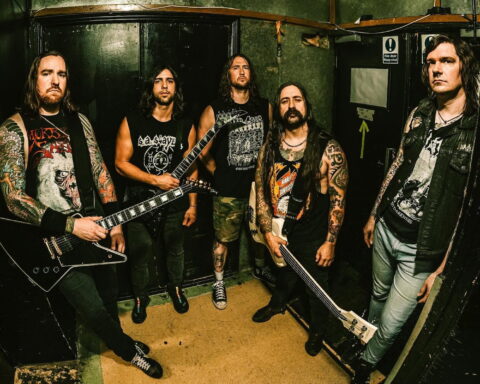


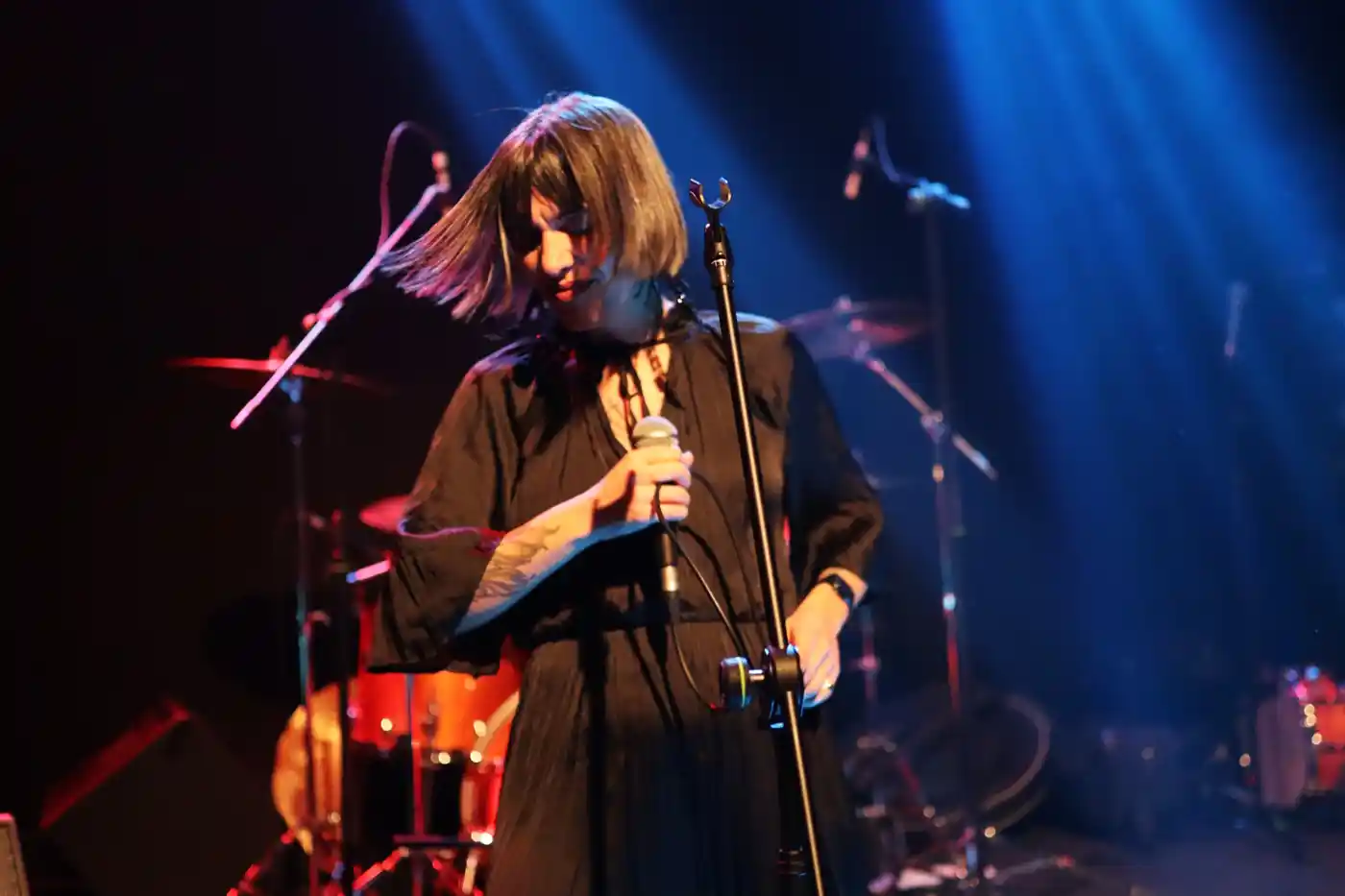
The Bandcamp page for Volynka’s second album opens with a satirical dictionary entry. “Staycation,” noun, two readings: voluntary confinement when there’s no money for a real vacation, and mandatory confinement imposed by law, “oftentimes applied on a massive scale as a measure against disasters such as war, energy shortages, famine and others, by those responsible for bringing them about.” The Athens four-piece styled it after Ambrose Bierce’s Devil’s Dictionary. Bitter, dry, the kind of joke that stops being funny halfway through.
It also reads as a compressed thesis on the years that made the record.
“Staycation” lands three years after Volynka’s 2022 self-titled debut. In that gap, the band took itself more seriously than it had to that point. The first record came out without a label, without a vinyl plan, with almost no press push beyond a few Greek music sites, and the band routinely showed up to gigs with no merch table.
Guitarist Kostas recalls the early stretch without much sentiment. “It was the consistently good feedback that we were getting after people watching our shows that pushed us to make a better second record,” he says.
To get there, the four of them went back to school in different ways. Kostas finally took guitar lessons. Vocalist Kalli began learning the Saz, a long-necked lute from the Middle East and the Balkans, in order to deepen her grasp of musical theory. The band rehearsed tighter. The songs that ended up on “Staycation” reflect that, particularly “Pleasurable Hearts” and “Painfully True,” which were the first time Volynka let the songwriting get genuinely complex.
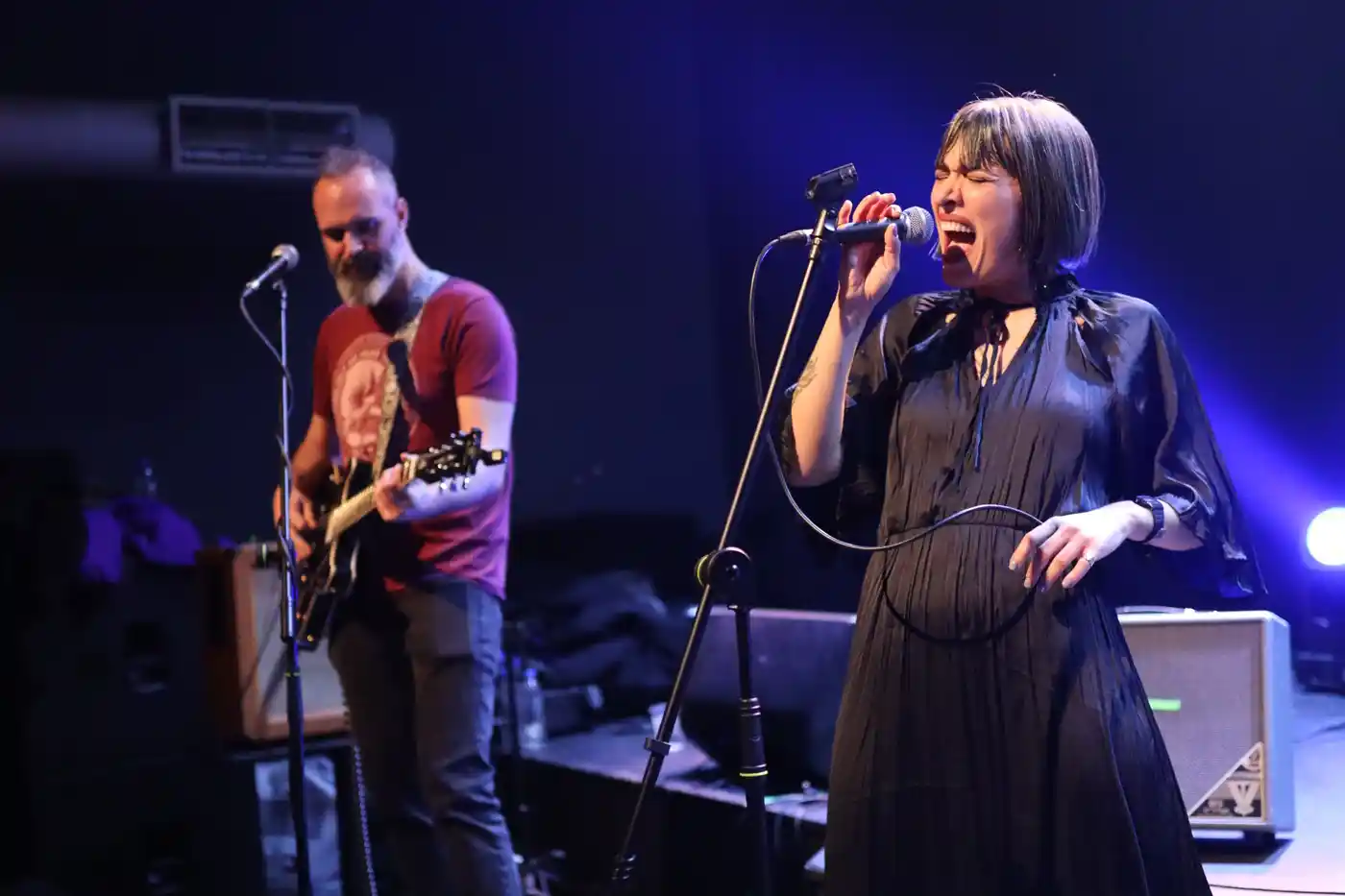
The band’s origin story goes back to 2017 and a chance run-in between Kostas and his old drummer Sakis. The two had previously played together in a crust outfit called Process of Decay, with Kostas on vocals.
After Process of Decay ended, Sakis pushed Kostas to pick up a guitar instead, despite him having no formal training. “He insisted that he liked some riffs he had heard me play, that we should mess around and see what comes up,” he remembers.
Bassist George came in next, a punk and crust listener with actual music school behind him. Kalli was the last to join, and the only one who had never been in a band before. She had been more drawn to Balkan and Middle Eastern traditional music, but she had once asked Kostas, half-joking, “when are WE going to start a band?” He’d noticed her singing voice. He called her.
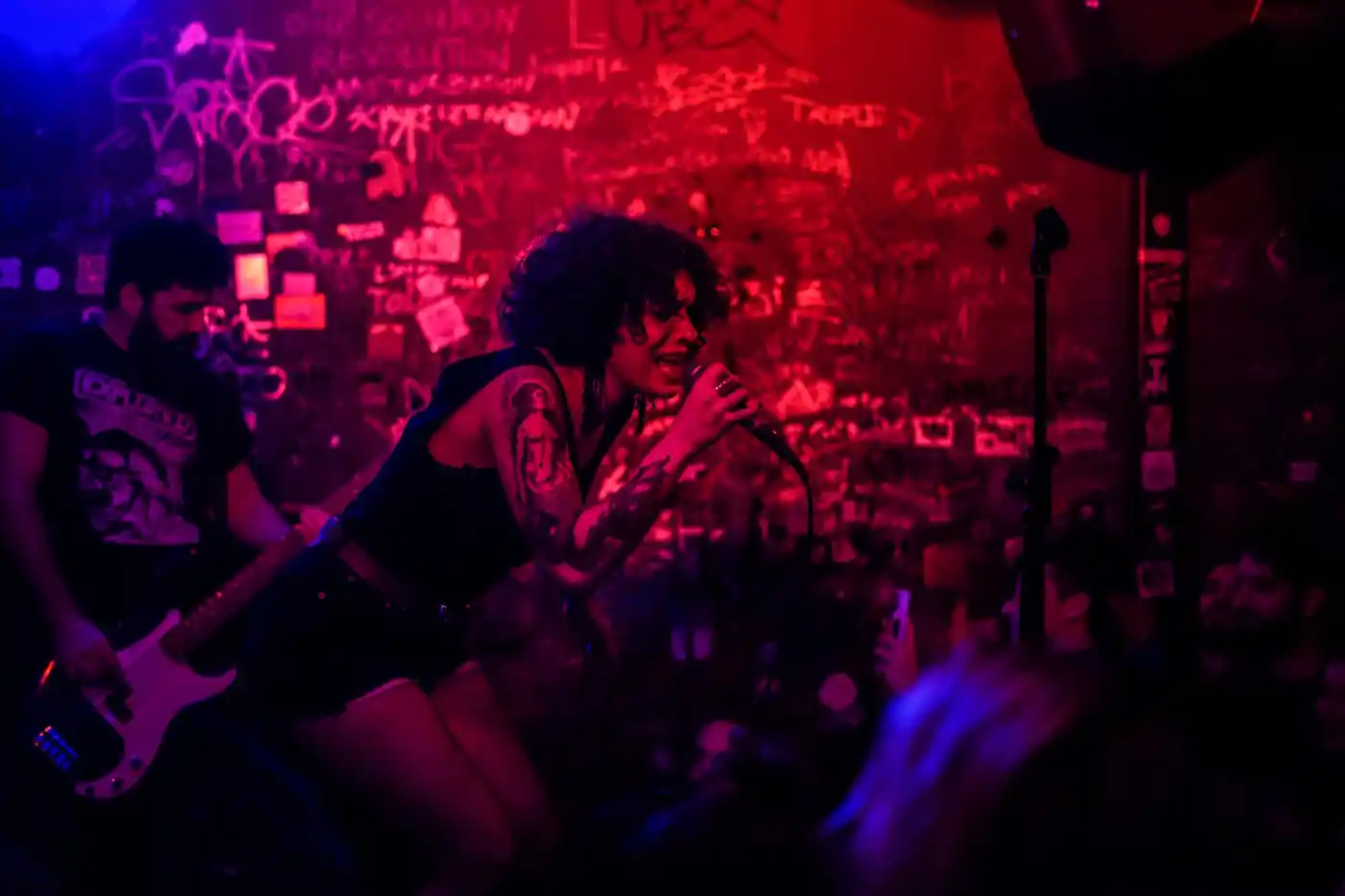
The four of them shared a generational vocabulary that ran underneath whatever they were listening to in 2017. “We were all born in the 80’s and therefore grew up listening to the big ’90s stuff such as Nirvana, Offspring, Rage against the Machine, Alice in Chains, PJ Harvey,” Kostas says. “That was our common musical vocabulary, our common ground.”
The quiet-melodic-to-heavy dynamic the band later codified comes from there, with the loud-soft structures of Nirvana and Alice in Chains crossed with the crust dynamics of Amebix and Fall of Efrafa. For the wiry, tense parts, Kostas reached for the post-punk guitar lineage of John McGeoch (Magazine, Siouxsie and the Banshees) and Geordie Walker (Killing Joke). For the heavy hits, he reached for Sabbath. Rehearsals ran weekly. Everyone arrived early to chat and ended up entering the practice room late anyway.
The band’s current drummer Alex came in after Sakis left, bringing a different ear: Led Zeppelin, funk, danceable rhythms. The lineup change opened up a more aggressive rhythmic register, and the rest of the band stepped up to match it.
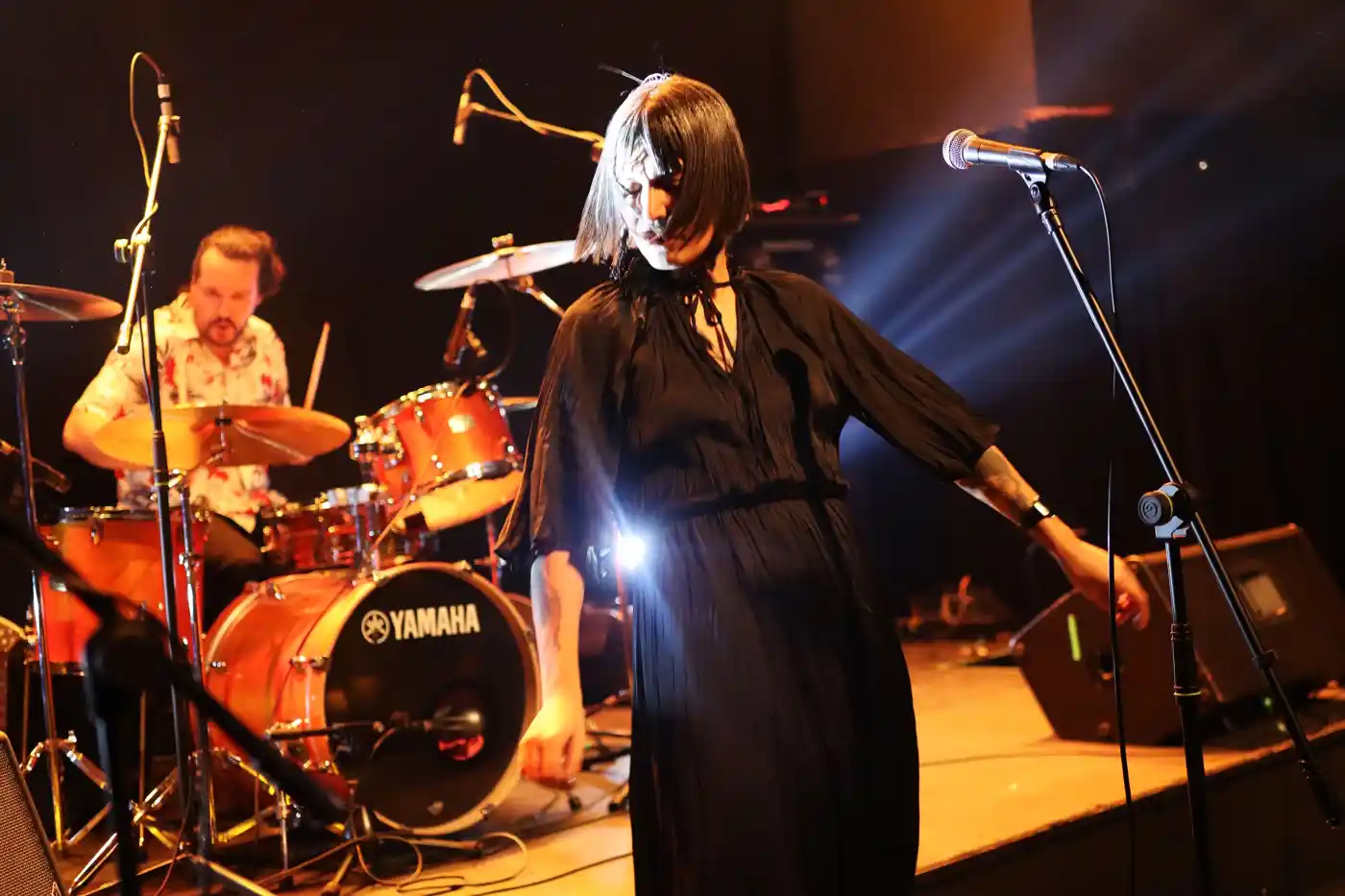
The “Noise ‘n’ Roll” tag arrived in 2022, accidentally, after the band’s first live show. They had spent the lockdown years rehearsing and recording the debut, and when someone needed a genre description they had been using “alt. rock” because it described everything and nothing. Then they opened for the antifascist black metal band Yovel and the extreme metal band Zakula, and a journalist covering Yovel’s release night reviewed the support sets.
He wrote that Volynka “vigorously presented their alt-rock material, which included many post/noise outbursts. Despite their alternative nature, they managed to convey an exciting rock ‘n’ roll feeling.” The band liked the phrasing. “‘Noise ‘n’ Roll’ kind of sums it up so we stuck with it instead of using a post-this-post-that experimental whatever cliché railroad every time,” Kostas says. He’s quick to acknowledge the tag is arbitrary.
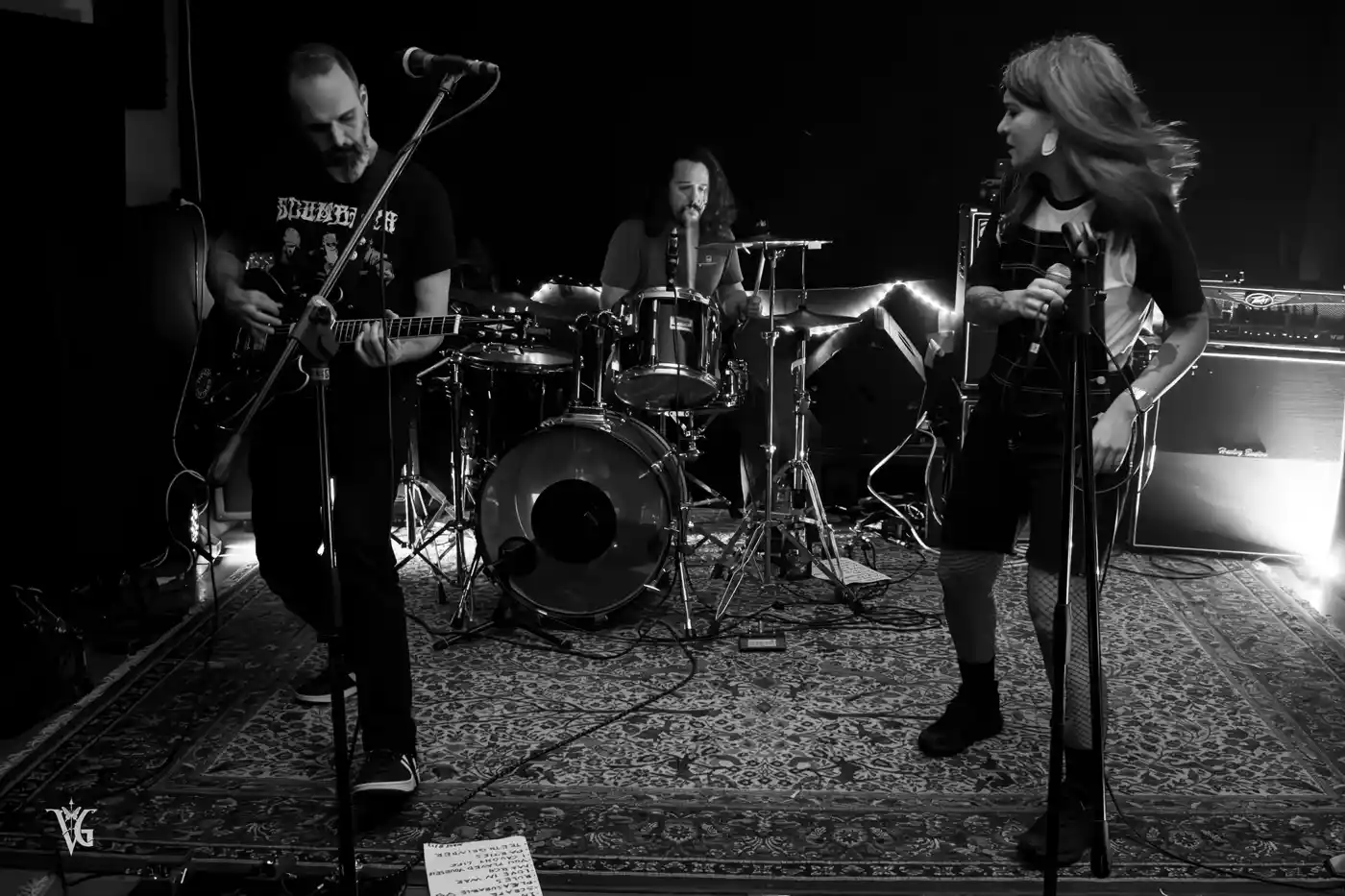
“We don’t push back against being classified as post-punk, grunge, no-wave or whatever anyone wants to call us, but we don’t play just one of these things because we never intended to emulate one specific style in the first place.” He’s also happy the journalist clocked the “roll” half, which Kostas traces to a love of garage, surf and protopunk. He points to “Second Best” and “Parties” as examples.
On “Staycation,” all of that holds across most of the record’s run. Kalli’s voice carries the phrasing instinct she picked up before Volynka, shaped by traditional Balkan singing, applied here to lyrics about late-thirties love and city-level fatigue. The guitar work circles around McGeoch-style spiked figures that fall, without warning, into Sabbath-weight slabs.
Alex pushes the rhythms past straight punk, with a swing that occasionally lands closer to dance music than to hardcore. The whole thing has the low end of a band that’s spent a long time with Fugazi records, and the spike of post-punk women who broke open what punk could mean in the late 70s. There’s room in it for melody. There’s also a lot of room for the room itself, the kind of recording that lets you hear the air around the snare.
Wyświetl ten post na Instagramie
Fugazi are, by Kostas’s account, the cornerstone. “They have inspired so many people on so many levels, us as well,” he says. “They showed that you do not have to conform to anything.” He’s careful not to overclaim. “Maybe I don’t like every record they ever made, and maybe we lack their conviction to do the things they did. But one thing is certain, if there is a band that deserves admiration for their music, their ethos and their consistency, it’s them.”
From there he lists Au Pairs as part of a wider lineage of late-70s post-punk women who pushed at punk’s edges: Lene Lovich, X-Ray Spex, Siouxsie and the Banshees. Cable Ties and Gouge Away pick up the same lineage in the present, and the fact those bands exist at all reads to him as proof that thought-through lyrics still find an audience. “They are part of the above lineage that extends to this day,” he says. “They are proof that you can still write thought-provoking lyrics, strum away with soul, and people will care about it.”
What’s around the songs is also context. The band’s individual lives between 2022 and 2025 were, Kostas says plainly, in turmoil. They started Volynka in their early thirties for fun and were suddenly looking at gray hair. Athens kept getting more cramped, more touristed, more expensive. “Choices were made under stress, not always the right ones,” he says. “It carries a bitterness about what could have been, and anxiety for what will happen, both in the lyrics and in the music.”
Lyrically, Kalli wrote “Pleasurable Hearts” and “Painfully True,” both about recognising patterns in how love gets handled, your own and other people’s. “Rules,” “Love in War,” “Scrape” and “Second Best” sit in the same orbit, and together with Kalli’s two songs they account for more than half the record. Kostas ties the cluster back to the album’s wider concern: “people don’t treat each other very well, even in the most intimate relationships. Unfortunately, maybe that is because in a world in which you feel powerless, those closest to you become the easiest targets.”
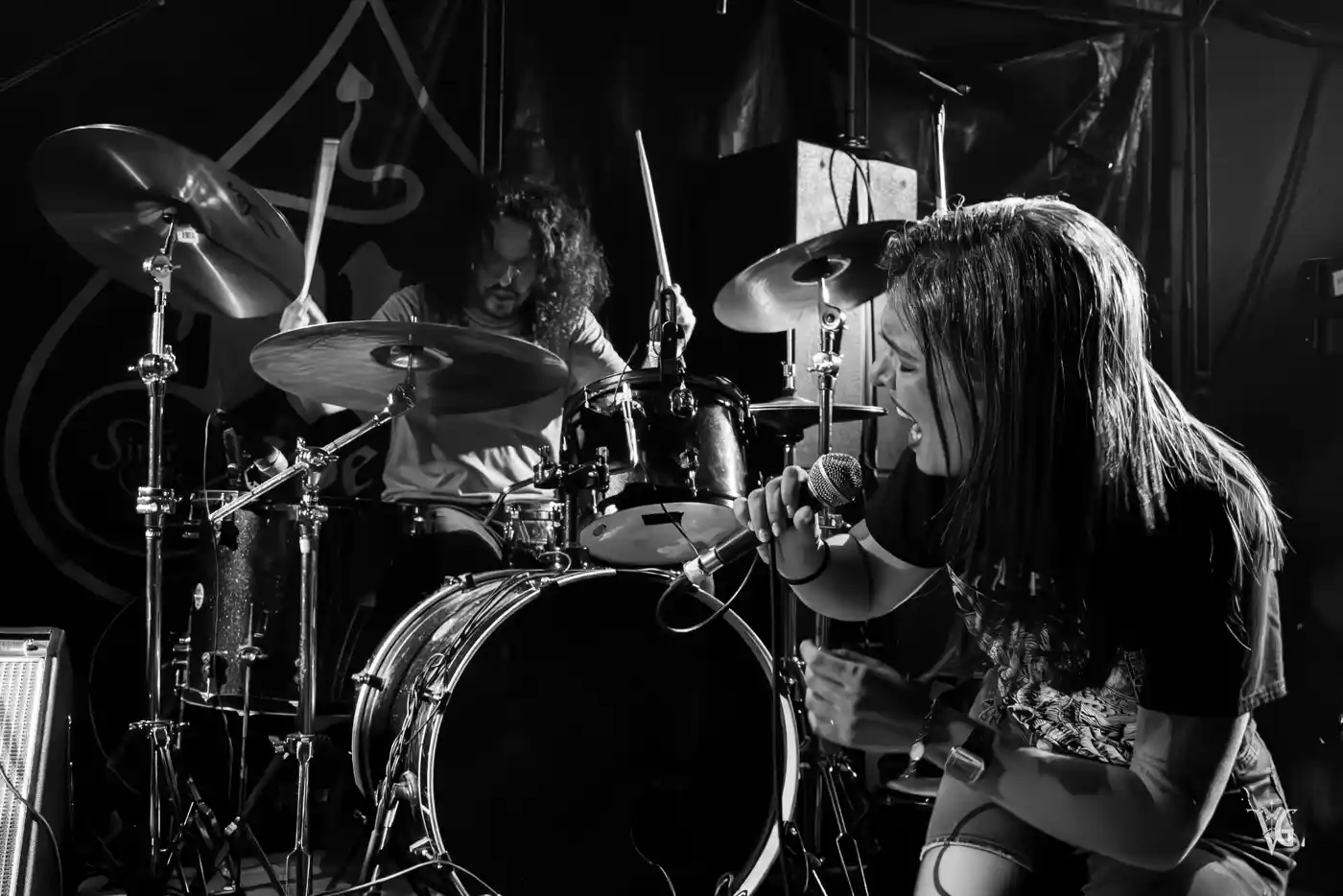
“Teeth Grinder” is the band’s own favourite. It’s about the anxiety of just living in Athens, drawn from everyday conversations between four people who have spent their entire lives in the same city. “Dadaoism” turns toward social media, where everyone performs everything and every contradiction becomes content. The title fuses dada poetry’s nonsense with the Daoist comfort that contradiction is what people are. “Scrape” is about removing the residue of people who pull the worst out of you. “The Machine” closes the record on the fragility of being human.
The press one-liner around “Staycation” leans heavy. “Post-lockdown trauma that remains unaddressed while we collectively as a species become increasingly deluded and aggressive day by day,” it reads. Asked whether that’s blunt, Kostas pushes back on the word. “I respectfully disagree that our statement is blunt. It’s a mere observation of what is happening. Blunt was the transfer of wealth from the many to the few that culminated during the lockdown ‘staycation.’ Blunt was the war in Ukraine and the genocide in Gaza that came immediately after. Blunt is the fact that prices rise and wages do not, for most people around the world.” He’s careful here, too. “Although we are not a militant band and we were not formed to preach any certain ideology, we refuse to remain apathetic. Our music and lyrics therefore aim to convey the feelings of those that notice what is happening around us. Rather than give answers, we are asking ‘does this feel right to you?'”
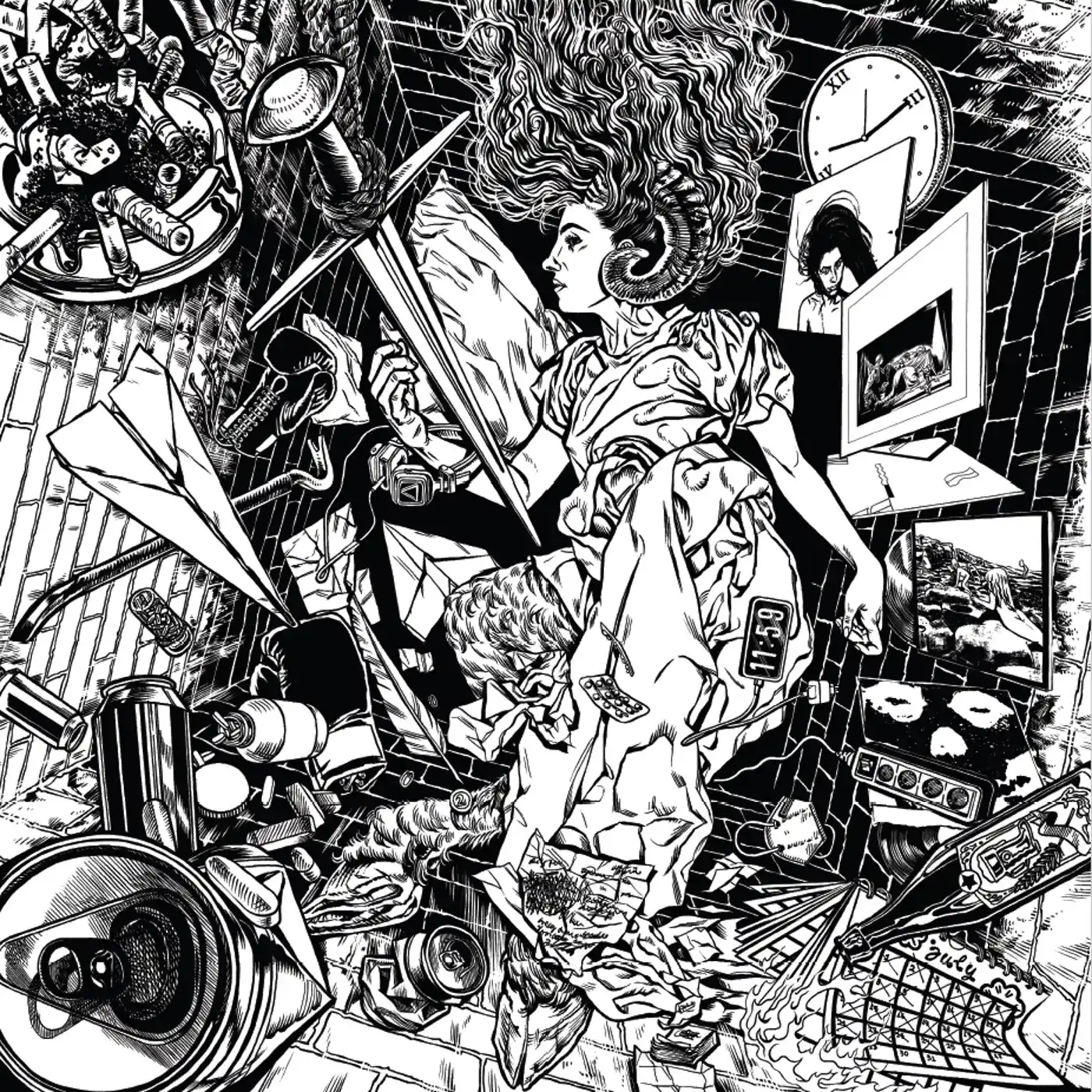
The cover art is by Athens illustrator Raphaella Koni. Volynka met her at a 2023 comic book festival, saw her drawings, and decided then that she would do the next album. When half the songs were ready, the band sent her demos, brought her to shows, and traded sketches with her for the better part of a year. The final image arrived as a draft they fell in love with. Koni isn’t on a collaborator footing anymore, Kostas says. “We now consider her a friend.”
Wyświetl ten post na Instagramie
The recording happened at Matrix Studio in Athens across spring and summer 2025, with Dimitris Misirlis as engineer. Kostas had met him while jamming at the studio with other friends, and the rapport carried into the sessions. “He respected our decision to maintain the more abrasive sound that resembles our live performances but also paid attention to every small detail,” Kostas says. George Christoforidis mixed and mastered the record at Ignite Studio, also in Athens.
“Staycation” is out now. Available on Bandcamp, Spotify and the artist-owned platform Subvert.
🔔 IDIOTEQ is ad-free, independent, and runs on one person’s time. If you want it to stay that way: DONATE via PayPal 𝗈𝗋 SUPPORT via Patreon.
Stay connected via Newsletter · Instagram · Facebook · X (Twitter) · Threads · Bluesky · Messenger · WhatsApp.