
Every song on “Collecting Sentiments of a Derailed Past” had been written, recorded, mixed and mastered before Russ Weisenthal’s mother died around the Fourth of July in 2025. The album title and track names were already fixed. The record was not written in response to her death. What changed was Russ’s ability to continue with music, and later, the meaning he found in songs that had already been completed.
Promotion stopped immediately. Russ stepped away to concentrate on his family and his own mental and emotional health, unsure whether he would return at all. The finished album remained unreleased for close to a year, until he could engage with it again without the weight of that period becoming paralysing.
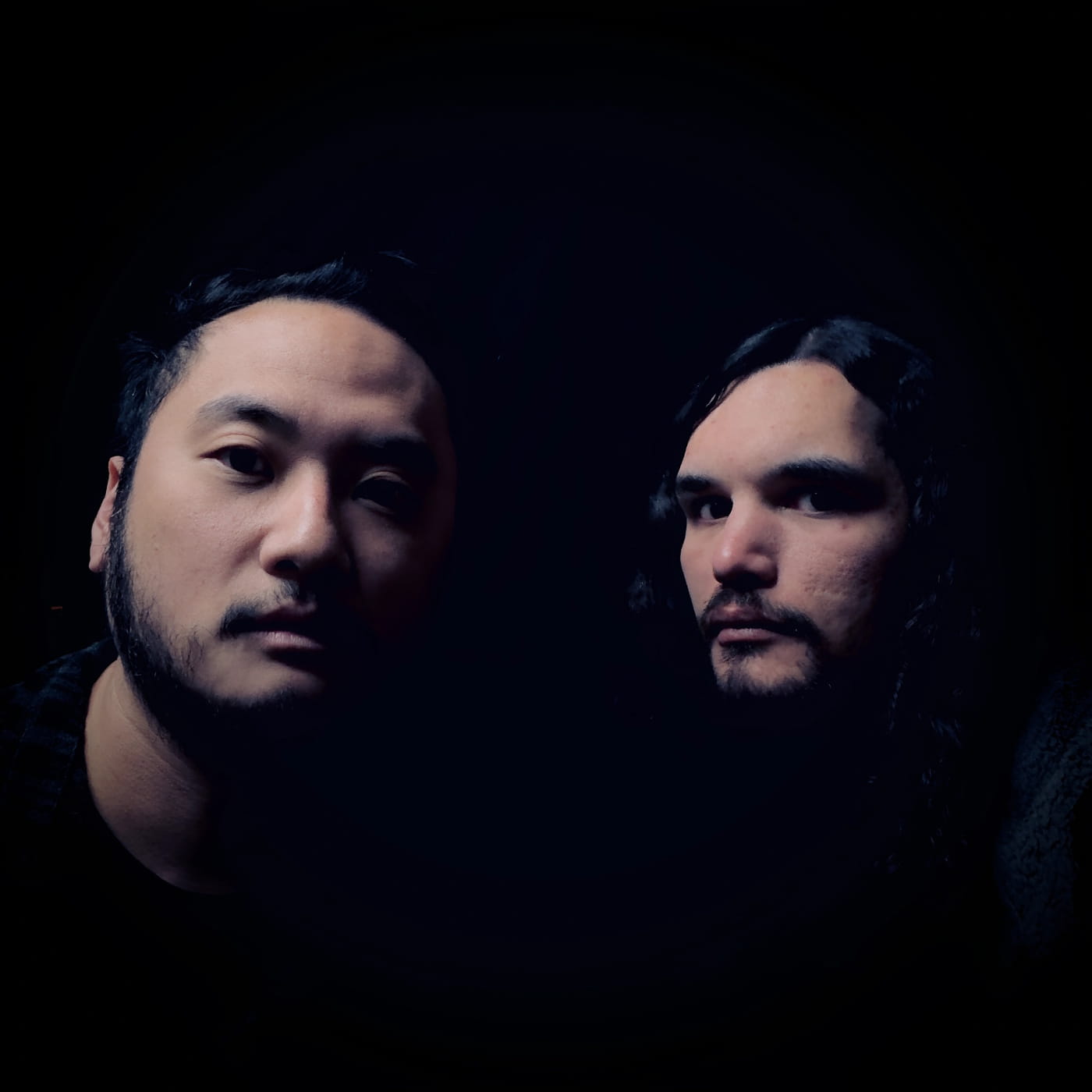
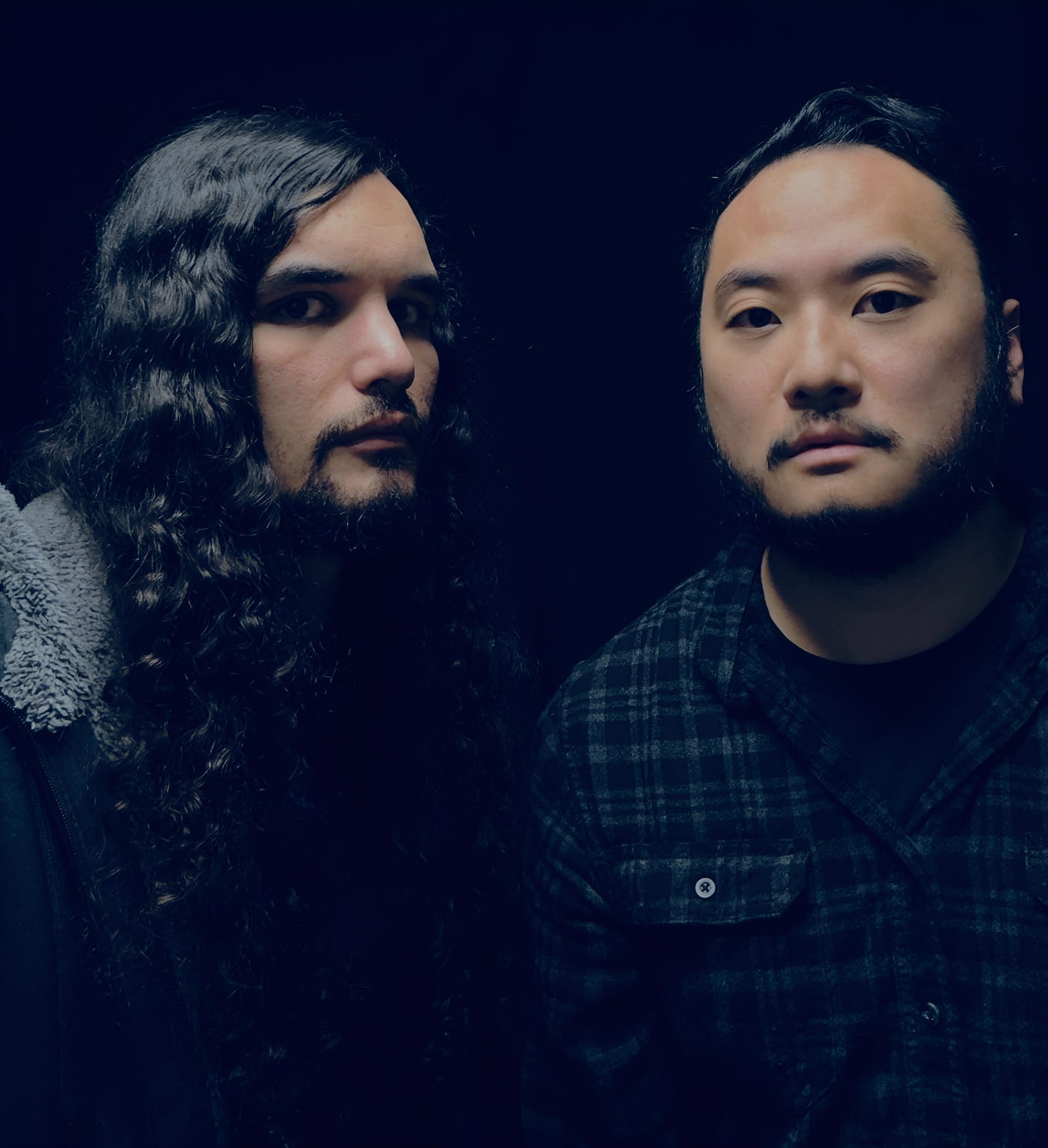
Released on July 24, 2026, “Collecting Sentiments of a Derailed Past” is the second full-length from Southern California instrumental band The Mantra Discord. Jeremy Arcibal handles drums and programming, while Russ plays guitars, bass and keys. The two have worked together in different bands since 2008 and formed The Mantra Discord in spring 2021.
Their first album, “Relapse Into Silence”, arrived in September 2022. When we last spoke with The Mantra Discord in 2024, they had followed it with “The Lost Widow”, an EP that moved away from the progressive and math-rock structures of the debut towards longer builds, quieter sections and a tighter post-rock focus.
Tracks including “We’ll Find the Light in Darkness”, “Reach”, “Resting for Oblivion” and “Watching the World Fall Apart Together” became the groundwork for the new album. Jeremy remained drawn to songs that take their time before revealing their full shape. Russ felt the band had found a direction on “The Lost Widow” that they had not yet taken far enough.
That approach runs through the new record, but each piece handles it differently. “Images in Raindrops” began with a few guitar chords and quiet leads before Edoardo Gastaldi added piano at the opening and violin through its middle section. Its title came from Russ’s partner at home, and the track now holds a more personal place for him because of everyone involved in completing it.
“An Elegant Descent” removes drums and beats completely, leaving the guitars to carry the piece on their own. Rhubiqs brings piano and ambient detail to “Eternity Erased“, while “Vanishing from the Mountains: Part II” closes the album as the fastest and heaviest song the band have recorded.
Taylor Deupree mastered the record, and Derrick Lin mixed its guitars. Derrick had previously worked with The Mantra Discord on “We’ll Find the Light in Darkness”. Russ credits Taylor, Derrick, Edoardo and rhubiqs with helping the album keep its identity during the long period when he had stepped away from its release.
The artwork developed separately from the music. Samitha Perera, who had worked with the band before, received only the album title. He was not sent the songs or given a detailed explanation of what they meant.
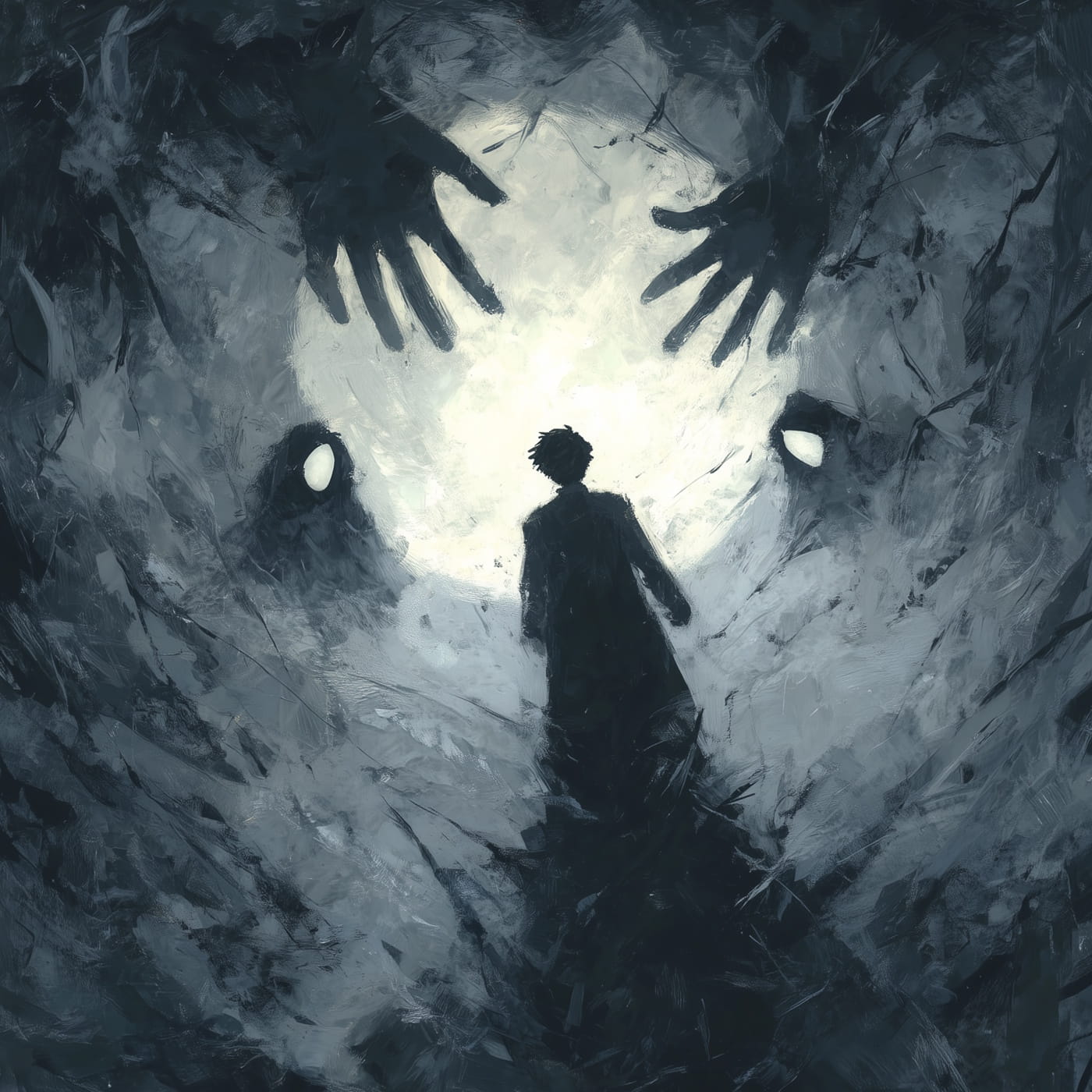
His painting places a lone figure walking towards light while hands and ghostly eyes remain in the darkness behind them. The band connected the image with memory, regret, loss, trauma and the parts of the past that continue to follow someone even as they try to move on.
Neither the artwork nor the album’s titles were created in response to Russ’s loss. The timing was coincidental, but the year between completion and release changed how both members understood what they had made.
Russ now hears “Images in Raindrops” through the people who contributed to it, while the drumless “An Elegant Descent” came to represent the stillness he needed during that period. Jeremy found that the distance gave him a greater appreciation for the songs without changing what they originally meant to him.
The July 24 release date, landing only a few weeks after the first anniversary of Russ’s loss, was not planned around it. Jeremy was prepared to wait for as long as Russ needed. The date was not planned around the anniversary. Jeremy was prepared to wait for as long as Russ needed, and the release was scheduled only when Russ felt ready to share the album.
The closing track also gives a clear indication of what comes next. The Mantra Discord will remain instrumental, but both members want to draw further from their metal backgrounds, using more distortion, faster passages and heavier dynamics without abandoning the slower writing that shaped their recent work.
“Vanishing from the Mountains: Part II” was placed at the end of the album for that reason. It closes the album while pointing towards the heavier writing they want to pursue next.
Read the full interview below for the year-long pause, Russ’s gradual return to music, the collaborators who helped complete the album, Samitha Perera’s cover painting, the older songs that shaped the record and the heavier direction already signalled by its final track.
Wyświetl ten post na Instagramie
Sitting on a finished record for close to a year while grieving is its own strange thing. How did the waiting change how you hear the album now, compared to when you finished it? Are there songs that mean something different to you now than when you wrote them?
Russ Weisenthal: Sitting on a finished project while navigating a period of profound personal loss has been a complex, transformative experience. In many ways, that year-long gap acted as an emotional anchor of our music. When I finished the record, it was a finished, polished body of work and I was ready to share it with the world. But after my mother passed away last summer, the music stopped being just content and became a sonic landscape of my own mourning.
The promotional side of things came to a complete halt because I simply didn’t have the bandwidth to engage musically. That silence allowed me to re-enter these songs months later not as a composer, but as a listener, and the feelings of certain tracks shifted entirely.
The collaboration with Edoardo Gastaldi on “Images in Raindrops” has taken on a sanctity that transcends the music itself. It started as an unfinished idea, just a few guitar chords and some quiet atmospheric leads that never quite felt complete. I sent it to Edoardo to see where he might take it, and what he sent back completely changed the track. The subtle textures he added seemed to weave throughout the composition and really gave the song a depth and sense of movement it had been missing. It felt less like adding parts and more like uncovering what the piece was always meant to be.
I felt it was essential to place this as the second track. It acts as the album’s emotional heartbeat, setting the tone for the journey to come. It wasn’t just the creative process behind it, but even the title feels like a very personal shared experience for me, as my partner at home contributed the track name, which adds another layer of intimacy to the piece. Listening to the track now, I don’t just hear the music, I feel the beauty of everyone who contributed to it and all the moments, challenges, and experiences that shaped its creation. It remains one of my absolute favorite tracks on the record, both for what it is and for what it represents.
Similarly, “An Elegant Descent” evolved from being a structural, ‘flowy’ change-of-pace track into a deeply introspective anchor. Stripped of drums and beats, it now serves as a conduit for the stillness I needed to embrace during my grieving process.
You mentioned needing to step away completely, that you didn’t think you had it in you to continue music. What did coming back look like? Was there a specific moment that shifted, or did it happen gradually?
Russ: The return was not a sudden epiphany, it was a slow, deliberate process of recalibration. Because the album was already finished, I wasn’t fighting a creative block, I was dealing with a profound shift in my reality. I needed to step away from the business realm of music entirely to focus on my family and my own mental and emotional health.
Coming back wasn’t about forcing myself to start something new, but rather reaching a point where I could engage with the music I’d already made without the emotional weight being paralyzing. It happened gradually. It wasn’t until I had the space to reflect on the loss that I could finally see the album for what it was and not just a release, but a document of a time in my life that I needed to try and honor.
Ultimately, I realized that while it’s vital to allow yourself the space to grieve, life doesn’t stop. You have to find a way to move forward. It’s important to grieve, but it’s equally important to keep going.
When I finally decided to move forward, it wasn’t because I felt “recovered” but because I felt ready to let this music exist in the world as a part of that healing process. It taught me that you don’t have to get back to normal right away, you just have to find a way to let your work and your grief occupy the same space.
The titles and songs pre-date the loss, but the record is only being released now. Does that gap change how you talk about these songs?
Jeremy Arcibal: I personally still enjoy these songs just as much as I did a year ago. While they’ve been with us for some time, I don’t think that has changed how I feel about them. If anything, having that distance has given me a greater appreciation for what we created and allowed me to hear the songs from a different perspective. Every time I revisit them, I notice something new or reconnect with the emotions that inspired them in the first place. Even though time has passed, I feel the music has remained true to what we wanted it to say, and I’m excited that people are finally going to have the chance to experience these songs for themselves.
Russ: It definitely shifts the language I use when discussing them. When I wrote these tracks, they were expressions of a certain emotional state, but I couldn’t have known how prophetic or moving they would become in the wake of my mother’s passing.
The gap between creation and release has turned the album into a time capsule. While the titles and compositions are fixed in the past, their emotional resonance has only deepened. I no longer view them as just a collection of songs I produced, I hear them now as a narrative that I am only just beginning to fully comprehend. They’ve transcended their original intent, and even though they were written before my loss, they feel more urgent and more emotionally compelling to me now than the day I finished them. They are no longer just music, they are a record of where I was, and a reflection of where I’ve had to go.
You mentioned collaborators who helped bring it to life. Who mattered most, and how did they show up during that stretch?
Jeremy: Honestly, everyone we’ve had the opportunity to work with has been a tremendous help in shaping what we’ve created so far. I truly appreciate anyone who is willing to invest their time, creativity, and experience into helping us bring a track to life. Collaboration is always a chance to learn something new, whether it’s a different perspective on songwriting, production, or simply approaching music in a way we hadn’t considered before. Those experiences have helped us grow not only as musicians but also as songwriters. We never take that support for granted, and we’re incredibly grateful to everyone who has been part of our journey. Each collaboration has left its own mark on our music, and I think that’s something listeners can hear in the evolution of our sound.
Russ: Every collaborator on this project was essential. They didn’t just contribute technical skill, they contributed a part of themselves to the vision. When you’re creating something this personal, the process requires a deep level of trust, and I was incredibly fortunate to work with people who truly understood the weight of what we were building.
There were specific pillars that made this possible. Taylor Deupree was instrumental in mastering the record, providing the final polish that brought everything together. I also have to highlight Derrick Lin, who mixed all the guitars. We’ve worked with Derrick in the past, and his consistent ear for detail and his understanding of our sound was a massive anchor for us throughout this process.
Then there were the pieces that added entirely new textures. Edoardo Gastaldi provided the piano at the beginning of “Images in Raindrops” and some incredible violin work in the middle. He was someone we had been wanting to collaborate with for a long time, and he exceeded all expectations. Additionally, working with rhubiqs on “Eternity Erased” was a major moment for us as he brought a completely new ambient and piano element to our sound that I think really pushed the band into new territory.
In many ways, these collaborators served as the architects of the music during my time away. Knowing that the foundation they helped me lay remained intact gave me a sense of security. They didn’t just show up and lay down some tracks, they helped cultivate an environment where vulnerability was encouraged. I view this album as a collective effort, and I’m deeply grateful that they were there to ensure these songs kept their integrity and their heartbeat.
Release timing lands only a few weeks after the one-year mark. Coincidence, or a call you made?
Jeremy: As far as I know, it was genuinely a coincidence. Losing a parent is one of the hardest things a person can go through, especially when they have been such a significant part of your life. There was never any pressure from my side to release the album by a certain date. I was willing to wait as long as Russ needed until he felt ready, because some things are far more important than sticking to a schedule. At the end of the day, I wanted the music to be released when it felt right for both of us, and I think that was the most important decision we could have made.
Russ: I’ve come to realize that the alignment feels almost fated in retrospect. I didn’t set out to target a specific anniversary as my focus was simply on getting to a place where I felt ready to share this music again.
When we were looking at the calendar and determining when to put this out, the date just felt right in a way that’s hard to articulate. It wasn’t a strategic move, it was more of an intuitive landing. After the year of processing and silence I’ve been through, it feels appropriate to release this now, as I’m finally entering a different chapter of my own life. Perhaps there was a subconscious part of me that knew this music needed to find its home just as the weight of the last year began to shift.
The “new era for The Mantra Discord” description. What does that actually look like? What changes, what stays, what are you carrying forward and what are you leaving behind?
Jeremy: First and foremost, we will always remain an instrumental band. While we may continue exploring cleaner, softer, and more atmospheric songs, the possibilities for where we can take our music in the future are endless. That being said, where we are currently as a band, we have been focusing more on creating heavier tracks with distortion and intensity. Since we both come from a metal background, we feel that this side of our sound is something we can naturally showcase while still maintaining the emotional depth and atmosphere that defines The Mantra Discord. We are excited to continue evolving, experimenting, and creating music that captures both the heavier and more melodic sides of who we are.
Russ: This new era is really about a transition from the ethereal to the visceral. We’ve always leaned into those darker post-rock and ambient textures, but we’re finding ourselves increasingly drawn toward the gravity and intensity of post-metal. It feels like the right evolution for our sound not a departure, but a deepening of the darker currents that have always existed under the surface of our music.
This definitely means we’re allowing ourselves to explore heavier, more abrasive dynamics. If our previous work was about creating an immersive atmosphere, this next phase is about pushing that atmosphere to its breaking point. We’re carrying forward that foundational focus on texture and emotion, but we’re leaving behind the fear of being too loud or too intense.
We actually placed our heaviest and fastest track we have done so far “Vanishing from the Mountains: Part II” at the end of this album specifically as a bridge. It’s the final word on what we’ve done up to this point, but it also serves as a deliberate foreshadowing of where we are headed next. It’s the doorway into this heavier, more expansive territory, and we couldn’t be more excited to walk through it.
The album artwork shows a figure walking into light, hands reaching from the dark and ghostly eyes on either side. How did that image come together, who made it and what was the brief?
Jeremy: Artwork is extremely important to us because we view it as an extension of the music itself. We want the visuals to reflect the emotions, atmosphere, and overall feeling behind each song and the album as a whole. Just like the music, the artwork helps tell a story and gives listeners another way to connect with what we have created. We put a lot of thought into making sure the imagery matches the tone and themes of the music, because we believe the visual side of an album can enhance the entire experience and create a deeper connection between the listener and the songs.
Russ: The artwork was created and painted by Samitha Perera, someone we’ve worked with before and have a tremendous amount of trust in creatively. One of the reasons we keep coming back to him is because of his ability to interpret an idea in ways we never would have imagined ourselves. Every time we’ve collaborated, he’s taken something simple and transformed it into something far more meaningful.
Interestingly, the brief for this album was incredibly minimal. We didn’t send him the music. The only thing we gave him was the album title: “Collecting Sentiments of a Derailed Past.” We wanted to see what that phrase meant to him without influencing his interpretation. We felt that if we overloaded him with context, it might limit where his imagination could go. Instead, we gave him complete creative freedom and trusted his instincts.
What came back completely exceeded our expectations. His interpretation felt like it understood the emotional weight of the title without ever hearing a single song. The lone figure walking toward the light immediately stood out to us as someone moving forward while carrying the weight of everything behind them. The hands reaching from the darkness can represent memories, regrets, loss, trauma, or the parts of our past that continue to pull at us, even as we’re trying to move on. The ghostly eyes surrounding the figure add another layer, creating the feeling that the past never truly disappears, it watches, lingers, and becomes part of who we are.
What we love most is that none of those elements are overly literal. The artwork leaves room for people to project their own experiences onto it, just as the album title itself does. Everyone has memories they hold onto, moments that shaped them, and pieces of the past that continue to influence the present. Samitha captured that feeling without needing a detailed explanation from us, and that’s what makes the piece so special.
That’s one of the things we admire most about his work. He doesn’t just create artwork, he responds to an idea and builds an entire emotional world around it. He took a few words, interpreted them through his own artistic lens, and created something that felt bigger than anything we could have described. Seeing his first concept was one of those moments where we immediately knew he’d found something we hadn’t even considered ourselves.
Looking back now, I don’t think the artwork could have been anything else. It feels completely connected to the identity of the album, even though it was born entirely from the title. That speaks volumes about Samitha’s talent, and it’s why we’re so grateful to have collaborated with him once again.
You mentioned older tracks that shaped this record on the way here. Which ones, and why did they matter to you? Do you have any favourite tracks from the new record?
Jeremy: “We’ll Find the Light in Darkness” and “Watching the World Fall Apart Together (feat. Atonalita & Jason Keisling)” are probably two of my favorite tracks we’ve written. I’ve always been drawn to songs that take their time and gradually build, creating a sense of anticipation before everything comes together. I think both of those songs do a great job of capturing that feeling. As a listener, I love when a song feels like it’s taking you somewhere rather than revealing everything at once, and that’s something we try to incorporate into our own writing. People will definitely be able to hear this with our new record.
“Vanishing from the Mountains: Part II” is my favorite track from the new record. I think it’s a good way to end the album and hopefully it leaves a lasting impression on the listeners.
Russ: Our past work acts as a roadmap for where we are now. If you look at “The Lost Widow” EP and our standalone single “We’ll Find the Light in Darkness”, they provided the essential DNA for this new record. We weren’t just creating something new from scratch, we were effectively conducting an autopsy on the themes and textures we established in those projects and deciding which ones to carry forward.
Take our track from “The Lost Widow” EP, “Resting for Oblivion”, for example, it remains, without a doubt, the piece of music I am most proud of to this day. My personal favorite I have ever written as it holds a specific weight for me because of the emotional intensity behind its composition. Originally, we planned for it to be the lead single off “The Lost Widow”, but we made a conscious pivot for our track “Reach” instead. Shifting toward that more ambient, expansive sound was a deliberate choice to create a space where the more delicate, introspective moments could coexist with the darker cinematic post-rock sound we had also developed during that time.
Wyświetl ten post na Instagramie
That shift wasn’t just a stylistic experiment, it was a refinement. We were happy with the results of that EP, but we knew we hadn’t hit the ceiling of what we could do with that sound. “Collecting Sentiments of a Derailed Past” is the culmination of that pursuit. It’s where we took the lessons from those four tracks and finally expanded them into a full-length journey. It’s an evolution, not a reinvention. We’ve taken the best parts of our past and pushed them into the wider, deeper space we inhabit now.
Also, one of the most rewarding parts of making this record was finally having the opportunity to create a cohesive full-length album. We wanted to explore a sound that sat somewhere between post-rock, ambient, and post-metal, and this was the first time we felt we were able to fully commit to that vision from beginning to end.
When we made our first full-length, “Relapse Into Silence”, it was more of a collection of nine individual songs than a unified album. Each track had its own identity, but they didn’t necessarily feel connected as a complete listening experience. At that point, we were still learning, not just as musicians and songwriters, but also in terms of recording and production.
We made the decision to mix and master that entire album ourselves, and looking back, it probably wasn’t the wisest choice. At the time though, it was part of our learning process and allowed us to understand the craft on a much deeper level. While there are certainly things I would do differently today, I’m still proud of what we accomplished. That album represents an important chapter in our growth, and the lessons we learned from it ultimately helped shape the record we’ve made now.
It’s honestly difficult for me to choose a favorite from the new record because I feel it works best as a complete experience. Each track brings its own character and emotion while coming together as a cohesive body of work. That said, I’ve found myself returning to “Images in Raindrops (feat. Edoardo Gastaldi)” and “Vanishing from the Mountains: Part II” more than any others lately. But truthfully, I believe every track has something special to offer, while giving listeners the opportunity to find their own meaning and form personal connections with the music.
🔔 IDIOTEQ is ad-free, independent, and runs on one person’s time. If you want it to stay that way: DONATE via PayPal or SUPPORT via Patreon.
NEW: IDIOTEQ Explore 🗺️ Browse 15+ years of our archive by city, country, and style. Find artists on the world map or trace related sounds through the styles map.
Stay connected via Newsletter · Instagram · Facebook · X (Twitter) · Threads · Bluesky · Messenger · WhatsApp.