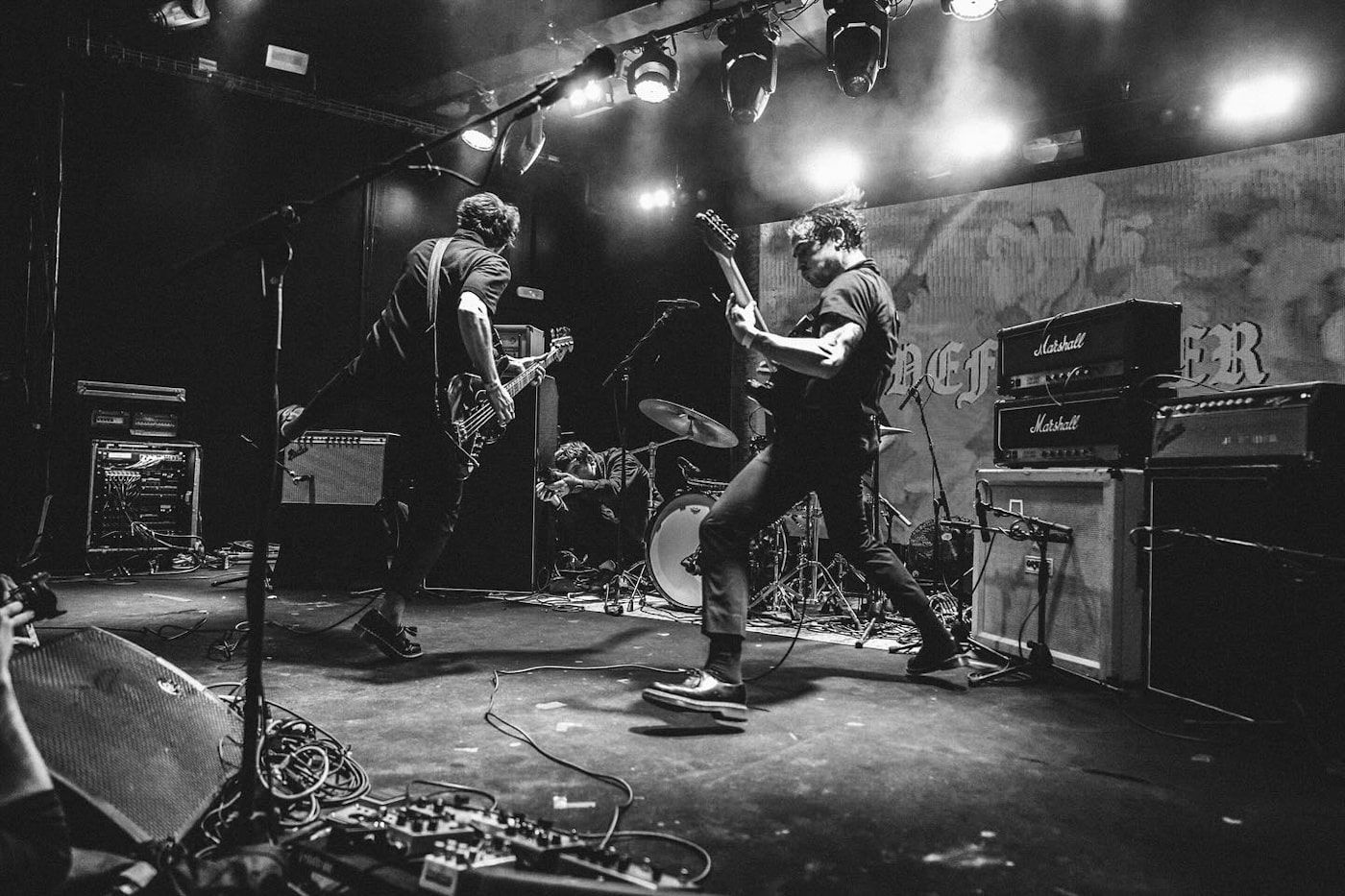

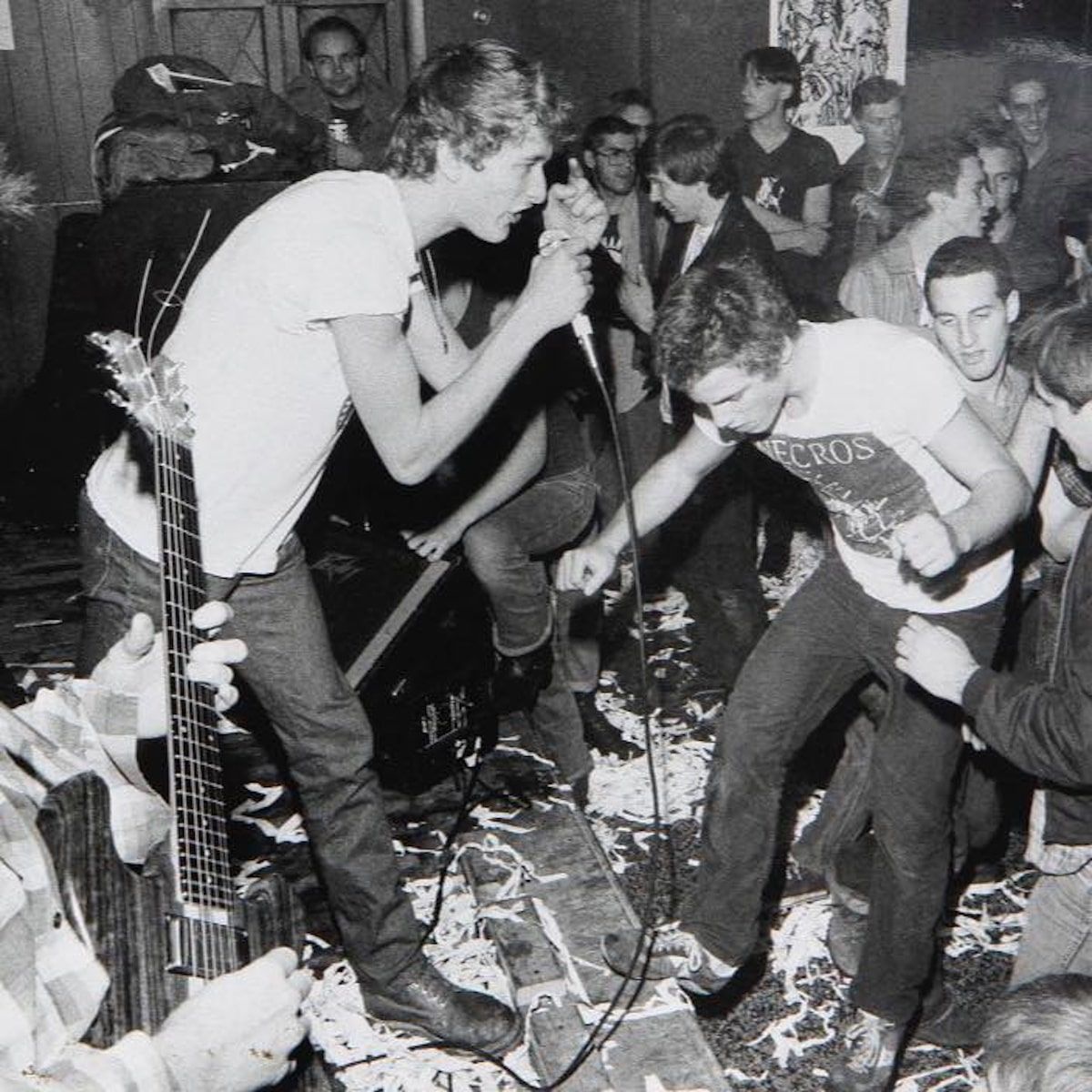
Milwaukee didn’t leave behind an SST or Dischord. It left behind Die Kreuzen.
In the early ‘80s, while the coasts were stitching their punk myths into label catalogs and legacy acts, Milwaukee was just freezing and churning. What grew out of it wasn’t easily classified, and in the case of Die Kreuzen, it couldn’t be. Their first LP tore through genre lines with hardcore speed and metallic precision, then kept pivoting—toward art-damaged sludge, gloomy atmospherics, and sonic experiments that defied any tidy storyline. “Were they punk? Metal? Something else entirely?” the book asks—only to let the band’s shifting shape be its own answer.
Now, with Don’t Say Please: The Oral History of Die Kreuzen, Milwaukee-based writer Sahan Jayasuriya finally assembles the whole fractured picture. Ten years of work went into the project: hunting down zines, flyers, Maximumrocknroll reviews, and tracking down key figures like Richard Kohl, the band’s sleeve designer and former manager, who had fallen out of contact for decades. The result is a first-of-its-kind document—told directly by the band and those who witnessed it firsthand.
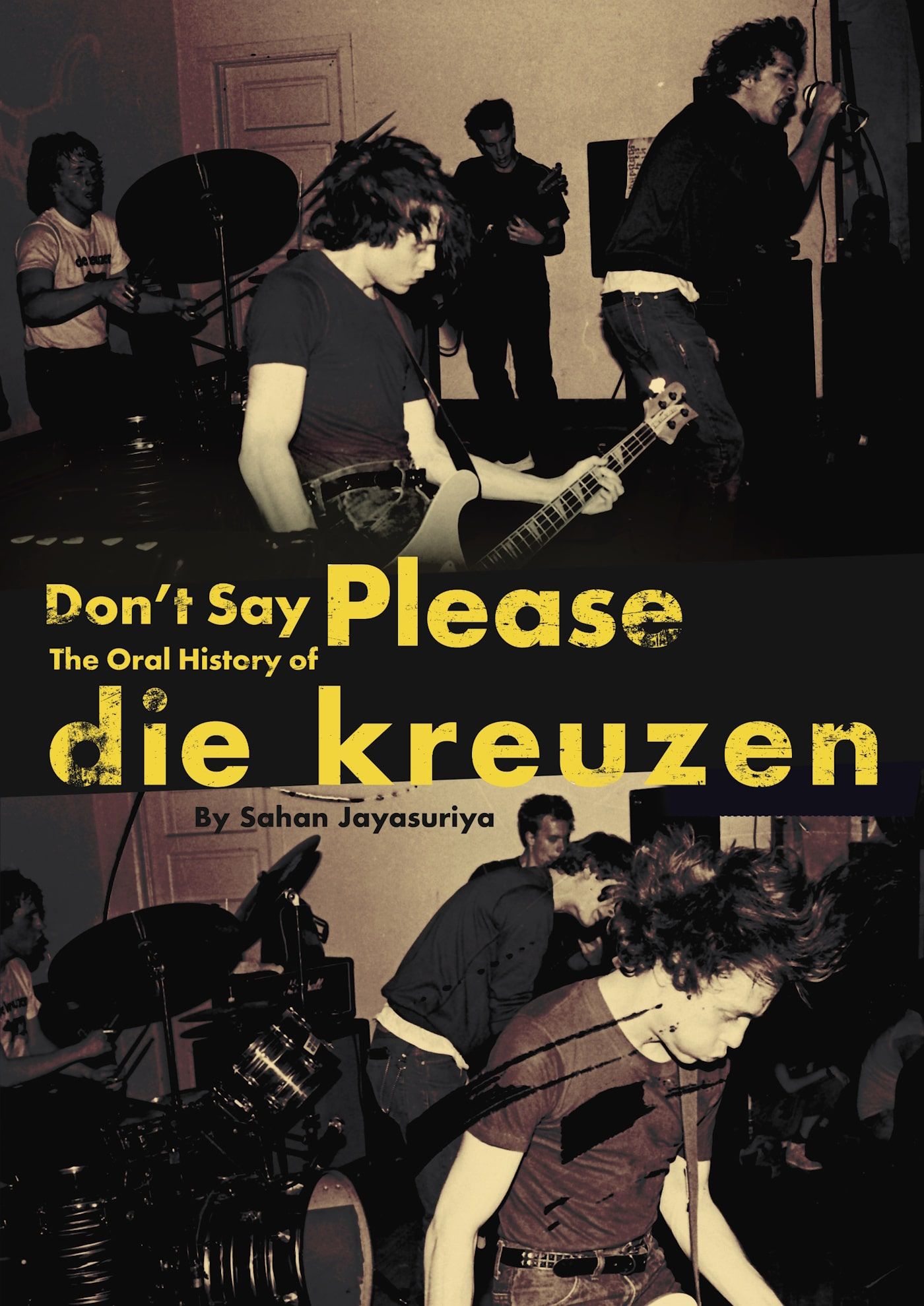
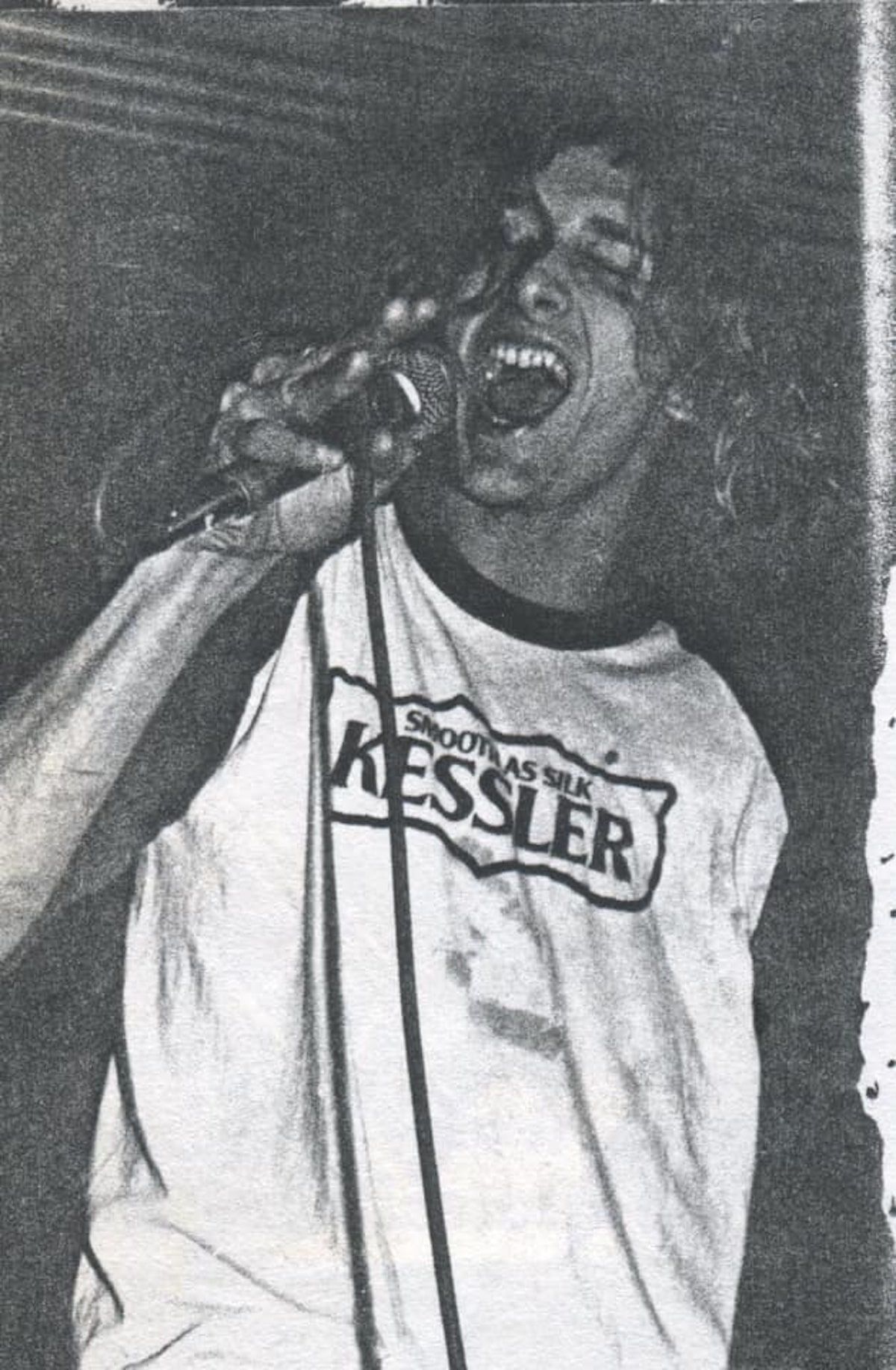
The interviews anchor the narrative, not just with band members Keith Brammer, Brian Egeness, Dan Kubinski, and Erik Tunison, but with an impressive cast of artists who felt the shock of Die Kreuzen’s sound: Steve Albini, Thurston Moore, Neko Case, Lou Barlow, and Butch Vig among them. “All bands have a lifespan and Die Kreuzen were lucky to have burned so brightly during their tenure,” Albini reflects. But the book doesn’t flatten them into a neat arc of rise-and-fall. As Jayasuriya told us, tracing the group’s stylistic shifts wasn’t about redemption or decline—it was about accurately following the music’s natural evolution, no matter how polarizing it became. “There was never this conscious plan to take a left turn for each record,” he says. “Their evolution was totally natural and directly related to what they were into at that time.”
View this post on Instagram
The oral format lets contradictory memories rub against each other. Jayasuriya says, “If there were inconsistencies, I would ask another member to weigh in and have them discuss it among the two or three of them.” The result is something closer to lived memory than a cleaned-up band history. He didn’t aim for mythology, and neither did the band: “They didn’t want this to be an idealized version of their history,” he says, openly including their tension with press and the criticism aimed at their later records.
The book also captures how geography shaped the band’s path. Milwaukee and Rockford weren’t just backdrops—they were limitations, filters, and creative sparks. “No one else sounded like them, in the Midwest or otherwise…besides maybe Voivod,” Jayasuriya notes. The city’s lack of documentation made this project feel like a rescue operation. “It’s super important to talk to people about their lives and experiences, especially if they haven’t really documented them,” he says. “People need to know this stuff.”
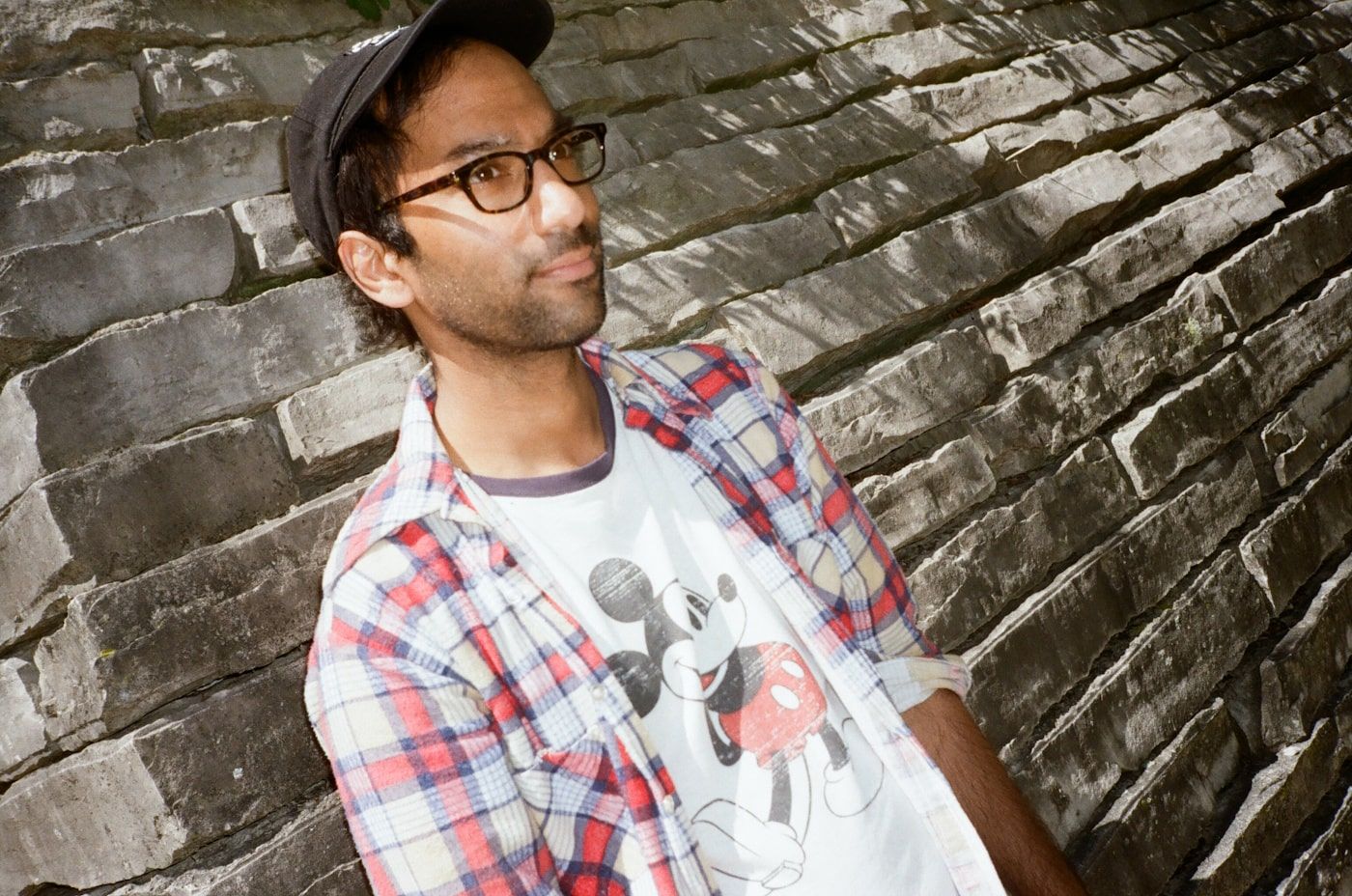
For Jayasuriya, a Midwest kid raised on dusty record bins and Dischord CDs, the project began with a moment of blindside discovery: picking up Cows and Beer at Atomic Records and realizing he’d somehow missed one of the region’s most singular bands. “Hearing Cows and Beer and then seeing that 1983 public access performance for the first time was absolutely blindsiding in the best possible way,” he remembers. That moment set the course for a decade-long effort to reinsert Die Kreuzen into the narrative—not just of hardcore or metal, but of the underground in general.
The full interview below dives deeper into the years of research, lost archives, key contributors like Richard Kohl, and how Jayasuriya sees the modern Midwest scene in contrast to Die Kreuzen’s era. We also talk about the absence of a central Milwaukee label, the contradictions in the band’s public persona, and the current wave of bands that carry some of the same unpredictable energy. Topics include obscure bands rediscovered during the process, why the story of Die Kreuzen became the story of an entire era, and the complicated business of preserving legacy without sanding off its raw edges. Read on for the full conversation.
You spent a decade chasing Die Kreuzen’s ghost. Let’s start simple: what was the moment where this book stopped being a passion project and started to feel like a calling?
I think from day one, I felt like I had this goal of sharing Die Kreuzen’s story with whoever cared to read it. I was born and raised in the Midwest, and I am very proud to be from here, but I often feel like we’re underestimated. The level of influence and impact that Die Kreuzen has had is difficult to quantify, but it’s sizable.
Over time, my purpose for this book definitely evolved. I spent a few years living in Colorado and California before returning back to Milwaukee, but while I was out west, I felt a lot of Midwestern pride. By that point, I think the purpose of the book started to feel like a calling. It felt like it was my job to put everyone on to this great band that we can claim as ours.
Reading through the early chapters, it feels like this band had to be unearthed, not just written about. How much digging, tracking, and reconciling of different memories did it really take to get the full picture?
This project took me ten years in total. An endless amount of interviewing and research went into this project, and beyond accessing the information, processing it took a lot of time. Combining that with all the interviews and then sequencing it all together…yeah it took a bit. Even as recently as this spring, I was still adding in things that helped guide the story. So really, in some ways, this entire time I’ve been trying to piece it all together to the best of my ability.
You write like someone who’s not just documenting but protecting a legacy. Did you ever feel a sense of responsibility—like, “if I don’t do this, it’ll vanish”
Oh, absolutely. It’s super important to talk to people about their lives and experiences, especially if they haven’t really documented them in some form. A huge part of this was totally approached with that kinda responsibility-“people need to know this stuff, and if I don’t ask these questions, there’s a good chance that these stories will go unheard”. My goal was to tell the band’s story with as much accuracy as possible (hence my decision to present it in the oral history format) while also putting emphasis on their influence, and I’d like to think I succeeded in doing both.
You mention being handed Cows and Beer by Rich at Atomic Records. Looking back, what’s crazier: that you hadn’t heard the band until that point, or that no one had written this book before?
At that point, I think I was more surprised by never having heard the band before. I was really deep into all types of aggressive music at that time. Getting into Converge, American Nightmare, Snapcase, Glassjaw and Refused eventually led me to Minor Threat, Bad Brains and Void. I was loving all those bands alongside other stuff like Born Against, Das Oath, Swing Kids, Reversal of Man and Some Girls. I kinda felt like I had probably heard a good chunk of the earlier records that were gonna really blow my mind. Hearing Cows and Beer and then seeing that 1983 public access performance for the first time was absolutely blindsiding in the best possible way.
Jumping forward about 8-10 years after having learned a bit about the band, it was then that I was kinda surprised that no one had ever really written much about them.
View this post on Instagram
The book paints Milwaukee as a weird, frozen incubator of genius. How do you think geography shaped Die Kreuzen’s sound and ethos? Could a band like that have happened anywhere else?
Yeah, I think the band’s Milwaukee and Rockford origins really shaped them. The climate, the limitations and lack of music industry, all of that really played into how bands operated. I think back then, a lot of acts including Die Kreuzen spent a lot of time listening to records, developing their sound and catching whatever touring acts came through town.
Does the music of Die Kreuzen sound like how Milwaukee feels? Maybe not so much anymore; Milwaukee is a much different place now, but if you look at photos of the band at the time alongside photos of the city at the time, it definitely makes a lot more sense. I think a band like theirs could have happened elsewhere, surely, but maybe not outside of the Midwest. There’s something very Midwest about the way they sound.
The early Midwest punk scenes were isolated—no internet, barely any zines at first. How do you think that kind of creative isolation affected the bands, compared to today’s ultra-connected ecosystem?
This kinda goes hand in hand with the previous question, but I think the creative isolation of the Midwest only helped people be more creative about the music they were making. I’ve always believed that creative limitations often lead to great outcomes. I think that isolation played a big role in why Die Kreuzen grew into this really singular sounding band. No one else sounded like them, in the Midwest or otherwise…besides maybe Voivod
A lot of the book is built around personal anecdotes, memories warped by time, and raw impressions. How did you decide what to trust, what to challenge, and what to leave ambiguous?
Honestly, if I deemed anything to be relevant to the story and interesting, I tried to get as much information and detail about it as possible. There weren’t really that many inconsistencies in the stories I was told. Some of the interviews I did were with multiple members at once, but there were just as many interviews that were one on one with individual members. If there were inconsistencies, I would ask another member to weigh in and have them discuss it among the two or three of them.You give proper weight to the early DIY infrastructure—clubs, fanzines, random couches. Was there a moment in writing when you realized you weren’t just telling Die Kreuzen’s story, but the story of a whole era?
I think prior to starting the book, I just sorta figured I’d be talking about the records they made, tours, etc. Almost immediately after starting interviews, though, I quickly realized that there was way more to the story than just the records. It became something much larger, essentially me telling the story of the entire era of 80s American underground music, from the perspective of this one band and how they experienced it.
How did you handle the tension between mythology and memory? Everyone wants their legacy told a certain way—did you ever have to push back against idealized versions?
Honestly, this is something that I’ve been asked a handful of times, and surprisingly there were no instances of this. I think when we started the project, we had a lot of discussions about the kind of book the band wanted this to be. One of the main points they made was that they didn’t want this to be an idealized version of their history. The band faced their fair share of adversity from audiences and American music press, especially in the latter half of their career, and they wanted me to make sure that I include all that in there.
There’s a part where you talk about the guys being “nice boys from the Midwest,” then ripping through sets like possessed animals. Was that contradiction something you leaned into when shaping the narrative?
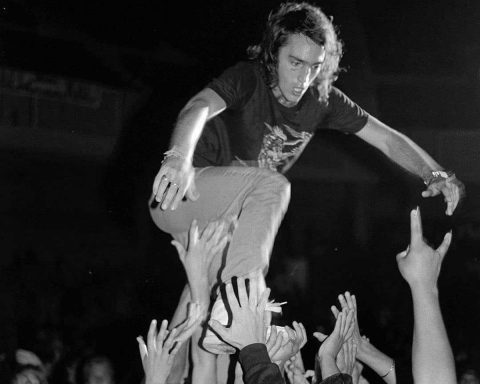
That’s kinda common though, isn’t it? Look at Iggy Pop; total sweetheart offstage and total maniac onstage. I think I just wanted to reinforce the fact that Die Kreuzen were nice guys because I heard it so much from so many people. People still remember the members of Die Kreuzen’s names because of how kind and approachable they were. When people wrote them letters, they always took the time to respond. What a bunch of swell dudes, truly.
He’s not Midwestern, but I met DJ Shadow a few years ago. I’m a huge fan of his, but I wasn’t really sure what to expect, since his music can sometimes be, like, pretty dark, pretty serious. He was super down to earth and really kind though! We ended up talking about music for like a half hour, it was so cool. That experience ust kinda reinforced the fact that you can make the heaviest or darkest or most serious music while also being kind and approachable, and that doing so doesn’t take away from however you want the music to be perceived.
View this post on Instagram
The band’s sound evolved drastically—hardcore, then sludgy metallic weirdness, then almost 4AD-level atmosphere. How do you trace that arc without it feeling like a fall-from-grace or a redemption story?
Based on the conversations I had with them, there was never this conscious plan to take a left turn for each record. Their evolution was totally natural and directly related to what they were into at that time. Surely, there were people along the way who didn’t really care for some of the changes, and I made a conscious effort to include those opinions in the book to show the whole picture. I think tracing the story with the utmost accuracy was my goal, and I credit the band members with giving me the best source material I needed to do that. For all the pushback they got with those later records, there were plenty of other people who really connected with them. The ultimate goal was to simply present the story exactly as it was, with both the good and the bad.
What’s your take on why Die Kreuzen never hit the level of reverence that bands like Hüsker Dü or Bad Brains got—especially considering how many of those same bands worshipped them?
I’d argue that, while they never hit the level of reverence as those bands did, if I’ve learned anything from writing this book, it’s that they are still extremely respected by a good amount
of people. In some cases, people put them on the same level as Bad Brains and Hüsker Dü. Whereas those bands continued to be talked about long after their split or initial run, Die Kreuzen kind of stopped being a part of the conversation. It doesn’t mean that they weren’t respected, it’s just that they stopped being discussed, probably because of the cultural focus on the super popular grunge/alt rock acts of the day
Steve Albini, Thurston Moore, Neko Case, Lou Barlow… these are people who don’t drop quotes lightly. What surprised you the most about how these artists remembered Die Kreuzen
I just loved everyone’s individual perspectives. Which records were their favorites, what they remembered about seeing them live. I was surprised by how many people really celebrated the later records, because from my perspective it felt like those last two albums were the ones that were the most dismissed. Hearing people who are more affiliated with more aggressive music celebrate records like Century Days was a pleasant surprise. I just loved the fact that based on these conversations, every record was someone’s favorite. I also loved hearing people really latch on to how the band presented them visually and how they really dug their overall visual aesthetic.
In the case of the specific artists you mentioned, they all had some sort of personal connection to the band, whether it was through working with them, touring with them, seeing them live or otherwise. I think those personal connections to the band maybe played a role in why those artists all still held them in high regard, because to them it was more than just a band who’s records they had.
Some scenes preserve themselves. Others dissolve. What do you think made Milwaukee’s scene so elusive, so under-documented compared to, say, D.C. or San Pedro?
I think it’s because we never really had a singular label who documented it all. We didn’t have a Dischord or SST that functioned with the goal of documenting and preserving the city’s music of that time. The few acts from here who did have records out either self-released them or worked with other labels who’s focus wasn’t limited to one city. Touch and Go, who released pretty much all of the Die Kreuzen records, really focused on the Midwest, but documenting an entire region is different than just focusing on one city.
From what you’ve seen, has Milwaukee today preserved any of that raw, no-map energy that Die Kreuzen emerged from? Or has the city moved on entirely?
Our music scene here is certainly thriving and the DIY spirit is definitely still here. The hip hop scene in Milwaukee has been popping off pretty hard, and I think that in a lot of ways, that music has way more of a raw and experimental nature than what many of the rock bands here are doing. They’re doing it all completely on their own terms with complete creative control, and in some cases, making some truly out there weird shit. Some of these artists are starting to get signed by major labels, and they’re coming to labels’ attention just by virtue of being themselves. That’s a beautiful thing to see.
View this post on Instagram
You spent years digging through Midwest flyers, zines, and oral accounts. What were some of the most obscure or serendipitous finds that made it into the book?
All of that stuff is super cool and finding it all kinda piecemeal in some ways was really rewarding. Having them talk about things like the infamous Maximumrocknroll review of their first album or the Puszone feature from Thrasher, and then being able to actually find those actual physical documents was really great.
More than any review or flyer though, finding Richard Kohl was one of the best and most rewarding experiences of this entire project. He designed every Die Kreuzen record sleeve, briefly managed the band and above all else, is a dear friend of theirs. At some point, they had lost touch with him and hadn’t heard from him in probably 20 years. Thanks to the efforts of this guy called Karl Paloucek, we were able to track Richard down and get him and the band reconnected. I was there in the room when Die Kreuzen bassist Keith Brammer saw Richard for the first time in decades, and it was such a cool thing to see. Richard actually loaned me his original contact sheet / proof sheet for the October File album cover, so I got to see all of the photos he shot for that record cover. That might be my favorite artifact in the whole book.
While working on the book, were there other Midwest bands you started obsessing over in the process—like bands that didn’t get their due but should’ve?
Midwest things like Mecht Mensch, Appliances-SFB, The Fix and Killdozer got a lot more play from me as a result of me working on this book. I wasn’t really familiar with Laughing Hyenas prior to talking to the band, and those records are absolutely fantastic. They did some touring with Die Kreuzen and Sonic Youth in the late 80s / early 90s, and I got heavily into those records once the band turned me onto them. That band was so great, truly terrifying at times. This guy called J.J. Griffin IV has been working on a book about them for a minute, really putting in a ton of time doing research and conducting interviews. He talked to members of Die Kreuzen for it, too. That should be coming in the next few years I’d imagine, definitely look out for that.
Let’s talk 2024–2025. Who are some current artists—either from Milwaukee or further out—that give you that same cracked-rib, late-night basement show feeling
There’s a label here in Milwaukee called Unlawful Assembly that specializes in the kind of hardcore I dig. Everything from the visual aesthetic to the production of the records to just the bands they choose to work with, it’s all super DIY and really rad.
Lifeguard out of Chicago are supremely sick too, leaning a bit more towards the post punk side of things. They consciously play on the floor at venues, which I’m all for.
Science Man put out a record recently called Monarch Joy that’s like, my platonic ideal of hardcore.
Stress Positions, NØ MAN and Frail Body are all amazing. There’s a ton of music out there now; the ease of being able to record and release it has made it so that you have to sift through things you don’t like to eventually find what you do like. It’s all there waiting to be found, just like how it was 20-30 years ago, the only difference is that now it’s a lot easier to access once you finally find it.
Any under-the-radar Midwest acts from the last couple of years that readers of this book need to check out before they blow up—or break up?
This is all assuming that people know who Tenement are, who in my opinion continue to be the best band in the Midwest.
Other stuff? I’m here to shout out a bunch of friends’ bands-Graham Hunt, Disq, Dusk, Combat Naps, Loveblaster, Impish Tips, Bad Crime, Heather The Jerk, Standstill, Shamewave, Big Laugh, World I Hate, Forktail, Bad Crime, Stephen Strupp, Royal Jelly, Evinspragg, Overhand, Garden Home and Ladybird are all Midwest (largely Wisconsin) acts right now who I feel are pretty damn good at what they’re doing. There’s a big range of sounds there-some more aggressive stuff, some quieter stuff, some goth stuff, some power pop stuff. Depending on your taste, there’s probably something there you’ll dig.
I play in a slowcore band called Good Night & Good Morning. I love those guys so much so I’ll mention us here, too.
How does it feel now that the book’s done? Did you get what you needed out of this project, or do you feel like you’ve opened the door to even more unfinished business?
I think I’ve done the band and their story justice. Of course, there’s always other things you’d like to do or things you wish could’ve done differently, but I’d say for the most part, I’m quite pleased with how this turned out.
You ever worry that in documenting something so intimate and underground, you might be making it too accessible—like turning a secret into a scene
If it’s okay for Scowl to do Taco Bell commercials (which I love), then I’m pretty sure it’s okay for me to do this.
I’m all for giving credit where it is due, and really, I just want people to know how important this band is. My favorite thing in the world is sharing the music I love with people. I’ve always been the mixtape / mix cd guy for my friends, and in some ways, this project feels like an extension of that mentality, with just way more other elements. The underground is such a different place now, anyway. You don’t necessarily need to scam copies from Kinkos or find ways around paying for long distance calls or use BYOFL to book shows anymore.
The stories in this book are from a very different era, and if anything, I hope it sheds light on a time where you didn’t have to fight with algorithms just to find your audience. Maybe, just maybe, it will inspire other people to do something similar, taking the tools of the past and using them in the present, albeit in a new and different way.
And finally—if some punk kid walked into a record shop today and asked, “What’s this Die Kreuzen shit all about?”—how would you answer them, without spoiling the ride?
Wow this is tough! I guess it all depends on what they were into. That band did a lot-hardcore, post punk, college rock, proto 90s alt rock…they covered so much ground, but I think there would probably be a Die Kruezen record for most kids who are into various offshoots of rock music. I think the world is finally ready for a band like Die Kreuzen, there’s a much bigger audience now for the kind of things they were doing.
A lot of the 4AD and Creation Records bands have enjoyed renewed interest in the last decade, especially Cocteau Twins. Deftones are absolutely massive, bigger than they’ve ever been, and their whole thing is the blending of heavy sounds with dreamy sounds. I think those fans as well as people digging into early hardcore will be the ones who will explore the Die Kreuzen catalog and hopefully get something from it.
My answer though? For anything that I think is truly great, I usually just sum it up with “recommended for fans of music”.