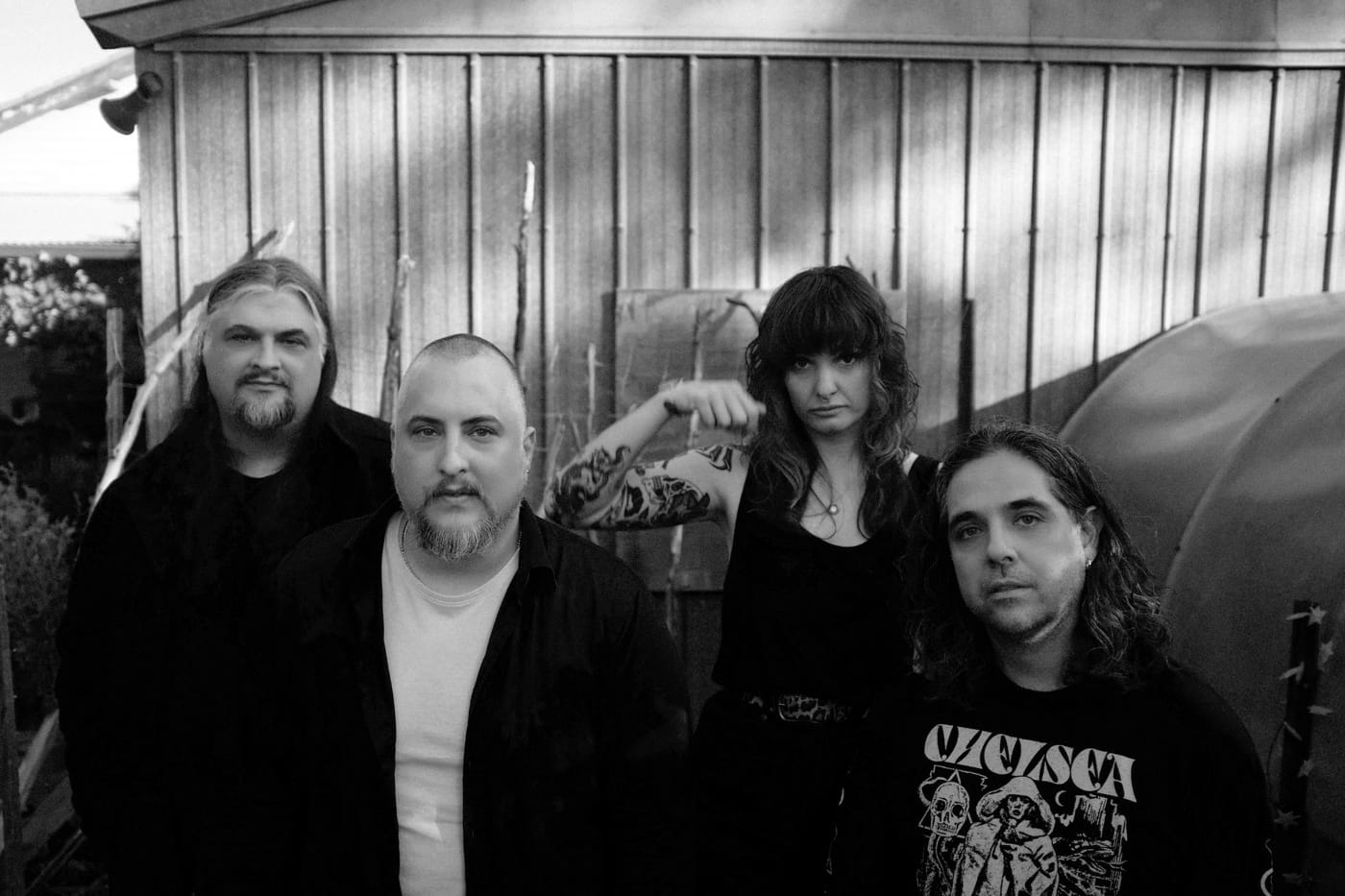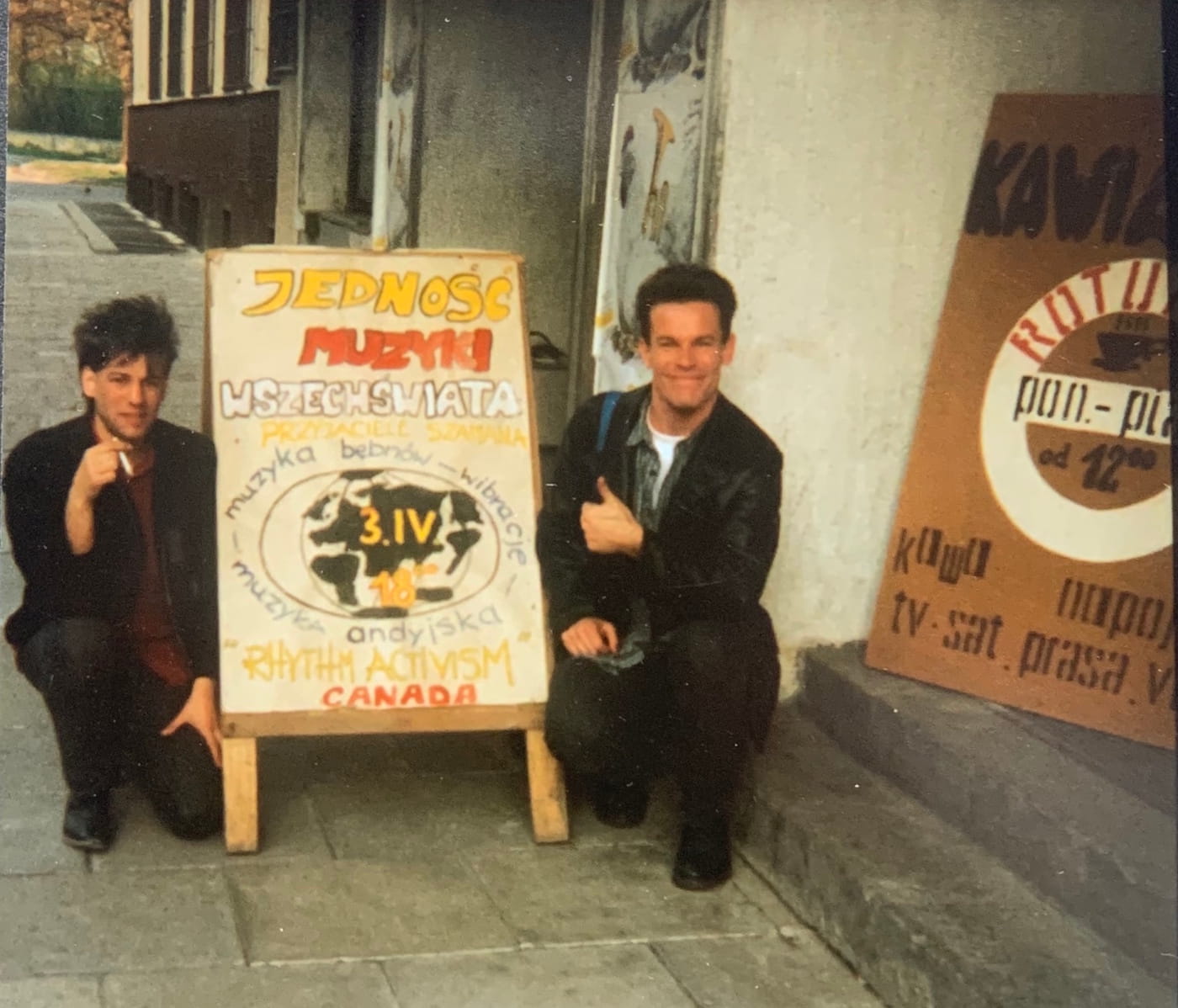


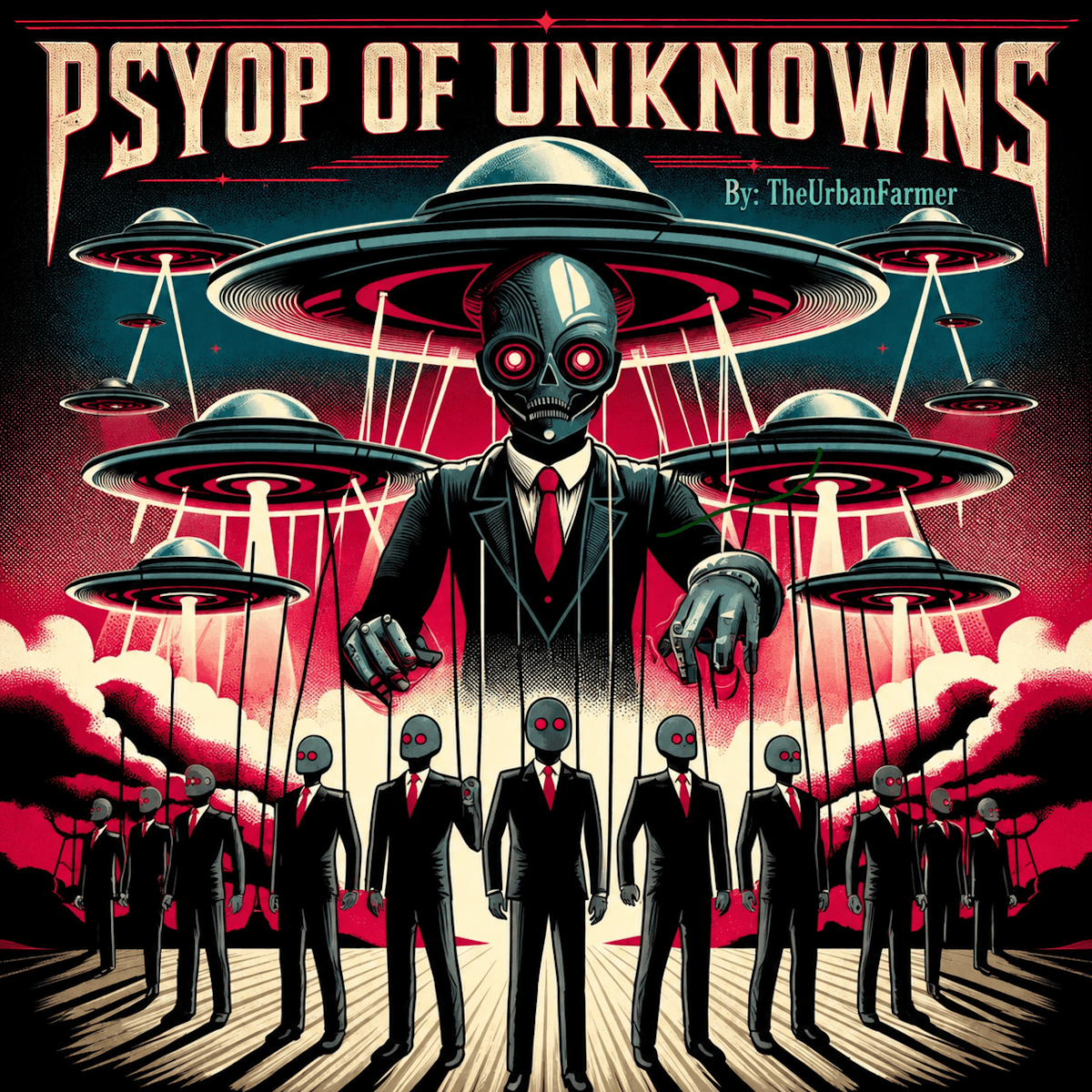
TheUrbanFarmer is Keith Griffiths, a rural American artist making heavy rap-metal with a pretty unusual CV behind him. He has studied audio engineering in Hollywood, spent about a decade growing marijuana with his mother, gone deep into biotech investing and built a sizeable following on Stocktwits. His latest track, “Psyop Of Unknowns”, pulls a few of those worlds together in a fake emergency broadcast full of sirens, fast guitars and people being told to stay calm when everything around them is telling them to panic.
Music has been around much longer than the investing. Growing up, Keith built a little studio in the storage area of his parents’ house, made beats in FruityLoops and recorded friends rapping after school. They smoked weed, made tracks and generally spent a lot of time recording.
After high school he moved to Hollywood for Musicians Institute. His apartment became another recording spot, including for a guy Keith regularly saw selling blank CDs. He persuaded him to come over and record some freestyles, then started burning the recordings onto actual CDs. He also made deals with dispensaries to move the CDs and get free weed in return.
Musicians Institute meant proper studios, better equipment and plenty of time learning Pro Tools. Keith graduated, got certified and later worked on audio for independent films. It didn’t take long to work out which part he actually enjoyed.
“I loved creating shit and experimenting. I didn’t love doing repetitive audio work on somebody else’s project all day.”
Weed was already another long-running interest. When his older sister left for college, Keith started growing marijuana in her closet. The family cat eventually gave him away. His parents found the plants and somehow managed to break the garbage disposal while trying to destroy them.

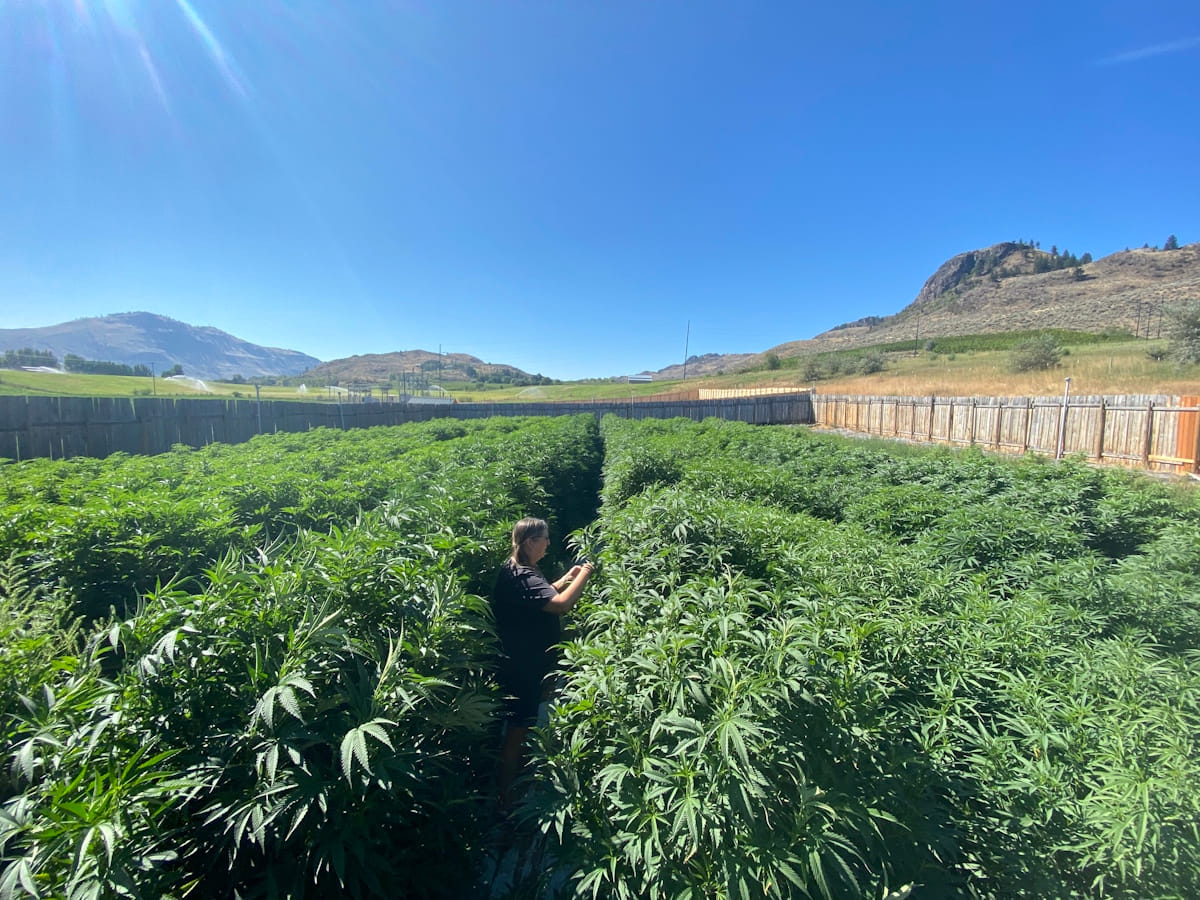
Years later, when Washington began legalising marijuana, he took growing much further. He went to Oaksterdam University in California with his mother, and the two ended up running a business together. She handled much of the paperwork and bookkeeping. Keith grew the plants. Friends helped with harvests and they sold around Washington.
The closet grow eventually became acres of marijuana and around a decade of Keith’s life.
His mother then died suddenly at 57.
“She was my best friend and the best mom, and we’d spent the previous decade working side by side building that business.”
Keith sold the business. Farming on that scale had been taking up most of his time anyway, and he didn’t want to keep doing it without her. Suddenly having free time again also meant making music again.
He had been investing throughout the farming years, especially in biotech companies. Around 2019 he joined Stocktwits under the name NattaCop, initially because he wanted information about the companies he was following.
Pretty quickly, he became interested in the people posting the information too.
Someone holding a particular stock could describe a company decision one way. Someone betting against it could take exactly the same news and make it sound disastrous. Keith gives the example of a company asking shareholders to authorise additional shares. Those shares could later be used for financing, acquisitions or employee compensation. On Stocktwits he would see the authorisation treated as proof that huge dilution was coming, sometimes by people whose position would benefit if the price fell.
“The same fact can mean completely different things depending on somebody’s financial incentive to frame it.”
Keith started posting his own research. With biotech, that could mean going through clinical trial design, manufacturing, regulation and whatever else was relevant to the company. He would link the sources, give his reading of them and disclose that he had money invested.
“I’m not trying to hide the fact that I have an opinion or an investment. I obviously do. The difference to me is showing somebody how I got there instead of just feeding them the conclusion I want them to believe.”
His account got bigger and so did the arguments. Over the years people have called him a scammer, pumper, idiot and cult leader. For a while he tried to answer everything. These days he’s much less interested in spending hours arguing with somebody he thinks has already decided what story they want to tell.
He doesn’t assume every disagreement comes from some hidden financial motive. People look at the same information and reach different conclusions all the time. His problem is with somebody continuing to spread information they know is false because doing so helps them.
“I’d much rather give somebody enough information to tell me I’m fucking wrong than have them agree with me because I successfully manipulated them.”
Investing also brought him into contact with CEOs, government officials and Washington lobbyists. Keith heard plenty of gossip through those connections. The legal stuff interested him more: lobbying, consultants, lawyers, advocacy groups, access and the ways money can be used to keep pressure on a decision without anybody handing over the proverbial bag of cash.
“I think before getting close enough to see some of this I sort of imagined corruption in the obvious cartoon way. Somebody hands somebody a bag of money, gets a favor and breaks the law.”
One of the cases he became interested in involved Washington lobbyist Evan Morris, who worked for Roche and later Genentech. Keith pointed us towards the public reporting around Morris’s work connected to Tamiflu and later Avastin. He also knows more about the story through personal connections, but those details were given to us off record and stay there.
“The gossip is entertaining. The system itself is what shook me.”
You can hear where all this starts feeding the songs.
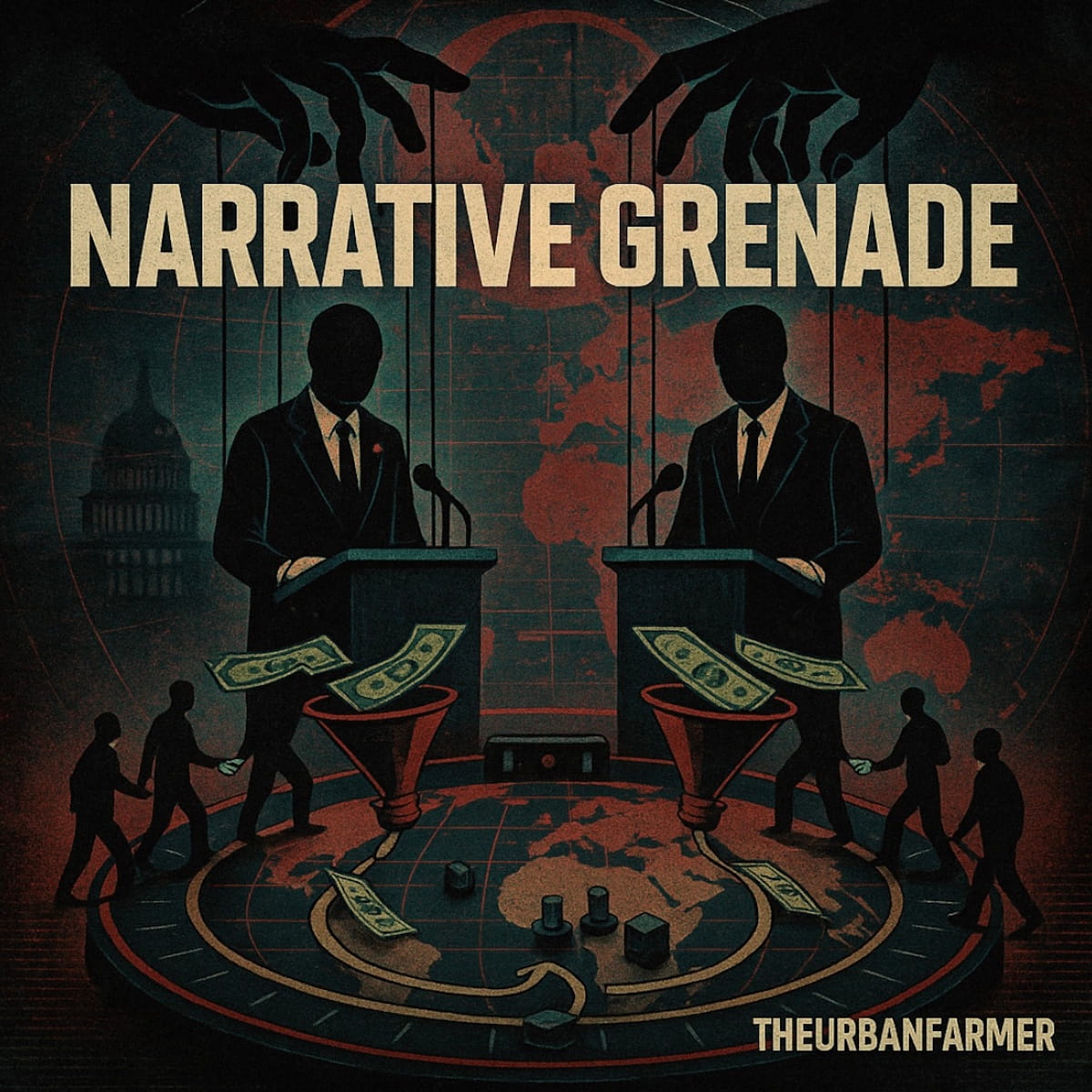
“Narrative Grenade” came out on September 29, 2025. Keith had wanted to write something about competing narratives for a long time. The killing of conservative activist Charlie Kirk earlier that month pushed him to finally sit down and do it.
“Narrative Grenade isn’t meant to be a Charlie Kirk song. I’d wanted to make a song about narratives for a long time already. What happened to Kirk was just the moment that made me go, yeah, I need to finally write this fucking song.”
Keith doesn’t see TheUrbanFarmer as a vehicle for one political side. He thinks the American two-party system is broken and talks about money, self-interest and manipulation across both sides of it. That’s his politics, and it’s also part of the background to “Psyop Of Unknowns”.
The track starts like an emergency news bulletin. Hundreds of unidentified objects have appeared in the sky. Hostile action may be imminent. The government is telling everybody to remain calm and wait for further information.
Underneath it, a fast repetitive Drop-D guitar starts hammering away. The track runs at 150 BPM, with double-kick drums, sirens and Keith’s aggressive rap writing over the top. The broadcast stays controlled. The guitar absolutely doesn’t.
“The broadcast telling people to remain calm while the repetitive guitar tells the listener to feel the opposite. That conflict between what they’re being told and what they’re feeling is part of the story being told. Not some meaning attached afterward.”
Eventually the news bulletin comes back. There is no evidence of extraterrestrial activity. Attention moves towards international tensions.
“That’s the whole jab.”
Keith wrote the story around what happens when nobody has much information yet and fear gets there first. People hear that there might be an enemy. Something needs to happen quickly. Decisions suddenly become easier to sell.
“Fear and urgency are really effective ways to get people comfortable with their money being spent or actions being taken that they might question under normal circumstances.”
Then the UFO scare disappears and everybody has another threat to think about. That’s where “Psyop Of Unknowns” leaves it.
This kind of fictional storytelling is common in Keith’s work. His first album, “Love Don’t Decompose“, follows a man after his partner dies. He refuses to accept her death and sinks further into his own version of reality because it’s the only place where he can still be happy. About 30 seconds after the apparent final song ends, the hidden track “One Bone At A Time” starts, leaving room for Keith to pick the story up again someday.
He’s also written from the perspective of serial killers, grieving people and people detached from reality. He usually knows the story he is writing, but he doesn’t expect everybody else to hear exactly the same thing.
“Two people can hear the same story and walk away with completely different interpretations, and neither one necessarily has to be wrong. What they see in it is going to be shaped by their own life, experiences, beliefs and the narratives that shaped them.”
And yes, TheUrbanFarmer uses AI. Quite a lot of it.
Keith writes the lyrics, stories and concepts. He plans songs section by section, working out melodies, vocal delivery, what the instruments should do, where things enter or drop out, where a half-time part belongs and how the story should move. Generative tools produce voices, sounds and performances, which he then works through, edits and changes.
The voice you hear on “Psyop Of Unknowns” isn’t Keith singing. He doesn’t claim that he physically played all of the instruments either.
“I also understand why you’re drawing a distinction here. A model generating a performance is contributing something different than a microphone recording one. I’m not claiming the voice is me singing or that I physically played every instrument. The technology contributes to what you hear. But that doesn’t mean the writing, story, musical direction and decisions about what ultimately gets released stop being mine.”
He’s done a frankly stupid amount of generating to get there: more than 50,000 generations by his estimate, with around 100 songs released so far.
How much of an individual generation survives depends on the song. Sometimes plenty does. Sometimes very little. Other tracks are still sitting unfinished because Keith doesn’t think the technology can do what he wants from them yet.
His old audio engineering skills come into play here. He listens for timing, delivery, section changes and individual sounds and keeps cutting and changing things until the track works for him.
“For me, handing over authorship would be letting a program decide what I’m trying to say and then putting my name on whatever comes out. I already have something I want to express. The tools help me get there, and I’m still responsible for deciding whether the result actually expresses it.”
He won’t name the individual platforms or models. The setup changes depending on the song and what’s available at the time, and he doesn’t want TheUrbanFarmer tied to a particular software company. The voices started as synthetic voices, with some developing from earlier tracks. None are recordings of Keith. He also draws a firm line at cloning recognisable singers or feeding artists’ names into a model to chase their sound.
The covers for “Psyop Of Unknowns” and “Narrative Grenade” were made with generative AI too. Keith comes up with the visual concept and works with different tools to get there. For “Psyop Of Unknowns”, he also fed in an older piece of his own artwork as a reference. He no longer has a reliable record of exactly which models were involved, so he doesn’t pretend otherwise. Both covers are credited to TheUrbanFarmer. Recording, mixing and mastering carry the same credit.
He knows perfectly well that some people will stop right there.
There have already been listeners who refuse to play TheUrbanFarmer once they find out how the music is made. Others find a track first, stick it in a playlist and carry on listening. Keith has seen both.
“Honestly, I don’t blame people for holding that line in the sand right now. Almost everything I see out there is low effort slop with seemingly no thought behind it, so I understand the bad taste it leaves.”
For him, the attraction is pretty practical. He can take an idea all the way to a finished track without putting a band together or paying for a studio and a pile of musicians every time. He also knows those same tools make it incredibly easy to churn out endless songs with very little thought behind them.
“But it’s a double edged sword. The same access that lets somebody finally make something they’ve always wanted to make also lets somebody else pump out endless slop because they think there’s money in it. I understand why being surrounded by that turns people off.”
TheUrbanFarmer is released through Keith’s own Barn Yard Records imprint. There isn’t a complicated label story behind the name. He lives in rural America, he’s a farmer and he needed a name for his own releases.
“It just felt like the right fucking record label to make lol.”
Music isn’t his only place for strange ideas either. Keith has published a quantum mechanics preprint on Zenodo, which he jokingly refers to as his theory of everything. Some of that thinking has already made its way into songs. “Borrowed Time” includes the line:
“in another life you woke up, in another life you stay, in another place we made it, in another place you’re mine”
In September he also finished an official lyric video for “Ghost Code“, which gave him another excuse to mess around with tools he says he couldn’t have done much with a year earlier.
His father and girlfriend get to hear all of this stuff as it comes together. Apparently there isn’t much he can send them that will cause serious concern. “Hell Womb”, for example, is about a satanic ritual.
“I can make a song called Hell Womb about a satanic ritual and still know I can walk over and be like ‘hey, what do you think of this?’ without getting a ‘what the fuck is wrong with you?’ in response lol. Having people who will genuinely listen to whatever weird shit comes out of my head and give me an honest opinion is priceless.”
Artist-funded editorial. The artist covered the time needed to produce and schedule this feature. The article was written and edited by the author.