

By the time Thrownness tracked their first EP, the whole thing already existed on paper. Kévin Guimet had written all six songs that would carry the project, and the plan was always one body of work split across two releases. “Marrow” (2024) put out the first half. The remaining three waited.
What changed in between wasn’t the writing. It was who was in the room to play it.
The years after “Marrow” thinned the band down to almost nothing. “Due to pressure and internal problems with the previous members, we had a lot of members coming in, others leaving,” Kévin says.
At one point he was the only one left, and decided to try the thing one more time before letting it go. He brought in guitarist Tiago Rodrigues (Moloch, ReignOverClouds), then André Martins (Skyllar), who agreed to help out for a year, then bassist Micas (Reia Cibele, Deathclean.xo). João Fernandes rounds out the current lineup on drums. “For the first time I had a collective of members with the same frame of mind, same eagerness to move forward.”
He’d written the songs, but he handed them over. Kévin kept the basic structures and adjusted from there, then gave the others room to leave their own marks on the three tracks. What came back surprised him. “They extracted a rage, vision and strength that I didn’t know those songs could have,” he says. “In many ways the songs revealed their true faces with their input, their presence, their creativity. They became proud songs wielding ‘we are here,’ not with a banner of vanity but with a fist of honesty.”
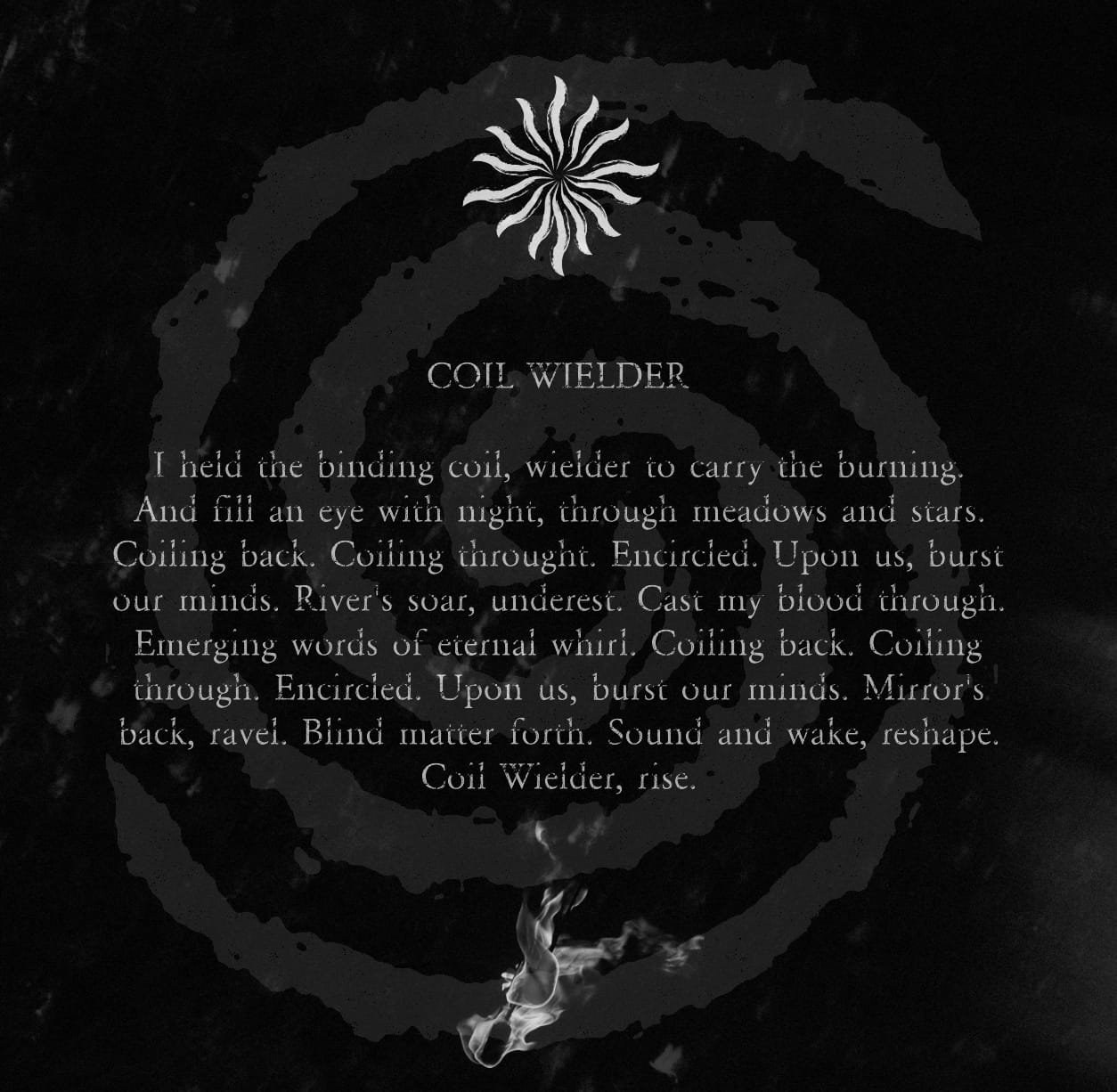
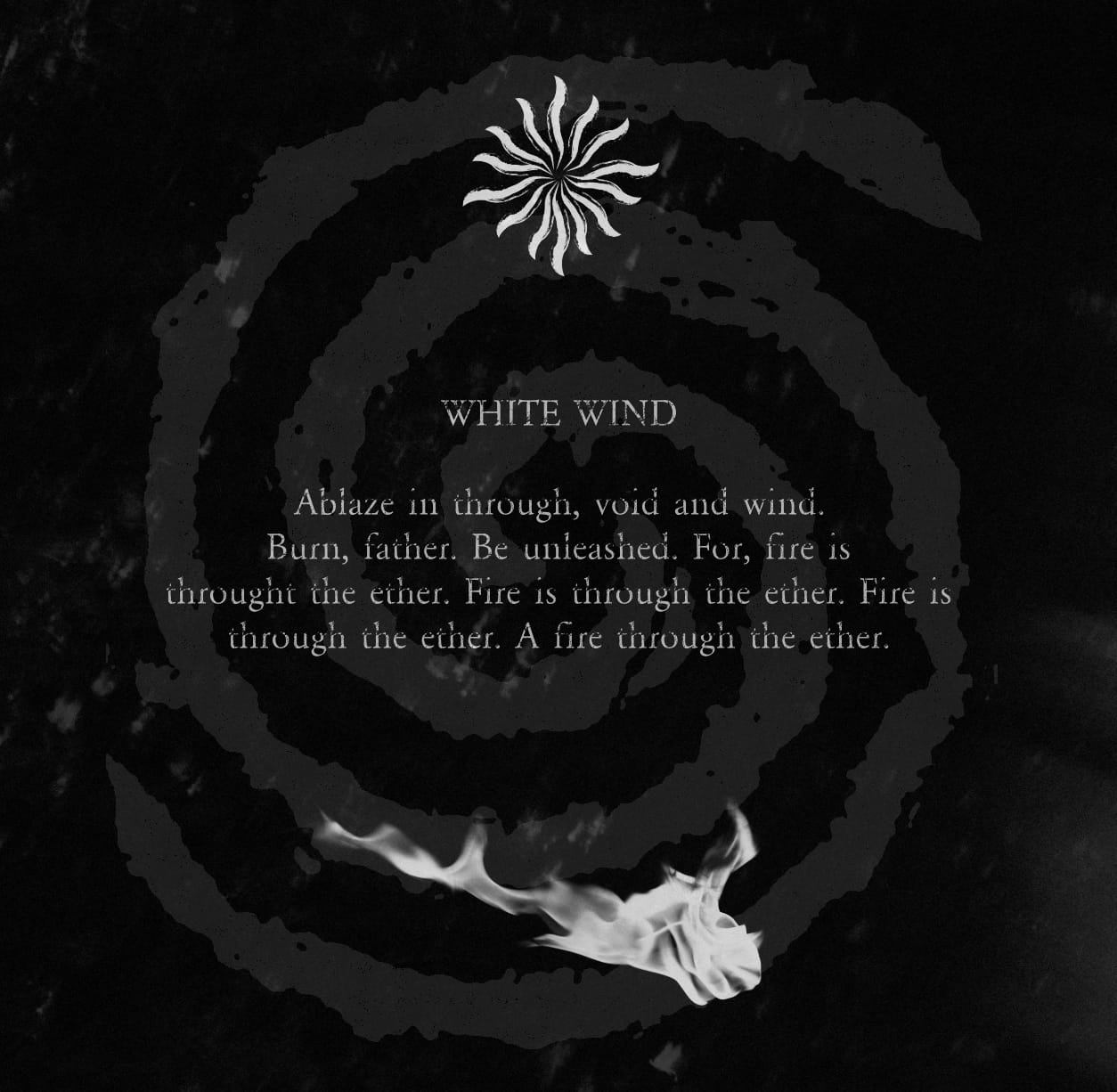
The subtitle, “A Fire Through The Ether,” is doing more work than it looks. Kévin wanted the title to read as a statement: that fire, however brief, leaves a mark on space and time. The cover shows a single flame rising into a blurred horizon, the fire breaking the frame and climbing toward the sky. He traces it back to Heraclitus.
“I’m here following the footsteps of Heraclitus when he wrote ‘the lightning governs the universe,’ by putting the verticality of fire through the horizontality of the landscape, dividing it and giving the chance to make it perceptible. And in some ways starting a fire in reverence for those who left.”
Wyświetl ten post na Instagramie
That reverence is the actual subject of the record, not a decorative theme laid on top of it. The songs came out of mourning. “These songs were carved out of necessity,” Kévin says. “These songs were what gave me hope during times of mourning, and helped me cope with the avalanche of hardship during those times. They are, in many ways, giving an eternal memory, an eternal place, to those who passed, a way to praise them. A voice never forgotten.” There’s no recovery arc here, no neat resolution. The long-form sludge structure exists to hold the feeling open rather than close it.
He’s clear about whose school he went to. Neurosis and Cult of Luna first, then a longer list he doesn’t try to hide: Isis, Amenra, Joy Division, Asylum Party, Blut Aus Nord, Gorguts, Leonard Cohen, Lantlôs.
“I trusted what Neurosis and Cult of Luna revealed to me, went to their school, learned the lessons from those titans. And, hopefully, finding our voice, without wanting to be their disciples, but willingly, and openly being, their student.” The band’s own register sits in atmospheric sludge and post-metal: monolithic riffing, slow and often dissonant doom structures, long passages that pull toward post-rock before the weight comes back down.
Wyświetl ten post na Instagramie
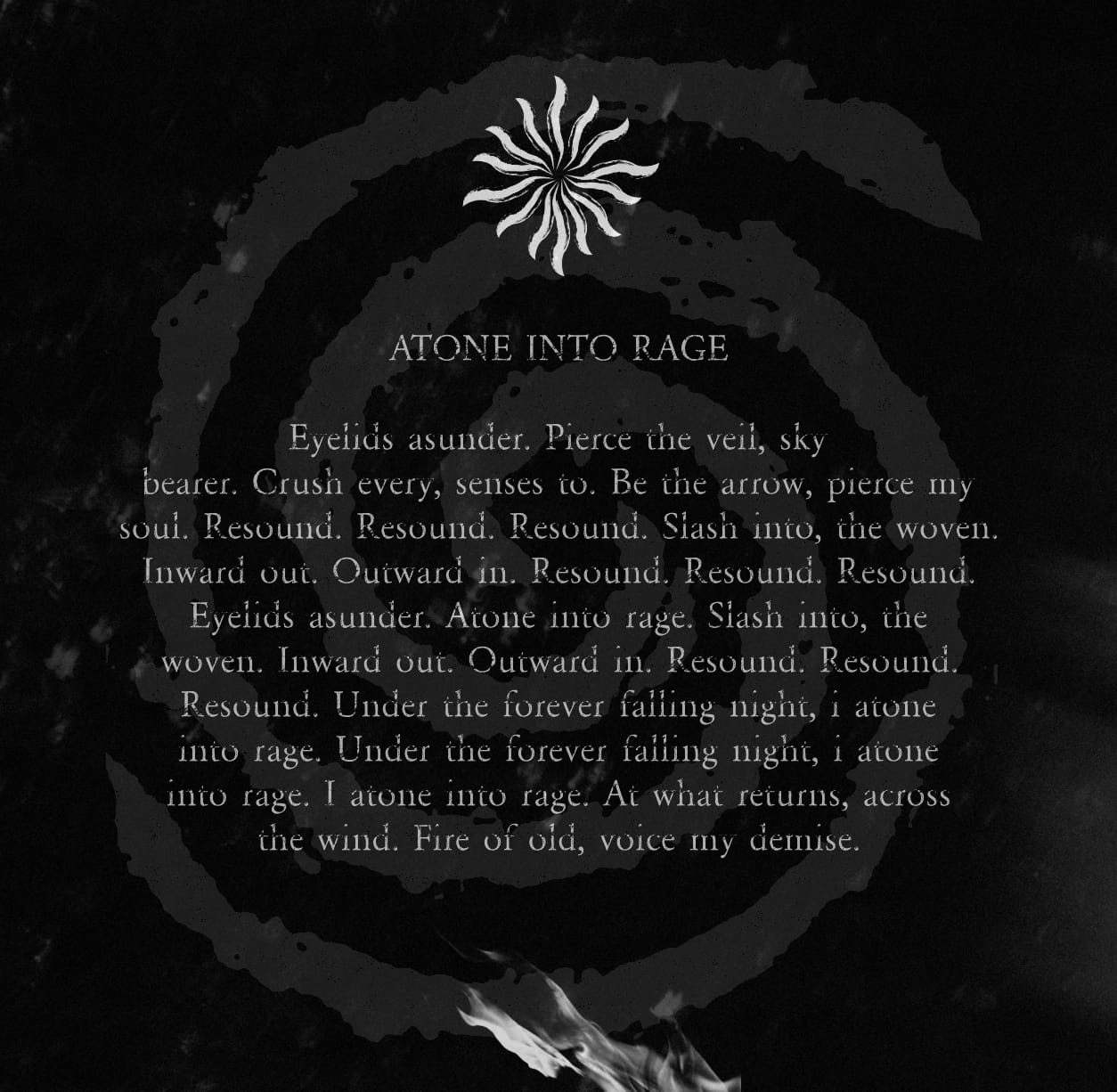
The three tracks each carry a different temperature. “Atone into Rage” is Kévin’s favourite of all six. “It encapsulates everything we are: the narrative composition, the harshness, the dissonance, the power of a riff, the experimentalism.” Its title and lyrics nod to Dylan Thomas’s “Do not go gentle into that good night.”
“Coil Wielder” sits more open than the rest, less the feeling of working inside a narrow space, though Kévin notes the middle section is still drenched in rage. Its closing section was written on the spot with the new members, in what he calls total spontaneity.
“White Wind” is the one that costs the most to play. “It carries the longing more explicitly, before it regains its strength in the heavy part.” He describes it as a simpler song, peeled back, melancholic: “a song to say goodbye with the chosen words.”
They recorded it the way they did the first one, semi-live, chasing how the songs hit in a room rather than a polished studio version. André Isidro handled the recording, with voices captured by Kamuya. André Martins played the session drums across 2025, and Kévin doesn’t undersell what he brought.
“You could throw in any Converge or Opeth song and he would replicate it without sweating. His creativity is all over the new EP, there’s no way anyone would not notice it.”
Wyświetl ten post na Instagramie
The band sit inside a busy stretch of the Lisbon heavy underground.
The members’ other projects, Reia Cibele, Moloch, ReignOverClouds and Skyllar, give them a working history in what Kévin describes as the very harsh living conditions of the city right now. He sends a shout out to friends in Agitat Solum, Lord of Confusion and Mouthful of Grief. The label came after the fact. The band finished the EP not knowing if anyone would care, sent it to Raging Planet, and got signed into the label’s long catalogue.
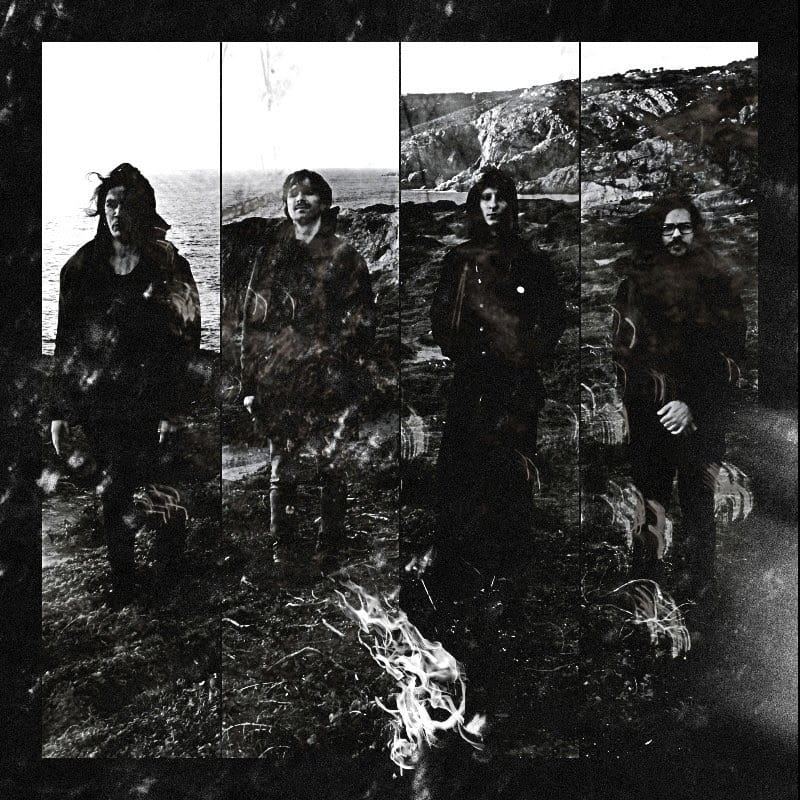
“Marrow Part II: A Fire Through The Ether” came out via Raging Planet on May 4, 2026, with a first single ahead of release. Artwork by Kévin Guimet, band photo by Cristina Fridenand.
🔔 IDIOTEQ is ad-free, independent, and runs on one person’s time. If you want it to stay that way: DONATE via PayPal 𝗈𝗋 SUPPORT via Patreon.
Stay connected via Newsletter · Instagram · Facebook · X (Twitter) · Threads · Bluesky · Messenger · WhatsApp.