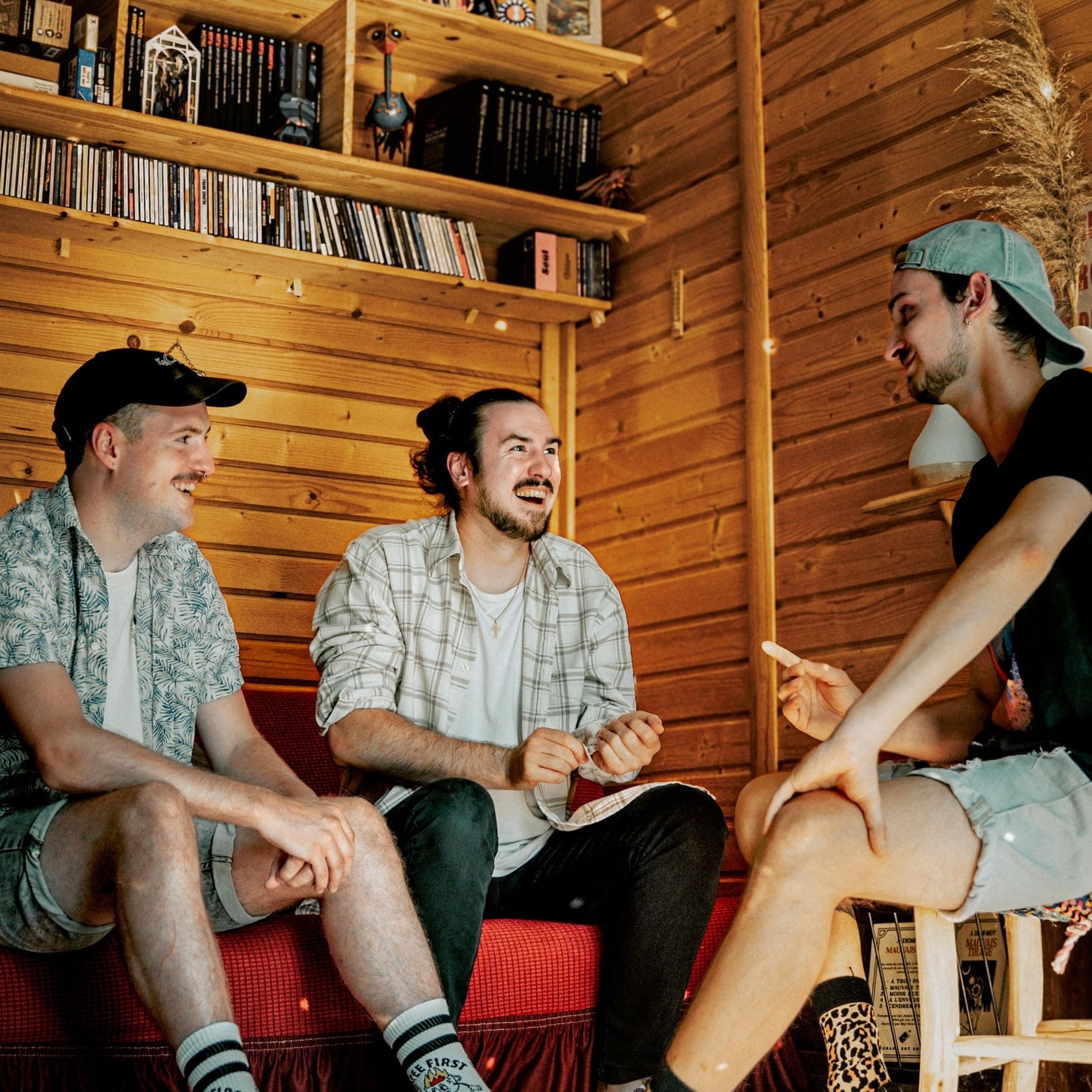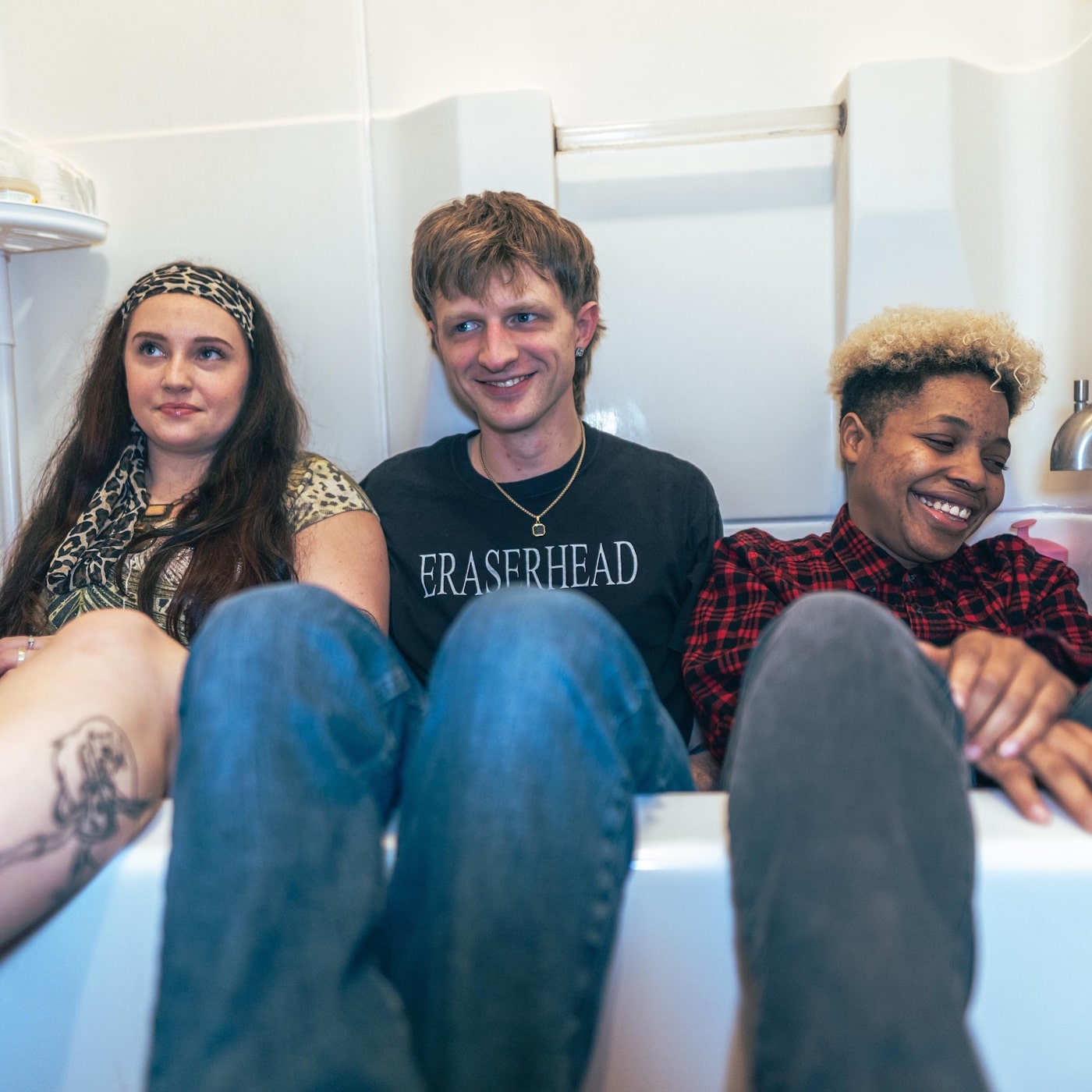

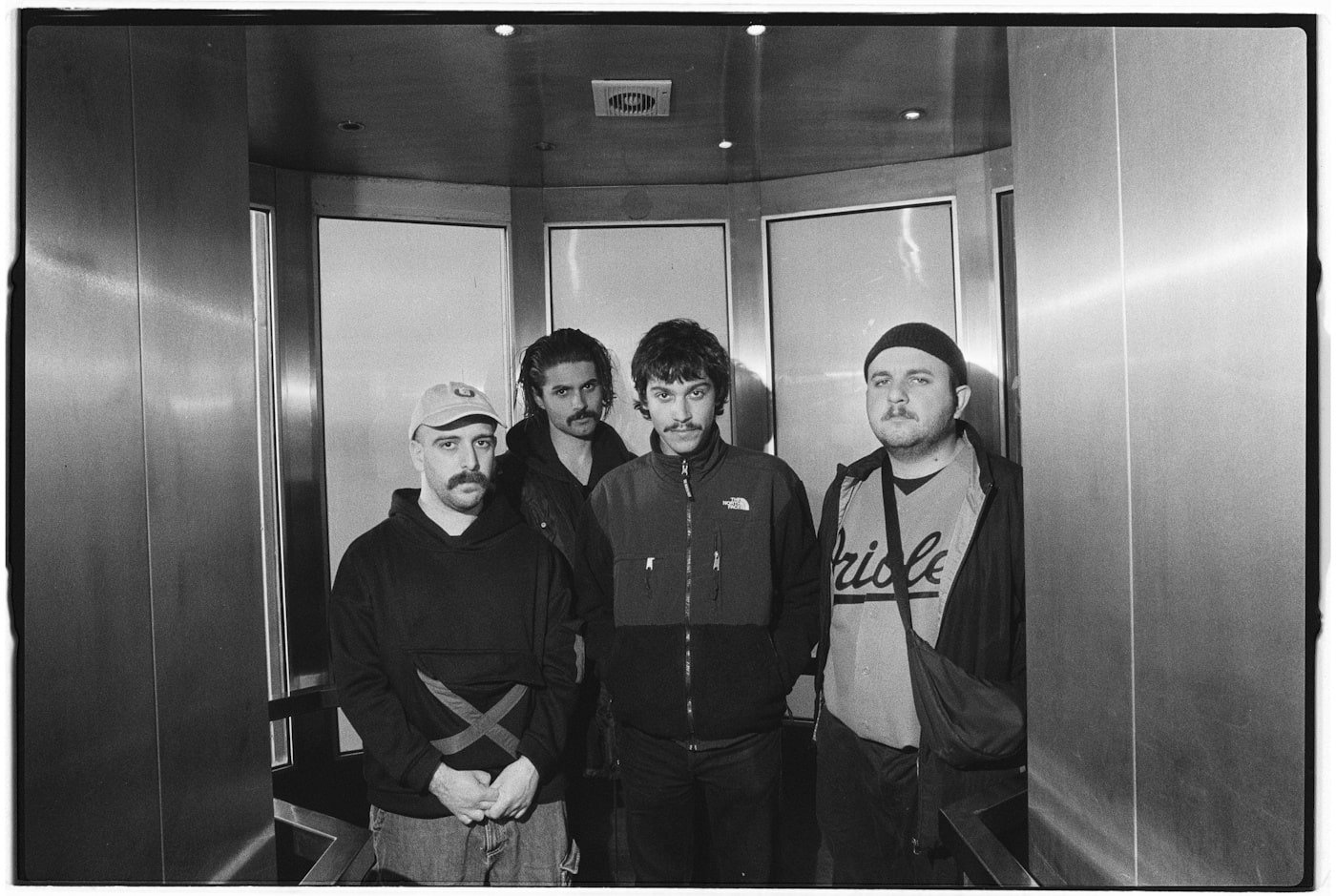
Hetta’s debut full-length “Acetate” arrives on November 21st with a clear sense of lived time behind it. The record follows a self-released EP and a four-way split on Zegema Beach Records, but the real backbone is the stretch of years the band spent touring almost weekly, playing wherever they could, and tightening the bonds that shaped the album.
Recorded with Jack Shirley and built from 13 tracks that move between melodic undercurrents and jagged rhythms, “Acetate” reflects the years the band spent navigating life on the road, day jobs, and an underground scene that keeps mutating around them.
João describes that period bluntly: “Since the EP and ZBR split era we’ve been playing almost every week. Between life and jobs and other stuff, we only really slowed down to actually write and record the new record.”
Those years put them in front of bands they felt aligned with, and he keeps returning to how natural that camaraderie felt. One example he gives is Crossed, a band they clicked with immediately—“the hang outs feeling just as good as playing the shows.” He sees these memories as something that follow them back into the rehearsal space, shaping the instinctive way they work.
Alex talks about reaching a point where they had to stop repeating old material and lock themselves in their Montijo studio. After playing the same songs from “Headlights” and the split for two to three years, they knew they needed to refocus: “It feels weird constantly playing the same stuff for that period of time and still call yourself a working band.”
They blocked off weeks, brought their lunches, and treated the process like a job—arriving at the same hour every day, filling a whiteboard with early skeletal forms of songs, storing rough video clips in a shared folder, and slowly figuring out what stuck.
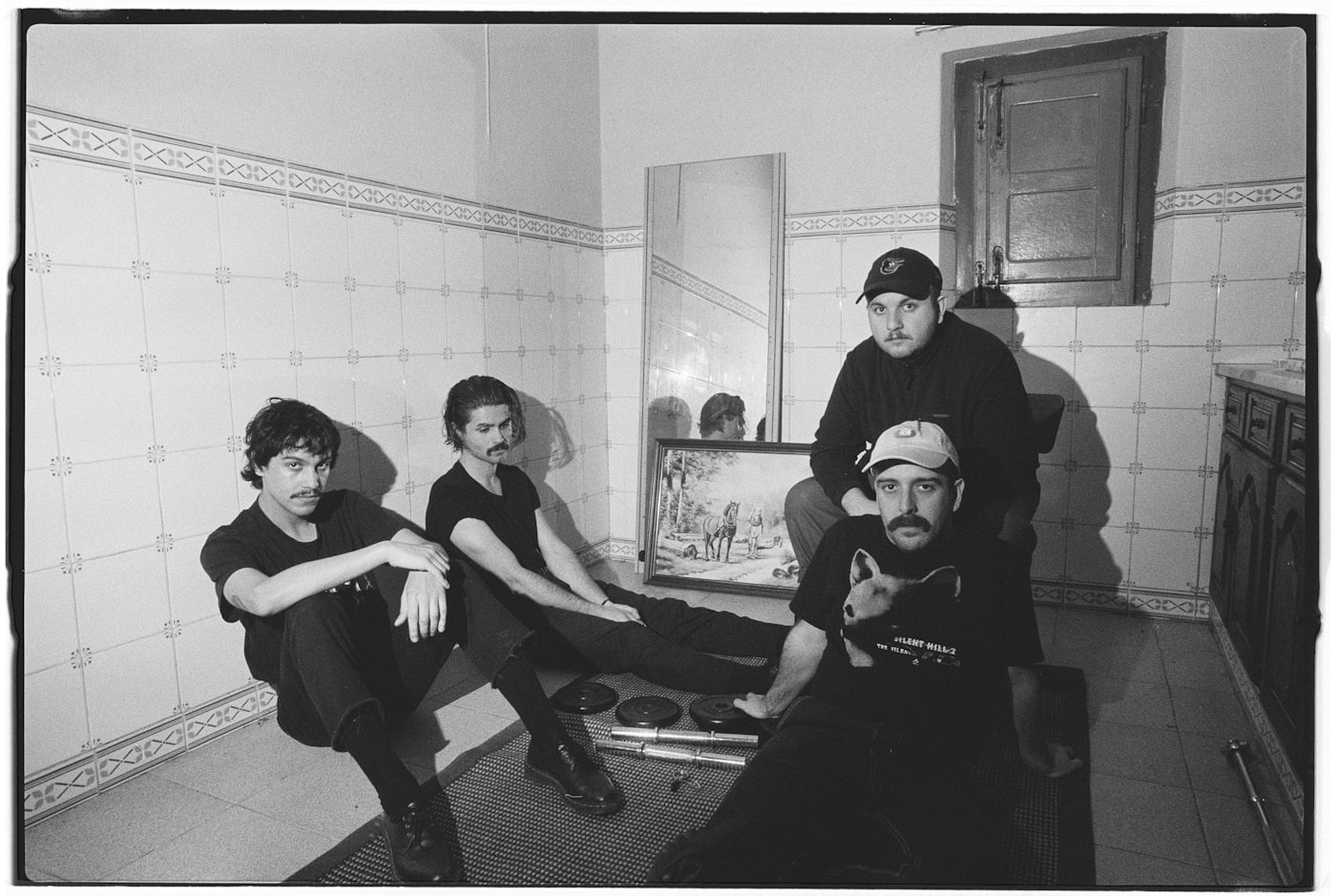
He remembers productive days where ideas snapped into place and others where nothing worked, but the permanence of that routine became a turning point.
Over these months, the band got deeply interested in structure—naming verses and bridges, thinking about the “mathematics of a simple song,” and trying to fuse their influences into short pieces that carried pop logic inside their more chaotic tendencies. He references Some Girls, Converge, The Locust, The Blood Brothers, Jeromes Dream, and At The Drive-In meeting the Pixies, using them as guideposts rather than templates.
Simão frames the last four years of touring as equally important. For him, seeing ideas become real onstage and meeting people across Portugal—and occasionally Europe—has been the most rewarding part of being in the band. But he also admits that relying on the same nine released songs for so long pushed them toward new material. The repetition “started getting stale,” and that discomfort fed directly into the writing process.
He notes that it took around two years from the first ideas to the finished recordings, and a noticeable amount of work ended up discarded. This time, the writing was more deliberate, and they became comfortable shelving parts that weren’t going anywhere instead of trying to force breakthroughs.
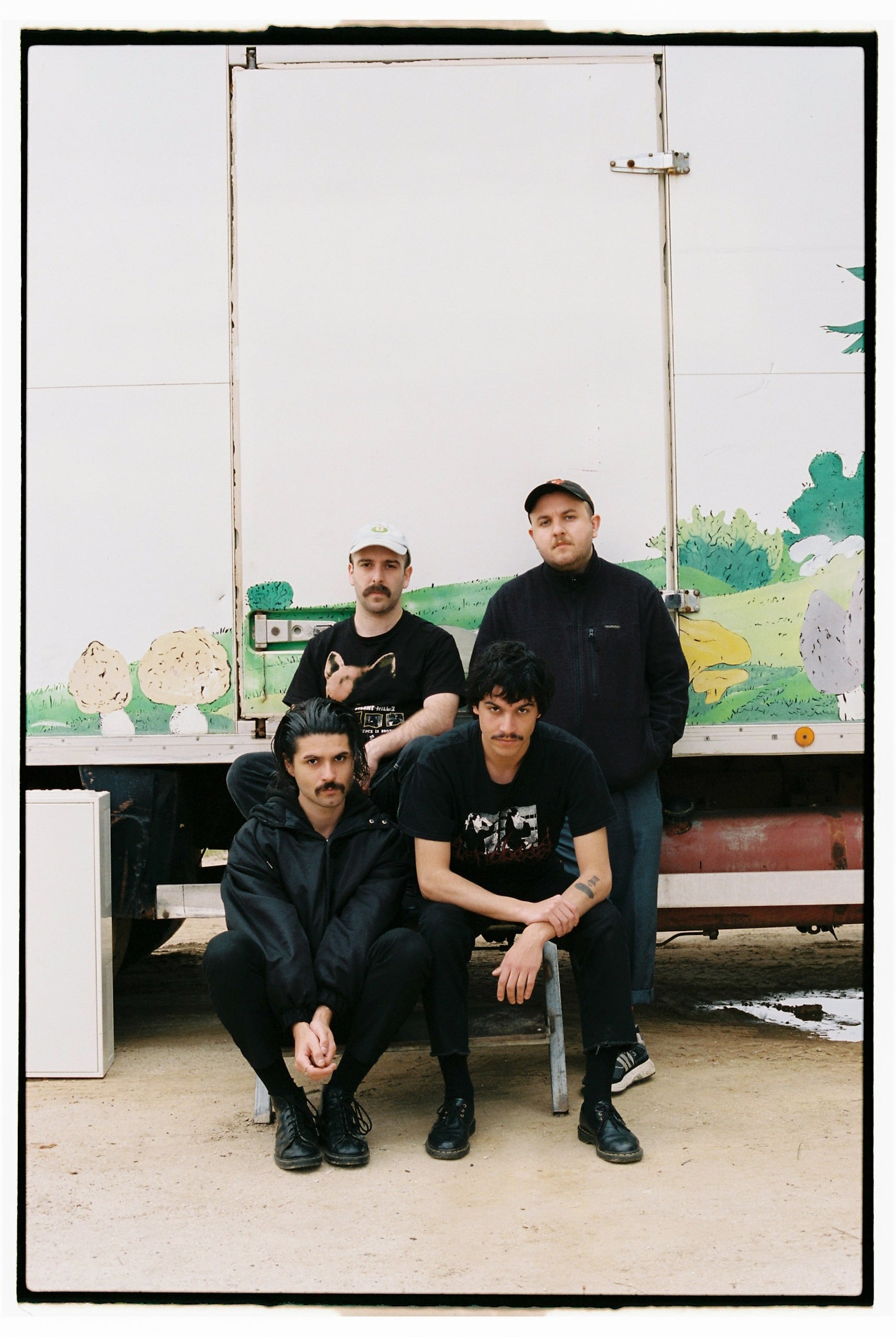
“Acetate” carries that sense of deliberation. Alex describes starting each session by staring at the whiteboard, choosing whether to begin something new or salvage older scraps. Many songs began as procrastination from finishing what they’d already started, but they pushed through sections by playing parts over and over until the next idea surfaced. Their approach allowed room for both extremes—songs built on a single riff, two notes, two vocal lines, and others among the most complex they’ve written. Vocals came last, acting as connective tissue: “Attempts at writing choruses on top of discordant excitement,” he says. “Disjointed lines with weird sentences (that make me happy) slithering between weird heavy riffs. Melody where melody is not expected.”
View this post on Instagram
João points out that many ideas were streamlined before the studio, and one full song was cut. He sees the record as a place with sharper contrast than anything they’ve done so far—more space between melodic moments and the spastic riffs, and a clearer divide between the instruments and the voice.
Simão expands on that contrast, noting how the quieter moments became some of his favourites. He mentions how “Caught Again” and the second half of “Triple Tracy” feel “dreary and miserable,” while “Buckteeth” carries a brighter, almost yearning tone. The clean section in “Husband and Bribe” strikes him as the most claustrophobic part of the album despite being more melodic than their previous work. Only one song was cut at the recording stage, but he recalls how several earlier ideas were abandoned months before: “It’s a funny feeling realising an entire song you wrote 6 months ago really isn’t that good.” Having the time and space to come to those realizations, he says, “lit a fire under us.”
View this post on Instagram
Visually and lyrically, the record grew from a loose conceptual impulse.
Alex wanted to write a sort of conceptual album without naming it as such, circling around a world similar to his own life but warped—“tin people bore dull children, teeth were made of sand and I could not lie.” He used that imagery as a way to write honestly and visually. The title “Acetate” came from the idea of transparency and because, in his words, “it sounded and looked cool.”
View this post on Instagram
The cover photograph sets the tone. António Júlio Duarte allowed them to use a two-decades-old image of a car crash simulation for firefighter training. That picture, extending across the sleeves and back cover, captured something that aligned with Alex’s ideas: preparation unraveling in the face of an uncontrollable crash, bodies thrown into the moment, and the blurry line between composure and self-inflicted chaos. He talks about the people left behind when moving forward too fast—“trying not to be young or old. Trying to be in a band. The boring old stuff.”
Simão notices an unplanned connection between the album cover and the video Porti made for the first single “Plainclothes Man.” Both images center vehicles, but where Duarte’s photograph is cold and violent—almost angelic in its severity—the video’s shots from the tour van feel warm and nostalgic.
Their view on the Portuguese underground adds another layer to “Acetate.”
Alex recalls the attempt to make up for lost time. They started playing sporadically around 2018, wrote most of “Headlights” between 2018 and 2019, and planned to play shows only after releasing it. Then the pandemic froze everything for almost two years. Once shows resumed, they played as intensely as possible.
Coming back from covid, he saw artists in Portugal trying to reclaim a small, fragile scene and rebuild excitement around live music. Hetta’s sets carried a lot of energy, and he thinks some of that aligned with a group of people eager for something to reconnect with. But he stays realistic: bands shouldn’t play for whatever reaction they expect. “You do your thing whenever and wherever you can,” he says, guided only by the idea that a younger version of yourself would think your band is worth seeing.
He sees diversity in the audiences and notes that underground music has always had its place, even with stretches of low support. Still, the lack of venues makes consistent touring hard—not for lack of listeners, but for lack of infrastructure. He mentions bands like clericbeast, Fear The Lord, Reia Cibele, Prado, bbb Hairdryer, Maquina., Cave Story, Cortada, Mouthful of Grief, Ideal Victim, Cobrafuma, Borf, and Heroína, all facing similar challenges. But despite those difficulties, he remains confident in the community’s ability to keep shows happening.
Simão adds context from a different angle. Portugal, he says, is “a weird place to create and play music in.” There’s an engaged public, but touring is structurally difficult—rents are too high for small venues, occupied spaces aren’t as common as elsewhere in Europe, and the country is geographically awkward for foreign bands. Cultural budgets go toward tourist-friendly events rather than small venues. He calls it a community of endless potential, but one where infrastructure blocks long-term growth.
He also stresses how fortunate Hetta have been. They started at a moment when screamo and post-hardcore hadn’t had much new movement in Portugal for a long stretch, and a renewed interest in these sounds was forming online. He also points to the richness of Portuguese music beyond their lane—free improv, electronic music with recognition abroad, abrasive punk bands old and new.
“Acetate” lands in the middle of that landscape as a record shaped by repetition, movement, stubborn work habits, and a community that survives in spite of unstable conditions.
Upcoming shows include November 21st at CSA Las Vegas in Málaga, November 23rd at Wurlitzer Ballroom in Madrid, December 4th at Casa Capitão in Lisbon, December 18th at Lovers & Lollypops in Porto, December 19th at Lúcia-Lima Associação Cultural in Cadima (Coimbra), and December 20th in Montijo.