

Dave Graney gave Royal Commission an early nod on Triple R after playing “The Woman (Who Cannot Be Named),” singling out the fact that Dean Robb had recorded the whole thing on 4-track. Louder Than War had already picked up on the first single “Emotional Support Australian,” describing the Melbourne project as a brash, playful start to a new run of songs. By the end of March, Royal Commission was sitting at #8 on the Local Sounds Top 100 trending tracks chart.
That alternative rise has happened quickly. Royal Commission only launched in January, with a plan to release one single each month through 2026.
On March 2, Robb put out the first EP, “Dossier #1,” a four-song release available through Bandcamp and the usual streaming platforms.
It comes out of a bedroom setup, but the working method is stripped back even further than that usually implies: a TASCAM DP-006, second-hand guitars and pedals, a $13.95 microphone from Jaycar, a drum machine, then Audacity for a basic mix, master and file export. Robb has played in Disapora and Guys Doing Stuff, the latter appearing on ABC TV’s “rage,” but Royal Commission keeps things narrower and stranger, sitting somewhere between alternative rock, post-punk, DIY recording, outsider pop instinct and the occasional singalong.
The EP’s four tracks do not try to settle into one mode. There is a disco detour, a Gospel retelling barked through noise, a direct guitar-pop song that radio programmers keep circling back to, and an instrumental pieced together during a power cut in the Australian summer.
“The Woman (Who Cannot Be Named)” started somewhere else entirely. Robb says it was “originally a lot slower, with a rant over the ‘Peter Gunn Theme’ style main riff and the guitar doing what the horns did on that track.” Then a mistake with the drum machine changed the whole thing.
“I put the wrong preset into the drum machine when messing around with it and it changed everything for the better – the speed, the singing style – suddenly you could dance to it!” That shift matters because the lyrics go the other way, written “from the perspective of a third party in a domestic dispute who is being used as a pawn by both sides, but would rather be left out of their nonsense altogether.” It is also the EP’s focus track, pitched by Robb as a collision between alternative rock and disco.
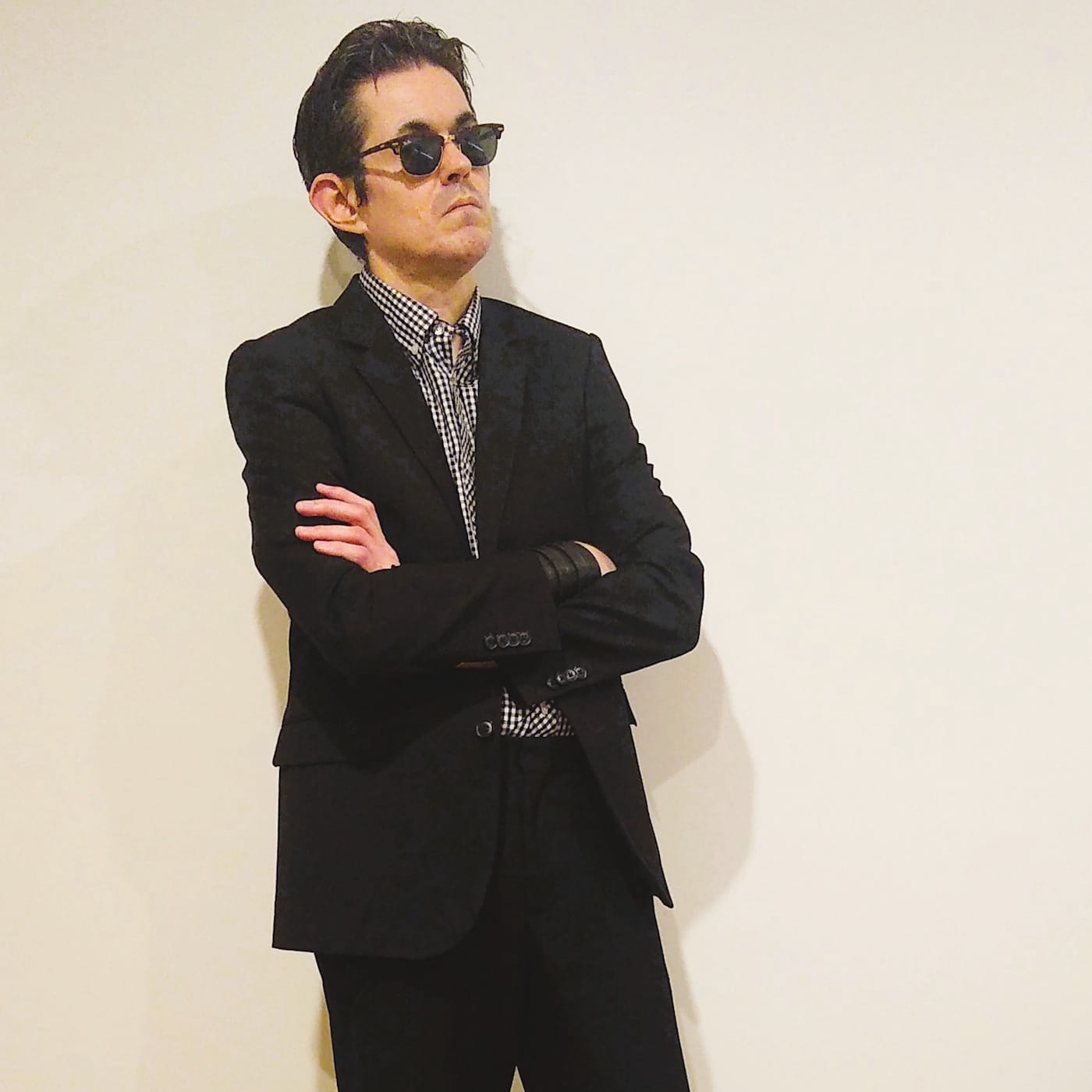
“March #23” takes an even less expected route. Robb is not especially religious, but he points to Pasolini’s “The Gospel According to St. Matthew” as the starting point, especially the way its script sticks to Scripture. In his version, those events are still there, but they are being followed by an observational documentary crew.
“Like a street preacher (or film director) I’m shouting it all through a megaphone over some of the most unholy noise that you’d never hear in church,” he says. “Again, I love that contrast, as you’d usually hear far more aggressive lyrics over this kind of backing, but it’s just me making a movie.”
The track story pushes that idea further, turning it into “The Gospel According to St. Matthew” set to grunge riffs, with Jesus and Judas interrupted by a Louis Theroux-style voiceover: “I began to sense a change in mood at the Supper. There appeared to be tension between Jesus Christ and his disciple Judas Iscariot over their interpretation of recent events.”
Then comes “Don’t Go Then,” which Robb simply calls “the nice one.” Its construction is straightforward enough to become part of the song’s appeal.
“This is fun to play because it’s mostly open chords (except for the bridge) and they all blend together by starting off with a G, then you keep your fingers on the 3rd fret of the B and E strings while playing the rest.” The lyric came from a rough phone recording made while he was writing it. In his reading, it is about trying to talk to someone who has reached their limit and fallen back on the old line that you will never understand, while pushing back with the suggestion that the opposite may also be true.
Robb says it plainly: “it’s all gonna be OK.” For all the odd angles elsewhere on the EP, this is the one radio playlisters tend to pick first, “even at the heavier stations (they love a ballad!).”
“John Doe #3” closes the record with the least stable recording circumstances and maybe the clearest example of how Royal Commission works. “This was recorded during a power cut,” Robb says.
“The advantage of working on 4-track is that it can run on batteries, as can the effects pedals and I can trigger the drum machine from my phone, so that’s exactly what I did.” It was recorded on a hot night, well over 35 degrees, and he leaves the conditions in the take: “you can hear my fingers slip over the frets a couple of times and one or two of the phrases are off due to doing it all in 35+ degree heat.”
Musically, the piece came from two leftover parts that had sat in the maybe pile for a while. “I played some MIDI brass (which is now the main guitar line) over the jazz chords and it finally all clicked into place.” In the EPK, Robb reduces it even further: “the wildcard – a ‘spy theme’ instrumental recorded during a power cut.”
“Dossier #1” is out now. Royal Commission is based in Melbourne, Victoria. You can contact the artist via royalcommissionband at Gmail.
.