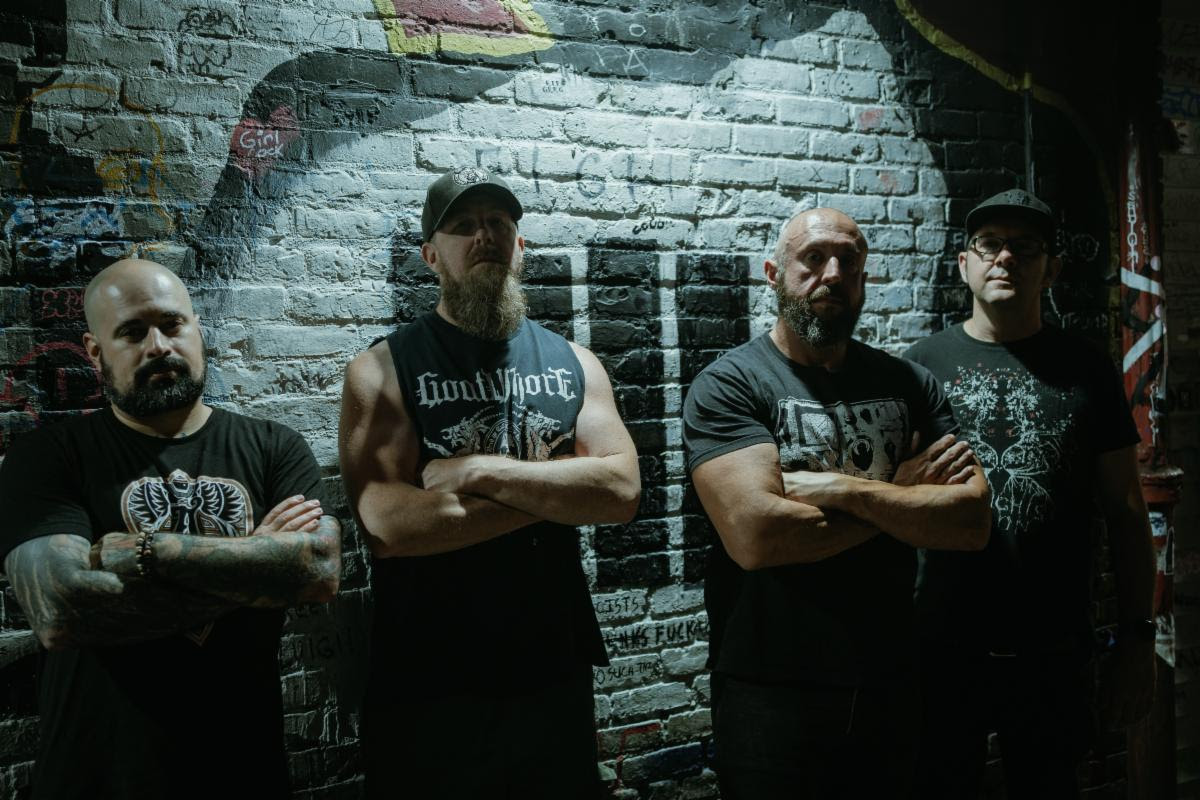


The Philadelphia trio DRILL FOR ABSENTEE resurface with “Strand of a Lake Volumes 1 and 2”, their first new release since 1998, out October 24 via Expert Work Records. Known for merging precision with tension, the band once again bridges math-rock intricacy with post-hardcore intensity.
The record’s roots trace back to guitarist and vocalist Michael Nace’s unexpected discovery of YouTube’s math-rock scene. “It was far removed from our 1990s ethos,” he explained. The rediscovered spark led to “Hums,” the band’s first new composition and the start of their remote collaboration with bassist and vocalist Kevin Kelly, now based in Los Angeles, and drummer Ken Kuniyoshi, who joined from Okinawa after Nace found his covers of 90s post-hardcore tracks. “That’s how it started,” Kuniyoshi recalled. “First with Mike and I exchanging isolated tracks and overdubbing, and Kevin joining on bass, which became the reincarnation of Drill For Absentee.”
Distance reshaped the band’s writing process. “Our creative process in the 1990s was much more conventional,” said Nace. “Now, the fact that we live in three different places has completely changed the way that we collaborate on new music.”
Instead of rehearsing weekly, they now trade digital files, refine takes across time zones, and build compositions that layer precision and atmosphere. “Being oceans apart didn’t stop the creative process,” Kuniyoshi added. “We set ourselves apart from others as an international band.”
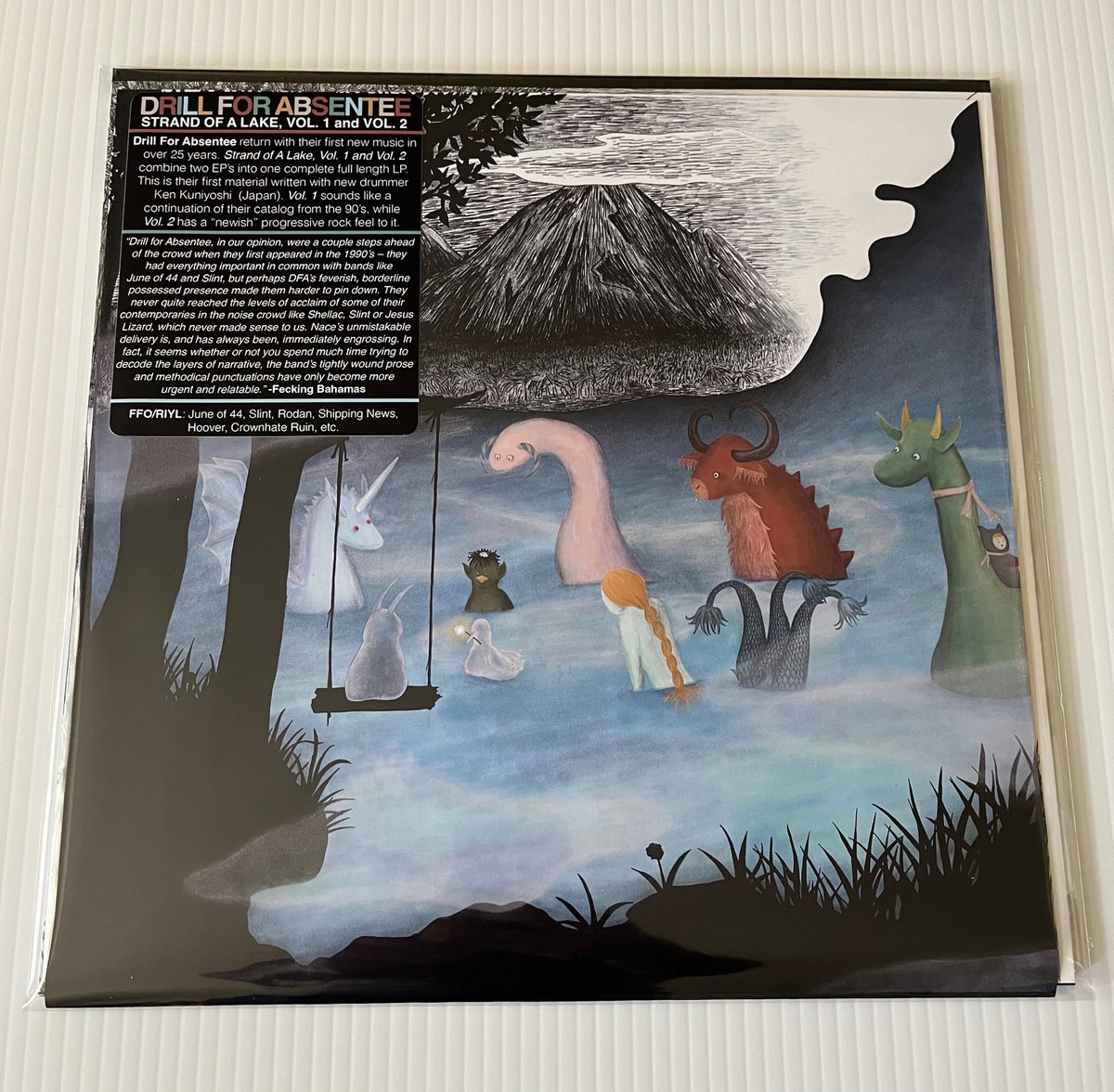
The new double LP, described by the group as a “double EP,” mirrors two creative phases. Volume 1 captures their angular, discordant 90s sound—sharp edges, unpredictable rhythm changes, and restrained aggression. Volume 2 ventures into broader rhythmic and textural territory. “Passing tracks back and forth and recording in our own spaces allowed plenty of room for experimentation,” said Kelly. “It led us in some unexpected directions.” Kuniyoshi added, “We sound like a different band on each side – Vol 1 sounds like a continuation of Drill For Absentee from the 90s, and Vol 2 has a progressive-rock feel which was a very pleasant surprise.”
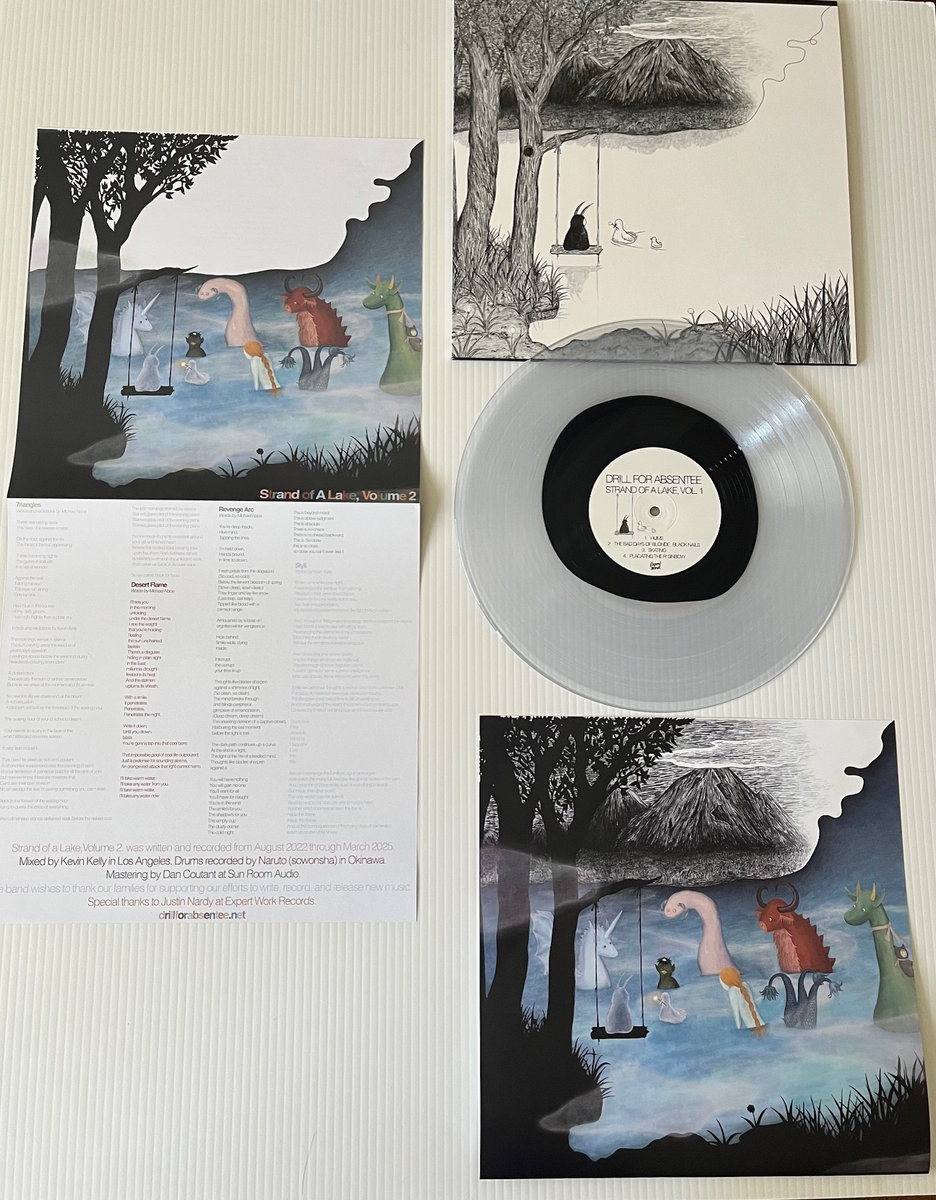
At the core of the album lies a reflection on time, identity, and endurance. “We’re time travelers,” Nace said. “These songs honor our 90s selves while embracing the freedom of now.” That duality runs through the material: the controlled dissonance of “Hums” and “The Bad Days of Blonde, Black Nails,” the reflective drift of “Skating,” and the intensity of “7riangles” and “Revenge Arc.” The record finds equilibrium between their early restlessness and a more expansive, textural curiosity that only years of distance could shape.
View this post on Instagram
Kelly describes the new sound as “the foundations of our post-hardcore roots, together with all of the new and eclectic music influences that we’ve picked up over the past 25 years.” Despite the evolution, the essence remains familiar. “It still sounds like Drill for Absentee,” he said.
“Strand of a Lake Volumes 1 and 2” blends what once defined the band with what now sustains it—a reunion that feels more like a reconfiguration than a return. The record is out now via Expert Work Records.
Read the band’s full track-by-track commentary below, authored by Michael.
Hums
Hums was the first new song that we worked on as a reformed band, and originally, it was going to be the only song we’d finish and release. The genesis of the song was the B-section riff, which came about after not having played electric guitar or any kind of music similar to DFA in decades. The other song parts flowed out of that original idea. The middle section of the song features a unique polyrhythm, with the guitar playing a phrase in 11/8 while the bass reprises the verse riff in 3/4. The drums phase in and out of these two time signatures, playing along with the bass but accenting the guitar’s chord changes in 11.
The Bad Days of Blonde, Black Nails
Lots of song ideas spun out of the Hums project, many of which didn’t stick with the band. Blonde, Black Nails, however, showed promise because it captured the energy of our noisy, discordant early music in 1995-96. There is also a wicked time signature overlap in the third verse.
Skating
DFA has a tradition of juxtaposing songs with a post-hardcore ethos with darker, quieter tracks, such as the inclusion of Naked Singularity on our original Circle Music EP, or The Sear is Watching, the bonus track on the recent Circle Music + 4 compilation. Skating definitely represents this kind of track for EP 1 of Strand of a Lake. It was built upon 2 sparse phrases of repeating guitar harmonics. Ken’s jazz/breakbeat-style drumming in the verse really came to define the tone of the song. The middle section has the guitar, bass, and drums playing independently of one another, but meeting up at the end. Note also the 3 carefully-placed cymbal accents leading into the middle section, achieved by Ken scraping a coin over his cymbals. These are the two figures skating apart from one another, then coming together as the whole band comes in.
Placating the R’Sinbow
R’Sinbow follows more of a verse/chorus pattern, with the bass and drums cutting through the second verse in 6 as the guitar plays in 7. I think the middle section of the song, with the long rests at the end of each phrase, is probably reminiscent of Hoover and Crowhate, who love to add time and space onto the end of their phrases to build tension that releases when the 1 finally hits. We always loved that when we were kids.
7riangles
I started listening to hardcore punk again as we started to write for EP 2, and it dawned on me that we might be falling into a pattern of not pushing the tempo enough in our new music. So, I started from a position of developing some new, aggressive guitar ideas with a faster tempo. I think 7rianges tops the BPM of any of our new music. There is a lot going on in this song, and the guitar parts in the middle section became platforms for Kevin and Ken to develop complex riffs that begin in unison with the guitar ideas and then depart to a point where they’re almost ignoring the guitar completely. That’s an idea that ended up persisting across all of the tracks for EP 2. Another interesting note is that, after the bass and drum parts were developed, I went back and completely rewrote most of the guitar parts. This meant that the new guitar parts were inspired by the bass and drum ideas that had been based on the original guitar ideas. Since we work on songs remotely, this kind of technique is how we recreate the unbridled creativity that you get when you’re working in the same space together.
Desert Flame
This is another track where the bass and drums go on a journey through the second half of the song and seem to float over the persistent, repeating guitar figure. This is a really new aesthetic for DFA. Some people are saying that it is a “prog rock” inspired idea, but I can’t say that we’re necessarily obsessed with prog rock bands or trying to recreate that style (though I am a huge fan of King Crimson’s Discipline, Yes’ Fragile, and Bitte Orca by the Dirty Projectors, and I guess that they do similar things on those albums). The bass and drums definitely seem to have the listener arrive at some kind of destination, but it’s a winding road to get there.
Revenge Arc
This song was put together originally with a longer, more drawn-out structure that Kevin really pared down, which is good. I think Ken does some beautiful stuff on the drums in this song as well. It is definitely the darkest and most brooding track we worked on across both EPs.
Styli
I’m a huge fan of Slint’s untitled 10-inch, and I love the guitar tone on both of those tracks. It had been my hope to capture some of that with the guitar tone on Styli. This was another song that got a total re-edit from my original song structure idea, with Kevin swapping the original beginning and middle sections. I think what really makes the track stand out are the incredible vocals that he put together, including the final outro section, which delivers a tragic note to the record.