

When old subcultural artifacts return, they usually come filtered through nostalgia or remixed into something cleaner. This isn’t that. After more than 25 years out of print, the early book series written by Kurt Brecht of Dirty Rotten Imbeciles has resurfaced through Blackhouse Records, reconstructed from original files and artwork and pressed into professionally bound editions that retain their odd punch.
For years, rare copies drifted across auction sites for absurd sums, but most people only ever glimpsed their covers in ancient mailorder catalogues. Scott Rozell of Blackhouse remembers first seeing them listed next to the “Dealing With It” tape in the early 90s, always marked unavailable, always out of reach.
View this post on Instagram
Rozell eventually caught a D.R.I. show in Spokane in late 2024 and tried to talk books, but the noise swallowed the moment. Months later, he reached out directly, took custody of the source material, and spent the majority of this year rebuilding everything. He describes sifting through raw fragments, cleaning them, and matching the original feel. “I am incredibly proud of what we put together, and couldn’t be more happy to have these back in print, not only for Kurt, but for everyone out there who never had a chance to get their hands on one,” he says. The run includes high-gloss covers and corrected errors, plus an expanded lyrics collection titled “See The Loud Feeling.”

Brecht doesn’t present the books as lost masterpieces. He remembers trying to move boxes stacked in his apartment, not planning for rediscovery. When asked if it felt strange to see them revived, he shrugged: “I never really thought about that. I was focused on moving the thousands of copies sitting around in my apartment!” He doesn’t find the voice foreign, either. A few pieces had slipped his memory, but that’s the point of writing them down. The tone came from a place of shock instinct, a way to poke and document at the same time: “Provoke and document? Both, yes.”
View this post on Instagram
He expected parts to offend when he wrote them, and he expects parts to offend now. There’s no apology in the reissue. His stance is as simple as it was decades ago: “Don’t read them if you may be offended and don’t wish to be.” During reconstruction, he wanted to correct mistakes and then found more, so he fixed those too. Future editions might get further clean-up, not to soften content, just to tighten mechanics.
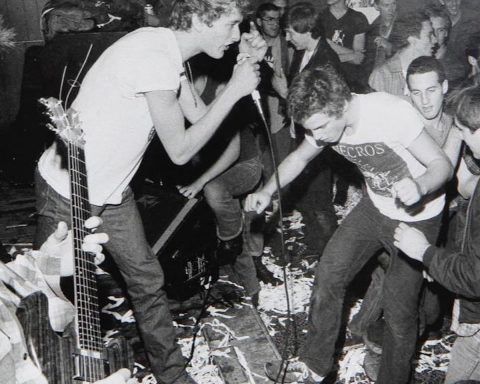
Touring remains central. Brecht says he’s still in the middle of underground culture, not watching from above. He likes the connectivity of the current era and how quickly bands can promote themselves. Younger crowds show up at all-ages spaces and skate parks, thrashing just fine. He mentions a band called World of Chaos, teenagers who played with D.R.I. recently, as an example of that spark. For him, scenes change shape but the current is alive.
If there’s a thread connecting early writing, early touring, and decades of road miles, it’s not a clean arc. “Fragments for sure!” he says. He still recognizes the person behind the pages, even when the stories feel distant. And when asked what hasn’t changed in all this time, he distills it to one principle: “Do It Yourself. DIY.”
A possible fifth book floats somewhere on his desk. If it materializes, he says it would be reflective and funny. He still sees younger writers blending literature and hardcore energy into something personal, and he thinks the raw connection survives.
Below, we get into the origins of those books, how touring shaped the writing, the process of rebuilding the manuscripts, their place in the current landscape, the risk of offense in 2025, teenage bands pushing forward, and what readers might find between the lines. Dive into the full interview.
Hey Kurt, I wanted to start with something simple — when you first started putting those early writings together between shows back in the day, did you ever imagine they’d come back around decades later, almost like old songs people suddenly rediscover?
No, I never really thought about that. I was focused on moving the thousands of copies sitting around in my apartment!
How did those moments of downtime on the road actually look back then? I’m curious if the writing was more like a survival outlet between chaos, or just another creative itch next to D.R.I.
A little of both.
Looking back at those four books now, what feels the most foreign to you — the voice, the mindset, or maybe the rawness of how it all came out?
None of it feels foreign to me. A few stories I had forgotten about so I am happy I wrote them down at some point.
You’ve always written from a place that felt brutally honest, sometimes even absurd in how it mirrors real life — what kind of headspace were you in when those pieces came out? Do you still recognize that guy on the page?
A headspace of trying to be shocking in a way. I very much recognize myself in my books.
I wonder how much of what you wrote was meant to provoke versus document — did you ever think of these texts as extensions of your lyrics, or were they born out of a completely different energy?
Extensions of my lyrics, no. Provoke and document? Both, yes.
Was there ever any hesitation about reissuing them now — like, how they might land in today’s world, where everyone’s looking for meaning or offense in everything?
They were offensive then and are offensive now. I never believed my books were all that great but some people like them so that kept me going. Don’t read them if you may be offended and don’t wish to be.
When you revisited the original manuscripts with Scott to reconstruct them, did you leave them untouched or did you feel tempted to edit or “fix” anything with the benefit of time?
There were mistakes in the originals and I was keen to correct them all. Then I found even more so we fixed those as well. I will fix others in the next edition I suppose. Also, we added a ton more lyrics to my complete collection called, See The Loud Feeling.
You’ve been through so many cycles of punk and hardcore scenes morphing, dying, and coming back again — do you feel the same pulse in underground culture now as in the ‘80s, or has it become something entirely different?
Something different but better. People are more connected now and information flows more quickly. Self promotion is easier for a band, for instance.
How do you see your place in that ecosystem now — still inside it, or more like someone watching from a distance but still deeply connected?
I am right in the thick of it!
Do you still get that same charge from touring with D.R.I., or is it more about keeping the spirit alive for the people who never got to see that first explosion happen?
I love touring and performing live! Always a new crowd thrashing! We try and play all ages shows se we can get the younger crowd in there. Skate parks a a lot of fun.
If you were to write something new now — not lyrics, but a fifth book — what would it sound like? more reflective, angrier, funnier?
I have some ideas. Reflective and funny I would say.
In all those years of chaos, touring, writing, and everything between — what’s the one small, specific thing that’s never changed for you?
Do It Yourself. DIY.
What’s your take on younger writers or lyricists trying to mix literature with punk or hardcore energy today — do you think that raw connection between word and sound still exists?
Yes, it does exist. I see and hear it all the time.
You’ve seen thousands of bands come and go. who’s caught your ear lately — maybe someone from 2024 or 2025 that made you stop for a second and think “yeah, this is real”?
World of Chaos. A band of teenagers who played with us recently.
When you think about the early D.R.I. years, the books, and everything that’s happened since — do you feel like it all connects in a straight line, or more like a bunch of fragments that somehow still belong to the same story?
Fragments for sure!
And last one — when people pick up these books now, what do you actually hope they see?
Ideas that the reader already had but that I brought forth in a way that makes sense to them.