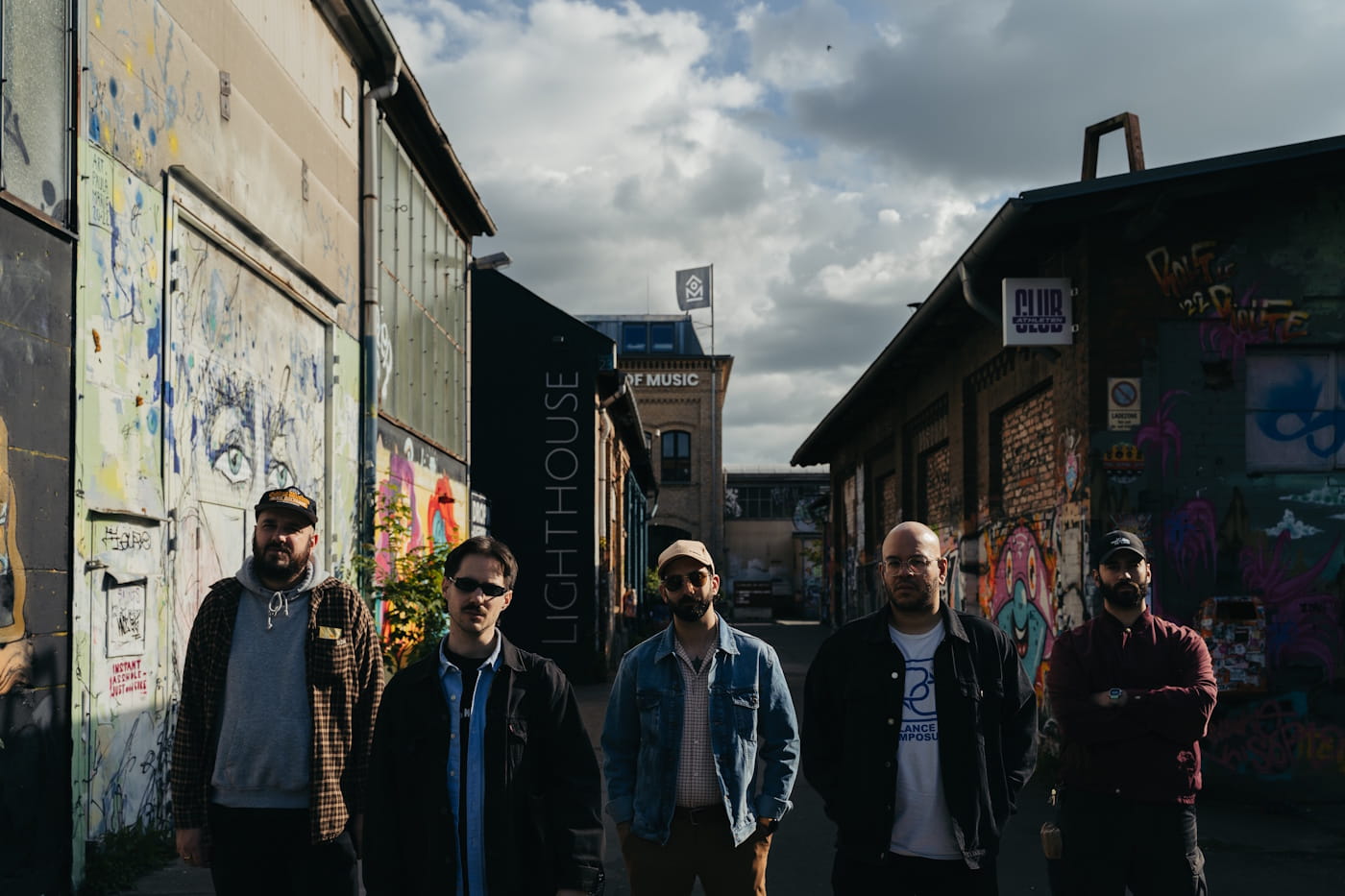

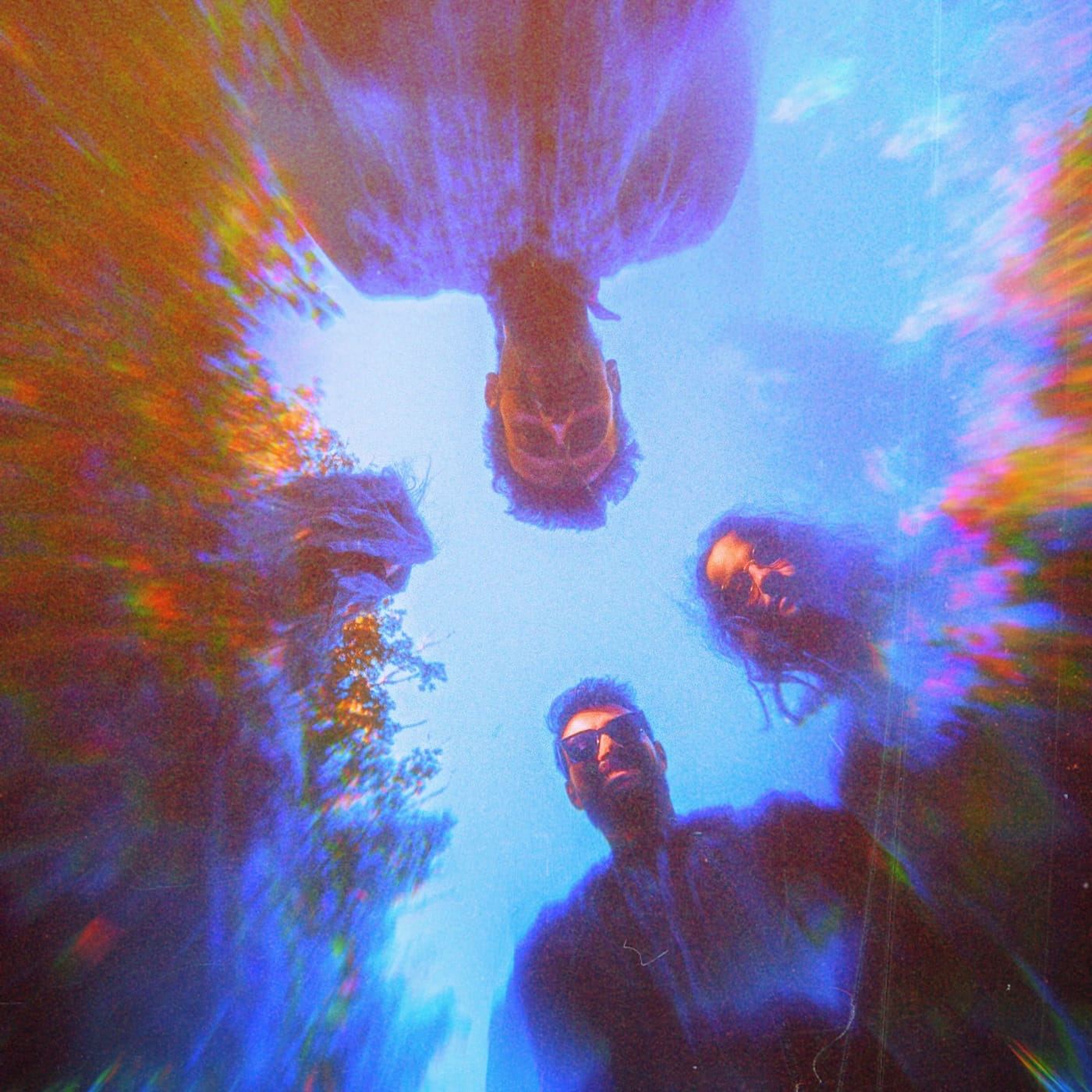
Half an hour outside Annecy, in a rural hamlet called Marcelette, there’s a barn that doubles as a workshop. It belongs to Lolo’s father. It’s also where The Blue Marmalades — Chris, Flo, Loïc (Lolo), and Seb — recorded their second EP, “River,” entirely by themselves. No outside engineer. No professional studio. Just four people, some foam for soundproofing, and a vocal booth made of old sheets.
“River” came out on February 13th, 2026 — six tracks that move through introspection, nature, mental health, love, and war. The influences are broad and worn openly: Pink Floyd, Led Zeppelin, Black Sabbath, Rival Sons, Grateful Dead, Jefferson Airplane, Grand Funk Railroad. But the band’s approach to recording is what gives the EP its particular character. Chris handled mixing and mastering despite having no prior experience. Everyone placed mics, everyone gave feedback on demos, everyone had a hand in shaping the final sound.
“From the start, our goal was clear: to create a sound and atmosphere that truly represent us,” the band explains. “We knew it wouldn’t be perfect, and it wouldn’t sound like a professional studio album, but we had full control over the project — no one outside the four of us influencing our artistic decisions.”
Budget played a role too. They didn’t have the funds for a professional studio, and they didn’t know anyone who was both skilled enough and interested. So they gave themselves a maximum of five days and got to work.
“Of course, doubts arose. None of us had ever produced an EP entirely on our own. We learned as we went, listening to every demo, sharing feedback, and tweaking each version until we reached the final result.”
The track order on “River” is intentional. It opens with the title track’s intimate questioning, moves through the Alpine beauty of “Summer in the Alps,” drops into the depression and addiction of “Dark Sun,” shifts into the passionate chaos of “Sweet Little Thing,” and closes with the war-torn weight of “Come On.” Despite the range, the band sees a thread running through it: “Four musicians expressing truth, reality, and creativity, leaving a raw emotional imprint on each track.”
Annecy isn’t exactly a hotbed for psychedelic rock. The Blue Marmalades are well aware of this. “The city isn’t particularly ‘rocky,'” they admit, though they point to a few local acts worth knowing: Mornifle and Black Chair Rite, both leaning more toward metal, and regional bands Howling Beards, Man In The Shack, and Whiteblank.
Three venues in Annecy host rock shows: Le Brise Glace, Le Bistro des Tilleuls, and La Coloc, which the band compare to music pubs in bigger cities. But from the start, they played wherever they could — bars, restaurants, association events. Not all of it was glamorous.
Chris remembers: “Sometimes we played in restaurants where people were eating fondue two meters away, talking and almost ignoring us. That’s when you realize you’re not always in the right place to be heard.”
Still, they kept at it. They landed spots at larger regional venues, played small festivals, and won a jury prize at a music contest. Outside Annecy proper, the region does offer some infrastructure for heavier and psych-leaning music — festivals like Palp Festival, Namass Pamouss, and Lunaris Festival, plus venues like Brin de Zinc that attract bigger touring acts.
“Annecy may not be a very ‘rock’ city, but we are rock at our core, and we will continue to be, no matter where we are.”
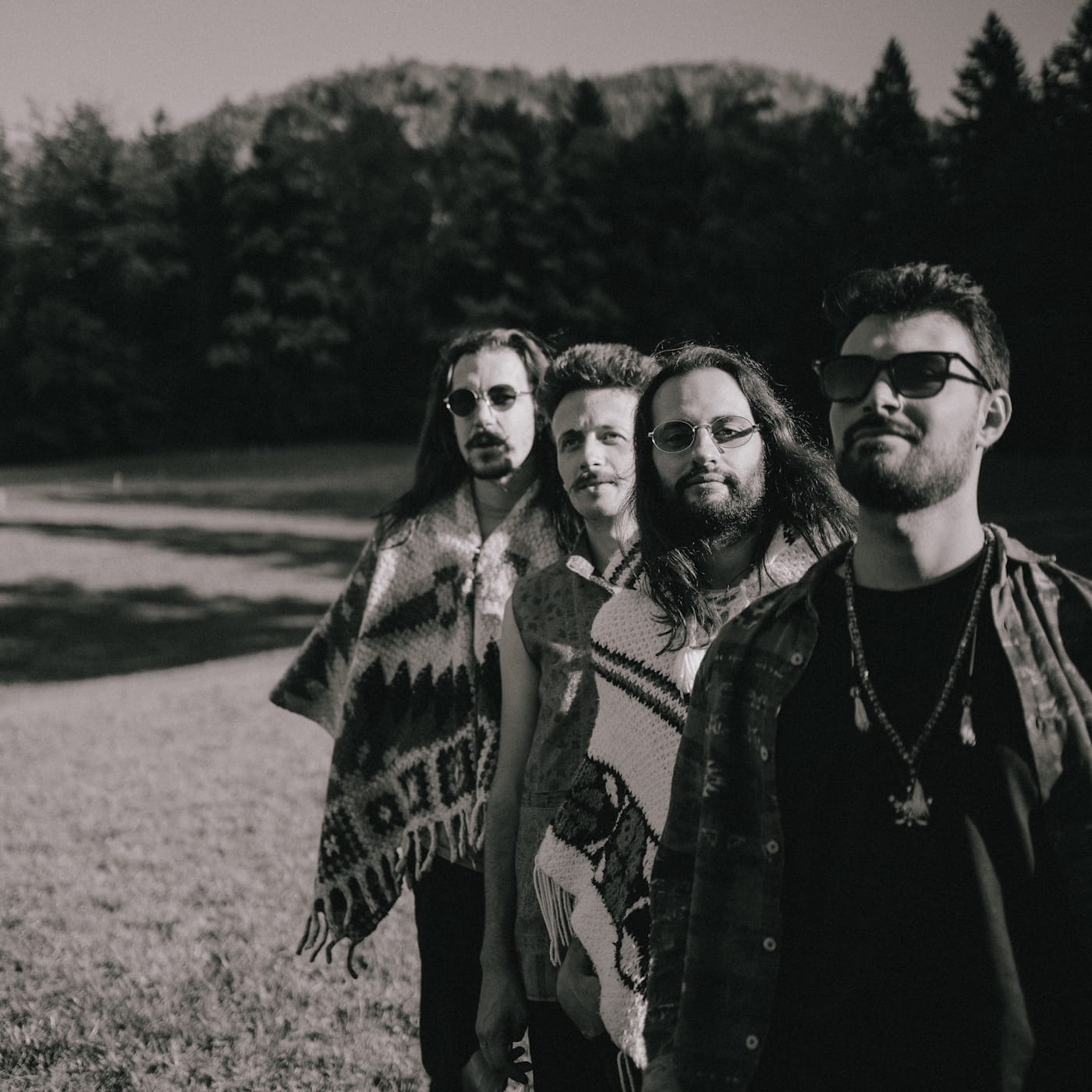
Each member of The Blue Marmalades came to music through a different door.
Chris grew up at rock and metal concerts from around age three, thanks to his parents. These days, he listens mostly to 60s and 70s rock — the San Francisco and Los Angeles scenes, old and modern psychedelic stuff. He doesn’t feel direct influence from any single artist when he writes, preferring to think in terms of broader inspiration. But one moment stands above the rest: “The fragility in Jerry Garcia’s voice when he sings Morning Dew during the Grateful Dead concert at the Lyceum Theatre in 1972. That fragility, that raw emotion, is exactly the feeling I aim for when I make music.”
Flo traces his entry point to discovering “Numb” by Linkin Park around age eight. Middle school brought Green Day and Sum 41. High school — with help from a guitarist friend and his father’s cassette tapes — opened the floodgates: Pink Floyd’s “Wish You Were Here” on repeat in the car, then Led Zeppelin, Black Sabbath, Scorpions. He picked up electric guitar only after that intense period of discovery, then gravitated toward psychedelic and progressive rock. The KEXP channel led him to bands like Lucy In Blue and All Them Witches — “two bands I love especially for their strong identities, their sound, and the journey they take me on.” He also listens to a lot of prog metal and prog rock, drawn to how different sections intertwine, and recognizes that blend seeping into his own writing. “If we take Sweet Little Thing, toward the end of the song and during Chris’s solo there’s a very Led Zeppelin-style riff — looking back, it’s obvious.”
Wyświetl ten post na Instagramie
Loïc didn’t grow up in a musical household — aside from his mother dancing to funk and his father humming U2 in the garage. Music found him in high school, through friends who played. “They gave me some band names to listen to, including two that deeply moved me: Pink Floyd and Led Zeppelin.” Pink Floyd, for the ethereal, psychedelic side — music that takes you somewhere. Led Zeppelin, for power and groove. He still remembers the first time he heard “Shine On You Crazy Diamond”: “It was the end of the day at my father’s house; I was doing my homework, listening to albums in the background on headphones… And those three notes… repeated several times, and after that intro… I remember stopping my work just to listen, even ending up with tears in my eyes.”
Seb‘s musical upbringing started with his father, a trumpet player who’d bring him along to jazz rehearsals. His own listening began with Eminem and Linkin Park, then moved into metal — Slipknot especially — before drifting toward a blend of French rap and Tekno. “For me, there’s truly a style of music — an artist — for every emotion I feel.”
Wyświetl ten post na Instagramie
The gap between The Blue Marmalades’ live and studio selves comes down to time and control. In the barn, they can spend an entire day refining the sound of a single instrument, testing ideas, experimenting. On stage, everything rides on energy and the moment.
“Come On” is the track that shows this split most clearly. The percussion changes constantly in live settings — sometimes derbouka, sometimes bongos, sometimes nothing at all, “depending on what fits in Seb’s car.” On “River,” Chris added psychedelic effects in the studio that they can’t replicate on stage yet. And because the barn doubles as a workshop, some unexpected sounds crept in — Lolo was using a sander during vocal takes, and the sound ended up on the record.
“Summer in the Alps” also shifts between versions. The band has been working Indian-inspired elements into the studio take that haven’t been fully explored live.
Track by track
“River”
Chris wrote the lyrics during the summer of 2023 while sitting by the river Fier, near Annecy. He was questioning a lot of things at the time — his mental state, the human condition, his future.
“I felt like I was in transition, moving from a state full of doubts toward some kind of self-acceptance.”
Musically, it started with a bass riff. Chris had just bought an auto-wah pedal after listening dozens of times to the Barton Hall ’77 concert by Grateful Dead, and that groove pushed him to experiment with the effect, especially on the verse and vocal sections.
The third part of the song is essentially a jam — mostly improvised, never quite the same twice. During one rehearsal near the end of the track, Seb suddenly started playing slightly off-beat. Instead of stopping, the rest of the band felt it created something unexpected and kept it.
“Moments like that are important to us. We’re not afraid to experiment or let accidents shape the music if it feels right.”
Three years later, “River” still shifts on stage. “River is never the same twice. Every time we play it, it feels like painting our emotions in real time.”
“Summer in the Alps”
Flo wrote the intro riff on acoustic guitar, inspired by a memory of playing outside at his parents’ house, facing the Chartreuse massif. “Most of the time, the weather was warm and beautiful, and those were very inspiring moments of relaxation.”
The composition sat for two years before coming together during an evening jam with Chris, who liked the riff and the lyrics immediately. The rest of the band arranged it from there. The chorus, deeper and more forceful, breaks from the contemplative mood of the verses — the band hears grunge influences in it.
“Sweet Little Thing”
Born from a blues-rock riff by Chris — “very much in the style of Neil Young” — and lyrics Flo had been working on separately. The two came together during a rehearsal and clicked. The chorus takes a more classic rock direction, landing somewhere close to a pop ballad, before the ending locks into something fierier and more intense.
“While writing the lyrics, I thought a lot about my past loves, my adolescence, and the pain that unrequited love can cause. That’s exactly what we tried to convey in this fiery ballad.”
“Dark Sun”
One of the oldest tracks on the EP, written and composed in July 2022 during a period when Chris was listening heavily to Grand Funk Railroad, Free, The Groundhogs, and Jefferson Airplane. That bluesy foundation carries through the whole song.
Chris handles vocals for most of the track. Flo wrote the chorus, finding a chord progression that stayed true to the blues spirit and matched the energy of the vocals. There are two guitar solos: Flo’s, after the first chorus, keeps a thread of questioning and hope even as the descent begins. Chris’s second solo is darker, more cynical — “a total unraveling, signaling that the end is closer than ever.”
The track ends with a stoner-tinged section where Flo takes over vocals, repeating the words “Dark Sun” theatrically. The song tells the story of a man in a world where the sun has disappeared — isolation, addiction, madness. “In Dark Sun, the image of the black sun represents inner suffering, its consequences, and what disappears within oneself.” Some aspects of the character reflect personal experiences.
“Calling Peace”
An interlude that sets the stage for “Come On.” Seb suggested opening it with didgeridoo, and the rest of the band went for it immediately. It’s tuned to D — the same key as “Come On” — making the transition seamless. The title isn’t arbitrary: while “Come On” deals with war, “Calling Peace” inverts the traditional symbolism of war horns and tocsins into a call for peace. It was the first time the band recorded a wind instrument. The result is sparse and meditative — a deliberate contrast before what follows.
“Come On”
The song begins in the fading echo of the didgeridoo. Then Seb’s drums hit, launching the track into its most intense stretch. The guitar and bass come in heavy. Flo opens with a psychedelic intro solo before an almost abrupt shift into an a cappella section where Chris pushes his voice to the edge of his limits.
“The song is intentionally brutal, both in its texture and vocal energy, reflecting the heavy subject it deals with.” At points, the atmosphere leans toward metal.
From there, it evolves into a tribal section — percussion layered with rhythmic, atmospheric lead guitars. This is where Lolo delivers a bass solo, recorded in a single take. He had the chorus effect cranked all the way up, giving the section a groovy, almost disco-like feel. “Moments like this really capture why we make music: to surprise ourselves and explore creative directions we didn’t necessarily plan.”
To break out of that section, the main riff returns, this time with a trap-inspired drum pattern from Seb. Then the final chorus — two guitars, two voices, maximum intensity.
The subject is war. A child growing up under missiles and bombs, in a world where everything has been taken away. Chris wanted to express the strength those children must find to survive. “It’s also a particularly difficult song for him to sing. Every time we perform it, it’s impossible not to think that somewhere in the world, children are still living this reality.”
At the end, Chris’s partner Lili suggested adding the sound of a burning fire. Practically, streaming platforms don’t allow long sections of silence, but the fire also reinforces the atmosphere — the ruins, the desolation, the ashes left after war. They recorded it in Chris’s backyard.
“A Final Whisper”
A hidden closing track. Sounds intertwine — unexpected, free, exploring textures that feel like they belong to a parallel world. A suspended improvisation for anyone who stays until the very end.
“River” is out now on all major streaming platforms. The Blue Marmalades are: Chris, Flo, Loïc, and Seb.