
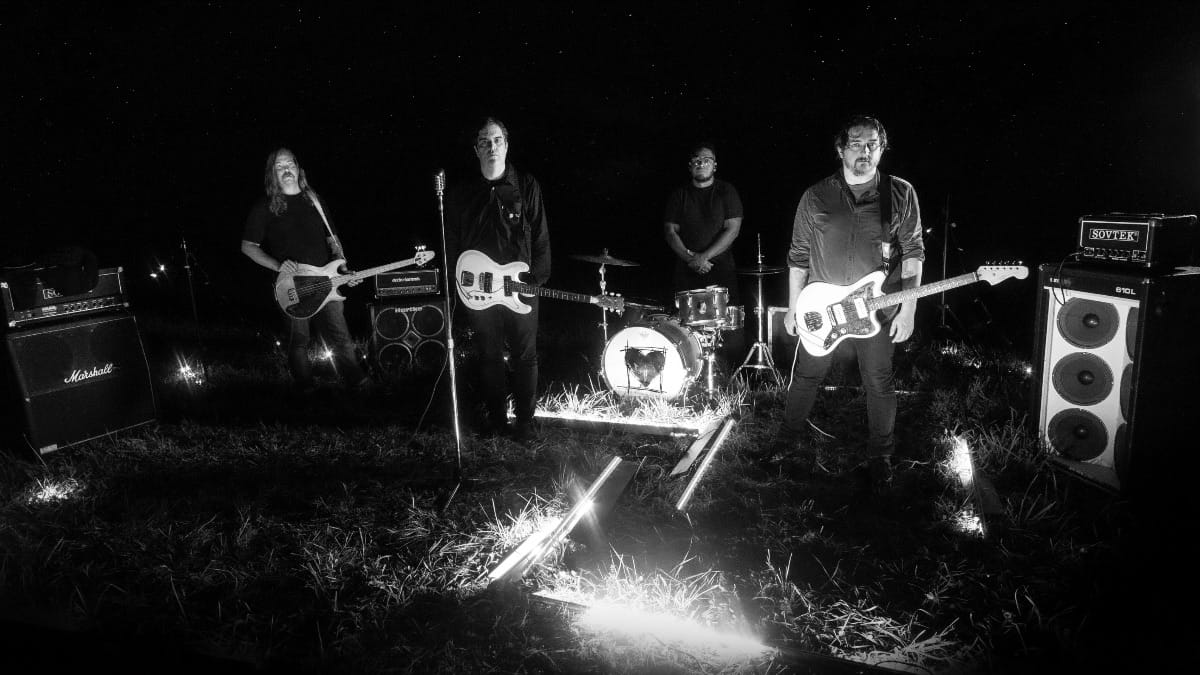
There’s a moment in “From Home They Run” where everything briefly lifts — tension gives way to something close to relief — and then it’s gone again. Andy Maddox describes it as one of those rare flashes where anxiety and depression loosen their grip just long enough to breathe. The song holds onto that feeling without pretending it lasts.
It’s the first look at “Alone With Heaven,” The Saddest Landscape’s first full-length in ten years, out April 24 via Iodine Recordings. The album carries more weight than a typical return. Part of it was tracked with Steve Albini before his death, placing it among the final records he worked on.
The rest came together slowly, across years, with Jack Shirley and long stretches of home recording — laptops, pedals, cables, and a band learning how much time they were willing to give themselves.
That time wasn’t part of any grand plan. Early versions of the album existed as far back as 2017, recorded and then abandoned when they didn’t feel right. Life shifted around the band — children, departures, distance — and what had started as a standard cycle stretched into something else entirely. Writing never really stopped, but it fractured, regrouped, and eventually reset. When they came back to it, the goal wasn’t to pick up where they left off. It was to make something they wouldn’t regret leaving behind if it ended there.
“Alone With Heaven” moves like a full piece rather than a stack of songs. Instrumentals bleed into recurring melodies, titles mirror each other — “A Badge Of Sorrow” later answered by “A Badge Of Hope” — and the pacing stretches across a double LP that was never meant to be trimmed down. Maddox points to records like “The Downward Spiral” and “Disintegration” as reference points, not stylistically, but structurally — albums that shift the listener’s position by the time they end.
Wyświetl ten post na Instagramie
The guests fit inside that structure instead of sitting on top of it. Julien Baker appears on “The Invisible Hurt,” delivering a performance that caught the band off guard the first time they heard it, opening the track into something larger than expected. Jeremy Bolm and Evan Weiss fill equally specific roles — voices the band knew they couldn’t replicate themselves, each tied to the same emotional lineage without repeating it.
Wyświetl ten post na Instagramie
Albini’s presence hangs differently here. The sessions in Chicago were intimidating at first — standing in front of someone responsible for records by PJ Harvey, Songs: Ohia, Fugazi, Nirvana — but the experience settled into something more direct. No heavy-handed steering, just documenting the strongest version of the songs. The title track was written with that room in mind: space, air, drums and bass pushed forward, letting the recording breathe.
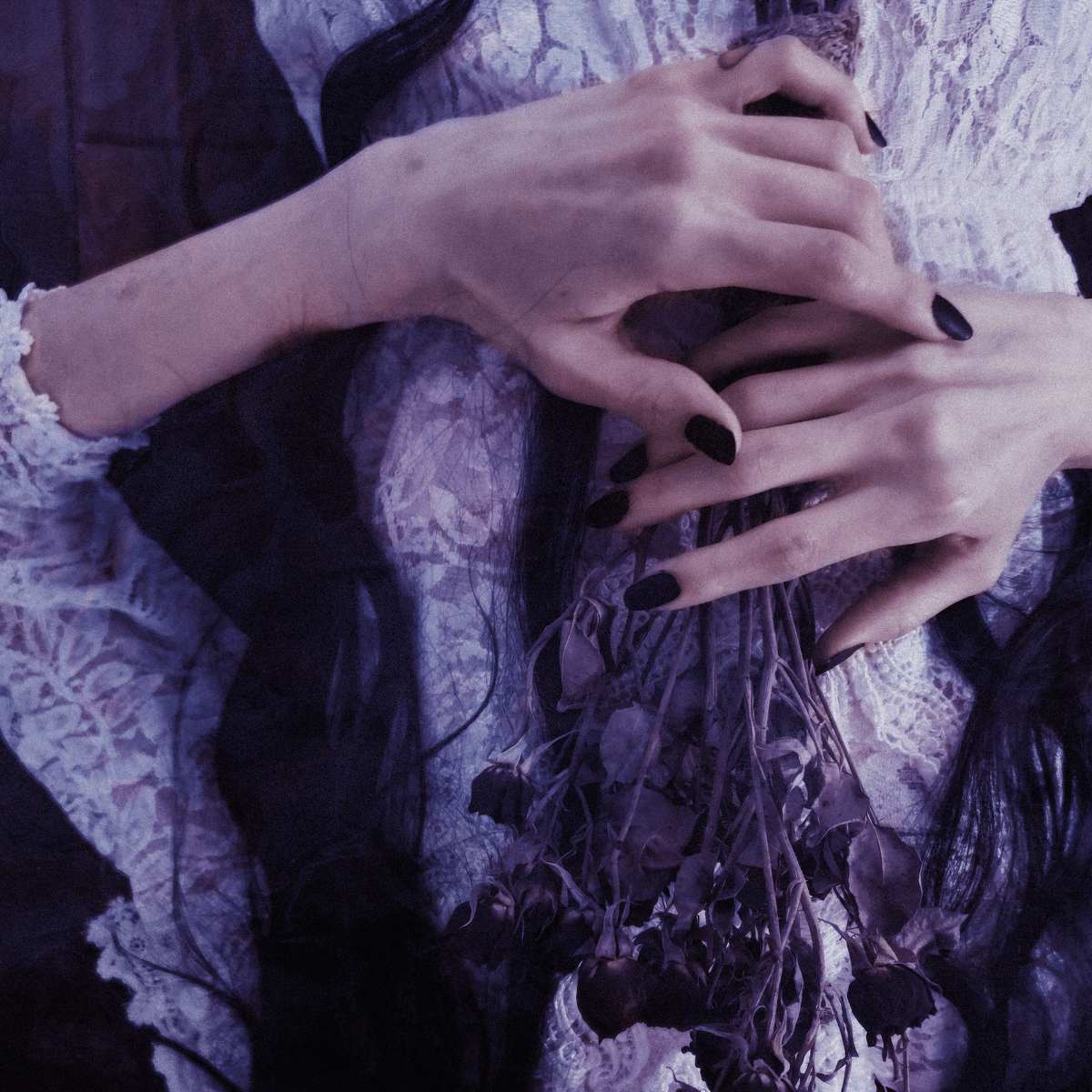
Visually, the album extends the same approach. Daniel Danger, long tied to the band, stepped into more of an art director role, building a 16-page insert around photography, found objects, and layered textures. The cover image — taken by Joanna Araujo — sits in that same ambiguous space as the music, suspended somewhere between mourning and something still alive. The full package pulls in work from Jem Richards and Shelby Parks, assembled into something closer to an environment than a standard layout.
Even after more than two decades, the band doesn’t fully claim a single place anymore. Members are scattered across Massachusetts, New Jersey, New York, and beyond, writing wherever they can meet. That distance feeds into a broader sense of identity — less tied to Boston specifically, more to a wider North American thread of hardcore and screamo that they helped shape and now watch evolve through younger bands pushing it somewhere new.
The DIY tag doesn’t quite fit the same way either. This record came together through a network — friends, collaborators, people willing to invest time and risk — while still being built on their own terms. As Daniel puts it, it’s less about doing everything alone and more about doing it with people who share the same values.
We spoke with Andy Maddox and Daniel Danger about the decade it took to get here, scrapping and rebuilding the album from the ground up, writing through shifting life stages, working with Steve Albini, finishing the record with Jack Shirley, the role of guests like Julien Baker, Jeremy Bolm and Evan Weiss, the visual world behind the album, Boston’s evolving scene, DIY in 2026, and the idea of ending a record with an ellipsis instead of a full stop.
Answers by: Daniel Danger (DD) and Andy Maddox (AM)
Ten years between full-lengths is a long stretch, and bands usually either come back swinging or stumble trying to recapture something that’s already gone. At what point during that decade did you realize this wasn’t just a break but a buildup, and was there a specific moment where the album stopped being a “maybe” and became inevitable?
DD: We started writing for this record almost immediately after finishing 2015’s Darkness Forgives and a few tours abroad, and initially it was like any other album cycle. We spent a year or so writing every few weekends, recorded a series of crude demos at our rehearsal space in Connecticut on a constantly crashing Korg D888, and eventually went into the same studio in 2017 and spent about two weeks tracking a first iteration of the album. Despite being largely happy with the keystone tracks of the album as songs, it just ultimately wasn’t what and where we wanted it to be as an album, and it took some time apart and some butting heads to come to terms with that.
Myself and our longtime drummer Aaron both had daughters right around this time, and priorities shifted with breakneck speed. Aaron stepped away permanently after nearly 18 years with the band, and I took time to just be an exhausted new dad (short of a 2019 tour with The Sound of Animals Fighting, which brought the band to our biggest venues and shows to date). Big change was coming for TSL; the part time full time band was likely to become a part time-part time band, we had moved on from our label, and then the global plague, etc. We were beholden to nobody but ourselves.
It’s hard to say that the decade was a “break”, because there was pretty consistent consideration of the record that whole time – we worked on it here and there when schedules and babysitters allowed. I do think our awareness of the change that was on our doorstep steered our mindset about what we wanted to make, and it wasn’t Darkness Forgives Part Deux. We were all in new stages of life and The Saddest Landscape needed to follow us there. Ultimately, and with some forced hands that made things truly inevitable, the decision was made to start over completely. To take everything we loved about the first iteration of the record, and do it better. We had already gone to Chicago and spent some time with Steve Albini, but we would head to Oakland and spend a week with Jack Shirley just hammering the songs, and then later, spend a tremendous amount of time with microphone cables and laptops and guitar pedals in our basements tracking vocals and making all the little choices, futzing with synths, recording cellos, breaking stuff.
Most importantly, we gave ourselves the resource most independent bands can never give themselves, which is time. We were in zero hurry. We got to sit with recordings for months, even years, and see what resonated long term, what stuck with us, and adjust. I recall there was a bit of a tone of ‘…in case this is it, how do we want to leave it? What are we capable of? If this is the last record we make, what are we going to regret not saying or doing if we don’t?”
When you look back at those early records — the ones that basically helped define what emotionally-driven screamo could be — do you ever feel like you’re in conversation with a younger version of yourselves, or does Alone With Heaven exist in a completely separate universe from that era?
AM: I like to think it is just much further down the line than where we started, but it was a journey filled with many twists and turns and a lot of surprises along the way. We are definitely not the same band as we were twenty years ago but I think our desire to do what we do is still just as pure, so it is not completely disconnected. We are still willing to play old songs and sometimes playing them in context with the newer material can spark new ideas.
Andy, you described riding that final section of “From Home They Run” until dawn, which is a hell of an image. I’m curious — when you’re writing lyrics that sit inside those brief windows of relief between waves of anxiety and depression, does the act of articulating that feeling actually extend the relief, or does it just make you more aware of how temporary it is?
AM: Mostly a combination, and it of course depends on the song. Songs also have this way of finding new meanings after they are out there for a bit and as a writer you see how they connect with people, so new memories and feelings get added to them which can be exciting. And while writing them it is sometimes hard to see it clearly until it is finished, I just write through the feelings.
The album dives into survival, grief, and what you call “the things not said aloud.” Over twenty-plus years of writing about emotional devastation, has your relationship with vulnerability in lyrics changed? Like, are there things you can say now at this stage that the younger version of the band couldn’t have touched?
AM: I am honestly not sure. I will say in the beginning everything felt much more immediate, and now, with a better understanding of the life span of a song and how it can reach people, it leads to more considerate word choice as I want our record to feel inclusive and people can attach their own experiences to it. I hand write everything and there were so many notebooks for this record over the years, I was glad for the time to sit with it and revisit.
Those track titles read almost like poetry on their own — “A Badge Of Sorrow” mirrored later by “A Badge Of Hope,” which feels very deliberate. How much of the album’s sequencing is meant to function as a narrative arc, and did you build that structure early on or did it reveal itself once the songs were all laid out?
AM: I would say all of it, the intent was to be a more immersive experience that would reward the listener by sitting with the record as a complete work. I think of records like The Downward Spiral and Disintegration, it is clear they are so much more than simply a collection of songs. By the end of it you are at a different place than where the record started, that was the goal. As for did we build that out, mostly yes, but there was also a little bit at the end of the writing of needing to create some pieces that were missing to help it feel cohesive. The instrumental passages feature melody lines that appear elsewhere on the record in other contexts; we wanted to show that experiences or memories can feel different at different times. They could be happy/calming then later feel anxious/heavy, much like living.
The double LP format with instrumental passages woven between songs feels like a statement about pacing and space, almost like you’re demanding the listener sit with the weight of it. Was there ever any pressure to trim it down, or was the sprawl always the point?
AM: From my end, it was always the point. I wanted us to take our time and accomplish what we set out to do – it was an immense amount of effort but we have never been one to let that stop us. There was a little pressure to possibly release it in two volumes, but thankfully, we have Jessie at Iodine who really believes in the record and wanted to help us achieve our vision.
Wyświetl ten post na Instagramie
Steve Albini working on this record carries enormous weight now, obviously, but I’d rather ask about the experience itself before the grief attached to it. What was it actually like being in a room with him — did he challenge you, did he push back on things, and how did his approach reshape what you thought these songs were going to sound like?
AM: At first it was massively intimidating, I knew I was going to have a vocal mic placed in front of me by the person who did the same for PJ Harvey, Songs: Ohia, Fugazi, Nirvana…., how am I not going to be affected by that? As time went on though, he was good at making us feel at ease and we were just making a record. He was a lot of fun, so many good stories. As for pushing us, I didn’t feel that, it was more a sense of he was there to help us document the best version of the songs he could.
DD: I think knowing we were going to Chicago made us think about what kind of songs we would want to write and perform in that room, in front of a presence as modestly huge as his, and what we ourselves wanted to hear out of the experience as fans of Steve. The title track “Alone With Heaven” was very much written for that space as a drums and bass forward song, textural and clangy, quiet loud, with a lot of openness to really hear the air in the room.
Finishing those sessions with Jack Shirley after Steve’s passing must have been an impossibly strange emotional space to navigate. How do you reconcile the joy of completing something you’re proud of with the sadness of knowing it’s tied to such a significant loss?
DD: I imagine Andy feels the same way, but so much of the art and music I’ve made since I started making art and music has always been overly tied to loss and death that we’ve been feeling some iteration of reconciling that for our entire lives. It feels inevitable to me that my creativity will always be sewn to tragedy. But the way I’ve always looked at it is that the work I make is a direct vessel for feelings about and memories of certain people in my life, and then a thousand copies of that thing go out into the world and are held onto by people who will keep those vessels safe. It’s archival in a way. That said, I knew Steve way more than Steve knew me; and I experienced his death as a lifelong fan compared to friends of mine who experienced his death as a dear close friend. I’m really really happy we got to spend some time with him, absorbing the Albini’isms, and learning by watching him work.
Having Jeremy Bolm, Evan Weiss, and Julien Baker appear on this record — these aren’t random feature grabs, these are people deeply embedded in the same emotional and musical DNA. What was the conversation like when you approached them, and did any of them take their contributions in a direction you genuinely didn’t expect?
AM: I think you nailed it. The guests you mentioned definitely deal in the same emotional fabric we do, even though we all approach it from different angles. We are beyond grateful that they all appear on the record, truly. The reason they are there is because they all do something we can’t, they are unique powerful voices that were needed to achieve what we were after.
I think Julien especially went above and beyond and delivered a performance we didn’t see coming. The first time Daniel and I heard it we were shook, it left a mark. It is perfect. I am still amazed it is on our record. Evan was a real champ – we actually ended up re-recording the song he is on and he was gracious enough to record his part a second time. For Jeremy, everytime I approached his part I knew I could not do it myself, I just heard his voice so clearly in my head, it took me a bit to get up the bravery to text him and ask him to do it, when he responded back within minutes I was so happy, one of my favorite texts ever.
DD: I was standing outside of a grocery store the first time I heard Julien’s first demo of her vocals, and hearing a texture to her voice I really don’t think I’d ever heard before, especially that sheer volume of it. I was kind of losing my mind a little bit at how much the song had suddenly opened up, and that it all actually happened in the first place. But the first time I heard her final vocals for the outro, I was openly teary eyed. TSL is a band built around moments in songs, not breakdowns or choruses like many bands, but communicative points in the songs that people circle back to and wait for. And they’re not always what you think they’re going to be. Andy and I were instantly calling each other back and forth just sort of stunned at the intensity and rawness of what we were hearing.
Daniel Danger’s visual work has graced some massive projects, but his connection to the band feels more personal than a hired-gun situation. How does his art interact with the album’s themes — did he work from the lyrics, from the sound, or from something more abstract and unspoken between you?
DD: On this record, I honestly acted more as an Art Director than the artist, and I just sort of guided with my eyeballs and design brain a lot of visual ideas and collaborators into one cohesive entity; to make a lot of things feel like one big immersive thing. We knew we wanted something very rich feeling. Fabrics and flowers and paper and textures and voids. Navy blue moving into lavender, bone white highlights, blacks rooted in deep purple. It was a massive undertaking, but is another aspect of this record that revolves entirely around our collaborators. Early on in the process of conceptualizing the layout, Andy had stumbled across this photo taken by Joanna Araujo, one half of the creative duo Little Ghouls. The feeling it evokes is both funeral-esque given the positioning of the hands and flowers, the viewpoint is upside down, but it still feels very alive; it could go either way and I think narratively Andy and I were both drawn to the ambiguousness of that. We asked Joanna if we could use the photo as the album cover, and over time it became something of a keystone to nearly every decision made with the larger packaging design.4
From there, we expanded out to two other amazing photographers, Jem Richards and Shelby Parks, who contributed amazing photographs. The booklet is a collection of found objects, photographs and dried flowers, all set around hotel stationary typed letters that Andy saw in his head. It was shot in my basement with a camera clamped to a ballet bar and a series of makeshift lights low against the panel to accentuate the textures and create shadows, and involved a ton of really interesting overlays of swirling patterns and colors to make the final pages feel almost otherworldly or disintegrating.
AM: Daniel is much more than a hired gun. He is a full member and integral to the band, the record would definitely not be what it is without him. As for the artwork, he went above what I had hoped for and really helped what I saw in my head come to fruition, even if I could not always easily articulate what that was.
Wyświetl ten post na Instagramie
Boston’s hardcore and post-hardcore lineage is deep but sometimes overlooked. After twenty-plus years rooted there, how do you see the city’s underground now versus when you started, and does it still feel like home in the way it used to?
AM: It is interesting as I am the only one living in the Boston area, other members call New Jersey, New York, and western Massachusetts (which might as well be a different state) home, and for a while we were primarily meeting and writing in Connecticut. All this has caused us to feel more nomadic, not really sure where we are from exactly. It is often that Shellac route of, we are The Saddest Landscape from North America. That said, Boston has some really great touchstones, Converge is always inspiring, Rebuilder deserves to be so much bigger, and I am expecting great things from the next New Forms record. The scene though is much more than that, there are a lot of great record stores, studios, and labels keeping the area vital. There are some top tier photographers keeping things well documented in a way that makes me think of Sub Pop/Seattle in the early 90s. Bookstores/Zine culture still going strong, bakeries and breweries with punk/metal leanings. There is inspiration all over. I am proud of this area.
You’ve operated on fiercely DIY terms for over two decades, which in 2025 almost feels radical in itself. Has the meaning of independence shifted for you over time — like, is it still a philosophical stance or has it just become the only way you know how to function as a band?
DD: There’s a part of me that wonders if DIY is even the term for us now, because so much of making this album happen involved a tremendous number of people outside of ourselves who saw the value in what we were doing, who could burden some risk or give their time. We did so much ourselves, on our own dime, with our own hands, at great expense to our sanity and sleep schedules, for the better part of a decade. Maybe what I need is DIWF: Do It With Friends? Or DIWPWAI: Do It With People Who Aren’t Idiots? Or DIWPWWSTF&FMWYITT: Do It With People Who Will See The Fast & Furious Movies With You In The Theatre? Or simply DIWPWSYV: Do It With People Who Share Your Values? We made the record we wanted to make, and it looks the way it looks, because a team of people did their best work. I know how to screenprint patches, but I don’t know how distribution works, so I text Jessie.
With the amount of music coming out now, especially in screamo and post-hardcore circles, it’s easy to miss things. Are there any bands or artists you’ve come across in the last year or two that genuinely stopped you in your tracks — stuff from 2024 or 2025 that you think deserves way more attention than it’s getting?
DD: I am comically bad at keeping up with new music, but Massa Nera’s ‘The Emptiness Of All Things’ which was just released is an incredible work of art, intention, and execution. I sat in a parking lot late one night just annihilating my truck’s speakers and my ears, it absolutely floored me. It sounds like being swallowed by an ocean at points and I immediately told everyone I knew. Additionally, we played New Friends Fest up in Toronto over the summer and I ran downstairs after our set to catch Your Arms Are My Cocoon, who obviously and deservedly are getting a lot of attention right now. One of the first things I saw was a couple lovingly slow dancing in the center of a circle pit and I just cackled with joy. I really could not say enough good things about what they are doing, it’s so singular and unique and warm with absolutely zero fucks given about “staying in the lane” of the genre of “screamo”. I left that festival feeling so good about the state of things, that these folks decades younger than myself are really and truly making this genre their own; creating music and spaces where they can be themselves and be free and find support. They’re not beholden to so much of the macho bullshit and rules so much of my generation left in the way. “Metamorphosis” is perfect.
Wyświetl ten post na Instagramie
AM: I have been very into what Planning For Burial has been doing, “It’s Closeness, It’s Easy” was tremendous. It feels like you are living in that world when you listen to it, and just dissecting all the layers pull me back to it even more. Also really into seeing Gillian Carter at New Friends, the band crushed it.
The press materials describe this return as “necessary, not nostalgic,” which is a sharp distinction. But I want to flip it — is there anything about nostalgia that you think gets unfairly dismissed? Like, can looking back actually fuel something forward, or is it always a trap for a band like yours?
AM: Nostalgia can be a tricky thing, but as far as being unfairly dismissed, what I do appreciate is seeing people later in life looking back on their younger years of discovering punk/hardcore etc. with such fondness and taking those ideals to what they do in the present in a non punk setting. I’ve met so many punk doctors,accountants, chefs, or architects etc. doing great work that was fueled by the nostalgia of their punk past. So if nostalgia is that spark, all for it.
DD: If someone is holding onto a feeling a song or album still holds for them years later, it’s certainly important and valuable to consider why that is. You never want to try and write the same song again, slightly varying the chords and hoping nobody notices, because that’s where bands always stumble. The track “Where Angels Ascend” with Evan Weiss feels like it emotionally and nostalgically calls back to a very early TSL song “The Sixth Golden Ticket” in what it’s communicating and its emotional core, but it sounds nothing alike. I think that can create something really interesting, a moment now that links to a moment before and sort of Tony Hawk Pro Skater 2x combos your heart a bit.
The album closes with a song called “Alone With Heaven,” which is a hell of a final statement. Without giving too much away, what do you want someone to feel when that last note fades — and does it feel like a period at the end of a sentence, or more like an ellipsis?
AM: I would simply just want someone to feel, it is up to them what that is, and it may be different on multiple listens, that is ok. And definitely an ellipsis.
🔔 IDIOTEQ is ad-free, independent, and runs on one person’s time. If you want it to stay that way: DONATE via PayPal 𝗈𝗋 SUPPORT via Patreon.
Stay connected via Newsletter · Instagram · Facebook · X (Twitter) · Threads · Bluesky · Messenger · WhatsApp.