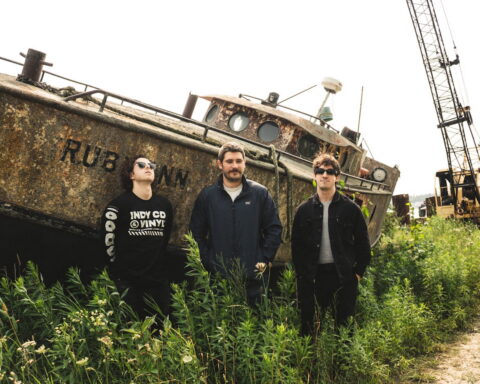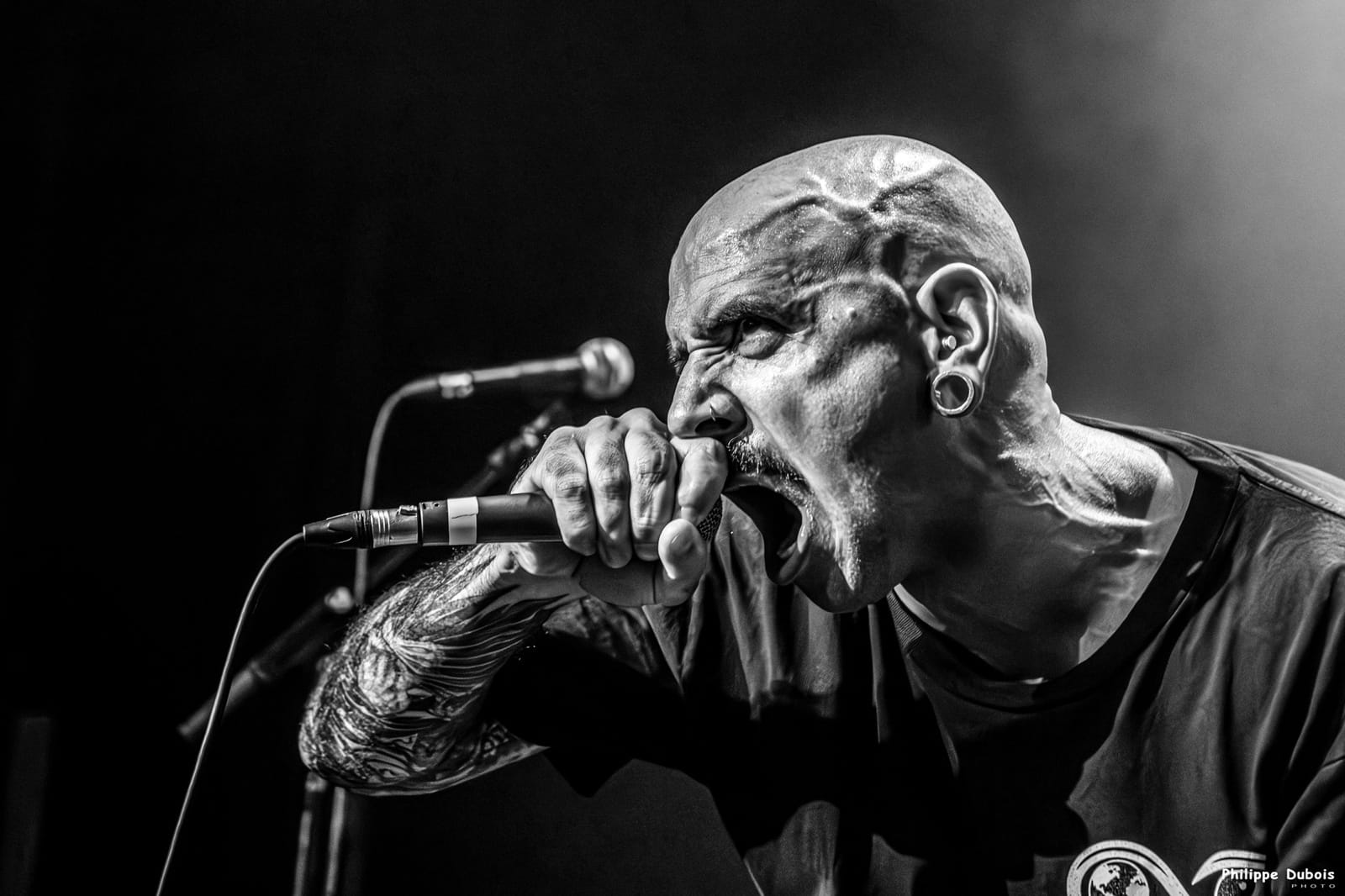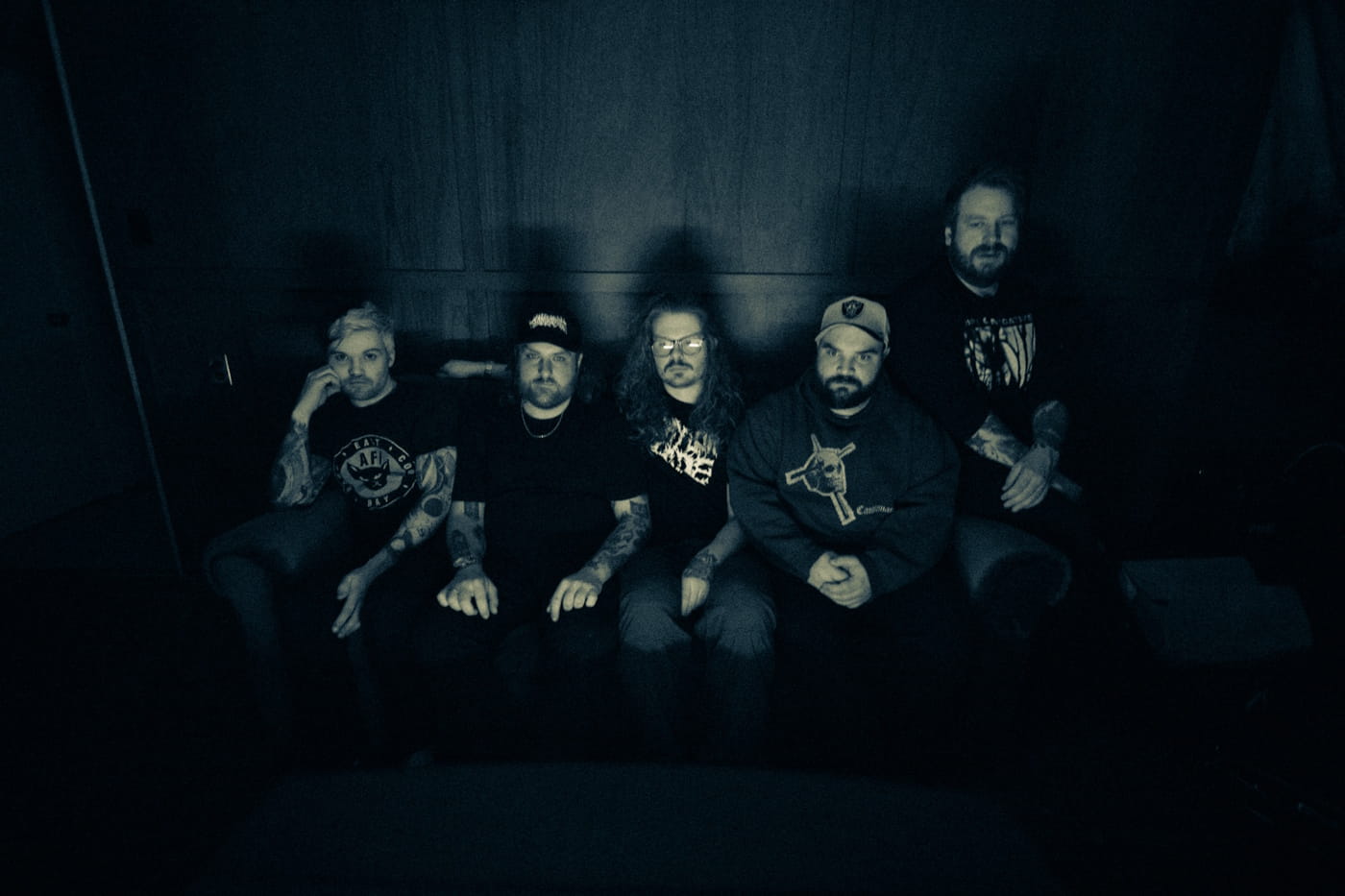



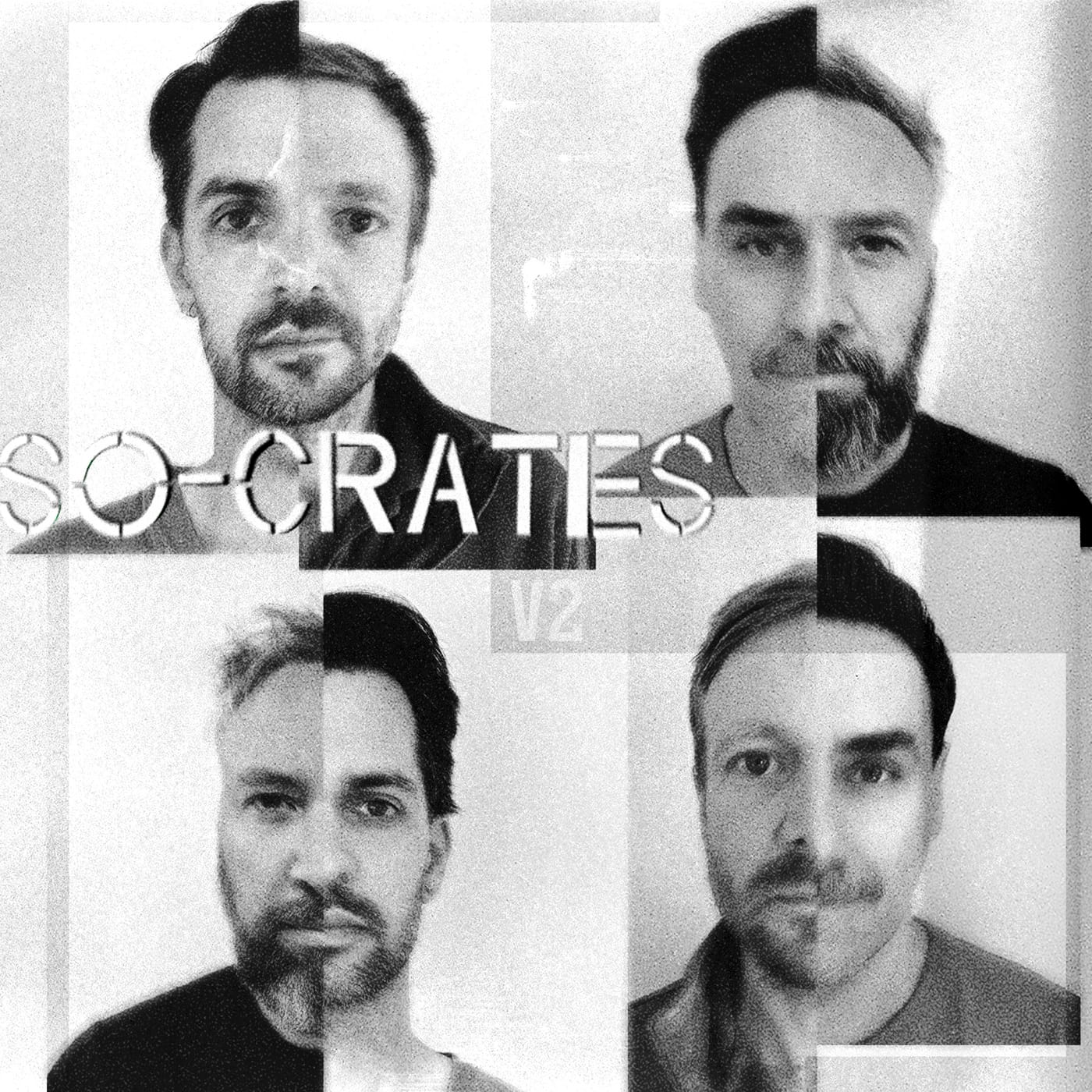
A few of the songs on the new SO–CRATES EP are at least nine years old. Robin Pearson wrote them in the immediate wake of the band’s 2016 debut, then watched them sit in demo form while the four members scattered across England and Portugal for marriages, kids and other careers.
“V2,” their second EP and first new music in a decade, arrives on May 29th. We’re premiering “Reveal Itself” today, alongside a long conversation with Pearson about how the six tracks finally got finished, the earthquake that unlocked one of them, and why some of the songs are older than they sound.
SO–CRATES formed in 2015 around the Fleet and Farnham corridor on the Surrey / Hampshire border, drawing members from Hold Your Horse Is, Reuben and Samoans.
Their first EP came out in 2016, they played a handful of shows, and then everyone moved on to other lives in other places.
The band that recorded “V2” looks the same on paper as the one that recorded the debut: Robin Pearson on guitar and vocals (ex Hold Your Horse Is), Chris Rouse on drums (ex Hold Your Horse Is / Samoans), Jon Pearce on bass (ex Reuben / Freeze the Atlantic), and Toby Jackson on guitar. The record itself sits in post-punk and post-hardcore territory, with a math-rock undercurrent and a strong melodic streak.
There’s no dramatic reason the gap stretched a decade. Pearson never put the idea down. He kept making demos at home with quickly recorded guitars and programmed drums, then used trips back to England to meet up with the rest of the band and play them in a room. “The songs always get better in a room with loud amps and real drums, obviously, so that’s a feeling I never stop chasing,” he says. “If we manage to maintain that hunger as a band, despite all the other life distractions, then we get to keep creating stuff to be proud of.”
That hunger is what kept “V2” alive. Some of the songs date back to the months after the 2016 EP. “A few of the songs on the new EP were written immediately after we finished our last EP in 2016, so they’re at least 9 years old,” Pearson explains. “It feels really good to finally do them justice on record.” Other tracks came together more recently, built up in person when the four of them could be in the same place at the same time. The arrangements didn’t drift with the long timeline. Pearson says he used the time between sessions to focus parts even more. “That’s one benefit of taking a long time over a short record.”
The recording maps to that fragmented working pattern. Drums were tracked across three sessions at The Mayfair Studio in Farnham, with Pearson engineering: same room, same kit, same drummer, with slight mic-setup variations between sessions that he had to reconcile in the mix. Guitars and vocals were recorded at homes in Fleet, Hampshire and Ericeira, Portugal, where Pearson now lives. Bass was tracked at homes north and south, by The Andy and Sam Turner. Pearson mixed and mastered everything himself.
Gear is part of the story too. Pearson started by miking his amp, then moved through four different pedalboard amps before settling on the Friedman IR-X. They’re all on the record.
“Our man Toby is a serial guitar trader so he’s had a wide range of motors, pedals and amps on this EP too,” he adds. The mixing process doubled as a self-taught crash course. “This whole thing was a learning process for me, getting to mix songs properly, and those changes in gear kind of made the challenge even more fun. The only annoying thing is that when I thought a song was mixed, then as I mixed the next song I got better at mixing, learned something crucial and had to revisit all the previous ones to get them up to scratch. I’m happy now though.”
Wyświetl ten post na Instagramie
“Reveal Itself,” the song premiering here, started as music Pearson couldn’t find a vocal for. The earthquake that hit Portugal in the middle of the night gave him one. “Quite scary, though thankfully no major problems came of it,” he says. “Waking up in the middle of the night with loud rumbling, house shaking, doors banging.” What stayed with him wasn’t the event. It was the reaction to it online.
“Because so many people in my local area have their self-obsessed social media personality, everyone seemed to be trying to make it about themselves, and I just thought that was pretty ridiculous. Like, it’s in the news, process it, move on with your life. I know it can be easy to feel self-important on the internet but that time felt extra strange, like an internet overreaction.” The first verse leans into that. The second turns outward. “It’s more about how some people treat world culture as something to take for themselves, like they have something to gain from it. I guess it’s generally about being selfish.” With the lyric finally in place, the song came together quickly.
Wyświetl ten post na Instagramie
Across “V2,” Pearson swings between full directness and intentional blur. “I Hate Your Friends” is the directness end, written from inside a relationship breakup. “Pretty much everything I’ve ever written has been heavily shrouded in metaphor,” he says, “it’s a fun way to write and lets you be as poetic as you want. But sometimes it makes sense to be completely direct, and I found it quite funny to be as blatant as that. I hate your friends. It’s fairly gentle but honest for the most part, but in the more aggressive parts of the song the lyrics just seemed to suit being completely direct. It’s the best form of therapy there is.”
“As Black as Midnight on a Moonless Night” goes the other way. The song is intentionally blurred, pulling from memories of growing up in suburban Hampshire. “I grew up in a pleasant suburban commuter town in Hampshire, we had woods all around us, we dug bike jumps, made music, and generally found various creative avenues to keep ourselves entertained. But I guess some people got really bored, and I remember some wild stuff happening while I was at school. Violent things, gross stuff…” The title nods to Twin Peaks. “It’s obviously about a weird town full of secrets. I just thought that was a funny comparison to draw.”
“Gold Rush” works on two fronts at once. The first is the Portugal property market, where Pearson lives and watches prices climb past anything most locals can afford.
“Where I live in Portugal has had an insane property market boom in recent years, and there seems to be no shortage of wealthy foreigners who are ready to pay CRAZY money for houses here. (I realise I’m also a foreigner living in Portugal.) It’s created a significant divide between the people who are actually from here and the new guys. I like to have friends in both camps but I’m wary of the sense of invasion felt here.” The last lines of the song target a specific kind of seller, the chancers listing ratty old houses at luxury prices: “You all think you’re buying gold. Can’t you see they’re selling brass?” His real concern is cultural dilution. “If enough new people move to an area like this, we end up diluting the place and the culture that we came here for in the first place. I’ve already seen it with the shifting local business landscape, since prices have been driven up so much.”
The other front in “Gold Rush” is social media value. The first verse, “Anonymous praise… infinite fame… if you’re having no fun you could fake it,” sits inside that world. The money imagery throughout the song (“Count your wins, count your fails, count your losses”) gets equated to likes and followers.
The second verse flips perspective: if you’re not active on social media, you’re invisible. Pearson points to the line “We’re missing the point just existing… Can’t make new shapes out of silence.”
He writes from outside the cycle. “I’ve stepped back from social media use, I still have accounts but using it isn’t part of my day to day. When I was active on there I would mostly use it for promoting my photography & video work, very rarely anything about my personal life. So the song is written from the perspective of an outsider, or half-outsider. I’m not bitter or anything. Do whatever makes you happy.”
On whether Hold Your Horse Is, Reuben and Samoans still actually shape what SO–CRATES sounds like in 2026, or whether the lineage talk is more useful to other people than to the band itself, Pearson lands somewhere honest.
“It’s definitely more about the context for the listener, like I’d love people to understand that we come from the scene we come from, it gives a good background to how we got to where we are. But then again a lot of people would say maybe it doesn’t matter, the music should stand by itself. I’m just so proud of the scene we grew up in, I will never shut up about it.”
He keeps writing in conversation with his own back catalogue, even when he’s writing against it. “I love listening back to things I wrote 15 or 20 years ago and wondering what was going on in my head, then remembering how to play those songs and realising that so much of what we did then was down to the other local bands pushing our collective music in different directions. I love that.”
“V2” is out May 29th.
🔔 IDIOTEQ is ad-free, independent, and runs on one person’s time. If you want it to stay that way: DONATE via PayPal 𝗈𝗋 SUPPORT via Patreon.
Stay connected via Newsletter · Instagram · Facebook · X (Twitter) · Threads · Bluesky · Messenger · WhatsApp.