

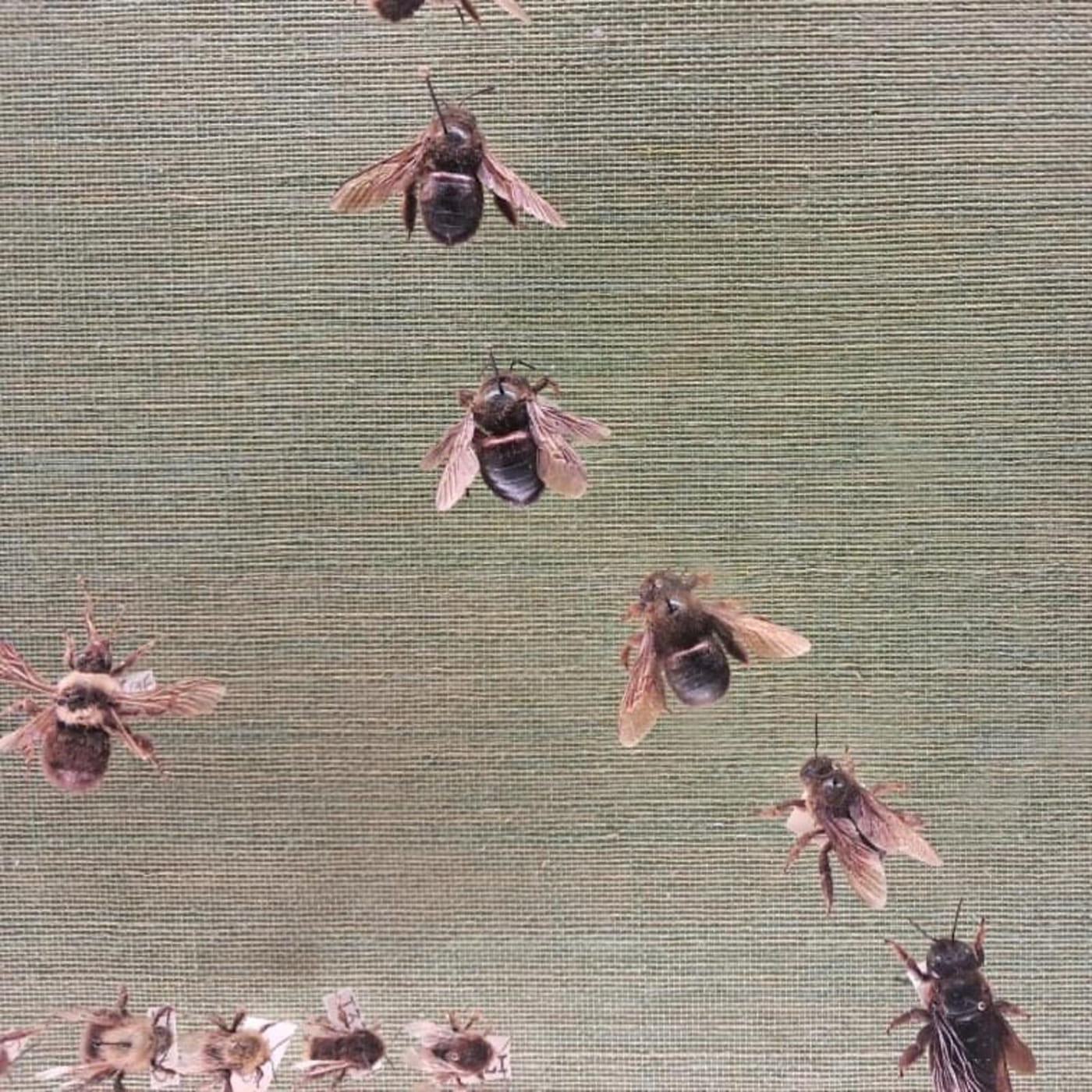
Fractured, broken, dark, unpredictable. Those are the words that surface first when you press play on the new Tetsuo EP, a four-track record that moves from chaotic hardcore through bedroom lo-fi into post-hardcore screamo straight from the heart. All of it was produced, mixed, and mastered alone in a cramped home studio in Athens. The EP is called “critters“, out today, and it lands as another reminder of how spacious this genre actually is, and what kind of dark, unpredictable trip one mind can deliver when nobody else is in the room.
That mind belongs to Alice Anthimou. She handles production, mixing, mastering, all the bass parts, many of the guitar parts, the synths, the samples, and one of the two vocal positions in the band. Evripidis Kyparissis writes the second vocal layer. Dimitris Anagnostopoulos plays guitar.
Wyświetl ten post na Instagramie
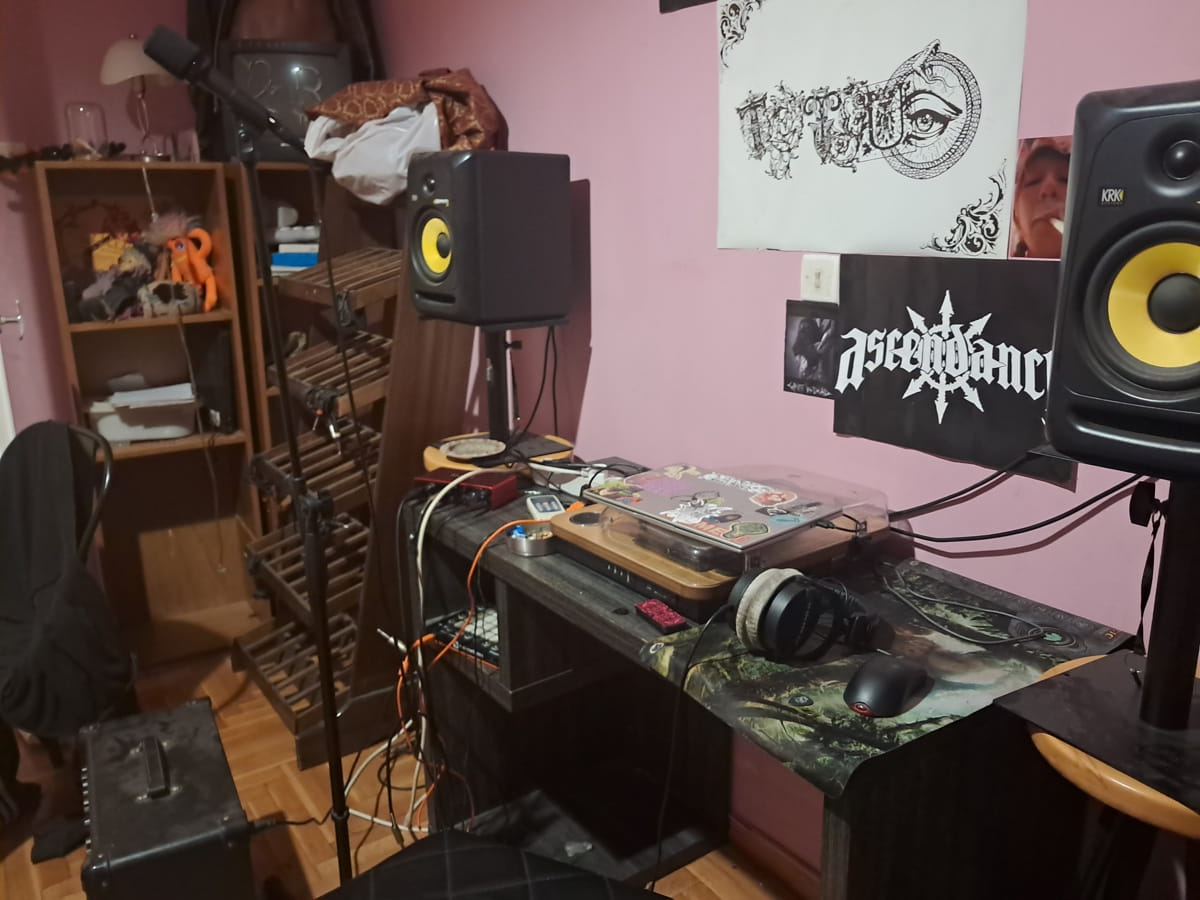
The studio everything passes through is a room Alice has been building from nothing since 2022. For Alice, who is a trans woman, the studio is also a personal safe space, a sanctuary rather than just a workspace. She is specific about why that distinction matters: working in heavy music as a trans woman in Athens has meant carving out her own slot in a scene she says never made one for her.
The “critters” tracklist runs “The Serpent”, “Between The Lands”, “;serenity;”, and “i saw a lady in a blue dress smoking in my living room”. The fourth track takes the biggest swerve, folding a hip-hop sample from an old friend’s project and Alice’s own bars over the top. It is the kind of move that only works if you trust your own ears, and trust is what most of the conversation below is about. This is also Alice’s second record with full production control, following the band’s first album “fauna.”, and the new one finds her segmenting the work in a way she compares to art school sketching.
We caught up with her about the studio build, the gear that finally translated her ideas into tangible music, the obsessive loop of mixing alone, the hip-hop accident on track four, the title, and the Athens scene in 2026. Evripidis chimes in on what it feels like on the other side of Alice’s foundations.
What was yaga, bodi sonically, and when did you notice the production work itself becoming the centre of gravity rather than just a means to finish songs? What from that electronic period actually carries into how you approach heavy music now?
Alice: Sonically, yaga, bodi was a project heavily rooted in DIY electronic music, mixing underground free-party tekno, breakcore, and mental sounds to create poetry and spirituality in the soundscape. It actually started as an exclusively liveplay project. I was focused entirely on the immediate, raw energy of performing.
The shift happened when I started preparing custom production elements to mix into the live sets. I realized that manipulating the sound in a studio environment gave the audio a sharpened edge that I couldn’t get just by tweaking gear on stage. That was when production became the center of gravity. It stopped being a logistical means to finish a track and became the main creative weapon.
What carries over from that electronic era into Tetsuo is not being scared regarding sound design. yaga, bodi taught me how to construct a heavy, oppressive atmosphere from the ground up. It also taught me to experiment with editing the sound from the very end of the signal chain down to its core, rather than just building things linearly. Most importantly, I learned how to push sonic limits without caring about standard genre rules or what anyone else was doing. When you approach a metalcore breakdown with the angle of a breakcore producer, you end up with something way more dangerous.

Take me back to 2022. What pushed you to start building your own room? What did you have at the beginning, and what was the first thing in the chain that started to sound the way you wanted?
Alice: I literally couldn’t go a single day without thinking about music or playing. Because of that, I desperately needed a space that was available to me 24/7. I needed a physical sanctuary where I could close the door at any hour, recede into my own world, and create without external noise or judgment.
At the beginning, the setup was as barebones, as DIY as it gets. I had a copy of Ableton, a basic audio interface, and a shitty pair of desktop speakers that barely worked. There was no acoustic treatment or high end gear, just the bare minimum required to make air move.
The first thing in the chain that actually sounded right wasn’t an expensive piece of hardware, it was a software synthesizer called Synth1. It’s a legendary, free plugin created by a Japanese developer that is modeled after the Nord Lead 2. Because it looks simple but is deeply versatile, it taught me all the basics of subtractive synthesis oscillators, filters, LFOs. It forced me to learn how to shape sound. That plugin was the turning point where the ideas in my head finally started translating into actual, tangible music. I still use it today, great stuff.
You said you finally tracked down the specific tools to execute the sound in your head. I want this part concrete. Which tools, signal chain pieces, instruments, plugins, samples, mic positions, room work, whatever. What took longest to find? What one solution opened up the others?
Alice: On a physical level, the toolkit definitely upgraded for this record. I picked up a new Epiphone bass to anchor the low end, tracked down Neural DSP’s Archetype Gojira, which is pretty much the gold standard for heavy guitar tones right now and upgraded to the latest version of Ableton. The new stock saturation effect in there, Roar, is really nice by the way. Together, those tools are more than enough to drive a great-sounding record.
But if I’m being completely honest, the real change was my ear. About 90% of making music is actually just listening to music and seeing what other people are doing, dissecting how they achieved a certain feeling, and constantly staying inspired.
My tools aren’t perfect, and neither is the way I’m using them. I’ve just evolved my musical taste and trained my ears to hear the gaps between what was in my head and what was coming out of the speakers. The unfortunate fact of being a creator is that in a couple of years, I’ll probably look back, think this record is shit, and move on to something even better. You can never appreciate your own sound, even if it’s the only music made for you, by you.
Producing heavy music alone, with no second pair of ears on the day, has its own problems. How do you keep perspective on a mix when you’re also writing all the bass, many of the guitars, the synths and samples, performing as a vocalist and engineering everything? How do you avoid getting locked into a version of a song that only works for you?
Alice: The honest answer is that I don’t keep a healthy perspective, I just obsess. I listen to the mixes all day, every day. I listen on the train, while I’m doing the dishes, right before I fall asleep. It is a deeply obsessive process that has honestly almost pushed me over the edge multiple times.
Your brain plays tricks on you. The first time I export a mix and listen to it, it sounds absolutely perfect. By the tenth listen, I’ve found a hundred things I want to tear apart and change.
The only way I survive that loop and keep the music relatable to the outside world is learning when to walk away. It is vital to lay off your own work for days at a time because you will burn your ears out, and it quickly leads to diminishing results. You start fixing things that aren’t broken.
This is your second record with full production control. What’s different between the first one and “critters”, not in gear but in how you actually work? What did you already know going in, and what only clicked this time?
Alice: This time around, I segmented the project, both for the sake of the record and for my sanity. On the first record, I tried to do everything at once, which just leads to madness. For Critters, I forced myself to work in distinct phases. I wrote the first songs and produced the core tracks in just a couple of sessions, and then I strictly restricted myself from trying to make them better in that moment. I had to learn to stop myself from recording a hundred guitar takes or going crazy with production elements right away.
I just said, “Let’s make something listenable, get the bones down, and build from there.” When the foundation was locked I went back in to make the bigger structural changes and fix up the details.
I used to do art school preparations, and they taught us to draw like this, you start with a loose, rough sketch to get the proportions right, and then you edit and layer in more and more detail as you go. Fuck art school though and the art market too.

Evripidis and Dimitris. What does the dynamic look like when one member produces, mixes, and masters everything? How do you weave their parts into a framework you’re driving, how do disagreements actually get resolved, and has the way you all work together shifted between records?
Alice: When one person handles the backend of a project, the dynamic shifts away from a traditional jam room and becomes much more focused and deliberate. I build the foundational skeletons of the tracks, the pacing, the bass, the synths, the structures and then Evripidis and Dimitris bring in the crucial, raw human energy with their vocals and guitar parts.
Weaving their parts into the framework is a process of sculpting. They hand me these incredibly aggressive raw materials or deeply melancholic and emotional riffings and as a producer I recontextualize them so they sit perfectly inside the sonic world I’m building.
Disagreements don’t really become shouting matches when you operate this way, you have to leave egos at the door and look at the project objectively. If a guitar part or a vocal line isn’t working, we’ll find somewhere else to use it or work with whoever wrote it to adjust everything.
Between the first record and Critters, the main shift has just been trust and efficiency. They know exactly how I operate in the studio, and I try to take their performances and push them to sound as massive and polished as possible.
Evripidis: I’m all in when it is my time to add the monstrosity on Alice’s tracks. It has become a staple of how we work alongside the raw energy she has already produced. Since ‘fauna.’, the ideas for ‘Critters’ came to me even more precisely. I knew how to give my strongest riffs and vocals to the powerhouse Alice had already built, without adding too much or too little. I’m proud to have contributed to a way of writing that is very mature and emotional at the same time.
Track four, the hip-hop influence. What’s actually doing the work there, rhythmically, vocally, structurally? Where did the idea come from, why that song in particular, and what did you do at the mix stage to keep that element from pulling the rest into mud?
Alice: That track went through a massive amount of revisions and reforms because the vision was completely unclear at first. It actually started out by sampling an old friend’s project called Sklavos. Once I had that piece in place, I just started writing my own bars over it, experimenting with the flow, and trying out different ideas until something finally clicked.
The turning point for the mix was an accident. I accidentally baked the Sklavos sample directly into the vocal channel. When I listened back, the way the sample slammed into all the vocal saturation and distortion I already had on that chain sounded really nice. So instead of trying to undo it and separate the tracks perfectly, I just said, fuck it, and ran with it.
“critters” as a title. Where did the word come from, what it carries for the EP, and what would it have been called if not that?
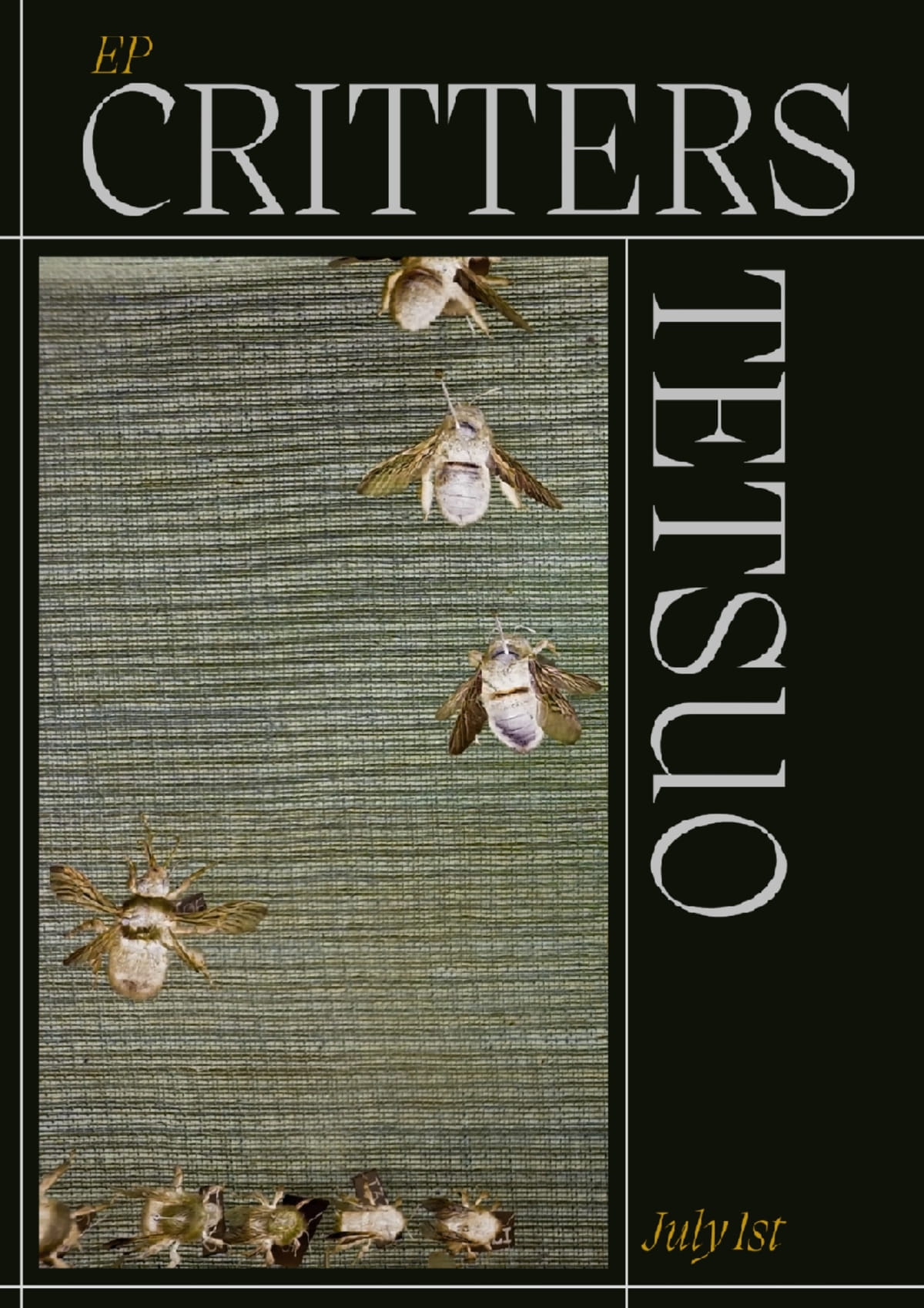
Alice: The title actually came up through the cover art originally, but I immediately fell in love with the contrast of it. The songs on this EP feel absolutely massive, they are heavy, dense, and expansive. But in reality, our day to day operation is really small. We are producing in a cramped home studio, holding onto small dreams of better futures, skittering under the floorboards of the Athens scene and waiting for the right time to strike.
You wrote about the studio as a sanctuary, a place where you have absolute control over environment and output. I’d like to give that real space in the piece. What does it mean in practice to have that control, and how do you think having a room that is fully yours has shaped the music you make in it? Could the heaviest moments on this EP have come from anywhere else?
Alice: I’ve been going to alternative spaces and gigs here in Athens since I was a teenager, and the truth is, I never felt that any place had room to fit me. When you realize the world doesn’t have a slot carved out for you, you have to build your own thing. That’s what this studio is and I’m still building it. One day, the vision is to expand this sanctuary into a physical venue or space where I can bring people in and actually play this music for you live.
But for now, having full control inside my own walls is awesome. I’ve never been a team player with these things. I am a bit of a control freak when it comes to the music, and having a room that is fully mine allows me to protect the vision. The heaviest, most vulnerable moments on Critters absolutely could not have come from anywhere else, because you can’t create something this raw if you’re constantly compromising or filtering yourself for a third party.
Somehow, the dynamic works right now because I think I’ve matured enough to communicate my vision while making sure the people working with me feel genuinely included. For every bit that I hate losing creative control, I double hate the idea of people feeling like their work isn’t recognized or that they’re being shut out. That is high school bullying level shit and I find it completely stupid. You can drive the ship and have absolute ownership of the output without being toxic. My studio is a sanctuary from that kind of noise.
Athens heavy scene in 2026. Where does Tetsuo sit on that map? Which bands, venues, rooms, or labels are worth naming? What works in the Greek heavy scene right now, and what doesn’t?
Alice: Right now, Tetsuo kind of sits in its own completely isolated pocket. The music we’re making is complex and layered, and it has been tough to translate that into a live set without compromising so we’ve stayed in the studio for now. I would much rather wait and give people a fully realized live experience than rush onto a stage and deliver something halfbaked.
As far as the local scene goes, Pray for Decadence is absolutely a band worth naming. I actually met Ifestionas back in the Desert Flowers era, and we’ve been keeping in touch since. They are making really great music.
If you ask me what doesn’t work in the Greek heavy scene right now, I think there are way too many men on our stages and in our mosh pits, and not enough women or queer people. If you want to know what my vision for a Tetsuo show is? I want to see femmes in high heels slam-dunking neckbeards in the pit. That’s what’s missing, and that’s what I want to see change.
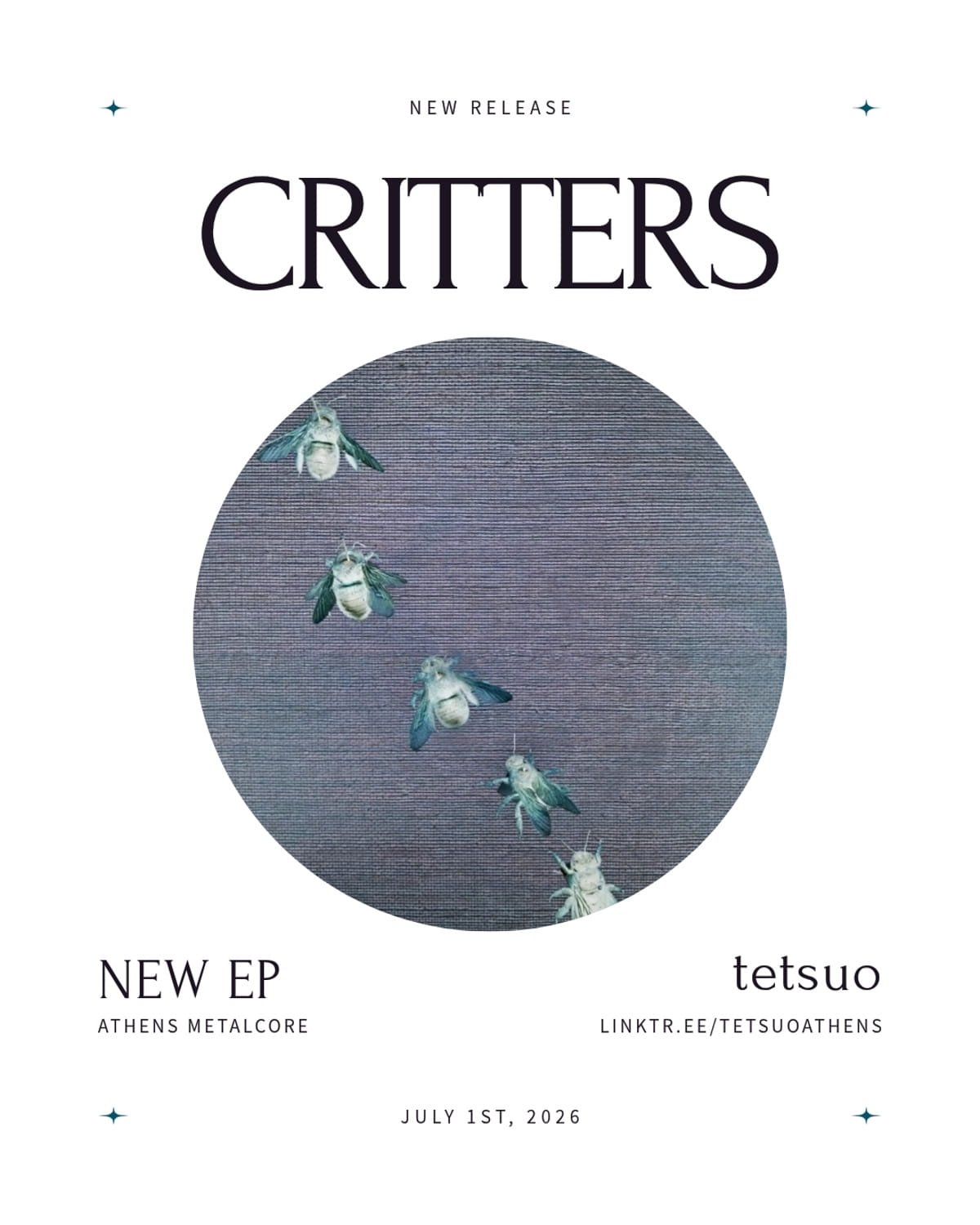
“critters” lands 1 July. Four tracks, self-released, produced from start to finish by Alice in Athens
🔔 IDIOTEQ is ad-free, independent, and runs on one person’s time. If you want it to stay that way: DONATE via PayPal 𝗈𝗋 SUPPORT via Patreon.
Stay connected via Newsletter · Instagram · Facebook · X (Twitter) · Threads · Bluesky · Messenger · WhatsApp.