


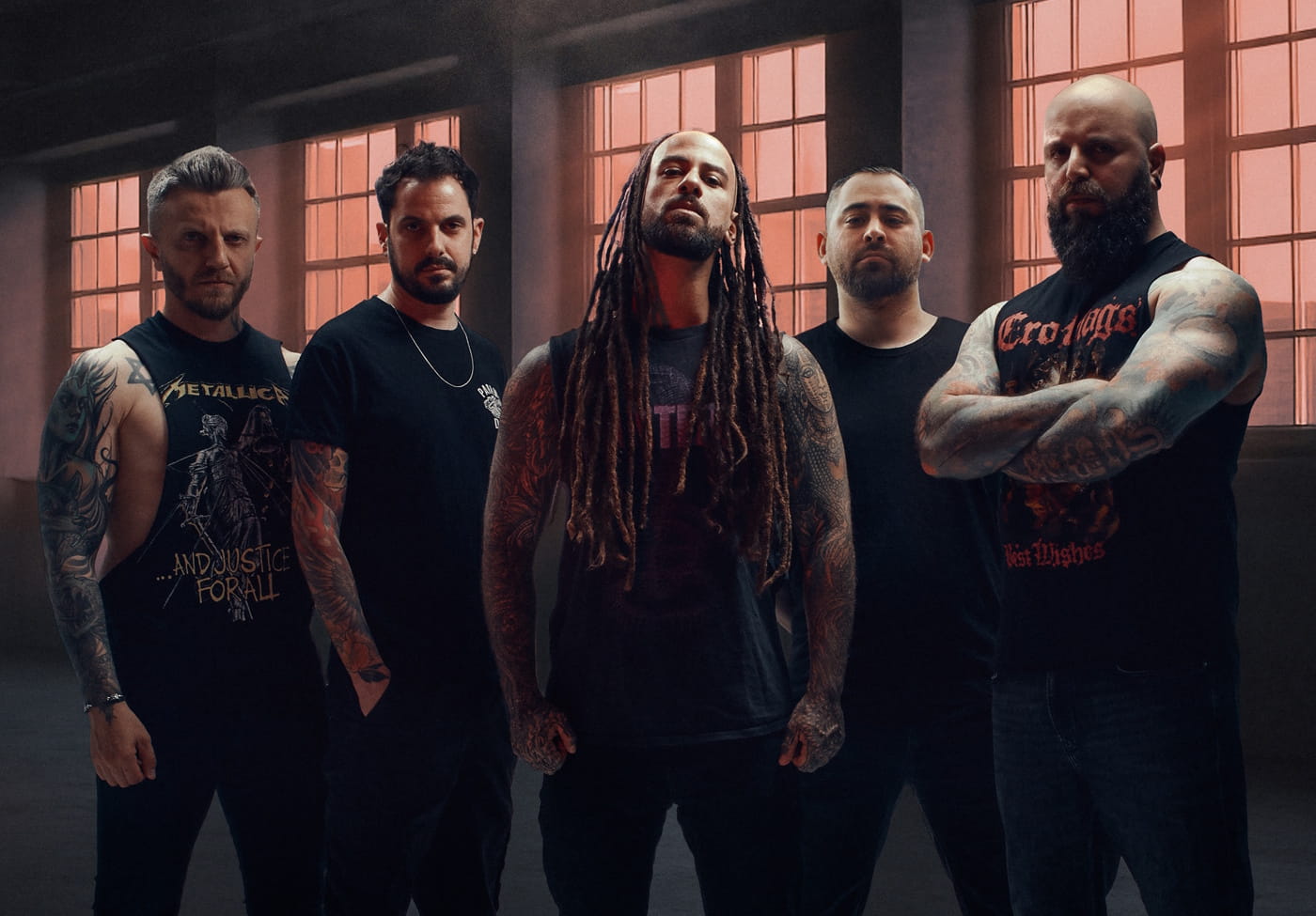
Working title was “Hate Is Not Enough.” That’s what Eternal Struggle had been carrying into the writing sessions for their new record, before the war started, before Tel Aviv rehearsals started getting cut short by rocket sirens, before people close to the band were killed, kidnapped, or listed as missing in the October 7 attacks and the months that followed. By the time the songs had taken shape, the title had stopped fitting the music that was actually coming out.
That criticism is not being hidden. IDIOTEQ is not asking readers to set that reality aside. The scale of Palestinian death, displacement, hunger, and destruction in Gaza is part of the political and moral context around any Israeli story published right now. The Israeli state and its military campaign carry responsibility for that suffering.
It also does not change what this article is. Eternal Struggle were asked about their new record, the people they lost, their rehearsals, their local scene, touring, isolation, antisemitism, and the last two years. IDIOTEQ published those answers. We are not retrofitting a different interview after publication, and we are not treating nationality as a reason to erase an artist’s voice.
Three days earlier, IDIOTEQ published a long conversation with Baratro, a Milan hardcore band whose new record engages with Gaza from an explicitly anti-Zionist position, with the word “genocide” appearing repeatedly in the band’s own words. Both pieces remain on the site. They do not cancel each other out. They also do not resolve the politics around them.
This article remains published in full. So does the criticism around it..
“Our daily lives became a constant mix of instability, anxiety, hope, fear, and confusion,” the band said. “The record naturally grew into something much bigger than anger alone.”
The new title arrived while trying to find a single phrase that could hold all of that.
“Putting the words war and love together felt poetic because they’re complete opposites, yet somehow they perfectly represented everything we were experiencing,” they said. “I had this feeling that the album deserved a more artistic title, almost like the title of a novel.” The rest of the band connected with it. Brian “Mitts” Daniels, who produced the record and had produced their 2021 debut “Year of the Gun,” gave his blessing. From that moment, “Wartime Love Affair” was the album’s name.
The metallic hardcore lineage that ran through “Year of the Gun” is still here: NYHC groove pulled from Madball, weight pulled from Hatebreed, Sepultura’s metal sitting underneath. What’s changed is the space the record leaves between the hits. Denser guitar layering, sharper contrast between the crushing passages and the ones that pull back, more room for grief and frustration to surface between the parts meant to hurt. Engineered by Arie Aranovich, mixed and mastered by Connor Haines. It’s out on Demons Run Amok Entertainment.
Most of the album was written after October 7. The band had been working on songs before the war broke out, then put everything on hold when it did. During those first months, life was rocket sirens, hostages still held in Gaza, friends who’d been killed or kidnapped or were still missing, and the running “risk assessment” the band said they’d do in their heads every time they left the house. When rehearsals eventually resumed, they weren’t really rehearsals at first. They were an excuse for everyone to be in a room together for a few hours. Sometimes practice stopped mid-song because a rocket alarm went off, and the band would run to the shelter with their families and pets still at home.
Songs like “Bloodshot Eyes,” “Shed the Goat,” “The Lowest Kind” and “Every Form of Violence” came out almost naturally from that stretch.
“Playing them live is still chilling because they immediately bring me back to that state of mind,” the band said. “We’ve always written about trauma, inner struggles, and the reality of living in this region, but these songs hit me on a much more personal level.”
“Bloodshot Eyes” is the most war-driven song on the album. It’s about October 7 and the months that followed, as the full scale of what had happened became clear. Shock, fear, the images that got permanently engraved. “Shed the Goat” comes at it from the other side. It’s about leaving the battlefield and realizing the battlefield doesn’t leave you. Disconnection, trauma, survival mode still running in the background when you try to fit back into a normal world.
Wyświetl ten post na Instagramie
“Bronze” is the record’s most personal moment. It’s dedicated to Arad “Bronze” Amitz Lev, a close friend of the band who died in 2022 after a long fight with cancer. “He was one of the most positive, uplifting people I’ve ever known and a true legend in our local scene,” the band said. “You’d see him at every show, always smiling and supporting everyone around him. Losing him left a huge hole in our hearts, and writing this song was our way of making sure his memory will always live on through our music.”
The local scene held. About three months into the war, once cultural events could legally happen again, Eternal Struggle played their first show back. It was a benefit for Gagarin, the Tel Aviv venue that’s been the home of the country’s alternative music scene for years, and it stayed in the band’s memory as one of the most emotional shows they’d ever played. “People weren’t just coming to see bands,” the band said. “They were coming to see each other again. Friends who hadn’t met for months were finally able to hug, share their stories, and process everything they had been through. There were tears everywhere, but there was also hope.”
More bookings got cancelled after that. More lockdowns. Every show that did happen felt like a small window opening. “It became obvious how much people needed those few hours of release, a chance to disconnect from reality, lose themselves in the music, and simply breathe again,” the band said.
Outside the country, things closed up in a different way. 2022 and 2023 had been the band’s biggest touring years, nearly forty shows across Europe, festival dates, real momentum building. Then the war started, and it all stopped. International touring in Israel has largely paused since. Touring in Europe has become significantly harder for the band. Some people they had worked with before, some bands they had hosted at home and welcomed in, no longer want to deal with anything connected to Israel, as they describe it.
“It feels like no one wants to touch a ‘hot potato,'” they said.
Two names have stayed close through it: MAD Tourbooking and Demons Run Amok. Both checked in regularly to make sure the band were safe. Both treated them like family. They frame it not as a marketing line, but as one of the reasons the band still has a way to put records out at all.
The antisemitism piece, as the band describes it, has been sharper than the professional pullback. What they describe isn’t the old, whispered version. “The biggest change has been how comfortable some people have become expressing it now,” they said. “It’s no longer masked or hidden, but increasingly growing and embraced. Trendy, even. We’re met with blood libels, conspiracy theories and Nazi talking points regularly.” Some people in the music industry weren’t even willing to hear the new record because of where the band is from. Online, comments range from openly hateful to full arguments that Israeli bands shouldn’t exist in the hardcore scene at all.
“Growing up in the Middle East gives you a thick skin, and we’re proud of who we are,” the band said. “We’re Israelis, we’re Jews, and that’s not something we need to apologize for.”
The hardest part to hold onto, they said, isn’t the noise. It’s the isolation underneath it. Watching people they’d known for years turn their backs. Being on the receiving end of instant judgement over an accident of geography. The obvious questions (will we be okay, will life here ever feel normal) sit alongside a harder one about how small the world can suddenly feel. “Seeing people refuse to show compassion, or immediately point fingers simply because of where we’re from, made the world feel much smaller and lonelier than it ever had before,” the band said. “That was painful.”
What they’ve held onto is a version of hope with teeth in it. “We’ve always believed that holding onto hope is an act of resistance in itself,” they said. “As frightening and uncertain as everything has been, we refuse to let fear define who we are. We keep moving forward, we keep making music, and we keep believing that there has to be a better way.”
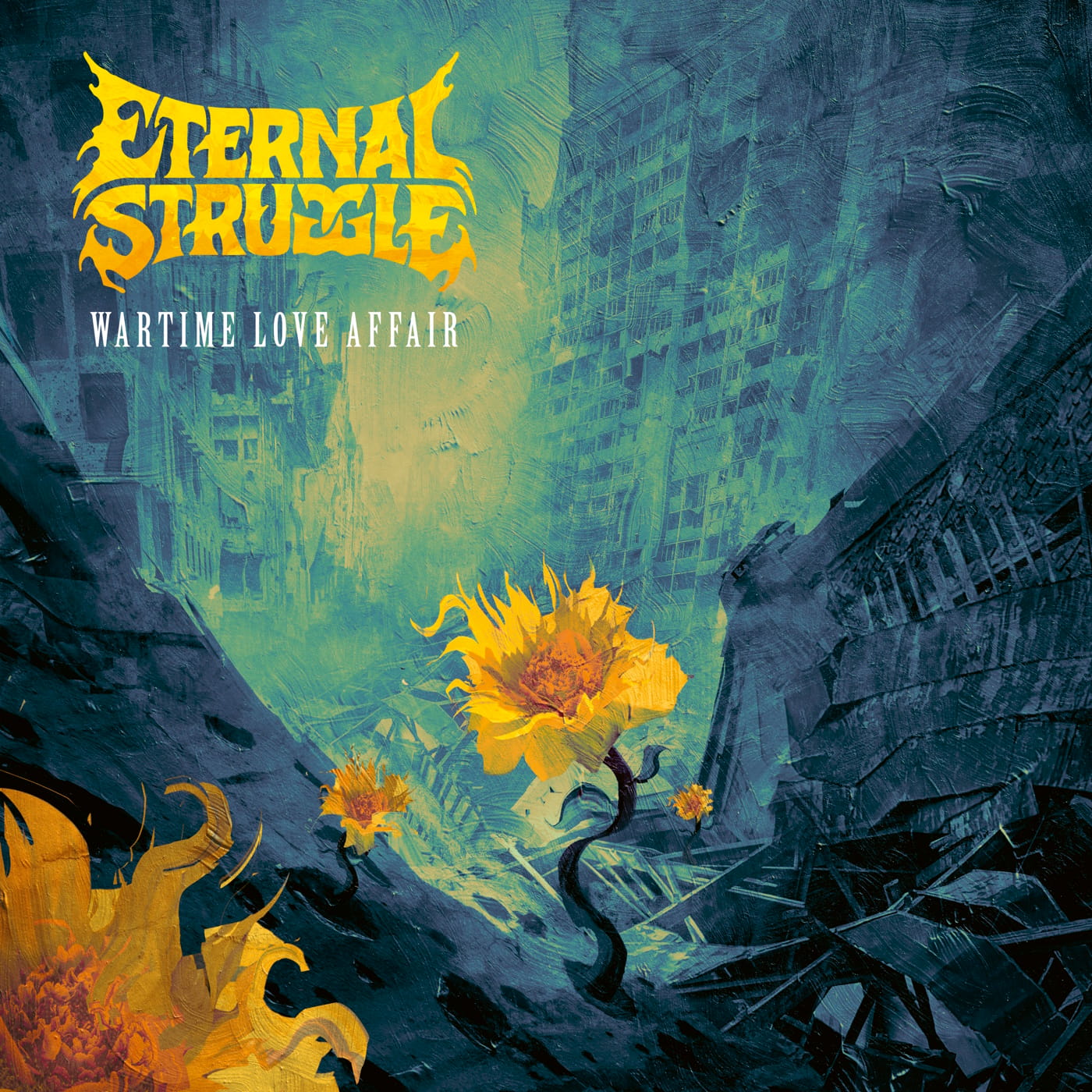
In musical terms, “Wartime Love Affair” is where all of that lands. Two new band members joined for this record, and the band said their ideas opened up new directions the songs immediately took. “After finishing ‘Year of the Gun,’ we already had a clear vision of where we wanted to take our sound,” they said. “‘Wartime Love Affair’ feels like the natural evolution of that vision. More focused, more emotional, and more ambitious in every way.”
The last thing the band said turned outward from the record entirely, addressed to anyone outside the country walking in with none of this context.
“People would be surprised by Israel, and especially Tel Aviv. It’s much calmer and far more multicultural than many people imagine. You can find Jews, Arabs, Christians, Druze, religious and secular people living side by side in a way that’s actually quite unique.”
Life there, they said, isn’t only about war and politics from where they sit. There’s food, a music scene, thousands of years of history, and people who mostly want to live their lives and share their stories. “If you ever decide to visit, I think you’ll discover a place that’s far more complex, welcoming, inclusive and beautiful than the headlines allow people to see.”
Editor’s note updated after publication. See note at the top of this article.
🔔 IDIOTEQ is ad-free, independent, and runs on one person’s time. If you want it to stay that way: DONATE via PayPal 𝗈𝗋 SUPPORT via Patreon.
Stay connected via Newsletter · Instagram · Facebook · X (Twitter) · Threads · Bluesky · Messenger · WhatsApp.