


The strangest thing about calling an album “joy” is how quickly the word starts to look suspicious. Repeat it enough and it loses its certainty. Is joy pleasure? Contentment? Purpose? Relief? A permanent state you arrive at after making enough correct decisions? Or can it be ten good seconds in the middle of a terrible day?
Ethan Reed spends much of Sleepthink‘s second full-length record worrying at that problem without forcing it into an answer. “joy“, released independently on July 16, contains eight pieces whose titles already read like pieces of an argument: “surely something good will happen soon”, “zapffe’s sublimation”, “none of this is meant to be”, “where is my joy”. By the end, after all that abstract thought, the record arrives at “it’s morning, you are here”. The destination is almost embarrassingly ordinary. A warm bed. Someone you love beside you. A cat against your chest. A few seconds before consciousness properly switches back on.
That last move might be the most convincing thing about the whole record. “joy” is interested in very large ideas, sometimes almost comically large ones, but its best moments keep reducing them to physical experience.
The music does much the same. On “new game ! restart ! overwrite save !“, stuttering chords and a dense distorted bass figure push against a sustained drone. The title comes from video games, but Ethan connects it to Robert Nozick’s experience machine: if you could enter a simulation engineered to give you pleasure, would you choose it over an imperfect reality? Nozick’s thought experiment appeared in “Anarchy, State, and Utopia” in 1974, and Ethan takes it one step further. What if you entered the machine and still wanted to hit restart? What if even the supposedly perfect version of life became another save file you suspected you could improve? Nozick’s experience machine is indeed part of the 1974 book.
It is one of the record’s sharper ideas because it avoids treating happiness as a shortage that technology, money or better circumstances could simply correct. The dissatisfaction follows you into the simulation.
“it’s morning, you are here” works differently. Modular synth arpeggios open into noise, distant electric guitar and birdsong before glockenspiel and synth take over towards the end. The arrangement is gentler and more exposed than the distorted mass of “new game ! restart ! overwrite save !”. After a record spent asking what consciousness does to a person, birds outside a window and the sound of a small instrument become sufficient evidence that being alive can occasionally be pretty good.
This is where “joy” works best for me. Its philosophical references could easily have turned an instrumental ambient album into homework. At points the accompanying essay goes much further into Zapffe, Camus, Nietzsche, Seneca, Weil, Nozick and ethical hedonism than the music requires. But the record itself rarely sounds like somebody trying to prove they have read the books. Synths, acoustic instruments and field recordings keep bringing the abstractions back into rooms, gardens and bodies.
One tiny event in Ethan’s courtyard ends up carrying more weight than several of the famous names.

For weeks he kept hearing an unexplained sound outside his studio. He considered a cat, then a bird. Eventually he looked over the fence and found a branch from his neighbour’s lemon tree. It had grown towards its own trunk and was scraping against the tree whenever the wind moved it. The observation eventually became the repeated line, “The branch scrapes against the tree”, heard in “where is my joy” and echoed elsewhere in the tracklist. Ethan admits in his essay that he is not entirely sure what the metaphor means. That uncertainty is useful. He followed the image towards questions of self-harm, consciousness and why human beings can turn their awareness against themselves.
From there comes Peter Wessel Zapffe, probably the philosopher most deeply embedded in the album. Zapffe argued that human consciousness has developed beyond what is useful to us, leaving people capable of recognising the apparent meaninglessness of their existence and then suffering because they recognise it. His proposed responses were isolation, anchoring, distraction and sublimation. Ethan names the second track “zapffe’s sublimation”, and the joke is difficult to miss once you know the definition. Sublimation means turning the trouble of existence into art. Ethan is making an album about Zapffe while enacting one of Zapffe’s suggested defences against the condition Zapffe describes.
That is a much more interesting relationship between philosophy and music than simply attaching quotations to tracks.
There is another tension running through the essay that deserves attention before the essay itself begins. Ethan keeps returning to the possessive word in “where is my joy“. Modern ideas about happiness often present it as something individually obtainable, a state owed to us if we choose correctly, work correctly, heal correctly or optimise ourselves correctly. His reading eventually brings Simone Weil, Buddhism, Hinduism and Taoism into the discussion and begins asking whether the individual might be the wrong unit of measurement altogether. Community, connection and responsibility towards other people appear alongside the earlier emphasis on private consciousness.
Ethan does not solve the contradiction. That uncertainty separates “joy” from its predecessor. Sleepthink’s 2025 album “RETURN TO THE ROOFTOP” was built around a specific death, with field recordings and titles carrying a story about the loss of a close friend. It ran to 14 tracks and was selected as a local feature by Perth station RTRFM shortly after release. “joy” reduces the track count to eight while making the subject much wider. The first record had an event at its centre. This one has a question.
There is a longer history here too. Ethan is not entirely new to IDIOTEQ. Back in 2018 we spoke with him as part of Perth emo, indie and spoken-word band Treehouses, then followed the band through several subsequent releases. Even then, Treehouses were talking about poetry, mental health, relationships and “being a living human”. Eight years later the musical language has changed dramatically, but apparently the last part of that sentence never really went away.
Sleepthink now operate from Perth, with Ethan handling the project as composer and producer. The project’s catalogue stretches back to 2019, through short releases including “Closer”, “y,aa” and “Body Knowledge”, before “RETURN TO THE ROOFTOP” and now “joy”.
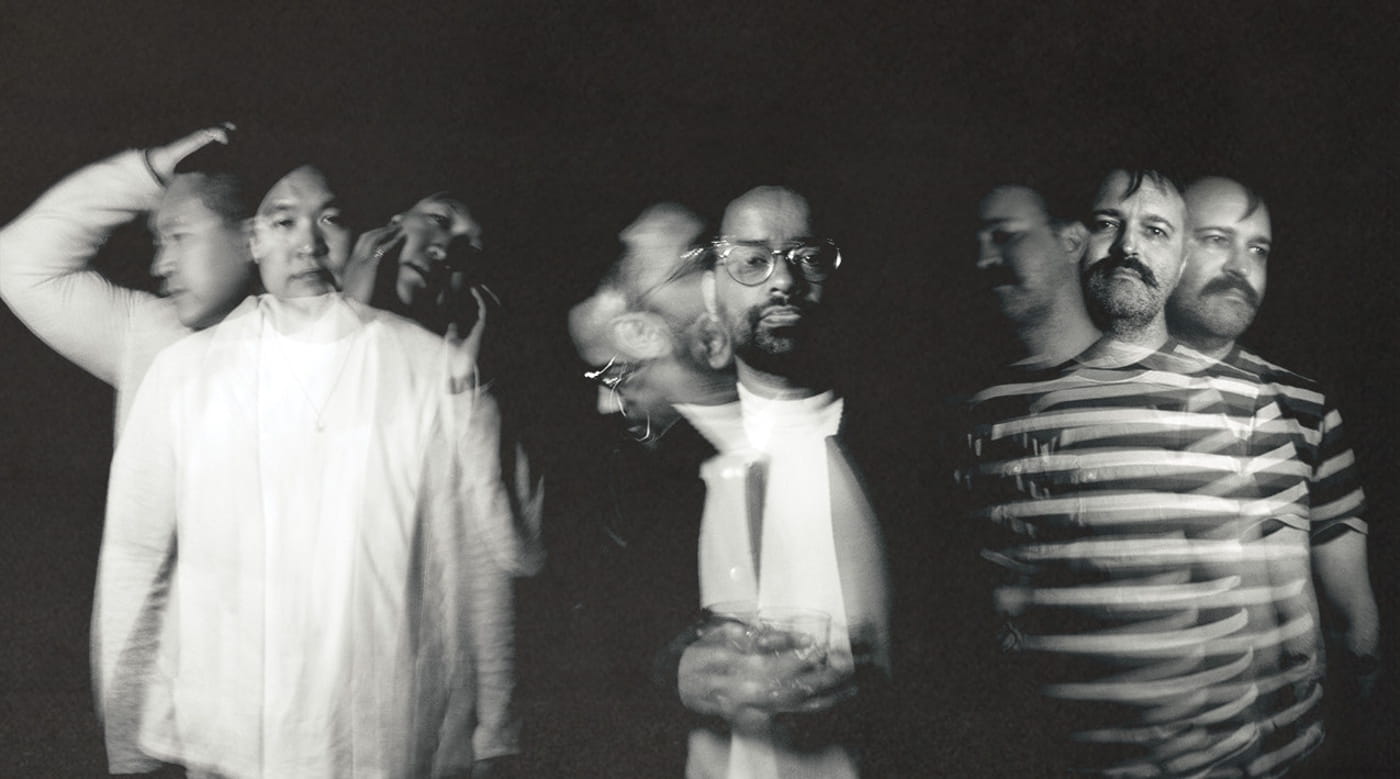
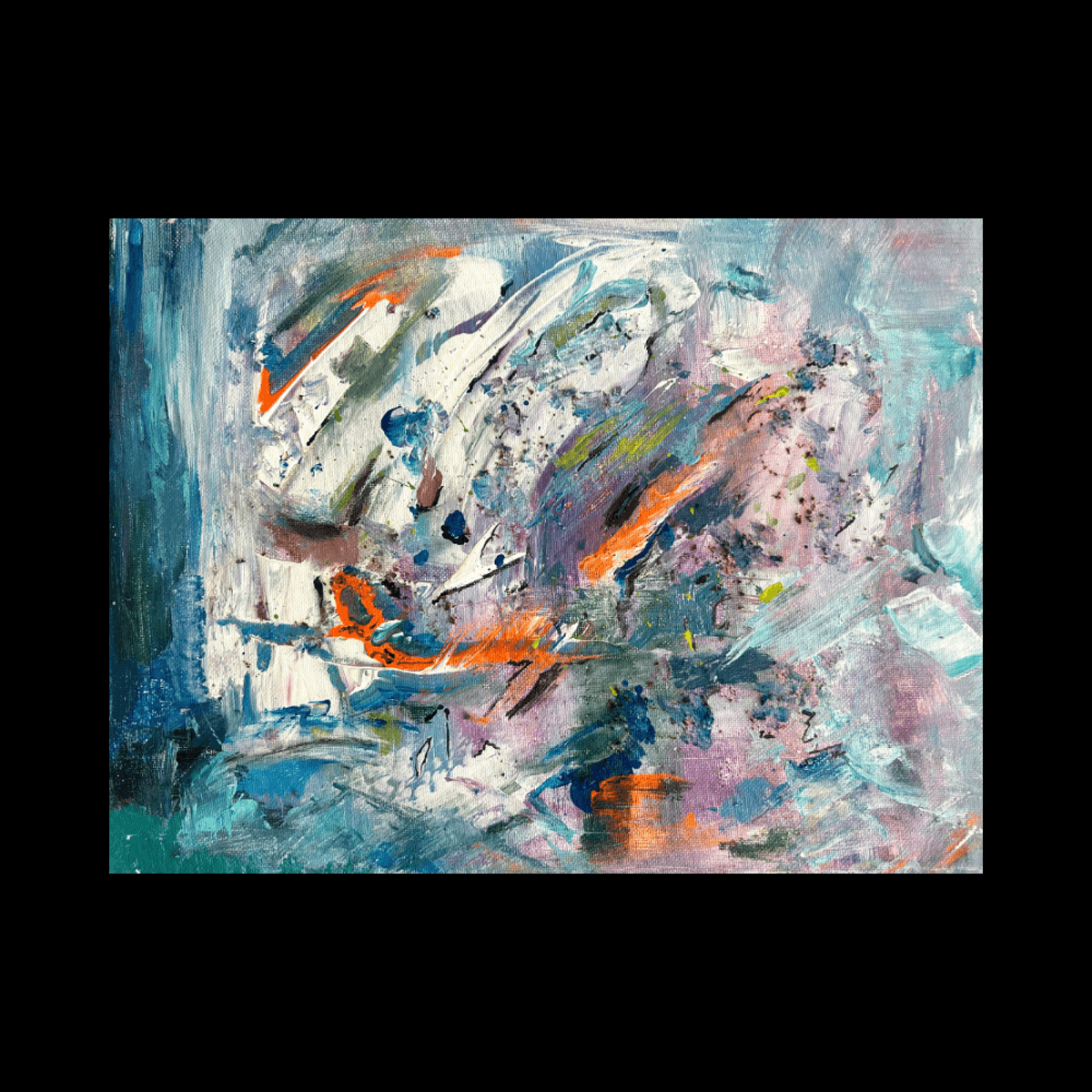
The new record is fully Ethan’s work in the most literal sense too. He recorded it, mixed it, mastered it and painted the artwork himself. Sarah Spight shot the press photographs.
But the best reason to spend time with “joy” is not the size of its reading list or the completeness of that DIY process. It is the strange shrinking movement that happens across the whole project. Happiness begins as a philosophical absolute. Then it becomes a problem. Then a branch, a distorted bass part, birdsong, another person asleep nearby. Eventually Ethan reaches a definition modest enough to survive his own pessimism.
Wyświetl ten post na Instagramie
Maybe joy does not have to stay.
Below, Ethan takes that thought much further in an essay written alongside the album. We are publishing it in full and without editing his argument.
Content note: the following essay contains discussion of suicide, self-harm and existential despair.
What would it take to be truly happy? Is anyone? Is it even possible? What is joy? What does joy actually look like? I made a record titled ‘joy’, but it’s not a joyful record. Rather, it’s an exploration of what the concept of joy means to me and, in a way, more about the search for joy.
Creating a (mostly) instrumental record and trying to inject context and meaning through musicality alone is always a unique exercise; I lean on the use of song titles and field recordings to accompany the overall tone of the tracks and start to scaffold meaning for the listener. My debut album ‘RETURN TO THE ROOFTOP’ was similar, using field recordings and pointed song titles to tell a specific story around the death of a close friend. This current release, ‘joy’, expands its scope; while creating this record I found myself reading and exploring a range of philosophical works around ‘joy’ as a concept, delving into ideas and possibilities all focused on this simple, ubiquitous three letter word.
Wyświetl ten post na Instagramie
In making this record, the focus of musical and technical choices made was in conveying emotion to support the concepts I was exploring. Manipulated, twisted field recordings paint an absurd backdrop to melody; shifting rhythmic patterns evoke uncertainty; flowing generative synthesis chords analogue an increasing curiosity. Later in the record, acoustic instruments provide a tangible grounding from the lofty heights of synthesis and philosophy.
I don’t pretend to be an expert on happiness, or joy, or philosophy. I’m interested in the work of many great minds that have come before me and will surely follow. There’s a powerful feeling of validation I experience when I discover works or perspectives that resonate with me or perhaps put into words concepts I have felt but not been able to properly articulate.
In this context, I think of joy as happiness, fulfillment, purpose and elation in the absolute sense; what ethical hedonism defines as the single most important pursuit and root of all value and meaning in life. Other definitions of joy vary from source to source; etymologically, origins can be found in the old French ‘joie’, meaning pleasure or bliss, or traced further back to Latin ‘gaudia’, meaning inward pleasure or gladness. The word shares roots with the phrase ‘rejoice’, which perhaps today would be more often used in a religious context (Potkay, 2007).
Wyświetl ten post na Instagramie
Joy can be many things, and different people may find their own experience of joy in many ways. Community, religion, fame, financial success, friendship, connection, purpose or experiences. However, an important distinction exists for me in the difference between joy and hedonism – I would argue that there is a difference between the noun ‘joy’ as an abstract concept, compared to the output or result of hedonism, or a hedonistic pursuit. I wouldn’t think of hours spent scrolling through mind-rot social media, or smoking a pack of cigarettes a day, as a joyful experience. But hedonistic, sure. This distinction is also argued by the Stoic philosopher Seneca (1614/2015, Letter 59) in his ‘Moral Letters to Lucilius’: “If, however, you seek pleasures of all kinds in all directions, you must know that you are as far short of wisdom as you are short of joy.” Seneca makes a clear distinction in this letter between chasing momentary reward through vices and distractions, and the prolonged, intentional state of peace and happiness he attributes to joy. Aristotle’s ‘eudaimonia’ (Kraut, 2022), a state of utmost human good, defined later by Plato (Frede & Lee, 2023) as “The good composed of all goods; an ability which suffices for living well; perfection in respect of virtue; resources sufficient for a living creature”, conveys the idea of this higher state of living as being similar to joy; something that is worked towards and thus achieved, through prudence, virtue, reflection and self-awareness. Similarly, Russian-American philosopher Ayn Rand’s set of philosophies under her umbrella term and concept ‘objectivism’, explored in her works such as ‘Atlas Shrugged’ (Rand, 1957/2007), posit that humanity holds his “…own happiness as the moral purpose of his life”.
So who has it? Who has achieved ‘joy’? Philosophers have certainly lauded it as a lofty goal. For me, and I imagine for many others, it feels elusive and out of reach.
The record begins with hope: ‘surely something good will happen soon’ is less of a deep philosophical musing and more a simple, desperate exclamation. In the great balance of the universe, surely there must be some positivity coming my way in the near future. The scales feel tipped to the side of struggle and despair with no apparent remedy in sight. Perhaps this is simply the way of things, the reality of the human condition. But why would this be? Is it the way of the universe and of existence to suffer?
There is a passage in the song ‘where is my joy’, partly reflected in titles of tracks throughout the record, that reads as follows:
“The branch scrapes against the tree
None of this is meant to be
All we have is memory
The branch scrapes against the tree
And it sounds like songbirds
Where is my joy?
Have you found yours?”
Wyświetl ten post na Instagramie
This central motif is an extract from an originally much longer piece of writing, cut down to its bare and simplest form. It is literal as well as metaphorical; a couple of years ago, a strange sound floated into my studio over and over again for a few weeks. It was coming from behind the wall of my courtyard garden, just outside the window.
At first, I thought it was a cat scratching the fence, or a tree. For a while I thought it might have been a bird call. One day I decided to farewell the mystery and have a look into the neighbour’s yard as the sound was occurring – a branch from the lemon tree on the neighbour’s side had grown up against the fence, curved back around towards the trunk of the tree, and was gently scraping against the tree itself as the wind stirred the branches.
Strange indeed, but I knew that I’d stumbled across a ripe metaphor. I am still uncertain what exactly the metaphor here is; I think it just came to represent the absurdity of struggle that faces all living creatures. The thought of a living organism being driven to turn on itself, to scrape against its own body, started to spark my curiosity around consciousness and suffering.
A question arose; do any living creatures other than humans self-harm or suicide? The scientific consensus is… not really. While controversial, the general understanding is that animals do not possess the high level of cognitive ability and conscious self-awareness to comprehend or intend suicide. So why do humans? Simply due to our complex cognitive development?
Humans are unique because of our self awareness and our level of consciousness. The ability to reflect on our experience as a living being and ponder meaning and morality is what defines us and curses us to struggle.
As described by Thomas Ligotti in ‘The Conspiracy Against The Human Race’ (2018), “This is the tragedy: Consciousness has forced us into the paradoxical position of striving to be unselfconscious of what we are—hunks of spoiling flesh on disintegrating bones.” Citing Norwegian philosopher Peter Wessel Zapffe as a major influence, Ligotti is touching on Zapffe’s fundamental belief about human beings; we’re too conscious.
Humans are desperate to find some meaning and reason in life, but this search is in itself paradoxical; we only desire meaning because we can conceptualise it through our heightened consciousness and self awareness, but having this level of consciousness renders us incapable of existing free from the struggle of existential angst. Zapffe uses the analogy of a Megaloceros, a now extinct genus of deer from the Pleistocene; the weight of its enormous antlers developing into a biological disadvantage that resulted in extinction.
Much like the deer’s overgrown antlers, human consciousness is overdeveloped to the point of detriment, “in all its fantastic splendour pinning its bearer to the ground” (Zapffe, 1933/2004). So what to do? In his essay ‘The Last Messiah’ (Zapffe, 1933/2004), Zapffe proposes four possible defense mechanisms against this overwhelming burden of consciousness:
- Isolation – isolating one’s self entirely from any negative conscious thought. Essentially avoiding facing up to any existential questions that may bring difficulty.
- Anchoring – anchoring to a value or set of values that focuses attention, such as “God, the Church, the State, morality, fate, the laws of life, the people, the future”.
- Distraction – constantly occupying the mind with tasks, ideas or events to prevent any inward reflection.
- Sublimation – channeling the struggle of existence into creating meaningful art; analysing and commenting on the paradox of existence through an aesthetic lens.
Are any of these conducive with joy? Perhaps not within the framework of joy as an ongoing state of being, as proposed by many schools of philosophy over time. They stand more as ways to get by, not guidelines for joyful living. Zapffe does not claim these four concepts will remove existential meaninglessness, but rather that they can defend against the feelings this truth can bring. I would argue that most individuals utilise one or more of these defenses to some degree.
I can admit that it’s not a stretch to identify behaviours of my own that could easily fit into the isolation or distraction categories, and certainly I attempt sublimation on a daily basis; I am a musician and composer, I sometimes paint, and am currently writing this very piece. I certainly find some level of meaning in creating, but is this sufficient to make me happy? Is this bringing me into a true state of joy?
Zapffe’s pessimistic philosophy has been historically aligned with his predecessors in the world of nihilism, reflecting and expanding on views from philosophers such as Nietzsche, Schopenhauer and Kierkegaard. Existential nihilism does seem appropriate to touch on; the belief that life is fundamentally without objective meaning stands as a necessary prerequisite for Zapffe’s perspectives. Absurdism extends this belief by examining the human need to attempt to find meaning in an objectively meaningless world. This conflict is what can lead to existential angst or crisis and, much like Zapffe’s four proposed defenses, Albert Camus proposed in ‘The Myth of Sisyphus” (1942/2000) three possible responses to the psychological turmoil caused by facing the truth of the absurd:
- Physical suicide – if no meaningful life can be obtained, why even live a life?
- Higher belief (philosophical suicide) – assuming there is some greater purpose to serve; values, religion or society, and failing to see the absurd nature of these ‘higher purposes’.
- Rebellion against the absurd – embracing the freedom inherent in the absurd and taking personal responsibility in the creation of meaning.
The provocative wording of these responses paints a dark, pessimistic outlook indeed. It is implied that the only positive possibility here is to rebel against the absurd. But this suggestion itself is flawed; if existence is truly absurd, then any response to it is also absurd (ie. without meaning). Camus argues for accepting and living alongside the meaninglessness of our existence; and using it as a starting point to continue in life regardless. But continue to what end? To simply exist without giving in to despair? It certainly doesn’t paint an image of life in which joy is possible or achievable.
I’m reminded of a line from a piece of writing written by my good friend Phaedra Gurton (which you can hear her reading in an older song of mine aptly titled ‘phaedra reads happiness’) – “Happiness is what we all want. Something we deserve.”
This idea of happiness, or ‘joy’, as something that we are all intrinsically deserving of, or perhaps achieve through hard work or a long series of correct decisions, I think, is pervasive in our society. Children are told to dream big, to be whatever they want to be, guided to grow into the version of themselves that will bring them the most happiness. Every self-help book, podcast, essay, or piece of generational wisdom tells us the right way to achieve this seemingly obtainable happiness. The song title ‘where is my joy’ echoes this same sentiment – emphasize the possessive adjective ‘my’, here, and it sounds like something that is owed, or deserved – or, think of it as something that isolates the joy to the individual: where is ‘my’ joy, not the joy that others have, or seem to find, but the thing that completes that expression for me, that is uniquely mine. But what if this idea is misguided? What happens when a person can not find that so-promised joy? Adversity exists in abundance for many in this life and this joy that we are taught to seek might remain out of reach. If we are to heed the words of Zapffe, Ligotti and others, it may in fact be fundamentally impossible due simply to the nature of our consciousness.
Track three on the album is titled ‘new game ! restart ! overwrite save !’; a phrase that, steeped in video game lexicon, is intended as an artistic response to Robert Nozick’s (1974) infamous ‘experience machine’ thought experiment. Nozick asks if, given the choice, would one choose to live in a simulated, entirely pleasurable (joyful) simulation of reality in ‘The Experience Machine?’ Or choose to remain in everyday (‘true’) reality? Nozick argues that many would not choose the pleasurable simulation. That the realness of struggle, the overcoming of adversity to reach desired goals, is integral to human experience. Not only integral, but desired. This argument places truth and authenticity of experience above simple pleasure; an argument that counters true ethical hedonism by suggesting struggle and difficulty is a requirement of true happiness. Nietzsche argues that forms of struggle, physical, ethical or mental, are what enables humans to experience joy. His concept of ‘will to power’ (Nietzsche, 1906/1967) is rooted in this idea; a desire to overcome hardship and one’s circumstances that can lead to further development and self-actualisation. This is further echoed in his concept of ‘amor fati’ (Nietzsche, 1908/1967), an originally Stoic idea to simply accept and love one’s fate. By embracing wholeheartedly the good and the bad, the road is paved for longer lasting, more genuine happiness.
This phrase, ‘new game ! restart ! overwrite save !’, extends Nozick’s (1974) thought experiment and asks the audience to approach the question from a different perspective; what if you’re currently in the artificially generated ‘pleasureable’ reality? Are you satisfied? Is the current balance of triumph and struggle working in your favour? Would you choose to start over? Perhaps even once electing to enter the ‘experience machine’ the most common outcome would be to choose to ‘restart’ this version of reality, in hope of achieving more than before, naively and falsely believing there is a chance to obtain greater happiness with another attempt.
Nozick’s ‘experience machine’ thought experiment recalls with stark similarity Nietzsche’s character of ‘The Last Man’, from ‘Thus Spoke Zarathustra’ (Nietzsche, 2003); an entirely passive, nihilistic being with no motivation or desire left, existing simply, claiming that happiness has been ‘invented’ or manufactured, but seeking no further meaning in life. This certainly doesn’t paint a picture of a joyful man; Nietzsche uses this to argue again for the importance of meaningful struggle and its potential (in overcoming struggle), to lead to long-lasting joy.
Simone Weil, a French philosopher, emphasized the widespread ‘uprootedness’ that afflicted all of humanity in her book ‘The Need for Roots’ (Weil, 1949/1952). This condition was a result of gradual disconnection from the past, from the environment, and from community. Weil emphasises the importance of an individual’s sense of belonging in these facets in order to achieve intellectual and moral value in life. She envisions a flourishing community where ‘The Needs of the Soul’ are met in a balanced capacity and this allows for a “flowering of fraternity, joy, beauty, and happiness” (Weil, 1949/1952). Perhaps Weil has reached something crucial here; happiness may need to be reframed as a community endeavour, rather than an individual one.
Classical ‘Western’ philosophy seems to emphasise individualism and the role of the individual in navigating life, whereas many ‘Eastern’ philosophies such as Buddhism, Hinduism and Taoism focus more on happiness as an interconnected concept, obtained through love and compassion for all living things (Kyomugisha, 2024). Inner peace is obtained through balance, relationships, care and ethics. Is the individualistic approach to navigating life and seeking joy too narrow in scope?
The perspectives of Buddhism and Hinduism do not shy away from engaging with the complexities of consciousness and existence; there is great emphasis placed on actively addressing one’s place in the interconnected universe, and the possibility of achieving intellectual peace through careful contemplation of the true nature of reality.
Is there a concrete answer to extract from the myriad perspectives on joy and meaning? If it was that simple, I doubt there would have been such extensive examination of the subject throughout human history. But there may be some simple wisdom to glean from such a diverse range of perspectives, of which only the surface has been touched here.
Create; make art in some form. Not because the act of creating will bring you anything, not because you have goals to reach, or fame or money to acquire, but because creating something that only exists to provide a commentary on what it is in itself to truly experience existence, is the most pure thing that a suffering, conscious creature can do. Act in a way that transcends the boundaries of action governed by biological need or self preservation – make and or do something that says in your unique, human voice; “I am here! I am alive! I don’t know what that means but I am profoundly aware of the paradox!” Even the act of writing this is an expression of existence, as I place words in a sequence, commenting on what it means to be alive and experiencing self-knowledge.
Embrace completely and wholeheartedly the absurdism of existence and the consciousness with which we experience it. Do things which, if not in hedonistic pursuit, simply because you can. Live as a goat does. Exist, and be, simply. (An important distinction should be made: your pursuit of joy should never impede someone else’s. This is also a fundamental pillar of utilitarian ethical hedonism, which argues for a moral obligation to increase happiness for the greatest number of individuals, as well as Hinduism and Buddhism, which advocate for happiness as something only obtainable if individuals act in a way that seeks the betterment of all.)
While the album delves into existential philosophy, with a somewhat dark and despondent approach, the final track on the record ‘it’s morning, you are here’ presents a tonal and conceptual counterpoint; a gentle grounding through tangible, tactile awareness; a reminder of the simplicity and comfort that can be found within sensory experience. There’s a brief moment each morning when I first wake; I am warm beneath the blankets, my love is next to me, our beautiful cat snuggled against my chest. For a handful of seconds, I feel joyful. Who are these philosophers to deny the truth of this feeling?
I think there is a danger in considering joy as an achieved permanent state rather than something that can be momentarily experienced. In contrast to the definition given by many, joy can be fleeting moments. Joy can last ten seconds in an entire day of misery; it’s still joy. Maybe that’s all we can find.
As Nietzsche wrote in ‘The Will to Power’, “If our soul did but once vibrate and resound with a chord of happiness, then all of eternity was necessary to bring forth this one occurrence—and in this single moment when we said yes, all of eternity was embraced, redeemed, justified and affirmed” (Nietzsche, 1906/1967).
You may have already found your version of joy. If not, try creating. Try drawing, try painting, writing, singing, sculpting, or eat a ripe, unpeeled mango in the ocean with your bare hands and teeth. Not because it will bring you into this permanent heightened state of ‘joy’, but because you can and because it feels good while you’re doing it. Even if, like me, you are overwhelmed by the vast, cold, meaningless mystery of existence and the paradoxical consciousness through which we navigate it, search for your own moments of joy. Acknowledging the lack of objective meaning in life does not remove the possibility of experiencing subjective meaning. Accepting the impossibility of reaching a permanent, enlightened state of happiness does not prevent one from experiencing brief moments of pure elation. These moments and the feelings contained within them are real, and they might just make it all worth it.
- Camus, A. (2000). The Myth of Sisyphus (J. O’Brien, Trans.). Penguin Classics. (Original work published 1942)
- Frede, D., & Lee, M.-K. (2023). Plato’s Ethics: An Overview. In E. N. Zalta & U. Nodelman (Eds.), The Stanford Encyclopedia of Philosophy (Winter 2023). Metaphysics Research Lab, Stanford University.
- Kraut, R. (2022). Aristotle’s Ethics. In E. N. Zalta & U. Nodelman (Eds.), The Stanford Encyclopedia of Philosophy (Fall 2022). Metaphysics Research Lab, Stanford University.
- Kyomugisha T., A. (2024). The Philosophy of Happiness: Eastern Vs. Western Perspectives. Research Output Journal of Education, 4(3), 29–33.
- Ligotti, T. (2018). The Conspiracy Against the Human Race: A Contrivance of Horror. Penguin Books.
- Nietzsche, F. (1967). On the Genealogy of Morals and Ecce Homo (W. Kaufmann & R. J. Hollingdale, Trans.). Vintage Books. (Original work published 1908)
- Nietzsche, F. (1967). The Will to Power (W. Kaufmann & R. J. Hollingdale, Trans.; W. Kaufmann, Ed.). Random House. (Original work published 1906)
- Nietzsche, F. (2003). Thus Spoke Zarathustra: A book for Everyone and No One (R. J. Hollingdale, Trans.). Penguin Books. (Original work published in four volumes between 1883 and 1885)
- Nozick, R. (1974). Anarchy, State, and Utopia. Basic Books.
- Potkay, A. (2007). The Story of Joy: From the Bible to Late Romanticism. Cambridge University Press.
- Rand, A. (2007). Atlas Shrugged. Penguin Books. (Original work published 1957)
- Seneca, L. A. (2015). Letters on Ethics: To Lucilius (M. Graver & A. A. Long, Trans.). University of Chicago Press. (Original work published 1614)
- Weil, S. (1952). The Need for Roots: Prelude to a Declaration of Duties Toward Mankind (A. F. Wills, Trans.). Putnam. (Original work published 1949)
- Zapffe, P. W. (2004). The Last Messiah (G. R. Tangenes, Trans.). Philosophy Now, (45). (Original work published 1933)
🔔 IDIOTEQ is ad-free, independent, and runs on one person’s time. If you want it to stay that way: DONATE via PayPal or SUPPORT via Patreon.
NEW: IDIOTEQ Explore 🗺️ Browse 15+ years of our archive by city, country, and style. Find artists on the world map or trace related sounds through the styles map.
Stay connected via Newsletter · Instagram · Facebook · X (Twitter) · Threads · Bluesky · Messenger · WhatsApp.