

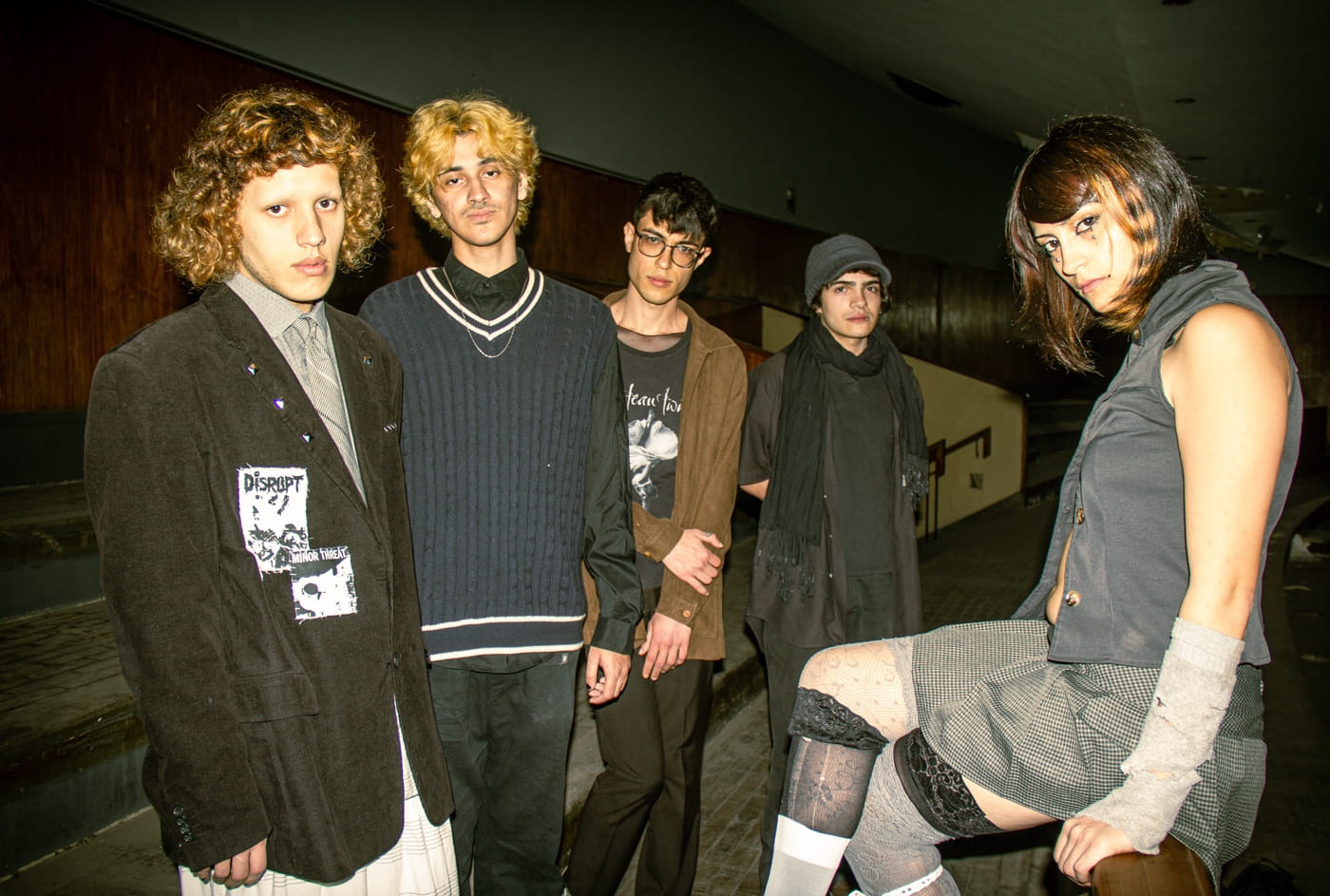
Among the newer generation of São Paulo screamo bands, magnólia have become closely associated with screamo fofo, the affectionate Brazilian term for “cute screamo“. Their music has the screaming, distortion and sudden changes in tempo you’d expect, alongside softer melodies and bits of indie folk.
Their fourth album, “ternura e violência“, is the first they’ve recorded as a five-piece band, following three records written alone by Caru Frascaroli. Some of the songs had already been around for a while, and the new lineup ended up changing them quite considerably.
Caru started magnólia in São Paulo in 2021, initially recording everything at home. The debut, “caru vai à luta contra os bixinhos do seu coração”, arrived in 2022, followed by “o dia em que a maré carregou nossos corpos” in 2023 and “alma e pipo” in 2024.
Those records mixed bedroom screamo with emo, post-hardcore and indie folk, with Your Arms Are My Cocoon becoming an especially important reference for the project’s early sound.
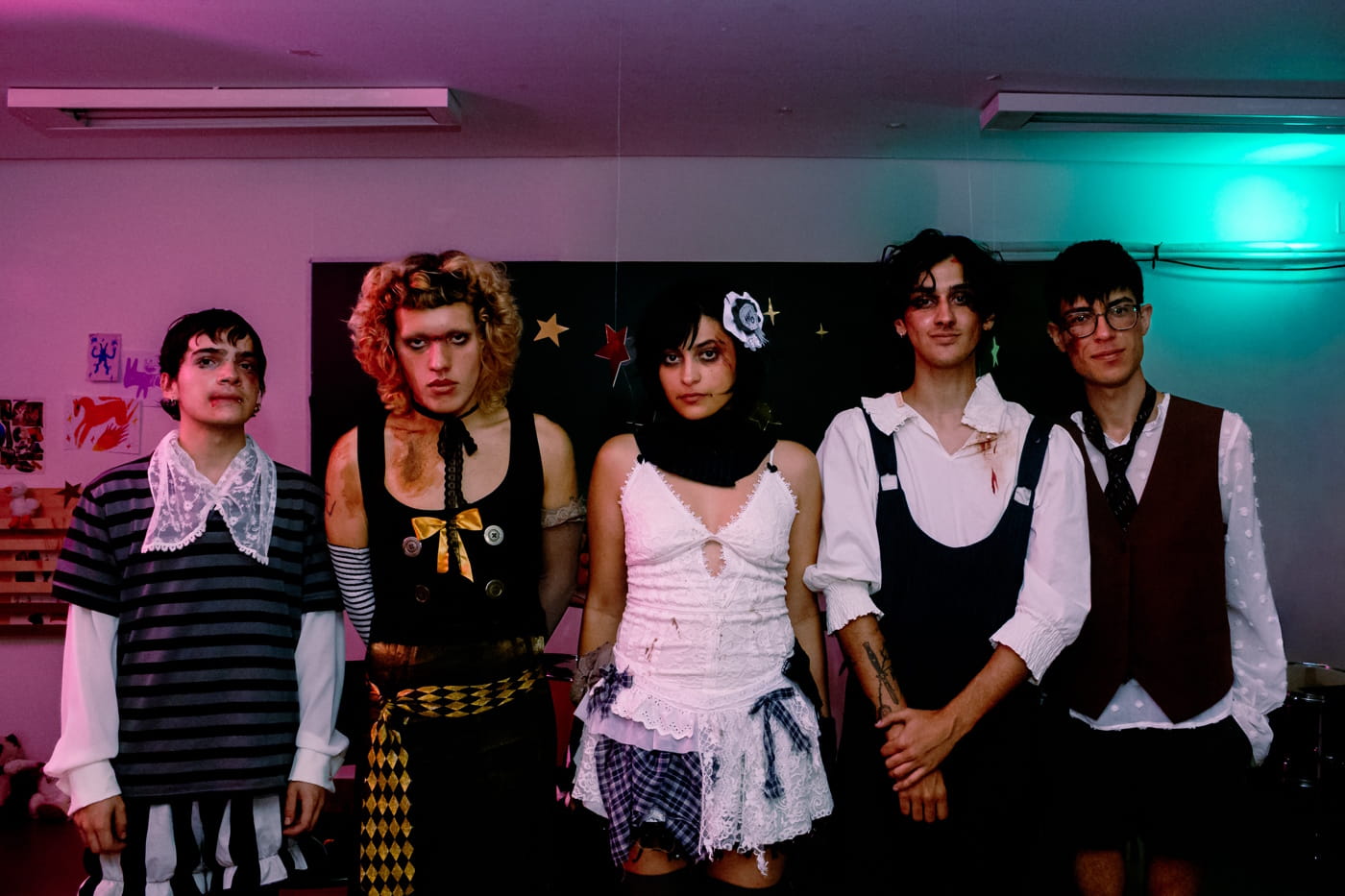
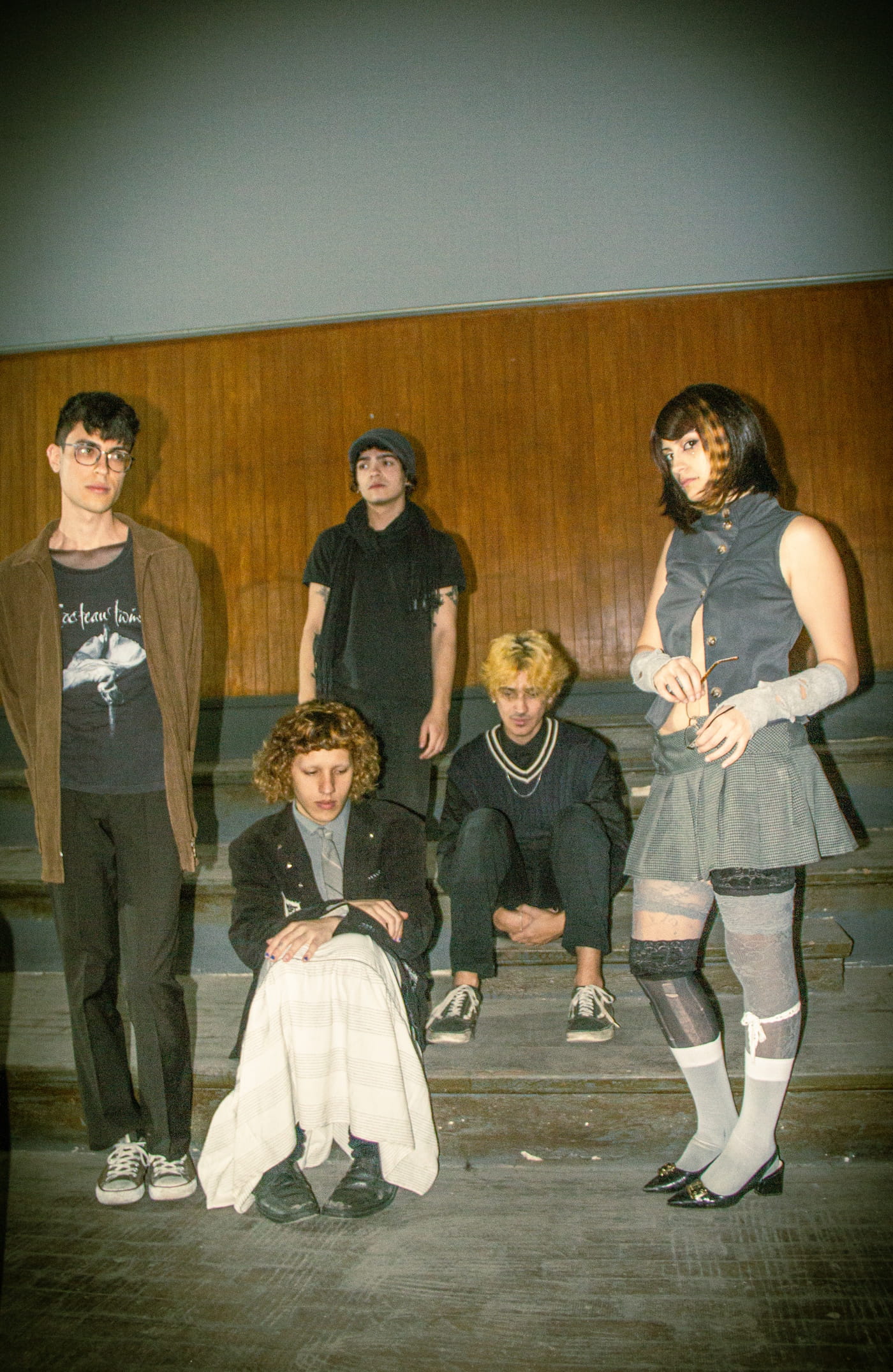
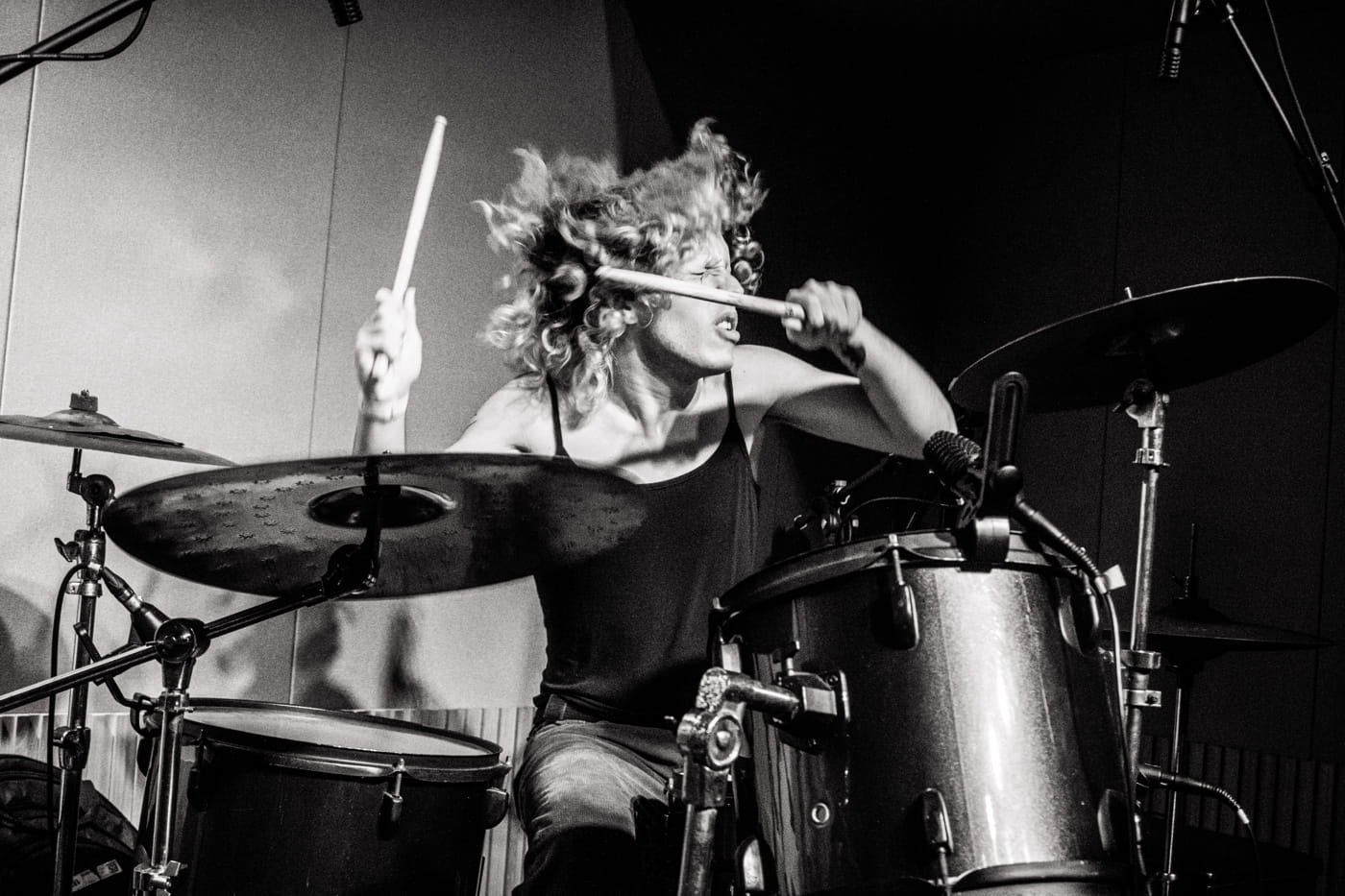
The current lineup brings Caru together with Fábio Shiguemori on lead guitar, Davi Scarpa on bass, Luccas Leme on rhythm guitar and Maya Soares on drums.
Caru handles vocals, keyboards and melodica, and although most of “ternura e violência” started with songs written during the solo period, everybody had room to change them. All five musicians share composition and arrangement credits, with Caru and Luccas credited for the lyrics.
“Maya, Luccas, Davi and Fábio put their ideas, feelings and point of view to almost all of them, reinterpreting my feelings to their feelings and transforming it into something that’s ours,” Caru explained.
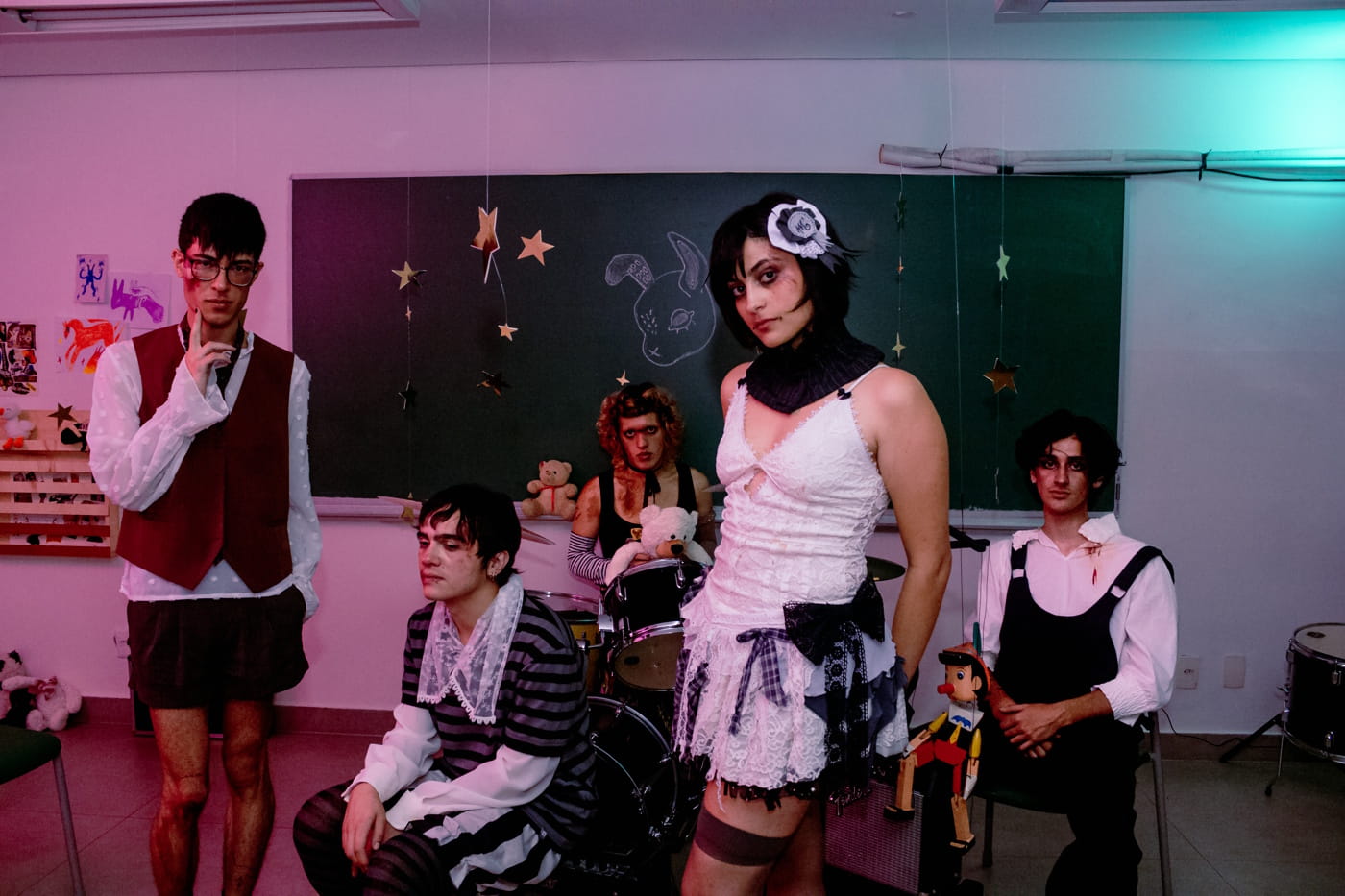
The best example is “temporada de amoras“, which originally came out in 2024 as a single connected to ghosttundra’s animated series “imigrantes road”. That recording had electronic drums and a different arrangement. When the other musicians got involved, they brought in natural drums, changed the rhythms and reworked the transition at the beginning. Much of the song was rearranged.
“I reeeally liked how it turned out, I think it really expresses us as a full band.”
There was already a personal story behind it. Caru wrote “temporada de amoras” about romantic love and the pleasure of watching someone grow older and change. Blackberry season marks the beginning of Caru’s own relationship, returning every year and reminding Caru of how that relationship has developed. The song originally took plenty from the bedroom recordings of Your Arms Are My Cocoon, and its newer version keeps those emotional details with a different band arrangement around them.
The shift also opened up space for the others to bring in songs of their own. Fábio wrote “moinho de vento” around the turn of 2025 and 2026, when the deadline for finishing the album was approaching and writing had become frustrating. Around that time, Fábio began returning to artists he’d loved years earlier, before becoming heavily involved in emo. One of them was George Harrison.

Revisiting “All Things Must Pass” brought back memories of adolescence and feelings associated with that period. Harrison’s writing about the passage of time, change and nostalgia gave Fábio a way into “moinho de vento”. The song became part of a record where the other musicians were already contributing their own interpretations to Caru’s compositions.
Recording took place between April and May 2026 at Estúdio Costella, with Alexandre Zampieri, better known as Capiléh, and Gabriel Zander producing and engineering the sessions. Capiléh had previously worked with bands including Sugar Kane and Water Rats, and Caru appreciated the opportunity to work with musicians and producers who had experienced different generations of Brazilian emo and hardcore.
“From the start, the biggest challenge was bringing the spontaneity of the early works, which Caru recorded alone at home, into a studio environment with more resources and a full band,” Capiléh said.

The songs were already extensively arranged and prepared in demo form. The producers worked with the musicians on their performances and the individual sounds, and some of the decisions came down to how much of the original home-recorded approach they wanted to keep.
Several demos used MIDI drums, similar to the electronic percussion in “seja delicado por favor“. Luccas remembers being happy with those parts initially, before Bill and Capiléh encouraged the band to try naturally recorded drums, which they felt would give the songs more weight.
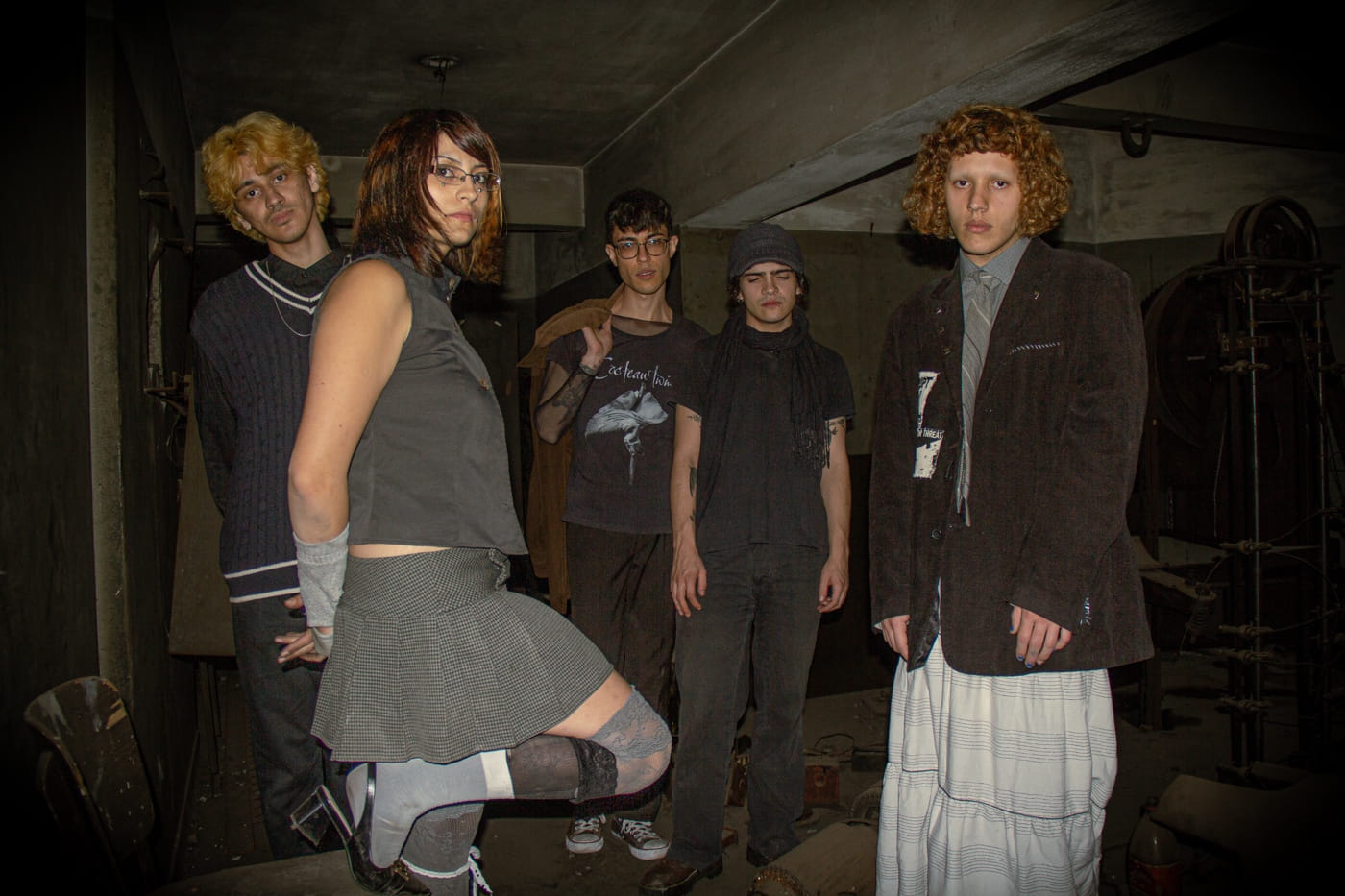
Another challenge came with “canção de amor para amigos“. Caru wanted a large number of voices singing together, with different singers alternating throughout the chorus. It took considerable work during recording and mixing, but the producers supported the idea.
“Caru’s idea of having a really big number of people singing in chorus, alternating between voices, in “Canção de amor para amigos” was a real recording and mixing challenge at first, but they embraced the idea and the result is one of the prettiest moments on the LP, in my opinion,” Luccas said.
The song itself was written during a happy period of new friendships and creative beginnings. Caru drew on the layered arrangements of Carissa’s Weird and the post-rock of The World Is a Beautiful Place & I Am No Longer Afraid to Die, giving the band another chance to work with sounds that had already been part of magnólia’s earlier recordings.
Mixing was handled by Pedro Guerreiro Moreno, Maya and Capiléh, with Maya also responsible for mastering. The sessions were the first time all five musicians had made an album together, and there were friends from other bands visiting the studio as well.
“Beyond the technical side, the exchange of ideas was great and a lot of fun,” Caru said. “It’s wonderful to share experiences across two different generations of emo and hardcore.”
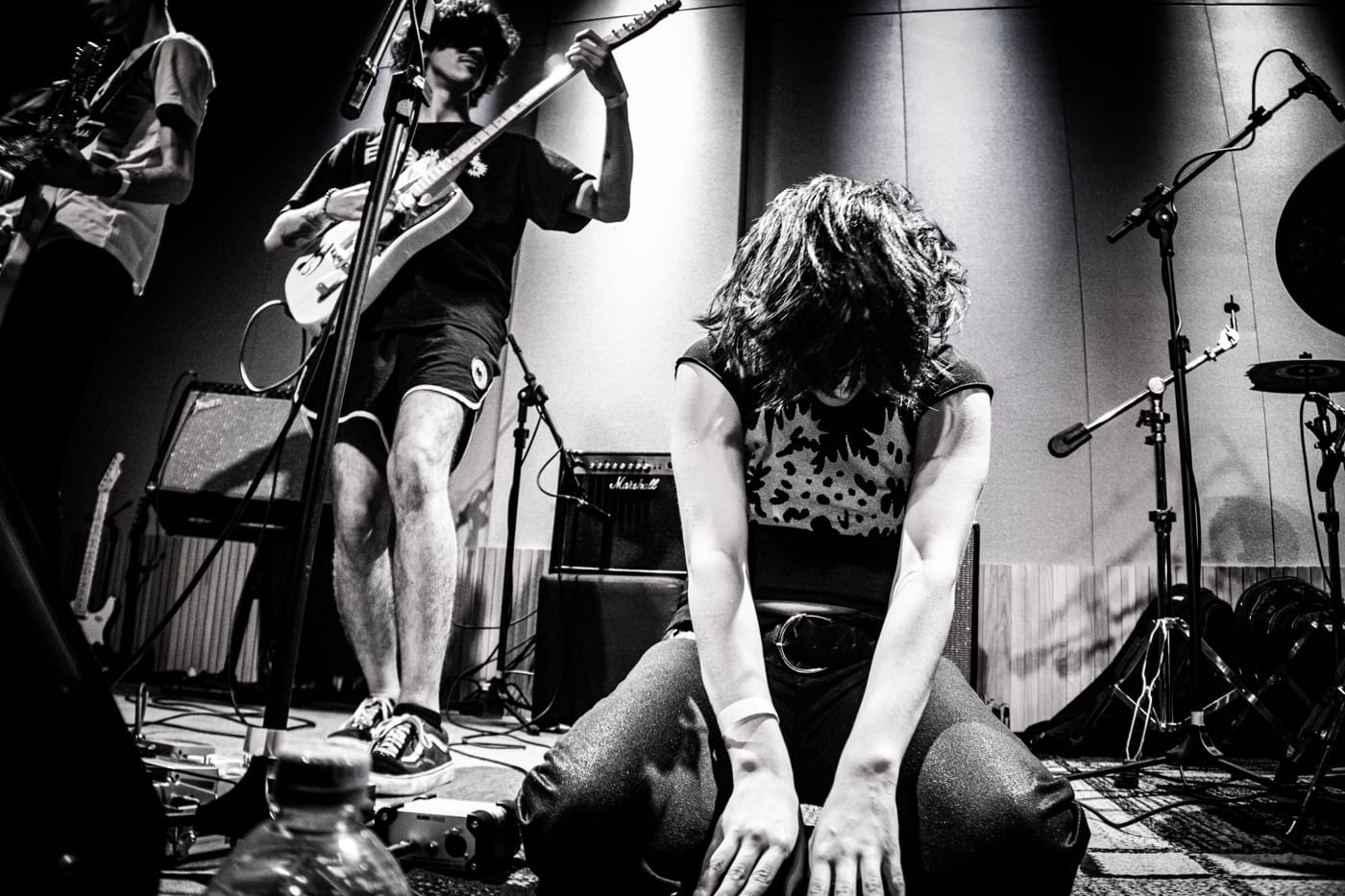
The finished album moves through quite a few corners of emo and screamo. The short title track introduces a central melody influenced by Magdalena Bay’s “Imaginal Disk” and The Microphones. Across the following songs, softer passages give way to distorted guitars and screamed vocals, with the drums shifting between slower sections, more frantic rhythms and heavier bursts. Circa Survive, Beforeyouleave and Frail Body are among the bands whose music helped shape different parts of the record.
“sentença” goes into some of the album’s harshest territory, with breakcore-influenced rhythms, blast beats and connections to Orchid, Oakwood and William Bonney. Luccas wrote it while dealing with a bipolar disorder diagnosis, including the confusion of manic and hypomanic episodes and the regret that can come afterwards.
Caru contributed another vocal section, dealing with body dysmorphia and gender dysphoria.
“I wrote the part I sing with the feeling of using sex as an escape from body dysmorphia and gender dysphoria in mind.”

These subjects sit alongside songs about love, friendships and trying to make sense of growing older. “amar é assistir alguém morrer“, influenced by the slacker-rock of Teen Suicide, came from Caru feeling happy to be alive and becoming less afraid of death. There’s a particular kind of romance in that idea, being content with life even while knowing it cannot last forever.
On “neep“, Caru writes about someone unable to leave the past behind, held back by pride and struggling to reconnect with a person they’ve lost. The only way the character can manage to communicate is through making art. Mitsubishi Suicide and the film “Hotarubi no Mori e” were among the references behind the song.
The memories go further back on “seja delicado por favor”. Its lyrics follow the strange feeling of wanting to reconnect with old school friends, then realising that much of the desire comes from missing childhood itself. There’s also the friend who no longer fits into your life in quite the same way, but whom you still want to keep close because of what they once meant.

Caru drew on Circa Survive, Starry Cat, Sienna Sleep and Your Arms Are My Cocoon while working on the song. Its accompanying video, made with Laura Reis, also deals with childhood, change and nostalgia through stop-motion animation and scenes filmed around São Paulo.
“desperdício de tinta” takes the record somewhere angrier. Caru began writing about the expectations people build around an ideal romantic relationship, including how those expectations can make someone pursue things they never really wanted. The second half was written on the day former Brazilian president Jair Bolsonaro was convicted. Caru was happy about the decision and turned the song into a direct attack on Bolsonaro.
The music was already more agitated, with breakdowns influenced by Beforeyouleave and Meia Lua e Soco. The melodica came from an idea Caru had picked up from Your Arms Are My Cocoon.
One of the album’s most direct connections to the older Brazilian screamo scene comes through “sonho de virginia em águas profundas”. Caru wrote it about being young and watching humanity move towards what seems like a slow end, trying to hold on to hope while seeing things deteriorate. The song draws on the screamo of Frail Body and guitar sounds associated with Circa Survive.
Bruno Araújo Avilar from De Carne e Flor appears as a guest, screaming in alternating passages with Caru. His involvement was also Caru’s way of acknowledging musicians who had been making screamo in Brazil long before magnólia began.
“They were here making beautiful music when I didn’t even know what screamo was,” Caru said.
Jovem Werther, Golfo de Vizcaya, Nvblado and Meia Lua e Soco are among the other names Caru wanted to recognise for the part they’ve played in the country’s screamo history.
That history has a lot to do with São Paulo. Fábio considers the city one of Brazil’s major underground music centres, with venues such as Hangar110 helping establish local emo and hardcore during the mid-1990s and early 2000s. Fábio even compares the venue’s place in Brazilian music to that of CBGB in New York.
The differences between Brazilian cities are something Fábio has spent time thinking about. Rio de Janeiro bands such as Noção de Nada have a beachier character to his ears, while southern groups like Fresno bring to mind colder, gloomier moods. He associates São Paulo with harder, more aggressive music and lyrics, shaped by living in a densely built city where daily life can be pretty unforgiving. Ludovic are one of his main examples.
Screamo has remained a relatively small part of Brazil’s wider emo and hardcore community, often working outside the larger promoters and events. Fábio likes that closeness.
“Maybe that’s the beauty of it. It makes the scene feel more connected, like everyone knows each other, shares the same passion, and builds a space where we can just be ourselves and talk about the genre we love.”
The current generation has its own group of bands playing shows together and keeping in touch across different cities. magnólia have grown alongside Meia Lua e Soco, Nvblado and De Carne e Flor, with Violeta, Módulo Lunar, Errata, Desvio, Devir-Vespa da Orquídea and meu quarto é vazio also among the groups Fábio considers part of that circle.
There are people organising the practical side, too. Prod27 and +UM HITS have been helping magnólia promote “ternura e violência”. Banda de Casinha runs monthly festivals for independent bands around Brazil, while NDP organises visits from international artists and helps local acts secure support slots. De Carne e Flor opening for Touché Amoré is one example Fábio mentioned.
Veganasso is another place he particularly appreciates, both for its accessible vegan food and for how warmly the people there treat visiting bands. With newer groups increasingly working together to organise concerts, Fábio sees the beginnings of a more regular touring circuit between Brazilian cities.
magnólia have already played around the country, sharing stages with Bella e o Olmo da Bruxa, Chococorn and the Sugarcanes, Raça, Zander and Lupe de Lupe. One of their biggest experiences so far was opening for Orchid during the American band’s Brazilian visit.
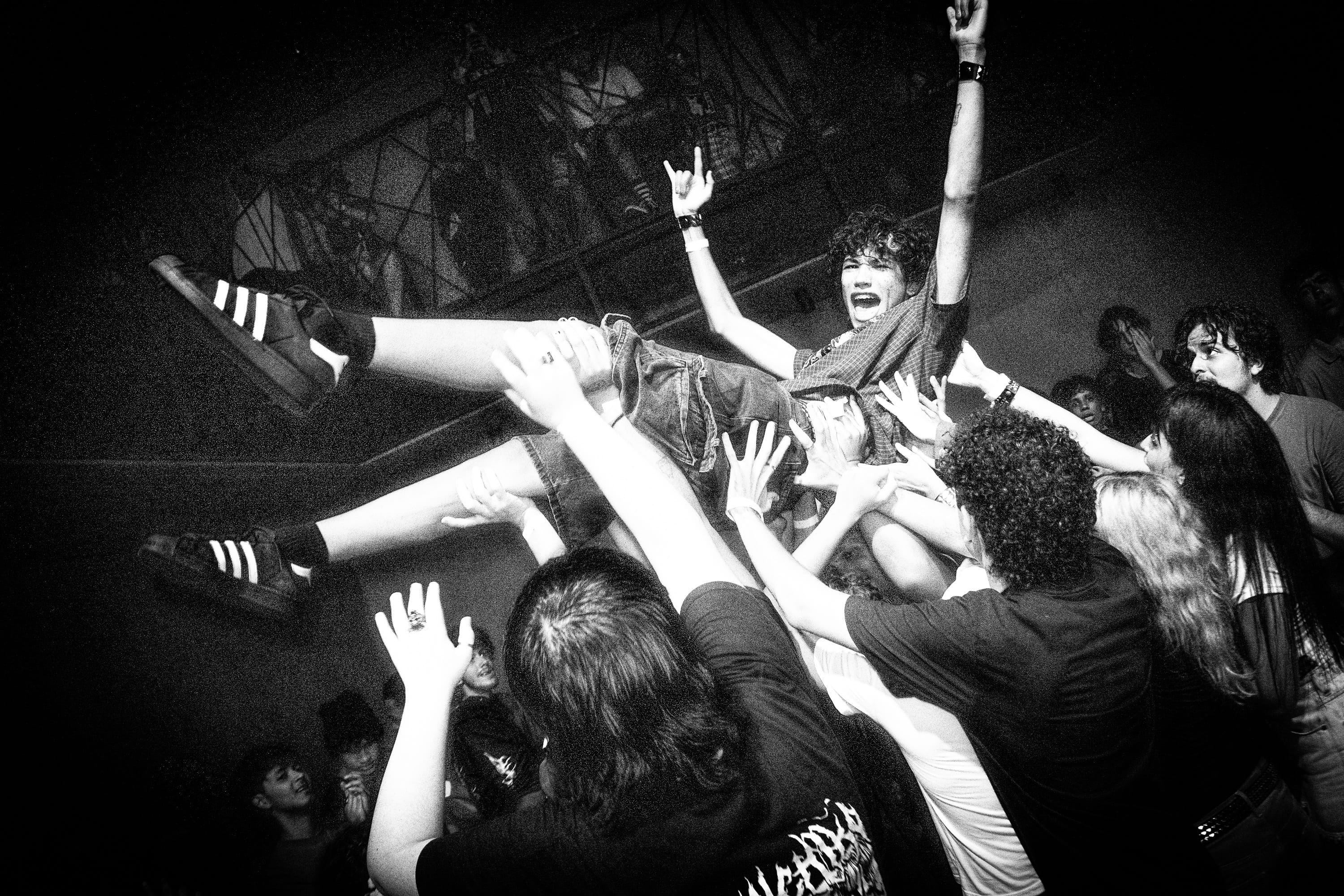
The show brought together friends from different parts of the local scene, including younger fans who have discovered screamo through its more recent bands. Fábio remembers being able to dance and scream along with friends, and considers Orchid one of the groups that made the current generation’s music possible.
“It’s so nice to see that younger people, like Orchid said about our crowd, are getting into this kind of music, working together, starting new projects and sharing beers after the gigs.”
Orchid’s influence runs directly into magnólia’s heavier music, and into the way some of Brazil’s younger musicians have been approaching screamo. The softer side has developed alongside it. Fábio connects the expression screamo fofo to Your Arms Are My Cocoon and Febuary, particularly their use of gentle melodies and comforting harmonies in music that can still be aggressive and melancholic.
Both parts are easy to find in magnólia’s work. The title “ternura e violência” translates as “tenderness and violence”, something Caru has been thinking about across the songs, the lyrics and the artwork.
View this post on Instagram
The cover was created by Caru using photography by Laura Reis, with Brie Slompo as the model.
View this post on Instagram
Lace lingerie and muted colours close to the skin represent tenderness, while the dagger held in the model’s hands represents violence. There’s also a hare ring, bringing back an animal that has appeared in magnólia’s logo and songs for years.
View this post on Instagram
The newer Brazilian bands are also finding ways to work with musicians elsewhere in Latin America. Maya Soares has been particularly interested in those connections, drawing inspiration from groups such as Cienfuegos, Mis Sueños Son de Tu Adiós, Viva Belgrado, 3 Segundos Antes da Queda and Aceleracionista, as well as De Carne e Flor, Meia Lua e Soco, Nvblado and Desvio.
During the past year, De Carne e Flor connected magnólia with Movimiento Circular de los Árboles, which included them on a compilation alongside Cienfuegos, Emily Brontë and Mis Sueños Son de Tu Adiós. The relationship has since led to plans for a CD edition of “ternura e violência” in Peru.
Maya sees cooperation between Brazilian and other Latin American scenes as particularly valuable given the political pressures faced by independent musicians. In Maya’s view, the rise of the right wing in Brazil, US intervention and the struggle to protect LGBTQIA+ and neurodivergent people’s rights are connected to problems being faced elsewhere in South America.
“The challenges we face in Brazil as an independent band in a small scene fighting against the rise of the right wing and US intervention, while asserting our rights as neurodivergent and LGBTQIA+ individuals are the same ones faced by our friends across South America.”
Maya wants music to retain a political purpose, including giving people opportunities to organise and support one another through financial difficulties, prejudice and problems at home. The hope is that people who recognise their own experiences in the band can also find ways to improve their circumstances.
“We need to restore the political significance of music amidst the frightening times we are living through, both in our country and around the world.”
There are some fairly straightforward things promoters can do. For Maya, shows should offer free entry lists for trans people and people with disabilities, or at least discounted tickets for those groups. magnólia themselves have trans and neurodivergent members, so making local concerts welcoming and accessible is a practical concern.
The band’s Latin American friendships, the growing Brazilian concert circuit and those nights sharing stages with older musicians have all become part of their lives since the first magnólia recordings. Their new album was made with other people contributing to songs that began in Caru’s bedroom, and it now belongs to all five musicians.
“ternura e violência” is magnólia’s fourth album, recorded at Estúdio Costella and released in September 2026 with support and distribution from +um HITS. The record is available on Bandcamp and Spotify.
🔔 IDIOTEQ is ad-free, independent, and runs on one person’s time. If you want it to stay that way: DONATE via PayPal or SUPPORT via Patreon.
NEW: IDIOTEQ Explore 🗺️ Browse 15+ years of our archive by city, country, and style. Find artists on the world map or trace related sounds through the styles map.
Stay connected via Newsletter · Instagram · Facebook · X (Twitter) · Threads · Bluesky · Messenger · WhatsApp.