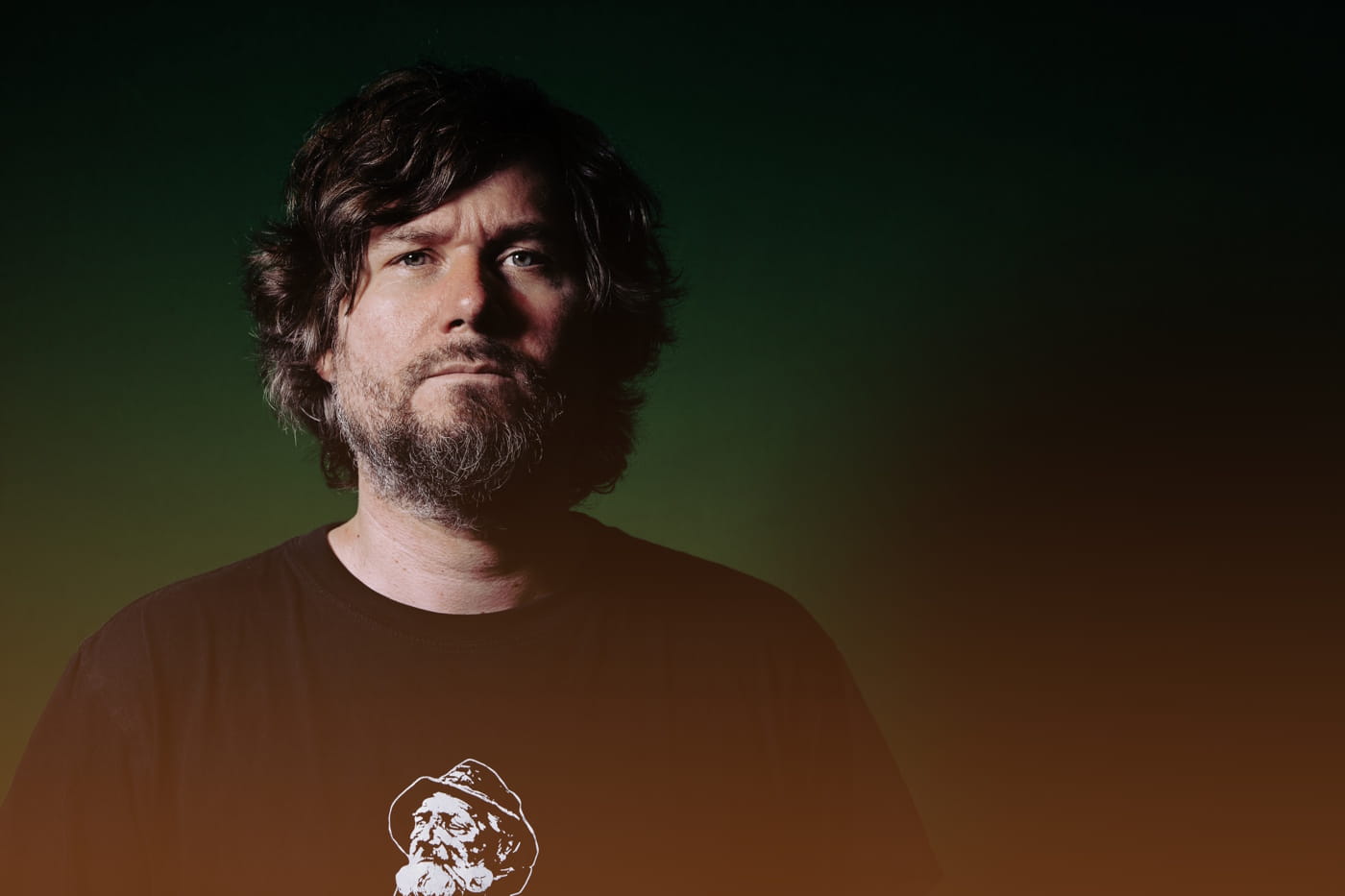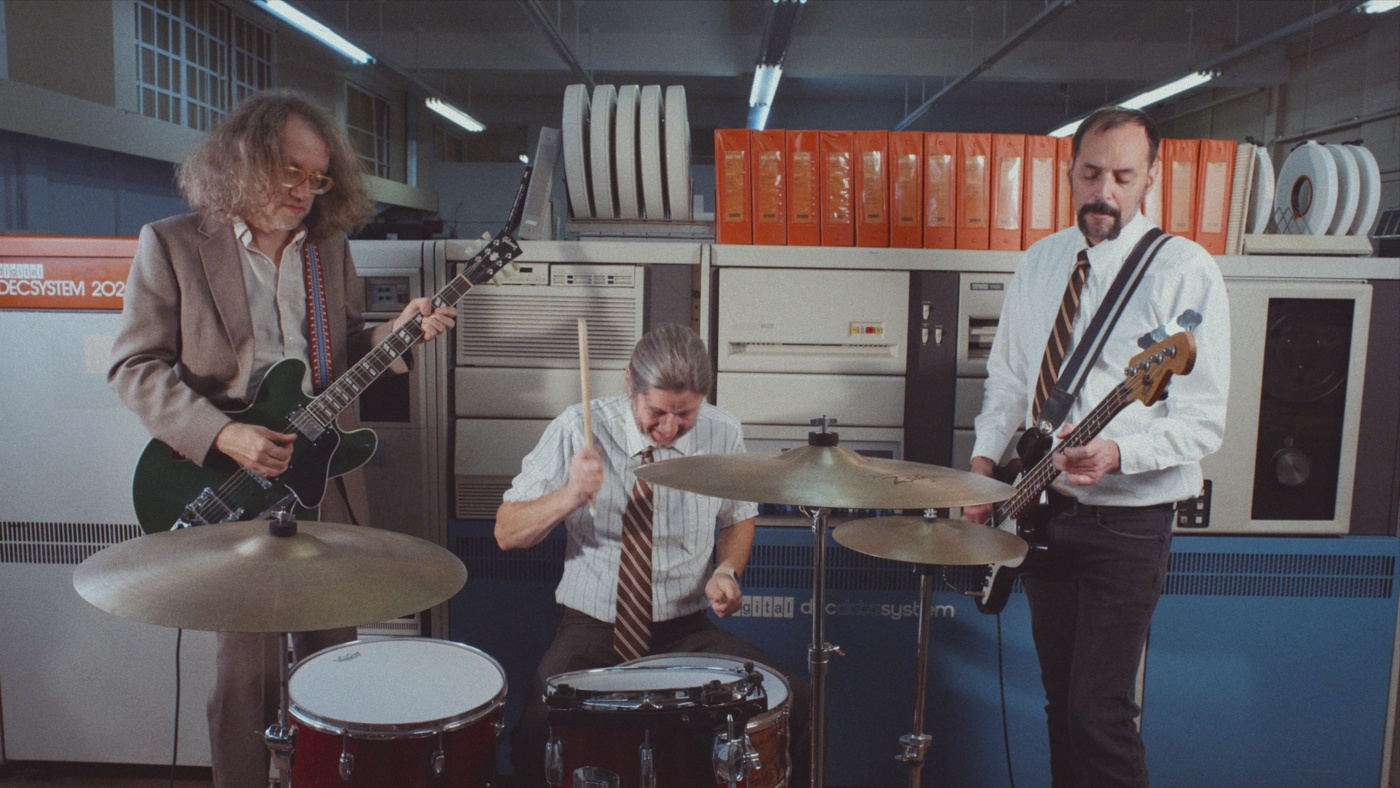


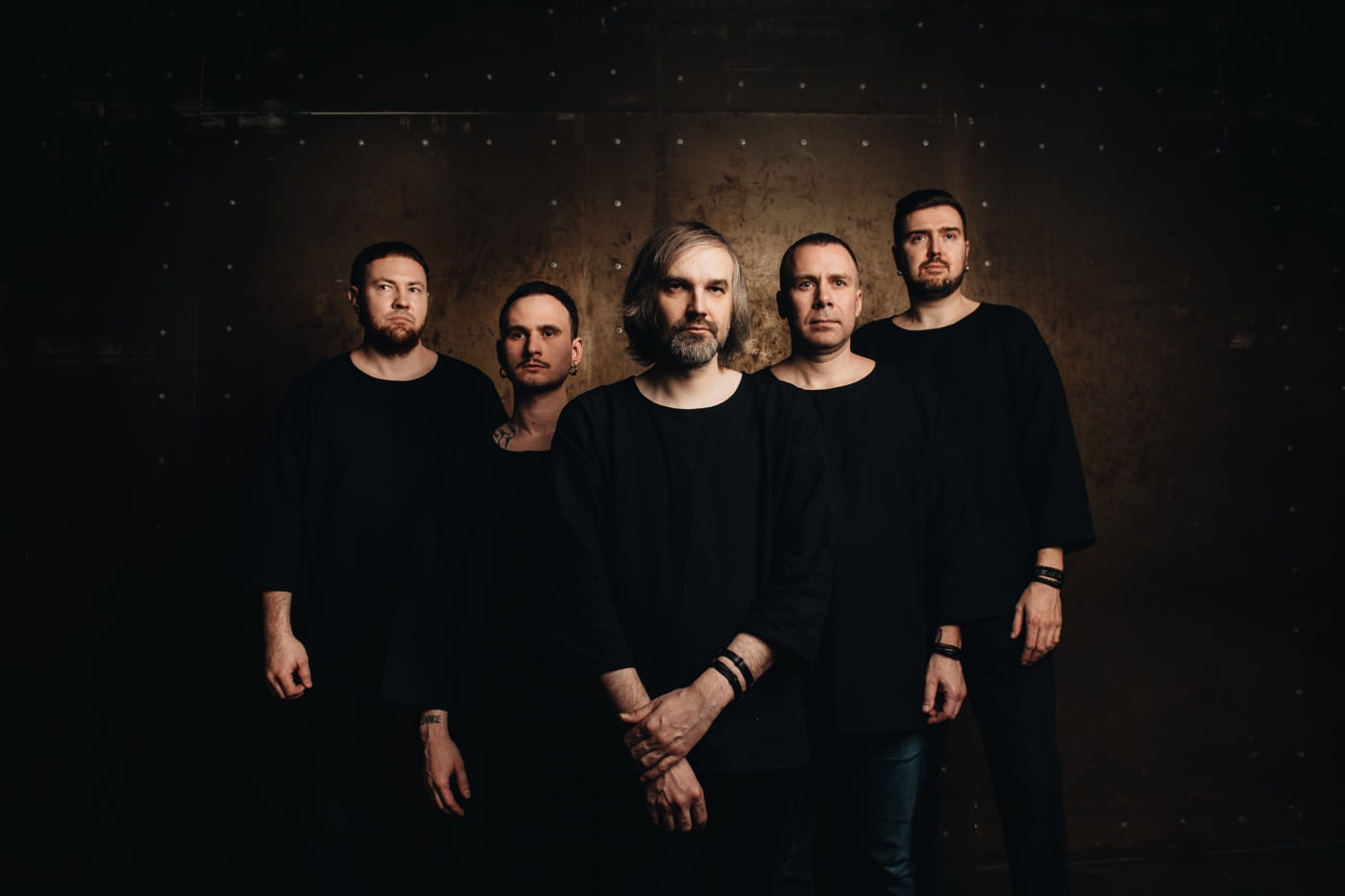
Splosh (сплошь) formed in Moscow in 2024, but the five musicians had already been moving through some of the same circles. Georgy came in through the band Mokritsa (Мокрица) and has also played with Stok Bazar (Сток базар). Evgeny came from the band Vaija. Andrey played in Kanikuly Malenkoy Pandy (Каникулы маленькой панды), while Maksim had previously played in Nebo Vstretit Geroya (Небо встретит героя) and the instrumental project troika. Dmitry remains active in the bands Heavy Plane and Ryab (Рябь) alongside Splosh.
Those connections had already crossed on stage. Ryab played a festival with Andrey and Kanikuly Malenkoy Pandy. Heavy Plane shared bills with Evgeny and Vaija, and with Maksim and troika. Dmitry also knew the others through local shows and friendships outside music.
“When the guys asked me to join сплошь I said yes without thinking, and I was glad to get back into metal with musicians and friends like these,” he says.
Dmitry joined after former bassist Nikita, who had played in Denova and Strela (Стрела). Georgy says Nikita remains someone the band love and have not forgotten. Maksim says Dmitry’s bass sound worked easily with songs that already existed and with the new stuff they began writing afterwards.
The immediate reason we’re catching up with Splosh (сплошь) now is “град“, released on 17 July 2026, and the new video that followed on 29 August (watch above). The track also ended up giving the band their biggest streaming spike so far, which is where the listener numbers later in this story come from. Before getting into that, the five members gave us separate answers about how the band actually works and what each of them brought into it.
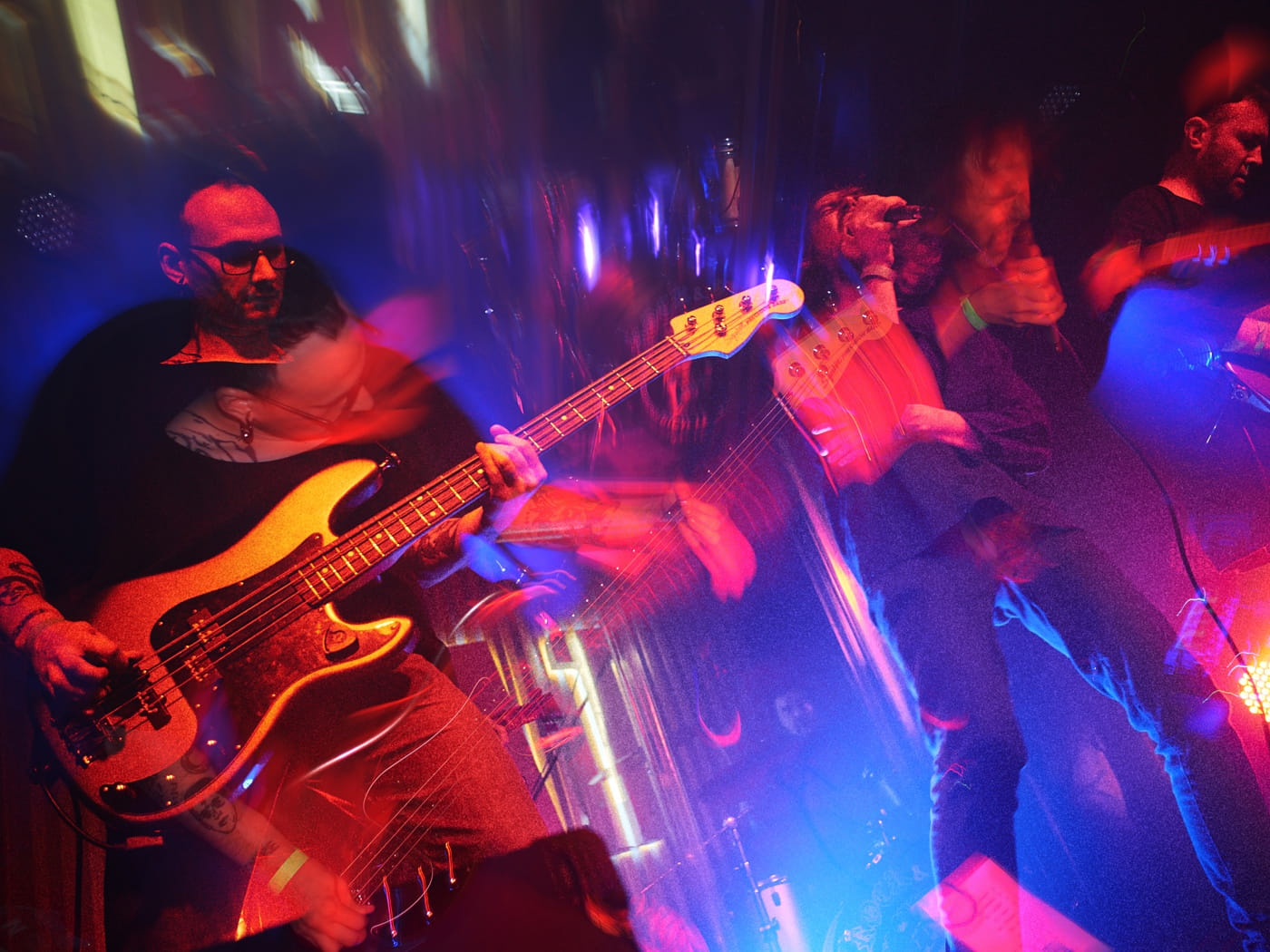
They did not agree their responses beforehand, and their answers sometimes pull in different directions. Georgy tends to be cautious about attaching much significance to outside attention. Maksim watches the practical signs closely. Andrey can reduce a long subject to one sentence. Dmitry talks through the bands and people around him. Evgeny’s shortest answer describes a fairly serious change in his playing.
“After Vaija I had to relearn how to play guitar. My approach to writing changed, and new horizons opened up in composing.”

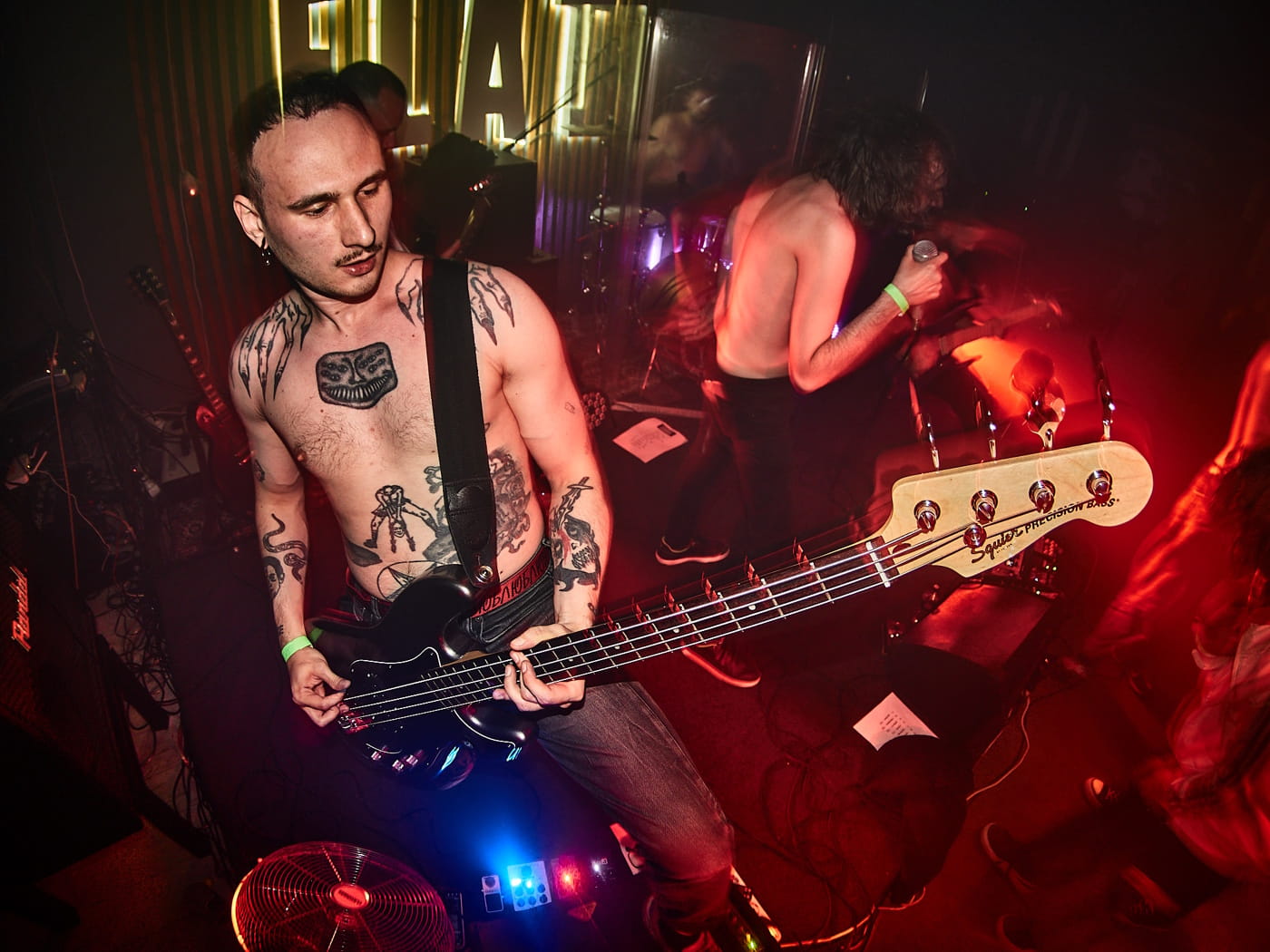
Dmitry brought more of his previous bass approach with him. He describes Heavy Plane and Ryab (Рябь) as grungegaze, shoegaze and alternative bands, with Heavy Plane heavier and dirtier and Ryab more melodic. The clean low end he had developed in those bands fitted Splosh naturally and gave him something he could keep developing after joining.
He also says ideas can come from any member. Arrangements are worked on collectively, and he values the fact that an idea does not have to fit one person’s established way of doing things before the band gives it a chance.
“It’s great that there was nothing that didn’t fit and had to be thrown out,” Dmitry says. “On the contrary, the clean low end I’d built got adapted and pushed further. And huge respect to the guys for their creative flexibility: every idea and arrangement from every member finds its place, and you can hear that in what we do. You rarely see that kind of interaction in a band these days, so it’s worth a lot and shouldn’t be lost.”
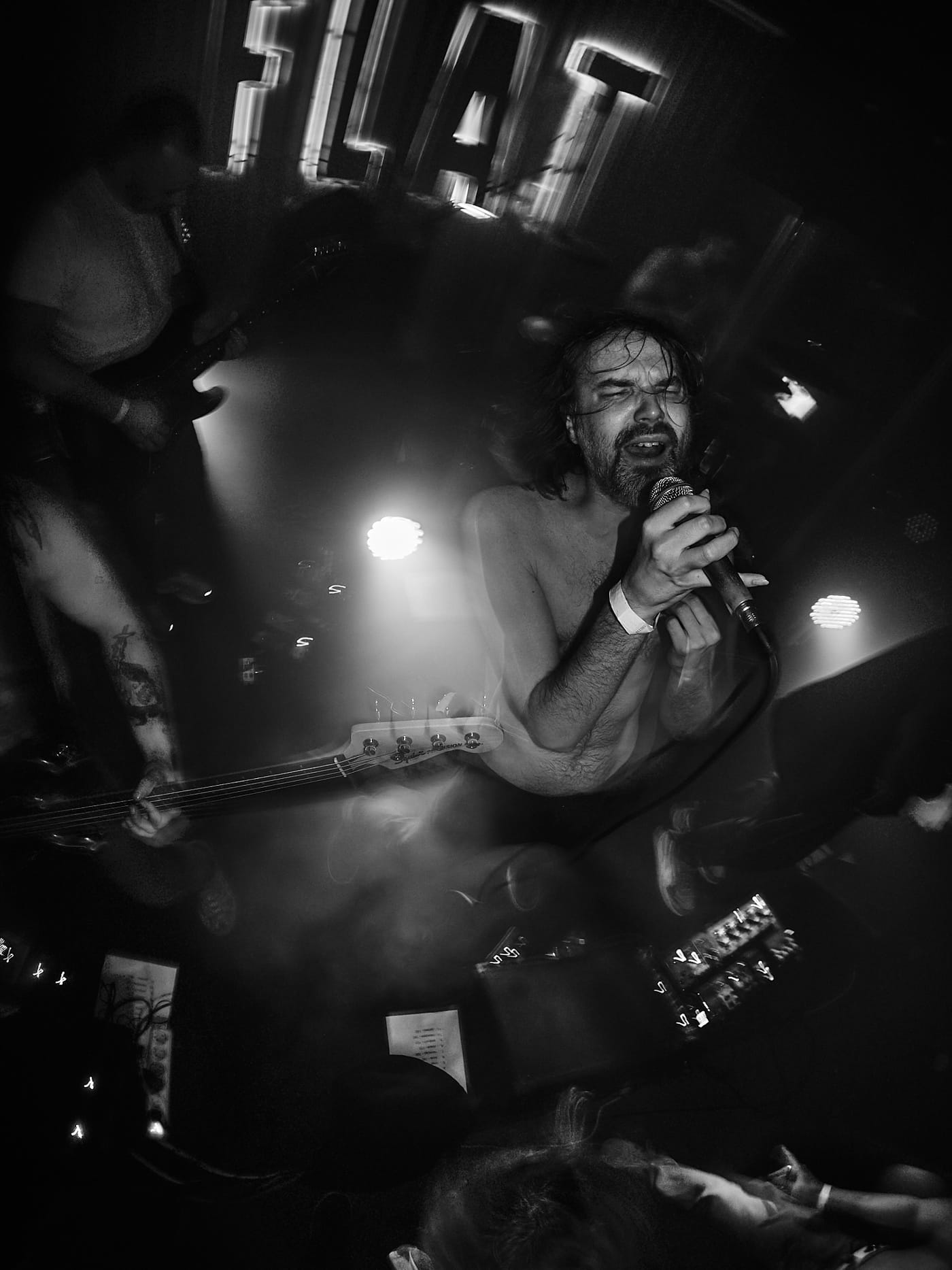
Georgy’s history stretches through a wider range of styles. Mokritsa (Мокрица), which he helped found, is an acoustic screamo / freak folk band and the one he identifies most closely as his own. He has also played emo-punk, indie, emoviolence, unusual metalcore and, as he puts it, “even a bit of something like SBDM”.
For him, every new band adds another set of habits to what a musician already carries.
“Every band forms new habits and approaches in its members, the ones it needs to exist, and those come out of your background, what you’ve listened to and seen and what you can do. That’s also the basis of a band’s identity.”
Andrey is more sceptical about some of what he brought from his previous band, Kanikuly Malenkoy Pandy (Каникулы маленькой панды).
“Out of habit I try to push strategies and approaches from the old band, even though they’re long outdated. Some of the experience did come in useful though.”
Everyone in Splosh is over 30 and has a day job outside music. Maksim thinks that experience helps with the ordinary work of keeping a band going. People take responsibility, contribute and know what they have agreed to do. He calls Splosh the best band he has been involved with.
The shared rehearsal room has made that work easier. Several Moscow bands rent the space together, and Splosh keep their own equipment there.
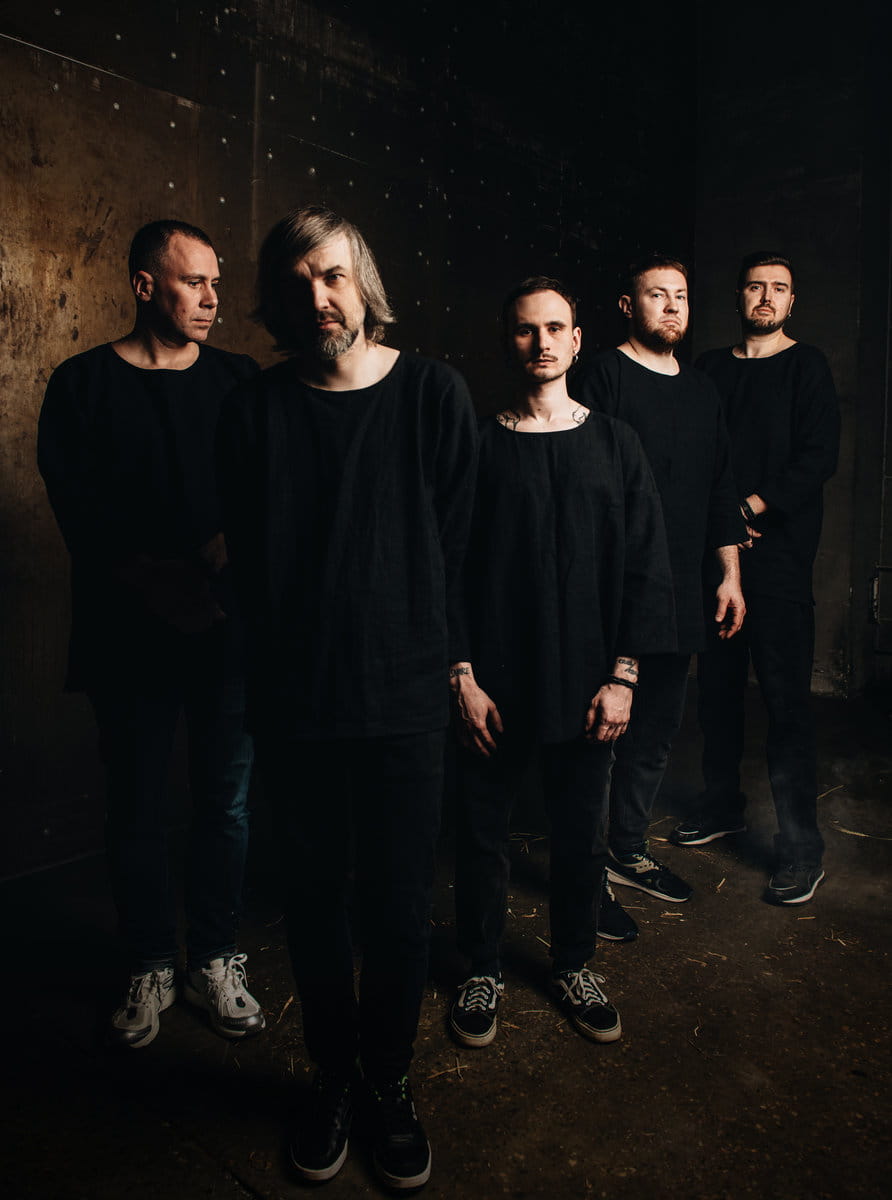
“We effectively have a musical home now, which helps both the work and the attitude to it, much better than drifting between rehearsal rooms. It raises the responsibility, but that doesn’t scare us. We’re all open to experiments and we listen to each other. There are no oversized egos or one-man-band syndromes here, which is probably why the work goes slowly but smoothly. There’s plenty of material; we’d just like more time.”
The band’s debut album, “перевал” (“Pereval”), came out on 14 November 2025 through Krugly Dom (Круглый дом), a DIY label run by a friend of the band. There is no contract and no label budget. Krugly Dom’s only public label page is on Yandex Music.
Later, one contributor placed “перевал” at number four in a personal year-end top 100 published on the Russian media and community platform DTF under the title “Top albums of 2025 (100-1) in my opinion”. The writer also called it the best screamo release of the year. It was the contributor’s personal list published on DTF, not an editorial DTF ranking.
“What people say at shows, and the shows themselves, are worth more right now,” Georgy says.
Maksim did not notice a sudden change in bookings either. The band had been receiving invitations before the list and continued receiving them afterwards. They had planned to play Ural Music Night in Yekaterinburg this year, but the trip fell through. They played Voronezh, St Petersburg, Dubna, Smolensk and Kaluga instead, with another Voronezh show planned for October.
For Maksim, the reaction at shows gives them a clearer idea of what is happening around the band.
“At shows people are generally complimentary, and the best part is the reaction in the room. People like how we work on stage. Mostly we’re told we sound much harsher live than on record. I think that’s a good thing; that’s what people come to shows for.”
Andrey keeps the same idea small. “Every small breakthrough like this has its use. A couple of new fans in the room is already something.”
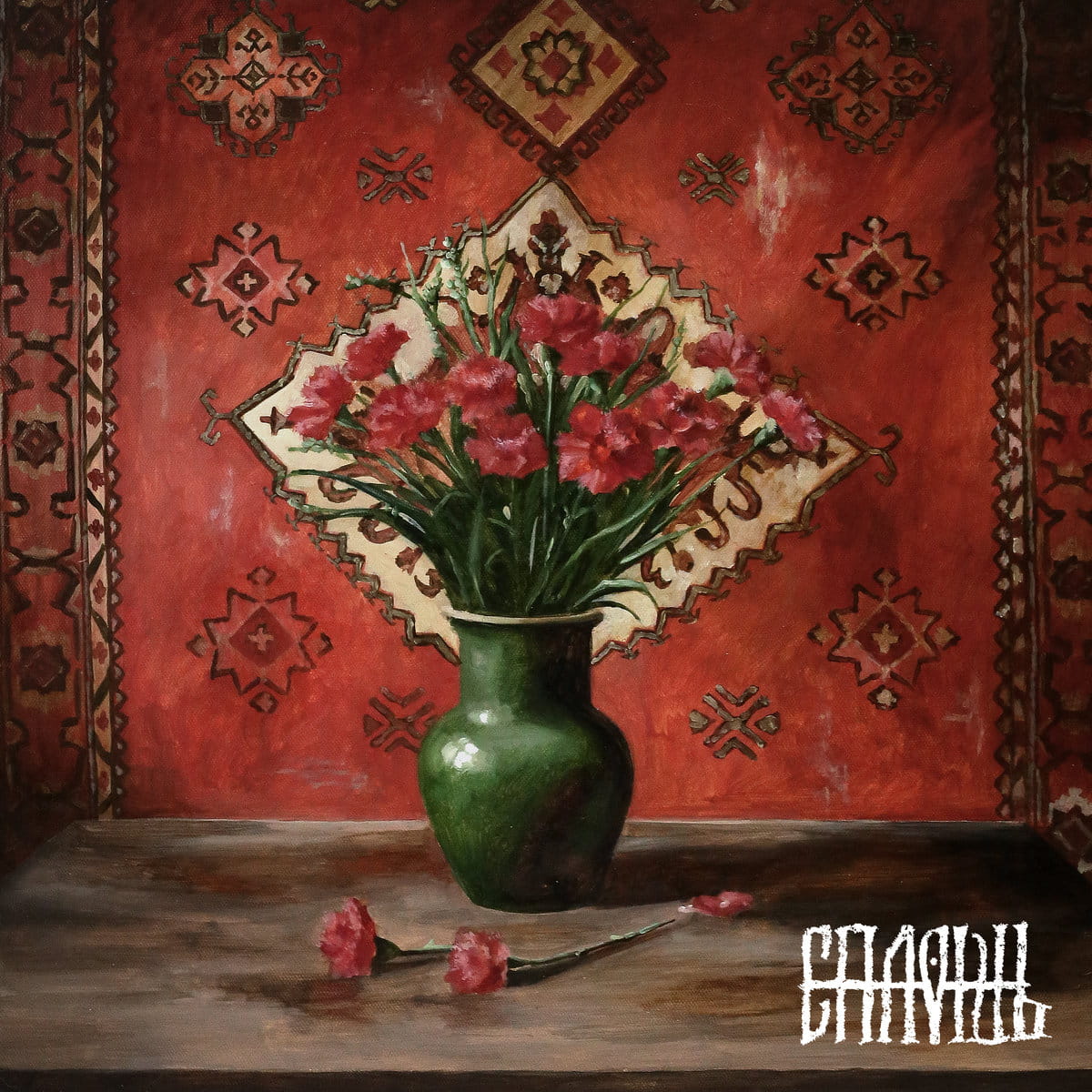
Their new single, “град” (“Grad”), came out on 17 July 2026, again through Krugly Dom. The release is also the reason we’re talking to Splosh now, with a new video following on 29 August.
On the track, Andrey plays drums, percussion and synths, Evgeny and Maksim play guitar, Dmitry plays bass, and Georgy handles vocals and lyrics. “град” was recorded at Nitrojam rec. and mixed and mastered at Lebedev Phonotheque (Фонотека им. Лебедева).
What makes the release especially interesting is how clearly сплошь can separate the promotion they actually paid for from the attention that arrived later. They did spend money, but the bigger wave did not come from the platform where that money went, and it did not come from an editorial playlist placement either.
The single had a normal DIY promotional campaign behind it. Splosh posted through their own channels, used stories and a smart link, contacted Telegram channels and bloggers, and pitched the track to editorial teams at VK Music, Zvuk and Wink. They also contacted VK communities around release night. Some of those communities later posted about the band independently.
About €100 of the band’s own money went into VK ads.
Krugly Dom separately pitched “град” to Yandex Music’s human-curated editorial playlists. The track got into none of them. No money was spent on Yandex Music at any point.
The release-day promotion produced an initial rise and then fell away within two or three days. Around 21 or 22 July, Yandex Music’s recommendation system began picking up the track. That algorithmic side cannot be pitched to.
The timing makes the two events easy to separate. The paid activity happened on VK around the release. The much larger increase started several days later on Yandex Music.
Before that pickup, Splosh had roughly 275 monthly listeners on Yandex Music.
Georgy saw that number as a useful indication of how many people were staying with the band between releases. A previous algorithmic increase had already fallen back to around the same level.
“It’s basically a measure of how engaged the audience is without any warming-up, and it tells us there’s a lot of work left. The band is still young. When I first joined, the number was lower.”
Andrey had watched the same cycle happen with an earlier release.
“It had held since the previous release, which also got picked up by the algorithm and pulled in thousands of plays, but then it all went back to 275. Hopefully this time it goes back to 375.”
Maksim places that baseline roughly after the attention around “перевал” had faded. The band’s longer Yandex history shows three visible rises. The first came with the single “дефолт” (“Defolt”) in September 2025, which reached the Nitro chart and later appeared on “перевал”. The second came with the album itself in November. “град” produced the third in July 2026.
As “град” began moving, Maksim started checking the dashboards every morning and comparing the numbers in the band chat.
“For us, a fairly new band with a small audience and a lot of competition in Moscow, the daily growth in listeners and the climb in the Nitro chart was exciting. My day started with checking the dashboards and comparing notes in our band chat. Everyone was glad the release got picked up, that different people were listening, that the work hadn’t been for nothing. For us as a band it was another confirmation that we can do this and that we’re going the right way. It’s good when someone notices what you put time, thought and money into. Music is a hobby for all of us, everyone has a day job unrelated to music, we’re all from different industries, but our tastes and our wish to make music brought us together here.”
Georgy enjoyed seeing it happen without assuming the numbers would keep rising.
“We’ve been making music and promoting it as best we can for a while now, so it was nice that the algorithms picked it up, but it’s temporary. Easy come, easy go. I don’t count on a rising growth curve yet. Still, the fact that this has happened more than once, and not only with this track, probably says something. Plenty of projects never get any of it. Maybe we’ve just gotten a bit better at making the music itself.”
Andrey had no expectation that one recommendation wave would suddenly change the band’s position.
“It’s always nice to see big listener numbers on your own band. But I had no illusions about becoming stars. It is good that mechanisms like this exist to help unpopular artists get their music out.”
During the rise, Splosh kept doing the same things available to them. Georgy mentions posts, videos and contact with outlets covering the scene. Several festivals they had booked earlier happened to fall around the same period.
Andrey kept the VK ads running and continued posting. Maksim says some communities started mentioning the band on their own, including posts and reels. He had seen that happen to some extent with earlier releases too, but the effect around “град” was more noticeable.
They also appeared on NASHE Radio’s Жёсткий диск (Hard Drive), opening an episode of the programme. Maksim considers that a good result for music like theirs, and the band shared the appearance through their own social channels.
The main Yandex wave peaked on 28 July. Monthly listeners eventually reached 7,139, up from roughly 275 before the pickup, and “град” reached number 31 on the Nitro chart. The band’s corrected estimate of actual fanbase growth across all platforms over the same 28-day period was much smaller, at +170.
That corrected figure is the one Splosh consider reliable. Their aggregate counter initially appeared to show a larger increase, moving from 2,003 to 2,368, but Yandex and YouTube were connected to the counter midway through the measurement period. That added existing followers who had not previously been included. The band therefore count +170 as the actual growth.
Maksim had already been thinking about what remained after the earlier wave around “перевал”. Without regular new releases, he says, it is difficult for a small band to keep growing its audience. That was one reason Splosh decided to put out several singles through 2026 and wait until early 2027 before judging whether the approach had actually built a larger regular audience.
The country data showed another limit to the increase.
Before the pickup, the band’s Yandex statistics listed four countries: Russia, Belarus, Kyrgyzstan and Turkmenistan. That had been roughly the picture through much of the first half of 2026 after the earlier “перевал” wave faded.
After the “град” increase, the list contained ten countries. Russia still accounted for by far the largest audience, followed by Belarus, Kazakhstan, Uzbekistan and Kyrgyzstan. Moldova had two listeners, while Armenia, Ukraine and Turkmenistan had one each. Israel also accounted for a single listener.
There was no Western Europe, UK or US audience in the Yandex country breakdown.
VK showed a separate regional distribution across Russia, Belarus, Ukraine and Kazakhstan. Yandex had increased the band’s listener count by roughly 26 times, while the geographical spread remained concentrated in the post-Soviet region apart from that single listener in Israel.
Maksim considers the regional distribution fairly normal and assumes many of those listeners found the band through recommendations. Georgy mainly follows Yandex and the band’s VK community statistics and does not attach much interpretation to the country list.
The video for “град”, released publicly on 29 August, cuts between the band playing and Georgy moving through an old Soviet-era flat rented specifically for the shoot.
For Georgy, the place recalls homes several members knew while growing up.
“It’s a rented flat; we were looking for one like that. Many of us grew up in flats like it, and now when you end up in such a place it makes a strange impression, warm, nostalgic memories of a time when that warmth wasn’t actually there. It’s odd, as if it couldn’t have been real, but it absolutely was.”
Maksim also connects the rooms with childhood, parents and grandparents. He points out that similar interiors still exist in homes around the country.
“A specifically chosen rented flat. The idea was that it should somehow reflect the mood of the song, point back to the past. The flat shots are cut with band play; there’s no beginning or end to a story there, just moments that in our view matched the mood. Worth noting that plenty of people in our country still live in interiors exactly like that, fewer and fewer, but it’s a fact. It’s a reference to the past, to our childhood, when we saw all this with our own eyes, when our grandparents lived in interiors like that and we and our parents were much younger.”
His memories of those interiors are mixed. “Bright feelings, but overshadowed by all sorts of historical events and hardships. It’s a kind of nostalgia, but I have no wish to go back to those times. Still, it happened, and it’s familiar to many. People will recognise their own past, remember something, pleasant or not, and associations will come.”
Andrey sees the apartment differently. “An old Soviet flat that’s now rented out for shoots. I get the feeling some lonely old man lived there before, died, and everything was left exactly as it was. Nothing was changed. You look along the shelves and piece together someone’s life, a whole world. Heavy feeling. A few TV series were shot there, by the way, you can find them online. Popular place with film people.”
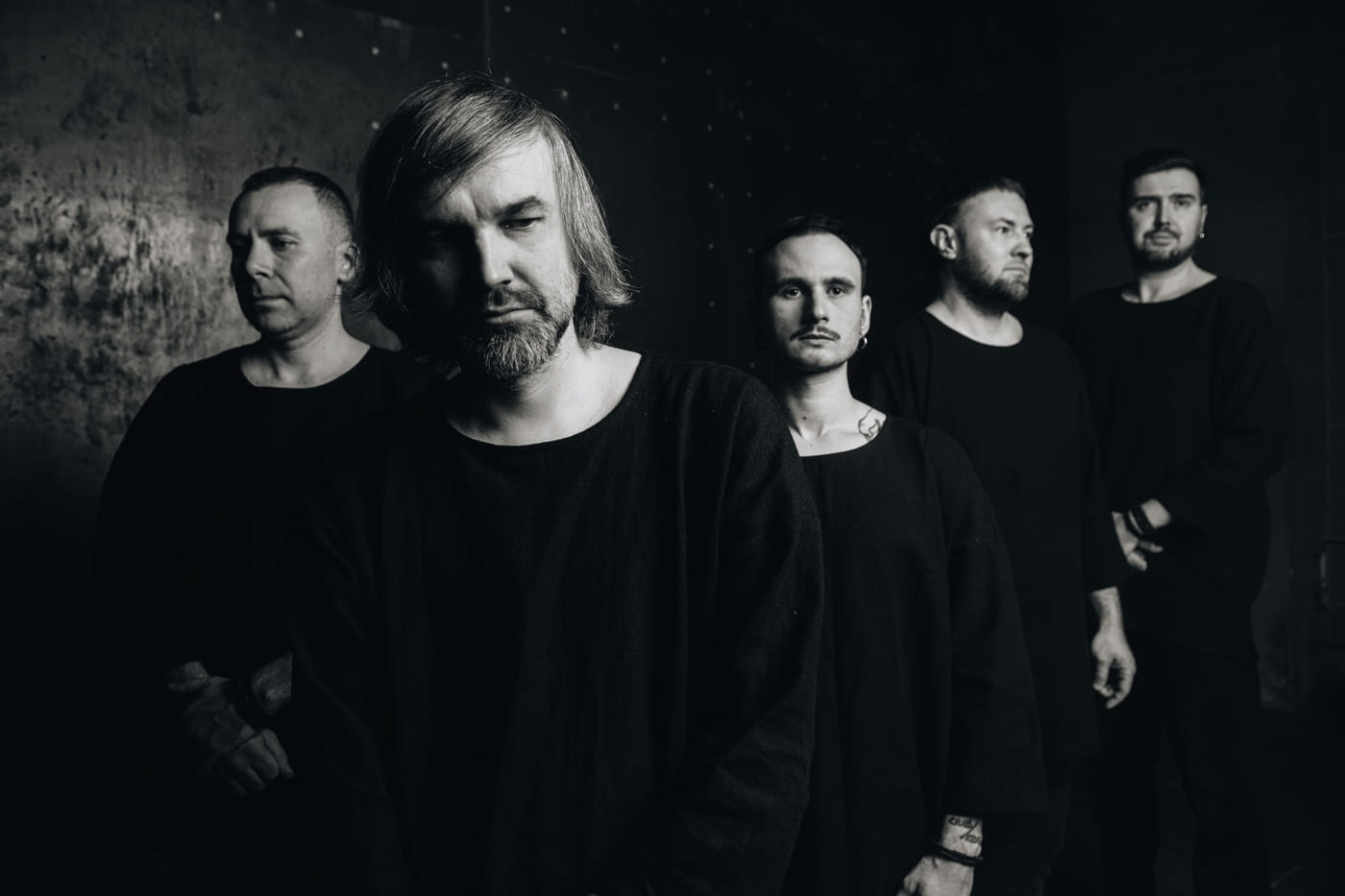
Eduard Semyonov shot and edited the video, with lighting and camera by Andrey Strepetov. Rita Fevralyova took the band’s press photos. Aleksandr Naprimer photographed Splosh live in Smolensk on 22 August, and Sergey Kapitanyuk photographed the private screening in Moscow on 28 August.
Asked what somebody outside Russia should take from “град”, Georgy rejects the idea of deciding that response for the listener.
“We never set out to please the world, that’s a dishonest approach and it gets in the way of the work. A foreigner will almost certainly catch something else; and not just a foreigner, any listener takes in art through the lens of their own experience, same as the one making it. And if a foreigner does feel something, if questions or thoughts or grievances start coming up, towards us, towards themselves, towards the world, that would already be a kind of success on our part.”
Maksim expects somebody who does not understand Russian to meet the track through the music first.
“If it’s only the music, they probably won’t make out the words, so the focus will be the music itself, aggressive and depressive, the way I picture it. If they watch the video, I’m sure images and associations will come, maybe they’ll compare what’s on screen with what’s happening or has happened in their own life. The video is speaking, in a way. What’s shown is a story with no beginning and no end, just emotions, a moment. Some kind of despair, something close to suffering, anger at a sense of injustice and of being deceived, which everyone, regardless of country or citizenship, has run into at least once. Everyone will see something of their own.”
Andrey’s answer is shorter.
“That anyone can be afraid.”
Splosh have four more singles planned before the end of 2026 and may make another video. Maksim wants to wait until early 2027 before judging whether releasing that frequently has actually built a larger regular audience.
Editor’s note: IDIOTEQ condemns Russia’s full-scale invasion of Ukraine. This is our own editorial position. The feature is about сплошь, a Moscow band formed in 2024, their music, their members and the room they work in.