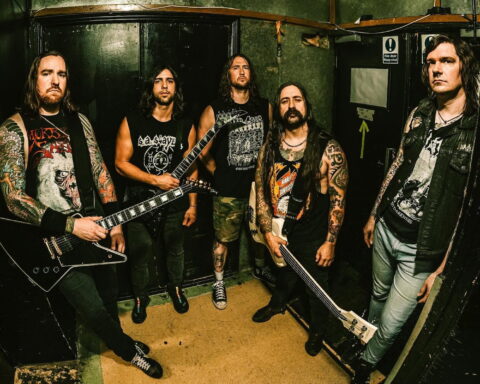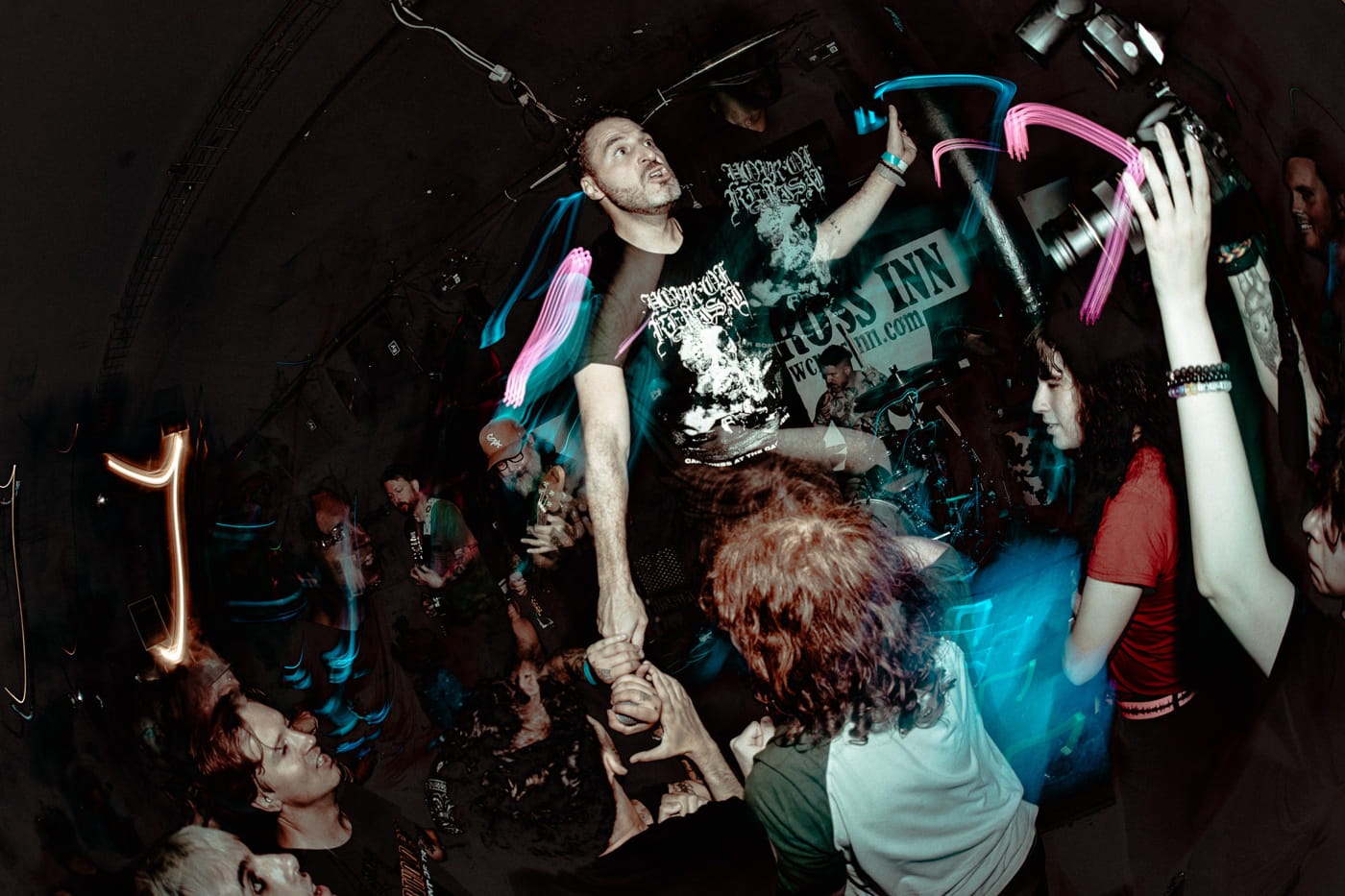

If I had to pick one broad genre tag for the kind of music that sits closest to our hearts here, it would probably be post-hardcore. I mean the wide version of it: 1990s and early-2000s bands pulling alt-rock, noise rock, repetition, melody and stranger guitar ideas into the same place, with enough room around the edges for screamo and plenty else besides. American Motors are a good example of how wide that word can get.
The Lancaster, Pennsylvania duo sit on the noise-rock-heavy side of that definition. Guitarist and vocalist Dustin White and drummer Alex Steward work with one-note repetition, bass and guitar parts moving around each other, harsher chugging sections and choruses that suddenly open up into much cleaner melody. Their second album, “Functional Music“, arrives on 6 November through Expert Work in the US, The Ghost Is Clear in the US and Vina Records in Italy. Lead single “No Horses” is out now.
American Motors were formed in Lancaster in 2023. Their first album, “Content”, followed in 2024 and picked up support from Stereogum alongside word of mouth and appearances in end-of-year lists across the US. Dustin had already spent years playing in or handling front-of-house for Pink Mountaintops, Times New Viking, Sea Wolf and Dead Meadow. Both members have also done the less glamorous DIY work around bands, from rewiring gear and screen-printing zines to putting on house shows. Touring member Andrew Krause plays bass on the new record.
For “Functional Music“, they went back to their friend J. Robbins of Jawbox and Burning Airlines at his Baltimore studio Magpie Cage. Shudder to Think, Girls Against Boys, Brainiac and Velocity Girl have all recorded there, and American Motors went into the sessions interested in the room and equipment as part of the record itself. White is enough of a gear obsessive that latency, compression and even the production rabbit holes around Def Leppard’s “Hysteria” B-sides have a place somewhere in his thinking.
Dustin said: “Making the first record, we established a conceptual framework to work inside of. This time we’re adding more detail inside that framework, and pushing against it slightly. We made some bigger swings in a few spots, but still just did what we do, which is basically whatever Alex and I find interesting. We’re still interested in experimenting with empty space and repetition. Working with J again was an absolute dream, and no band I’ve been in has managed to release a second LP while still continuing to function as a band, so this feels like a major accomplishment. It’s a little more interior to the exterior of the first LP. It’s a society, and we’re just living in it.”
“Content” set its songs inside a decaying world. “Functional Music” stays there and gets closer to the people trying to get through it. Across roughly 30 minutes there are waitresses counting change, nomadic characters, people running on too little sleep and too many chemicals, and kids learning about catastrophe in real time before they have much chance to understand it.
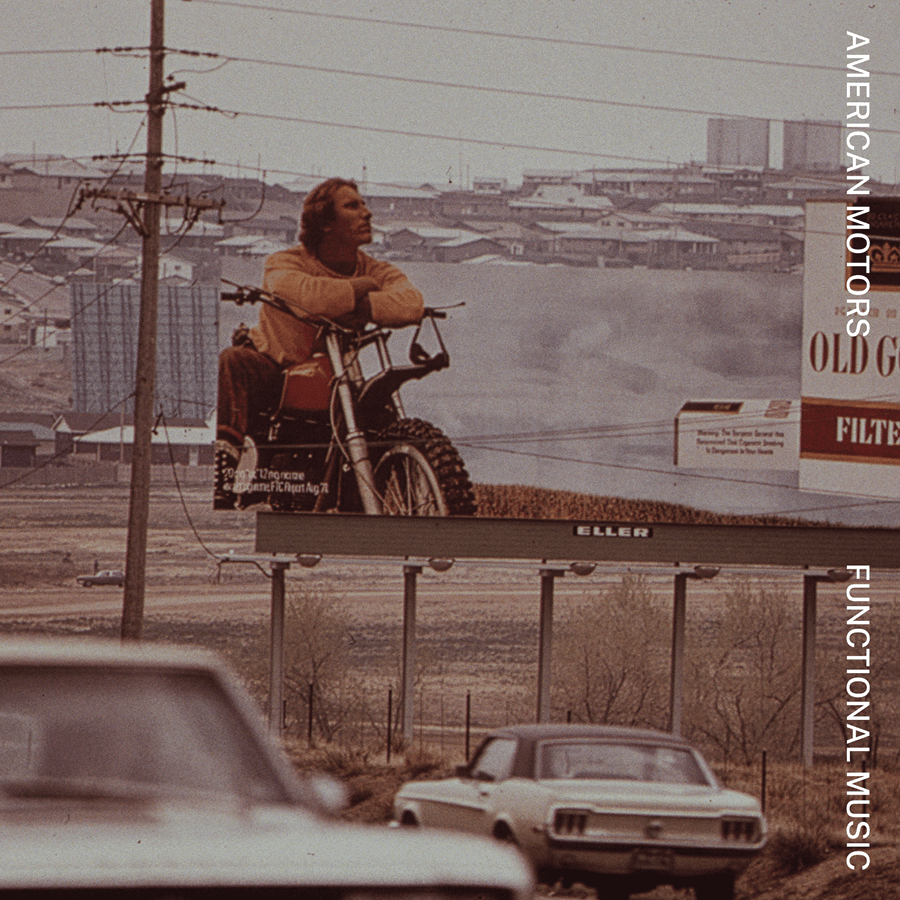
The band have talked about late-1960s and 1970s New Hollywood as part of the record’s thinking, especially Sam Peckinpah, “Easy Rider” and Peter Bogdanovich. The songs were written as small scenes rooted in particular places and ordinary situations where a bad decision or some larger trouble creeps into view. “Five Easy Pieces” and Charles Portis’ “Norwood” sit comfortably around that American roadside side of the record too.
Opener “Obvious” gets there quickly. One of its first lines is, “I know / it’s such a fucking cross / to bear”, and later Dustin sings, “there are no good old days, they’re just days.” The guitar opens into brighter chords around those words, one of the clearest examples of the extra melody and harmony American Motors have brought into this album.
The repetition is still central. Shellac, Lungfish and Girls Against Boys remain useful names around that part of American Motors, with Protomartyr, This Heat and Unwound nearby when the arrangements get sparse and stubborn. Some of the harsher sections on “5480 Big Tyler” and “Marlboro Miles” keep the grinding side of the band close to The Birthday Party and the more abrasive end of Skin Graft Records.
Other parts open much wider. Swervedriver, Slowdive and Moose make sense around the guitar layers, while Dustin’s own guitar vocabulary pulls from John McGeoch, Geordie Walker and Roland S. Howard. Fugazi and Killing Joke sit elsewhere in that family, with Sonic Youth, Einstürzende Neubauten, The Chameleons and Swans also part of the musical history running behind what the band do. There are still power chords and proper choruses in there. American Motors simply leave plenty of empty space around them.
“5480 Big Tyler” is one of several songs tied to a real place. Its title comes from a slum-lord apartment complex from Dustin’s childhood in West Virginia. “Marlboro Miles” keeps the heavier chug and repetition going, while “Margaritaville pt. 2” carries another of the record’s blunt lines: “I don’t see the future at all.” “No Horses” and “Margaritaville pt. 2” also carry some of the band’s inside jokes, tucked into otherwise fairly bleak settings.
View this post on Instagram
The new single goes back to another very specific West Virginia location. Dustin said:
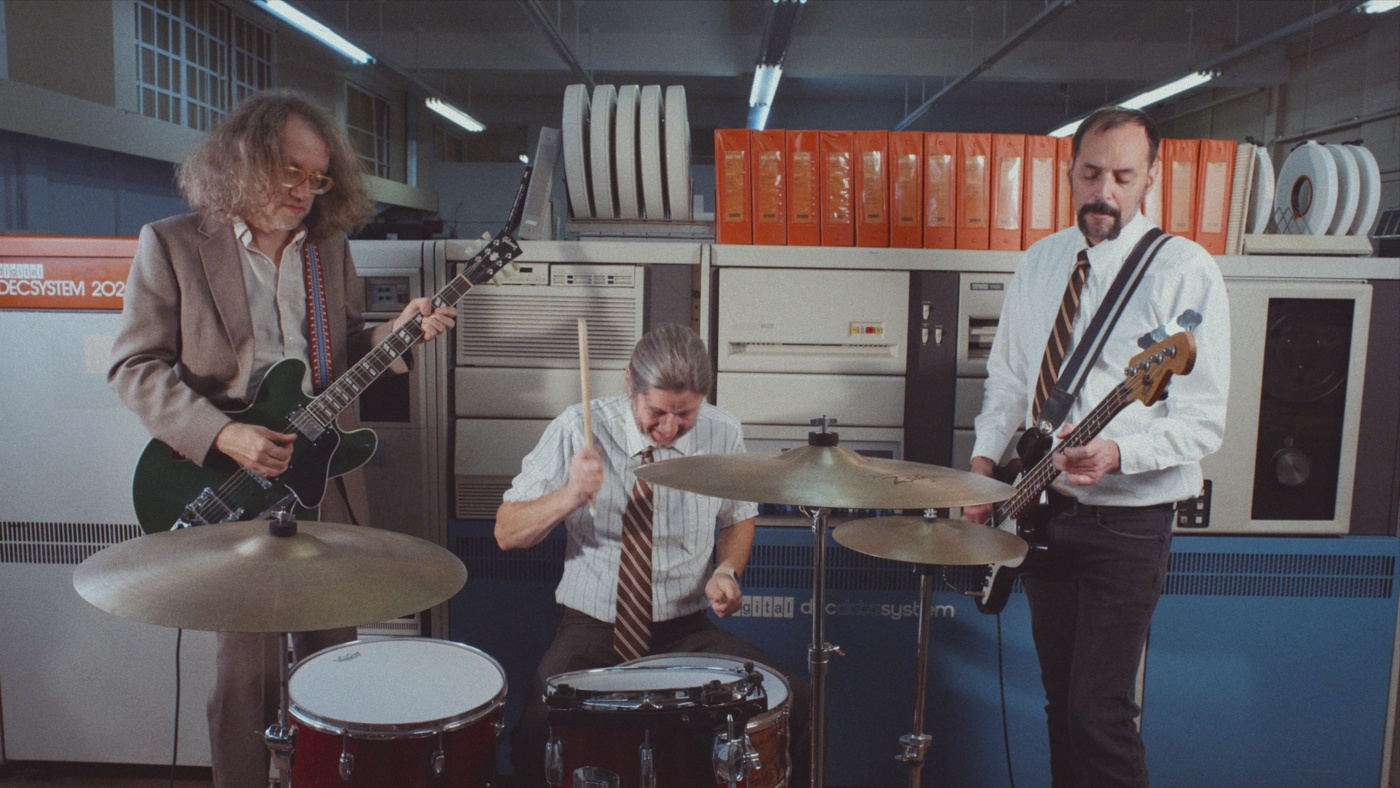
“‘No Horses‘ takes place mostly out on Route 60 just outside St Albans, WV, the same stretch that ‘(A Billboard Reading) Dissolve Jefferson’ from our first LP does. As a band, one of our favorite things to do is have either the guitar or bass play essentially one note while the other moves around. Here we do both. For the video, we were lucky enough to shoot at the Large Scale Systems Museum, just outside Pittsburgh. Everybody should go here and touch these machines; they want you to. To keep with the antiquated technology vibe, we shot the whole thing on a 1960s Arriflex 16ST 16mm camera. I’m honestly surprised we pulled it off.”
Dustin directed and shot the video himself at the Large Scale Systems Museum in New Kensington, Pennsylvania. He bought the second-hand camera gear, taught himself how to use it and ran test reels before shooting the band. They used an Arriflex 16ST with expired Kodak Eastman EXR 7245 50D and 7248 100T stock, with The Negative Space handling the film lab work.
The museum gave them working vintage computer equipment to shoot around. Among the machines are a Data General “Dasher” terminal, the model used as the visual template for the computers in Apple TV’s “Severance”, a VAX-11/780 and an IBM System/390 mainframe. Grey filing cabinets, suits and the grain from the old film stock give parts of the clip the look of a late-1980s office. The band themselves call it an “Official music video (what does that even mean).”
American Motors will take the record out in October supporting onelinedrawing, the long-running project of former Far frontman Jonah Matranga. Matranga will be playing “Tin Cans With Strings to You” in full for its 30th anniversary.
American Motors live:
View this post on Instagram
22 October – Boston, MA @ Rockwell – Tickets *
23 October – Syracuse, NY @ Funky Town Comics & Vinyl – Tickets *
24 October – Long Island, NY @ Massapequa VFW Hall -Tickets with dearly departed *
25 October – Rutherford, NJ @ Williams Center – Tickets with soft no *
26 October – Baltimore, MD @ Metro – Tickets with Knub *
28 October – Philadelphia, PA @ Kung Fu Necktie – Tickets with dear forgiven *
* = supporting onelinedrawing
“Functional Music” is out 6 November through Expert Work, The Ghost Is Clear and Vina Records.