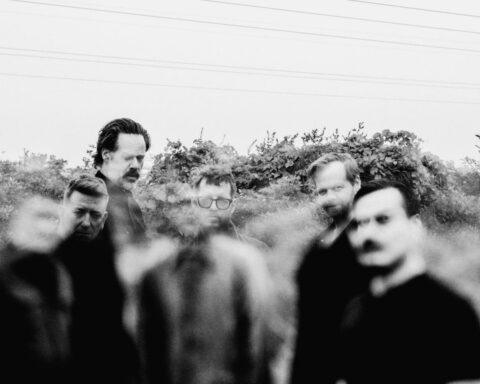



If you think IDIOTEQ is all post-everything, punk and whatever strange thing happens when those worlds start bleeding into each other, Alfredo Ovalles is a good place to widen the field a little. We have always had room for the outer reaches of jazz and experimental composition too, including our Spotify playlist collecting different shades and faces of jazz, and “The Art of Parties” lands somewhere inside that larger conversation.
Ovalles is a Venezuelan/Austrian pianist and composer, now based around in Warsaw, Poland, whose new album reaches from contemporary composition and prepared piano into improvisation, electronics, jazz and the kind of avant-rock thinking that makes names such as John Zorn and Frank Zappa sensible neighbours.
What makes the story worth going deeper into is much simpler. Alfredo spent years being scared to compose seriously for the instrument he knew best.
Born in Caracas, he had played piano since childhood. His father remembers him asking for piano lessons for his fifth birthday, despite coming from a non-musical family. One of his earliest ideas of what a piano could sound like came from an old videotape of a Queen concert that was always lying around at home. He eventually became a classical pianist with a career that has included appearances with the Bournemouth Symphony Orchestra, Polish Baltic Philharmonic in Gdańsk and National Symphony Orchestra of the Dominican Republic, alongside performances at Wien Modern, Transart Festival in Bolzano and Warsaw Autumn. His programmes have often included Bach and Leonard Bernstein, and his solo piano arrangement of Bernstein’s “Symphonic Dances from West Side Story” became one of his recurring concert pieces.
Yet writing his own solo piano music was another matter.
“The blockage for writing for piano came from basically feeling the weight of the whole repertoire of the instrument,” Alfredo said. “I’m a classical pianist, and the piano is, without a doubt, the instrument with the biggest amount of repertoire, and the biggest amount of masterpieces written for it throughout all eras of classical music. For me, that made it extremely daunting to even think of using this instrument, my own instrument, for writing music. How could I, someone who didn’t consider himself a composer for so long, add my voice to this monolith of an instrument with such a history? It was quite paralizing.”
Before this period he had written only one piece centred on piano, and even there he found ways to partly hide the instrument beneath pre-recorded electronics and his own spoken voice.
Then his wife became pregnant.
Alfredo already had a few small sketches on paper. On the evening he and his wife learned they were expecting their son, those fragments suddenly made sense to him. They grew into “i want to sing but i don’t know any songs”, although he hit another block before finishing it. The piece is dedicated to his friend Martyna Zakrzewska because a conversation with her during another project eventually dislodged whatever was stuck. Alfredo no longer remembers exactly what she said. He remembers that afterwards he knew how to finish the piece.
The following day brought another piece.
On his way to his practice studio, Alfredo encountered James Joyce’s poem “On the Beach at Fontana”. The image of groaning pier stakes stayed with him and triggered the first ideas for “singing in our chains”. In his mind it began connecting with imminent fatherhood, his relationship with Venezuela and what it means to come from a country shaped by authoritarian rule.
“So I guess something just popped open at around that time, and that’s what triggered me to get past my fear of the instrument,” he said.

Those years produced the four works collected on “The Art of Parties”, due September 18 through Ravello Records / Parma Recordings. Three are solo pieces, “singing in our chains”, “i want to sing but i don’t know any songs” and “seen by subtle seers”. The title work is a four-movement piece for piano, string quintet and percussion that Alfredo calls a post-concerto.
There is another route into all of this that runs through rock bands in Caracas.
Alfredo is still active in Changing Places in the Fire, which grew out of his earlier Venezuelan band Echoes. Changing Places in the Fire released an album in July 2026. He also spent time playing keyboards in the backing band of a pop singer who was just beginning her career and later became well known.
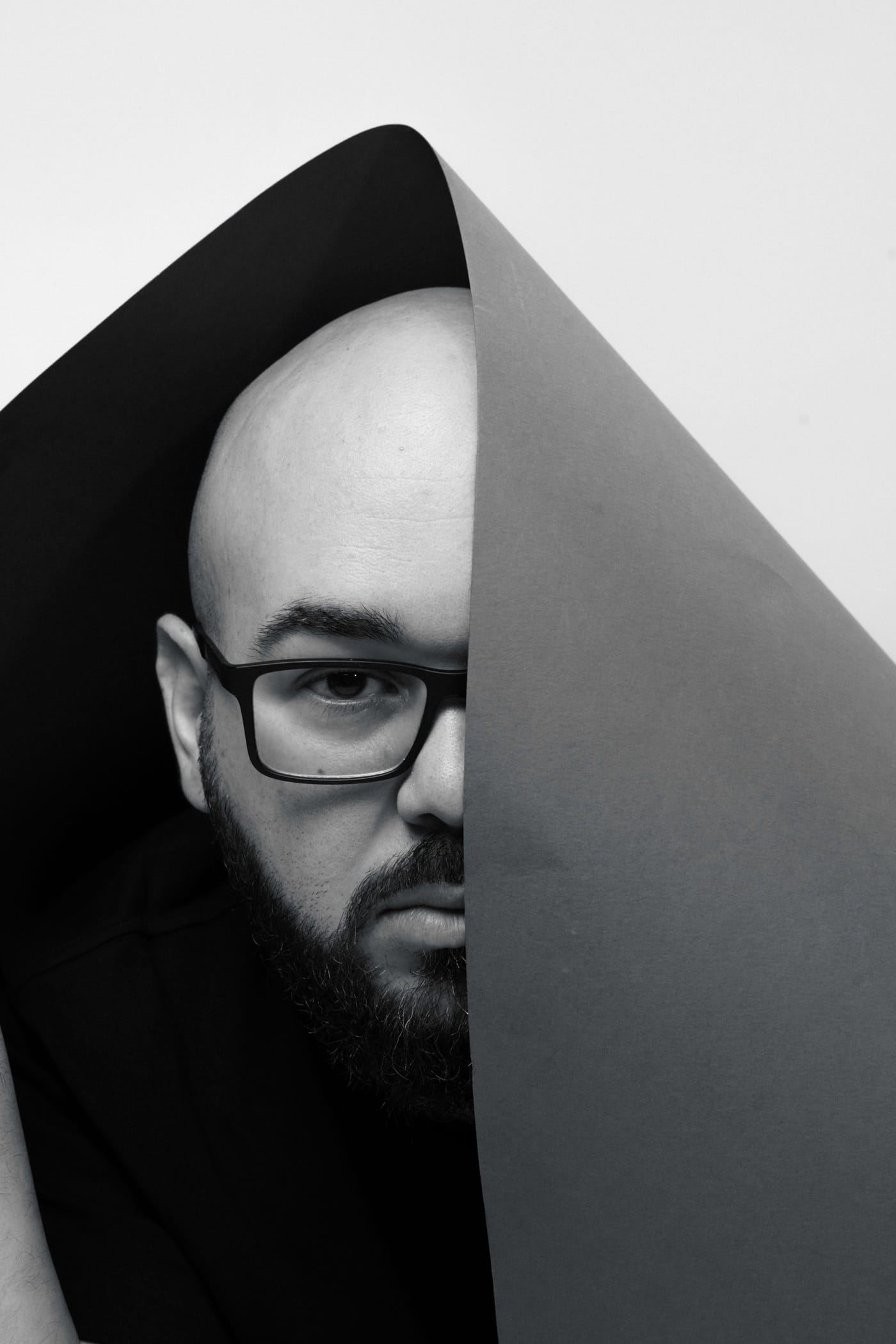
That job became hands-on training in popular harmony, voice-leading and keyboard playing. Echoes taught him a different set of skills. Alfredo produced and engineered most of their first album, learned recording and production, worked with electronic instruments onstage, organised sessions, dealt with budgets and figured out releases.
“I always say that my work with that band in particular was the equivalent to a master’s degree,” he said. “I have learned music production, sounddesign, how to deal with all sorts of instruments I wouldn’t have had to deal with had I remained just a classical pianist, how to set up a recording session, take care of budgets, how to release an album, etc.”
Playing with musicians who did not work from classical notation changed the way he communicated too. He had to demonstrate ideas, listen to form and harmony differently, and find useful ways to explain melodic or rhythmic ideas without putting everything onto manuscript paper.
He still uses those skills daily with groups including andother stage and Black Page Orchestra. They have even carried into his work with the Wiener Symphoniker, where contemporary pieces have required keyboard technology that he first learned to handle through his band years.
That background helps explain why “The Art of Parties“ can sit comfortably near avant-rock, experimental piano, jazz and improvised music without giving up the classical structures underneath it.
The album itself covers the four-movement title piece, three solo works, acoustic instruments, electronics and performance methods that sometimes ask musicians to accept approximation, physical difficulty or open choices as part of playing the score.
The title piece started somewhere much more conventional.
Alfredo wrote “Dance!” expecting it to become the first movement of a concerto. He was working with sonata form and had no complete concept joining the movements yet. The larger idea arrived while he was writing the fourth movement, “Scherzo Redux”.
“I realized that what I was doing was not really a concerto but it was closer to what I ended up calling ‘post-concerto’,” he said. “I was taking the classical concerto as a point of historical reference but abandoning its structural assumptions.”
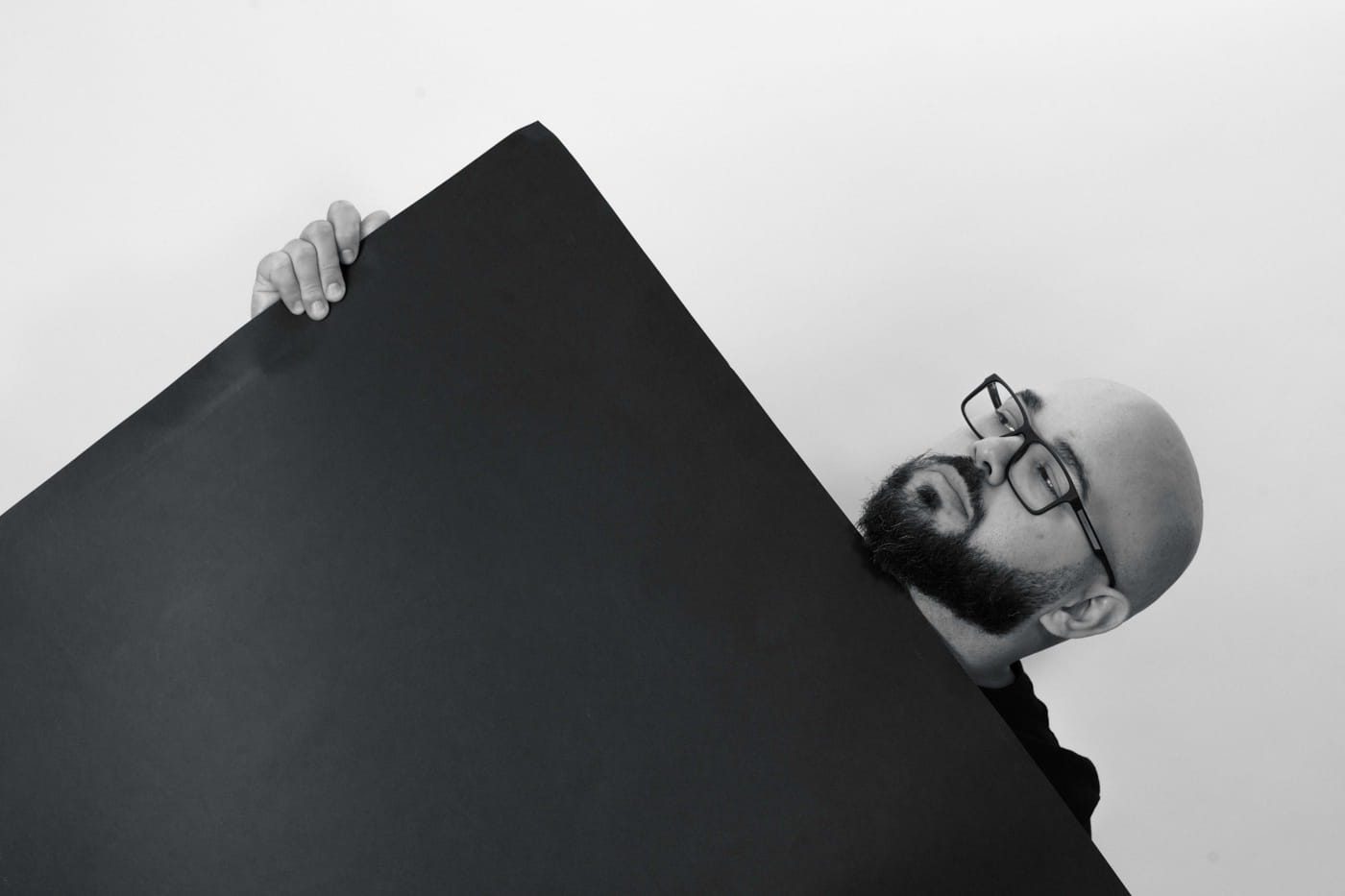
Across the four movements, the pianist keeps changing jobs. At different points the soloist is the protagonist, creates situations for the other musicians, watches the ensemble take over and eventually becomes what Alfredo calls an “unreliable host” at the gathering.
Once he started thinking about the piece as a gathering governed by inherited rules that could then be interfered with, the title appeared. “The Art of Parties” comes from the song by Japan, a band Alfredo says he absolutely adores.
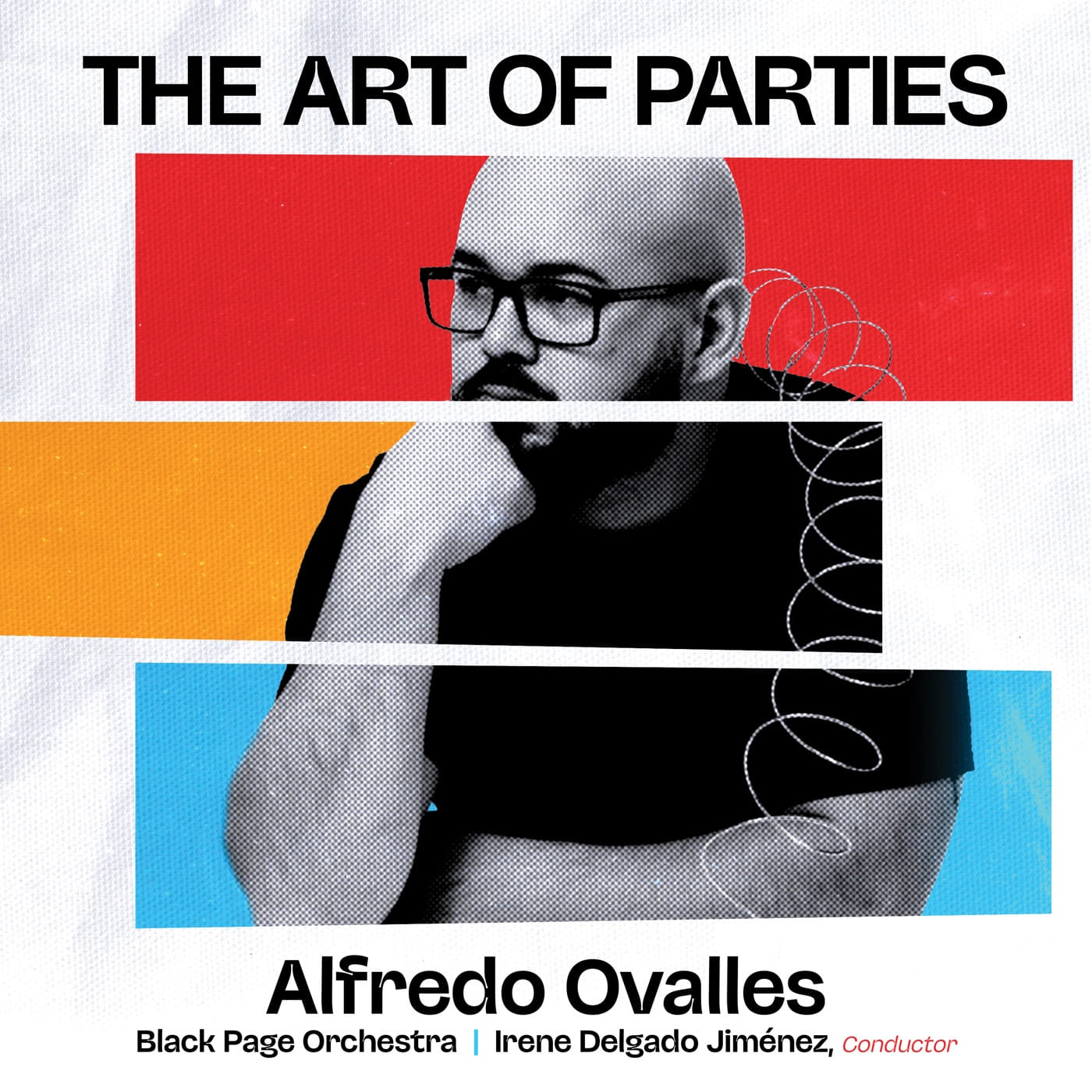
The social idea goes deeper in his liner notes. Alfredo writes about gatherings where people follow codes and perform versions of themselves. Classical concerts can have a similar quality for him, loaded with ritual, memory and behavioural rules that have accumulated over centuries. The concerto became a useful place to tamper with those habits.
“Invocation of the Spirit” opens the title work with fragments of memory arranged almost like a ceremony. “Dance!” came from somewhere far more domestic. Alfredo watched his son at six months old trying to stand and move whenever Venezuelan merengue was playing. He would wobble, fall and get up again. Alfredo wrote the groove in 5/8 and divided it unevenly to follow that unstable movement.
The third movement, “…in search of songs“, came from thoughts about an important teacher during her final days. Alfredo remembered music appearing through memory in small pieces: harmonic fragments, romantic gestures and parts of themes that seemed almost recoverable.
By “Scherzo Redux“, familiar classical gestures are being disturbed by muted articulations, broken phrases, exaggerated accents, atonal jazz bursts and distorted baroque fragments. The movement keeps pushing those elements until the structure eventually comes apart. Across the wider piece there are traces of Venezuelan folk rhythms, jazz and music associated with Brahms, Bach and Messiaen. Alfredo treats most of those as remembered shapes and habits rather than direct quotations.
Black Page Orchestra were central to making that looseness possible.
There are passages where Alfredo places suggested ideas inside boxes in the score and gives the musicians room to improvise from them. During rehearsals and recording, he told the players they could use his suggestions or bring in ideas of their own if those ideas helped achieve the intended texture or effect. A different ensemble could therefore produce noticeably different results.
The piano solo in the fourth movement works similarly. Alfredo has written a version, but treats it as a suggestion. He or another soloist can improvise or compose another solo over the fixed harmonic base.
For Alfredo, Black Page Orchestra have also been one of the places where he learned how composition works from inside an ensemble.
“If Echoes and Changing Places in the Fire were my master’s degrees in all things music production, sounddesign, music technology, related, Black Page Orchestra has been the best composition school anyone could imagine.”
Through the orchestra he has played a large amount of new music and worked closely with composers including artistic director Matthias Kranebitter, flautist Alessandro Baticci, violist Rafal Zalech and Mirela Ivicevic.
“We have played SO much music, and collaborated with SO many composers,” Alfredo said, “that it’s just the best way to be exposed to what works, what doesn’t, what ways of developing a work exist, and so on.”
His wider contemporary work has also included close collaborations with composers Roberto Sierra, Jorge Sánchez-Chiong and François Sarhan. One of Black Page Orchestra’s stranger performance locations was an abandoned submarine pier in Croatia, where the ensemble performed Stockhausen’s “Mikrophonie I”.
The same willingness to make performance physically awkward turns up throughout the new record.
Alfredo is wary of technical display that exists mainly to sound impressive. His solution was to make the difficulty produce a specific result.
On “i want to sing but i don’t know any songs“, selected notes are muted with Patafix or Blutack. Those are precisely the notes used for the fast passages, so the speed loses the familiar shine of rapid conventional piano playing.
The piece began with Alfredo’s own recurring failure to write simple pop songs. He loves pop and melody and sometimes tries compulsively to write them, but vocal melody and lyrics tend to stop him. He gets through chord progressions and structure, overthinks what comes next and often needs somebody else to finish the job.

Here the substitute for melody is a set of quick, muted figures that stutter and repeat. Eventually almost everything drops away and a repeated C is left behind. In his notes Alfredo calls that note the only “melody” because it simply remains after the other attempts have run out.
“singing in our chains” makes the physical problem much harder to ignore. Alfredo spends its full seven minutes standing inside the piano. The position is uncomfortable enough to cause backache during practice.
The piece uses sounds from inside the instrument, including scraping, pizzicato playing, harmonics and a low sustained hum. Alfredo connects it with internalised constraint, a person learning to live inside a system that limits expression while retaining enough comfort for that arrangement to continue. The title came to him through that coexistence of restriction and participation.
Then there is “seen by subtle seers”, which puts the discomfort somewhere else.
Its score contains 23 six-note chords linked through slow voice-leading. Each is repeated an unspecified number of times. The instruction Alfredo wrote for the performer is unusually direct:
“repeat each chord so many times that you start to feel uncomfortable, then continue repeating until you feel comfortable again. Only then move on to the next chord”
The piece began with a single chord Alfredo heard in his head while riding a tram. Once he reached a piano, the rest followed. Electronics introduce soft glitches, filtered feedback and small resonances, and the dynamics stay below mezzo piano. Alfredo does not have a fixed answer for who the “subtle seers” are. They could be imagined listeners picking up tiny changes, or some part of the listener that becomes more alert once very little is happening.
Its final duration was never planned.
Alfredo thought “seen by subtle seers” would run somewhere between seven and twelve minutes. The entire record was made during one very long recording day, and this was the final piece he had left to play.
He dimmed the studio lights and asked engineer Lisa-Maria Hollaus to record one uninterrupted take. Alfredo sat down, played, and thought perhaps five or six minutes had passed.
He went back to Lisa and apologetically asked whether they could try another take because the first one seemed too short.
She told him it had lasted 24 minutes.
“So the subtle seers where somehow in the room helping me get in the zone for the piece.”
There are smaller versions of the same instability inside the ensemble writing. In “…in search of songs”, Alfredo intentionally wrote some rhythms that may be too complicated for the full ensemble to reproduce together with absolute precision. The slight mismatch is acceptable. He likes sounds that seem close to breaking and passages where exact mechanical agreement is practically impossible.
That is the kind of friction he was looking for when he returned to writing for piano. Fast notes get muffled. Seven minutes of playing can leave his back hurting. Repetition continues beyond the point where it becomes embarrassing. An ensemble can aim at notation that is intentionally difficult to line up exactly.
The album was recorded with support from Österreichische Musikfonds and SKE. Bösendorfer provided the piano, while some of the piano microphones came from Remic Microphones. Alfredo is also a Bösendorfer and Remic artist.
The recording brought together Fani Vovoni, Eirini Krikoni, Sara Dragovic, Irene Frank, Juan Pablo Trad Hasbun, Igor Gross and conductor Irene Delgado Jiménez. Lisa-Maria Hollaus engineered the session. Florian Fennes provided another pair of ears during the process, while Johannes Winkler worked on the sound. Viktoria Mevsha developed the visual concept and photographed Alfredo, Anabel Rodríguez and Sepp Bruderman worked on the film side, and Gerardo Estrada encouraged the original idea behind “The Art of Parties”. The cover artwork is by Emily Roulo. Alfredo also thanks Marta Gardolińska-Ovalles and Félix, and dedicates the record to Carlos Urbaneja, Krassimira Jordan and his parents.
That mixture of classical repertoire and less obedient performance contexts has been present in Alfredo’s work for years.
He has performed and premiered contemporary pieces as a soloist and chamber musician, worked with orchestras, electronic instruments and composer-led ensembles, and carried lessons from Caracas rock rehearsals directly into contemporary music. His background also includes festivals such as Wien Modern, Darmstädter Ferienkurse, Warsaw Autumn, MärzMusik and Transart.
For all of that preparation, “The Art of Parties” itself has only been performed publicly once so far.
Alfredo does not think the setting was ideal for the work, though the performance helped him understand what still needed changing before recording the final version. Black Page Orchestra and Irene Delgado-Jiménez understood what he was trying to do immediately, he said, and enjoyed playing it.
“That just made me feel incredibly humbled an honored to play with this people.”
The next substantial test is already booked. “The Art of Parties” will be performed again in May 2027 in Elbląg, this time with the Elbląska Orkiestra Kameralna conducted by Marta Gardolińska.
By then Alfredo will have had some time to learn what listeners actually make of the record. Right now, after one public performance, he says it is simply too early to know what people consistently misunderstand or miss.
The recording arrives on September 18, 2026 via Ravello Records / Parma Recordings.
Artist-funded editorial. The artist covered the time needed to produce and schedule this feature. The article was written and edited by the author.
🔔 IDIOTEQ is ad-free, independent, and runs on one person’s time. If you want it to stay that way: DONATE via PayPal or SUPPORT via Patreon.
NEW: IDIOTEQ Explore 🗺️ Browse 15+ years of our archive by city, country, and style. Find artists on the world map or trace related sounds through the styles map.
Stay connected via Newsletter · Instagram · Facebook · X (Twitter) · Threads · Bluesky · Messenger · WhatsApp.