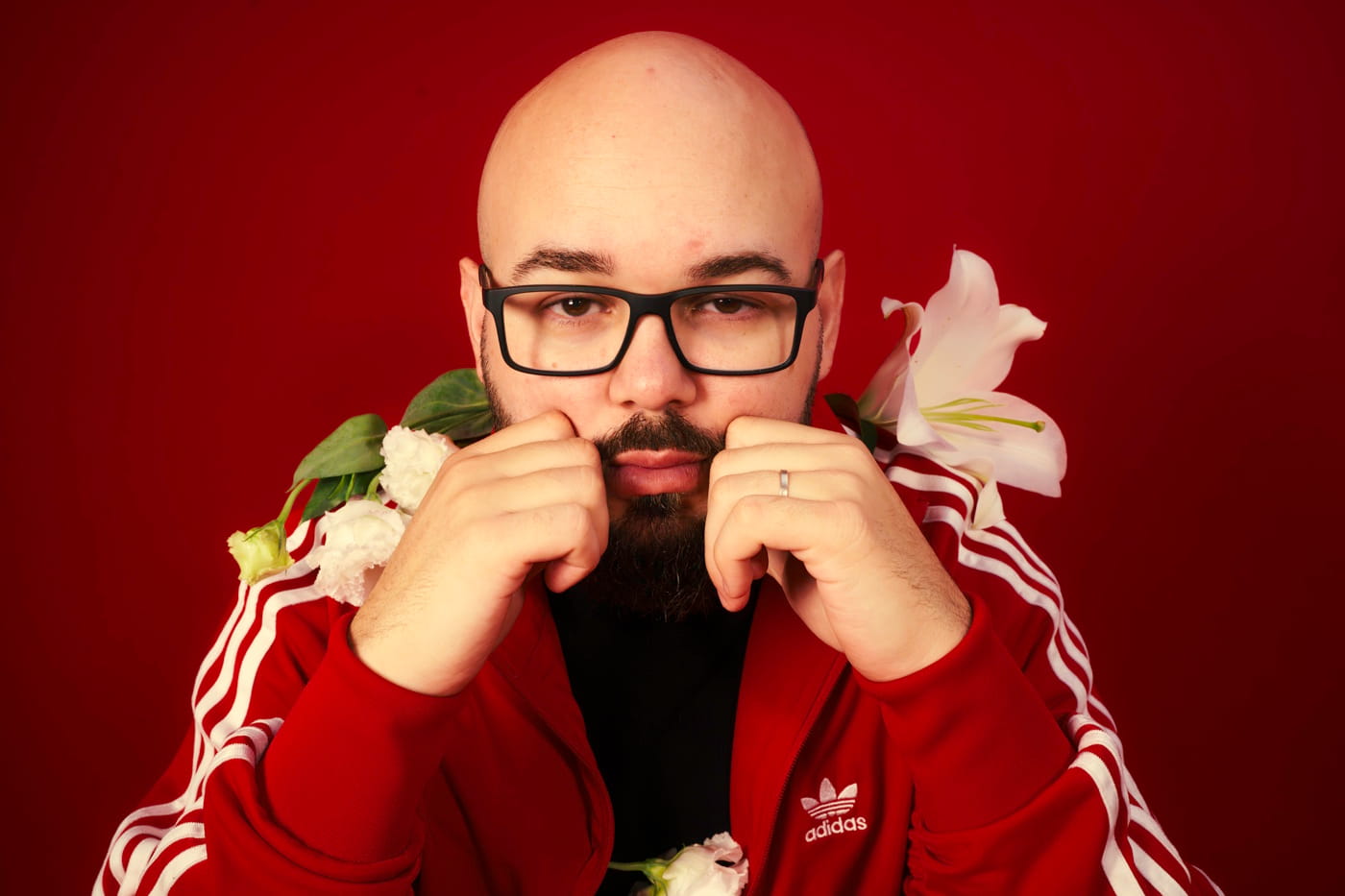


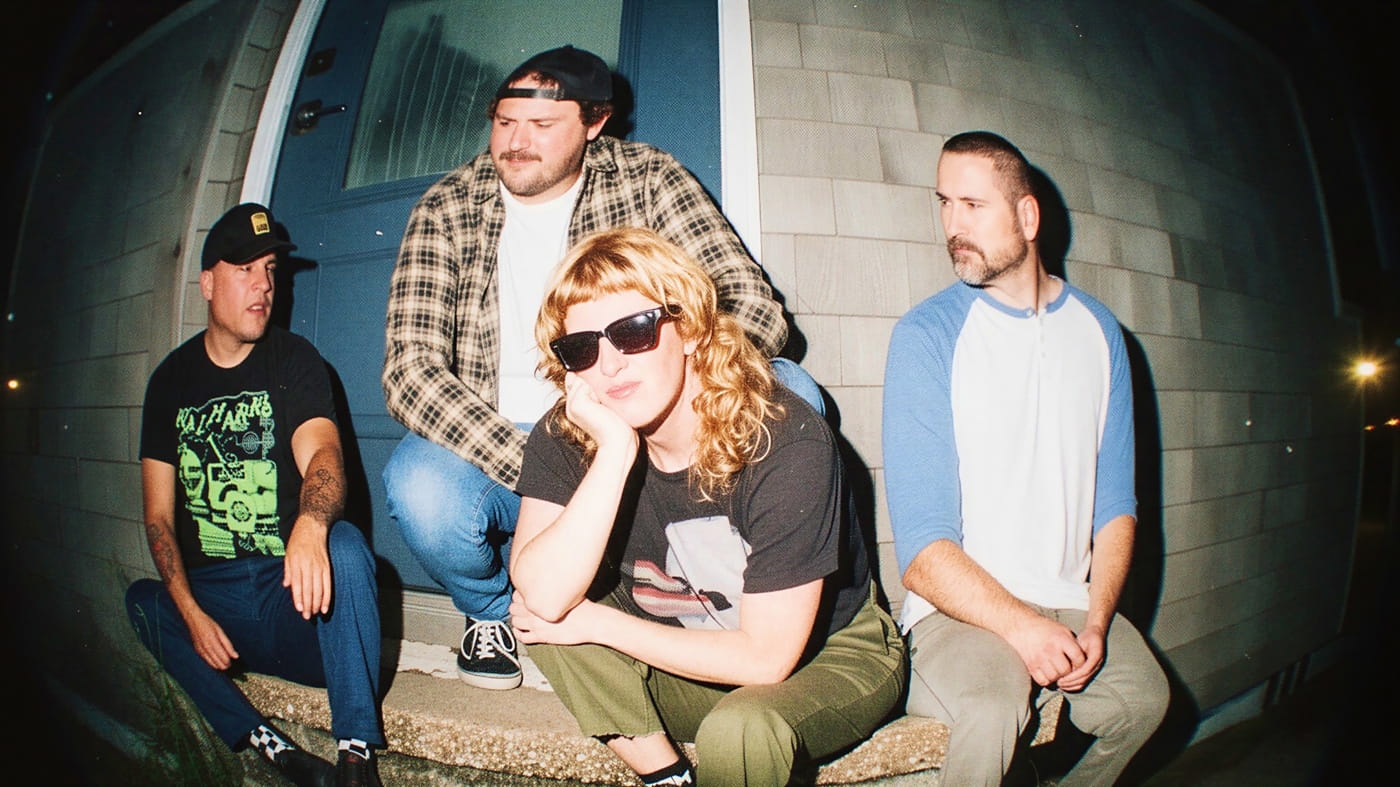
Cor de Lux are four friends from Kill Devil Hills, North Carolina, making guitar music somewhere across post-hardcore, post-punk, shoegaze and noise rock. A lot of it begins before they even practise the songs they already have. Dawn Moraga, Tim Lusk, John Bliven and Jacob Richardson plug in for a loose warm-up, somebody catches something, and suddenly they are trying to remember a piece of music that did not exist five minutes earlier.
Dawn reckons they have “1000 songs that will never happen again.”
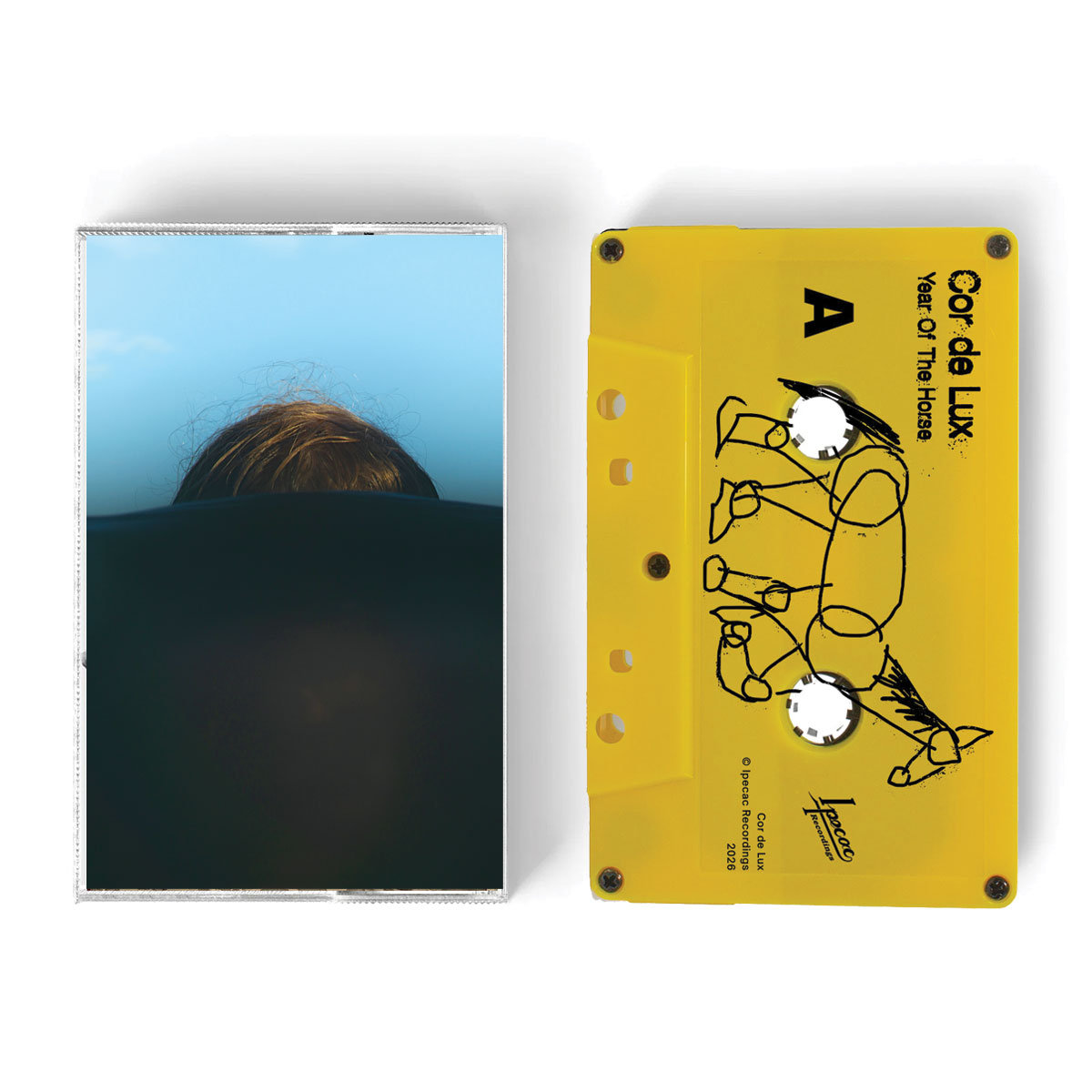
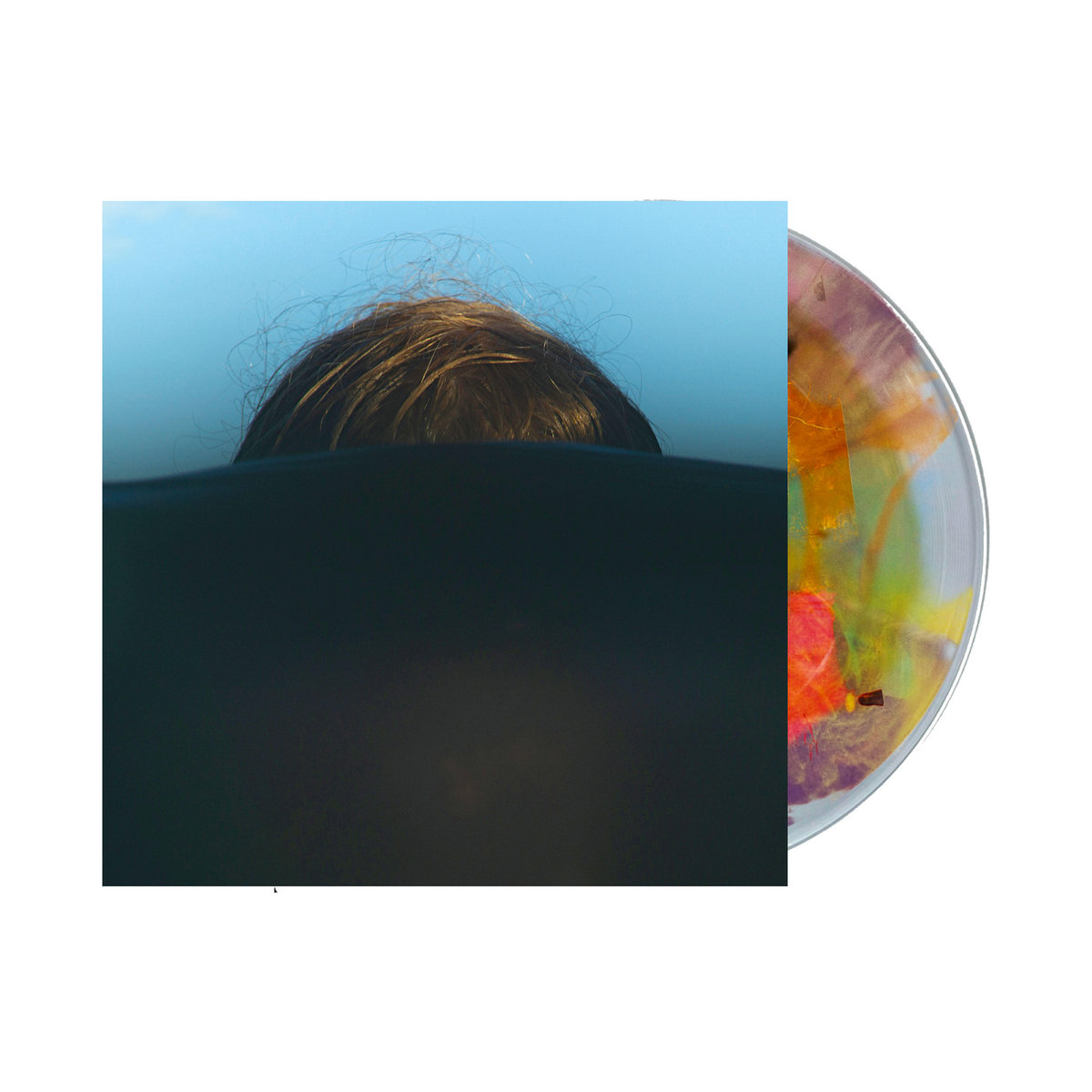
“Year Of The Horse”, out September 18 through Ipecac Recordings, is the latest group of songs that survived. It follows “Dream Life” from 2020 and “Media” from 2023, with nine tracks moving through the band’s different speeds and instincts. “The Cringe” runs hard on clipped post-hardcore and noise-rock guitars with a Hot Snakes pull, then opens up into a slower, wider section. “Ping Pong” stretches past six minutes and gives several voices room to enter. “The Deli” is shorter and sharper. Guitars can scrape against each other, settle into something cleaner, then pull apart again.
Kill Devil Hills has given Cor de Lux plenty of time to become that band. It has also made simply getting to a show much harder than it would be for a band living in Raleigh or another city with clubs close by.
“The Outer Banks is the raw exposed to all elements while touching down with beauty kind of place that I personally couldn’t imagine being ripped away from,” Dawn said. For her, the small-town community around them can mean more than filling a 1,500-cap room, although Cor de Lux still want the dark-walled city clubs where their music makes immediate sense.
For years, reaching one of those rooms meant driving.
A Raleigh show could count as local support even with three hours between the band and the venue. Dawn remembers early nights where they made around $30 from the door. A room could cost $150. Gas could take another $50. Taking the loss was simply how they kept playing.
Quite a few times, John and Tim skipped the room and drove back through the night, keeping each other awake in the van at 3am and watching for bears through Alligator River on the way home.
Dawn thinks the $30 Raleigh show was probably at The Night Rider. Those early sets could mean standing in front of 15 to 30 people, which she remembers as some of their most exciting shows because they were so nervous about playing at all.
Back home, local beach shows can pack out. Cor de Lux also had fewer opportunities to play during their early years, and Dawn thinks that gave them something useful. They practised once or twice a week and spent a lot of time learning each other, both musically and personally. During COVID, that time became especially important.
“I suppose it helped us from not getting bigger before we really were ready,” she said.
Touring also means they get to come back. Dawn describes Kill Devil Hills as a resting spot after time away, somewhere she and Tim particularly enjoy during the off-season once the tourist traffic drops. A life built around traffic gridlock has no appeal to her.
The place itself keeps changing. North-east storms and hurricanes hit the Outer Banks, and Dawn connects some of the band’s music to living around that constant movement. The beaches are beautiful, the weather can be harsh, and the ground itself shifts.
Zack Mexico were one local example of how far a band from there could go. They started in high school, later toured Europe opening for Future Islands and found audiences well beyond the local watering holes. They still come home and draw big crowds. Jacob grew up with some of them and knew them long before Dawn and Tim did, and Cor de Lux have always admired their creativity.
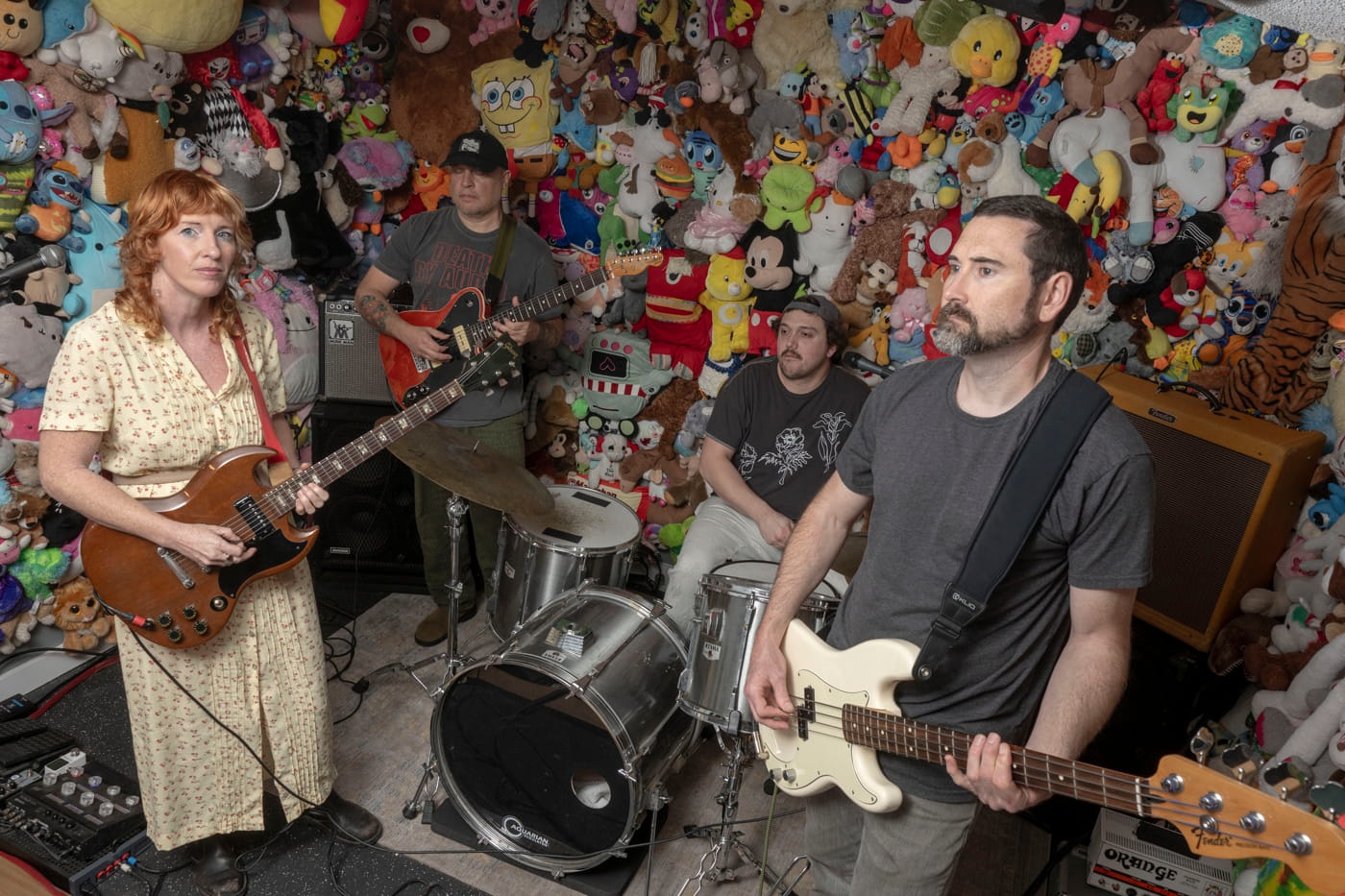
Cor de Lux have also worked to bring touring bands in the opposite direction. Skorts, Eric Bachman, Ekko Astral and Mdou Moctar have all come through the area, sometimes combining a show with a little beach time. The band help book visiting artists with support from places including Swells’a Brewery and Goombays.
Being able to guarantee even a little money helps. So does giving bands a place to sleep.
Massie, a DC dream-punk band, recently came through. Their drummer also plays US dates with Lambrini Girls and had gone from playing for around 3,000 people to a Kill Devil Hills show for roughly 200. Cor de Lux housed them, fed them and tried to make sure they left with money in their pocket, some new listeners and another place worth coming back to.
There is one condition.
“It’s for us all about offering a nice place to stay as long as they don’t mind my big ass dogs,” Dawn said.
John Bliven takes that same local approach into “The Deli“. The song throws political disgust around with some humour, including the line “eat all the politicians like sandwiches – no kind of sauce can make them taste good.”
His answer gets much more specific once the joke is out of the way.
“We don’t pick a side because it’s becoming even more clear that it’s going take people from more than one party to turn things around. We encourage analysis of current events and for people to make their own decisions.”
John sees the main fight as a class issue between extremely wealthy people and everybody else. He pointed to tariffs as a current example. Consumers were told foreign countries were paying them, corporations raised prices and passed those increases along, and major companies are now receiving billions back while ordinary buyers get nothing back.
“To combat things like this would take a united front, but sadly there will be some other incident which people will be distracted and divided by and this news will fade from public scrutiny,” he said. “Name calling and bickering allow this divide to grow while we squabble and that’s exactly how they want us.”
His answer ended close to home. “We have to collectively do better than play someone else’s tune. It starts with community and builds from there. Grow something local, make connections and create a microcosm of what you’d like to see on a national scale.”
Cor de Lux already do some of that through charity events around the Outer Banks. They play the annual Whichcraft surf contest, which raised $25,000 last year for the Outer Banks Relief Foundation. The foundation provides direct financial help to families and individuals in Dare County and the Currituck beach towns dealing with serious illness, injury or personal tragedy.
Elsewhere on “Year Of The Horse”, “Blind Smile” looks at people squabbling over trivial subjects while a person without vision can still smile. The song holds onto that smile as something beautiful in people at a time when certainty, ideology and division keep swallowing ordinary curiosity and kindness.
“Ping Pong” turns towards relationships. It deals with the way the early flutter of young love changes as responsibility and everyday pressure pile up. Dawn sings, “Figure out my life / Pissing on my time / To be set free,” before Tim comes back with, “Conversations will suck you dry.”
Cor de Lux usually find vocals after the music has already started telling them where they belong. Somebody hums nonsense, paces a phrase or starts making sounds over the live arrangement.
Dawn actively encourages Jacob and Tim to sing because she likes hearing several people inside Cor de Lux.
“John won’t sing .. and that’s ok. lol”
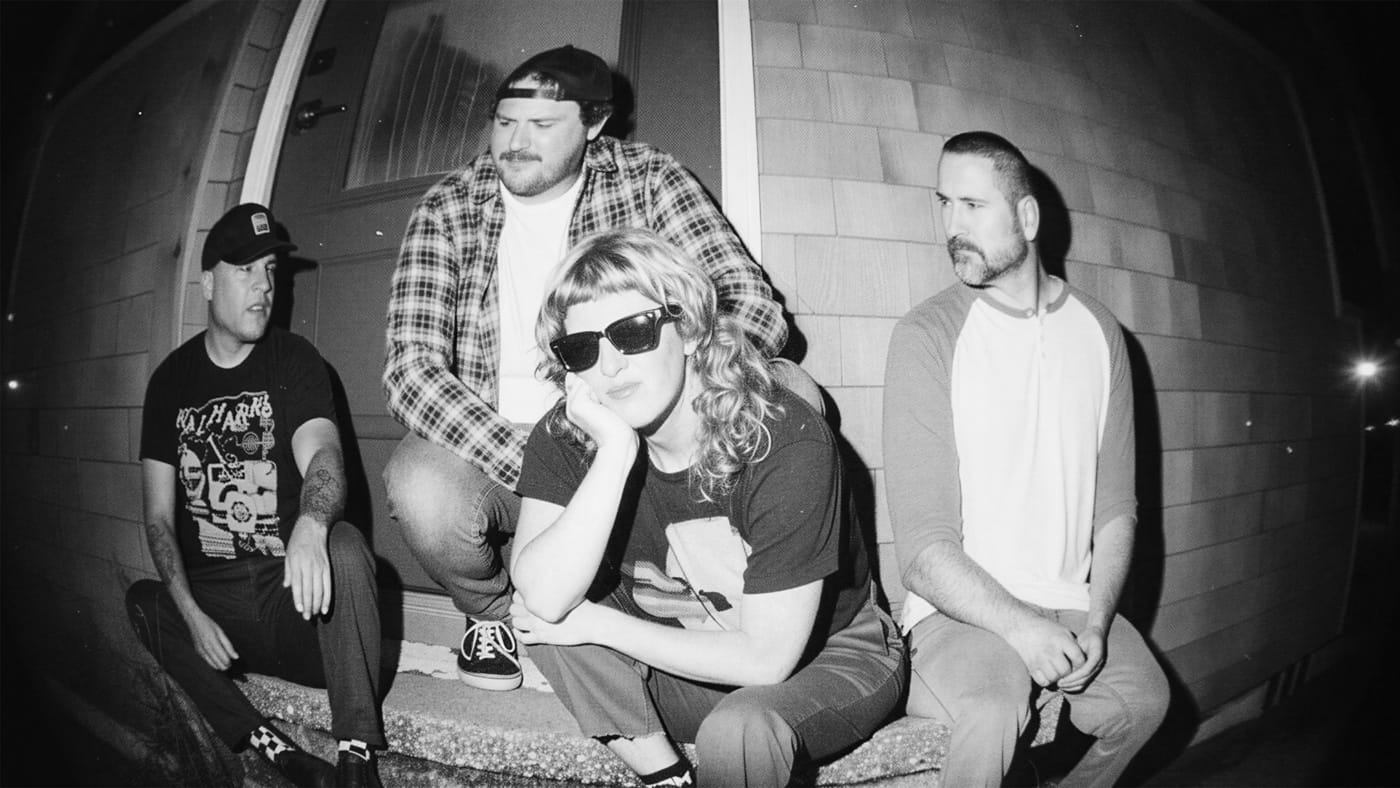
The guitar negotiations can be harder.
Dawn and Tim push each other the most there. When Dawn falls for one of her own parts, she wants to keep it. Tim can bring in something happier, brighter or shinier and get the wrinkled nose from her. He has his own version of the same response when she plays something that gets on his nerves.
Sometimes they need to work separately. Sometimes they keep bending the part until an argument starts. Dawn would sooner let everybody suggest something, leave it for another day and try again than waste rehearsal with four people digging into fixed positions.
A heavier song they are currently building finally made her put her foot down.
Tim heard one of Dawn’s parts and said it reminded him of the “Friday the 13th” intro. The others liked it. Tim kept asking for a change. Dawn refused and Jacob backed her.
“F you Tim,” she joked.
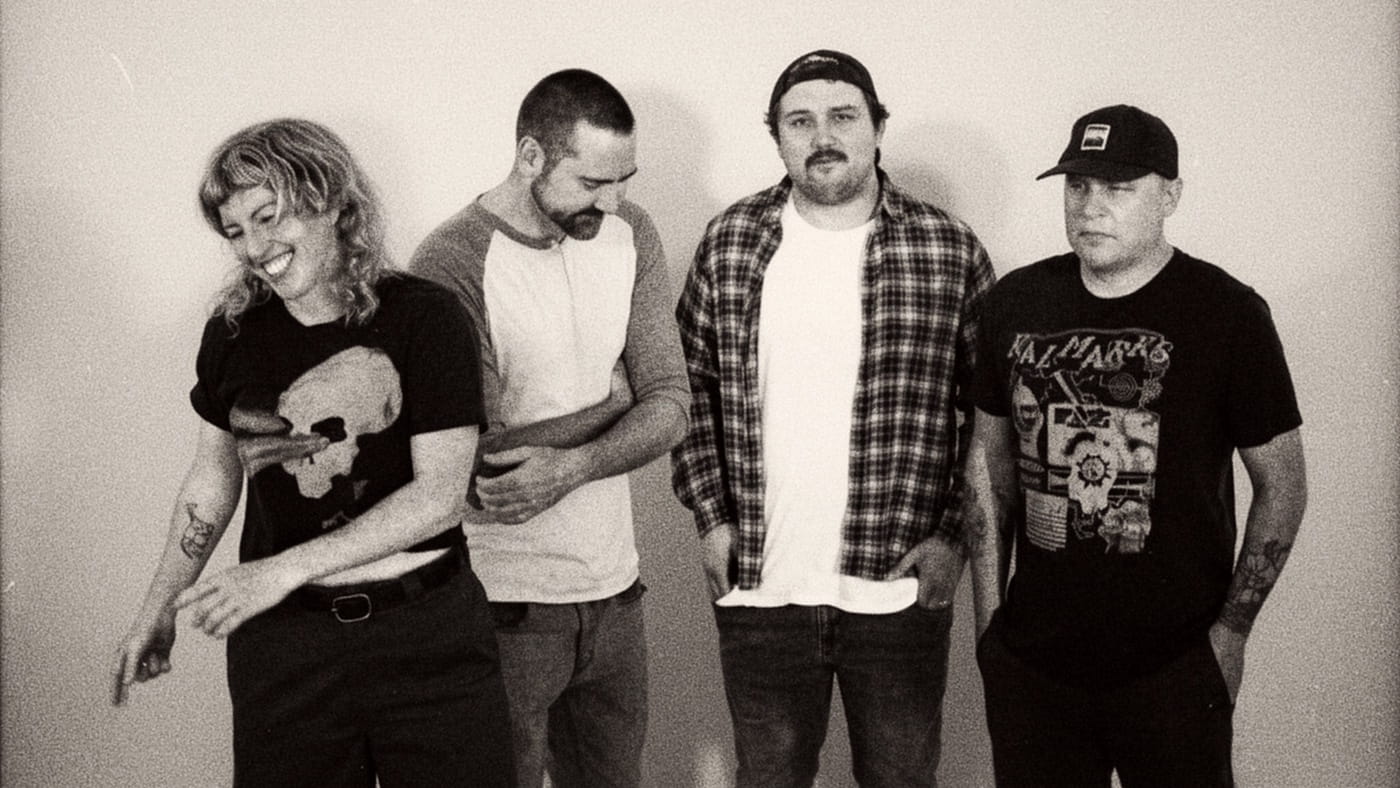
Tim is also her partner. Dawn calls him the sweetest and freely admits that he can shred much harder than she can. Her own guitar playing is often simpler and stranger. Tim has told her she is his favourite person to play with.
The band began partly because the two of them could pick up guitars and naturally bounce off each other’s notes.
“I wonder if he still doesn’t like the part?” Dawn said.
Tim’s account of these little standoffs begins with the famous facial expression.
“Dawn says I wrinkle my nose haha. I don’t think I consciously do. I think it’s projection.”
Both of them find it difficult to tell another person that a part is not working. Tim says suggesting that somebody try something else can almost feel taboo until they are already deep into a rough patch and frustration has taken over.
He also has trouble walking away. He likes those moments when pressure between the players produces something nobody had planned, even though he freely admits that the result is not always the great idea everybody hoped for.
Dawn is still teaching him when to stop pushing.
“Oh my gosh Chancho stop licking my legs it sounds like you’re stirring noodles,” Tim added halfway through his answer. Chancho is his dog.
A lot of their songs never get past this stage. Dawn talks about them as the needle-in-the-haystack moments that somehow survive all those warm-ups.
“Song for the Dead” survived long enough to reach a few live performances.
Then everybody lost it.
“We just collectively started feeling it die no pun attended and made the call one practice.”
Other nights disappear immediately. Dawn says some of the best things the four have ever played probably happened once, everybody looked up, laughed, and accepted that nobody would ever hear them again.
“There’s a few times that we do shit and will probably be the best shit we ever do together and we look up and laugh knowing it was just for us… and that’s fine.”
Wyświetl ten post na Instagramie
J. Robbins came into “Year Of The Horse” with that way of working already firmly established. Dawn remembers him as a quiet judge at Magpie Cage Recording Studio. Sometimes his face was enough to tell them another take was coming.
He pushed Dawn harder on the vocals for “Blind Smile”. He also gave the band plenty of room during mixing, and Cor de Lux came back with very few revisions.
“J gets guitar music. That’s it find someone that understands your music.”
The scream at the end of “Ping Pong” has two slightly different memories attached to it. Dawn remembers Robbins pushing that part and taking it heavier. Jacob Richardson remembers screaming something during the outro at a few practices before recording.
“I was kind of inspired by the dichotomy within ping pong. I was naturally inclined to scream something out in the outro,” Jacob said.
When the band mentioned it in the studio, Robbins was ready.
“The way he just said go for it, allowed me to just let loose and belt it out.”
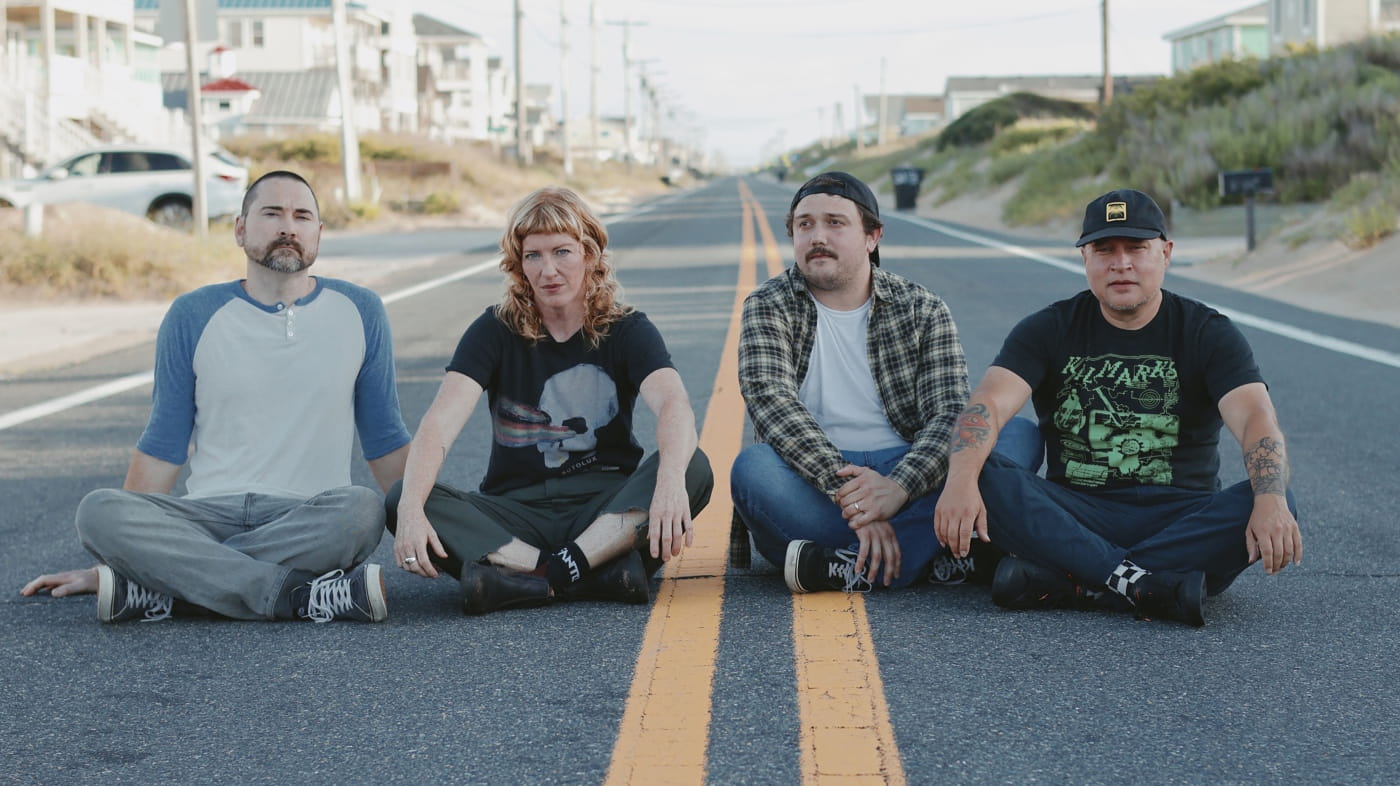
Cor de Lux themselves are credited with writing and producing all nine songs. Robbins recorded and engineered the sessions at Magpie Cage Recording Studio and mixed the studio tracks there. Tracks two, five and six were recorded at Ivakota Recording with Ben Green. Dan Coutant mastered the album at Sun Room Audio.
“Long Face People” had its own recording path. Matt Erlichman recorded and engineered it at Flagship Studio, then mixed and mastered it.
Jacob plays drums and contributes vocals on tracks one, three, four, seven and nine. Thomas Swinn-McNeely handles drums and background vocals on tracks two, five, six and eight. Tim and Dawn play guitar and sing, with John on bass. John also worked on the artwork with Ed Tupper and George Hirst of Cranky Curlew Productions. Stephen Brewer handled packaging and design.
Moving from self-releasing their records to Ipecac has mostly changed what happens around the music.
Tim says the label has helped guide the band as an extension of work they were already doing. That is what makes Ipecac comfortable for him. He still sees the artist making the decisions.
For Dawn, the most immediate change has been Marc at Ipecac organising all the loose parts of band life.
She had been handling radio PR and much of the DIY work herself for years. Marc now sends dates, projects and jobs in a form she can actually work through.
“I told him point blank in the beginning give me weekly list to tackle and then I do them.. it’s been a great team.”
Dawn also values having an opinion from somebody who has spent longer doing this work. Knowing people at the label are backing the band makes her want to work harder. She describes having an artist-friendly label around them as one of the happiest changes they have had.
The most personal song on “Year Of The Horse” sits at the end.
Dawn sees “Strawberries” as a message. She is unsure whether Cor de Lux will ever play it live because the feeling it had when they wrote it has changed. The song deals with children growing up with drug-addicted parents, and it comes directly from her relationship with her father.
Her parents separated when she was three. Dawn and her sister would see their father during visits once or twice a year. To them he was a nerdy, smart man who worked as an underwater welder and preached at his daughters about staying away from sex, alcohol and drugs. One of his lines was “No SAD girls.”
At 14, they would roll their eyes, sneak out to smoke pot and assume their father probably had no idea what it even was.
A year later they were called into a meeting and told he was going to rehab.
A cocaine addiction, which later became a crack addiction, had cost him his house, his job, their college money and their inheritance. The girls had spent those short visits with him without knowing any of it was happening.
Around 20 years later, he was living close to homelessness in a city far from Dawn. Their relationship had largely become one random phone call a year.
She does not mind telling this part of the story. Sharing it might help somebody else.
One year Dawn knew she would be travelling near his city and arranged to see him. Her plan was to take him somewhere nice for dinner, spend some time together and ask whether they could find somewhere like a halfway house where he might live.
The GPS took her to a Harris Teeter.
Her father was happy. He told her he wanted to show her his world.
Inside the supermarket, he introduced Dawn to the women at the deli who looked after him and gave him food that was going to expire during the week. He picked up a rotisserie chicken and told her they were going to eat the way he ate.
They sat in the little deli at the front of the store.
Dawn realised the evening she had planned in her head was gone. She followed him.
Afterwards, her father took her around town to introduce her to people he helped. Elderly residents told her stories about his kindness. For about 20 years, he had been planting wild strawberries around people’s houses so they could enjoy them.
“It was overwhelming and I wanted to hate the life and hate him but I hated the drugs and I hated the depression that caused him to give in to the drugs,” Dawn said.
She still does not understand addiction, and she respects the limits of that understanding. She wants her father to change. She also has more grace for him now and says she is at peace with knowing that he is a kind man who tries in his own way. She does not know how she will feel about any of it in the future.
They had not spoken for more than a year when she answered these questions. Dawn hoped to get “Strawberries” to him when the album came out.
“There will be many many years of wild strawberries in that city that proceed him when he’s gone .”
Cor de Lux will take “Year Of The Horse” out on the road soon after the record lands, joining French psych-rock trio Slift on their fall North American tour.
The run starts in October and includes the band’s first shows in Canada, with Toronto among the announced stops, followed by dates across the US. Cor de Lux have also said a few more shows are still to be added.
Wyświetl ten post na Instagramie