

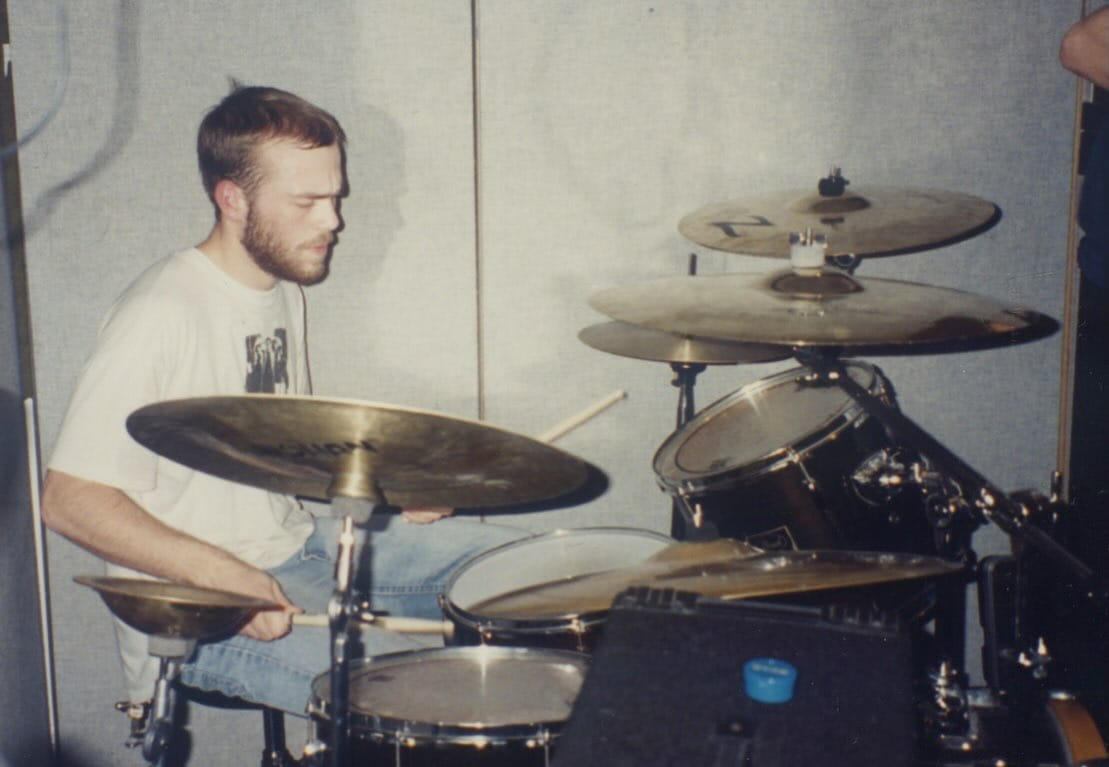
When Serotonin drummer Jim Valosik sits behind his kit now, one cymbal is there because his wrist no longer bends far enough to reach the way it did when he was 19. He added a third crash simply so he could hit it at a safer angle. The same wrist ended the Tennessee band’s first run after Jim was diagnosed with a rare form of osteonecrosis, or bone death, and told by an orthopaedist that he should never play drums again.
Twenty-three years after Serotonin’s last recording, that physical limit is part of how they write. Their new four-song EP, “The Price“, comes out September 25 through Immigrant Sun Records, and we are premiering the whole thing below. The record has “Expiration Date”, “Old Sorrow Blows In”, “Last Words” and the title track. It is also the first recorded Serotonin music made after the band returned to the stage and studio in Nashville in 2025.
Serotonin started in 1996 after the band members met during their first year at Middle Tennessee State University, in a small college town outside Nashville. Andrew Walker and the band’s guitarist at the time, Ryan, were both from Atlanta. Their house-show connections there helped Serotonin get their first two records out in 1996 and 1997, and Atlanta became a second home for the band for the next few years. Phil Dwyer from Inkwell designed the artwork for their first self-titled LP.
Early emo, math rock, fast punk and DIY hardcore all showed up in Serotonin’s songs, with post-hardcore and melodic noise rock in there too. The arrangements could stop suddenly and change time signatures without much warning. Botch and The Promise Ring both made sense as reference points, and Serotonin toured with bands as different as Piebald and From Ashes Rise. Andrew hears the new songs as “just a little less frantic than our old songs.”
“Returning to lyric-writing was definitely interesting as someone in their late 40’s because when you’re 19 or 20 years old there’s just so much stuff that makes you mad, sad, frustrated or whatever that you can find all kinds of stuff to vent about,” he said. “Writing now, it felt natural to write from the perspective of someone who has more time to sit with emotions and absorb how they make you feel and learn from what you’re feeling versus a younger person’s more direct reaction to emotions.”
Anxiety keeps turning up in the new lyrics. Andrew connects that to the greater sense of responsibility he feels now and to the way age changes a person’s reaction to the same emotions. The songs still carry abrupt rhythmic changes, emo melody and hardcore force. The people writing them have another two decades of life behind them.
Jim had to solve a physical problem before Serotonin could really come back. Some old songs returned through muscle memory. Others had been written at the peak of what he could physically do at 19 or 20, and he had to change how he played them.
“The end of my drumming ‘career’ felt very final,” he said.
The diagnosis came after he went to an orthopaedist for wrist pain. He left with an immobilising cast, a referral to a microsurgeon and a warning to stop playing drums under any circumstance. Drumming had been a huge part of his life. His grandfather had been a big-band drummer, and Jim had always assumed it would remain a major part of his own life too.
“I loved the band and playing with my friends. As much as we didn’t want to be, we were sort of forced into early retirement before we were ready.”
Serotonin were writing new songs at the time. With Jim unable to play, that work slowly disappeared, and the others did not want to replace him. Two years of experimental operations followed as surgeons tried to revive the bones in his wrist. When he was not recovering from surgery, he spent those years in a cast.

For a while, music disappeared too. Jim went back to school for graphic design and stopped playing altogether. Listening to Simon & Garfunkel eventually gave him the urge to learn one of their finger-picked songs on acoustic guitar. He started printing tabs for favourite acoustic players including Paul Simon and Kaki King, and treated the movement as a kind of physical therapy. His wrist was still delicate, unable to bear much weight and with only a small range of motion, but guitar got him through the depression that had followed losing drumming and the ability to create music.
He later played guitar in another band with Andrew and in a separate band with his wife, who is a drummer. During the Covid lockdown, Jim watched Jonathan “Sugarfoot” Moffett, Michael Jackson’s drummer, playing “Smooth Criminal” on YouTube and had another idea.
“It was his pocket playing that led me to believe I could play again without all of the bashing and flailing of my early drumming, but with control and precision,” Jim said.
He sat down at his wife’s kit, worked on fundamentals and ergonomics, practised along with Moffett’s videos and learned cover songs he had always admired. There was no Serotonin plan attached to it. He was playing because it felt good to play again. He also knew one bad movement could “essentially break my weak wrist at any moment.” Then Andrew started sending him demos, and the two were soon playing Serotonin songs again.
The restrictions stayed. Jim cannot fill space with the single-stroke rolls and very fast fills he could use at 19, so new drum parts have to account for the wrist from the start. He has to find different fills, keep the part interesting and still recognise his old playing in it. The third crash lets him strike a cymbal more ergonomically and with less impact on the damaged bones.
Jason Dietz had his own problem when he returned to the bass. “Being able to keep up with a younger version of myself was a challenge for me,” he said. Jim and Andrew handle the riffs and arrangements, then Jason works out where the bass can sit inside them. When he gets stuck, they throw in suggestions.
“When they present a song to me, my first thoughts usually are ‘what the hell am I going to play to that!’”
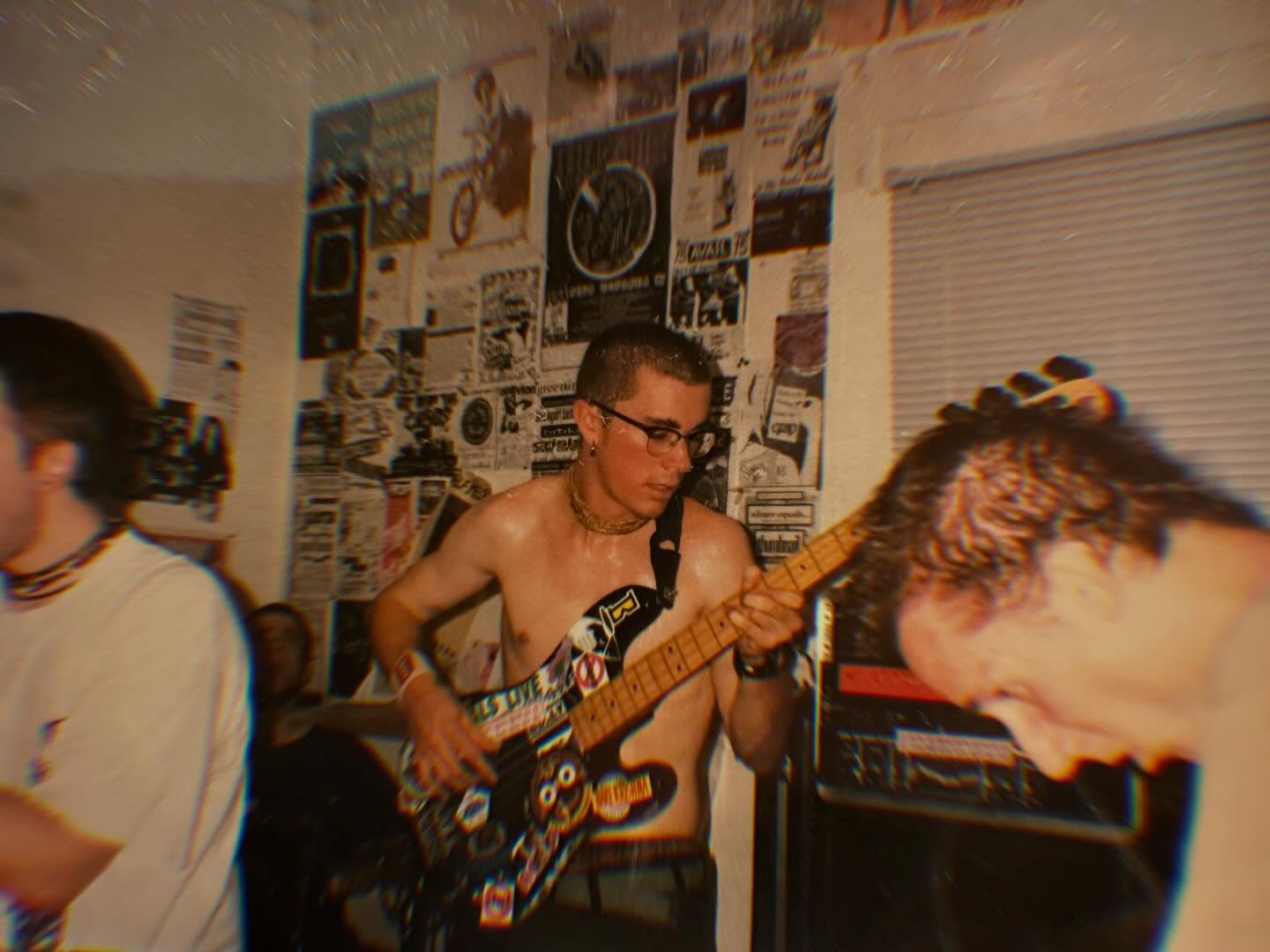
The new songs still use Serotonin’s quick stops and sudden changes. Andrew hears them as slightly calmer than the old records, and Jim physically cannot fill every gap the way he once did. “Expiration Date” starts the EP with that old restless movement still intact, then the four tracks keep working through age, responsibility, personal loss and the disappearance of familiar places.
Andrew wrote “Expiration Date” after his childhood home in Atlanta was demolished. He drove back to the address with his children and found a pile of wood, plaster, roof tiles and foundation where the house had stood. Developers had also pulled 100-year-old trees out of the ground with cranes to make room for a much larger new house, part of the same profit-driven teardown and rebuild he sees across Nashville.
His oldest son was irritated that Andrew did not look more upset. Andrew said the sight was too much to process visibly, and he found himself thinking about the memories attached to the place.
“That experience inspired the lyrics and title to ‘Expiration Date’ which is making a statement that all things will eventually be replaced and we just have to enjoy what we have while we have it and live with the memories that we make.”
Andrew has lived in Nashville for more than 30 years and watched it grow from a small regional city into a major tourist destination. He remembers the early 2010s, when articles started calling Nashville the new “it” city.
“We were all like ‘What? It’s not that cool here.’ It didn’t feel that way at the time but it’s almost like it was willed into existence.”
The punk and hardcore scene of Serotonin’s first run was small enough that Andrew remembers roughly one emo band, one metallic hardcore band and one D-beat hardcore band operating at a time. Bigger touring bands sometimes skipped Nashville, which meant travelling to Atlanta or Louisville. When bands did come through, putting a bill together was simple. Serotonin could jump onto whatever made sense, meet people and keep the network moving.
Some touring bands came because somebody in Nashville emailed them and asked. They would drive long distances to play for 20 or 25 people with almost no expectation that the show would lead anywhere. Looking back as an adult, Andrew finds the willingness to do that slightly absurd and special at the same time.
Serotonin have played recent shows at DRKMTTR, where they met younger people who reminded Andrew of the kids entering hardcore and punk 30 years ago. For him, hardcore still feels personal enough that each new wave builds its own community around it.
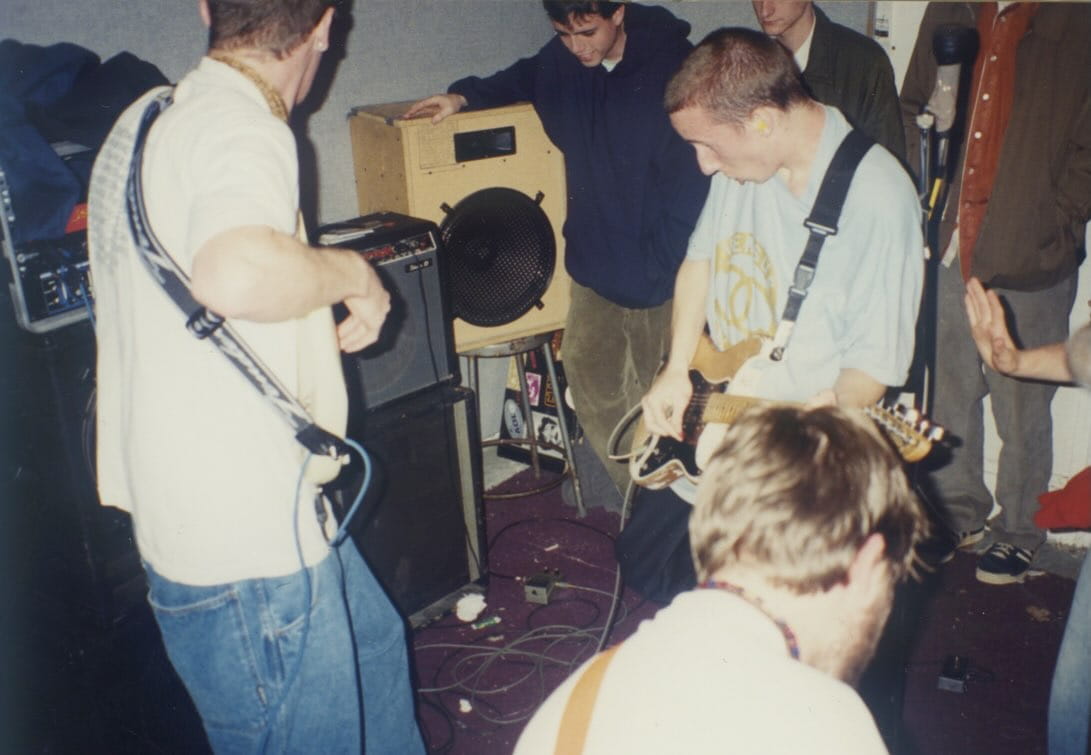
Jim’s memory of the same period starts with booking shows before streaming and social media. DIY shows did not have presale tickets, and promoters were not asking bands for follower counts and play numbers. Reputation, repeated shows and the music itself carried more of the load. He sees a layer of professional behaviour over DIY music now that he finds unnecessary.
“It’s easy to view old Nashville with sentimentality. Physically, this town has been paved over several times since then by growing layers of corporate gentrification that have turned it from a regular slightly run-down mid-size city into a mini Las Vegas.”
The underground has become much larger too. Jim sees entire groups of bands where there used to be one example of some obscure 1990s subgenre, enough that he sometimes finds it almost overwhelming. New DIY venues continue to appear as corporate venues open around the city every few months. He has also watched bands that would once have played houses or record shops sell VIP packages at chain venues.
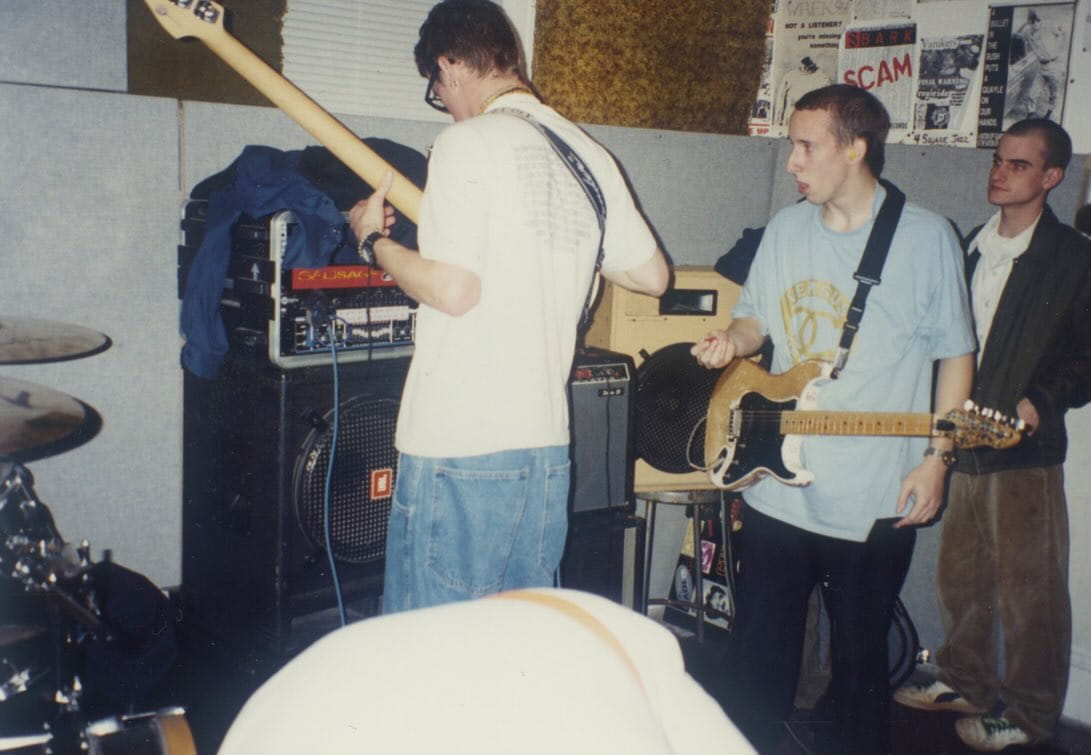
Serotonin travelled back to Atlanta for the Botch reunion. The huge room had big production, sound and lights. Botch vocalist Dave Verellen looked out at the crowd and asked, “Don’t you all just wish that this show was in a VFW hall?”
Jim was a child in the 1980s and a teenager in the mid-1990s. He now sees ordinary cultural choices pulled into political fights, down to the brand of beer somebody buys. He points to people saying increasingly extreme things online and in person, presidents naming and attacking individuals, and political figures weighing in on everyday cultural arguments.
He remembers plenty that was unfair in the earlier period. What worries him now is a sense of regression towards something that predates his own experience, alongside the erosion of civil liberties and the loss of social progress. He also points to aggressive technological adoption, constant surveillance and a growing inability to tolerate boredom. “I am a bit cynical about what is replacing a relatively recent way of life,” he said.
“The Price” was the first Serotonin recording Jim could remember making entirely in a modern DAW. Earlier records had been tracked to physical formats, including two-inch tape, four-tracks and ADAT. They used the convenience of the software and kept the performances close to what they actually played. Extensive drum editing and replacement were left alone, as was guitar re-amping.
Andrew kept his guitar rig basic too: a footswitch for clean and distortion, a volume pedal, tuner and noise gate. Complicated systems and virtual amps are far enough outside his world that he had no interest in rebuilding the setup around them. Jim is playing the same drums and cymbals. Andrew is still using the same Gibson guitars and Marshall. Newer influences can enter, but if a part stops sounding like Serotonin, they cut it even when they like it on its own.
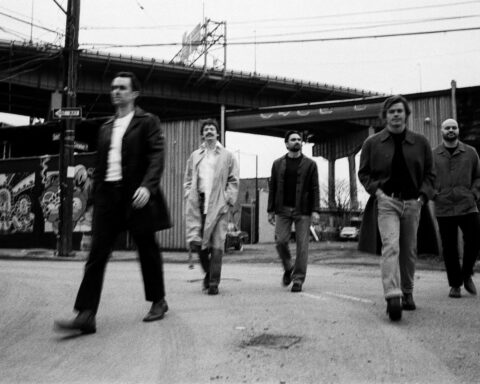
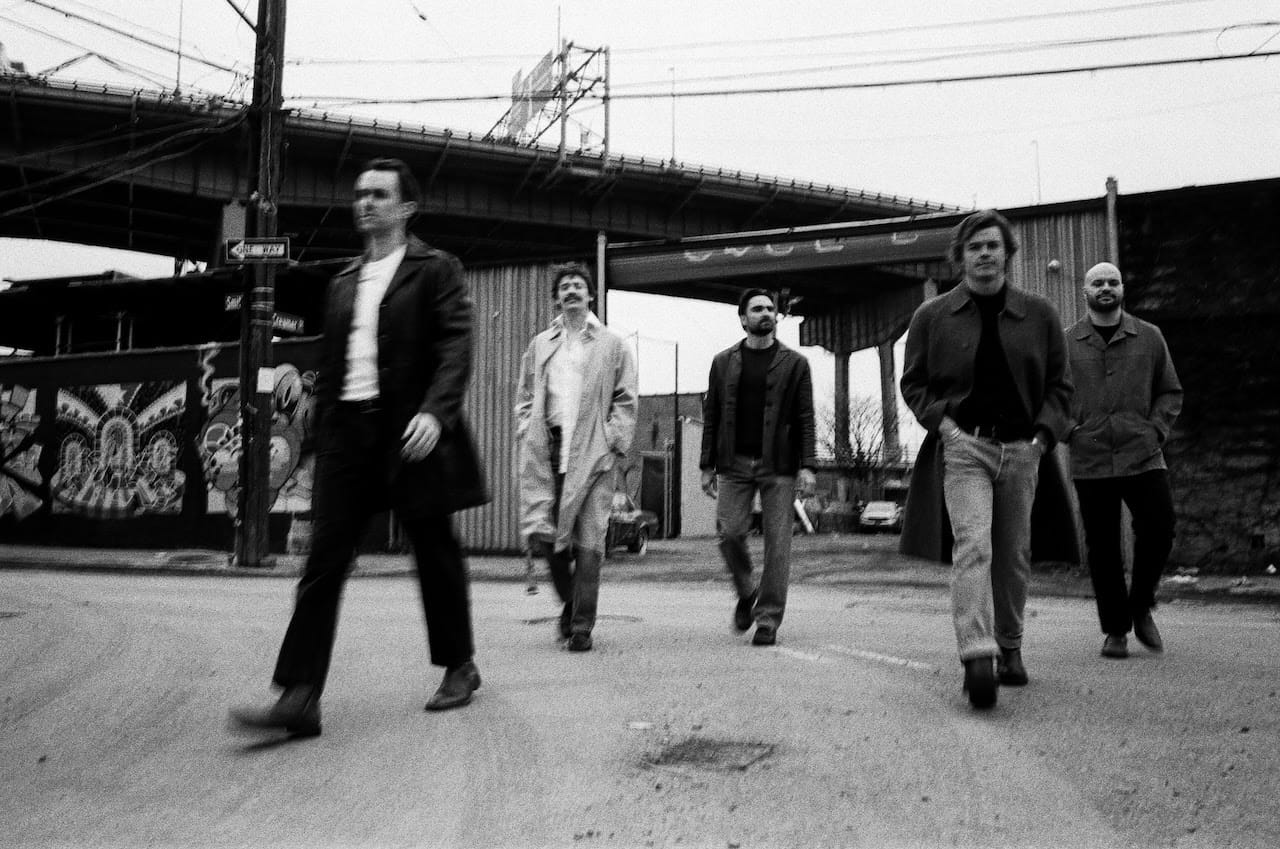
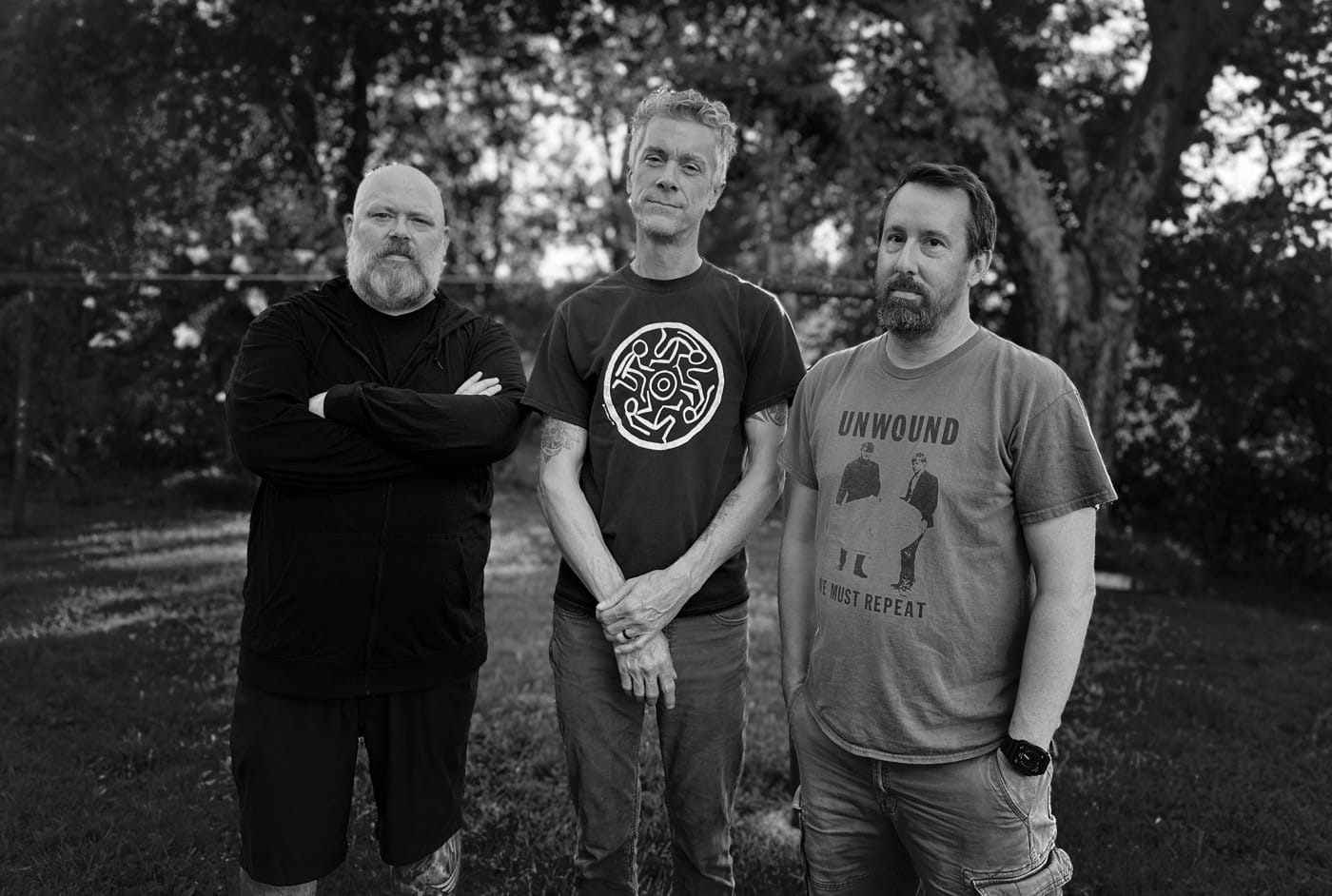
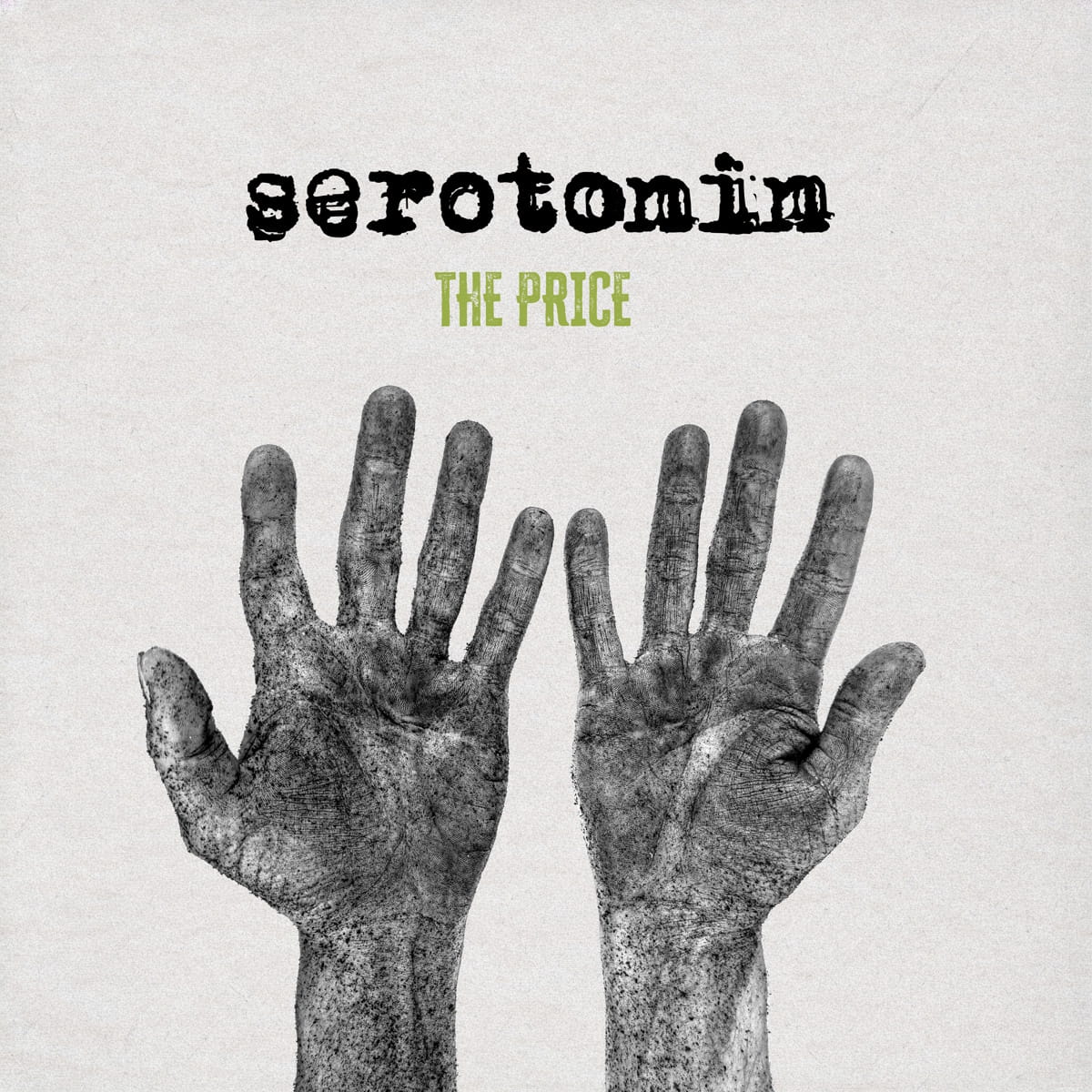
Jason recorded and mixed “The Price” at Twin Oak Recordings between May 2025 and February 2026, and Brad Boatright mastered it at Audiosiege. Jim handled the artwork and layout, Rachel Valosik took the band photo, and the hand model is credited simply as “gray creasy.” Andrew Walker is on guitar and vocals, Jim on drums and Jason on bass.
The band have already written more songs beyond these four. US preorders are up through MerchNow and Immigrant Sun Records’ Bandcamp, with European orders through Coretex Records. Immigrant Sun have a black test press limited to 20 copies, black/green smoke and black/green splatter versions limited to 100 each, and a one-off Burlington Special that has already sold out. “The Price” arrives September 25.
Jim said, “We are trying to keep it both emotional and technical, true to our old sounds but with a little evolution or maturation. I’d like to think our young selves would approve of the new material.”