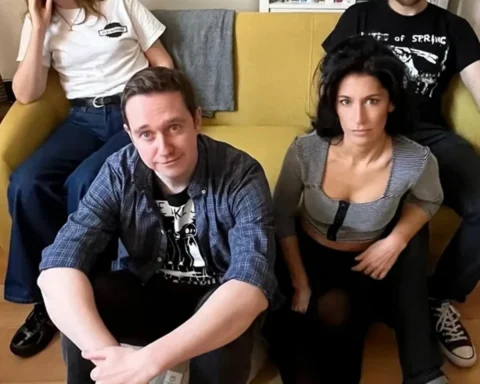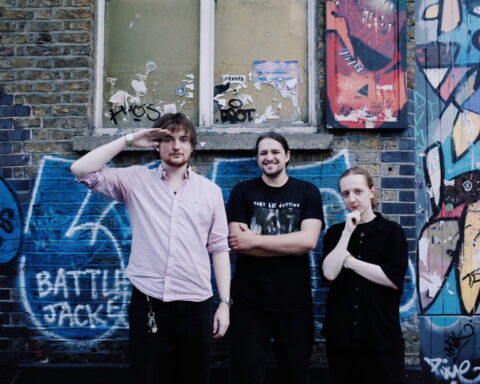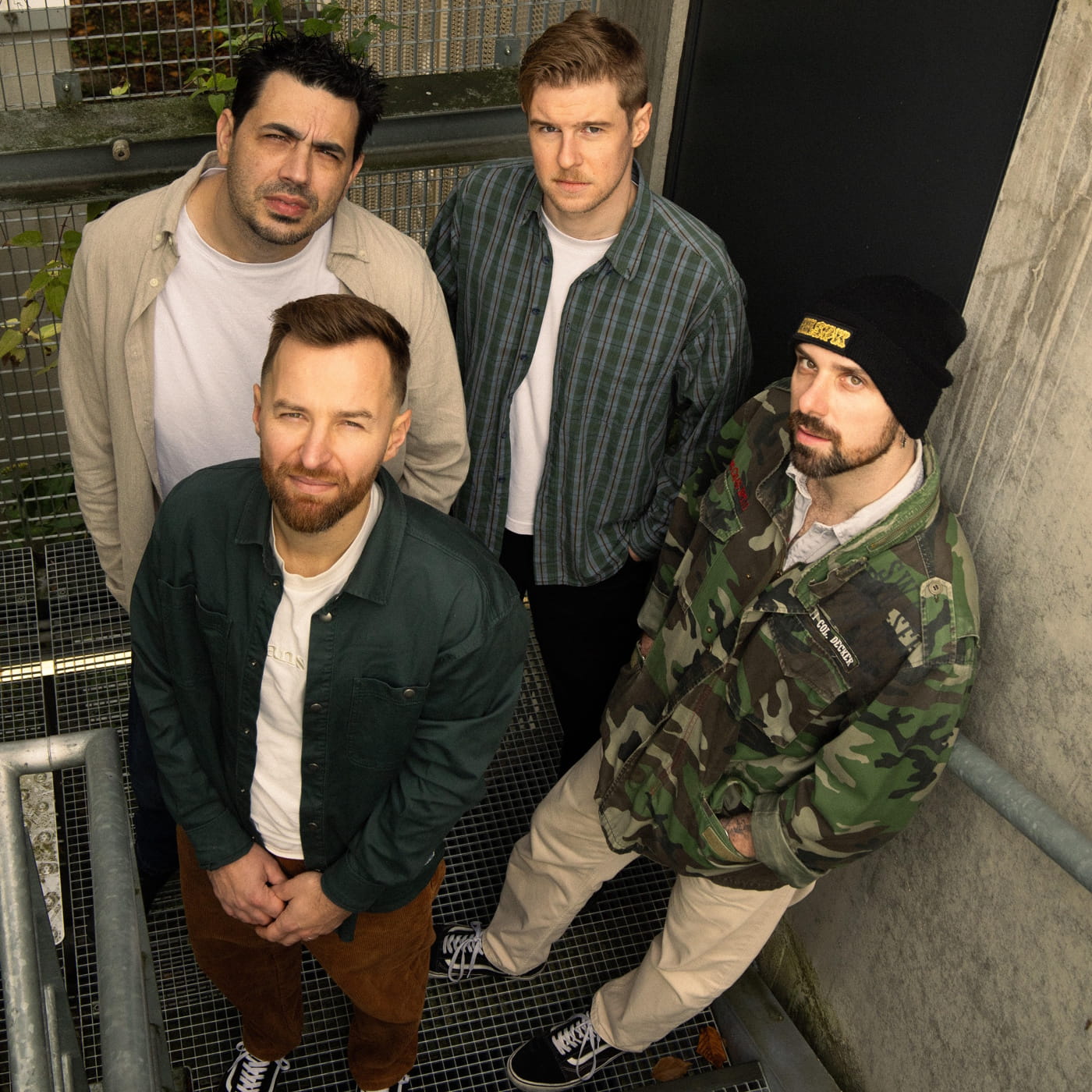


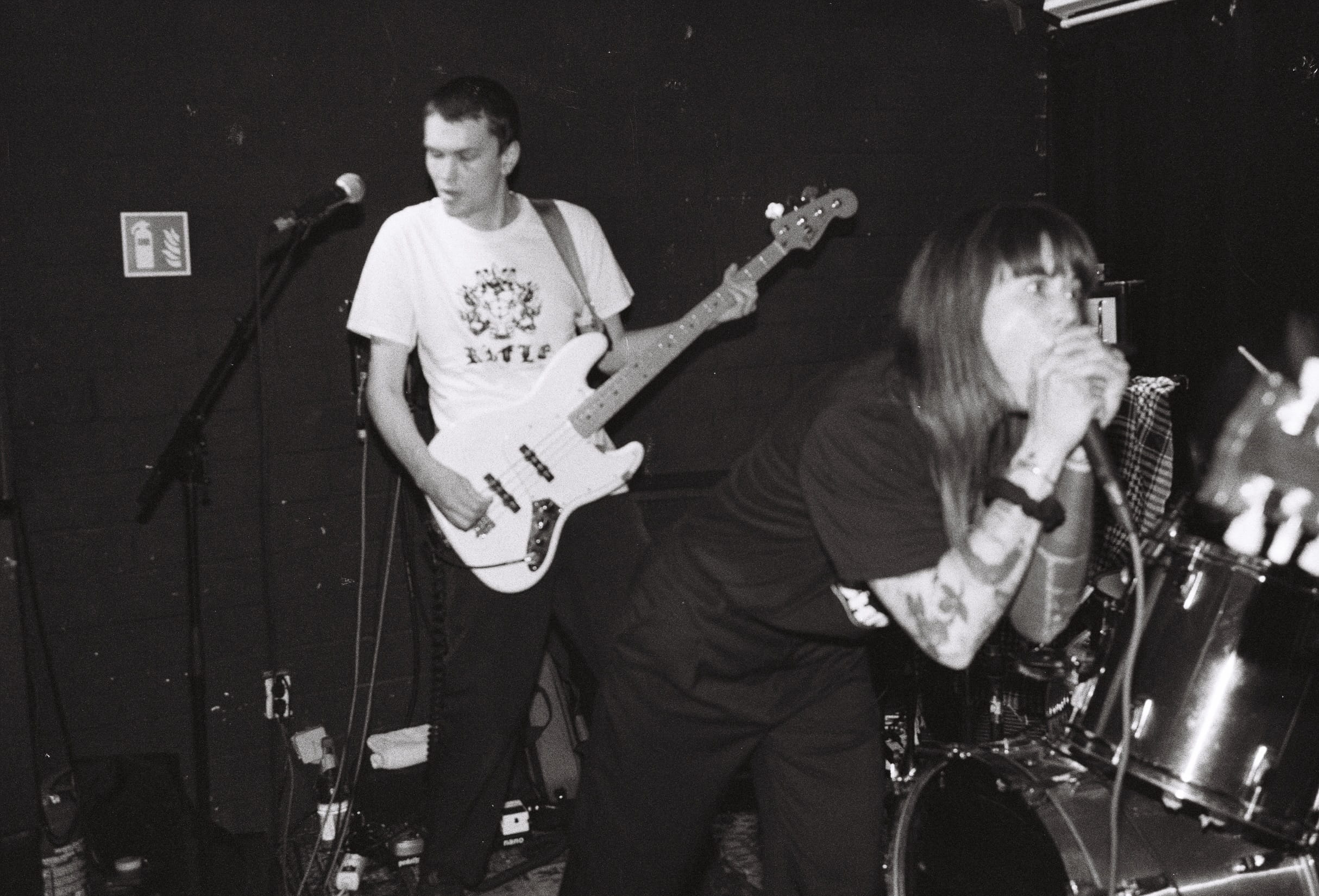
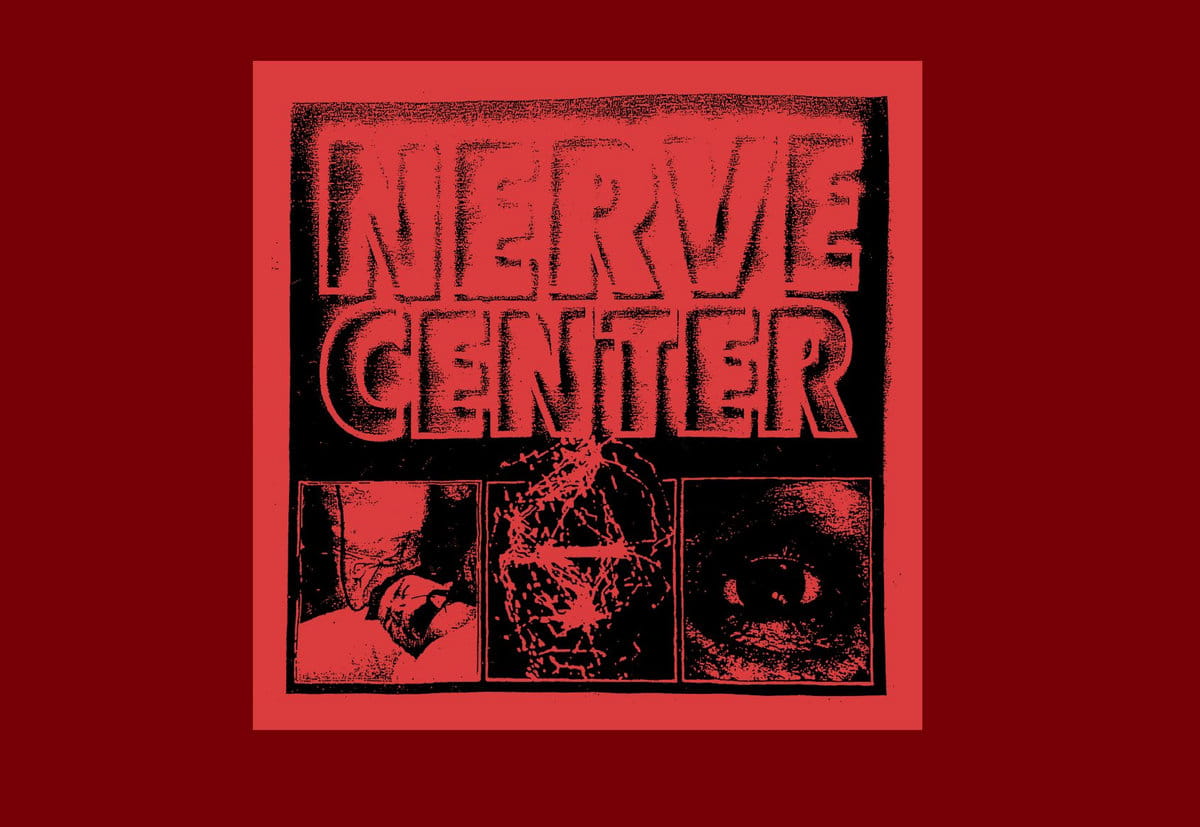
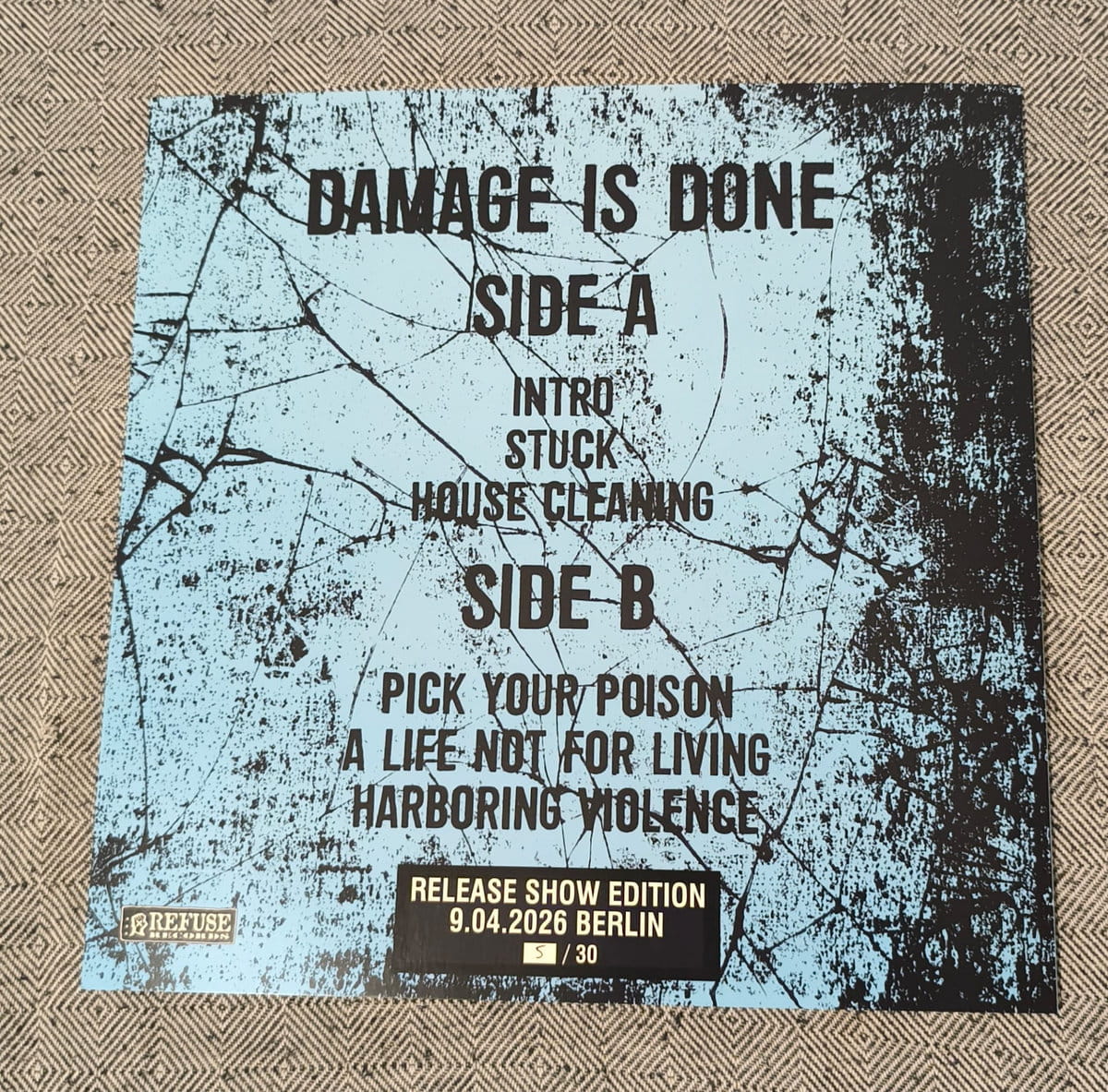
There’s plenty of anger on “Damage is done“, the first 12-inch from Berlin’s Nerve Center. Betrayal, financial hardship, environmental destruction and the smaller cruelties people inflict on one another run through five songs of noisy, mid-tempo hardcore, with stomping riffs, blown-out feedback and vocals covered in reverb. A couple of years ago, singer Julia and guitarist Hugo were just getting together to share music and work on a few ideas. They eventually reached a point where recording those songs seemed like the only way to keep them from disappearing altogether.
The band now have a four-piece line-up, a release through Refuse Records and a growing number of shows behind them. Their beginnings were considerably less organised.
Back in 2024, Julia was learning bass, Hugo was playing guitar, and their sessions were mostly an excuse to hang out. Hugo already had LÖRI, Soplon and his earlier experience in Reciklaje behind him. His other work was continuing, and nobody had settled on what Nerve Center should become.
“We had no real plan in the beginning, what it is or were it should be going. That’s why we called it side project, besides it was/is still a side project of Hugo’s & Donovan’s main project. It was more like fun hang-outs talking and sharing music and me learning the bass and somehow we came up with some songs and the idea of getting a band together grew.”
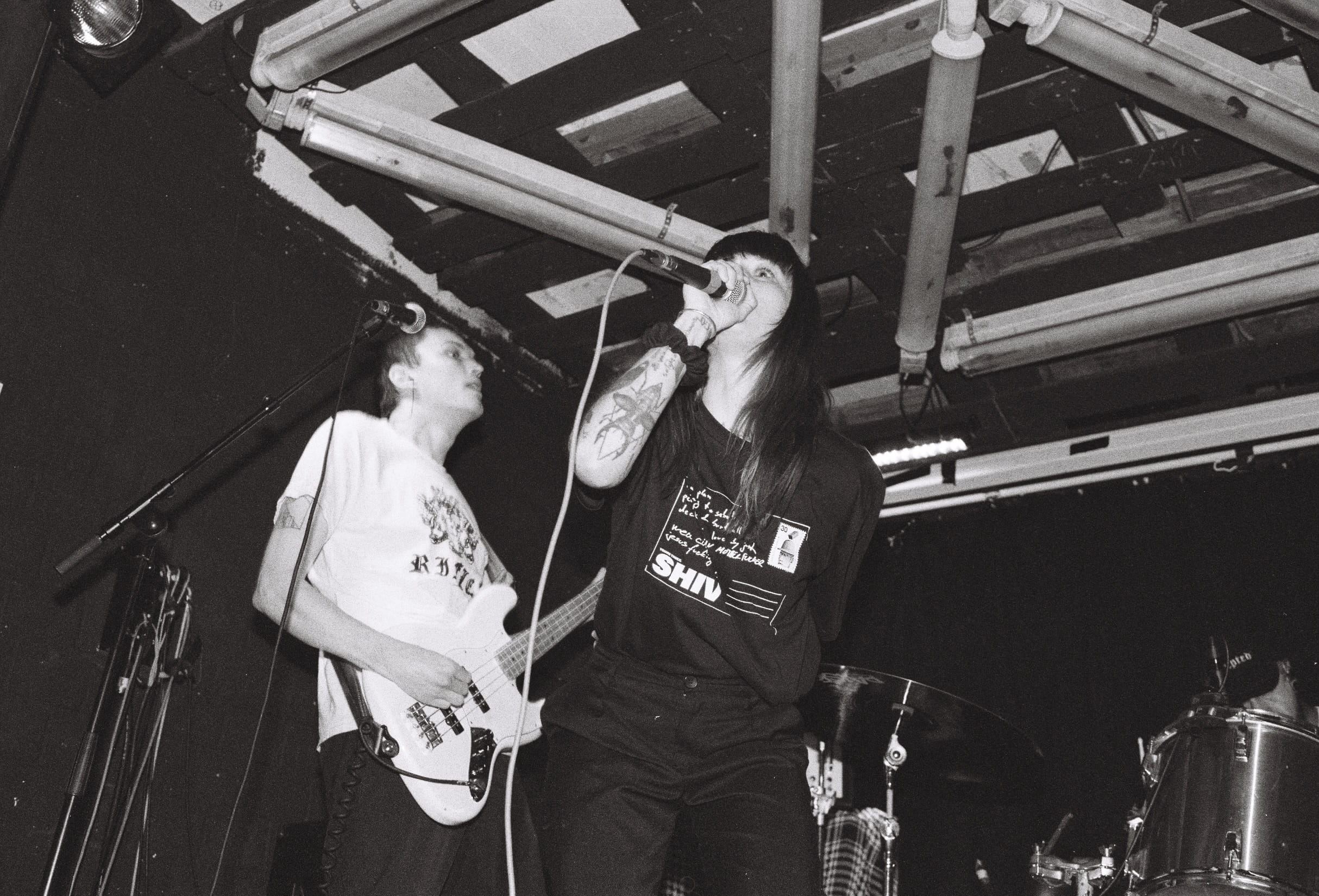
Julia and Hugo gradually put together enough music to consider finding a drummer. Julia invited a friend, and the three of them managed to work up six song drafts. Unfortunately, their new drummer couldn’t continue because of work and personal commitments.
They struggled to find a replacement. Rehearsals stopped, the songs sat around, and the prospect of putting together a proper band started looking increasingly remote.
“And we felt like it could also be the end, so we decided let’s record what we have so we can at least safe the songs,” Hugo remembered.
The five songs they eventually recorded existed as rough phone recordings, without vocals. They were enough to give another drummer an idea of what Julia and Hugo had been working on.
Donovan came in during summer 2025. He already knew Hugo through their shared involvement in LÖRI, and his previous bands included D’co and Korre Sangre. The two had originally met through a mutual friend from Mexico.
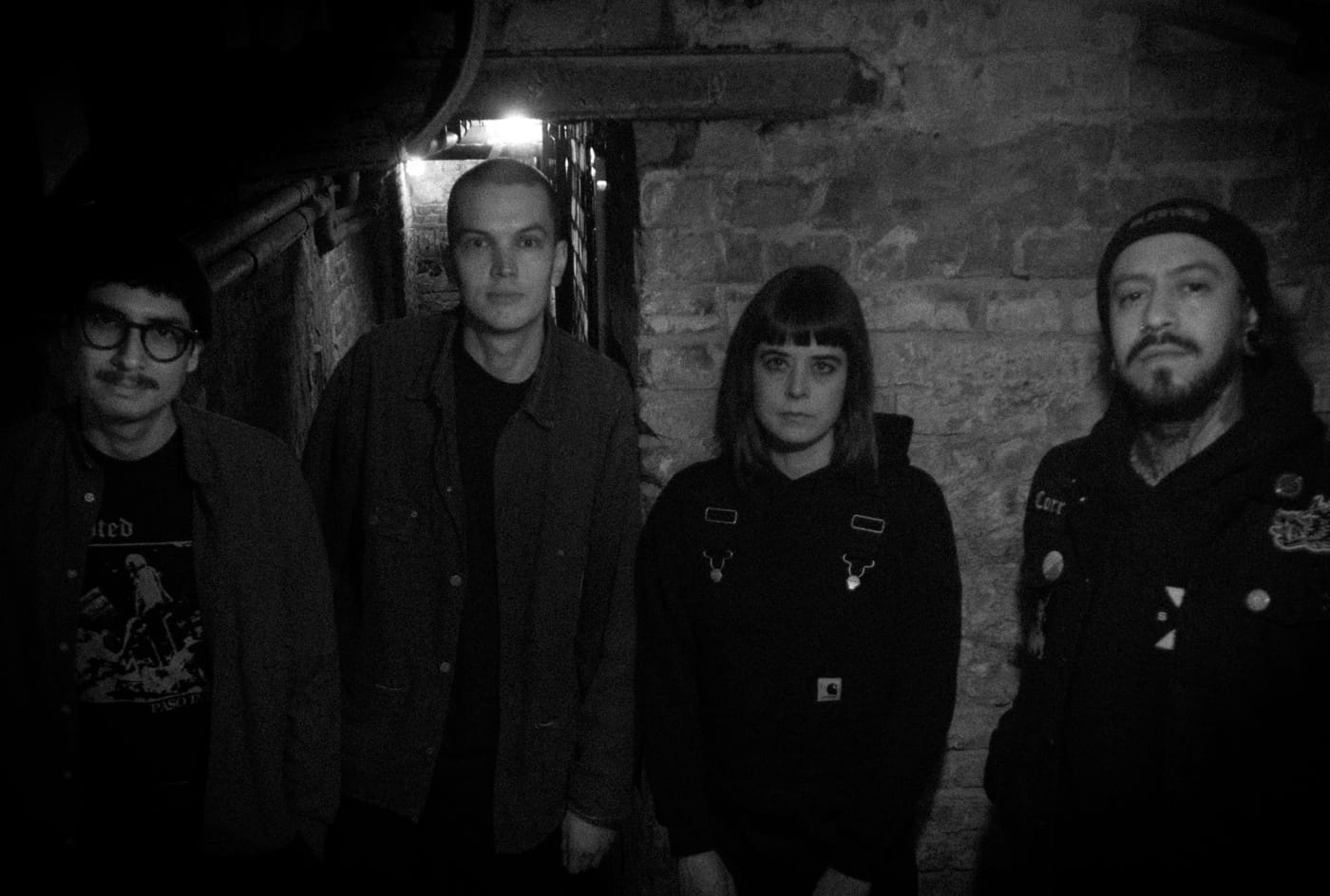
Initially, Donovan was helping them record the songs. His arrival also brought a different feel to the drum parts, even though there was very little time to work together before the studio session.
“The Songs were ‘ready’ for the most part in structure and vibe and after adding my drum parts I knew way more in which direction it was going. Cause we only had 2 or 3 rehearsals together before going to the studio to record.”
The entire first Nerve Center recording was made with Julia on vocals and bass, Hugo on guitar and additional noise, and Donovan behind the drums.
Wyświetl ten post na Instagramie
Julia had never sung before starting the band. Playing bass was already a challenge, and doing both at once proved particularly difficult.
She also had her own reasons for wanting to record the two parts herself.
“Since we didn’t know if we continue as a band or just ending up to keep the recordings as a memory, it didn’t make sense to involve another person at that point. But i also kinda wanted to record it both, since we put a lot of time in it.”
She recorded the vocals after the songs had been worked out instrumentally. Donovan wouldn’t hear the completed vocal versions until considerably later.
“I actually never heard the songs with vocals until the mix & master was done and that changed even more my perception of the whole project after listen the final songs.”
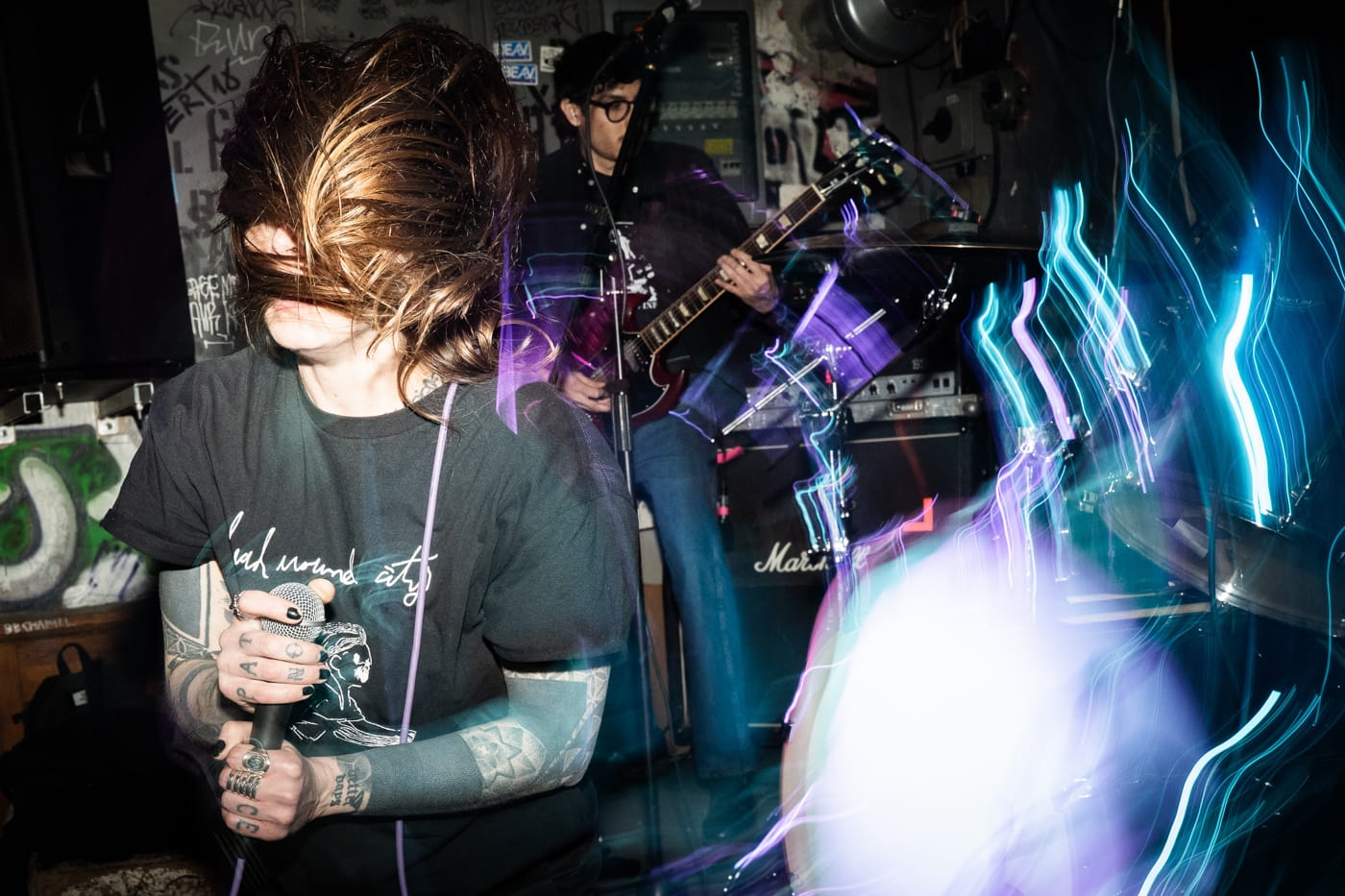
Give their raw offering a good listen and you’ll instantly see that Julia’s vocals are now a substantial part of the record’s character. They sit behind a layer of reverb, giving the words a rough, slightly distant quality against the weight of the guitars and drums.
The lyrics themselves are direct, and some of them make for pretty uncomfortable reading.
“Stuck” deals with an internal struggle that keeps getting worse. Its narrator is trapped inside their own thoughts, unable to escape something that seems to be consuming them. The words describe building walls, keeping up appearances and going through routines that offer little relief.
Wyświetl ten post na Instagramie
“Fake routines” is an especially plain way of putting it. Julia repeats the feeling of never doing enough, despite continuing to try.
There is no specific diagnosis or personal event attached to the song. The writing stays with the experience of being trapped and the exhaustion of having to keep fighting something that doesn’t go away.
The anger turns outwards on “House Cleaning“. Someone has betrayed the narrator’s trust, taken their words and used them against them. What follows is an absolute refusal to repair the relationship.
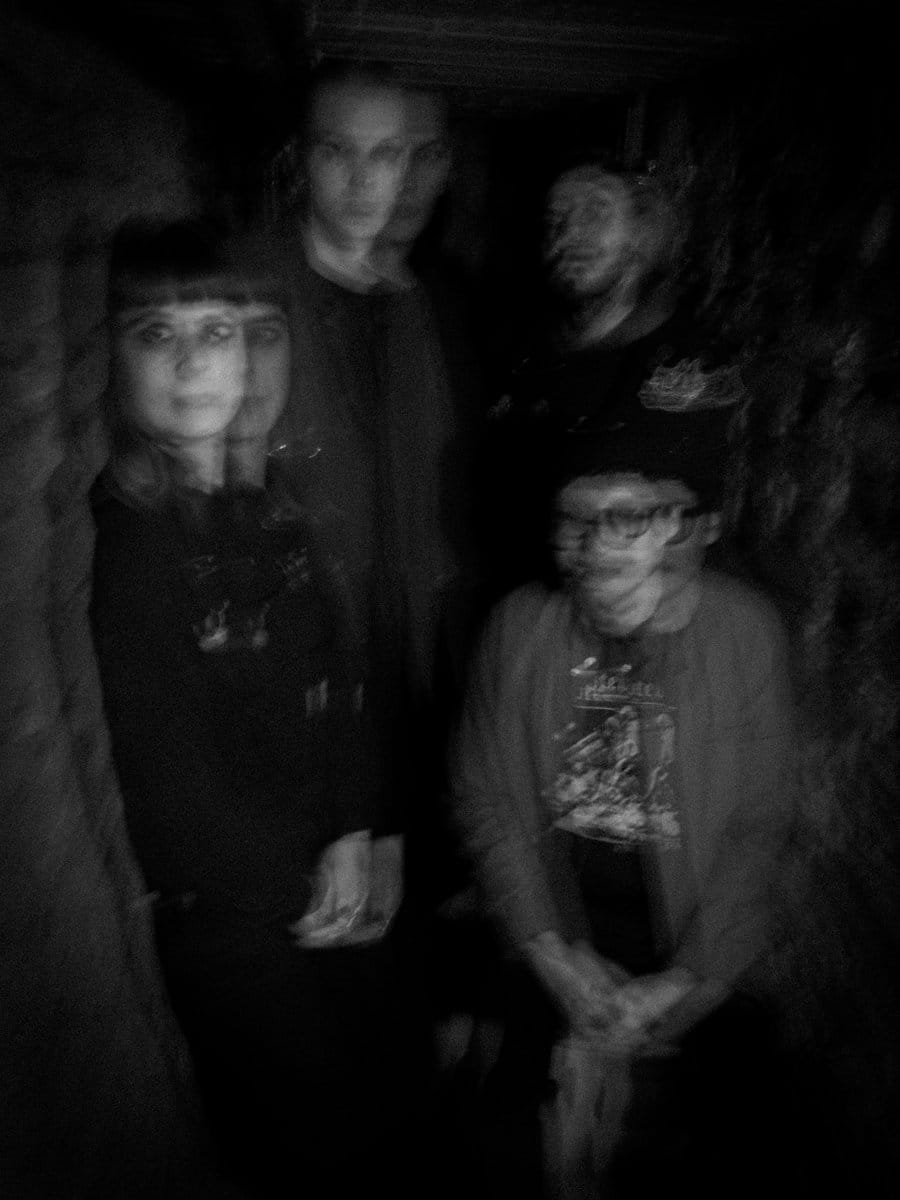
The lyrics return repeatedly to the same decision. There will be no second chance.
The song’s opening image is particularly nasty, with a rat in the house and the threat of burning it out. The accusation becomes more personal as the words continue. Someone who was supposed to have the narrator’s back has folded, broken the bond and shown no regret.
It’s a familiar subject in hardcore, but the writing here is unusually final. Julia leaves very little room for the relationship to recover.
She hasn’t identified the individuals or particular incidents behind these songs. Some subjects had been on her mind for a considerable time, while others were connected to things that happened shortly before the recording.
“Some topics were sitting with me for a while, but are also reactions to things happened shortly before recording. It’s a mix of dealing with personal issues and general problems and the anger and sadness of how we treat each other and the planet.”
Wyświetl ten post na Instagramie
That last point comes through particularly strongly on “Pick Your Poison“.
The lyrics move through forests being destroyed, growing landfills, polluted rivers and oceans, and rising temperatures. Greed is repeatedly identified as the cause, with the destruction of the natural world tied directly to the pursuit of profit.
Julia doesn’t leave much open to interpretation here. The song describes people treating the planet as something they can sell off, dump waste into and continue exploiting while the consequences accumulate.
“A Life Not For Living” takes aim at economic inequality and the conditions faced by people living from one paycheque to the next.
The rich continue getting richer while the poor remain poor. Debt keeps growing, there’s no money left to save, and even proper rest seems out of reach. The lyrics also accuse those in power of using fear and hatred to maintain the divisions between people.
It’s the shortest vocal track on the record, running just one minute and forty-five seconds, and the repeated references to debt and financial insecurity occupy a large part of it.
The final song, “Harboring Violence”, returns to the harm people cause one another.
Here, the subject is a series of apparently minor acts that are repeatedly dismissed. A hurtful remark, another small insult, somebody looking away when another person is in pain. The lyrics address someone who treats these things as harmless and refuses to acknowledge the damage.
“But tiny blades cut deep in the end”
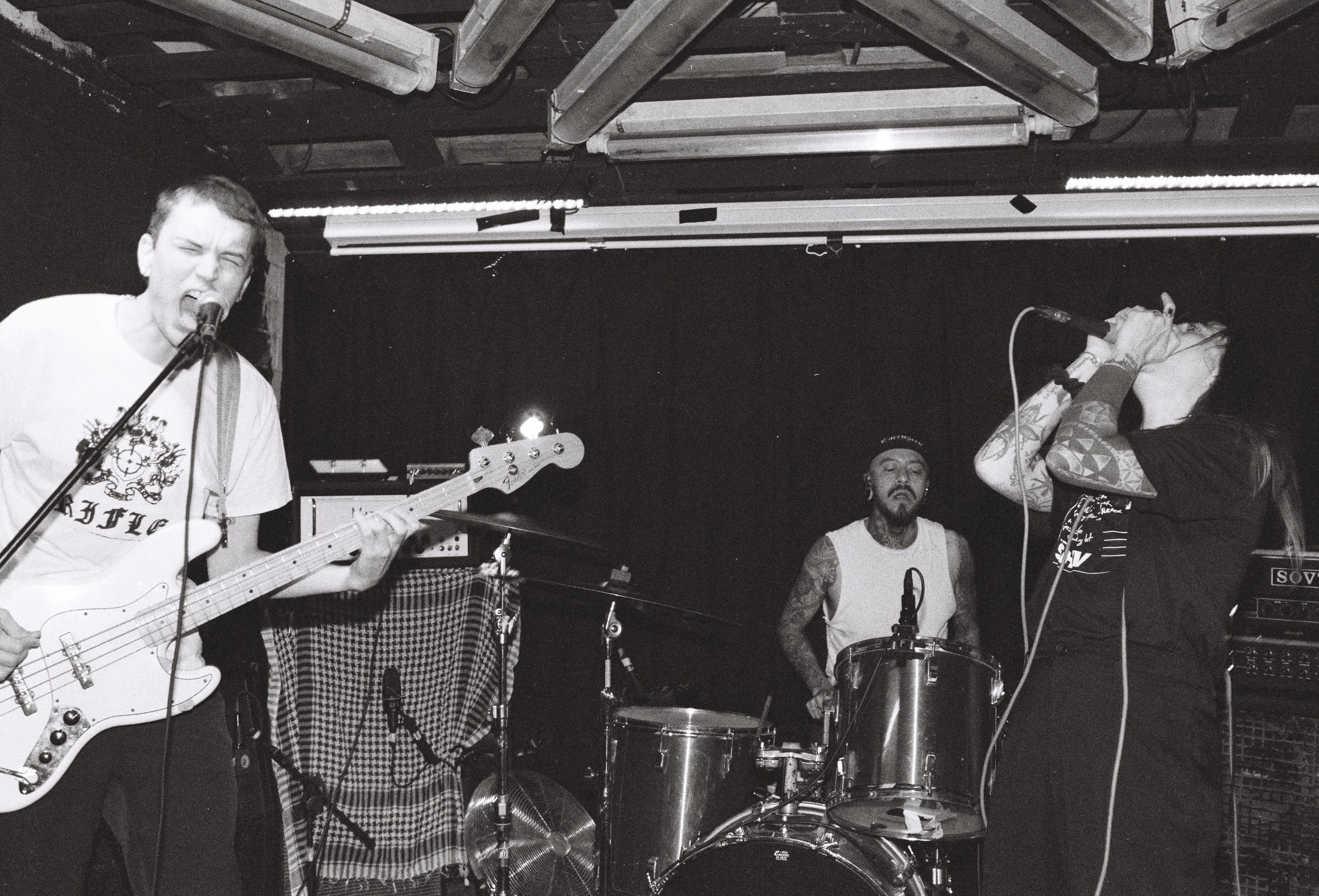
The final lines describe the same behaviour continuing day after day.
Across the five songs, Julia writes about experiences on very different scales, from what happens inside one person’s head to the destruction of the environment. The anger and sadness she mentioned run through the entire record, and the songs are quite blunt about where that anger is directed.
The instrumental side of Nerve Center has several different influences behind it.
Hugo’s years in Reciklaje gave him experience with d-beat, direct punk songwriting and the practical side of doing things yourself. In LÖRI, he spent considerably more time working with production, guitar effects, amplifier settings and samplers. Soplon brought sludge and an interest in groove into his playing.
He doesn’t consciously separate those experiences when writing with Nerve Center.
“That’s hard to answer because I don’t really think about it when I’m playing. But if I had to put it into words: Reciklaje brought the rawness, the d-beat side of things and the DIY spirit. LÖRI brought all the production background and everything I’ve learned about pedal usage, amp settings, samplers, etc. And Soplon has a lot of groove and sludge that maybe gets applied to the formula.”
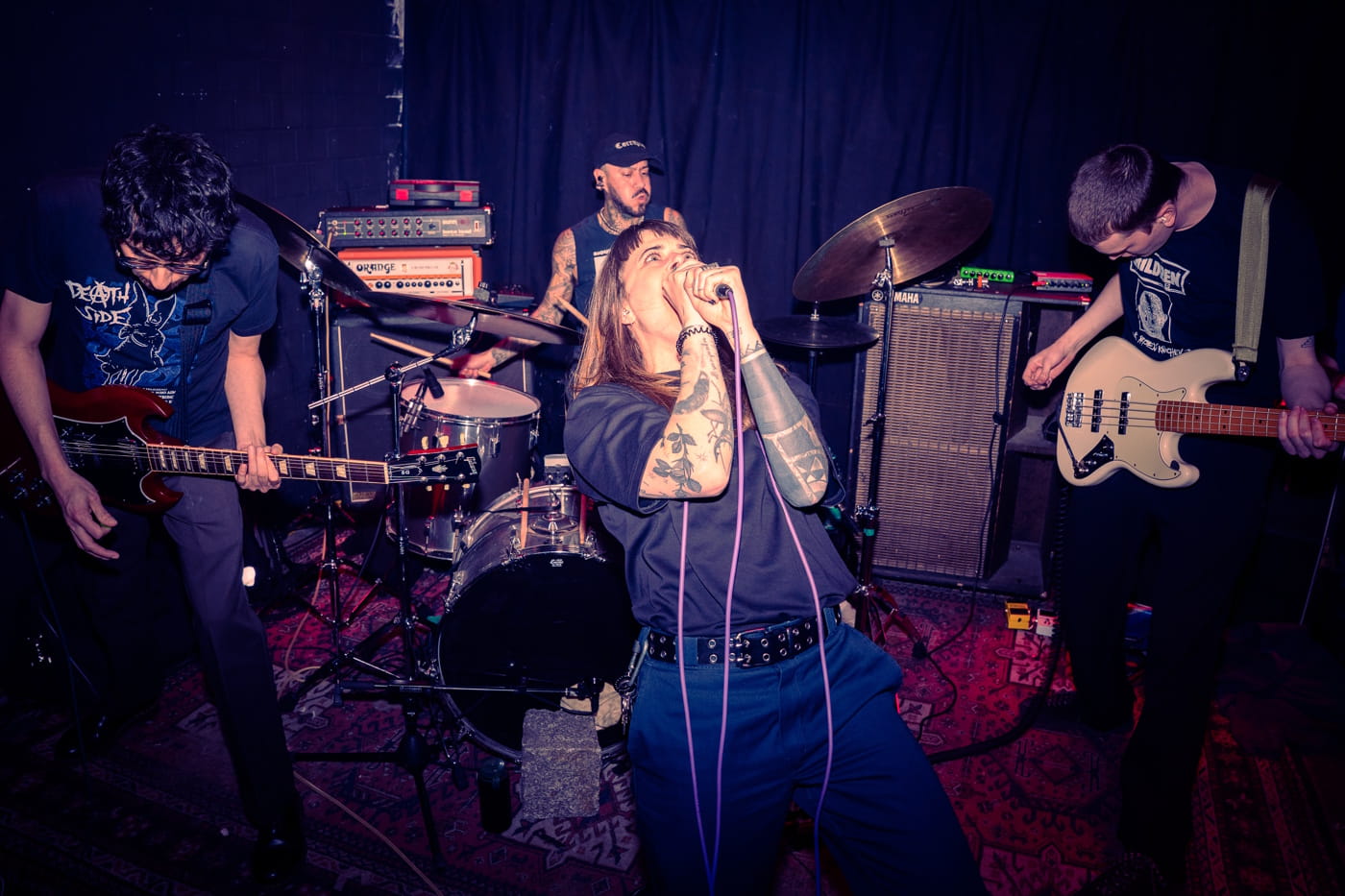
The resulting music moves through slower, stomping hardcore rhythms, with considerable guitar noise around the main riffs. There’s a d-beat background to Hugo’s playing, although the band’s preference for mid-tempo sections gives much of the record a heavier, more drawn-out feel.
He also wanted the recording to have additional layers of noise that would be difficult to produce with a straightforward guitar, bass and drums set-up.
The 59-second “Intro” is part of that approach, with feedback and drones also worked into the other songs.
“Those were intentionally created that way and I recorded some parts in the studio and some upfront. We added little drones here and there to give each song a bigger feeling, as well as the intro track and the feedback layers. We try to replicate them as much as we can live.”
Christian Ramisch recorded the songs at ADK Berlin. When it came to mixing, Hugo already had somebody in mind.
He had worked with Will Killingsworth several times before and appreciated what Will had done at Dead Air Studios. Records associated with Static Shock, Iron Lung and LVEUM were among the reasons Nerve Center wanted to work with him again.
“I’ve worked with Will many times before. We also really like the work he’s done on records from labels like Static Shock, Iron Lung and LVEUM, so it felt like a good fit for what we wanted. He really understood right away what we were looking for and helped enhance the songs while keeping the sound we wanted.”
For mastering, the band approached Charles Toshio at AudioByTosh/Panda Studios.
His previous work with SPY, World Peace and Gulch had caught their attention. Hugo wanted to bring together two particular approaches to hardcore production, drawing on Will’s experience with punk records and the more contemporary Bay Area sound associated with Tosh.
“We wanted to combine Will’s raw approach with Tosh’s more modern Bay Area Hardcore sound.”
Julia was pleased with how the finished recording brought the different instruments together.
“The songs sounded so much more powerful and energetic after mixing & mastering. Will & Tosh did such a good job to give each instrument room to shine.”
There was also a fair amount of work going into the visual side of the release. Julia and Hugo had already developed the main concept and had artwork prepared before Donovan took on the layout.
He assembled their ideas digitally and made suggestions about the presentation, particularly where he thought a change could improve the finished design. The artwork also involved @dirt.merchant.
With the music and visuals finished, Nerve Center had a record ready to release, although finding a label had never been a certainty.
Julia had known Robert from Refuse Records for years through the concerts he organised. They had become friends over time, and she appreciated the work he had put into the DIY hardcore and punk community.
She sent him the mix.
“There was no band connection to Refuse, however I know Robert for a long time from all the shows he put up and over the years we started to become friends.”
They were happy with the recordings but had very little live experience as Nerve Center. Julia was genuinely surprised that Robert wanted to put them out.
“To be honest, yes, we really liked the mix, but never really thought that anyone is going to put our music out since we were just a new band and never really played before, so we are more than lucky and grateful for Robert’s trust and to be on Refuse.”
By then, Nerve Center had also received their first invitation to play live.
It was time to do something about the bass situation.
Julia had managed to record both bass and vocals, but singing and playing simultaneously was still difficult. Bringing in another musician would allow her to concentrate on vocals, and the band began looking for somebody who could take over the existing bass parts.
Jakob was playing in Shiv, and he had already met Hugo and Donovan when Shiv and LÖRI appeared together on a concert bill. Shiv vocalist Kobi helped connect him with Nerve Center.
He arrived after the record had been made, so his first job was learning what Julia had recorded.
“Julia provided me with the incredible service of handwritten tabs, and I loved the tracks right away, so it was very easy to learn.”
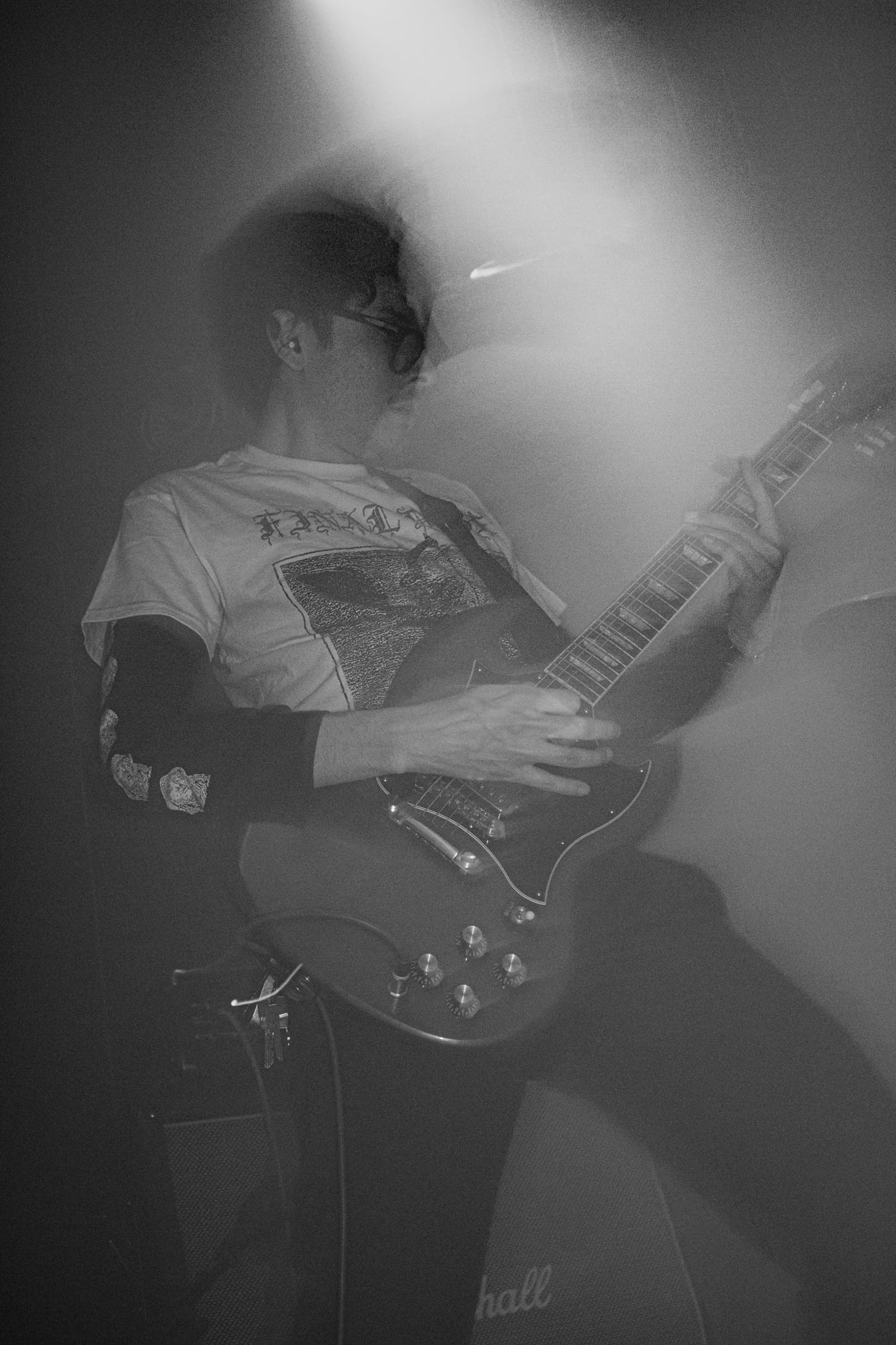
The handwritten tablatures made the process straightforward. Jakob kept the original bass parts as his starting point, adding some ideas of his own where he thought they would work.
He approaches Hugo’s newer riffs in much the same way, working out the existing ideas and contributing to the arrangement.
The transition into a four-piece went smoothly, and Jakob was pleased with the opportunity to join a band that already had its first recordings finished.
“Honestly, it was amazing. We were ready to play and knew what we were doing, but I still had the feeling I could add to the power of it all, if that makes sense.”
Julia enjoyed being able to concentrate on singing, and having Donovan and Jakob involved gave the band more energy when they played together.
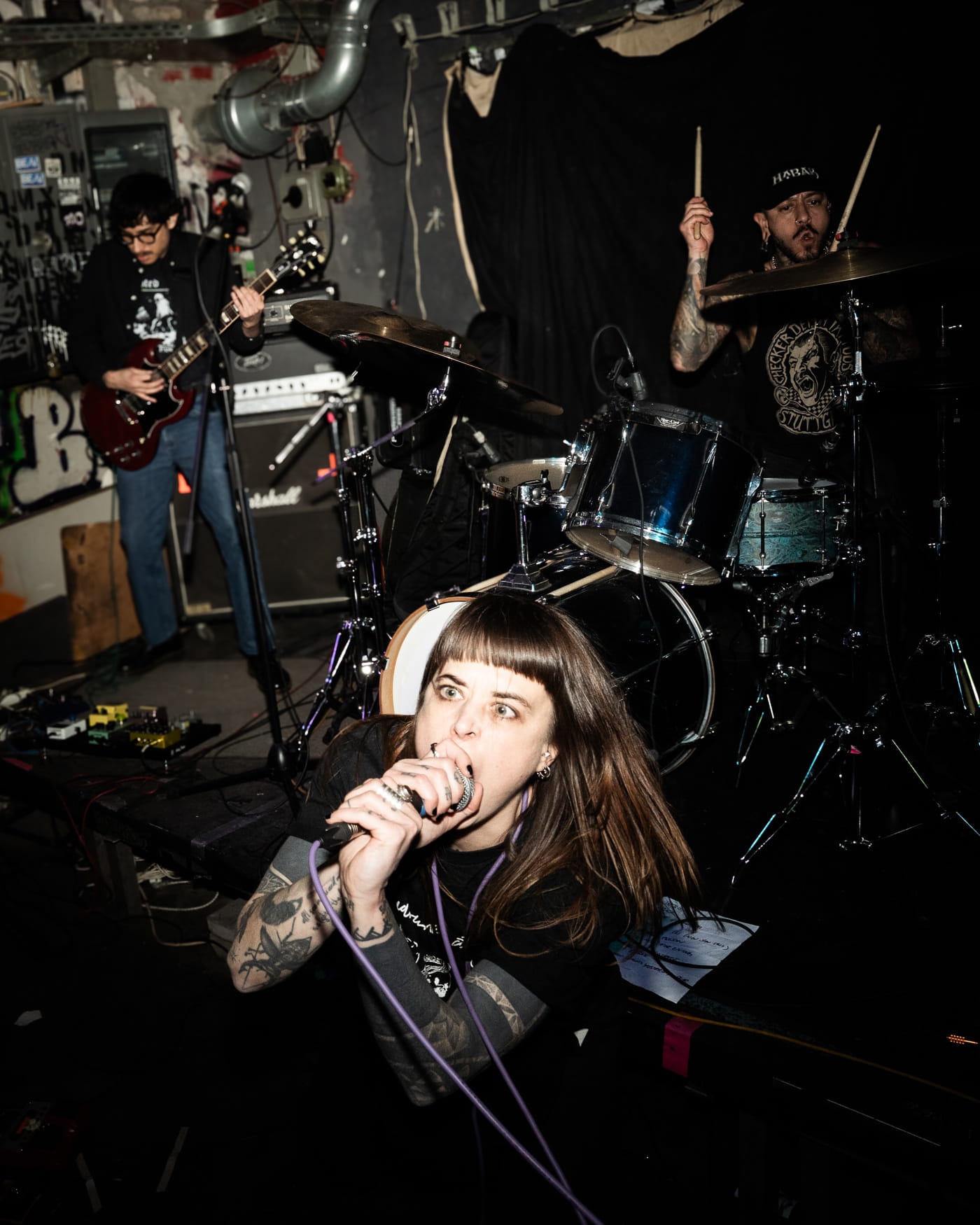
The four musicians have quite different histories in Berlin’s underground, although there are plenty of shared connections between them.
Julia has lived in the city since 2009. She initially knew one childhood friend who was already there, and that friend introduced her to the local punk community through the vegan Küfa at Fischladen.
The weekly dinners gave her an opportunity to meet people, find out about venues and become familiar with the different parts of the scene.
“When I moved to Berlin in ‘09 I had one childhood friend who was already living here and he took me to the vegan küfa at Fischladen and I immediately felt at home. Having weekly dinner with punk kids was a really nice start to get to know the scene, places and people.”
Donovan’s introduction came a few years later, around 2013.
His friend Iban from Insuiciety took him around Berlin’s underground and showed him different DIY spaces. Donovan was particularly struck by the number of bands and people he encountered, and those experiences encouraged him to return to playing drums live.
He remembers Mönster, Hatehug, Cult Values, The Now Denial, Crack Underpreasure and Henry Fonda among the bands he discovered through Iban and his friends.
They provided an introduction to the community that Donovan would continue playing in over the following years.
“Bands i can remember from that time are, Mönster, Hatehug, Cult Values, The Now Denial, Crack Underpreasure, Henry Fonda and other bands from friends of my buddy Iban that he introduced me to, were a great starting point for me to feel like home, from that point it all changed and snowballed until nowadays.”
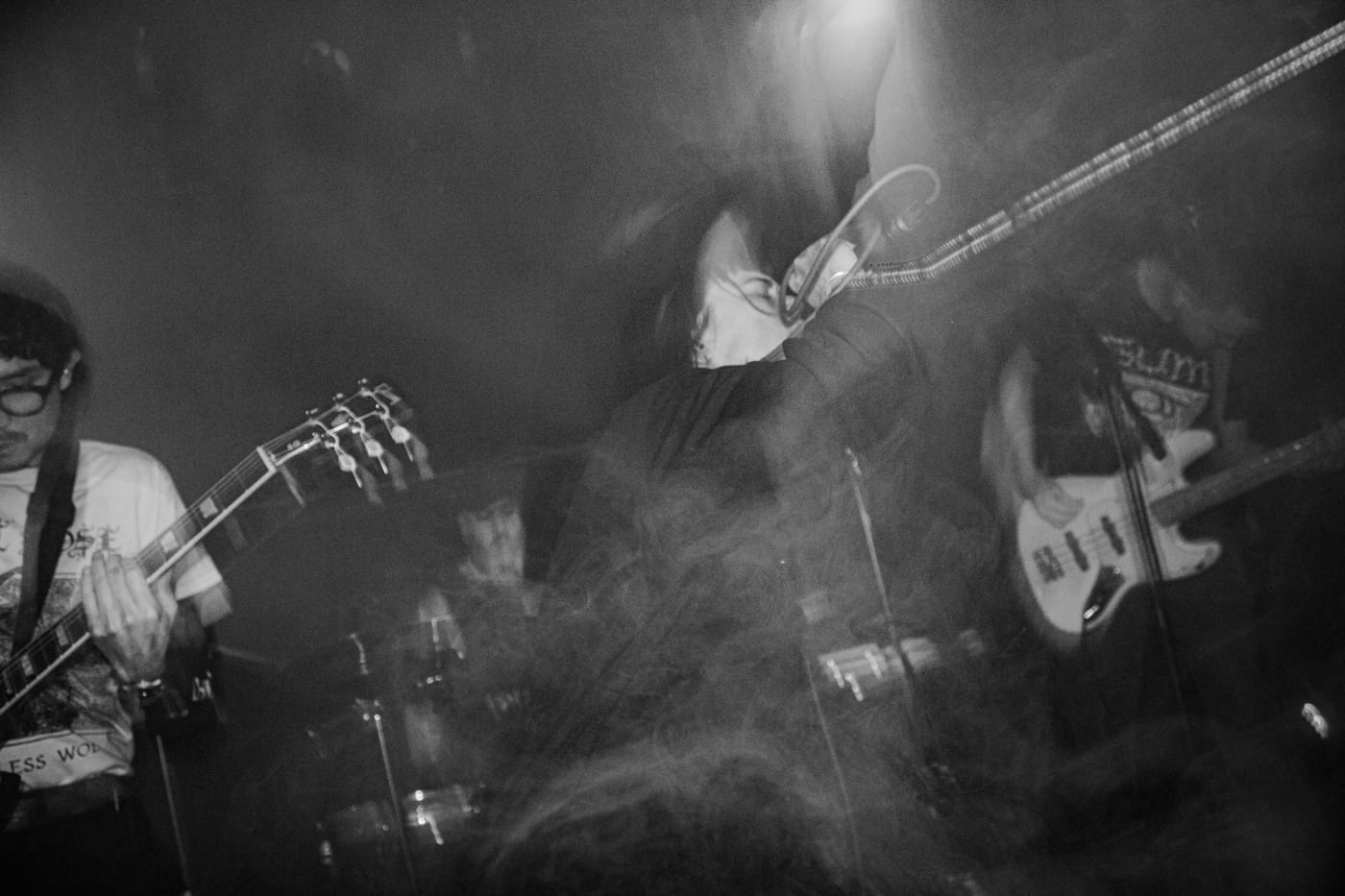
Hugo was also attracted by Berlin’s punk community when he moved to the city.
“I think Berlin overall is a city where you can breathe punk.”
He has seen the city change, and he acknowledges the continuing effects of gentrification. Collective spaces and squats remain part of the punk community he knows.
One of the things he particularly appreciates is how many different shows can happen on the same evening. Several punk and hardcore gigs might be taking place across the city, in different venues and with different audiences.
Hugo and the other members regularly attend shows outside a single genre, meeting people through whatever happens to interest them.
Jakob is particularly fond of OGH, which he considers his favourite venue for playing and watching bands.
He enjoys the openness of the place and the ease with which people who have never met can end up talking.
“Every time I’m there, I talk to someone I’ve never met before, make a new friend, etc. There’s something in the air.”
Julia also counts OGH among the Berlin venues she likes.
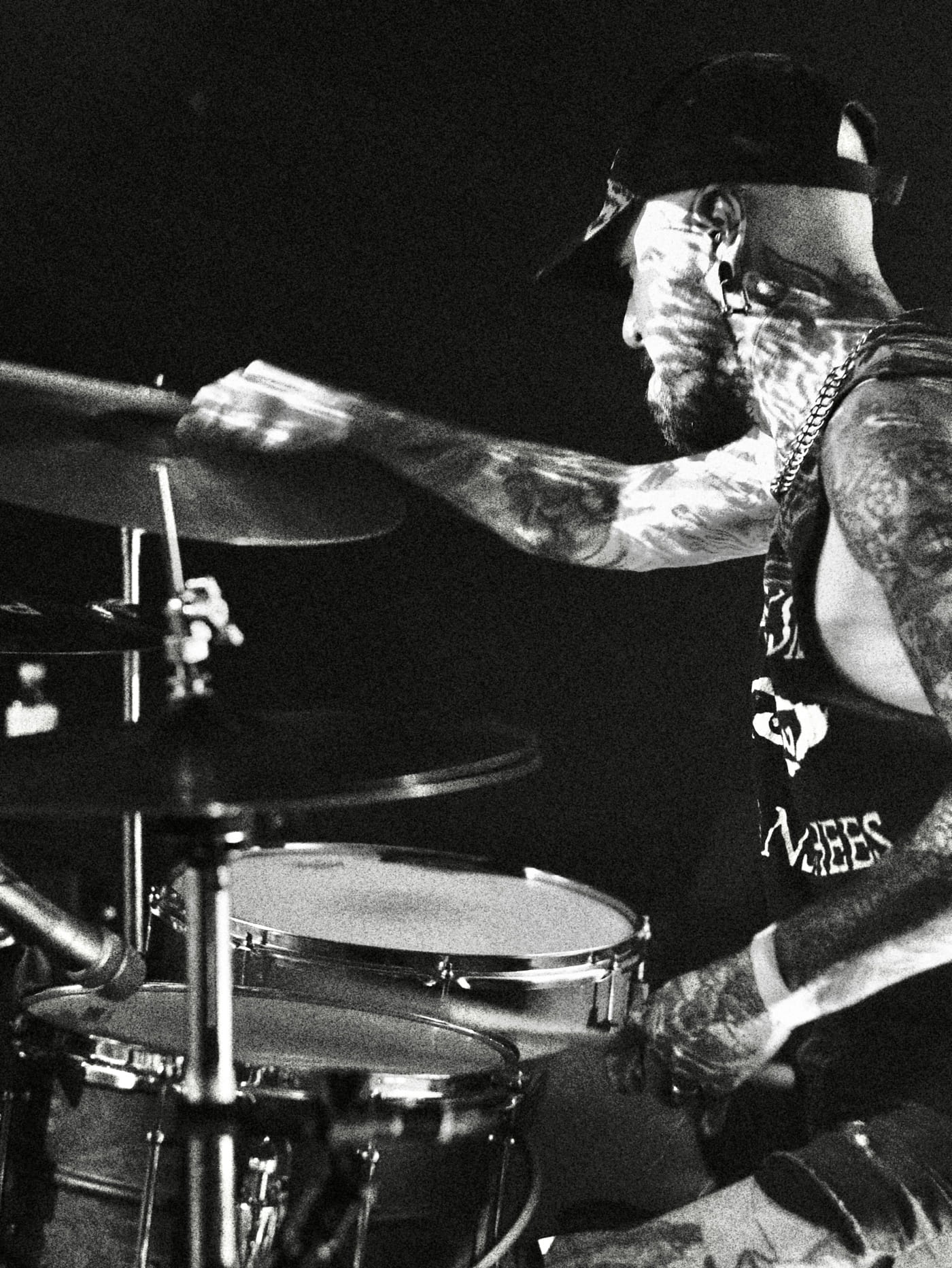
All those years of attending gigs, playing in other bands and getting to know people had already brought the members of Nerve Center together before the band had a finished line-up.
Their live experience has since taken them into some quite different spaces.
One early opportunity was a show at Berlin’s SO36 alongside Nothing and Haywire. The invitation came as a surprise, and the band were grateful for the chance to play a venue of that size.
Two days later, they were playing in a basement in Prenzlauer Berg with Urban Sprawl and Blockage.
The basement show was closer to the kind of gigs they had spent years attending, and the band found it easier to connect with people in that environment.
“The Nothing show was actually a surprise – playing SO36 was super surreal and such a big opportunity – super grateful for that, but the basement and DIY venues feel more like home, of course. In these small places you have more a chance to connect with people and shows are affordable for the most.”
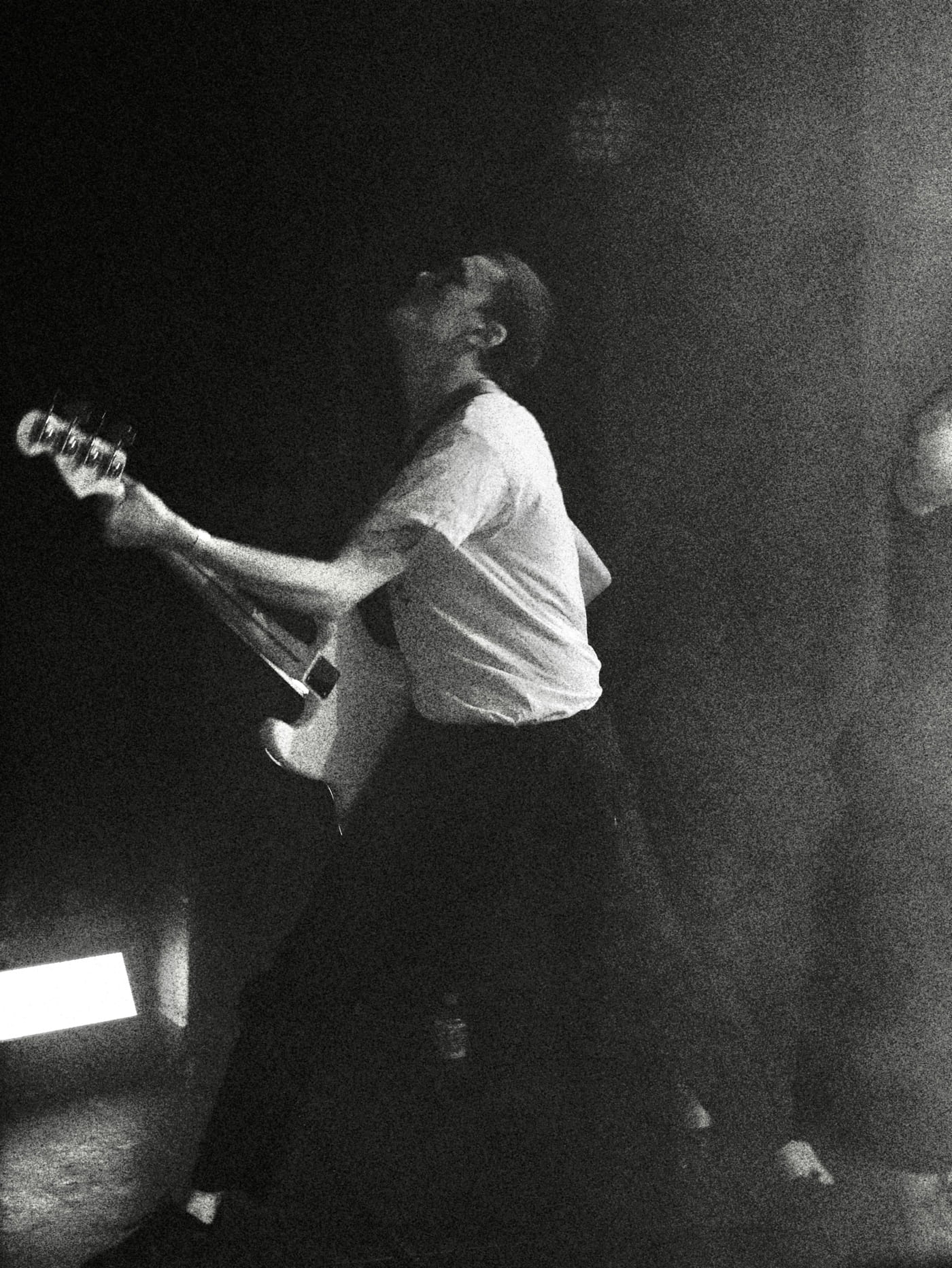
They’ve also played aboard MS Stubnitz in Hamburg, on a bill largely associated with screamo and emoviolence.
That evening was particularly enjoyable because Letterbombs, who were already friends of Hugo and Donovan, were also involved.
Playing with bands from different parts of the punk underground has given Nerve Center opportunities to reach people who might otherwise never come across their music.
The members have little interest in keeping themselves within one particular type of hardcore concert. Their own musical histories already reach across several different areas of punk, and they enjoy meeting musicians and audiences from those scenes.
“So, whenever we play a show out of the typical hardcore bill, seems like a good chance to show our music to a new audience that probably will not discover us otherwise. Every show is unique, but in the end, it’s all Punk. It’s a privilege to meet all these people from different areas.”
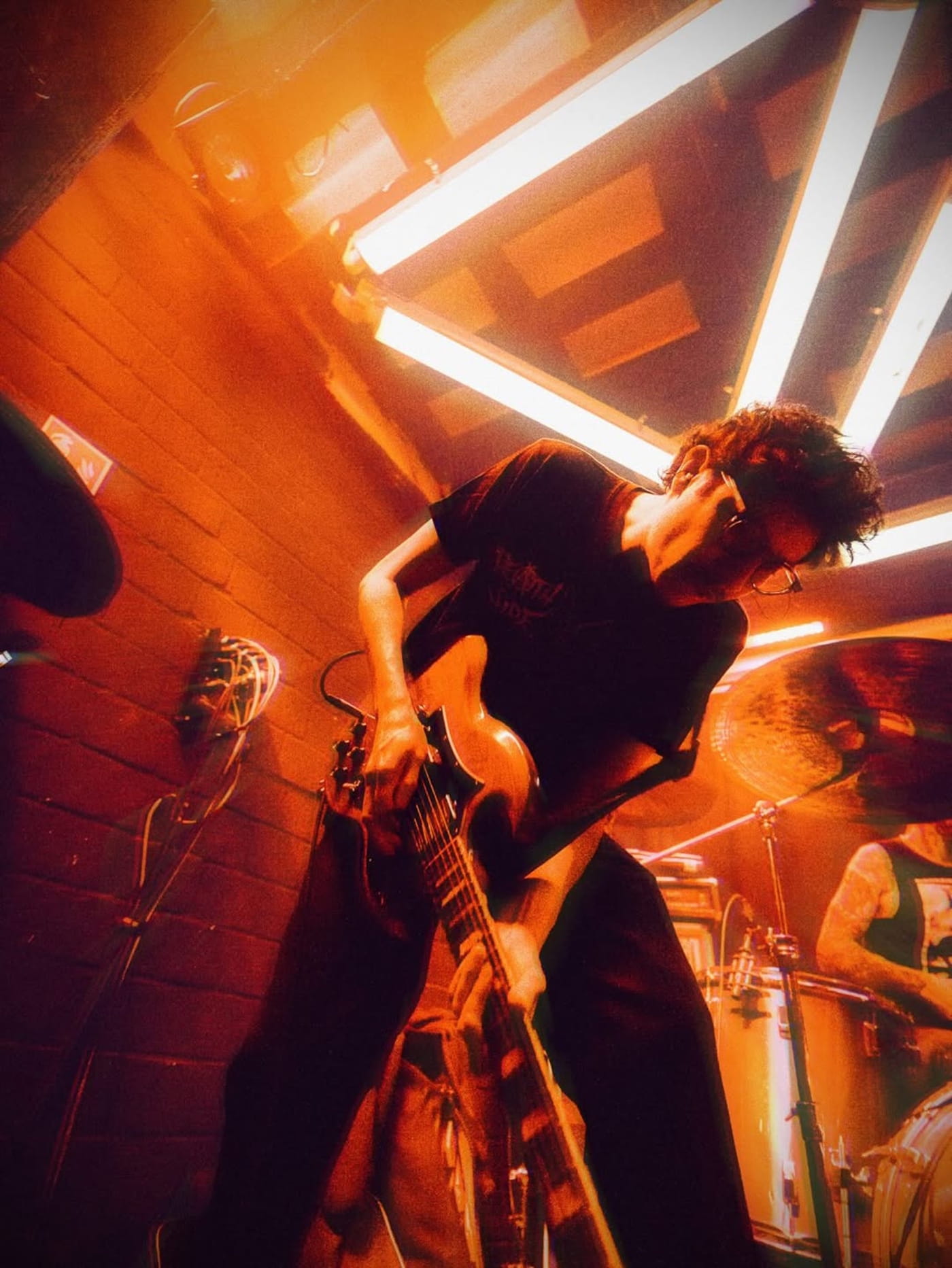
Nerve Center are now writing together as a four-piece. Jakob has started contributing his own bass ideas, and Julia can concentrate on singing without having to handle both instruments at once. The first recordings still document the earlier trio, but the songs they’re working on now involve everyone from the start.
Julia is particularly happy with how things have worked out after that uncertain beginning.
“Adding Donovan and Jakob to the bill gave the whole thing so much more power and drive, it’s so much fun being able to play the songs together and also creating new ones.”
“Damage is done” is out now as a six-track 12-inch through Refuse Records (REFUSE 223). Recorded by Christian Ramisch at ADK Berlin, mixed by Will Killingsworth at Dead Air Studios and mastered by Charles Toshio at AudioByTosh/Panda Studios, the record is available on black vinyl and limited red-and-black marbled vinyl, alongside a small release-show edition.
🔔 IDIOTEQ is ad-free, independent, and runs on one person’s time. If you want it to stay that way: DONATE via PayPal or SUPPORT via Patreon.
NEW: IDIOTEQ Explore 🗺️ Browse 15+ years of our archive by city, country, and style. Find artists on the world map or trace related sounds through the styles map.
Stay connected via Newsletter · Instagram · Facebook · X (Twitter) · Threads · Bluesky · Messenger · WhatsApp.