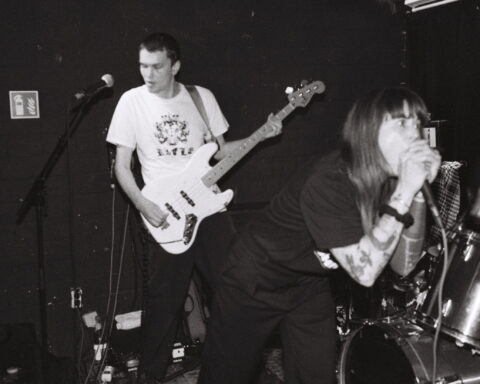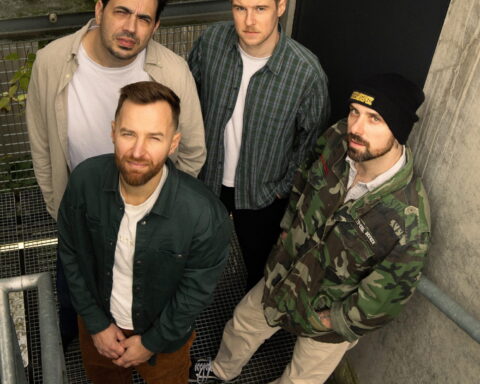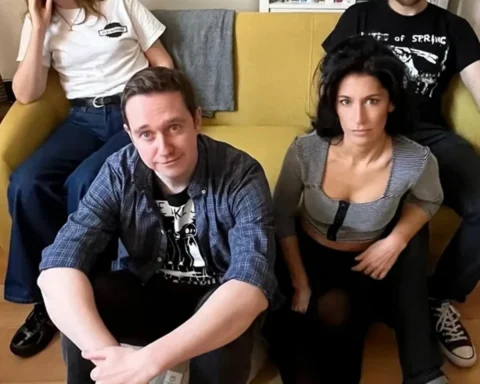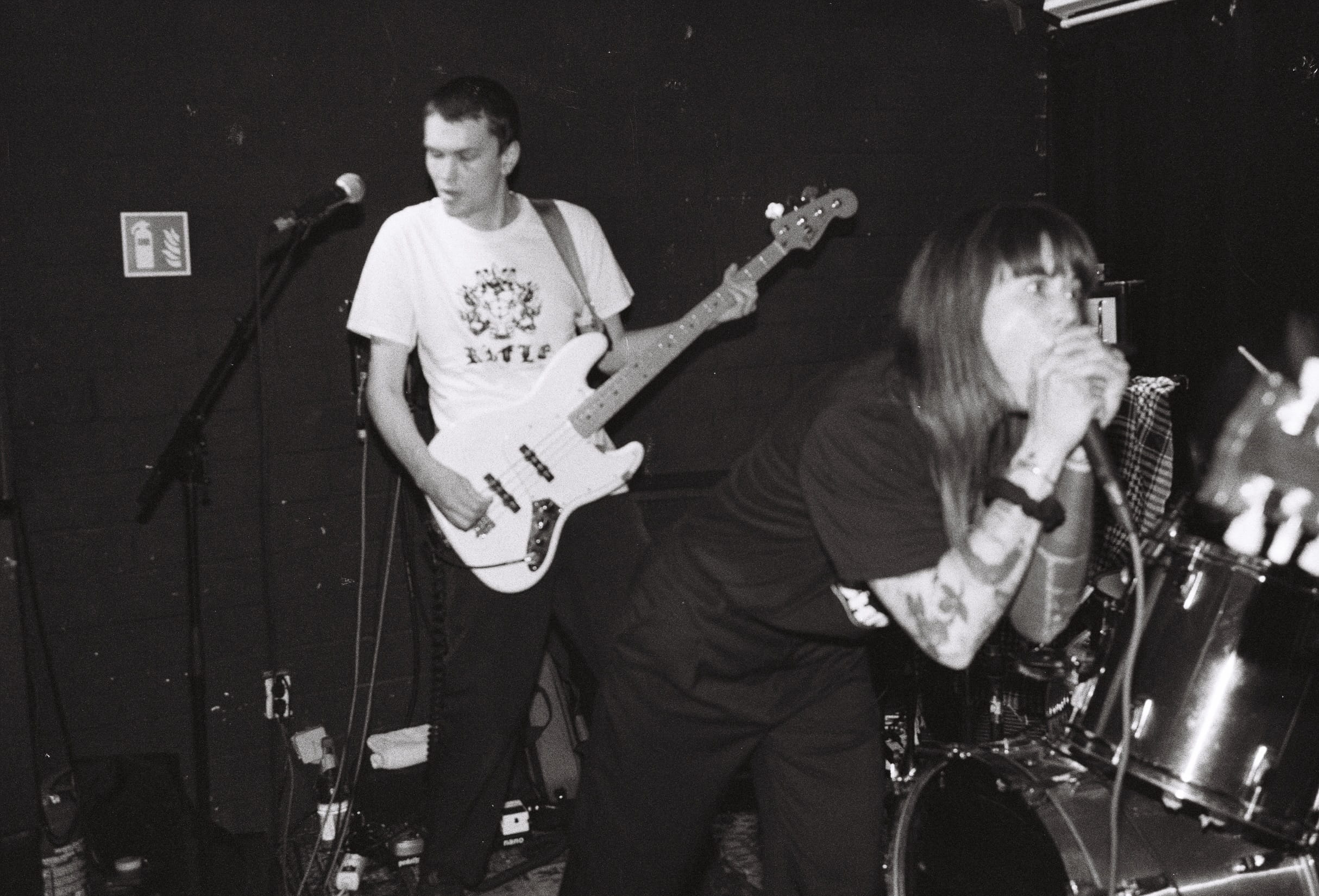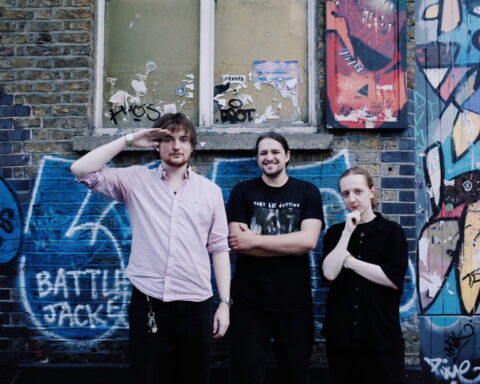


Born From Pain have a new EP planned for their thirtieth year, but vocalist Rob Franssen has also been spending a lot of time looking into the history of the place they come from. The Dutch hardcore veterans built their name on fast metallic riffs, heavy grooves and breakdowns. On their latest record, “Siege Mentality“, that familiar approach now carries a song about thirteen miners who died underground in 1947, sung in the local dialect of the region.
Rob returned to Heerlen around four years ago after spending nineteen years in Essen, Germany. Since then, the former mining region in the south of the Netherlands has become an increasingly important subject in his lyrics. He’s also been learning about the history of Polish Silesia, where Born From Pain played some memorable shows in the early 2000s.
There’s a practical connection with Poland right now, too. Following their self-released vinyl and digital distribution through Blood Blast, the band have teamed up with Polish hardcore label Spook Records for a deluxe CD edition of “Siege Mentality”. As we reported in August, they’re also hoping to return to Poland in 2027.
We caught up with Rob to get further into the band’s history, their relationship with Heerlen and the choices that have kept Born From Pain going since 1997. He also has some fairly concrete plans for the anniversary year, including new recordings, reissues and a special Rise Or Die Fest. Don’t expect an old line-up reunion, though. He’s already made up his mind about that.
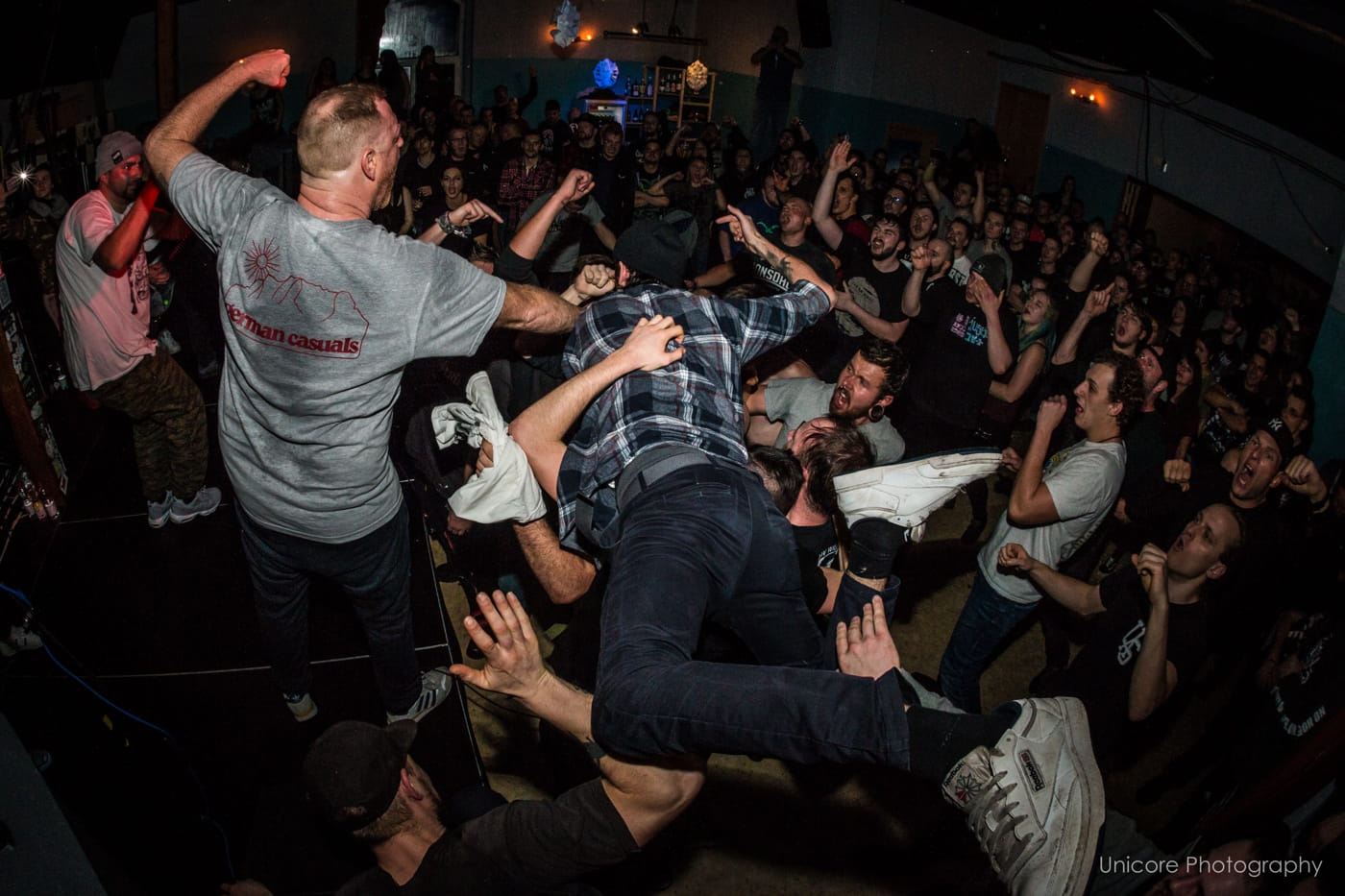
The connection with Heerlen has been there since the beginning, although it took Rob a long time to start addressing the region’s history so directly.
Born From Pain came together in 1997, when he was playing in Feeding The Fire and had grown tired of playing such fast hardcore. He still liked that music, but bands such as Merauder, Stigmata, Earth Crisis and All Out War were getting most of his attention.
The idea was to make something heavier and more brutal, with the groove and slower sections that made those bands so good live.
“We just wanted a band people could dance to.”
For the first year and a half, that was pretty much it. Then the offers from abroad began arriving, along with opportunities to tour. The band started putting more work into their live performance, getting tighter and buying better equipment so they could deliver the sound they wanted at shows.
Born From Pain gradually moved well beyond the local circuit. They would eventually tour Europe, the United States, Mexico and Japan, sharing stages with bands including Hatebreed, Madball, Agnostic Front, Soulfly and Slayer.
The basic musical approach has stayed recognisable through those years. Rob still considers the combination of fast, punishing riffs, grooves, breakdowns and occasional strong hooks an essential part of the band. He also places a lot of weight on the attitude of the people playing the music and how they conduct themselves within hardcore.
“I think it’s safe to say I am the anchor for BFP.”
He has taken a leading role in the lyrics, musical direction and general running of Born From Pain throughout their history. There have been plenty of personnel changes, and finding the right people hasn’t always been straightforward.
He doesn’t consider keeping the band together a burden, even when the work becomes considerable. Most of the musicians who have joined have come from the same local circle of friends, with similar ideas about hardcore and how a band should operate.
Drummer Max is from Heerlen and has been involved for almost fourteen years. Bassist Tommy has been around for approximately the same period. He lives just across the German border and has been a friend of Rob’s for a long time.
Thorsten previously played in Zero Mentality, whose members have been friends with Born From Pain for years. Rob has known him for more than two decades. Guitarist Pete played with BFP for five years beginning in 2009 and returned around 2021. Stefan, one of the founding members, still occasionally comes in as a stand-in.
There are former members who have returned, musicians who have spent many more years in the band than some of its founders, and people who have helped carry things through successive changes.
For Rob, having people around him whom he knows and enjoys spending time with is a big part of why it still works.
“There was never a point where I thought about ending BFP.”
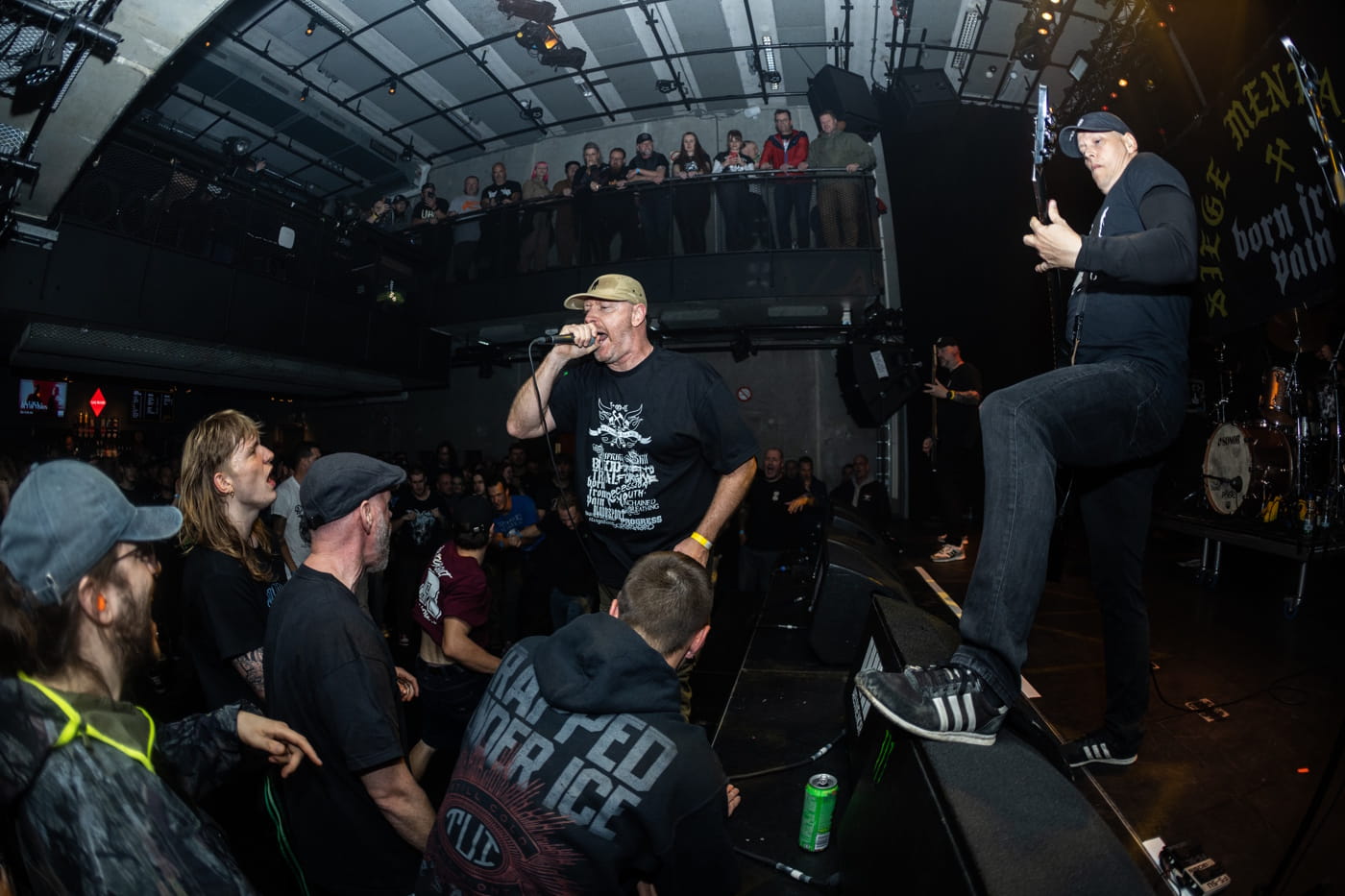
The band continue to receive encouraging reactions at concerts, and playing together still gives him plenty of energy. He sees no reason to stop while everyone involved remains committed.
He has also become considerably more interested in the place where all of this began.
Heerlen lies in the former Eastern Mining Region, known locally as the Oostelijke Mijnstreek. Coal mining shaped the area for generations, and the closures left serious economic and social problems behind.
Rob spent nineteen years living in Essen, another city with a substantial mining history. Coming back to Heerlen around 2022 made him look more closely at his own background, the people who had lived and worked there, and the circumstances that shaped the area.
“You strat thinking more about what formed you as a person, what your cultural dna is, your social background and what made the place called home the way it is.”
He believes the work done by earlier generations deserves to be remembered and respected. Getting older has made him more curious about the history of the region and the social conditions his family and neighbours grew up with.
Born From Pain had already started addressing these subjects on “True Love“. That record opened with “Glück Auf” and included “Antitown”, bringing the band’s hometown into their music quite explicitly.
“Siege Mentality” takes things further. Even the name Black Gold Alliance, which the band use for their own releases, has roots in the area’s mining background. The name had previously been used for local shows and other activities.
The most direct connection is “De Letste Sjiech“.
The song tells the story of the disaster at Staatsmijn Hendrik in Brunssum on 24 March 1947. Thirteen miners died in a fire underground. It was the largest mining disaster in the Netherlands after the Second World War.
The accident took place at a depth of approximately 636 metres. A fire broke out around a transport belt and spread through the mine workings, where wooden supports eventually collapsed. The victims were men who had gone underground for an ordinary working shift.
Born From Pain had already told this story in English on “The Last Descent”. Its lyrics follow a miner caught in the disaster, hearing the panic around him and thinking about his wife and children as he tries to escape. The words “Memento Mori” return throughout the song.
For the local-language version, Rob wanted to bring the story closer to the people whose history it belonged to.
“It’s a form of respect I think.”
The dialect lyrics are accompanied by an accordion introduction and outro, bringing a familiar part of the region’s musical culture into the recording. The combination of language, music and local history was particularly important to him.
Stefan van Neerven wrote the music, Rob wrote the lyrics, and Guido Beckers contributed the accordion. Tue Madsen handled the recording and mixing, while Daniel Priess recorded and produced the accompanying video.
“De Letste Sjiech” first appeared separately on a limited seven-inch release in 2025. It subsequently became the eighth track on the expanded digital edition of “Siege Mentality”, released on 30 January 2026, and is also included on the forthcoming Spook Records CD.
Rob sings the dialect version at concerts.
Some of the reactions have come from people with direct connections to the old mining industry. He has heard through friends that their grandfathers were moved by the lyrics and appreciated the band bringing the disaster back into conversation.
He doesn’t point to one particular conversation with a former miner. The feedback has reached him through people around the band, including families whose older relatives remember the mining years.
He considers those responses among the most rewarding things to come from the song.
The English version was important for another reason. The band wanted people outside Limburg to understand the story as well, including listeners who might never have heard of the Staatsmijn Hendrik disaster.
Both versions pay tribute to the men who died underground and to the workers who spent their lives in dangerous conditions earning a living for their families.
Rob’s growing interest in Heerlen has also affected the way he thinks about the band’s earlier political writing.
Born From Pain have spent years addressing war, power, economic inequality and the consequences of political decisions. Some of the writing on “True Love” became more personal, and the more recent songs have brought the problems of the Eastern Mining Region much closer to the centre.
“The personal is often the political.”
He connects his own sensitivity to social injustice with the history of the area where he grew up. In his view, the social problems following the mine closures were directly connected to changes in international energy supplies, prices and wider economic decisions.
He considers those same economic forces responsible for problems experienced by working people in other parts of the world.
View this post on Instagram
His criticism of an economic system that concentrates profits among relatively few people hasn’t changed. These days, he often chooses to address it through circumstances he knows from home.
The link with Poland came up when Spook Records suggested looking at the similarities between Heerlen and Silesia.
Both regions have long mining histories, although their industrial development and political circumstances have been different. Both have also had to deal with the consequences of major changes to their traditional industries.
Rob agrees that the comparison is worth investigating.
He admits, however, that he wasn’t making those connections when Born From Pain were touring Poland twenty years ago. At that point, the history of Heerlen wasn’t occupying his thoughts in the same way.
View this post on Instagram
Only in recent years has he started watching documentaries and other online material about Silesia. He would like to return, see more of the region for himself and learn about the similarities first-hand.
A possible Polish tour in 2027 would give him an opportunity to do exactly that.
There is already a fair amount of history between Born From Pain and the Polish hardcore scene.
In March 2002, the band visited Warsaw, Poznań, Katowice and Kraków. The run included appearances alongside local bands such as Inflexible, Knockdown, Coalition and 1125.
Rob remembers Poland looking considerably greyer than it does today, particularly around the city centres. The concerts themselves made a strong impression.
One in particular has stuck with him, although his original recollection placed it in the wrong city.
He remembered Born From Pain opening for Blood For Blood and Ignite in a completely packed venue. There was also a strange opening underneath the stage, with stairs leading up into the concert room.
After checking the old concert archives, we were able to establish that the show took place on 2 July 2004 at the old Mega Club in Katowice.
“Yesss, it was Katowice! Indeed!”
The earlier March 2002 Poznań date was a separate concert with Inflexible and Knockdown.
Born From Pain have played Poland at other points since then, although Rob admits they haven’t been here particularly often over the past decade. He isn’t entirely sure why, because he has consistently enjoyed the country’s hardcore shows.
He has seen considerably more of Poland through his work as a tour manager for Madball.
Those visits, every few years, have given him a chance to observe how much the country has changed. He’s pleased with the improvements he has seen, although he has mixed feelings about the gentrification of cities such as Warsaw.
The old Polish connection goes further back than those first Born From Pain concerts.
In the 1990s, while Rob was still playing in Feeding The Fire, he had a number of Polish pen pals with whom he exchanged hardcore recordings.
Tape trading was an important way of discovering bands, particularly in places where imported records were expensive or difficult to find. He already knew how active the Polish cassette scene was when Tomek from Shing Records approached Born From Pain about a local edition of “Reclaiming The Crown“.
The album had originally appeared through GSR in 2000. Shing released it on cassette in Poland in 2002, and the band also appeared on one of the label’s samplers around that period.
Rob was happy to approve the cassette because he knew the local culture and trusted Shing to do a good job. The edition was well received, and he noticed that Polish audiences responded positively to it.
There are still occasional reminders of that release when he goes through the band’s old stock. Every now and then, another “Reclaiming The Crown” cassette turns up in storage.
The deal was part of Born From Pain’s early relationship with GSR, a label whose owner, Theo, played a substantial role in getting them beyond the Dutch scene.
In 1999, Theo booked Cold As Life for a European tour and invited Born From Pain to come along. He liked the band and wanted to give them an opportunity.
He also reissued “Immortality”, released “Reclaiming The Crown” and “Sands of Time”, paid for music videos and invested in promotion.
Those weren’t insignificant expenses for an independent label. Rob remembers Theo as somebody who continued supporting the band as their audience grew and was happy to see them reach the point where a larger company became interested.
When Born From Pain signed with Metal Blade in 2004, GSR supported the move.
Michael Trengert, Metal Blade’s European CEO at the time, was central to that decision.
Michael had spent years around punk and hardcore before working at that level in the music business. During the 1980s, he had toured with bands including Napalm Death, Heresy and Ripcord.
He knew where Born From Pain came from and understood the way they wanted to operate.
Rob remembers their early conversations giving him confidence that Metal Blade would be a good place for the band. He still speaks very warmly about Michael, who has since passed away.
The larger label provided considerably stronger distribution, promotion, industry contacts and touring opportunities.
Michael helped secure two tours with Six Feet Under and a show at Wacken. He was also one of the original organisers of Summer Breeze Festival and invited Born From Pain to play there four times.
Rob believes Michael regularly helped them secure additional promotional support beyond the original budgets. He was willing to use his contacts and experience to get the band opportunities.
“They showed in their actions that they believed in us.”
Theo and Michael had different roles in the band’s history, and Rob credits both with helping them reach audiences that would otherwise have been difficult to access.
“Theo supported us to a level where we were ready for a next step, Michael took it from there together with us.”
He has no regrets about signing with Metal Blade and remains grateful for how the relationship worked.
The eventual return to GSR happened during a more unsettled period for the band.
Born From Pain had become a four-piece for a couple of years, something they had previously considered unlikely. They also started experimenting with electronic elements in their songs and trying approaches that moved outside some of their established musical habits.
Rob remembers those years as a period when the band were questioning their direction. He doesn’t regret the experiments, and looking back, he doesn’t think they went particularly far. Some of the choices simply didn’t feel right for Born From Pain.
Changes were also taking place at Metal Blade.
Michael was gradually becoming less involved, and other personnel changes affected the band’s relationship with the company.
Metal Blade offered to extend their contract. Born From Pain decided to return to working with GSR and release “The New Future” through people they already knew.
Rob is clear that the decision wasn’t caused by a dispute with Metal Blade. The people involved had changed, and the band wanted a different arrangement.
“The New Future” was also made available as a free download.
At the time, there was no streaming system comparable to the one listeners have today. The band wanted to make sure people with limited money, including younger fans, could get hold of the songs easily.
Rob still considers access to music important. He thinks the situation has improved substantially now that listeners can check out new releases through streaming, even if the price of physical records has increased.
With “Siege Mentality“, Born From Pain have been dealing with a different set of practical questions.
The record arrived on 20 November 2025, following a lengthy gap since “True Love”. Its original vinyl edition contained seven songs, packed into a short run of fast metallic hardcore, heavy grooves and breakdowns.
“Defiance” opens the record instrumentally before the title track brings in the band’s familiar mix of speed and heavier, slower sections. The rest keeps to the compact approach Born From Pain have used throughout their career, with frustration, personal struggle and the social conditions around Heerlen recurring in the lyrics.
The deluxe digital edition added “De Letste Sjiech”, bringing the total running time to a little over eighteen minutes.
After years of dealing with different companies, Rob was tired of situations where the financial accounts left the band with very little money from its own activities.
They decided to release the vinyl themselves through Black Gold Alliance and signed with Blood Blast for digital distribution.
The Blood Blast arrangement has worked well for them. Rob is happy with the people, the terms and the results.
The first vinyl pressing was 500 copies. By September 2026, a second pressing was already being prepared.
“The numbers are not huge it was 500 copies, but in a time where it is hard to sell any physical product we are very happy with it.”
Born From Pain have been selling the records through their own webshop and other channels. Rob considers a pressing of that size manageable without a larger company handling distribution.
He thinks the calculation changes considerably if a band wants to sell something like 2,000 copies. At that point, proper distribution and a label with the necessary contacts become much more important.
For their current sales numbers, doing the work themselves makes financial sense.
The CD wasn’t originally part of the plan.
People gradually began asking when “Siege Mentality” would appear on the format, and offers from labels arrived around the same time.
The band would have liked to handle the CD themselves as well, but they had already spent a substantial amount of money on the other parts of the release.
Spook Records came up with the plan Rob liked most, and the band agreed to work with the Polish label.
The relationship had actually started at Revolution Calling Festival in 2025, when Spooky met Rob and subsequently contacted him about the possibility of releasing the record. The initial idea developed into the deluxe edition now being prepared.
The forthcoming CD will contain all eight tracks, including “De Letste Sjiech“, alongside additional photographs and a specially designed disc with a mini-disc-style visual effect. The label has previously used a similar approach for releases by Coldside and Respect.
At the time of the original announcement, the CD master and artwork were still being finalised, with an autumn 2026 release intended. No exact release date had been confirmed.
Rob is pleased with how the collaboration has developed.
The experience hasn’t put him off working with labels in general. He remains open to future deals, provided they are fair and the people involved understand what the band need.
He’s worked with enough different companies over three decades to know that a good relationship can be extremely useful.
There is another part of the band’s history that has been receiving attention back in Heerlen.
Mijnstreek Oost Crew, usually shortened to MOC, grew out of the local hardcore community that produced Born From Pain and other bands in the Eastern Mining Region.
A documentary about the crew has now been made by people who were involved in the scene themselves. Cultural institutions in Limburg have also started documenting its history.
Rob appreciates seeing that work recognised.
Because the documentary was made by people who were there, he never had much concern about the history being misrepresented.
There are limits to what a film can communicate, though. Going to shows, meeting people, playing in bands and helping organise things were everyday parts of the experience.
The community developed through people doing that work themselves. Bands and promoters could put on events without needing large budgets, management companies or major booking agencies.
Rob hopes people watching the documentary will be encouraged to try doing something similar.
“I don’t believe in gatekeeping.”
There has also been some discussion about the people whose contributions appear in the film.
For a screening in Kerkrade, the organisers planned an additional podcast panel with a particular focus on women involved in the MOC scene.
Rob believes the filmmakers may not have given the role of women enough attention. The panel offers them more space to talk about their experiences.
He doesn’t think the contributions of other people involved in the scene have generally gone unrecognised. The documentary includes some well-known local promoters, venue owners, fanzine writers and other individuals who helped keep things running.
Giving women more room to speak is a specific addition to the screening.
View this post on Instagram
Rob remains closely involved with the local hardcore community, and Born From Pain have deliberately brought younger musicians into their recent work, including appearances on “Siege Mentality”.
He gets a lot out of seeing new bands put in the effort, particularly when they are getting started and playing local shows.
He also has some fairly clear ideas about what the next generation should take from the older scene.
Hard work, respect for previous generations and mutual support are all things he considers worth keeping.
Bands should help each other where they can, and differences of opinion shouldn’t automatically end relationships.
“Also, keep communicating even when you don’t agree.”
Gatekeeping is something he would happily see disappear.
The idea of “siege mentality” itself has a complicated meaning for Rob. He recognises how a shared history or difficult circumstances can bring people together, particularly when a community has to deal with problems coming from outside.
He has also experienced what happens when that solidarity becomes territorial and people start treating newcomers as less deserving because they are younger, less experienced or unfamiliar with the established scene.
“The line sits in the middle I think. I have experienced it as both.”
He sees a similar problem in the way some people approach hardcore today.
Back in 2008, Rob was already expressing concerns about the number of bands competing for attention and the growing emphasis on appearance and style.
He doesn’t think the situation is quite the same now.
Hardcore has grown enormously, and he believes there are more people involved than ever before. That includes listeners who may know very little about where the music came from or the attitudes associated with its earlier development.
He doesn’t see that as a reason to exclude them. People can discover the history, learn from others and become more involved over time.
What concerns him is that, for some participants, hardcore has become primarily about the music and appearance, with little interest in the values that helped sustain the underground scene.
He considers social media both useful and problematic in that respect.
It allows bands to reach people quickly, promote concerts and communicate with audiences without expensive infrastructure. The same platforms can also be used in ways that work against the cooperation and mutual respect he wants to see.
Having spent years playing shows, organising activities around the scene and working as a tour manager, he has watched those changes from several sides.
He still considers direct participation essential. People can find out plenty about hardcore online, but the actual work happens when they start bands, put on shows, help other people and get involved.
Born From Pain are still doing those things nearly thirty years after they began.
For the anniversary in 2027, Rob has already ruled out bringing former line-ups back together for special performances.
He also has no plans to play “Immortality” or “Reclaiming The Crown” in their entirety.
The band’s older stuff has remained part of their concerts throughout the years. He finds it funny when somebody asks whether a particular early song will finally be included again.
“Final Nail” is the example he brings up. People occasionally ask about it as though Born From Pain haven’t played it for years.
They play it at every show.
Rob has always tried to keep songs from different periods in the set, and he intends to continue doing so. He also points out that plenty of musicians who joined later have now spent longer in Born From Pain than some of the original members.
He has no interest in overlooking their contribution simply because the anniversary provides an opportunity to reunite an earlier version of the group.
There may be some special sets, a more extensive tour and appearances by people connected with the band’s past. The regular line-up will remain the one that has been carrying Born From Pain forward.
“Everybody came and went for a reason.”
The plans for new recordings are considerably more definite.
Rob has confirmed that Born From Pain intend to release at least another EP in 2027. The exact number of songs is still open, and he hasn’t completely ruled out something larger.
He currently expects a maximum of six or seven tracks.
He believes shorter releases are becoming increasingly sensible as listening habits change and people’s attention spans become shorter. The next record is therefore likely to follow a similar compact approach to “Siege Mentality”.
Several reissues are also being discussed.
“Survival” is definitely planned for its first-ever vinyl edition. The album has never previously appeared on that format, and Rob considers this release confirmed.
There are discussions about a cassette box containing some older records, although that project hasn’t been finalised.
Other possibilities include reissues of albums from the Metal Blade years, potentially on vinyl and CD, as well as a new edition of “Sands of Time” that Born From Pain may handle themselves.
Those projects are at different stages. Some are definite plans, while others depend on the conversations currently taking place.
The band are also looking at doing something special with Rise Or Die Fest in October 2027.
Rob hopes to bring in guests who have been connected to Born From Pain at different points in their history. There may be unusual concert sets around the anniversary as well, and he is interested in putting together a substantial tour.
Poland is among the countries he particularly wants to visit.
Katowice is high on his list, especially after becoming more interested in the history of Silesia. He would also like to return to Kraków, Warsaw and Poznań.
Gdańsk is another possibility. Born From Pain have never played there before, and Rob would like to change that.
He would be happy to reconnect with some of the Polish bands they knew in earlier years, although he isn’t sure how many are still active.
Among the Polish groups he currently enjoys, he mentions Hollowman, Heavy Runner and Time is the Ruler. He would be pleased to share a bill with some of them if the opportunity came up.
The intention is to return for shows, a tour and hopefully festival appearances, although no Polish dates have been confirmed yet.
For Rob, the anniversary also offers another chance to visit the region whose industrial history he has only recently started looking into properly.
Born From Pain have travelled through Silesia before, played some memorable concerts there and maintained connections with Polish hardcore for more than two decades. The next visit would give him an opportunity to spend time in the region with a better understanding of its past.
Meanwhile, the new music remains the priority.
Rob has plenty of ideas for marking the anniversary, but he is especially keen to release something fresh with the people currently playing in Born From Pain.
The old records will get another airing, and some will return to physical formats. There are still gigs to organise, possible guests to contact and a new EP to finish.
As far as the band’s future is concerned, Rob’s position is straightforward.
“We love it still, people out there still love it.”