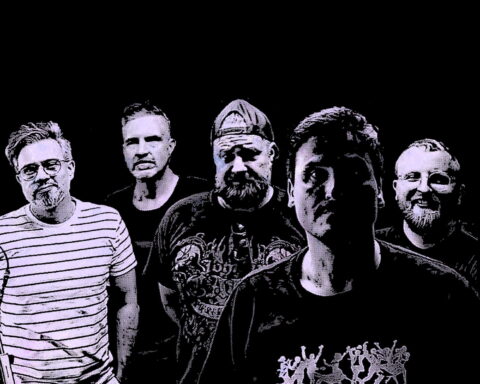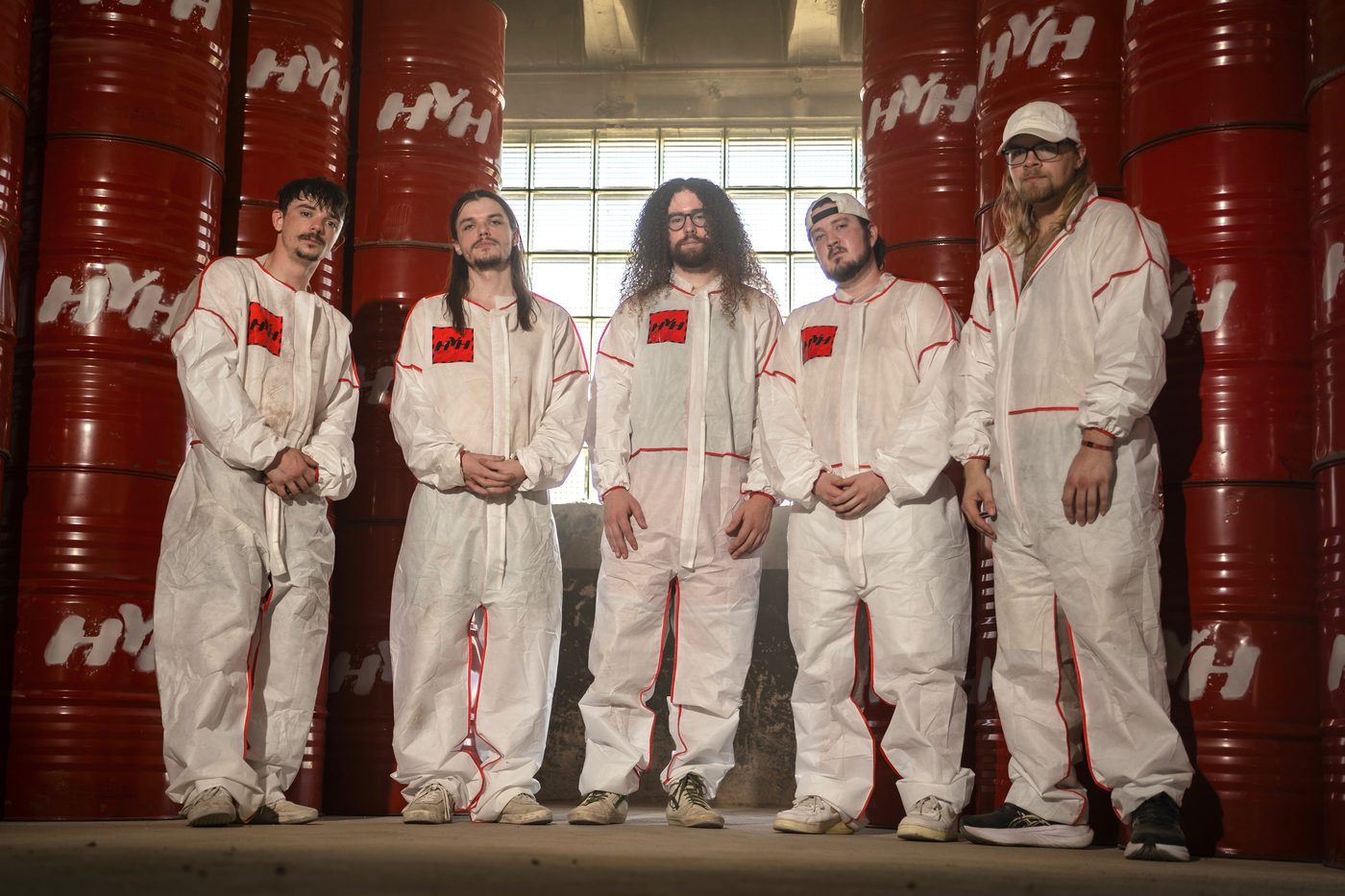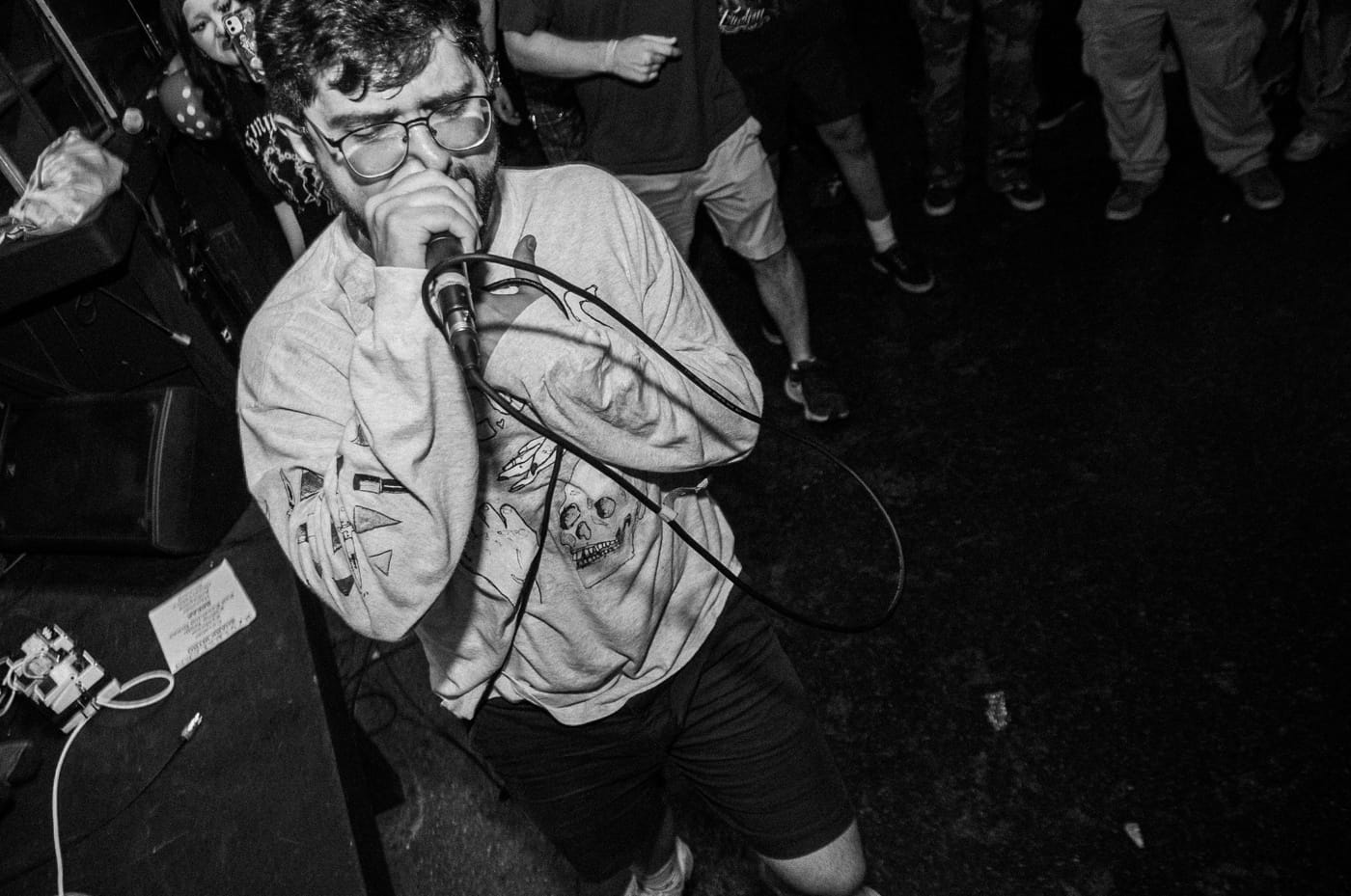


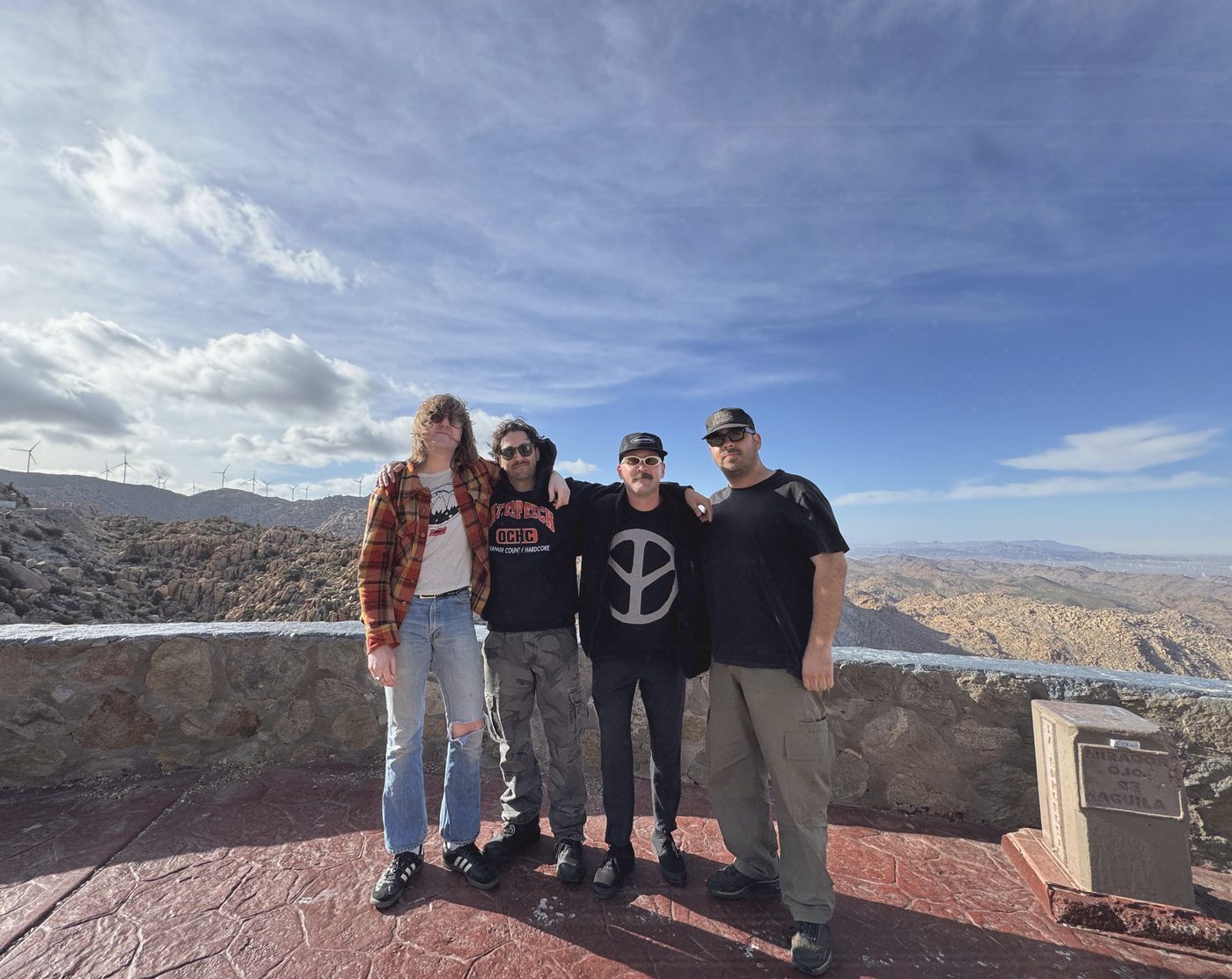
Frank Bach went through his teens and early twenties without trying any substances. Straight edge was a big part of his life back then, and he still credits it with giving him a good start. These days he fronts MONK, a Los Angeles hardcore band interested in both old-school punk aggression and Buddhist ideas about mindfulness. He’s no longer straight edge, but on 16 October, MONK released two covers of Boston straight edge band Stop and Think through Dine Alone Records, just in time for Edge Day. Frank also has some pretty strong opinions about what happens when somebody breaks edge.
“I didn’t try any substances until I was maybe 23. I feel like straight edge gave me a lifeline in my teens and early adulthood where I could really let my brain develop and be the best version of myself. It was a really positive experience for me even though I’m not anymore. I’ve always felt the love from my straight edge brothers and sisters and I hope they enjoy the covers as much as we enjoyed recording them.”
The songs are “Without Words” and “Get Lost“, two pieces of straightforward early-2000s Boston hardcore that have followed Frank around for years.
MONK have also put together a playlist of their favourite straight edge tracks, which you’ll find at the bottom of this article.
MONK have kept close to the original approach, slowing “Without Words” a little and adding a guitar lead written by recording engineer Mike Carnarius. It’s familiar territory for a band whose music owes plenty to the direct, aggressive hardcore of the 1980s, even if the ideas behind MONK sometimes take them somewhere quite different.
The Edge Day release was planned well in advance. Frank had considered doing the covers in 2025, but by the time the band got serious about it, the date was already too close. They pushed the recordings into 2026.
He’s quite open about the promotional thinking involved. Frank started out organising shows, works as a designer, and now spends his working days on a team developing strategies for digital products. Getting music noticed is something he thinks about professionally as well as personally. Releasing two straight edge covers around the annual celebration of that culture seemed like an obvious opportunity.
He also wanted people to hear Stop and Think again, particularly younger hardcore fans who knew the band’s contemporaries but had never come across their records.
That interest goes back to his parents’ basement in Sudbury, Ontario. Frank remembers finding a link to Stop and Think on the Bridge9 message board, probably shared by another forum user. He recognised some of the musicians from bands he already loved and started following the connections.
The Boston hardcore scene of that period had a remarkably busy group of interconnected musicians, with bands including Mental, Righteous Jams and The Wrong Side becoming much better known. Stop and Think were part of that same circle, and their music also appeared on Painkiller Records, alongside their association with the Lockin’ Out era.
Frank followed it all from Canada. He has never been to Boston and is quick to admit that his understanding of the band’s place in the local scene comes from records, conversations and what he could find out afterwards.
“The Boston scene at the time, and I can’t say it with total conviction because I wasn’t there, but my understanding is that bands like Mental, Righteous Jams, and The Wrong Side sort of became crowd favorites and got some massive success signing to labels like Bridge9 and touring. Stop and Think shared members with these bands, so my read on it is that they prioritized the new projects and S&T kinda took the back seat. Would be cool to interview someone from the band at one point to hear how it really felt!”
Looking back at those records as a designer, Frank also has a theory about why Stop and Think were easier to overlook. Lockin’ Out had developed a recognisable visual personality, and the sleeves, graphics and general presentation of its releases were part of what made that period so appealing. Stop and Think’s records looked much more basic, with photocopied artwork and a relatively small discography built largely around demos and later releases of older recordings.
There’s something quite funny about Frank admitting that the artwork may have kept him from paying closer attention to a band whose songs he eventually became so attached to.
“I think the artistry and gloss of that era of Lockin’ Out Records was so attractive to me, especially as a designer, that Stop and Think didn’t really stand out to me since their artwork was pretty basic Xerox style, they never really did a full release and mostly demos, some re-releases of old songs, and that’s really it.”
The band’s lyrics also seemed unusually serious to him, particularly alongside the joking, tongue-in-cheek personality of some of their contemporaries. That may have affected their reception, although Frank is careful to leave it as his own theory.
Years later, when he started talking to younger musicians and fans about recording the covers, the response surprised him. Most people knew Lockin’ Out. Almost nobody he asked recognised Stop and Think.
“Nope. None. Most knew Lockin’ Out but S&T was off their radar.”
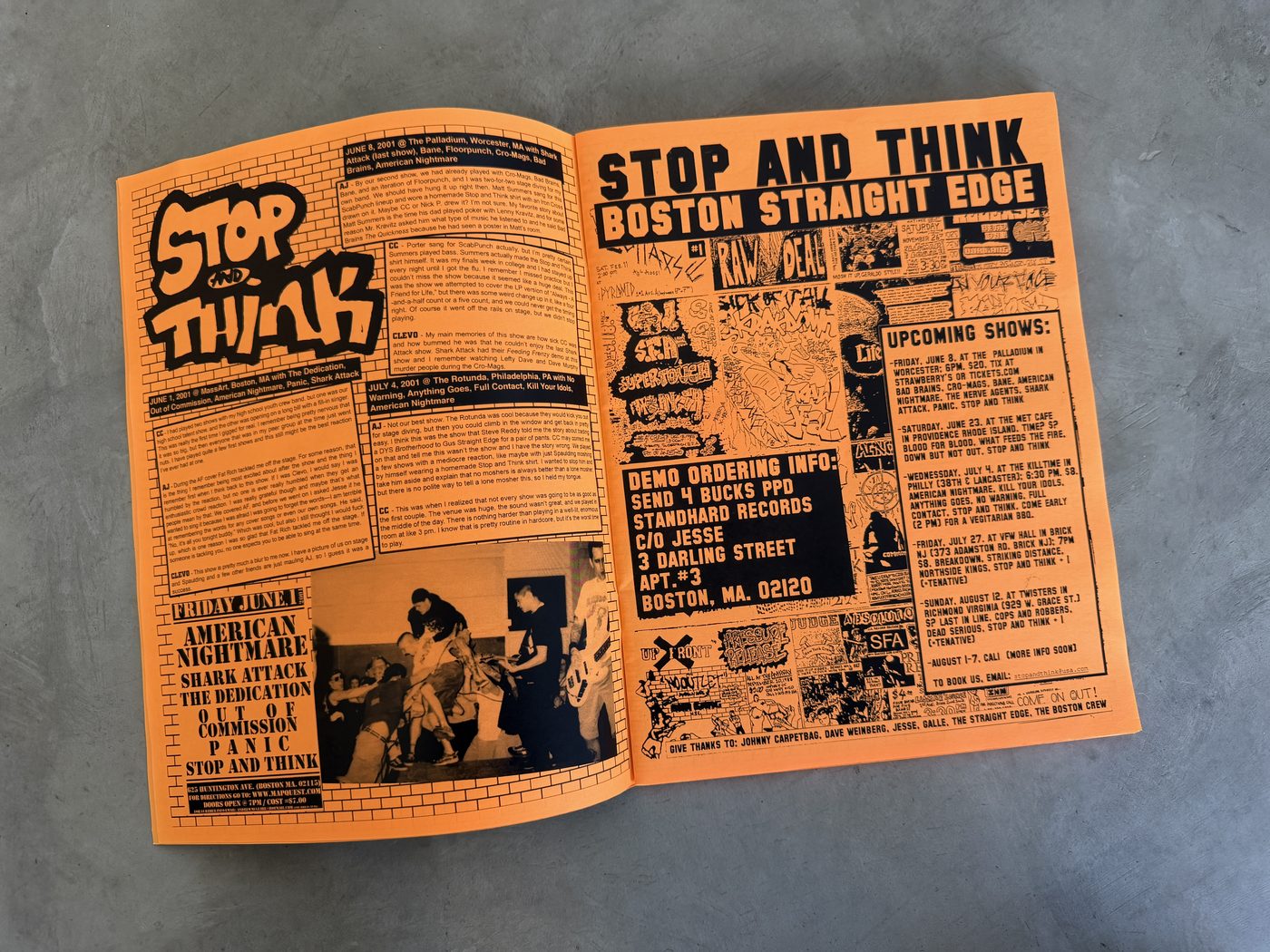
The old music had survived in his own collection, though, along with some of the printed stuff from the period. Frank still has a copy of Shining Life #26, a hardcore zine published by Shining Life Press, and shared photographs of it while we were preparing this piece. He remembers the publisher offering to mail copies to people who couldn’t afford one when the issue was announced. It’s a small reminder of how this music circulated before everything was available through streaming services.
Before the recording sessions, he got back in touch with some of the people involved in the original band. He reached out to drummer Rich Perusi and later spoke with guitarist Joey C, who, according to Frank, is now making solo electronic music in New York City.
The conversations were useful when it came to choosing the songs. Rich remembered seeing another band cover “Without Words” live and being disappointed when they stopped there. He thought they should have gone straight into “Get Lost”. The two songs made sense together.
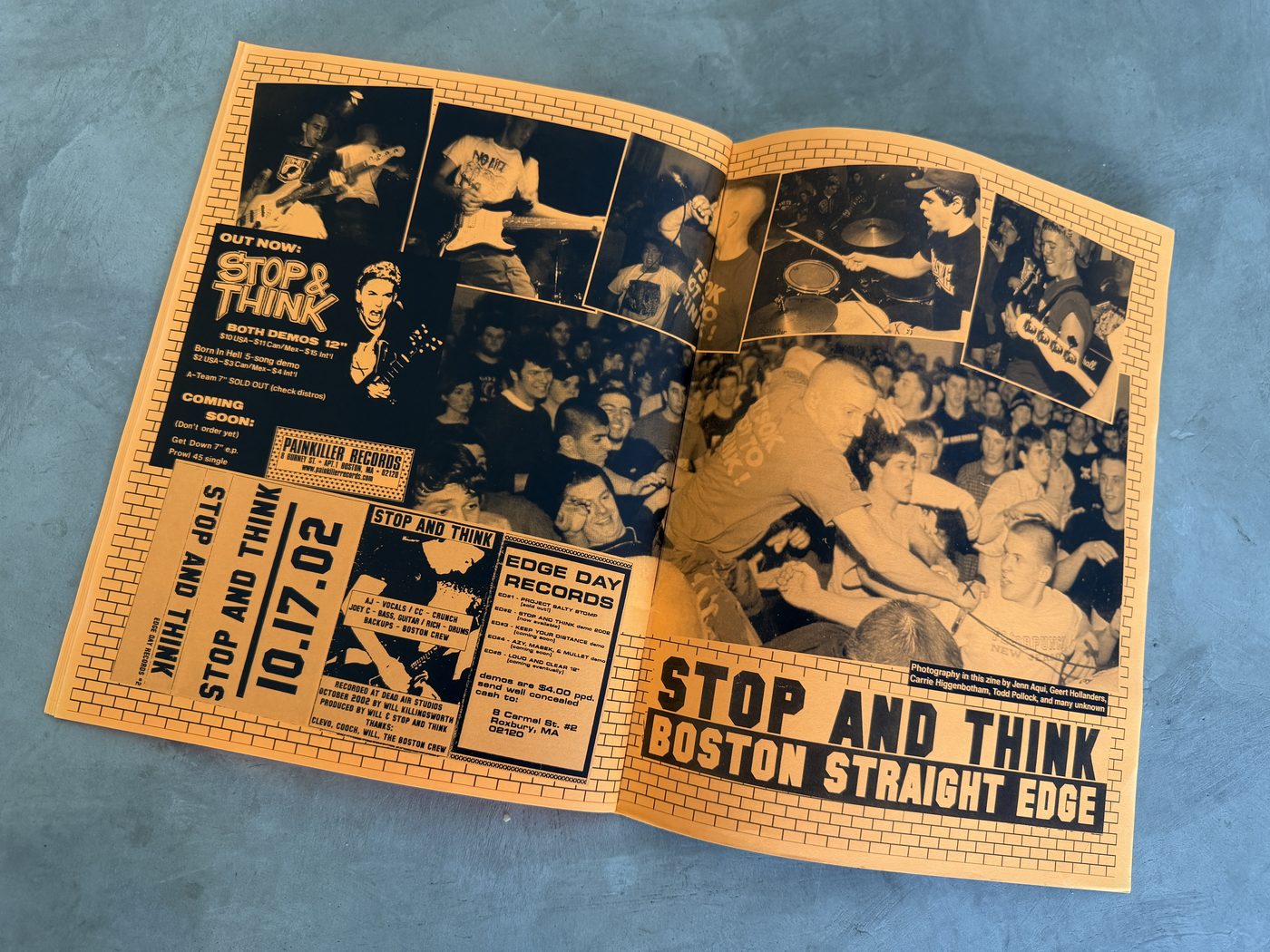
MONK ended up following that suggestion, although Frank had initially been unsure about how much the band should change.
“I doubted the decision for a while. The songs are straight-forward hardcore and Monk has been trying to push artistry and concepts that are a little outside the ordinary. I hoped we could add some musical flourishes to the songs, but still stay true to them. Not like we were gonna re-write them as a doom metal song or something, though we did slow down Without Words a bit. In the studio our recording engineer Mike Carnarius wrote a ripping lead and that stuck.”
MONK have done plenty of playing around with hardcore conventions already. Their first two EPs, “Rock” and “Dark Side of the Mind”, paired hardcore songs on the A-sides with guided meditations on the B-sides. The project takes some of its cues from Dead Kennedys and Negative Approach, with newer bands such as Puffer and Skinhead also among its musical influences. Frank’s interest in spiritual teachers Ram Dass and Thích Nhất Hạnh has been just as persistent.
We last spoke with him in April, when MONK released “No Gods” with George Pettit of Alexisonfire, paired with a cover of Blur’s “Song 2”. That release introduced the band’s ongoing “Starseed Series”, built around occasional original songs featuring collaborators and accompanying covers. Frank was already questioning whether traditional EP and album cycles made much sense for what MONK wanted to do next.
He was also talking about hardcore’s capacity for fun, the increasingly aggressive beatdown culture around Southern California, and how strange it sometimes felt to be playing the character of MONK on stage.
That character comes with a certain amount of self-awareness. Frank has a career, a family and a life that bears little resemblance to his teenage years. He’s serious about meditation and trying to live according to some of the ideas he reads about, but the image of an actual monk is obviously a bit of a stretch.
“Monk is an aspiration. I’m not a monk. I wish I was. I don’t know that I could be. For 20 minutes a night I can play one on stage. But I try to live my life in a way that’s authentic to me, try to find peace in the decisions I make and bring kindness to others. That’s the best I can do.”
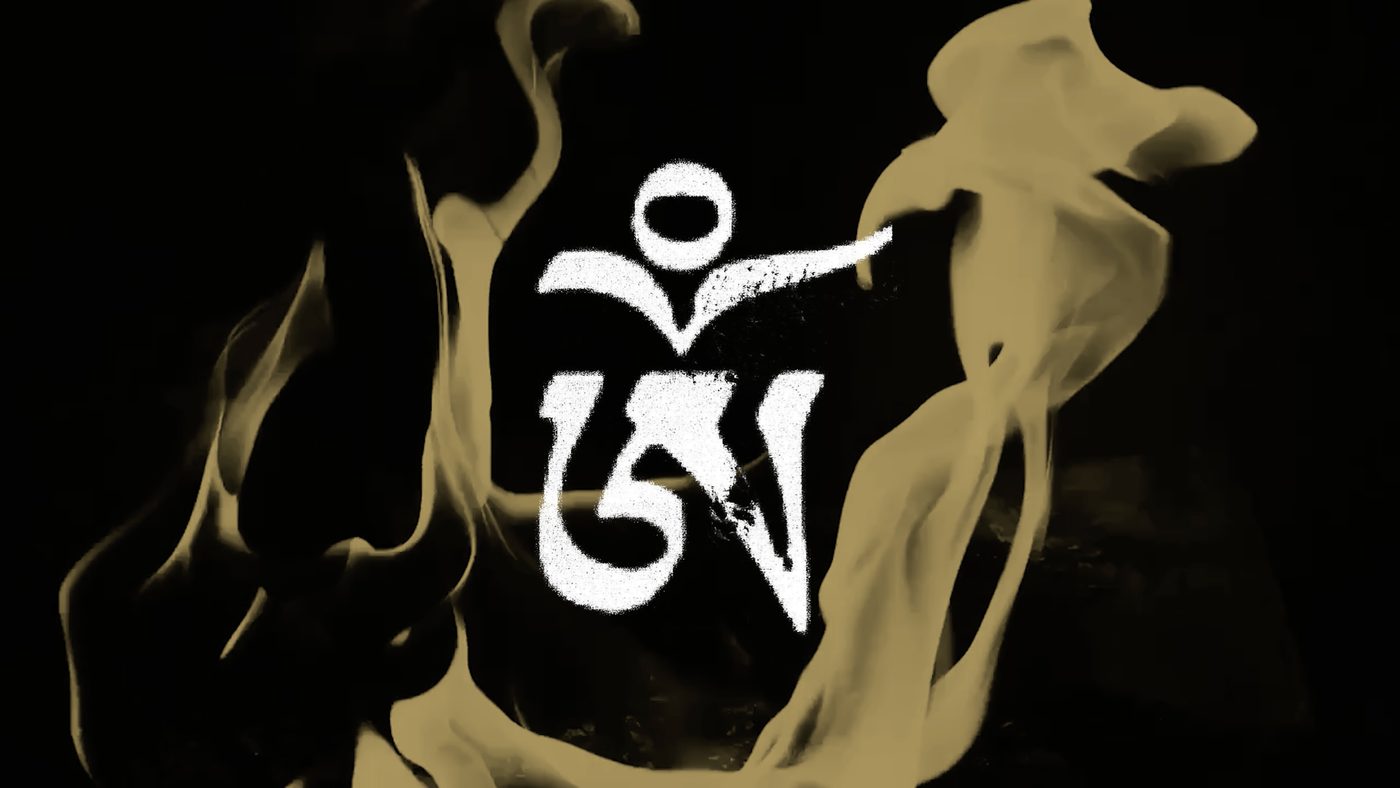
“Without Words” also happened to have a title that appealed to that side of him. Monastic traditions include periods of silence and, in some cases, vows of silence. Frank associated the song’s title with the practice of getting away from constant talking and finding some quiet.
There was still a much simpler reason to record it.
“It took a while for me to really connect the dots as to why this idea kept popping up in my head. The songs just rock and they’re super fun to play.”
For MONK, the connection between hardcore and meditation is already familiar. Bringing straight edge into the discussion gave Frank another opportunity to talk about some of the similarities he sees between Buddhist practice and the personal discipline of abstinence.
“I think hardcore always has been about finding the common ground. Humans have differences, and nothing is static. Straight edge and Buddhism are very similar in mindset. One wears X’s, one wears robes. They have a lot more in common than one might think.”
He finds value in the idea of experiencing life without relying on substances, and sees similarities in how the two traditions approach consumption, craving and attachment. Buddhism, in his view, takes the examination of those habits into other parts of everyday life.
“I don’t think drugs are immoral, but there is something beautiful about experiencing life in a pure, unclouded way. Both reject crutches, and maybe Buddhism goes deeper into consumption, craving, attachment, etc. Something about tolerating ordinary consciousness.”
This is also where some of the disagreements Frank anticipated over the release begin.
Straight edge meant a great deal to him during his formative years, and he has maintained close friendships with people who continue to identify that way. He’s grateful for the community and understands why people take their commitment seriously. What bothers him is the attitude towards people who eventually decide to live differently, particularly the idea that breaking edge somehow invalidates everything they believed or did before.
“I think the sensitivity to this around this comes from the “edge break face break” kind of rhetoric or how people get disowned by their friend groups for breaking edge. I think it’s awesome to be straight edge. I also think it’s fine to use substances recreationally, responsibly.”
He also brings up Ian MacKaye, whose song “Straight Edge” with Minor Threat gave the movement its name. Frank’s understanding is that MacKaye himself has questioned aspects of what the movement became.
“I think even Ian MacKaye has had words about what straight edge means today, and how it’s sort of removed from the original intent and wasn’t meant to create this big movement. But it’s also very cool how people can hear something, be inspired, and make positive change in their lives.”
The two covers come from a band whose identity was connected to straight edge, released by musicians who respect that history and have made different decisions in their own lives. Frank has little patience for attempts to police that relationship.
“Monk writes about all aspects of life, light and dark, so I don’t think it’s off base for us to do these covers. Besides, “If you’re not now you never were” assumes everyone experiences time in a linear way.”
Someone can have been sincerely straight edge at seventeen, changed their mind years later, and still regard those early experiences as an important part of their life. Frank’s own story makes that perfectly understandable.
Hardcore nostalgia is another subject he has been considering for a while. During our April conversation, he used the phrase “nostalgia cosplay” to describe his discomfort with people recreating the appearance and attitudes of older scenes. He had become especially conscious of it as he got older, partly because he occasionally caught himself doing something similar with the MONK persona.
Now he’s releasing two songs from more than twenty years ago, which makes the conversation quite timely.
“I don’t think I’ve changed my mind about nostalgia so much as I’ve thought more about the difference between nostalgia and influence. Nostalgia cosplay is when you’re recreating the surface of something because you want to feel connected to a particular era. That to me feels different from going back to a record because there’s something in it that still feels alive.”
Stop and Think have remained a band Frank enjoys listening to and playing. He wanted to give the songs another outing, make a few changes in the studio and hopefully get some younger people interested in the original recordings. He’d been thinking about doing it for years. The fact that it finally happened around Edge Day gives him a good excuse to have a conversation that goes well beyond two covers.
There’s also the question of what hardcore expects from people who’ve been involved for decades.
Wyświetl ten post na Instagramie
Frank’s teenage years in Sudbury were full of the usual things that come with getting deeply into underground music. There were records to discover, other bands to follow and scenes he wanted to understand from hundreds of miles away. His own life has changed considerably since then. He has a family, professional responsibilities and different interests, including ideas he probably wouldn’t have been thinking about when he first came across that Bridge9 forum link.
He has no interest in pretending those changes never happened.
“I do think there’s sometimes an expectation that you have to freeze yourself in whatever version of yourself first entered the scene. To me that’s such a juvenile perspective, literally. I don’t think that’s healthy or even particularly punk.”
It’s particularly odd when you consider how much hardcore depends on people continuing to participate after the initial excitement of youth has passed. They keep playing gigs, putting out records, organising shows and supporting newer bands, often while dealing with work, children and everything else that comes with getting older.
Frank wants to see people making room for all those different stages of life. His idea of staying involved is straightforward enough, and his answer to our final question was one of the best things he said during the conversation.
“People grow up. They have kids, careers, relationships, move cities, lose people, get exposed to new ideas, change their minds. That should be part of the scene too. For me, staying involved is about continuing to participate in something that shaped me, while allowing it to evolve with me. I don’t want to spend the rest of my life pretending I’m seventeen. I want to see what hardcore means when I’m 80.”
MONK released their versions of “Without Words” and “Get Lost” on 16 October 2026 through Dine Alone Records, ahead of Edge Day. The two Stop and Think covers are available to stream here, with a new video produced by Born in the North. The band have also put together an XXX playlist featuring some of their favourite straight edge tracks.