

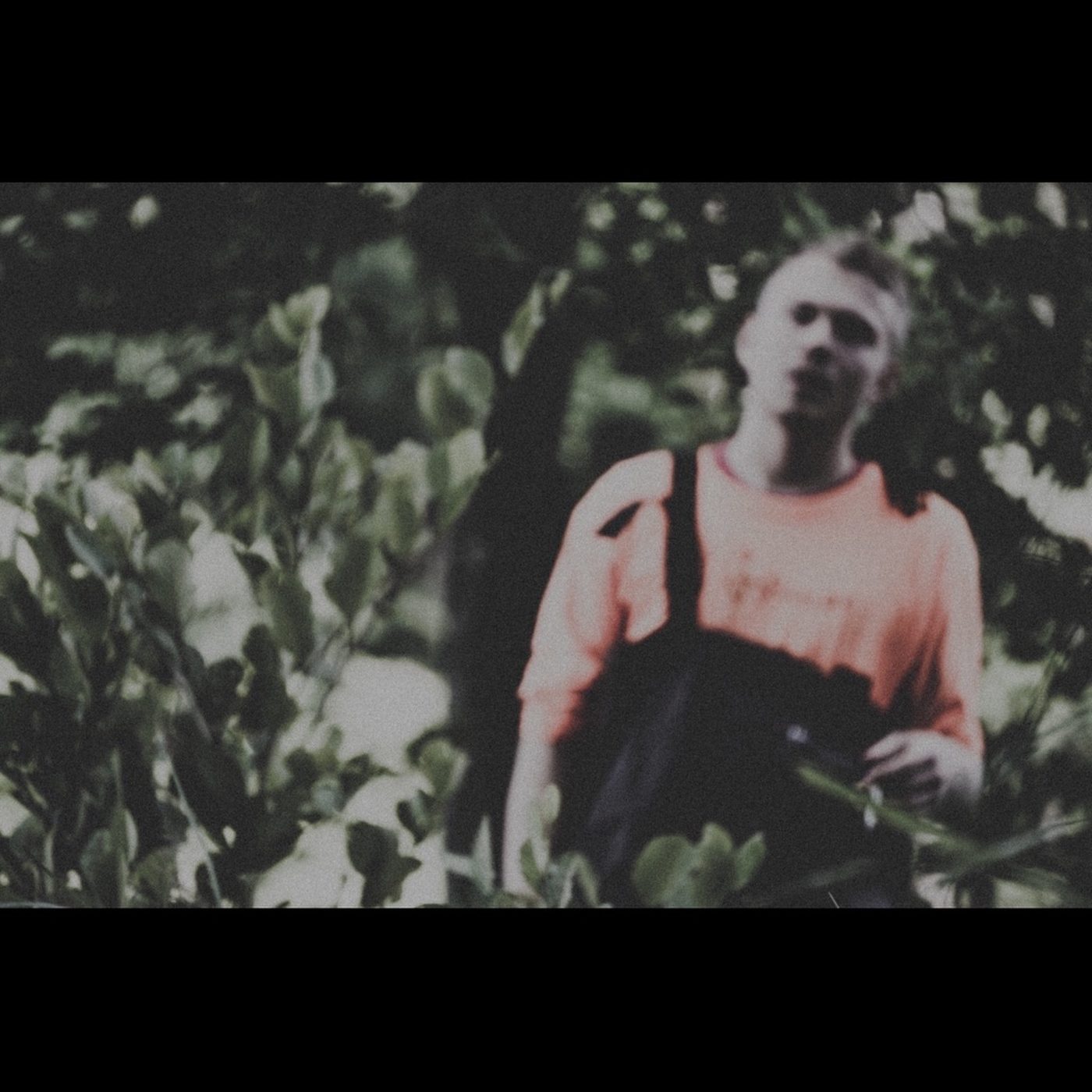
A recording of Christian Farrar at fourteen opens “Earney Road Sessions“. By the time this strange little Georgia rap record finishes, we’ve been through distorted hip-hop, Southern gospel, old country music, porn samples, self-loathing, religious confusion and a young guy’s fear of getting old. The final song, “death is real”, was actually the first one he recorded, a few months after losing his grandmother. Christian was twenty-one or twenty-two when he made the album, and almost everything about it came from that difficult period in his life.
There’s an almost ridiculous amount of stuff packed into these eleven tracks. Some of it is genuinely moving, some pretty funny, and some so far out there that you’d struggle to imagine how anybody came up with the idea in the first place. It’s a completely homemade, distorted and sample-heavy piece of experimental hip-hop, with Christian doing everything from the recording to the mastering at a dining table in his family home. The individual songs take some wild turns, and he spent an extraordinary amount of time messing with their sounds until they worked the way he wanted.
Eight years later, “Earney Road Sessions” is the only record he’s kept from his old catalogue. He’s now a chef and a parent, having stopped releasing music and deleted the rest of his work. Yet every few years, he finds himself listening to this one again.
“I hear a lonely kid making an album he needed to make.”
And it’s worth getting into just how much that kid was trying to work out.
Back in 2017 and 2018, Christian was living with a friend in Acworth, Georgia, working at an American Chinese takeout restaurant roughly six days a week. He was drinking heavily, had fallen out with some friends and felt increasingly isolated. He’d wanted to live an important life, whatever that meant to somebody in their early twenties, but couldn’t work out what he was supposed to be doing.
He’d already tried becoming a professional chef. At eighteen, he’d moved a thousand miles away to Boston and entered an old-school kitchen environment, only to find the hours and physical demands too much. He went home, decided he’d had enough of cooking and spent the following years trying other things.
He wrote comedy, made podcasts and designed merchandise. His podcast involved long drunken conversations with friends and people he met online. He’d been writing jokes for a couple of years, although stage fright and a lack of confidence kept him from doing much with them in public.
There was at least one commercial success.
“I did sell quite a few vagina mugs on Etsy, though.”
He’d also been making music since childhood. When his family bought a desktop Mac, eleven-year-old Christian discovered GarageBand and started teaching himself to record. He kept at it for years, although getting mocked for his music online eventually persuaded him to stop treating it as a serious possibility.
Then his grandmother died.
She’d been fighting cancer for around four years. Watching her deteriorate had been painful, and Christian remembers feeling unusually certain about his place in the family when she passed away. His father was devastated. At the celebration of her life, Christian saw him cry for the first time.
“When she passes, for the first time in my life I know I have a role to play. I have to be strong for my family, for my dad.”
For once, he had something concrete to do. He could help the people he loved, without worrying so much about his own failures or what he was supposed to accomplish.
A few months later, he recorded “death is real”.
“I had given up the rapping thing by then.”

He’d been listening repeatedly to Björk’s “Debut” and Daniel Romano’s “Modern Pressure”, and making that first song brought back something he’d missed about writing personal music. He could put difficult thoughts into a recording and spend hours experimenting with the sounds around them.
The track eventually became the album’s closer. Its words deal with the things he considered failures in his young life, including his attempts at cooking, comedy and music. A strange William Shatner sample appears along the way, and the arrangement grows louder before fading into a faint distorted synth as Christian delivers a speech about finding some direction.
Even the juvenile insults he throws at his inner demons still amuse him.
“I love the 22 year old me telling his inner demons to eat a dick. So juvenile, but perfect for how I felt.”
Earney Road had already given him plenty of memories to draw on. He’d spent his whole childhood in the same family home, wandering through the surrounding woods with his dog, fishing, foraging for mushrooms, riding bikes and skateboards, and getting into trouble with friends.
There were crabapples, pinecone fights, teenage flirtations, the first experiments with alcohol and weed. Growing up in the years after the 2008 housing crash also meant having access to entire unfinished residential streets. The developments had been laid out, but many of the houses never arrived. Empty cul-de-sacs made excellent places for teenagers to hang around without attracting too much attention.
That same house eventually became associated with some much harder memories. His grandmother died there, his father died there years later, and his favourite childhood dog was buried beside it.
Christian was already living elsewhere when he started recording “Earney Road Sessions”, but his parents regularly asked him to visit and look after the dog while they were away. He brought his laptop, mixer and microphone and set everything up in the little dining area, next to the kitchen, with the laundry machines close by.
The entire album was made in that space.
He had almost no budget and plenty of time to play around. Logic was his main production software, and he remembers using an older version of Splice during mastering. A lot of the work involved figuring out compression and trying to keep the various sounds from fighting each other.
Sometimes he’d remove the low, middle or high frequencies from individual samples almost entirely. He used filters, distortion and amplifiers to change their character, layering pieces that barely resembled their original recordings.
For a more natural reverb, he’d play a track through his computer speakers, record it again through a microphone and let the room’s own sound become part of the recording. That slightly delayed layer would then sit underneath the proper mix.
“The production was all done by learning and feel, and there are still some moments on this project where I’m like, how did I even do that?”
He kept listening, adjusting and trying things until he liked the result. Some experiments went too far, even by his own current assessment, but he was happy to sacrifice polish if it meant preserving the loud and quiet parts exactly as he’d intended.
“There was no budget, but there was plenty of time, and that made for some eclectic sounds.”
A big part of that curiosity came from Tyler, the Creator and Kanye West.
Christian was fourteen when Odd Future began getting serious attention, and Tyler’s combination of deeply personal writing, obnoxious humour and completely individual production made an immediate impression. He admired how Tyler developed his own sound over the years, and how the early ideas on “Bastard” and “Goblin” could still be heard in what he made later.
“Yeezus” had a different effect. It came out two days before Christian turned seventeen and gradually changed his attitude towards distortion and industrial sounds. That also helped him get into punk, eventually taking him to Warped Tour, where he moshed and crowd-surfed.
“The Life of Pablo” appealed to his love of unpredictable production. Kanye would let a sample play, leave a beat running, bring in gospel or place something completely ridiculous beside something serious. Christian loved how much freedom there seemed to be in those arrangements.
“I wasn’t trying to make Kanye or Tyler type beats or anything like that. I was just really enamored with what they do, or were doing, from a production standpoint.”
Georgia brought another set of sounds into the album. Christian grew up surrounded by Southern religious culture, with a father whose born-again Christian faith was strong and consistent. His dad was also a thoughtful person who encouraged him to ask questions, something that made Christian’s own lack of certainty harder to resolve.
He never quite understood how people could be so sure about religion. In the part of Georgia where he lived, churches were also a major part of social life. The large megachurches could seem more like places to make connections than the close communities he wanted to find. He preferred knowing a few people deeply and never enjoyed the small talk involved in maintaining lots of casual friendships.
He looked for explanations that might make faith click for him, and kept listening to the religious voices around him.
“I’m not sure I ever found those, but I did find some cool samples of pastors yelling, and some beautiful choir songs.”
Some came from YouTube. Others were lifted from television or radio, sometimes captured by simply holding up his phone and recording. It was a pretty informal way of building a sample collection, and he was interested in the sounds of the places he actually lived.
You can hear how all of that ended up tangled together on “save me lord” and “stop being preachy bro”, two neighbouring tracks that contain almost opposite reactions to religion.
On “save me lord“, Christian uses a slow, bass-heavy beat, a choir and a preacher whose identity he can no longer remember. His own vocals are slightly altered with autotune and detuning, which helped him feel more confident delivering the verse. Sha, a rapper he found on Reddit, handles another part Christian had struggled to write for ages.
He’d been unable to find the right rhythm for that section. Sha came in and managed it.
The song eventually reaches a direct plea to God: “I want to be your child.”
Then “stop being preachy bro” arrives, with a crunchy bass line, simple synth and the words of somebody who was drunk, frustrated and tired of being told what to believe.
The ending samples what Christian thinks was a church baptism testimonial. He remembers those videos from growing up, with newly baptised people explaining how terrible their lives had been before finding Jesus. Their scripted presentation always struck him as a little strange.
“One song end with me begging to be god’s child, and the next I’m telling everybody to stop preaching at me. That was me with religion back then, both at once.”
The album gets equally personal elsewhere, although the route into those feelings can be completely absurd.
“do you love me” was one of the first three tracks Christian recommended to IDIOTEQ. At the time of recording, he was lonely but actively avoided getting into a relationship. He wanted to be loved and understood, yet he also kept his distance from people and felt uncomfortable staying in one place.
“A personal track. The “you” in the title is a girl, but it’s also people, and the world.”
He opens with a sample from an old interview, drawn to the way older women sometimes talk about troubled men. There’s also a lonesome country cover he found on YouTube. He can’t remember who recorded it, but he used it to create strange, high-pitched echoes throughout the track.
Then, at roughly 2:45, the song changes direction. A line from “Midnight Cowboy” appears, followed by a slow build with heavy guitar and distorted synthesisers. The arrangement moves close to rock and electronic dance music before dropping into Hank Williams’ “I Saw the Light”.
It’s a wonderfully odd collection of ideas to put behind a song about wanting human connection and simultaneously running away from it. Christian spent ages getting the transitions and individual sounds to work, and that level of care is a recurring part of this record, however bizarre the choices themselves become.
“fear a sober me“, the opener, goes back to his old teenage recordings. The first sample is Christian aged fourteen, introducing a mixtape. The line “I used to write poetry” has a much darker history than it initially suggests. Those old poems were cries for help, and the new song was another attempt to get difficult feelings out.
He had also developed a habit of treating alcohol as an excuse for whatever he wasn’t accomplishing. Somewhere in his imagination was a sober version of himself who could finally get everything right.
The instrumental runs on a droning guitar sample, with a Nathan Fielder clip, uncomfortable vocal echoes and a sexual sample from “Nick and Norah’s Infinite Playlist”. The hook section gives him space to vent, and the whole thing was intentionally made to sound disorientating.
“ok cuck” draws from the affluent suburban neighbourhoods he encountered while delivering food. He’d meet people with plenty of money who nevertheless struck him as disconnected and unhappy. The track mocks the distractions and hypocrisy he associated with that version of suburban American life, with distortion attacking several parts of the beat and an old country sample leading into a deliberately silly ending.
On “don’t be so dramatic“, another Reddit connection enters the picture. Mayo Staccato brings a deep, monotone vocal delivery, which Christian follows with a much more nervous performance. The beat has heavy drums and filtered sub-bass that almost behaves like a synth.
The ending gets especially nasty, piling distortion over vocals and a recognisable musical sample until the two singers are difficult to separate. Christian’s own comparison is pretty graphic. It’s like the room spinning after drinking too much, just before you throw up and pass out.
“you’re sweet my dear” opens with Eartha Kitt. Christian heard a sweet personality with something evil hidden behind it, which amused him because he considered himself the reverse, a gloomy young man hiding whatever softer side he had.
He built the song around a bit-crushed bass, synth and drums spread across the stereo field, with an experimental rock influence in the way those drum parts move from one side to another.
“ecco homo” wanders into another strange corner. It starts with Mishka Shubaly, whose music Christian associated with drunken and depressive periods, and uses a recording that also appeared at the beginning of Doug Stanhope’s podcast. Stanhope was one of his comedy heroes.
The beat underneath is fairly straightforward boom-bap, but the processed instruments sound so peculiar that Christian still can’t remember exactly how he made them. He suspects he spent hours experimenting with EQ and filters until he stumbled upon those odd, almost alien-like tones.
He now thinks he overproduced parts of the song. He’s still fond of its chunky, bizarre beat.
Then there’s “wait for the money shot“.
Of all the tracks on “Earney Road Sessions”, this might be the clearest example of just how far Christian was prepared to take a ridiculous idea. It’s also one of the three he initially singled out for IDIOTEQ.
The production is packed with clipping, distortion and complicated little transitions. Christian had been experimenting with some of those techniques on “ecco homo”, and by this point he was getting increasingly comfortable making arrangements that seemed to be heading in several directions at once.
The ending combines a Japanese female singer with a processed sample of a Japanese man being pegged. Christian used a vocal transformer on the latter recording, turning the man’s moans into part of the music. The title comes from the pornographic meaning of a money shot, and the song ends with exactly the event it promises.
“I don’t know, this song just makes me smile ear to ear. I think it’s very funny, and part of the funny is that it’s also kind of a bop.”
It’s genuinely funny how much attention he gave to this stuff. The joke is completely intentional, but the production behind it is almost obsessively worked out. That combination of technical curiosity, crude humour and strange little musical obsessions is a big part of what makes the record so unusual.
“i wanna stay pretty forever” heads into a different sort of discomfort.
This is Christian’s favourite song on the record, and another of the tracks he specifically wanted people to hear. Its aggressive vocal delivery and heavy drums accompany a pretty simple worry. He was twenty-two, knew he wouldn’t stay young forever and was already annoyed by the thought of losing his looks, his youth and the things that made him feel cool.
There’s a brief punk sample screaming about living fast and dying young, along with a Louis C.K. comedy bit about how reckless young people imagine they won’t have to deal with the consequences of getting older. Christian can’t remember the precise words, but the idea stayed with him.
The song also mentions Beyoncé playing Bonnaroo. Listening back eight years later, he laughs at how his predictions about himself turned out. He’s gained a little weight, listens to more pop music and complains about the news.
The final sample comes from Juju B Solomon, another musician Christian has admired for years. He recommends Solomon’s “Punk as Fuck”, a song he believes deserves far more attention than it’s received.
It’s quite a way to approach the fear of ageing. One minute the record is concerned with being attractive forever, the next it’s dragging in punk slogans, comedy and an obscure favourite song.
And then comes “death is real”, returning to the experience that got Christian making music again.
For somebody who’d been worrying about how much of his young life he’d wasted, his grandmother’s death brought him into direct contact with something he couldn’t joke his way around. The song let him speak about those worries, the jobs and creative attempts that hadn’t worked, and the unexpected certainty he felt when his family needed him.
Its closing words still motivate him.
“I think they’re things we all need to hear when we don’t know what we’re doing, which none of us do.”
Christian poured almost everything he had into making the album. He went back through its sounds endlessly, fixing details that bothered him and following ideas wherever they led. He paid far less attention to what was supposed to happen once it was finished.
“I was interested in music, not business.”
He was scared to promote it. Almost nobody heard the record when it came out, and although he continued making music for a while afterwards, he eventually stopped putting it out. The other releases disappeared.
Every few years he’d return to “Earney Road Sessions“, expecting to hear all the embarrassing things musicians tend to discover when revisiting their younger work.
That never quite happened.
“I pulled the other stuff down because it wasn’t this good or genuine. If this part of me is in the past, I want the relic to be what I think was the best stuff.”
At the time, he was convinced this record could prove that he was capable of making something worthwhile. The original release notes are full of that urgency. He talked about wasted potential, wanting to redeem himself to God and fearing he would die before accomplishing anything he cared about.
He also wrote something unusually direct about his own tastes.
“I’m a weird person, I like weird things, I make weird things.”
He can hear plenty of flaws now, and knows he might have built a music career differently if he’d put more effort into telling people about the record. Still, he likes the fact that so much of his time went into making the music itself.
“Looking back, if I’d really wanted a career in music, I should’ve put all that energy into promotion instead. What you got is the reverse, and in a way, that’s kind of how I think it should be?”
His life has taken him somewhere he couldn’t have imagined back then. He’s returned to cooking, become a chef and raised children. He also owns part of the restaurant where he works, and he’s noticed people taking ideas from what he’s built there. It’s made him think about the difference between having an unusual idea and being confident enough to actually do something with it.
As a parent, he now has a much kinder view of his younger self, too.
“What I couldn’t hear back then is that it’s not embarrassing or cringey to be figuring it all out. All that insecurity and unsureness are part of what’s beautiful about being that young, and things made with your heart behind them age better than you could ever imagine.”
He’d be proud if his own children made something similarly personal and strange, even if he couldn’t understand it himself.
That thought also brings him back to religion. He’s still uncertain about the beliefs his father held so strongly, but he knows how it felt to make something that was entirely his own.
“As a parent, if my kids ever made something like this, I’d be so proud of them, even if I didn’t get it. They’d be bringing something divine into the world.”
After a difficult year, Christian decided to send the album out again and see what people might make of it. Eight years have passed since he recorded those songs, and he thinks he can tell their story much better now.
“I think my memory of it tells a better story than I even had at the time.”
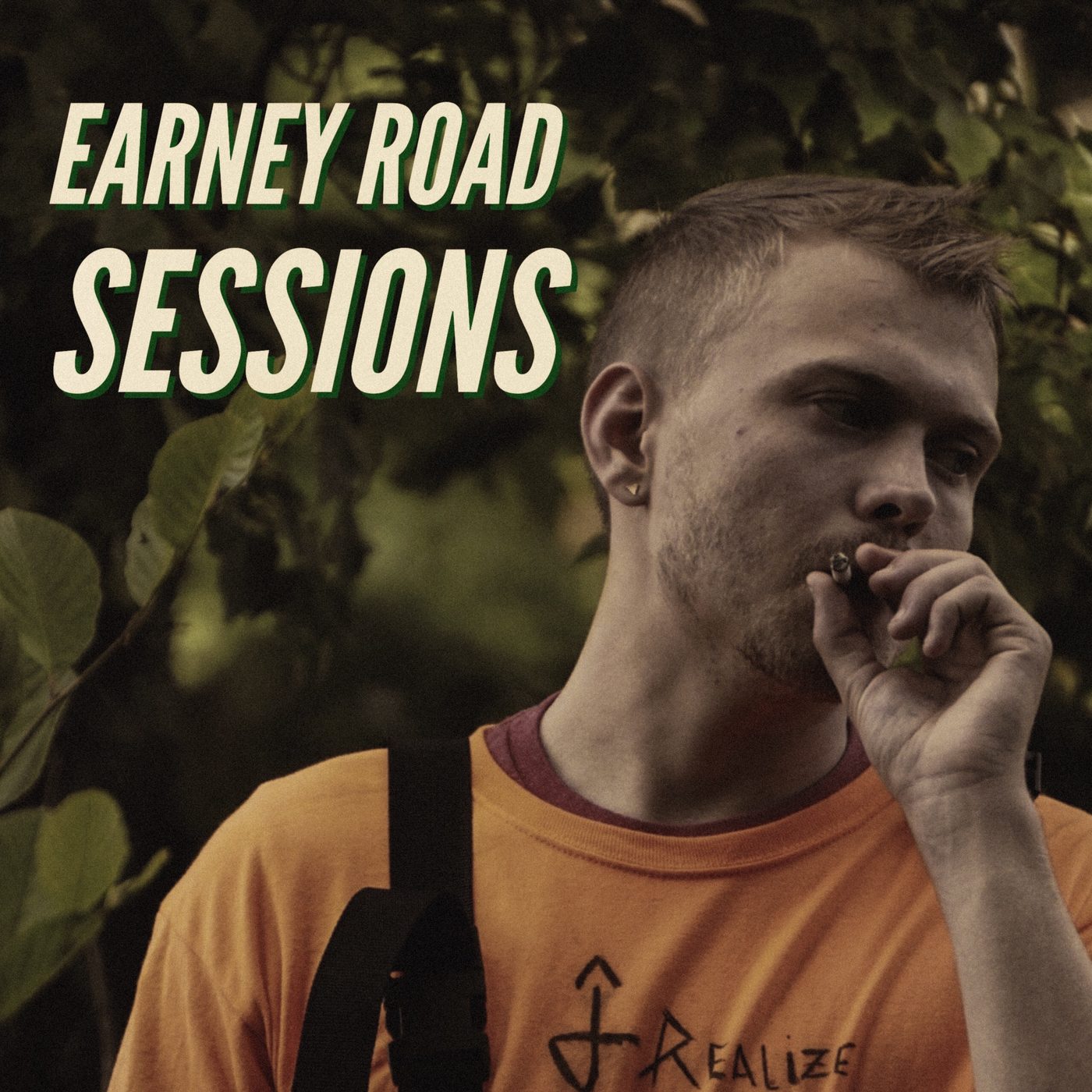
“Earney Road Sessions” was released on 2 November 2018, with Christian Farrar handling the recording, production, mixing and mastering himself. Sha and Mayo Staccato contributed guest performances, while Stephen Heller created the photographs and artwork. The full original version, including samples replaced by instrumentals on major streaming services, is still available on Christian Farrar’s Bandcamp. It’s the only record from that period he’s chosen to keep available.