

“Wanted”, the debut single from Graz-based rockish post-hardcore band Cursed and Calling, is about wanting to hear somebody’s voice even though you know that person has done you harm. There’s a relationship you should probably leave behind, a number you’re still tempted to dial, and all the complicated feelings that come with missing someone who’s been bad for you. Singer and guitarist Fabian has put that experience into a melodic, heavy post-hardcore song, the first taste of the band’s ten-track debut album, “Feel the Sun“, coming in April 2027.
And the guys found a pretty unusual way to get people to hear it. For three weeks before its release, “Wanted” was available through an Austrian phone number advertised on orange tear-off posters in cities across Europe and the United States. Hundreds of them appeared on walls and noticeboards, and people actually started calling. Some even left voicemails for the band.
The album itself has a rather unusual history. Fabian wrote the songs after a long period of writer’s block, got Kurt Ebelhäuser interested in producing them, and only then found the musicians who would become Cursed and Calling. By the time there was a full band rehearsing in Graz, its first record was already well underway.
The writing came in a rush. Fabian hasn’t pinned down exactly what got him going again after such a long dry spell, but once he was back at it, the songs arrived close together.
“After a long writer’s block, the songs suddenly came in one rush.”
“Spark“, one of the tracks on “Feel the Sun“, deals directly with that experience. Fabian describes being stuck in front of an empty page, with nothing to work from, until a small idea appears and suddenly there’s a song taking shape. It’s a fitting subject for a musician who ended up with enough new music to start an entire band.
His background goes back to the Berlin hardcore scene, especially the years when he was first discovering the music as a teenager. At fourteen, he started going to Trash, the city’s old hardcore and punk club, where he remembers catching Refused during their early EP days.
“Honestly, I’m not originally from Graz – my roots are in the Berlin hardcore scene. I was 14 when I first went to the legendary hardcore/punk club Trash in Berlin, and I saw Refused there with their first EP – that changed a lot.”
He also has strong memories of seeing Sick of It All, Shelter and Battery. Those gigs left him with a pretty clear idea of what hardcore meant to him, and it has stayed that way.
“Hardcore was never a phase, it was a way of life: that feeling of freedom when Sick of It All made the pit shake, or when Shelter and Battery shouted “Unity” and we raised our fists and surfed over the crowd. Still the same.”
It’s easy to understand why returning to that music appealed to him. Cursed and Calling are built around post-hardcore with plenty of melody alongside the heavier guitar work, and Fabian wanted somebody who could understand both sides of the writing. He approached Kurt Ebelhäuser, known for Blackmail and his production work with Donots, Pascow and T.S.O.L., while the songs were still demos.
Kurt got back to him within two or three weeks.
“Back then I didn’t even have a band. I wrote to him, and two or three weeks later he called: he liked it, it sounds international, it will be a lot of work, but in the end we’ll go home grinning.”
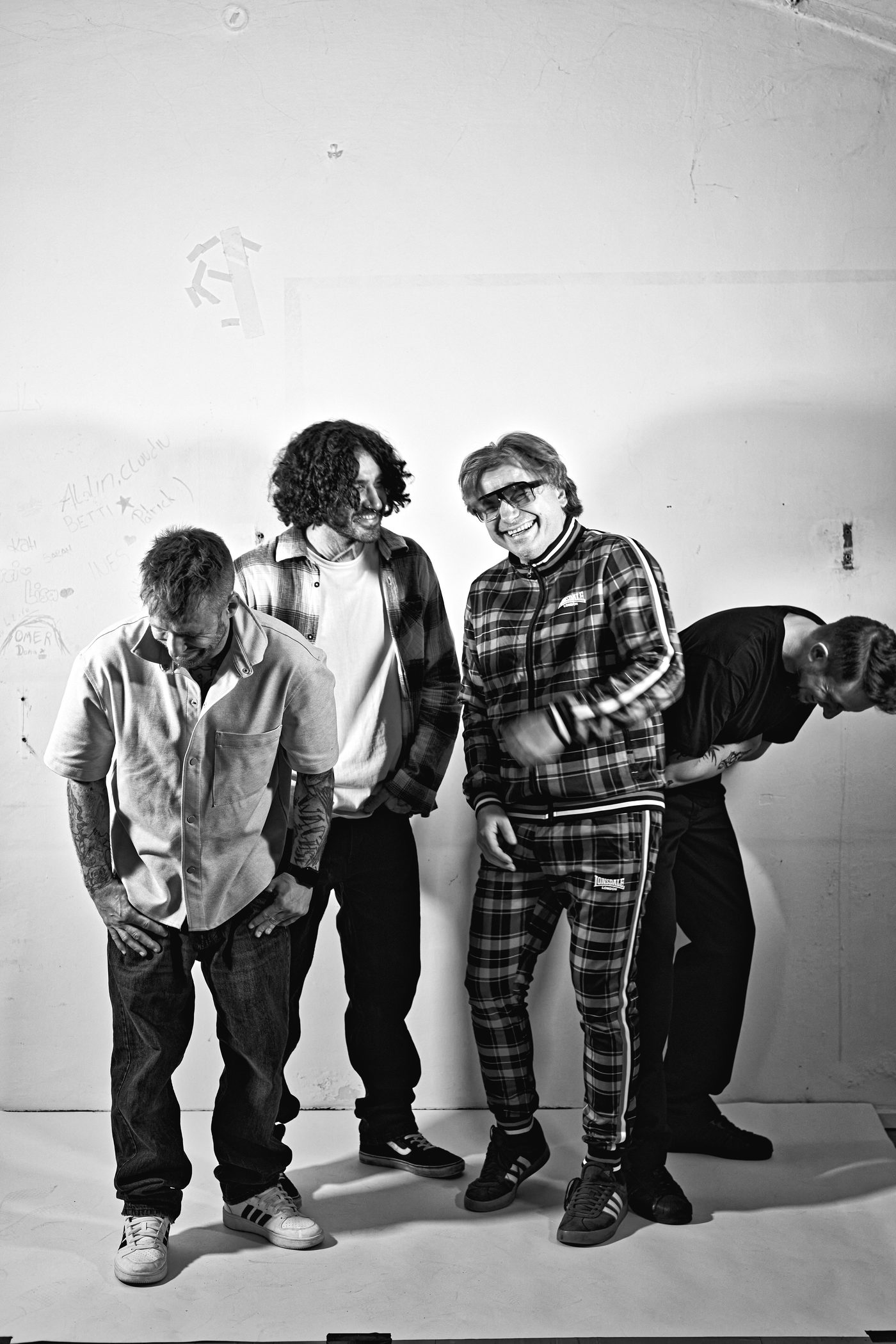
The prospect of working with Kurt was enough to get things moving properly. Fabian eventually found the other three members through online searches and personal contacts, joking that it was basically “online band member dating”. Miklos, originally from Hungary, joined on guitar, Ehren from Malta took the drums, and Chris from Austria came in on bass.
Chris arrived through a connection with grizzlydeerart, a tattoo artist who would also become closely involved with the band’s artwork. Fabian put out an advertisement looking for musicians, people replied, and the four got along straight away.
Graz became the place where they could play together. Fabian, originally from Berlin, now lives in nearby Gleisdorf, while the other three are based in Graz, where they also have their rehearsal room. The members bring different backgrounds to the band, although Fabian is careful about making any big claims about their place in the local scene just yet.
“The others come from somewhere else too, so we can’t tell you that much about Graz yet – we’re getting to know the scene show by show.”

He mentions Music House and Sub as places worth knowing, along with local hardcore bands Harrowist and Tired. Cursed and Calling are still getting familiar with the city and its gigs. They have their own musical history behind them, and they’re gradually meeting people around Graz.
By the time the four were together, much of the work on “Feel the Sun” had already begun with Kurt. The sessions at Tonstudio 45 lasted sixteen consecutive days, usually around twelve hours a day, sometimes longer. There was plenty of discussion about the songs, late evenings at the studio and a good deal of time spent working through individual parts.
Fabian had brought in the basic structures and ideas, and Kurt concentrated on the arrangements and how the finished recordings would sound. Guitar placement, little melodic changes and the way different sections built towards each other were all part of the job.
“The songs didn’t change in structure or idea – but in how they were dressed up and in the final sound, Kurt was decisive. He has an ear for where there’s still space, where which guitar should sit, whether a melody needs adjusting and how to build better tension.”
There’s a nice bit of family history in those sessions, too. Kurt’s brother Carlos Ebelhäuser, his former Blackmail bandmate, played bass, while Kurt added guitars himself. According to Fabian, it was the first time the brothers had worked together musically in a studio for roughly a decade.
And after six or seven hours of playing together, they were back to behaving like brothers.
“The funniest part: after six or seven hours, the two brothers were simply brothers again – discussions, memories, endless inside jokes. You could tell they really enjoyed being in the studio together again after ten years.”
Fabian remembers the whole thing fondly, even with the long hours. They talked through arrangements and changes without anybody trying to take control of the other person’s work. He was impressed by how well Kurt understood songs that had originally been written alone, and how much he could do to improve them while keeping the ideas intact.
“It was intense: 16 days in a row, 12 hours a day, sometimes longer, and we often sat together late into the evening. Lots of discussion, but always eye to eye.”
The two got along well enough that Fabian has already booked studio time for 2028, although he hasn’t said what they’ll be recording then.
The original demos were made in a rather different place. Fabian has a tiny old bunker next to his house, which he’s turned into a personal studio. It’s where he writes and makes demos, and he can play as loudly as he wants without disturbing anyone. He calls it his living room, and it’s clearly somewhere he enjoys spending time.
“The shelter is not our rehearsal room – it’s my own place, right next to my house. It’s tiny, it’s my living room, my favourite place.”
Fabian links the building’s existence to Austria’s old residential shelter requirements, recalling that new houses in the 1990s had to include such spaces. For him, the little room has become somewhere he can disappear for a while and work on music.
That gave him the idea for “Shelter”. It’s a love letter to his home studio, but also to the comfort of having your own private world. There’s a practical side to that when you’re writing and recording at home, of course. Having somewhere small, quiet from the outside and free of interruptions means he can spend time working through ideas without having to arrange a full band rehearsal.
The rest of “Feel the Sun” deals with people, relationships and memories that are harder to put away.
“Wanted” is the first example. Someone has left your life, the relationship has done you harm, and you still miss them badly enough to want another conversation. Fabian describes that pull very simply.
“Wanted – you want to call someone who is long lost, who only drains you and does you no good. But the longing for that voice is bigger.”
“Two Souls” takes a close friendship or relationship that has slowly changed. Two people were once there for each other through everything. Life got busier, they saw less of each other, and eventually one was left with silence. Fabian is interested in the hurt that comes when somebody who used to be so close gradually stops being part of your life.
Then there’s “Hello“, which deals with loving somebody who doesn’t love you back. Fabian gives the song a fairly defiant attitude. The person making the call has been rejected, but they’re determined to carry on and insist they’ll be fine on their own.
There’s quite a bit of this personal writing across the record, although the ten songs aren’t all dealing with damaged relationships. “When I Was Young” looks back at being ten or twelve, when the world seemed full of possibilities and fear hadn’t yet got in the way. Fabian remembers the feeling that you could do just about anything, even reach up and pull a star out of the sky.
“Dancing Shoes” goes somewhere more familiar to anyone who’s spent years going to punk and hardcore gigs. It’s about knowing exactly which friend to call when you need to get out of the house. You meet up, go to a show, end up in a bar and stay out until the morning. Fabian writes about those nights with real affection, especially the kind of friendship where you know somebody will always pick up the phone and come along.
“Happy” is a simple mantra about staying positive when things around you aren’t going well. There’s a similar attitude in the album’s title track, “Feel the Sun”, which deals with taking responsibility for your own happiness and doing your best to keep going.
“Feel the Sun – you are responsible for your own good. No whining, no blaming. Bite through, stay young, live your life. The sun will rise for you.”
The remaining song, “Silent Frame“, is a short interlude about sleeplessness. Fabian’s explanation is that sometimes you can’t sleep because you’re looking forward to what’s coming, with all that anticipation keeping you awake.
There’s a clear connection between the way Fabian got back to writing and the range of subjects he’s put into these songs. The record includes people he misses, friendships that have fallen apart, the kind of nights he wants to remember and a few reminders to look after yourself. The more hopeful songs sit naturally alongside the sadder ones, and Fabian isn’t trying to give every experience the same answer.
The band’s artwork also has a personal connection to how Cursed and Calling came together. Roland Kern, the tattoo artist working as grizzlydeerart in Gleisdorf, paints the oil paintings used for the covers. He’s the same person who helped Fabian find bassist Chris, so his involvement goes back to the earliest days of the line-up.
The painted covers sit alongside a very different visual approach for “Wanted”. Instead of using the artwork as the main way to introduce the single, the band printed orange street posters with an Austrian telephone number and tear-off strips. Each poster also carried a QR code.
The message was simple: “Wanted – call me tonight.”\
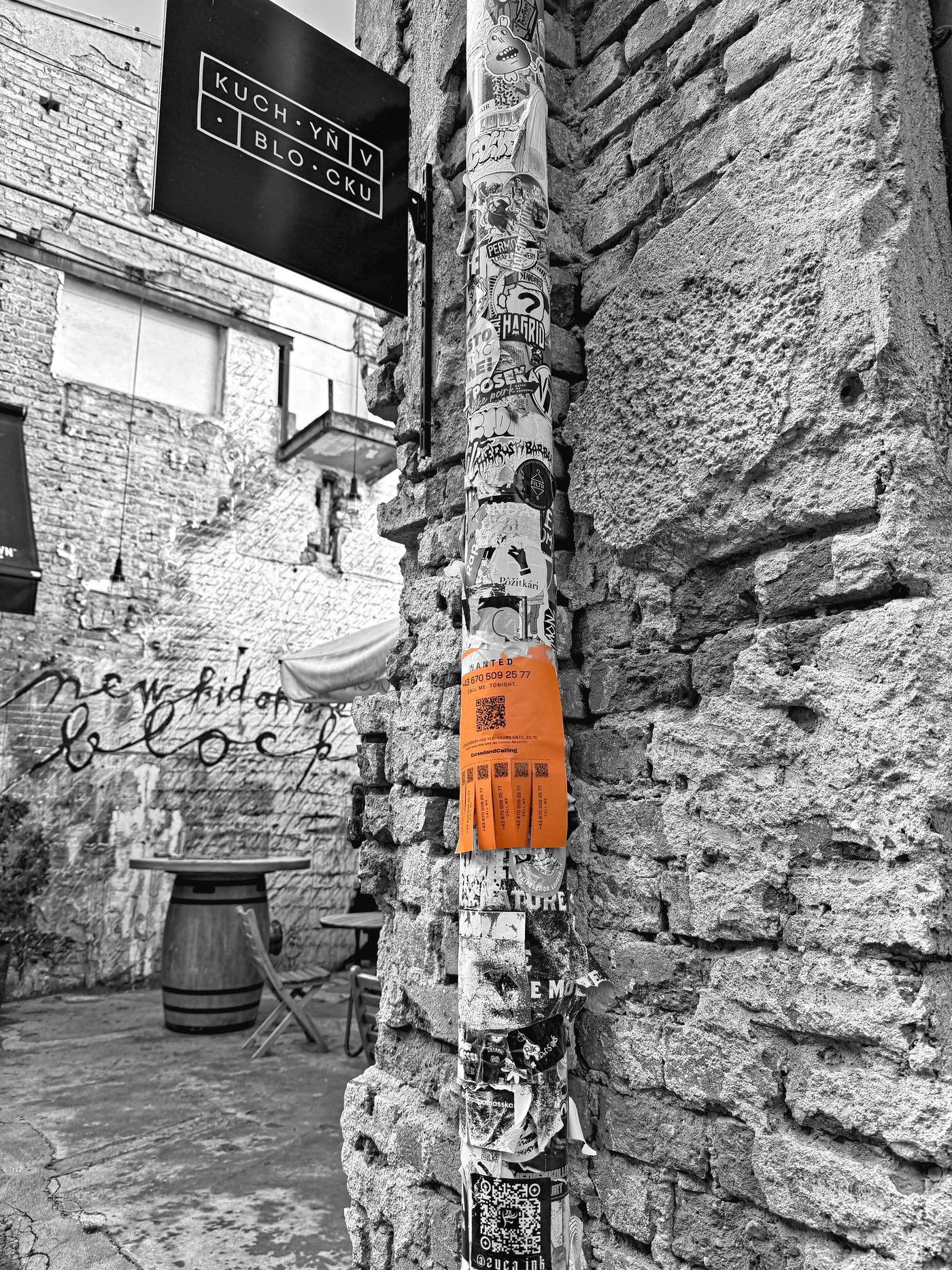
They went up in New York, Los Angeles, Philadelphia, Ohio, Berlin, Vienna, Prague, Amsterdam, Sheffield, Malta and Graz, with additional posters appearing around the Austrian region, including Weiz. Fabian handled most of the European locations himself. Friends and a street team helped with the American cities.
The number, +43 670 509 25 77, connected callers to an automated recording of “Wanted”. For three weeks, that was the only way the public could hear the track before its official release on 23 October.
At an early point in the campaign, Fabian counted 245 calls and eight voicemails. He estimated that around half the people who scanned the code actually made a call. The messages were generally short and enthusiastic, with people saying things like “great song”, “great idea”, “greetings from Vienna” and “we love this”. Berlin band Bluthund also got in touch through the number.
Wyświetl ten post na Instagramie
The posters soon started attracting local attention. Austrian and German outlets picked up the story, and people in Graz began noticing the flyers. By 24 October, a report from local publication 5min.at put the number of posters distributed at 487, according to the band’s figures.
Cursed and Calling kept photographs of the posters appearing in the different cities, putting together an online gallery of the campaign. There’s something pretty satisfying about seeing the same bright orange design turn up in so many different places, all asking people to call the same number.
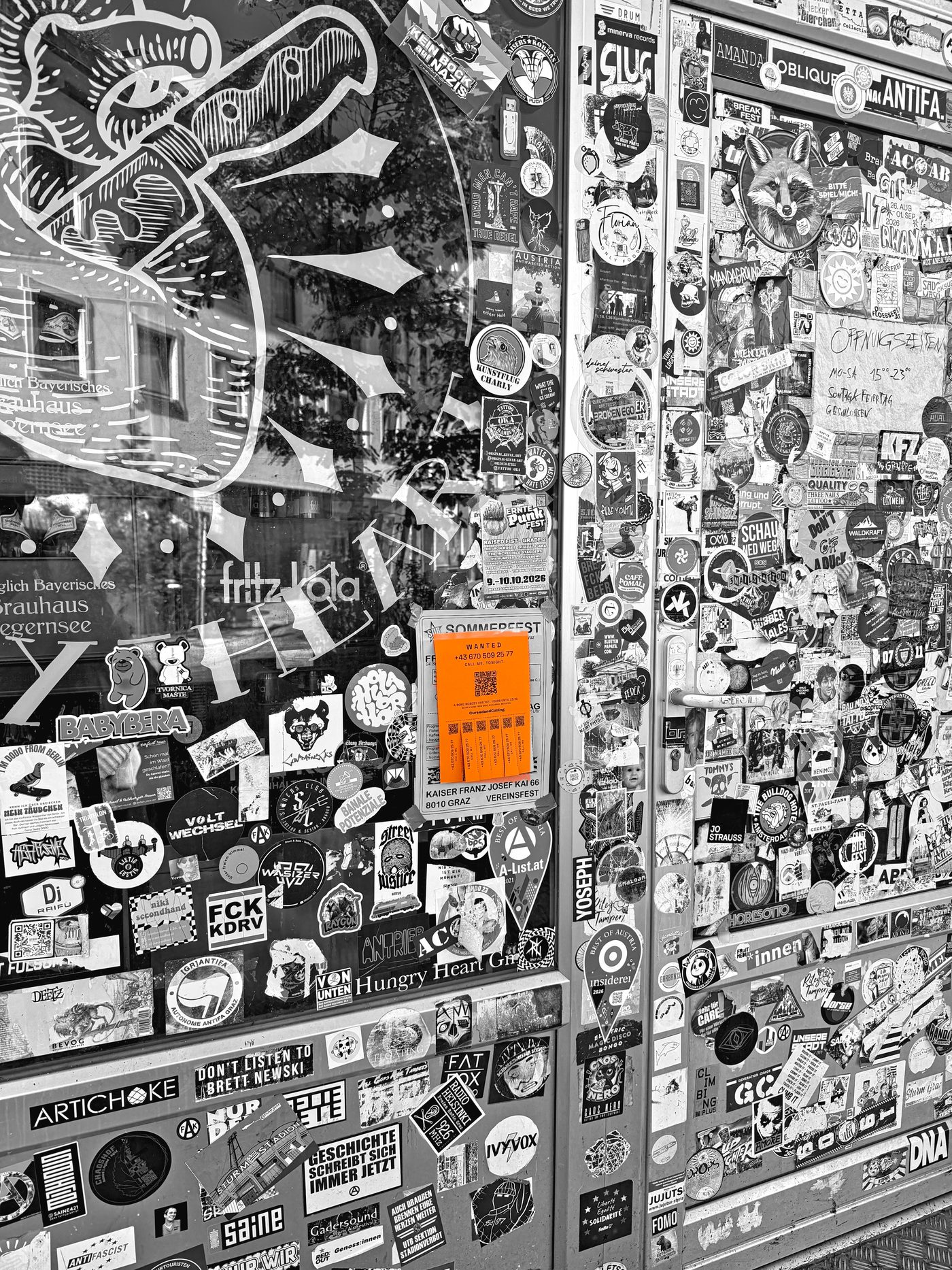
They also made a small retro-style computer game for the band’s website. The top fifty players were offered the chance to have their names included in the credits of the “Wanted” video, which came out alongside the single.
It’s an unusual amount of activity for a band releasing its very first song, especially when most of the music had already been written before the line-up was finished. The phone idea gave people a way to get involved without knowing anything about Cursed and Calling beforehand, and the lyrics made sense of the whole thing once they heard the track.
“Wanted” came out on 23 October 2026, with four more singles planned before the album. “Happy” follows on 4 December, “Shelter” on 15 January 2027, “Hello” on 26 February and the title track on 26 March. The complete ten-song “Feel the Sun” is scheduled for 2 April 2027.
For now, the band have the “Wanted” video online, along with the street poster gallery and the original phone campaign page. The first single is out, the album is on its way, and Fabian finally has a complete band to play the songs he started writing alone in his little bunker.