

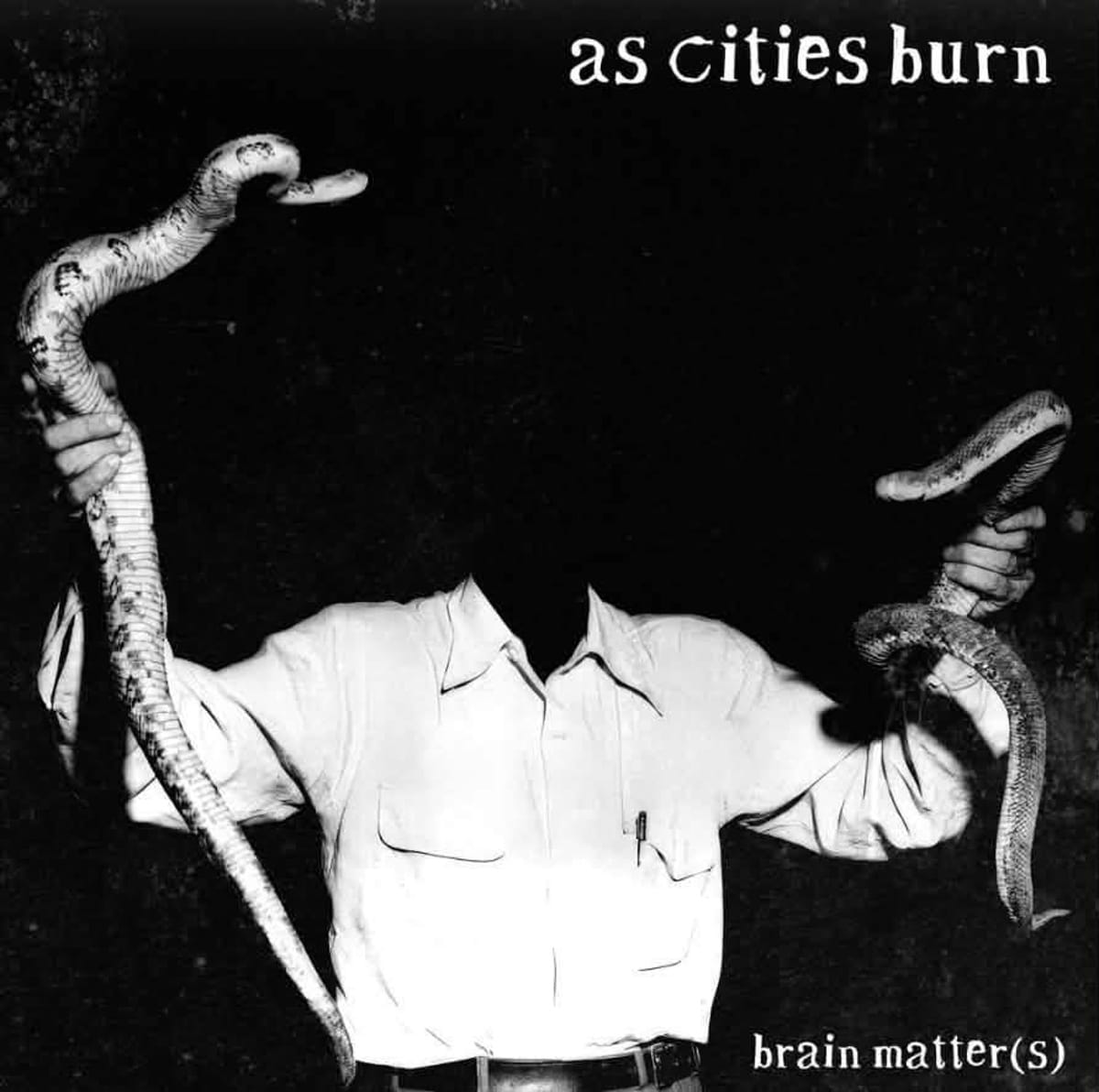
On “jester”, As Cities Burn vocalist and guitarist Cody Bonnette can barely stand the sight of himself in the mirror. The title track of the Louisiana band’s fifth album, “brain matter(s)“, eventually asks whether thinking about everything makes life any better. It’s familiar territory for a group whose early post-hardcore records were full of difficult questions, although the music around those words has changed a great deal. They’ve become a much more song-focused indie-rock band, with quieter passages, acoustic guitar and compositions that drummer Aaron Lunsford believes could stand up just as well on a piano.
The new record moves between heavier, guitar-led sections and much gentler songs, with Cody’s writing carrying more of the weight. Aaron remembers the first two As Cities Burn albums as records where the guitars drove almost everything.
He’s immensely proud of “Come Now Sleep”, but admits that some of its songs rely so heavily on all those parts working together that they’d struggle to survive in a stripped-back arrangement. He hears something quite different in “brain matter(s)”.
“I don’t know if it’s just getting older, or getting lazier, or getting better. But I think we have evolved to be extremely “song forward” meaning these songs would work – and do work – great on just a piano or acoustic guitar. Whatever we layer on top of them from there is just a matter of taste.”
I’ve got a fairly personal reason for being interested in that change. Around twenty years ago, I was slightly obsessed with As Cities Burn’s first two records. “Son, I Loved You At Your Darkest” and “Come Now Sleep” spent dozens of hours in my headphones, mostly when I was out riding my bike. I played those albums an absurd number of times. The guitars, the strange turns in the arrangements, the way the songs could get heavy and uncomfortable without losing their melodies. I kept coming back to them.
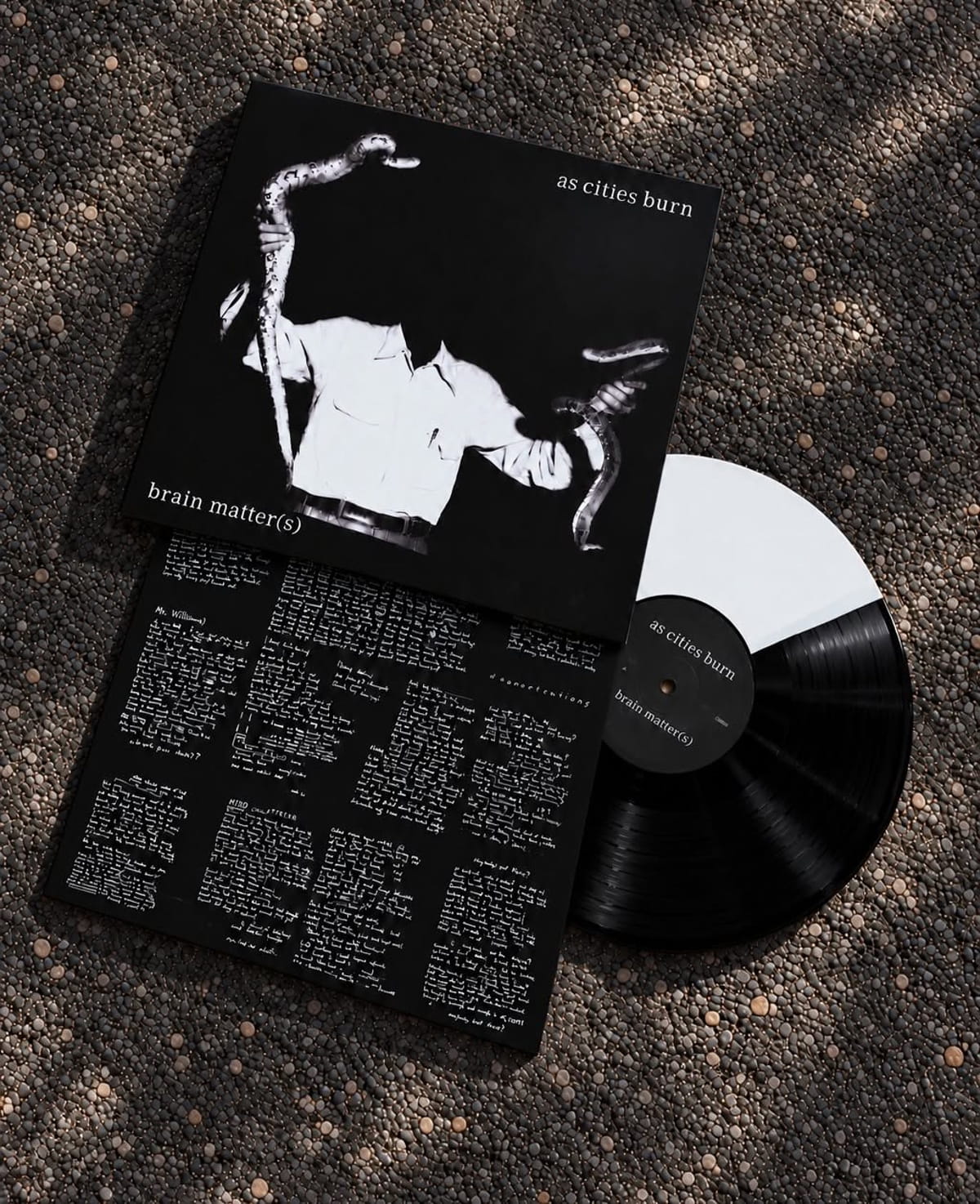
So when “brain matter(s)” arrived, I wanted to get into how the guys who made those records now work together. After all the changes in As Cities Burn’s lineup, the breakups and reunions, what makes Aaron keep returning to Cody? And how did two musicians who’ve known each other’s writing for 23 years end up making something this different?
Aaron’s answer goes all the way back to the first As Cities Burn demo or EP, which he thinks was recorded around 2002 or 2003. He doesn’t have an especially generous opinion of it today. To his ears, it sounds like a typical young local band from that period, vaguely trying to be Thursday, with poor recording quality and a lot of immature playing.
His friends weren’t impressed either. Aaron had just told them he was dropping out of college and moving to Baton Rouge to play drums with the band, and several of them couldn’t understand what he’d heard in those recordings.
“I fucking heard it though.”
The part he couldn’t get out of his head was Cody’s guitar. Even on those early songs, with all the problems in the performances and recording, he heard a guitarist who understood how to put music together. Cody’s playing was unusual, and his songwriting seemed to come naturally.
“I could immediately hear that he had some deep understanding, whether conscious of it or not, of what is good. I could tell he knew how to write a song. I could see that he had an undeniably unique style of playing.”
Aaron had to think about his own position, too. A drummer can be good at his instrument and still struggle to find the right band. Somebody else needs to write songs worth playing, and Aaron reckoned he’d found that person.
“I hitched my wagon to Cody, and he keeps delivering. It just fits, and I know exactly what to do with his song ideas. I don’t know how else to explain it.”
That understanding has survived a ridiculous amount of As Cities Burn history. In 2026, Cody and Aaron are the band’s two central members, with Cody handling vocals, guitars and songwriting, and Aaron developing the arrangements and drum parts. Their lives are nothing like they were when they started, yet Aaron still feels like much the same person.
“We’ve always just been able to get on the same page pretty quickly with the music. I don’t know if it’s instincts that survived, or just the result of 23 years into this project.”
They’ve got their own shorthand by now. Cody sends a demo, Aaron gets to work, and they usually don’t spend much time explaining what they’re trying to achieve. If a song is working, he’ll leave it alone. If something bothers him, he’ll start changing things until it makes sense.
“I might be like “no notes bro” and just roll with it. Or I might take a machete to a demo and wait for somebody to stop me and fight back. But, no there is no scenario where Cody is calling me to explain his idea for a song.”
Some of the biggest changes on “brain matter(s)” came directly out of that arrangement.
“us defines the means” originally had a structure Aaron wasn’t happy with. After the section that became the bridge, the chorus simply never came back. He started taking the demo apart, adding stops, trying different ideas and stretching the bridge to perhaps two or three times its original length. The change that survived was bringing the chorus back after that extended section.
It sounds simple when he tells it now, but that’s quite a lot of messing about with a song somebody else has written. Aaron has enough trust in Cody to try those changes, and Cody knows Aaron will push when he thinks the music needs it.
“bottoms up for the kids” was a tougher one.
Cody’s original idea had a punkier feel. Aaron had been listening to Turnstile and wanted to pull the opening into a heavier half-time rhythm, then let the song pick up speed further along. During pre-production with Matt Carter at Cody’s house in Louisiana, he became so dissatisfied with the earlier version that he seriously considered getting rid of the track.
“I was super depressed about the original feel when me and Matt Carter were doing pre pro at Cody’s in Louisiana. I was ready to scrap the song all together. I like the way it turned out.”
Matt, best known as the guitarist in Emery, played bass on the album and turned out to be hugely useful in ways that had very little to do with playing bass. He’s become the person who helps Cody and Aaron keep the whole As Cities Burn operation working.
Aaron prefers to call him a strategic adviser. Matt apparently hates being called a manager, and Aaron understands why. They’ve spent enough years around music-industry organisations and the baggage that comes with them.
The two longtime bandmates have a good relationship, but there’s a lot of history involved, personally, creatively and professionally. Matt is good at spotting where things are going wrong, helping people deal with one another and connecting the band with somebody who can actually get a job done.
“Matt has a unique ability to step outside of traditional systems and find where the actual gaps in the organization exists.”
Aaron reckons nobody they’ve worked with in the past, whether managers, labels or agents, has handled those problems as effectively.
“Whatever it is he is doing, he should charge us more money.”
In March 2026, Matt probably saved the album several months of waiting.
They were getting close to finishing the songs and talking about booking studio time around August. After a run of writing sessions at Cody’s house, Matt could see that everyone was working well together and that the songs were coming along. He asked what was stopping them from heading into the studio the following week.
Aaron remembers the question exactly: “What’s stopping us from going into the studio NEXT WEEK.”
View this post on Instagram
They didn’t quite make it there in seven days, but Cody flew to Seattle roughly two or three weeks later. Soon they were recording with Aaron Sprinkle, someone As Cities Burn had wanted to work with for years.
Sprinkle’s previous production credits include Anberlin and Story of the Year, and he’d developed a strong reputation for helping bands work out what their songs needed. Aaron was looking forward to it, although he also admits he was getting a little too confident about the demos.
The arrangements seemed so complete that he wasn’t entirely convinced a producer was necessary.
“The songs were so strong and so well developed that I was ready to track drums with my fucking iPhone. Sprinkle made a fool out of me.”
On “mind chatter“, Sprinkle found a small keyboard part that none of the others had thought to add. It comes in near the end of the chorus and returns towards the end of the song. That’s the entire intervention Aaron singles out, a simple little part in two places.
“I think it made the track. We probably wouldn’t have thought to do something like that.”
Sprinkle worked on both production and engineering, and the album was recorded at Substation in Seattle. The mixing was done at Starmilk Studio on Vashon Island, with Levi Seitz handling mastering at Blackbelt Mastering. Sprinkle also took care of the record’s art direction.
By the time the sessions were finished, Aaron had a much better appreciation for what somebody coming into the room with a different set of ears could bring to songs that he and Cody had already spent so long working on.
The whole thing happened without a record label financing it. As Cities Burn funded the album themselves, with direct support from their Substack subscribers helping them finish it.
That’s also why “brain matter(s)” arrived in an unusual way. The band initially made it available to their own supporters, then opened it up through Lockstep before the wider streaming release. They wanted people who’d been following As Cities Burn for years to hear the songs first, with early access giving those supporters something back for helping them.
“I think we just wanted to build a foundational fan connection that has not been present since the early days of ACB.”
There were financial reasons, of course. Aaron is pretty candid about that. They were paying for the record themselves, and the Substack made a real difference to getting it finished. The goal was never to get rich from the thing.
He was grateful that people still cared enough to support As Cities Burn directly, even after all the years of inactivity and changing lineups.
What did surprise him was that some listeners apparently had plenty of time to complain about the swearing in the new songs.
“I wouldn’t say it taught me anything unexpected – except that I’m still shocked that grown adults find time to leave comments about other grown adults choosing to use profanity in their art. It’s, strange.”
As Cities Burn have had a complicated relationship with the Christian music world for years, and Aaron’s thoughts on that business have hardly softened. He’d already spent a good amount of time writing about it in his memoir, “Backstage”, a book he now finds a little uncomfortable to revisit.
He was 32 when he wrote it. Looking back, he sees someone who was still angry about having failed to make a proper career out of music, but who also thought there might be time to turn things around.
He hadn’t managed to find another band to join. Nobody was chasing him to play drums, and he hadn’t really gone out and made a serious attempt to build a career beyond As Cities Burn. That combination of frustration and lingering hope is pretty difficult for him to read now.
He’s 43, has three kids and knows exactly how expensive ordinary family life can get.
“So I’d probably tell that guy, “Yo dude, move on and just either go get better at drums or start tech sales now with Colin so you can actually have money when you are 43 and Little League is $850 for 3 kids.””
His children are also keeping him informed about how embarrassingly old he sounds. Apparently, they’ve started telling him that “cringe” is now “wraps”, and that it’s already cringe for him to use the word cringe. Aaron seems to be taking the news reasonably well.
The things he wrote about the Christian music industry are another story. He still stands by those criticisms. Back when he was working on the book, he’d wanted to write about Michael Tait from DC Talk but worried he might get sued.
“Vindicated baby.”
It’s a long way from the Aaron who moved to Baton Rouge in 2003 because he couldn’t stop thinking about a local band’s guitar player. He’s had time to live outside the music business, and he thinks that’s been good for him. Touring, in his experience, can leave musicians stuck in the same habits for years. He jokes about the various degrees of Peter Pan syndrome that exist in the industry and is grateful he spent enough time away to become a functioning adult.
Yet the music keeps dragging him back.
In an earlier interview about the album, Aaron admitted he was a little frightened of what another run with As Cities Burn might involve.
“I’m a bit terrified of what I might get myself sucked back into … Unfortunately, I moved to Louisiana in 2003 to play drums for a damn genius. And I can’t all the way quit,” he said.
The strange part is that Aaron doesn’t seem to have many illusions about what playing in the band means for his life now. He’s not chasing the same career he imagined in his twenties. He’s had time to think about the records, the mistakes and the things that happened around them, sometimes probably too much time.
Cody’s words on the title track ask a question that could have been written for that situation: “Is it getting any better the more you think about it?”
Aaron doesn’t think so. He’s been trying to let go of the past and spend more time dealing with what’s happening in front of him. He has a fairly grim description of nostalgia, followed by a very funny admission about how little chance he has of getting rid of it permanently.
“Nostalgia is a dangerous cancer that in my view cannot be cured, and pushing forward with new art is the only treatment to achieve (temporary) remission.”
He fully expects it to come back around Christmas, when he’s sitting beside the tree, mixing Manhattans and listening to The Eagles’ “I’ll Be Home For Christmas”.
There was one other personal coincidence I couldn’t leave alone while talking to Aaron.
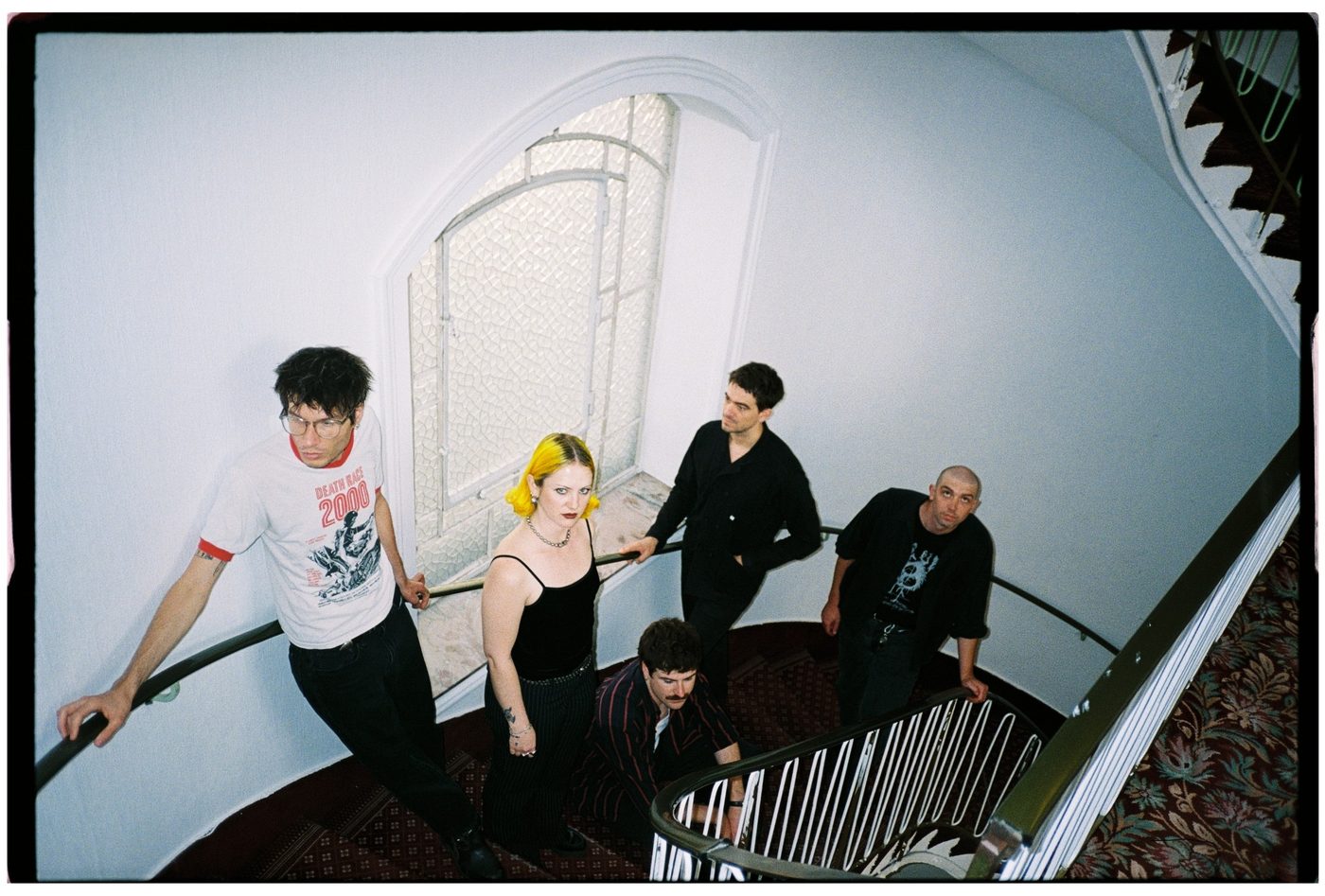
During the summer of 2026, my family and I made our first trip across the United States, driving from Chicago to Las Vegas and visiting Badlands, Rapid City and Yellowstone along the way. Badlands was our first national park, and the place made a huge impression on us. A few weeks after getting home, I opened the photographs supplied for the new As Cities Burn record and saw the guys standing by the Badlands sign.
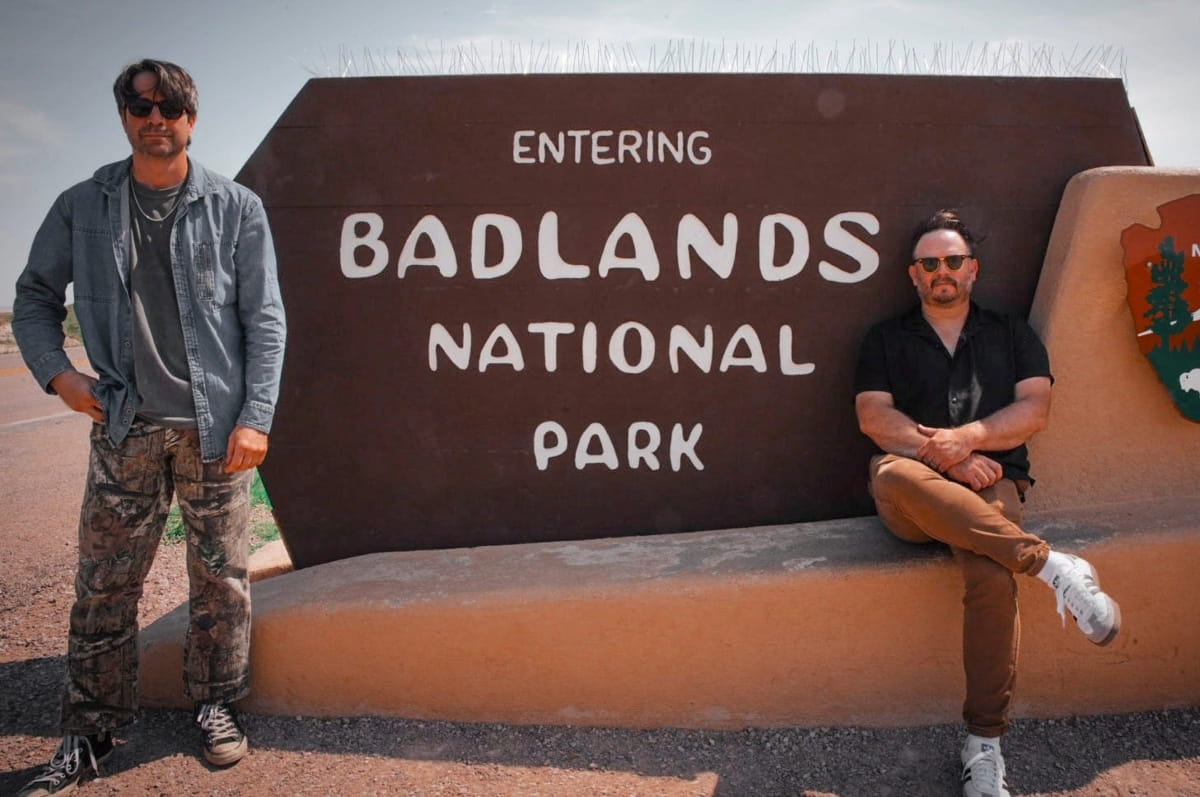
It was a pretty strange coincidence after all those years listening to the band, so I wanted to know how that photograph happened.
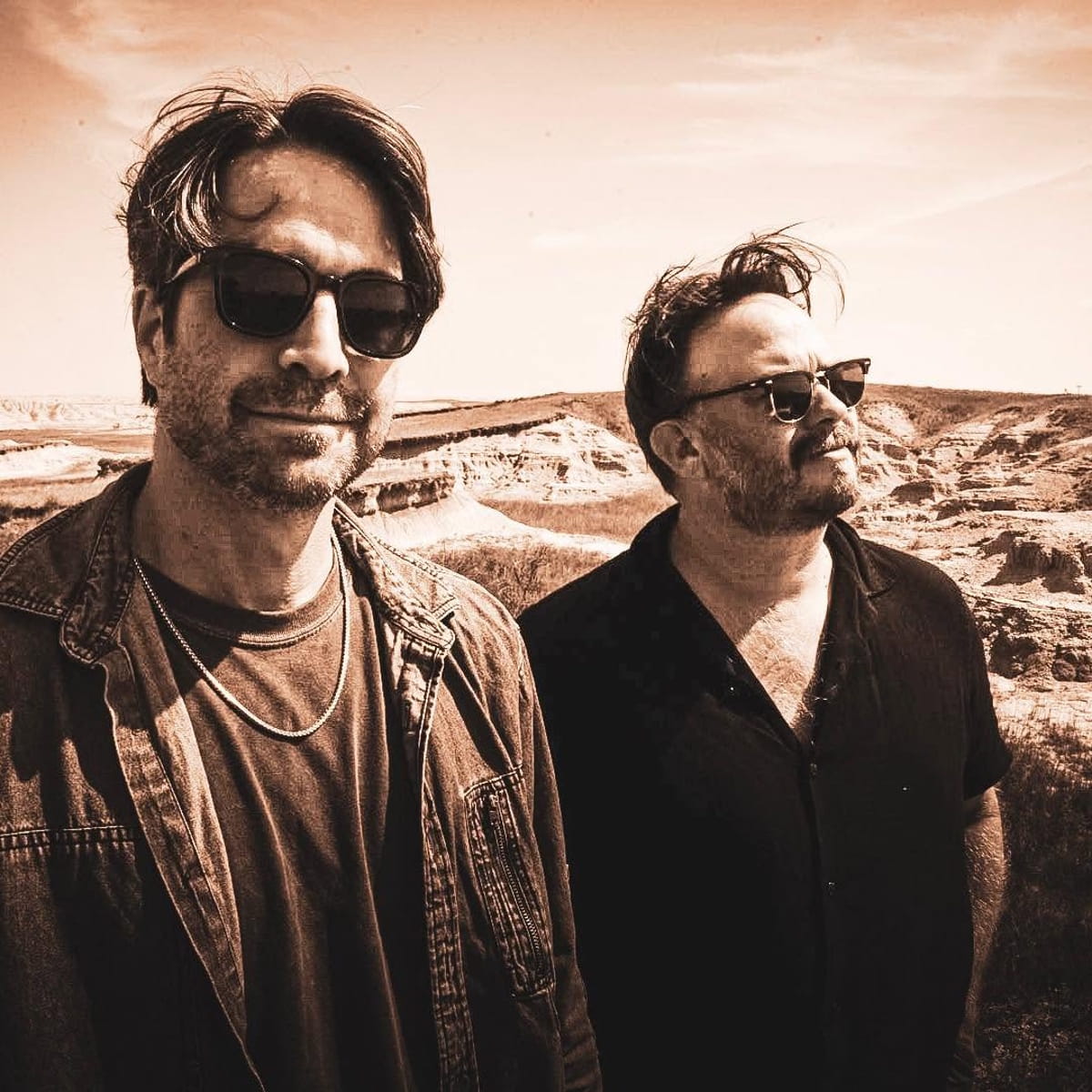
The story was wonderfully ordinary. As Cities Burn had played two festivals in South Dakota that summer. They were passing Badlands on a driving day between them, and somebody figured it would be a good chance to take some band photographs. Matt Carter took the shots.
Aaron was happy to provide an explanation, although he wasn’t interested in pretending the stop had some deeper connection to the album.
“If you can think of some really smart or introspective idea that relates those photos to the new record and this iteration of the band, please send and I’ll use it in the next interview – uncredited to you of course.”
I think I’ll leave him to come up with that one.
As Cities Burn have made a lot of different records since Aaron first moved to Louisiana. Their fifth full-length, “brain matter(s)”, brings Cody’s songwriting and Aaron’s arranging together again, with plenty of help from Matt Carter and Aaron Sprinkle. The songs have changed quite a bit since 2005, and Aaron still seems happiest when he’s working out what to do with something Cody has written.
“brain matter(s)” received its wide release on 2 October 2026, following its earlier availability to Substack supporters and through Lockstep. The self-funded album is available on major streaming services and can be heard through Lockstep. Vinyl editions and CDs are available from the band’s official store, and you can follow their own updates through Substack.
The band is headed out to tour with Underoath, August Burns Red, and Atreyu. Their set starts at 6:30 every night, show up early or you’ll miss them!
View this post on Instagram
11/5 – St Louis, MO SOLD OUT
11/6 – Oklahoma City, OK
11/7 – Albuquerque, NM
11/9 – Phoenix, AZ
11/10 – San Diego, CA SOLD OUT
11/12 – Las Vegas, NV
11/13 – Los Angeles, CA SOLD OUT
11/14 – San Francisco, CA (low tickets)
11/16 – Seattle, WA (low tickets)
11/17 – Vancouver, BC
11/19 – Salt Lake City, UT
11/21 – Denver, CO
11/23 – Minneapolis, MN
11/24 – Chicago, IL (we go on at 6PM!)
11/25 – Grand Rapids, MI