

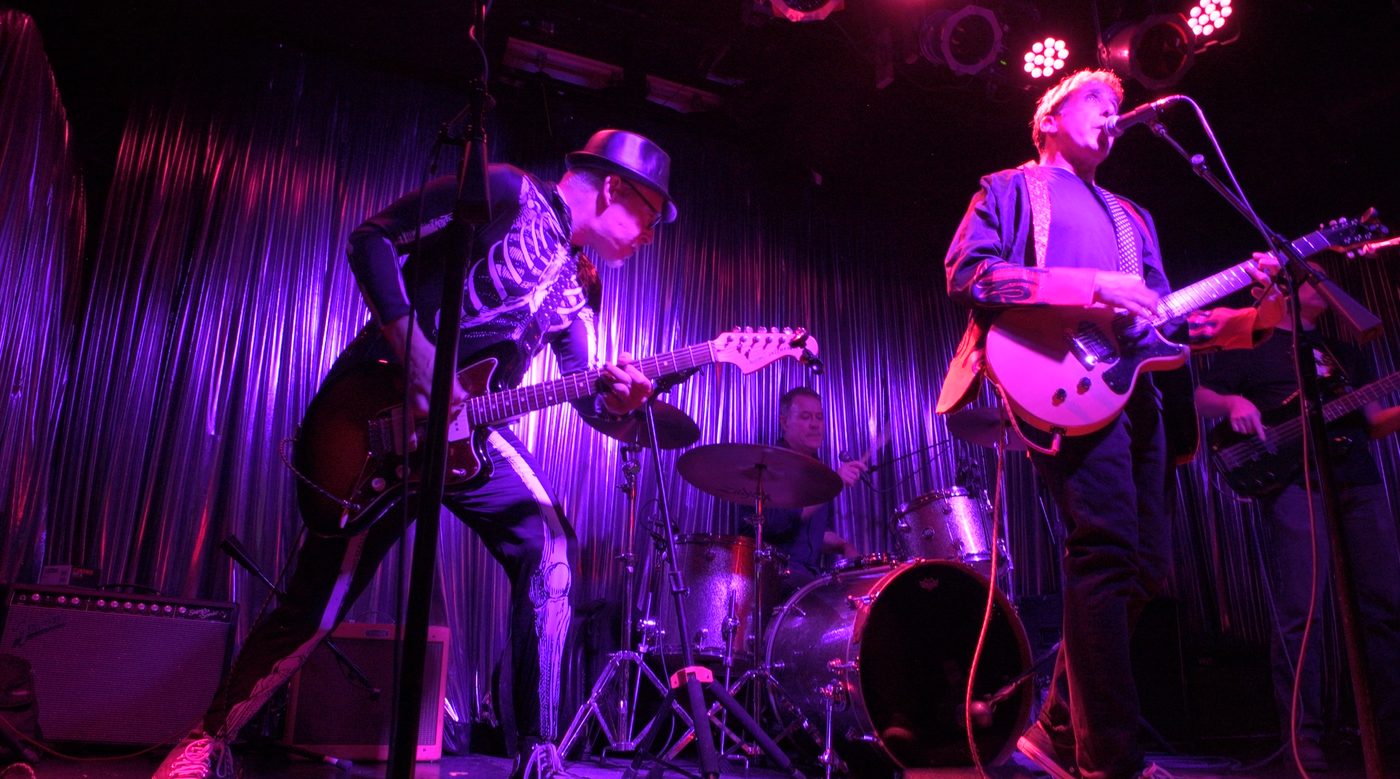
The Underbites have made a punk-rock record for people who are tired of being told what to do. On “Out of Control“, the New York four-piece get into politics, the people running the country and the everyday frustrations that make you want to tell somebody to get lost. The songs are short, quick and full of rock’n’roll hooks, with plenty of humour among the more serious stuff.
Two of the guys behind the record, Kurt Feldhun and Jon Fox, were already part of New York’s punk scene in the early 1980s. One was interviewing Bad Brains on college radio. The other ended up directing their first official music video. Now they’re playing in a band together again.
Jon, who sings and plays guitar, describes the shift from their previous album, “Soapbox Agitprop”, as a move towards politics with a capital P. The Underbites have written about personal issues before, and those songs could be political in their own way. After several years of watching what’s been happening in the United States and elsewhere, Jon wanted the new record to get more directly involved.
“We live in very crazy, weird times but there is a 50 year history of punk rock commenting on what’s going on politically and culturally.”
“The Ruling Class“, which opens the album, goes after wealth and the people who hold power. “Guantanamo” and “Modern Times” take on the wider political situation, while “American Election Day” came from Jon wanting to put some hope into a pretty bleak conversation. The title “Out of Control” belongs to that same frustration with events that seem to have been getting worse for years.
Jon has worked at MTV News and in digital media, and he talks about the amount of information people take in every day, especially living in New York. There wasn’t one specific event that made him start writing more openly political songs. He points to the last several years and everything that’s been going on around the world.
There are still songs that give the record a break from all of that. “Madame Butterfly” and the brief “Non-Stop Bop” bring out the band’s lighter side. The latter closes the album in just over a minute, and the record’s twelve songs together run for around twenty-seven minutes. The Underbites play punchy, guitar-driven punk and rock’n’roll, with the kind of direct choruses that make sense in a small club where people can sing along. Their music has plenty of the melodic pull associated with classic New York punk, and the songs get to the point quickly.
“You can’t be yelling about politics all the time — it can get kind of tedious.”
One of the songs that took longer to work out was “American Election Day“. Jon usually writes at home and brings his ideas into rehearsals with a fairly clear picture of how he wants them to sound. The rest of the group can get through the arrangements quickly. Kurt and Jon have known one another for so long that they don’t need to spend much time discussing every little change, and the whole band have developed a similar understanding. They sometimes call the process “instant rock”.
“American Election Day” needed more attention. They kept changing the tempo and working on the call-and-response vocals towards the end. Jon had initially taken some ideas from Bob Dylan’s “Desolation Row”. After they’d been playing the song for a few months, he happened across My Chemical Romance’s version of the Dylan track and started trying some of their arrangement ideas too. Those experiments carried on until the group settled on the version they eventually recorded.
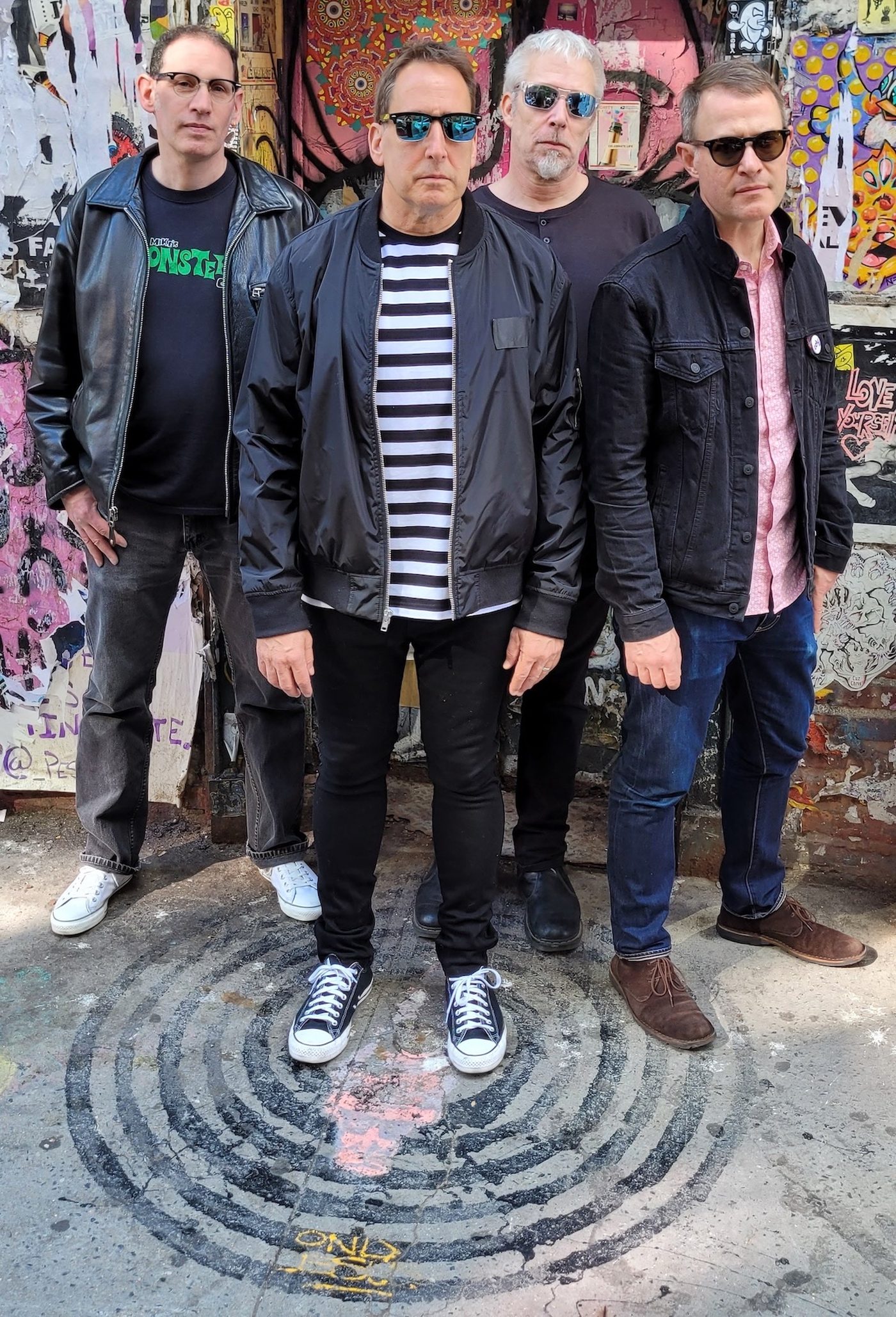
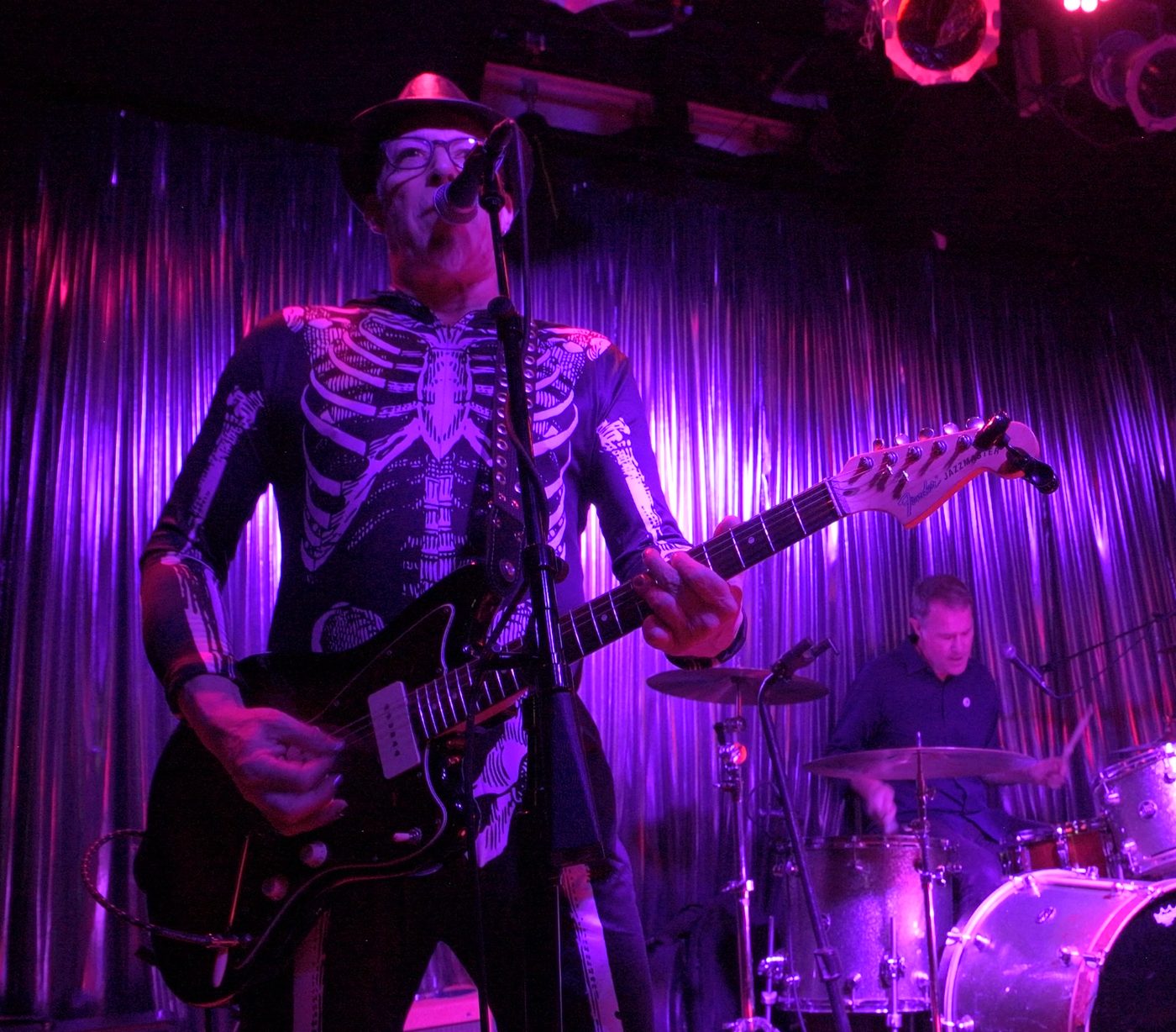
The album was made at Virtue and Vice Studios in Brooklyn, with Perry Leenhouts of Point Break Sound producing, mixing and mastering. Alongside Jon and Kurt, The Underbites have Ethan Rosenblatt on bass and Michael Hoffman on drums. All four contribute vocals.
Kurt’s own contribution to the writing includes “You’re Not the Boss of Me“, a song that came out of an especially irritating day when he felt that everybody around him was being pushy and selfish. He kept repeating the title to himself until it started sounding like something he could sing.
“Throughout the day, I found myself repeating the phrase “You’re not the boss of me” almost like a mantra which I found to be very empowering.”
It gradually turned into a punk chorus about standing up to bullies and people who try to control others. Kurt was thinking about the phrase following us through different parts of life, from childhood and parents to work, relationships and politics. He wanted something people could shout together. Since the band started playing it live, he’s noticed people joining in even when they’re hearing the song for the first time.
For the official music video, Kurt put the band footage together with protest images, cartoons poking fun at authority and a collection of people giving the camera the middle finger. The joke is that everybody gets a turn. There’s a baby in a stroller, a child with a mohawk and a line of older people, all making the same gesture.
Those characters were made using AI. Kurt had considered how difficult it would be to get those shots with real people, especially the baby. The production budget was going towards the studio rental and camera operator, and bringing in actors for every scene would have cost much more. He created the images and then spent time adjusting and processing them to get the results he wanted.
“I would always opt to use real people but sometimes cost and general logistics, whether creative or production related, make it impossible.”
He knows plenty of people dislike AI-generated imagery, especially when it turns up everywhere with little thought behind it. His view is that filmmakers can use it carefully, with the same attention they’d give other visual effects. He believes the positive reaction to the video so far comes partly from the work he put into making those images fit the rest of the footage. The technology gave him a way of getting shots he couldn’t realistically organise within the available budget.
“I crafted my own images, refined them, and effected them so they would work visually and not scream AI.”
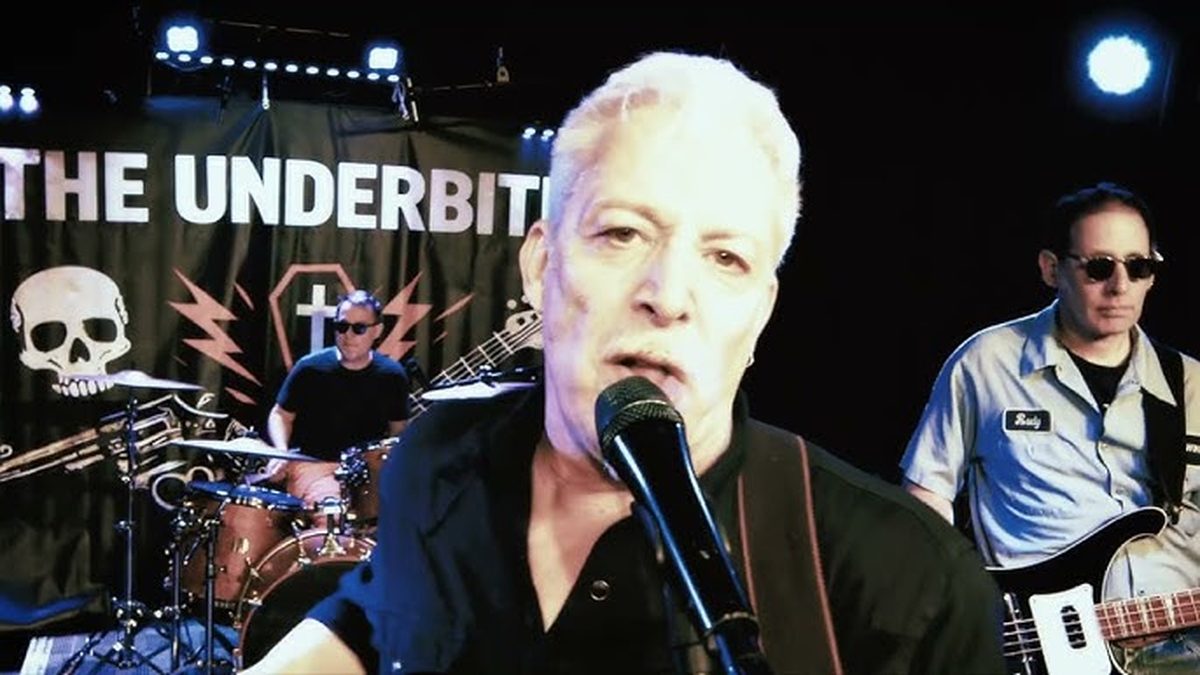
The four music videos made for “Out of Control” came out of a single five-hour studio session. Kurt rented the space, arranged the camera operator and got enough performance footage for “Panic Button”, “The Ruling Class”, “Modern Times” and “You’re Not the Boss of Me”. He could check the camera’s footage as they worked, try another take or come up with a new idea on the spot. He reckons the cost was a fraction of what one music video would have required when he started out.
Back in the 1980s, he was shooting on film. Every extra take meant using more stock, and nobody could look at the footage straight away. The film had to be developed and transferred before the director could see what had actually been captured. You worked out the shots in advance, trusted the camera operator to get everything in focus and hoped nothing had gone wrong. Kurt remembers how little freedom there was to experiment once the shoot was under way.
His first major music-video job came about in 1985, when he was studying film at NYU. Kurt had started there in 1982 and was already a devoted Bad Brains fan. He’d seen them play several times, and one night, after taking psychedelic mushrooms, he put on their album “Rock for Light”. He was 22, had no experience directing music videos and decided he was going to make one for Bad Brains.
“I had a lot of confidence at that age and I guess the mushrooms helped light the fuse to that fire.”
Getting in touch with the band turned out to be fairly easy because of Jon. They were roommates at NYU, and Jon had a programme on the university’s WNYU radio station. He’d recently interviewed Bad Brains, so Kurt asked him for their manager’s number. Jon handed it over, and Kurt called Anthony Countey to pitch himself as a young filmmaker who loved the band enough to make their video on the limited money available.
SST Records had provided a budget of $5,000, according to Kurt. He convinced Countey that his enthusiasm, film-school background and willingness to put in the hours made him a good candidate. The manager agreed to arrange a meeting with the musicians at Kurt and Jon’s apartment.
Before they arrived, Jon gave Kurt some advice about what to have ready.
“Make sure you have a lot of pot because they really like to smoke pot.”
Kurt took the advice seriously. He rolled the biggest joint he’d ever made, figuring it needed to be large enough for five people. When the band arrived, everybody sat down in the living room and started talking. Kurt lit his enormous joint, took a few puffs and offered it to H.R.
The singer politely put up his hand and declined. Then he pulled out a joint even bigger than Kurt’s. The other members did exactly the same.
“They all had enormous spliffs that would have made Bob Marley proud.”
Kurt had prepared one joint for the whole group, only to discover that everybody had brought their own. He doesn’t remember much of the meeting after that, although the band apparently liked him and his ideas enough to give him the job. He’d got his first Bad Brains video, and the budget was tight enough that his payment was almost comical.
“My payment for the whole video was a slice of pizza and a can of coke which I paid for out of the production budget.”
The result was “Hired Gun”, filmed partly at Rock Hotel, one of the New York hardcore venues Kurt knew well. He wanted real East Village punks and Bad Brains fans in the video, so he rounded up people from the neighbourhood. On the day of the shoot, one crew member drove a van around the East Village picking up more people to fill the crowd.
Harley Flanagan of Cro-Mags, a friend and fan of Bad Brains, agreed to appear. Kurt had imagined a low-angle shot of somebody diving from the top of a speaker tower, passing close to the camera as they fell. Harley said yes and climbed to a height of roughly eighteen feet.
He was ready to jump when Kurt noticed a fairly serious problem. Nobody was there to catch him.
Harley apparently had no intention of waiting for somebody to organise a safe landing. Kurt stopped him and quickly got several crew members into position. The jump went ahead, and nobody was hurt.
“It all went off without a hitch or accident and we avoided a Harley pancake.”
Another scene involved a hired killer shooting a crack dealer in an alley. Kurt had found a location and arranged for a friend to play the dealer, with about twelve others pretending to be customers waiting to buy drugs. When the crew arrived, there was already an actual dealer working there, complete with a queue of customers.
The dealer left, but some of the people waiting around stayed to find out what the cameras were doing. When they heard it was a Bad Brains video, about five agreed to take part. The fictional drug-buying scene ended up featuring people who really had been in the alley to buy crack.
“It was the 1980s in NYC after all.”
“Hired Gun” eventually made it onto MTV’s “120 Minutes”. Kurt remembers it airing in autumn 1986, probably in October, November or December, although he hasn’t been able to pin down the exact episode. He initially thought it had been included in the programme’s first broadcast, but later realised the dates didn’t line up. The video is remembered as Bad Brains’ first official music video, and for Kurt it was the beginning of a long involvement in filming musicians.
Rock Hotel itself occupies a big place in both musicians’ memories. The club was in the ballroom of the old Jane Hotel near Jane Street and the West Side Highway. Kurt remembers it packed with punks, skinheads, early goths and just about every other kind of person who might have been drawn to those shows. He and Jon watched Bad Brains, Cro-Mags, GBH, 999 and Anti-Nowhere League there.
There was a balcony overlooking the ballroom, which the two friends liked to use. Getting up there was easier said than done. Kurt remembers walking into the room and being swept away by the crowd before he’d even reached the stairs. People would be moving in every direction, and it could take ages to cross the floor. From upstairs, they could watch people biting into beer cans, hanging around inside the enormous PA speakers and waiting for the bands to come on. He doubts some of those people have much hearing left.
Shows often started around midnight or one in the morning. Once the band began playing, the room could turn into a mass of people pushing into each other and climbing onto the stage. Kurt remembers several stage divers in the air at once, with people underneath trying to avoid taking a combat boot to the head.
One GBH show got completely out of hand. The moment the band started, people began climbing onto one another’s shoulders for a giant chicken fight. It happened so quickly that Kurt wondered whether the crowd had somehow planned it in advance.
“There had to be at least 100 people on each other’s shoulders doing the chicken fight mosh.”
During that same gig, singer Colin accidentally struck a skinhead in the head with his microphone as the fan climbed onto the stage to dive. Blood started pouring down the man’s face, but he kept diving into the crowd. Kurt remembers seeing his bloody face appear again and again above the moving bodies.
For years afterwards, whenever Kurt and Jon spotted that same man around St Mark’s Place or at another show, they’d point him out as the bloody skinhead. Apparently the nickname stuck between them for a long time.
The old New York they remember was filthy, dangerous and full of strange people. Kurt says even walking to CBGB or Rock Hotel could be risky. There were drugs, fights, cigarettes, patchouli and plenty of situations you probably wouldn’t want to get into today. He remembers shows by Bad Brains, Misfits, Dead Boys, FEAR, GBH and Cro-Mags as being extraordinarily intense, with a level of disorder he rarely sees at gigs now.
He also acknowledges that people in the city are generally nicer to one another these days. The streets that once seemed dangerous are full of tourists and people staring at their phones. Kurt’s memories of the old clubs are fond, but he hasn’t forgotten how rough things could get.
Jon remembers being able to go out in the early 1980s and see Johnny Thunders, The Ramones, The Misfits, Bad Brains, The Cramps and Screamin’ Jay Hawkins. Looking back, he considers those years something of a golden age. He still goes to gigs and keeps up with the newer bands coming through New York, including Call You Out, Bed Pan Fight and The Lousekateers.
Another person who’s been part of Jon’s life for roughly forty years is Jack Rabid, the founder and longtime editor of “The Big Takeover”. Jack also played drums in Even Worse and Springhouse. Jon admires the amount of music he’s followed and written about, and credits him with helping develop his love for Jerry Lee Lewis, especially “Live at the Star Club”, along with early Beatles, The Saints and Bad Religion.
Jon’s own time working in music media has left him with an archive that could easily support another story. In storage, he has a box of old interview tapes from WNYU, including reel-to-reel recordings of conversations with Bad Brains, Stiv and Cheetah of Dead Boys, and Jello Biafra of Dead Kennedys.
He remembers H.R. as a difficult person to interview, somebody who often spoke in circles and seemed to enjoy keeping his answers mysterious. He thinks bassist Darryl Jenifer was also present at the Bad Brains interview and remembers him as friendly and easy to get along with. The tapes are still sitting in storage, with Jon having kept them through all the years since his radio days.
Kurt and Jon eventually tried making music together themselves. Around 1990, they played in a band called Baby Tapeworm, appearing at CBGB, The Knitting Factory and Rodeo Bar. Kurt later moved to Seattle and stayed there for many years, while Jon remained connected to New York’s music and media world.
When Kurt returned to the city in 2019, Jon suggested they start another band. He already knew Ethan Rosenblatt and Michael Hoffman, so the four-piece came together quickly. They called themselves The Underbites and began working on songs. Their first four-track EP, “Persons of Interest”, appeared in 2020, and they’d booked a debut show at Arlene’s Grocery for April of that year.
COVID put an end to those plans. When the lockdown restrictions were lifted and the band could get back into a rehearsal room, they returned to the songs and booked the original gig again. By then they had more music to play and had spent longer getting comfortable together. Their first full-length, “Sort It Out”, came out in 2022, followed by the “Four Songs About Girls” EP in 2023 and “Soapbox Agitprop” in 2024.
They’ve kept playing shows around New York, and the recent album has given them another batch of songs to take onstage. In October 2026 they played a record release show, followed by a Halloween appearance at Sally Can’t Dance’s Cramps tribute event at Bowery Palace. Kurt remembers the latter as one of their biggest shows yet.
“It’s a privilege to be able to make music with your friends at any time.”
That was Jon’s answer when talking about why The Underbites are still going. The group have been getting positive responses from people outside New York, too, and they’d like to play in Europe and Japan at some point. Nothing has been announced yet, but the idea of taking the band overseas is something they’re interested in.
Kurt has another long-running project occupying his time. He’s been co-directing a documentary about The Flamin’ Groovies for more than twelve years. The band formed in the mid-1960s and have carried on through plenty of changes, setbacks and arguments. Spending so much time with their story has given Kurt a close look at how difficult it can be to keep making music over several decades.
He’s hoping the documentary can be finished in 2027, though the filmmakers still need funding. The work has also made him think about his own band and the amount of commitment it takes to keep playing, recording and putting things out. Musicians can make records they love, attract devoted fans and spend years doing the work without ever reaching any kind of financial comfort.
“Even with that dedication and a catalog of incredible songs, it doesn’t mean that you’ll be buying yourself a house any time soon.”
For The Underbites, the immediate business is still playing their songs together. “Out of Control” was released digitally on 25 September 2026 through Italian punk label I Buy Records and is available on Bandcamp, streaming platforms and CD. Kurt and Jon have been friends since their NYU days, and the band they started after Kurt returned to New York has given them another good reason to keep getting together, making music and going out to gigs.
🔔 IDIOTEQ is ad-free, independent, and runs on one person’s time. If you want it to stay that way: DONATE via PayPal or SUPPORT via Patreon.
NEW: IDIOTEQ Explore 🗺️ Browse 15+ years of our archive by city, country, and style. Find artists on the world map or trace related sounds through the styles map.
Stay connected via Newsletter · Instagram · Facebook · X (Twitter) · Threads · Bluesky · Messenger · WhatsApp.


