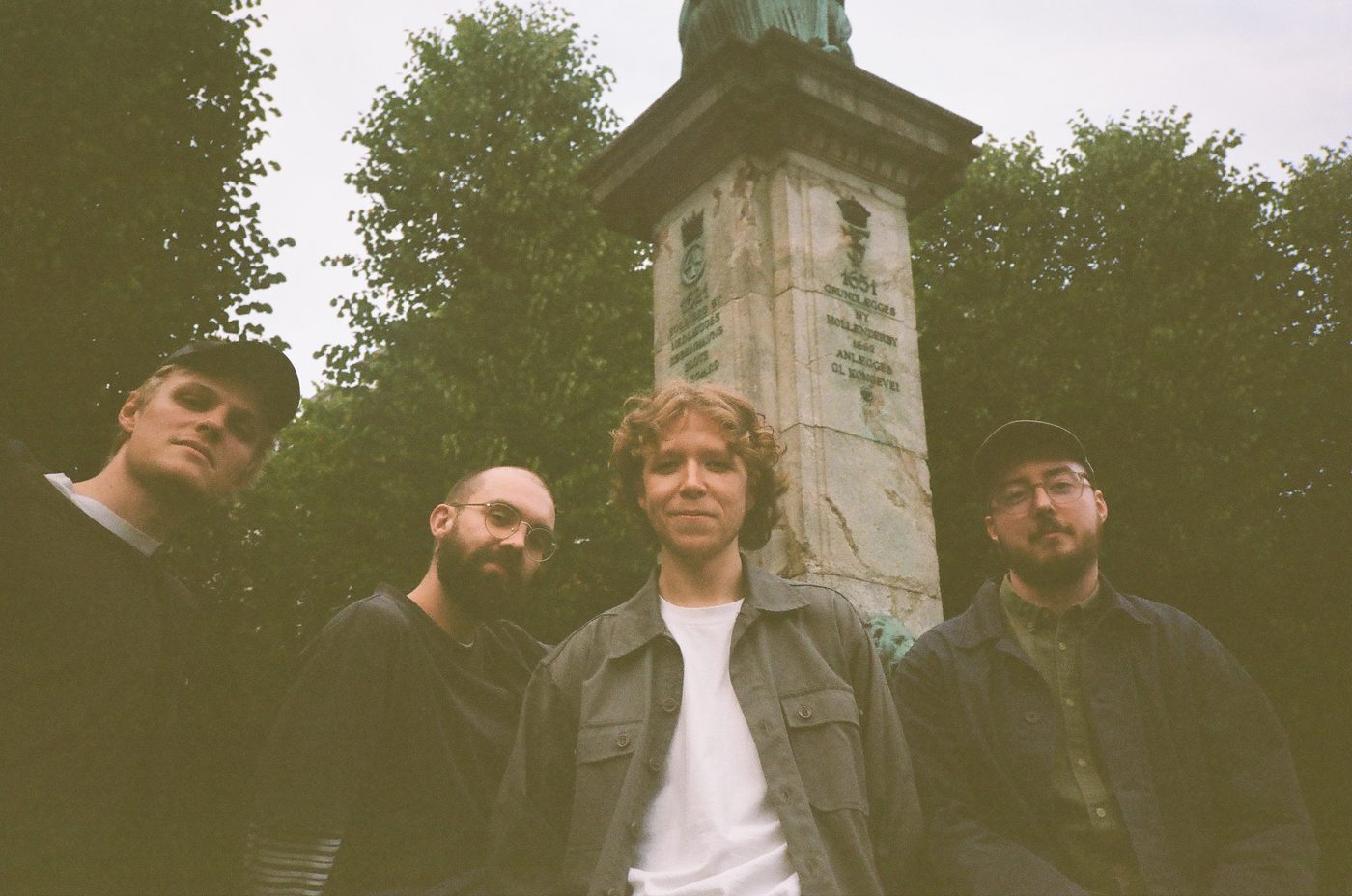


Canadian songwriter and filmmaker Tobin J. Stewart wrote the opening song on Carpet of Horses’ “Rain Glow” in just a couple of hours back in 2016. He kept every word. When he returned to those lyrics after his marriage ended, around three or four years later, he was startled by how clearly they described something he’d been trying not to acknowledge.
The nine-song album took him six years to record, starting in northern Italy and ending in his hometown of Guelph, Ontario. Its melancholy indie rock, psychedelic experiments, unusual percussion and brass arrangements grew out of sessions interrupted by a separation, two young children, a move across the Atlantic and the work of starting over. Stewart finished mastering in 2022. Another four years passed before he released it.
Throughout that time, the songs kept changing. Some were pulled apart and recorded again. Others stayed close to their first versions, with words that came to mean something quite different. Two tracks in particular, “Glory Man” and “Rain Glow”, ended up showing Stewart two almost completely opposite ways of writing a song.
“Glory Man” came first, alongside early versions of “The Last Drop” and “Circles”. Stewart was living in Piombino Dese, a small town about an hour outside Venice, with his then-wife and their young family. For a couple of years they stayed with her parents, who had an upright piano beside the kitchen table. Stewart spent a lot of time playing it, or sitting at the table with his guitar.
“Glory Man” was written on guitar, while the other two began on piano. It was also the first of the three to have lyrics. The words for “The Last Drop” and “Circles” came much later.
“Glory Man was one of those rare songs that was written effortlessly. I think the words and music were both written in a couple of hours. I definitely knew I was starting work on a new record (the Ballroom record was wrapped at that point), but I certainly had no idea what I was making or what direction the songs were going to head in.”
The song follows two people caught in a relationship that is coming apart. One is mopping up blood from the floor while the other looks towards the door. Later, their positions reverse. The argument keeps changing sides, and so does the responsibility for what’s happened.
Stewart wrote that reversal consciously, although the full personal meaning of the song took longer to register.
“The perspective shift in Glory Man is definitely intentional and I think it was my way of democratizing the blame, anger and confusion that two people can feel when they are facing a losing battle together. Sometimes one person wants out while the other person feels like they’re stuck trying to clean up the mess, and sometimes that flips.”
He had sensed something troubling when he first wrote it. After his separation, while listening to the old recording around 2019 or 2020, he began recognising how much of his own future he had already put into the song.
“Yes, the lyrics survived unchanged from that original version. Part of me made the connection immediately… I mean, the lyrics were pretty dark and pretty specific. But I think I hoped it was a passing thing… capturing a feeling I was having and a conversation I was having with myself, hoping and assuming it wouldn’t last. After my separation, as I was processing that experience (probably around 2019 or 2020), I do remember listening to the song and thinking it was pretty wild that I’d seen it all so clearly.”
Another early composition, “The Mansion“, contains the admission “I’ve been a ghost to my mind”. It comes from a related place, although Stewart was still struggling to understand his own situation when he wrote it. He talks about the song with a similar mixture of surprise and hindsight.
“The Mansion was another song that was written early on in the process, and another one that surprises me for how much my subconscious was aware of what was going on in my life while my conscious mind was pretty much in denial about it all.”
There are different stages of that relationship throughout the album. “In the East” looks at something wearing out between two people, including the difficulty of admitting what has happened. “Circles” returns to promises and a separation that cannot be undone. “Forget the Sound” has one of the record’s most upsetting domestic images, someone crying in the shower behind a locked door while the other person barely feels anything. On the later-written “Arrows“, Stewart is left looking at the prospect of making a new plan after someone has moved on.
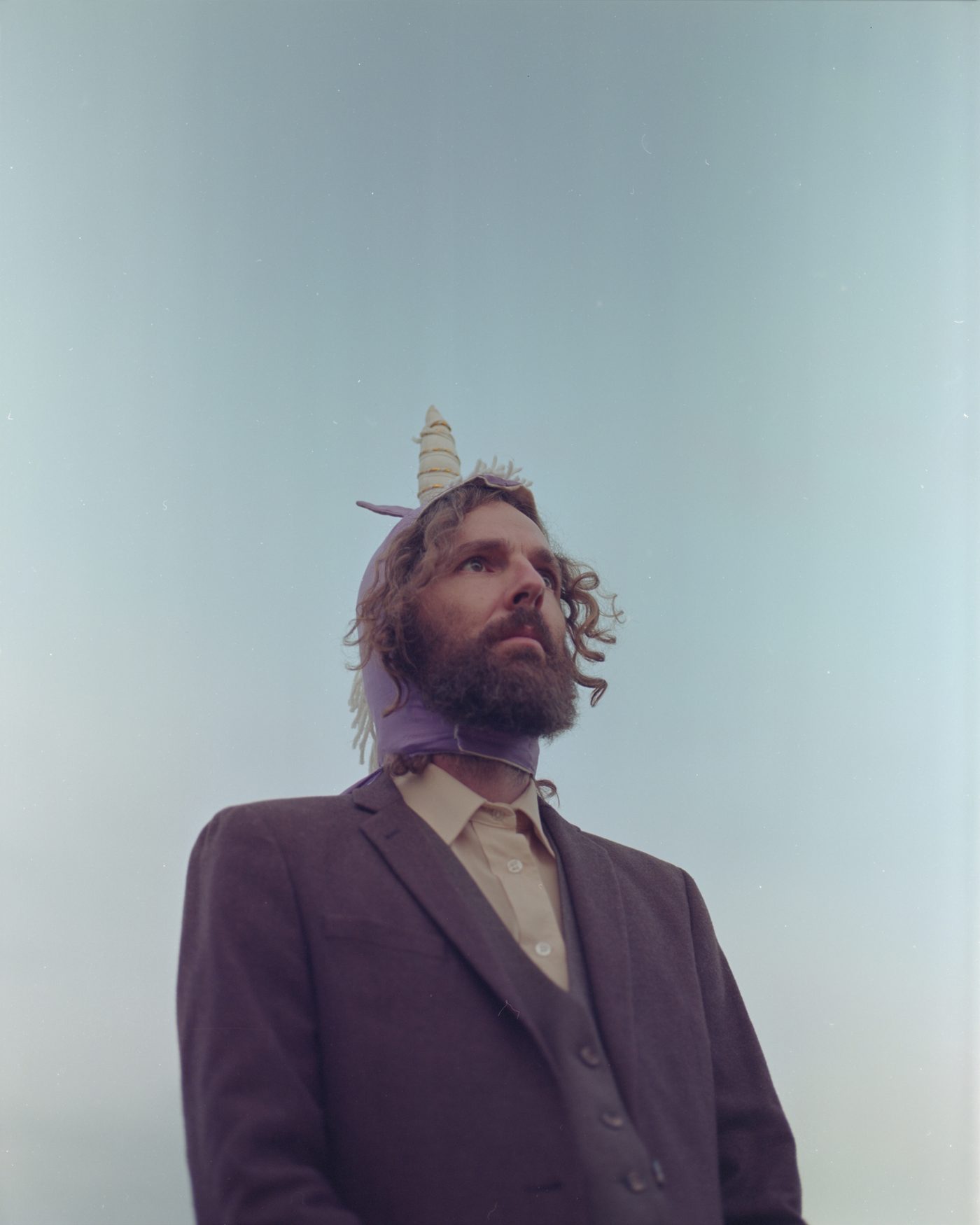
The title track took considerably more work than any of those early, quickly written ideas. Stewart had a guitar progression and a recurring vocal melody from almost the beginning. Whenever he played the chords, the melody would come back to him, eventually attached to the words “Thumb a match out and set a fire”. The rest of the song kept getting bigger and harder to manage.
“I had tracked so many different parts and they were all piled up on top of each other. I liked everything, but when it was all together it was like a big impenetrable mass. At a certain point I was either going to throw it away, or turn it into something, so I started under-dubbing. Taking things out, or muting them over certain sections. Some parts I’d tracked throughout the entire song, and ended up bringing them in for a little 5 second moment.”
That process of removing recordings, sometimes leaving just a few seconds of a part originally played all the way through, finally helped him find the song. It went through roughly 10 to 15 complete edits. He could then hear where new vocal melodies might fit and begin properly working out the lyrics.
For about two weeks, Stewart made himself write words for the track every day. Some sessions produced almost nothing. Others brought whole passages. He was trying to complete a long lyric that could follow an arrangement he’d already spent years changing.
“Rain Glow (the song) would probably surprise me the most if I could have heard its finished version back in 2016. That song was incredibly difficult to figure out what to do with, and it went through endless iterations of edits and re-arranging before it eventually ended up in its finished form. It is the antithesis to Glory Man, which came out as a fully formed song.”
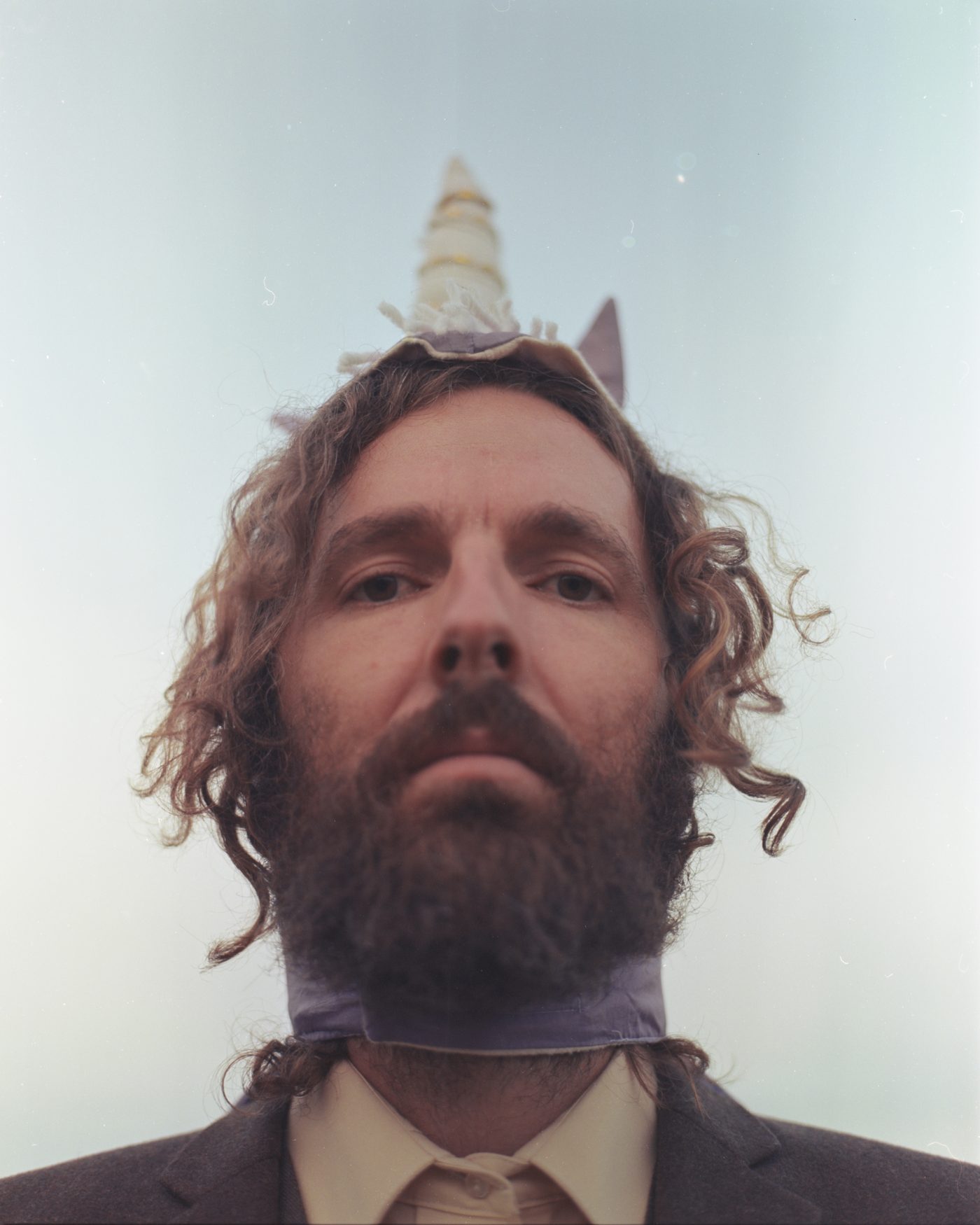
Its words move through a failing relationship, the exhaustion of holding on and an admission of dishonesty. At one point, Stewart sings about the rain turning into rainbows. He had spent a long time working out how to get to that part of the song, both lyrically and in the arrangement. When Brian Deck eventually mixed the album, he found another way to change how that moment came across.
Deck briefly makes the mix sound submerged, with individual sounds becoming less clear before slowly coming back into focus. Stewart considers it one of his favourite decisions on the record.
“Another defining moment (sonically speaking) for me is the moment in “Rain Glow”, right as the song shifts into what I guess is the album statement “The rain glows, it’s turning into rainbows”. That sudden shift where you feel like all of a sudden you’re under water, and then you slowly emerge from it as the clarity gradually returns to the different sound elements in the mix. That was also all Brian, and it’s pretty fucking stunning!”
Deck had been part of Stewart’s listening life for years. His work with Red Red Meat and Califone, along with his production credits for Modest Mouse and Iron & Wine, made him an obvious choice for somebody whose own records had long been drawn towards experimental recording and unusual combinations of instruments.
Stewart sent him “Rain Glow” after every part had been tracked and edited, and gave him permission to make major changes. The songs were finished as far as Stewart was concerned. He wanted to hear what Deck might do with them.
“I only sent the record to Brian after it was completely tracked and edited. The songs were “done” but I told him he had as much creative leeway as he wanted. I trusted him implicitly, and hoped he’d bring some of what he brings to the table as a producer to the mix process. To me that meant he could turn a song inside out if he felt like he had a good idea for doing so.”
One of Deck’s biggest interventions was on “Forget the Sound”. Stewart had recorded its opening drums with gentle brushes and a fairly straightforward arrangement. In Deck’s mix, they became a strange collection of processed percussion sounds, far removed from the original performance. Stewart had to listen several times before he could make sense of what he was hearing.
That song had already survived a major rewrite. Its first version was faster, and Stewart had never been happy with the way the parts fitted together. After returning to Canada, he abandoned most of the original arrangement and rebuilt it. Deck’s work gave it another unexpected turn.
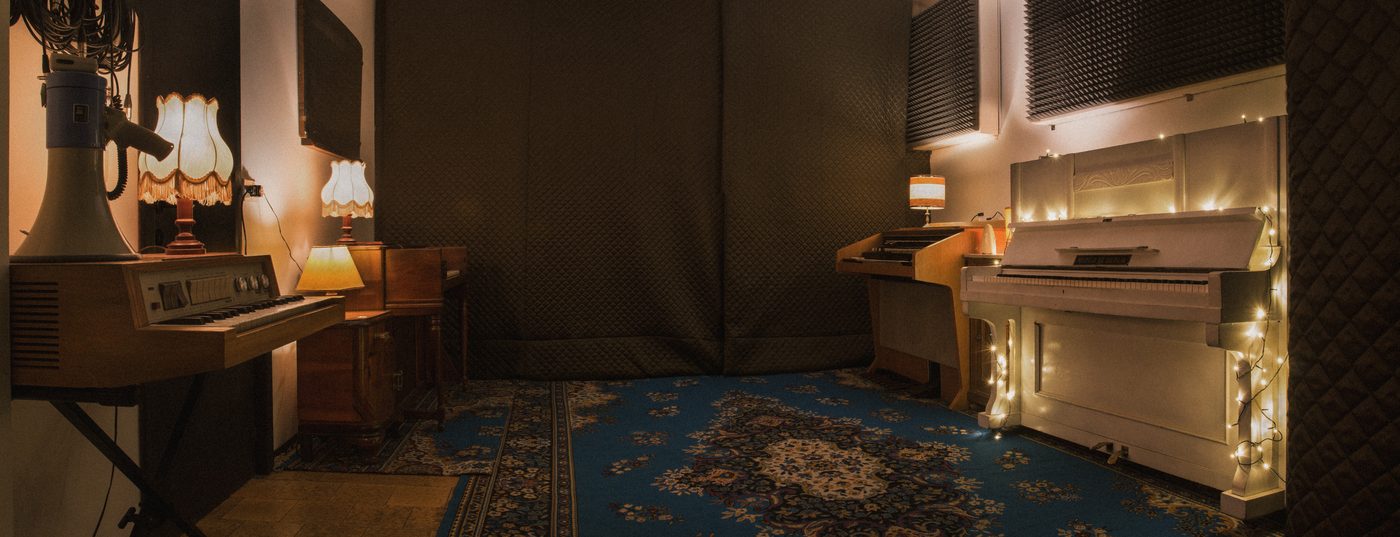
Long before Deck heard any of these recordings, Stewart had been working in a small studio in Castelfranco Veneto. He called it Starland. A friend of the family rented him the ground floor at the rear of a residential house for very little money. Somebody had once used the place to record advertising jingles, but it had been empty for a long time when Stewart moved in.
He covered much of the wall space with sound isolation foam. The floors got cheap ornamental rugs. Old lamps and Christmas lights supplied the lighting. He divided the space into a guitar room and a piano-and-organ room, with a small isolated booth for vocals, acoustic guitar and quieter instruments. The booth was lined with wood and reminded him of a sauna.
“One of the rooms actually led to a tiny isolated live room (about twice the size of a typical vocal booth, made of cozy wood paneling that made it feel like a sauna). I had two full rooms, plus the live room. There were no windows, and I plastered the walls, nearly from floor to ceiling, with sound isolation foam. I laid a bunch of old, cheap ornamental rugs on the floors, and then lit the place with as many old lamps as I could find, and Christmas lights.”
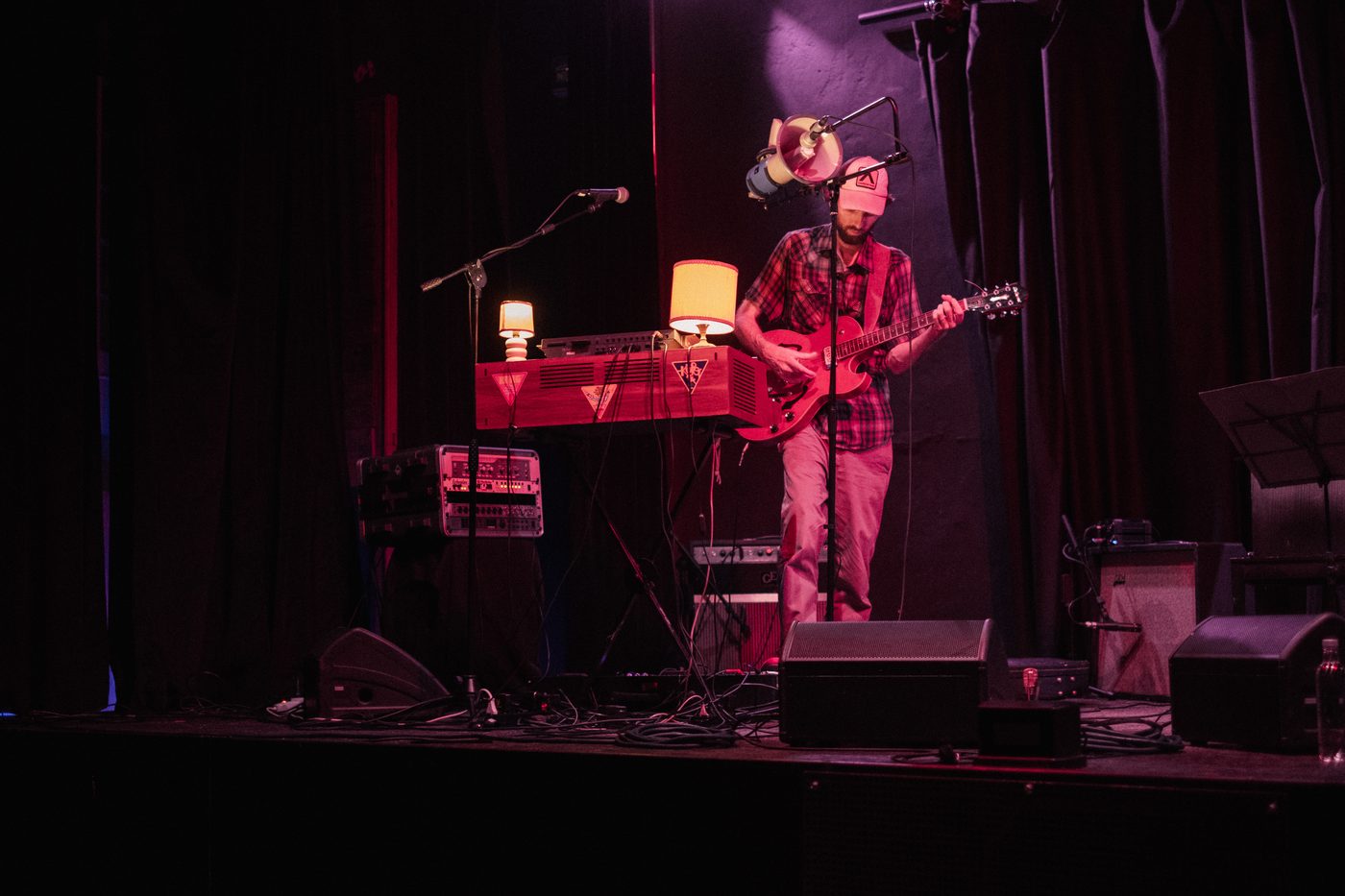
The surviving photographs show the two main rooms as Stewart left them, with guitars and amplifiers in one space and keyboards, organs and recording equipment in the other. They are ordinary working rooms, full of things he’d collected over the years. The lamps, rugs and Christmas lights are all there.
Eight of the nine songs on “Rain Glow” began at Starland. “Arrows” was written a few years later. During those Italian sessions, Stewart was still trying out different parts, recording ideas and seeing what he could do with them. Most of the arrangements were far from finished.
He had already been through a similarly long release process with “Ballroom”. The recordings for that album came from an earlier period in Germany, when he turned a former village dance hall into a studio. Although the songs had been completed years earlier, the album would only come out in July 2021. The experience of carrying older recordings forward was familiar by the time “Rain Glow” began.
Carpet of Horses had also released “Red Paper Flames” and “Collages, Vol. 1”, and Stewart continued making records while working on films. His later discography includes “The Fool” from January 2024. His filmmaking work includes the 2026 documentary “Thunder Queens”.
In 2018, Stewart returned to Guelph. He shipped his recording equipment over from Italy and started working from a new studio called Electric Ladybug. The original Starland sessions came with him. So did two Hammond organs, both of which had already travelled from Germany to Italy before making another journey across the Atlantic.
One of them survived the ocean crossing and promptly caught fire.
“Everything survived the trip across the ocean other than my Hammond S6 chord organ, which lit on fire the first time I plugged it in at Electric Lady bug. Luckily a friend of mine who happened to own an S6 and knew it was my favourite instrument offered a replacement almost immediately.”
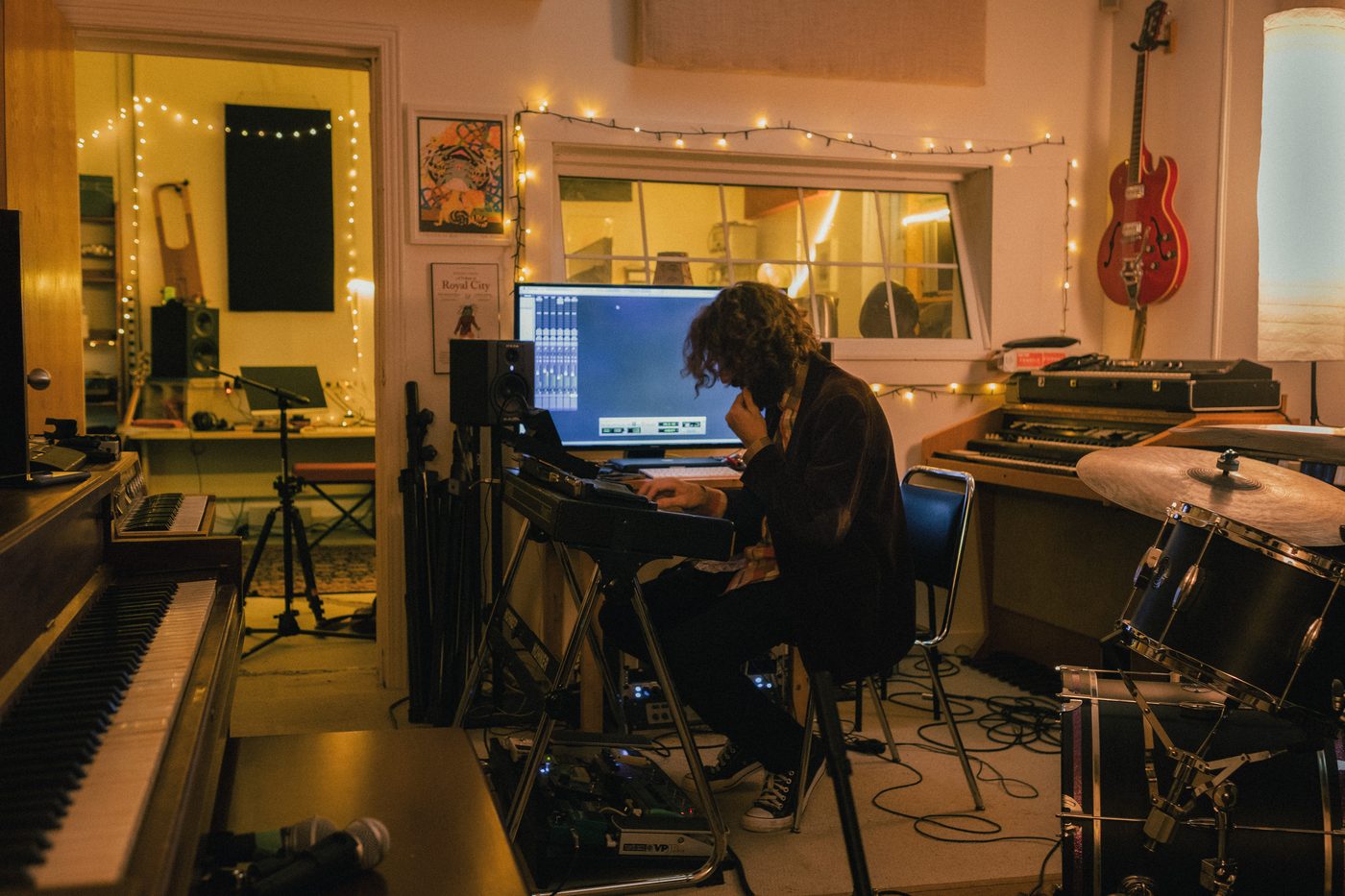
Getting back into recording was much harder. Stewart’s marriage had ended, he was raising two small children, and he was trying to find a stable income while rebuilding his life in Canada. He moved house three times during the first year and a half. For around a year after his return, he barely managed to record anything.
“The recording sessions for Rain Glow, sporadic as they were over these years, always provided a place of refuge from the chaos of the life I was living throughout this period. When I first moved back to Canada, I think there was a solid year when I was unable to record anything.”
It was the longest period he’d spent away from making records since he first started. When he eventually got back to work, he was listening to sessions that belonged to a very different part of his life.
“When I finally got down to recording again, my life was unrecognizable to what it had been when I’d last touched the record. I had never experienced that before, as from the time I’d started making music I’d always had pretty consistent access to a recording space, and I’d never experienced such big life changes (emotionally and geographically) while in the middle of recording an album before.”
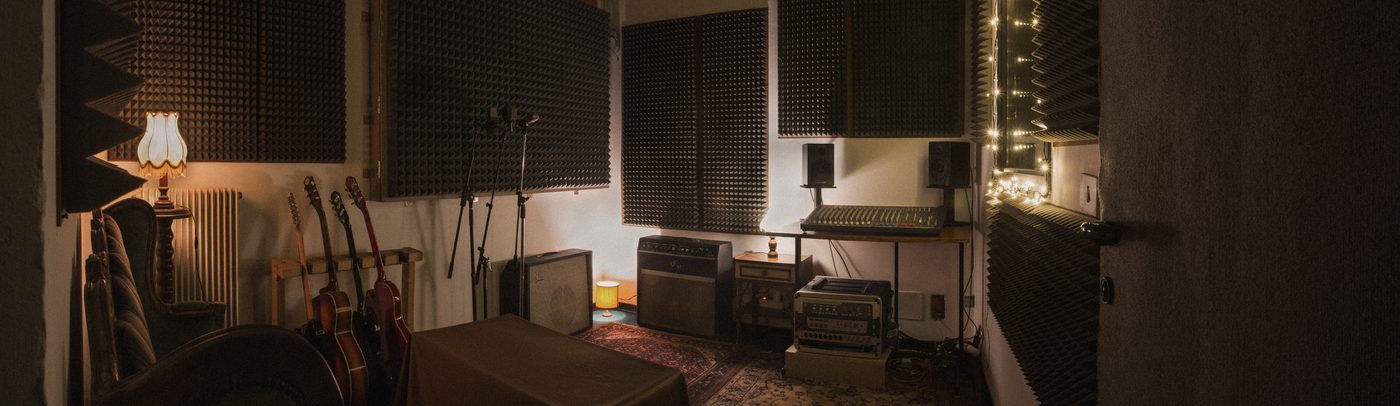
Electric Ladybug was shared with Nathan Lawr and Ben Grossman. Nathan had already played on several Carpet of Horses recordings, and the arrangement meant he and Stewart could spend more time working together. Stewart engineered their drum sessions, dividing the recording time between his own songs and Nathan’s records. They could try several approaches to a part, listen back and keep working until they were happy.
Nathan plays drums on all nine songs. Ben contributed percussion to six tracks, bringing in the experience he’d built playing hurdy-gurdy, electronics and other instruments around the Canadian experimental music scene. Stewart had wanted to give percussion a bigger role on one of his albums for years, with Califone among the reasons he was interested in taking that approach.
The other contributors came in through a mixture of face-to-face sessions and remote recording. Michael Feuerstack, who had already worked with Stewart on “Ballroom”, recorded his parts at home in Montreal. Stewart then edited and arranged the recordings himself. Michael’s guitar solo on “Circles” is a favourite, and he also plays pedal steel on that song and “The Mansion”.
Kent Lambert of Chicago’s Roommate supplied electronics for “Glory Man”, “Rain Glow” and “The Last Drop”. Stewart was already a fan of his work and trusted him to contribute without needing to direct every decision. Lauren Boni added vocals to “Glory Man”, and David MacKinnon sings on “The Mansion”.
Stewart recorded the lead vocals and much of the instrumental work himself, including guitars, bass, organs, piano, keyboards, synthesizers, percussion and assorted toys. Andy Magoffin played bass on “Glory Man” and “The Mansion”, but his biggest contribution was the brass. He arranged horn parts for every song on the record, something Stewart had never expected to become such a prominent part of the finished album.
“If there were any contributions I never could have imagined when I first wrote the songs, it would definitely be the gorgeous brass arrangements that ended up on all 9 songs, done by another longtime friend and collaborator, Andy Magoffin. It’s not that I never imagined horns being on the record, it’s that I never anticipated how predominant of a role they were going to end up playing on every song, to the point that for me the horns are one of the defining factors of what makes this record feel so special.”
Wyświetl ten post na Instagramie
Working with people he’d known for years gave Stewart room to experiment with the songs while retaining control over how they were put together. Andy’s brass, Ben’s percussion, Kent’s electronics and Michael’s guitar and pedal steel all became parts of arrangements Stewart had been carrying around since Italy.
Mastering was completed by Andy at House of Miracles in 2022. By then, Stewart had been making “Rain Glow” for six years. He was pleased with what he’d achieved, especially after finally working with Deck. That feeling was strong enough that putting the album out initially seemed almost optional.
“The record was mastered in 2022, and in all honesty I was so proud of it, and so amazed with the experience of getting to work with Brian, that I felt like I had achieved everything I’d set out to achieve. I’m also someone who’s been toiling away in obscurity for so long that the idea of either putting out an album or not putting out an album didn’t really make a difference to me.”
Wyświetl ten post na Instagramie
His feelings changed as time passed. He wanted to give the record a proper vinyl edition and make some effort to get it heard, but money was tight. He was still dealing with the financial consequences of the upheaval that had begun years earlier. Pressing an album and paying for promotion were expenses he couldn’t cover.
Meanwhile, he was recording new songs. Eventually he became so involved in those projects that the finished “Rain Glow” started slipping out of his attention. For a while, he more or less accepted that it might remain a private recording.
“Then I got so absorbed with the new music that I sort of lost my connection to this record that was already done, and so I got pretty lethargic about whether or not it would ever see the light of day, and more or less resigned myself to it just being a thing that I had done, and that would be it.”
In 2026, he received a tax refund. His income had been low enough to leave him with a decent amount coming back, and he immediately decided what to do with it.
“Then this past year I earned so little money that I got a pretty decent tax return, and the moment it touched my bank account I said fuck it, and blew the whole wad on pressing 100 LPs.”
Wyświetl ten post na Instagramie
The entire vinyl pressing was paid for with that refund. There are 100 copies of “Rain Glow”, pressed on 180-gram black vinyl, with matte-finish jackets, black poly-lined inner sleeves and double-sided colour inserts carrying the lyrics and album information. Stewart had finally been able to make the physical edition he’d wanted when he finished the record four years earlier.
He also had a cover that had grown out of another collaboration with a friend. Drew Steadman painted the image used for the artwork. Stewart originally planned to photograph the whole painting and use it as a single cover image, but began taking closer photographs of its different sections while working on the design.
“The original concept was just going to be a single image of the full painting, but when I set up to photograph it, I couldn’t help but play around and soon started to feel connected to these little details that seemed like entire universes unto themselves.”
The completed sleeve has nine panels, arranged in a three-by-three grid. The first shows almost the entire painting and represents “Glory Man”. Each of the other eight panels comes from a smaller section of that same painting, with Stewart selecting a detail for every remaining song.
The nine images follow the actual track order, left to right, row by row. “Glory Man”, “In the East” and “Circles” occupy the first row. “Forget the Sound”, “The Mansion” and “Rain Glow” occupy the middle. “The Last Drop”, “Porchlight” and “Arrows” complete the bottom row.
The photograph incorporated into the painting was taken by Lauren Boni. Stewart handled the cover photography, design and layout, while Dean Rank did the finishing work.
“I liked the idea that all of the images were component parts from the same source. It felt like an appropriate metaphor in the context of this record, as all of the songs feel like explorations of the same general territory, just approached from different angles.”
The first image preserves the whole painting. The remaining eight pick out details that would be easy to miss when looking at it from a distance. Stewart has done something similar with the recordings, spending years returning to individual parts and working out which moments he wanted to keep.
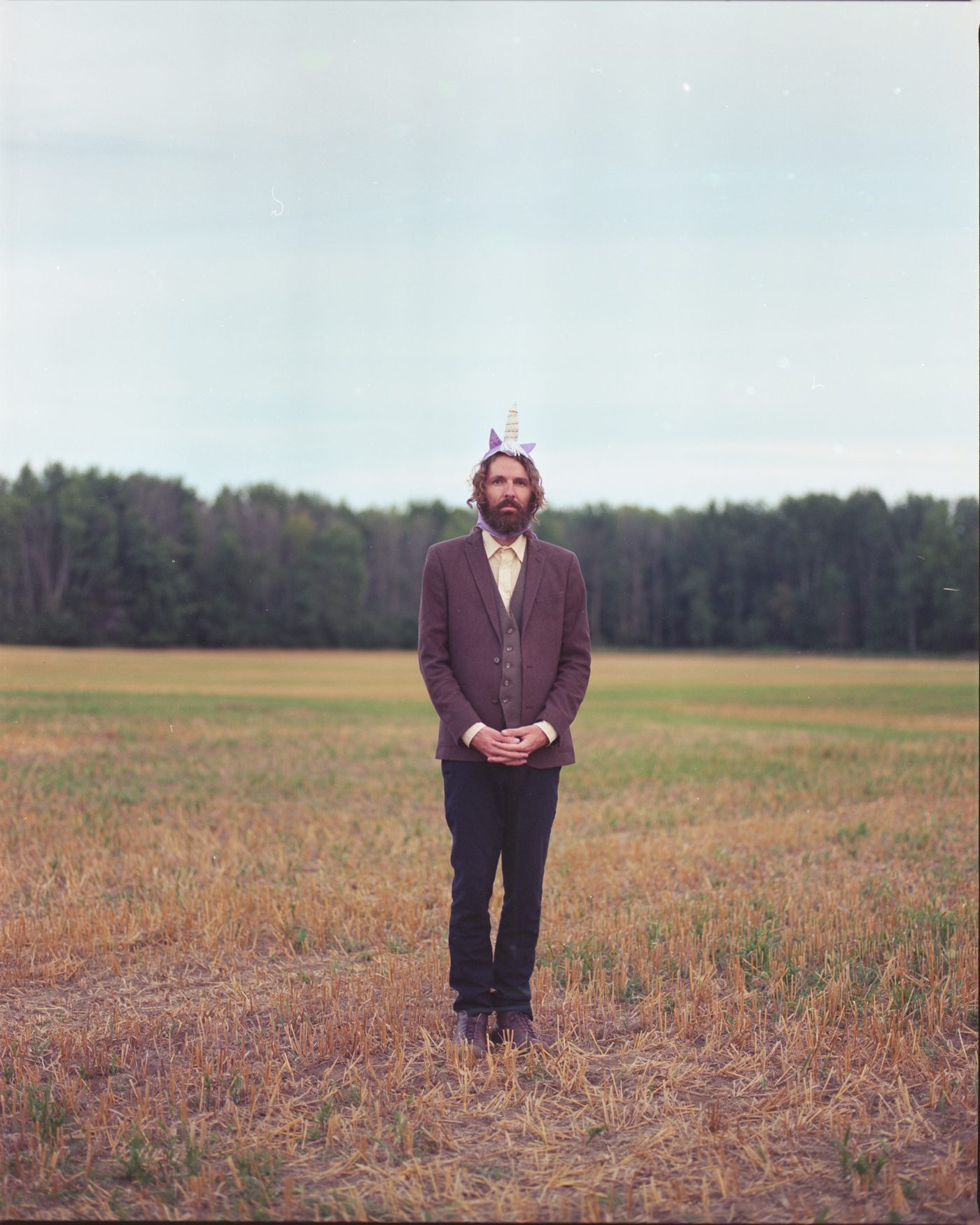
Carpet of Horses released “Rain Glow” on November 17, 2026, through Stewart’s independent imprint Montsou Records. The complete album is available to stream, download and purchase on Bandcamp, including the limited 100-copy vinyl edition.
🔔 IDIOTEQ is ad-free, independent, and runs on one person’s time. If you want it to stay that way: DONATE via PayPal or SUPPORT via Patreon.
NEW: IDIOTEQ Explore 🗺️ Browse 15+ years of our archive by city, country, and style. Find artists on the world map or trace related sounds through the styles map.
Stay connected via Newsletter · Instagram · Facebook · X (Twitter) · Threads · Bluesky · Messenger · WhatsApp.