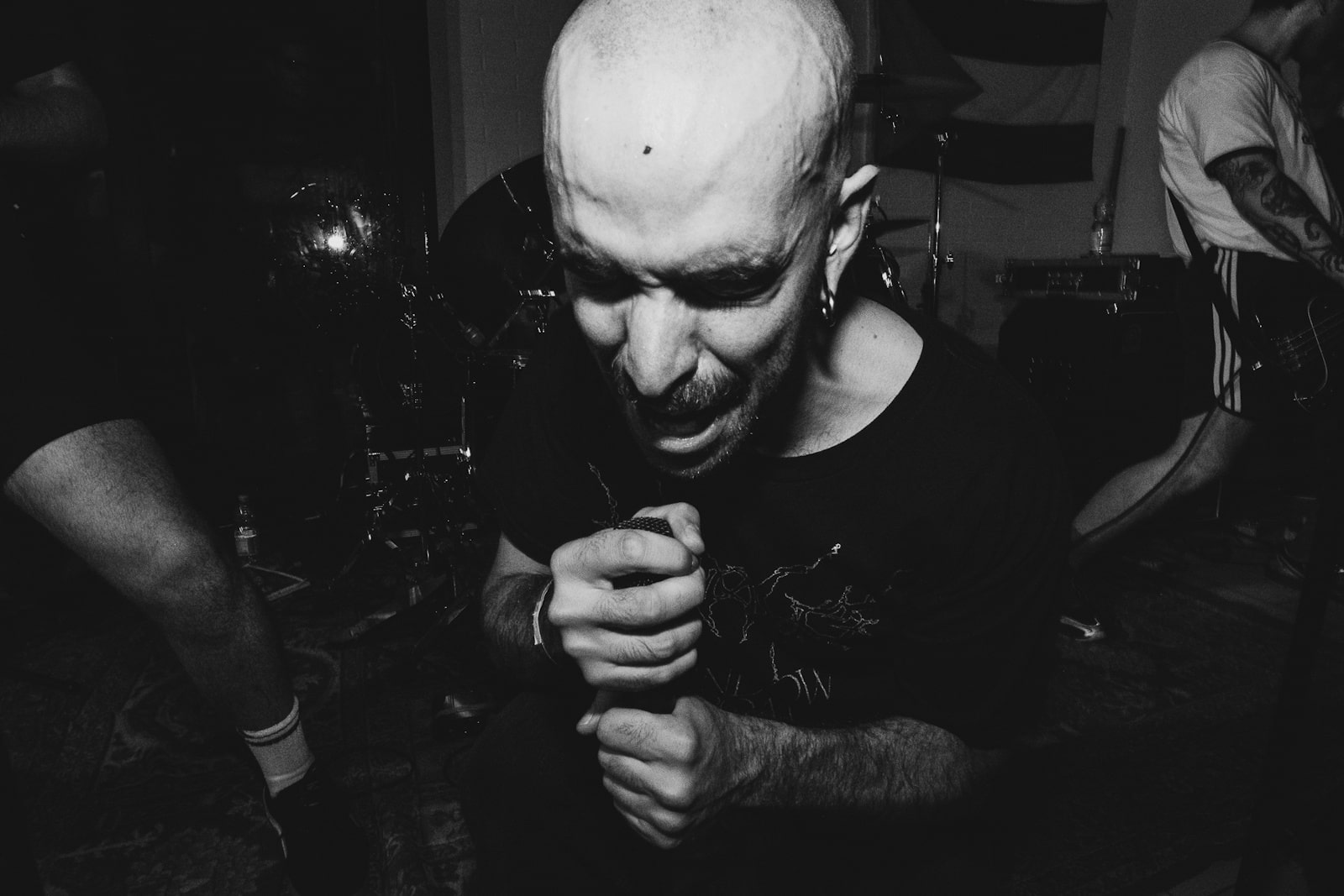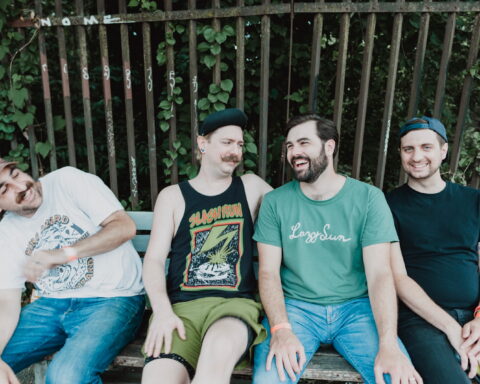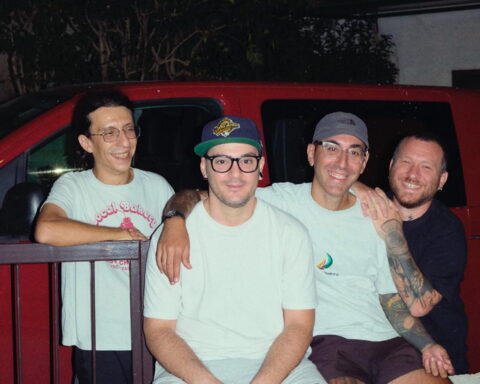



Five bands from five different countries—Malaysia, Peru, USA, Germany, and Mexico—are releasing a shared digital split today and we’re stoked to give you an exclusive premiere of this adventurous beast!
It’s brought together by a web of DIY labels that stretches across almost every timezone. Abraxas Distro, Dingleberry Records, Friendly Otter Records, Entes Anómicos, Dead Red Queen Records, Ruido y Pasión Records, New Knee Records, Movimiento Circular de los Árboles Records, Rufen Publishings, and Slow Down Records are all involved, each carrying a piece of the work. The 12″ vinyl edition sits in the hands of one of the label members who helped set this whole thing up.
What makes the split interesting isn’t only its geography. It’s the way each band enters the project from its own lived backdrop—broken-up scenes, revived ones, countries where screamo is tiny, and others where it manifests in unlikely corners. The songs share no unified theme, yet when placed side by side they feel like fragments of the same broader tension: people trying to stay intact in places that don’t make it easy.
Razones para el olvido: Lima’s small scene, big connections
Razones para el olvido come from Lima, “the largest city in Peru,” but they talk about the local reality with a kind of bluntness that keeps expectations grounded. “Rock music isn’t particularly popular here,” they say, “and the style we play—being quite niche—makes the scene remarkably small, even in a city as big as Lima.” Still, they’ve watched a new wave of very young musicians gravitate toward screamo and emo, giving the city a faint pulse in that direction.

They’ve paid attention to Latin American screamo for years, so hearing Ümit’s earlier work meant the idea of a collab “immediately excited us.” Communication with Ümit turned “very natural—we began sharing stories, ideas, and plans.” Their ties to Löri run even deeper: Hugo, now in Löri, is originally from Lima’s DIY scene, and the bands have known him for a long time. “Being able to share this release with them makes us genuinely proud,” they add. And as followers of the international scene, they felt that having Jamais Vu on the split “felt perfect.”
They admit that Portia was a discovery: “We didn’t know Portia beforehand, but once we listened to their music and understood the message behind their project, we immediately agreed they should be part of it.”
Their song “Náufragos” is tied to Luis Buñuel’s El ángel exterminador, reflecting on “the anxiety of being trapped, and on how the lack of certain comforts can slowly erode our manners and bring out a more decadent side of ourselves.” The second track, “Marejada,” looks at harmful dependencies—recognizing them, resisting them, and understanding that sometimes “the healthiest strategy is to walk away.” These two tracks are their first-ever official releases.
Löri: from Lima to Berlin, and the long wake of grief
Löri’s story starts in Lima as well but takes a detour through Berlin, where the band unintentionally found a second life. “The situation back home got complicated,” they explain, and Hugo, who was already in Berlin for work, ended up staying. The original lineup had begun recording a self-titled album before everything fell apart. Once members left, the project froze until it eventually re-emerged in Berlin.

COVID wiped out almost the entire local screamo, hardcore, and post-hardcore network there. “Festivals like Miss the Stars, Fluff Fest, and Cry Me a River stopped, bands broke up or moved away, and for a long time the whole scene fell silent.” When things started moving again, that emptiness created space for new bands—largely immigrant and expat projects where English sits as the common language. “None of us in Löri are originally from Germany,” they say, and the international pocket of the scene feels different from the German-speaking one, where micro-scenes operate in their own small bubbles.
Joining the split happened almost by coincidence. Hugo knew about the project through the MCDLA collective with Jaime from Razones para el olvido. Then one of the original bands suddenly had to drop out, and messages began piling in—from Olin at Friendly Otter, who has always supported their releases, and from Artwith, who plays in Jamais Vu and Piri Reis. The deadline was one week. “Luckily, we had a new song already recorded, so it all came together.” They’d shared three shows with Piri Reis in Canada, “and we all clicked right away.”
View this post on Instagram
They highlight Ümit’s tracks as “blowing us away—crazy when thinking that this is a 2 person project.” Portia’s contribution also made an impression, especially because they too joined at the last minute on Olin’s recommendation.
Their track, “Soare,” written by their singer Kobi, sits in a quiet but heavy register. It’s about grief’s long arc, “how, as time passes, it doesn’t get better or easier—just different.” The title means Sun in Romanian. The dedication is personal: Kobi’s mother, Sorina, died when he was in his early teens after a brutal cancer. The band describes the song as anything but narrow—it also speaks to survival guilt, how “groundless life can feel when you lose the sun your life once revolved around.”
Ümit: building community where none exists
Ümit come from Mexico, where screamo, crust, and emo are strong in big cities—Mexico City, Guadalajara, Puebla, Tijuana—but “in the south, events and bands within these genres are almost non-existent.” The lack of local spaces forces bands to look outward. They describe a scene held together by social media, labels, and festivals, forming a “strong and growing network.”
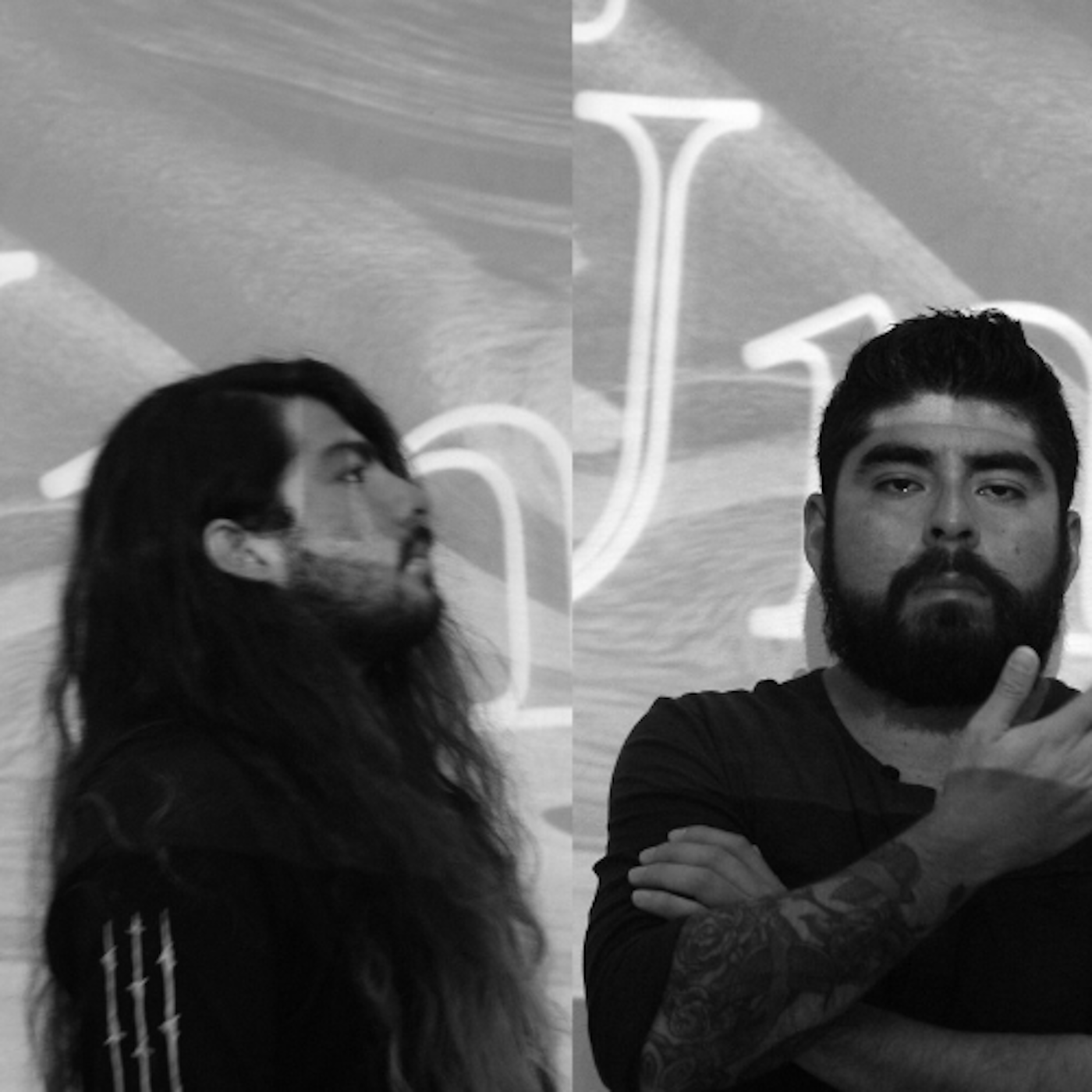
Their origin is tied to Hand 2 Paw Fest, an online pandemic festival from 2021 that connected screamo projects globally to support animal shelters. They emphasize Movimiento Circular de los Árboles’ role in spreading the event, calling it “one of Latin America’s most important labels.”
They don’t hesitate to say: “All the bands in this split inspire us, and we hope to inspire others in return—to create, strengthen the community and support both new and old projects, locally and internationally. This is more than a project; it is a global community. Always DIY.”
View this post on Instagram
Ümit contribute three songs: “Heridas,” “Vastitud,” and “Manos frías.” “Heridas,” they explain, “speaks about the actions and words that wound us—both from our surroundings and from ourselves.” It deals with the moment when coping breaks down, when things become “difficult to explain, hard to process and even harder to heal.” Loneliness enters not as punishment but as part of the path.
“Vastitud” turns inward toward the desire to feel better. They describe it as “an individual process that strives for improvement, for taking the next step,” holding onto hope even at a breaking point.
“Manos frías” is the emotional root of the project, reflecting Ümit’s name: hope. The song is about “a raw, violent pain that eventually finds calm.” It focuses on abandoned animals, “forgotten and ignored,” where the only perceived escape is eternal sleep — yet the band reminds that “sometimes a single act of compassion can ease the pain caused by indifference.”
Portia: New Orleans noise, political weight, and a track built in minutes
Portia enter from New Orleans—a city without a discrete screamo scene, but with a hardcore community that’s “incredibly diverse, inclusive and there’s tons of cross over and screamo influence.” They talk about New Orleans with a sense of responsibility: a place that has long been “a nexus point for expression and radical thought,” a birthplace of modern music, where DIY shows often organize around social causes.

They list local peers—Dremm, Panama Papers, Guts Club, Divtech, Slowhole, Laughing Torso, Paprika—as part of the fabric they move through.
Sharing a release with the other bands carries weight for them. “It’s beyond humbling,” they say. When Olin from Friendly Otter reached out, they didn’t hesitate; but listening deeper, they realized: “Holy fucking shit. This is something special.” They describe transnational collaboration as “crucial and poignant right now,” in a moment where technology amplifies distance more than understanding. “But there is no mediating or misrepresenting a scream. It needs no translation.”
View this post on Instagram
Their track, “Jazz Hostage #2,” came together fast. “Despite incubating for a minute, this track was all but invented on the spot over a couple takes on a 4 track cassette. Raw shit.” The song is about persistence and adaptation, about how what we think keeps us alive can turn out to be “vestigial or even malignant.” On a political level, they frame it as a reminder that dismantling capitalist and imperial structures demands endurance: “As long as there is a people oppressed, the oppressor’s position is insecure.”
They also give Olin his due: “the best guy ever,” someone who builds relationships, cultivates international screamo, cooks dinner for you, and sends you home with new music.
Jamais Vu: pandemic origins and two stark narratives
Jamais Vu formed in Malaysia during the pandemic, writing music online without physical rehearsals until their first EP, Babak 1, came out via New Knee Records and Utarid Tapes in 2022. Members come from Kias, Piri Reis, Cues in Braille, Piet Onthel, and Amu Daria.
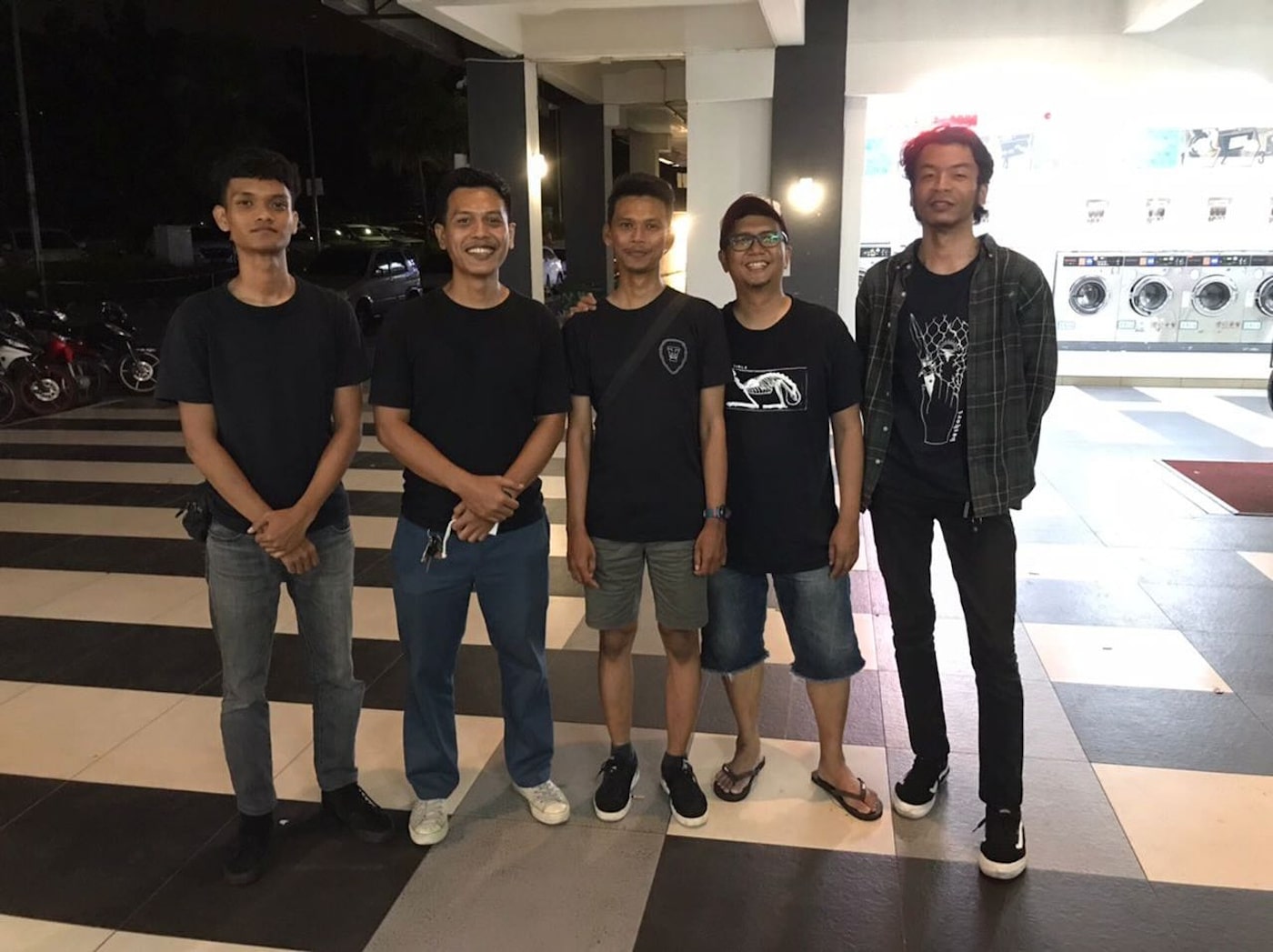
Their contributions to the split carry two different but equally heavy narratives.
“Sel Nista” speaks about genocide in Palestine but also reflects on “all the wars and genocides that are taking place.” It’s focused on the suffering of people caught inside environments shaped by violence.
View this post on Instagram
“Ratapan Seorang Pengemis” follows an individual surviving their own mind—“depression and suicidal thoughts” becoming the internal landscape they’re trapped in.
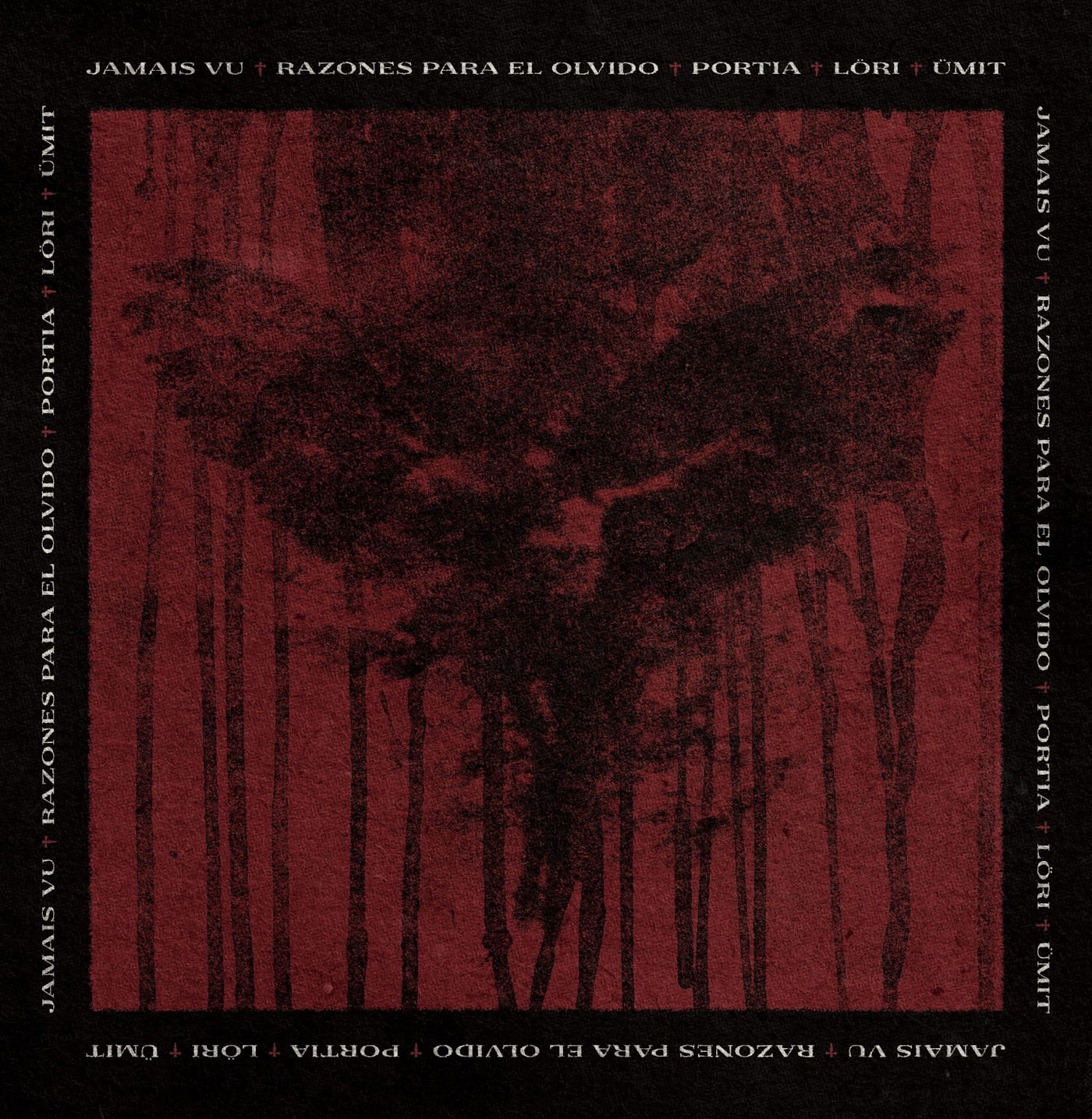
What ties this split together isn’t a concept or a shared sound. It’s the sense that each band shows up with whatever their corner of the world has demanded of them. The Lima scene held together by a handful of people. Berlin’s fractured post-COVID landscape. The absence of venues in southern Mexico. New Orleans’ political pulse. Malaysia’s pandemic-born projects.
Nothing here feels like a celebration. It’s more like five dispatches sent from different fault lines, stitched together by labels that believe collaboration still matters.